Posts Tagged ‘Propagation’
 Another good lunchtime QRP session
 August 27th, 2013 |
  Author:
 Propagation numbers baffle me sometimes. Yesterday, when the numbers looked so good, I thought I was going to end up getting skunked. I did end up working Oleg UR3IFD, in the Ukraine, and I also had a very brief, QSB busted QSO with Paul WA9PWP. But other than those two very brief contacts, it was pretty grim. There wasn’t else much to be heard and my CQs on several bands went unanswered. Advance the clock 24 hours, to find the SSN is down to 35 and the SFI is only at 110. Not great numbers. But despite the numbers, I had a great outing.
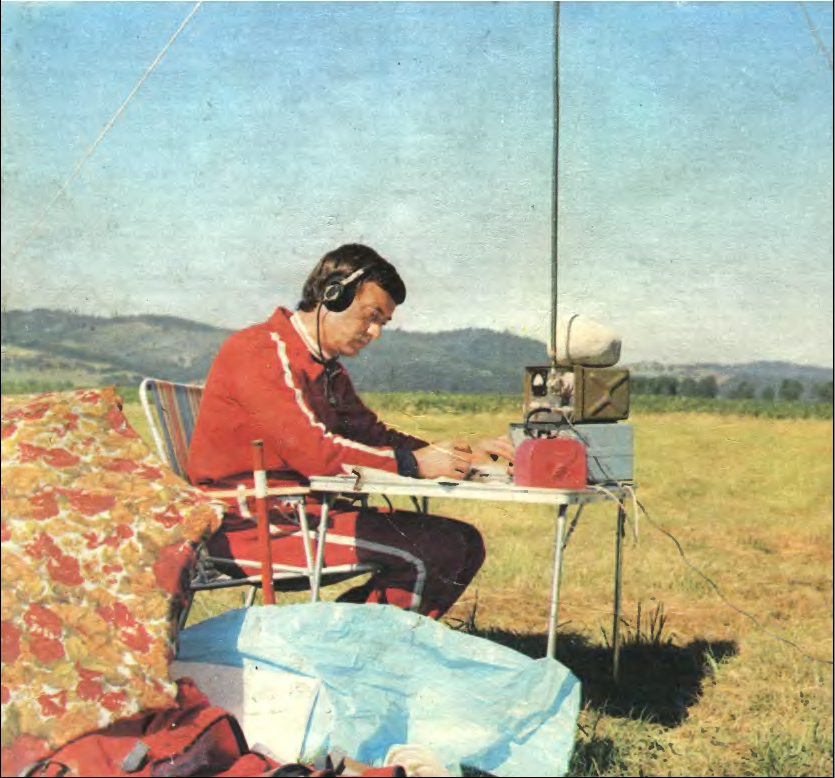
I started out on 17 Meters with a brief QSO with Ted LZ1ND, who was calling CQ. Ted was a good 599+ here in New Jersey, and I got a 549 in return. Not a bad report, and Ted got all my basic information, so I was definitely copy-able in Bulgaria. And it looks like Ted is quite comfortable behind the dial of a QRP rig himself. Here’s an old photo I dug up of him on the Web, taken while he was participating in Bulgaria’s HF QRP Field Day.
After Ted, I switched on over to 20 Meters and called CQ. I was answered by Ron W5VYN, from Whitesboro, TX. Ron had a magnificent signal into New Jersey. The fact that he was using home brewed gear made it all the sweeter. Ron had asked me if he was generating any key clicks, and I was happy to be able to tell him that he had a perfect, solid and stable 9 in the “T” portion of RST. His home brew rig sounded just as good as any commercial rig out there. That was a nice QSO.
That was followed up by a “quickie” QSO with Greg N4KGL. Greg, who’s down in Florida, was using one of those new PAR ENDFEDZ Trail Friendly antennas, which was generating a nice 579 signal for him. It’s always nice chatting with Greg, and I wish I could have stayed on longer. But as always, time flies when you’re having fun, and it was time to break down and head on back to work.
So it just goes to show …. you can have a great QRP day, even when the solar conditions say, “Maybe not”.
Even so, I had to laugh on the way home from work. As I was driving, I was listening to two Hams on a local 2 Meter repeater bemoan the current sunspot cycle. One was complaining about “How you just can’t work any decent DX without at least a 500 Watt amplifier!”. I almost lost it right there, I started chuckling so hard.
Lots of QRPers, including N8ZYA, K3WWP, W2LJ and many, many others have log books that attest to the direct opposite!
72 de Larry W2LJ
QRP – When you care to send the very least!
Show Notes #104
Episode #104 Audio (Listen Now):
Introduction:
- Pete is back on the show along with Russ
Announcements:
- Hamvention 2013 is happening May 17-19, 2013 in Dayton, Ohio. LHS reached the donation goal and thus will be in the Hara Arena. Thanks to Sierra Radio Systems for their incredibly generous donation that put us over the top. We will be talking with George from Sierra and Nick from Pignology in Episode #105. It’s a show you DO NOT want to miss.
- Bill, KA9WKA, has announced that he is also going to be on hiatus for a while. Therefore, we now have an opening for a show notes taker and keeper of all knowledge! If you’d like to be that person, please send us an e-mail or get in touch with Pete or I in the IRC channel.
- Website that lists known Linux Events.
- http://answers.oreilly.com/topic/3507-list-of-known-linuxfest-events/
Topics:
- We have a pre-recorded interview with Steve Nichols, G0KYA (also AB8ZV) the Author of STEALTH ANTENNAS an RSGB publication.
- http://g0kya.blogspot.com
- http://www.infotechcomms.co.uk
- HF Propagation Report Podcast
- Factors in HF Propagation
- Sunspots
- Flares
- CMEs
- Propagations changes over daily and monthly bases
- Solar Cycle 24 and its progress
- HF Propagation programs
- HamCap (Windows 32-bit)http://www.dxatlas.com/hamcap
- VOACAP (Linux, MacOS X, Windows)http://www.voacap.com
Feedback:
- Topic for short discussion: How is Ham Radio Free and Open Source?
- http://www.linuxjournal.com/ham (2010)
- http://www.linuxjournal.com/content/open-source-ham-%E2%80%93-free-range-chicken (2009)
- Both articles are more of a teaser for Linux Journal’s HAM section.
- Pro arguments:
- Home-brew your own
- Communications open worldwide
- No need for outside infrastructure
- Con arguments:
- Need a license from “The Man” to operate
- Many restrictions (band plan, op procedures, etc)
- Not Free, as in beer (license, equip, etc)
- Therefore, is it the ‘YANG’ to Linux’s ‘YING’?
- Due to the length of the interview with Steve Nichols, feedback will be moved to after the interview in Episode #105.
Contact Info:
- Contact Russ at [email protected] or [email protected].
- Listen to the live stream every other Tuesday at 8:00pm Central time. Check the LHS web site for dates.
- Leave us a voice mail at 1-909-LHS-SHOW (1-909-547-7469), or record an introduction to the podcast.
- Sign up for the LHS mailing list.
- LHS merchandise is available at the Merch link on Web site. Check out the Badgerwear or buy one of the other LHS-branded items at PrintFection.com/lhs or Cafe Press. Thanks!
- Thanks to Dave from Gamma Leonis for the theme music.
Music:
- “Alive” by Bright September
- “So Called a Hero” by Bright September
- http://www.brightseptember.com
10m 16 May 2013
 |
| 10m WSPR spots @ G4ILO 1242z 16 May 2013 |
By running WSPR day after day on the same band you start to get a feel for how propagation behaves that you don’t get from casual operation. It’s interesting to compare this map of WSPR spots for G4ILO around lunchtime today with the kind of results I was getting in November. Then I was getting DX spots throughout the day. Now I’m getting mostly local spots, within Europe.
In the autumn the picture changed slowly through the day. Now, in springtime, the picture changes all the time. Stations pop up for a few cycles and then disappear, never to be heard of again. The signal reports vary wildly as well, from just above the noise to +10dB or even higher in the space of a few minutes. This didn’t happen in November. It is a clear indication of Sporadic-E propagation: reflections from fast-moving clouds that are highly ionized and very reflective, creating a path with very little loss.
From time to time I pause the WSPR and tune the band to see what activity there is. I’ve also tried 6m for short periods. I’ve had a few spots on 6 (this is with 5W to my attic dipole) but the magic band is still fairly quiet at 55 degrees north. 10m is far from being wide open yet too. I’ve still to see what WSPR is like when the band is open and signals are romping in at S9+. So I will continue with my WSPR monitoring in the expectation that things will get even more interesting.
Alexloop vs Attic dipole
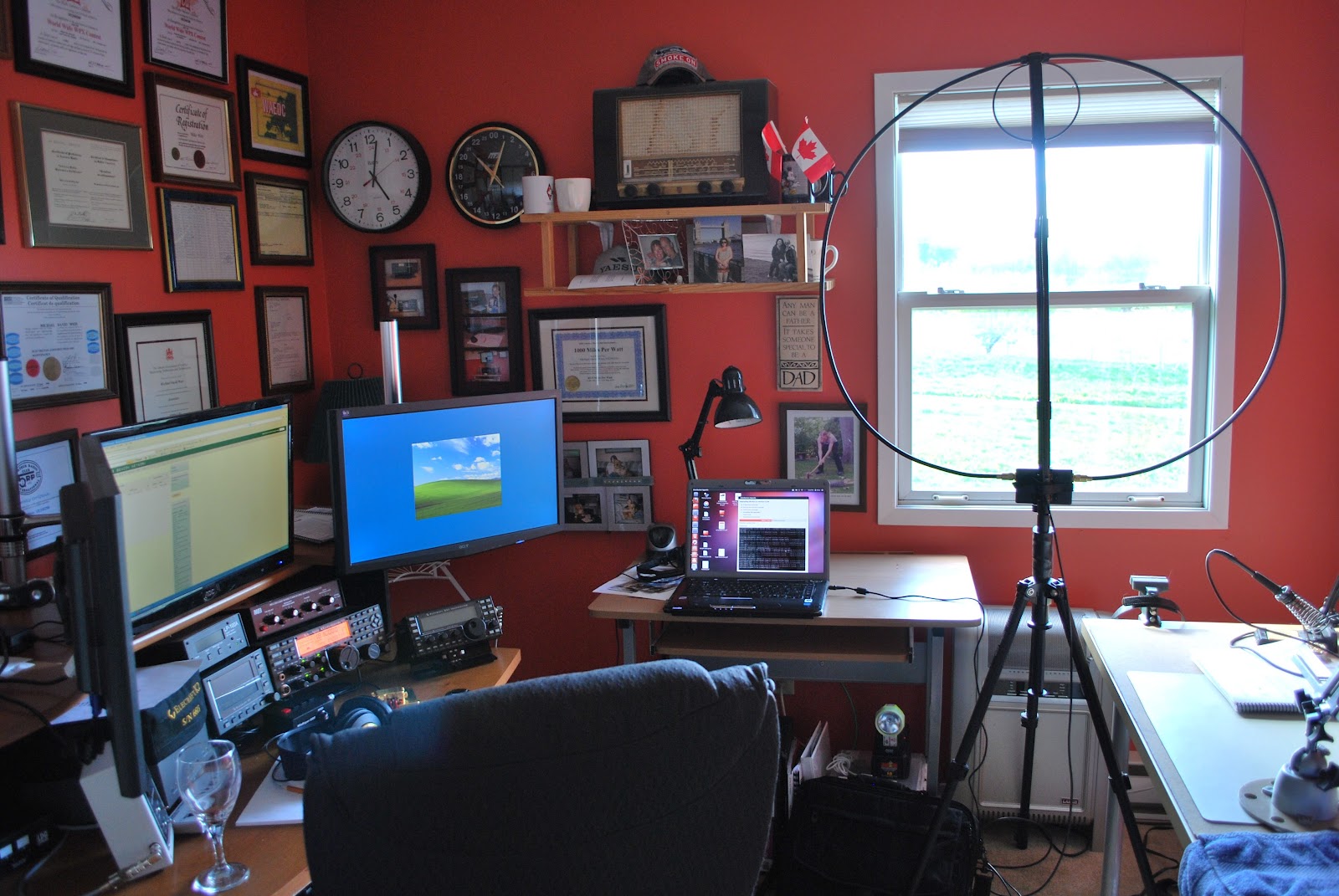 |
| Setup for test. (Laptop running Ubuntu update) |
A-5
K3
SFI 157
SN 173
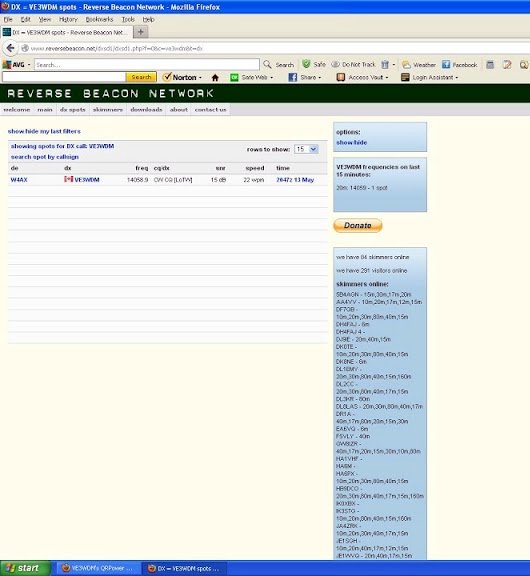
Below is the results of the test.....not so well it would seem the Alexloop netted zero and the dipole only one. So is seems for a more acurate comparison better conditions are needed.
A nice way to rest a sore back.
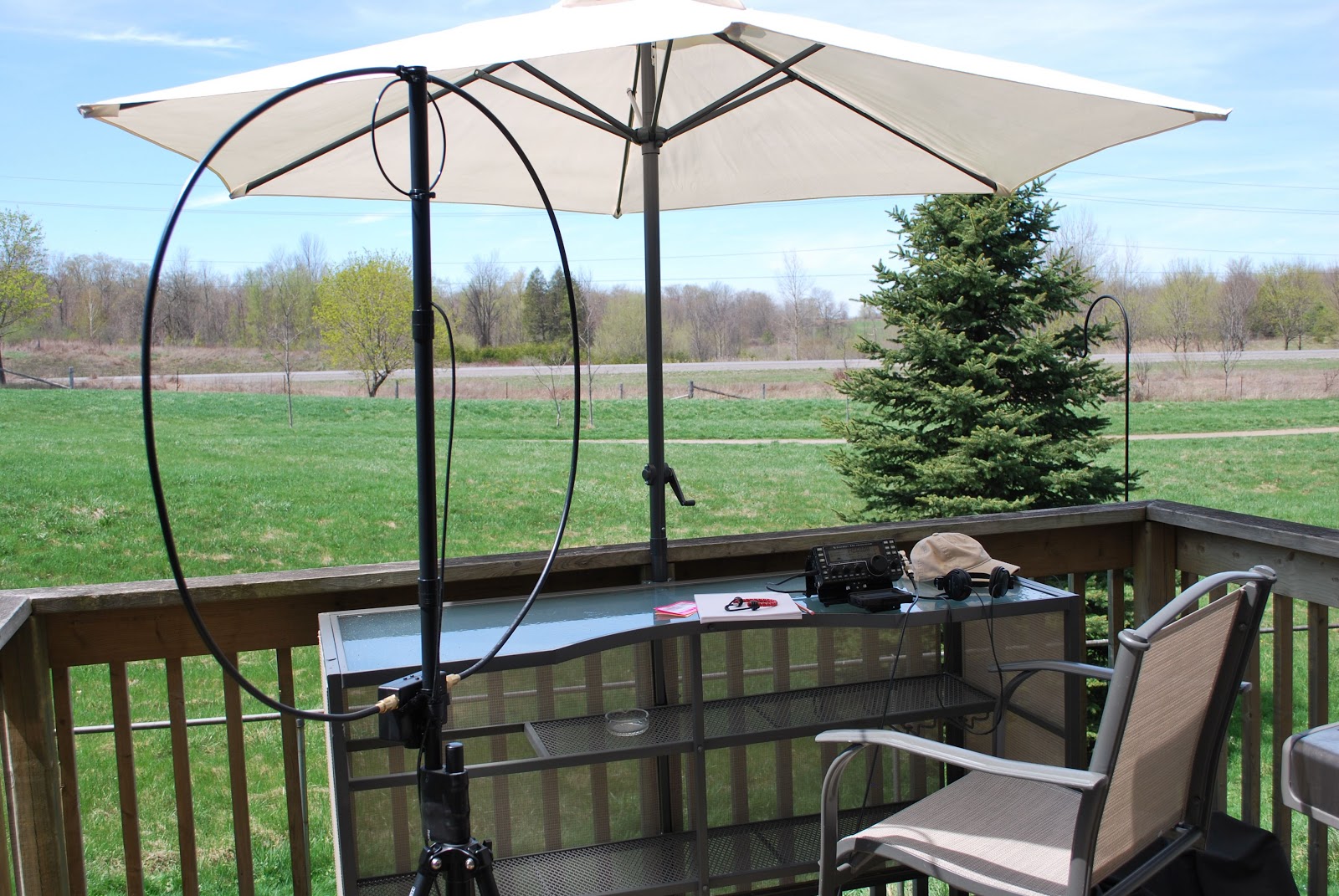 |
| Relaxing on the deck. |
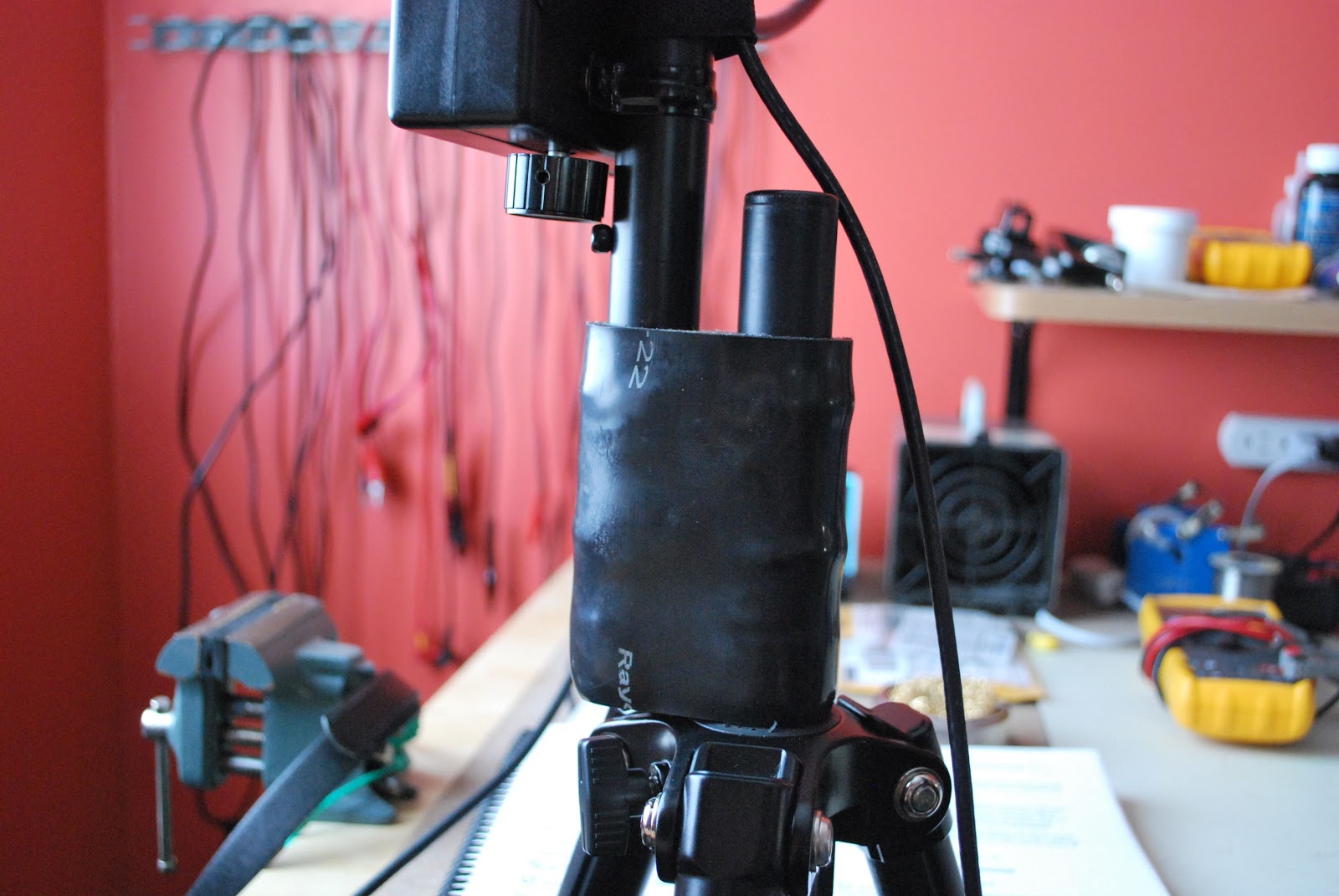 |
| New loop to tripod adapter |
LHS Episode #104: Propagation 101 with G0KYA
 We sometimes on this show attempt to bring you interesting interviews with people who are both computer literate and ham radio literate at the same time. In this case, we bring a scholar, physics buff, aerospace engineer and brilliant guy, Steve Nichols (G0KYA), to discuss the science of radio wave propagation. No need to turn the show off before it even begins. Steve makes understanding the Earth’s atmosphere, its magnetic field, and a ton of stuff about the sun simple and approachable. No mind-bending equations, no physics lectures, just some great information for anyone interested in learning how a radio signal gets from here to there. A bunch of follow-up information in the form of books and Web sites are provided as well, links to which will be in the show notes, for anyone who wants to further their education. Thank you as always to our loyal listeners. Make sure to tell a friend next time you’re out for a cold one. The more the merrier.
73 de The LHS Guys
Amazing Reverse Beacon Network
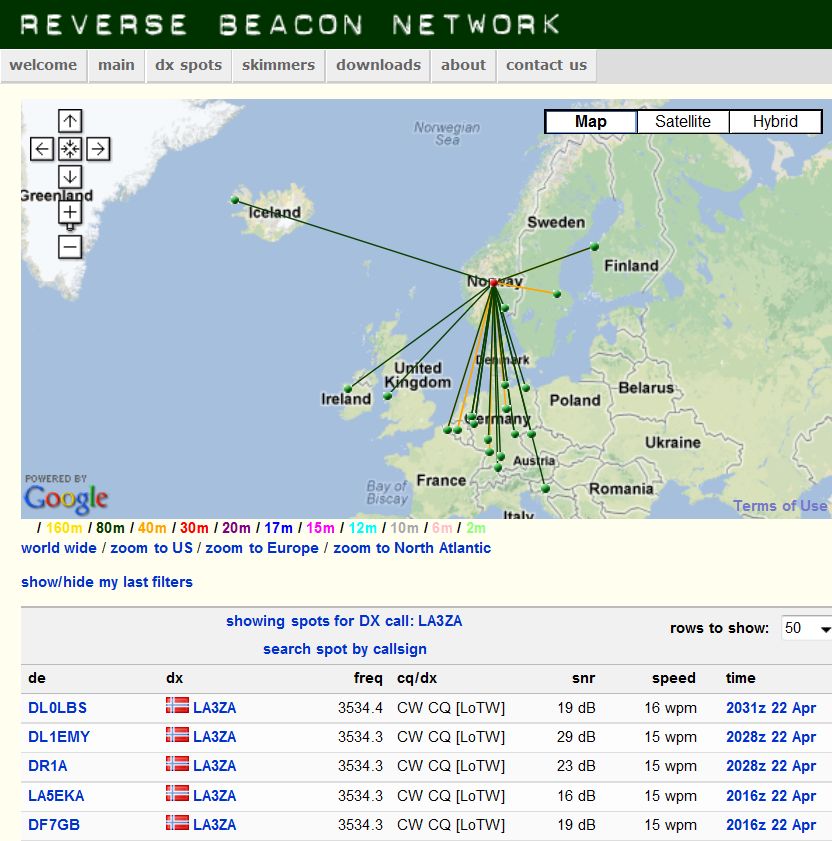
I haven’t called CQ for a long time on CW except in contests. Mostly I have just responded to DX calls with a super short “5nn TU” and that’s it. But this Saturday I heard a presentation at the Norwegian Ham Meeting by Roland, SM6EAT about a Swedish initiative to increase CW activity. It is called Scandinavian Open CW Activity (SOCWA) and it has at present 452 members from Scandinavia in a wide sense of the word. It really got me interested in improving my CW skills.
So now I have started to call CQ SAX and have had my first long CW QSOs for years with SM and OH.
It is also amazing to look at the reverse beacon network and watch your own CQ being reported almost in real time from various Software Defined Receivers with CW Skimmers. Below is the result of the two CQs I have sent these two last days.