Posts Tagged ‘CW’
 Bugs: My New Fascination
 January 13th, 2015 |
  Author: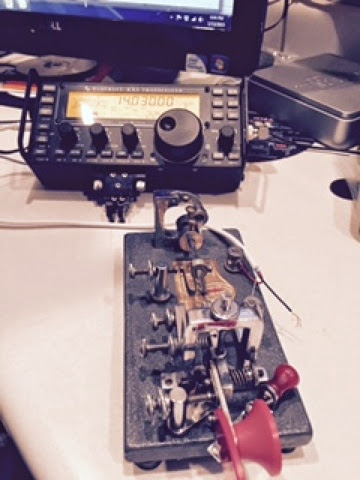
LIDS_CW
 Whilst twittering / tweeting / wasting time on twitter (delete as applicable) I came across a group @lids_cw . This is an informal twitter based group of CW and low impact data mode fans in the UK that seem to have their heads screwed on. The idea behind it is that the group encourages general radio chit chat then suckers you into having a go at CW.
Morse is not something I decided I wanted to do when I started out in radio, Hence the G7 callsign (For those unsure, G7’s in the 1990’s were VHF only because we couldn’t be bothered with CW. Hence the 19th Century rules at the time kept us away from HF as were weren’t proper or some such daftness). But over the years I’ve hankered after at least one QSO in CW. I’m only browsing, for research purposes, I wont be giving up VHF officer!
Sunday at 16:00hrs GMT see’s their net on 40m. I listened in and attempted to decode what was beeping through the speaker an got the occasional character. I cheated a bit and used HRD to decode some more of the text and fill in the gaps. It wasn’t until I let slip on Twitter I was listening in I heard my callsign being called by MW0IAN. Fortunately I had no way of returning the call (otherwise we might still be at it exchanging signal reports now!).
For those of us who struggle with CW but are too scared to admit it, there are others like you. For those of you who had the 5wpm RSGB cassette and never got further than ‘it’,’meant’,’mine’ and ‘nineteen’ but fancy spending hours listening to bleeps but secretly want to have a go. Watch out LIDS or Less Involved Data Society as it’s known will get you. Keyer at the ready for next Sunday. Snails will be faster.
Celebration of SKCC – K3Y Special Event
Special event, “K3Y,” the Straight Key Century Club’s annual January celebration, commemorates the Straight Key Century Club’s founding in 2006 following the American Radio Relay League’s “Straight Key Night” (SKN). A small group of participants wanted to extend the fun of SKN throughout the year. The Straight Key Century Club (SKCC) is the result.
For the first three years, the club’s founders used the special event callsigns of K1Y, K2A, and K3Y as the celebration’s special-event calls. But, someone cleverly noticed that a ‘3’ is nothing more than a backwards, curvaceous ‘E’. This “KEY” event has operated under the special event callsign of ‘K3Y’, ever since.
The on-air party is open to members and non-members alike. It runs from 0000 UTC Jan. 2 through 2359 UTC Jan. 31. It’s a great time to introduce others to the joys of hand-crafted Morse code using straight keys, bugs, and side swipers.
In this video, you can “sit in” with NW7US, the control operator of the regional activation of special event station, “K3Y/0”, during one of the many shifts during January (2015).
+ The SKCC website is at http://skccgroup.com
+ The K3Y special event page is http://www.skccgroup.com/k3y/index.php
+ The NW7US website is at http://NW7US.us
+ Some more CW/Morse code resources can be found at http://cw.hfradio.org
A New ‘VE’ on 630m!
 Interest in Canada's newest ham band, 630m, continues to slowly grow. Toby (VE7CNF) in Burnaby, BC, has made his first and second CW contacts on the new band!
 Both myself and John (VE7BDQ) had the pleasure of working Toby on 473.000 CW on Thursday afternoon. Here is Toby's description of his station at present:
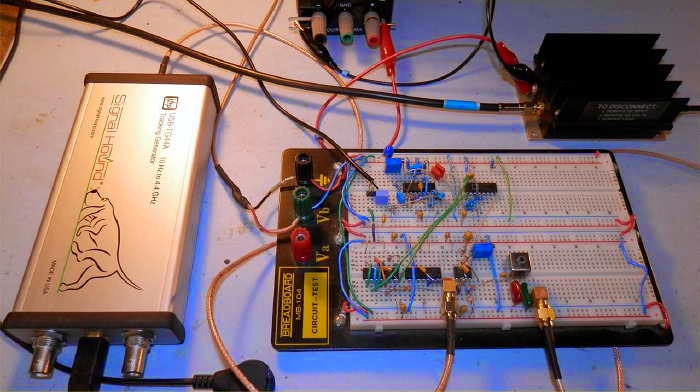
"I have put together a low-power 630m WSPR transmitter here. I have a USB-TG44A signal generator clocking a phasing-type SSB modulator with WSPR audio coming from a laptop. The modulator gives 45db suppression of the carrier and lower sideband. This drives a ZHL-32A 1-watt linear amplifier. I have a matching transformer and loading coil at the base of my 80-meter inverted-L antenna. Wire height is 10m.
 |
| Courtesy: VE7CNF |
 |
| Courtesy: VE7CNF |
Marketing With Morse Code
Code-is-not-dead prognosticators and hand-wringers will be happy to hear Asus is touting a new smartphone camera feature with Morse code. The smartphone feature has something to do with dual cameras and exceptional zoom capability but unfortunately appears to have no use of Morse code. But a tip of the hat to Asus marketing folks for using code!

1929 BK QSO Party Fun

 |
| Courtesy: http://www.spaceweatherlive.com |
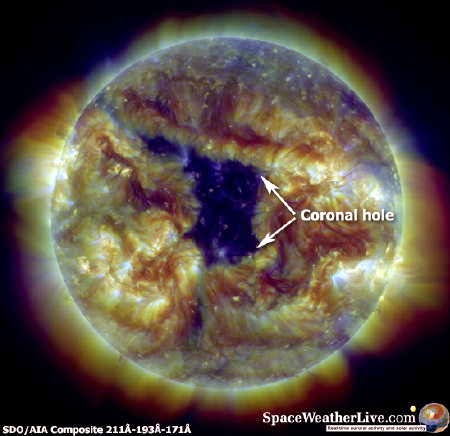
Not to disappoint, the usual BK winds came up, right on schedule as well, almost coincidental with the start of the Party. Thankfully, weekend number two saw no wind whatsoever....a rare event in December....but, from the sound of many other notes, I wasn't the only one having windy weather.
DE6 2317 40 N1BUG 568 449 TNT 29 10 PAUL ME
DE6 2322 40 WA1JAS 569 559 HART 29 8 MIKE ME
DE6 2347 40 W7LNG 567 578 TNT 29 6 BUD OR
DE6 2352 40 VE7BDQ 599 599 COLP 29 10 JOHN BC
DE7 0014 40 K7SF 578 579 TNT 29 10 STEVE OR
DE7 0105 40 NE1S 449 449 TNT 29 9 LARRY ME
DE7 0120 40 WB2AWQ 579 569 HART 29 10 HOWIE NV
DE7 0133 40 K4JYS 449 449 TNT 29 10 BILL NC
DE7 0145 40 WB8APR 559 449 MOPA 29 5 JOHN MI
DE12 2257 40 K0KP 579 559 HART 29 9 REX MN
DE6 0202 80 AB0CW 559 549 HART 29 5 MARK CO
DE6 0317 80 KK7UV 599 599 HART 28 9 STEVE MT
DE6 0329 80 KE0Z 559 559 HART 29 8 WILL SD
DE6 0356 80 N1BUG 449 559 TNT 29 10 PAUL ME
DE6 0403 80 KC9WYV 579 539 MOPA 29 9 JOE MN
DE6 0415 80 VE7BDQ 599 599 COLP 29 10 JOHN BC
DE6 0422 80 AA2YV 439 449 HART 29 10 BILL NY
DE6 0438 80 N8YE 559 569 TPTG 25 9 STEVE OH
DE6 0442 80 W7LNG 578 588 TNT 29 9 BUD OR
DE6 0524 80 K0KP 599 589 HART 29 9 REX MN
DE6 0530 80 W2ICE/0 579 339 COLP 29 10 SCOTT MN
DE6 0539 80 VE3AWA 578 339 TNT 29 10 LOU ON
DE6 0548 80 KI0DB 559 579 MOPA 29 10 MARK MN
DE6 1229 80 W0LGU 559 559 MOPA 29 9 TOM MN
DE6 1240 80 K0KCY 559 449 MOPA 29 10 TONY MN
DE12 0352 80 KB0ROB 569 569 MOPA 29 9 HAROLD MN
DE12 0427 80 W8KGI 559 448 MOPA 29 10 JIM NM
DE12 0440 80 W0VLZ 559 339 TNT 29 10 NIEL MN
DE12 0509 80 K4JYS 559 559 HART 29 15 BILL NC
DE12 0512 80 WB9WHG 569 449 MOPA 29 20 DAVE WI
DE12 0524 80 W0LS 599 579 HART 29 9 HARRY MN
DE12 0401 160 KK7UV 579 559 HART 28 10 STEVE MT
DE12 0539 160 VE7BDQ 599 599 COLP 29 10 JOHN BC
DE12 0542 160 W0LS 559 559 HART 29 9 HARRY
More information on '29 building may be found here in previous "'29-style blogs" and good project discussions always abound at the Yahoo "AWA Group" builder's site.
It's really not too early to start building for next year's BK!
Loop..Perseus..and CLE188
 |
| 10' x 20' LF Loop |
As is usually the case, conditions deteriorated rapidly as the CLE weekend approached. Conditions varied throughout North America as those listening from the south-eastern regions of the U.S. reported much better propagation than those further to the northwest. Friday night appeared to be the best of the lot but all three nights were very much less than stellar.
The three-night event produced a total of 39 NDBs, with a couple of surprises.
DD UTC kHz Call mi Location
----------------------------------------------------------
22 05:00 370 YBV 1169 Berens River Apt, MB, CAN
22 06:59 370 OUN 1611 UoOk Westheimer Apt, OK, USA
22 05:00 371 YK 211 Yakima, WA, USA
23 09:00 371 PUR 1629 Marshall, MO, USA
22 05:00 371 ITU 558 Great Falls, MT, USA
22 05:00 371 GW 1946 Kuujjuarapik, QC, CAN
22 05:00 372 ZPA 824 Prince Albert, SK, CAN
22 05:00 372 YCO 1340 Coppermine, NU, CAN
22 05:12 372 FPN 675 Petersburg, ALS
22 07:00 373 TF 1191 Pueblo Mem Apt, CO, USA
22 05:00 373 MF 444 Table Rock, OR, USA
22 05:00 374 LV 776 Livermore, CA, USA
22 05:00 374 EX 190 Kelowna, BC, CAN
23 09:00 374 EE 1319 Forada, MN, USA
22 05:00 374 BOD 942 Bowman, ND, USA
24 09:59 375 PSN 1854 Palestine, TX, USA
22 05:00 375 FS 896 Fort Simpson, NT, CAN
22 10:59 375 DW 1629 Owasso, OK, USA
22 07:00 375 CP 900 Casper, WY, USA
22 05:00 375 BD 803 Moose Jaw, SK, CAN
22 07:00 376 ZIN 3326 Matthew Town, BAH
22 07:00 376 YAG 1345 Fort Frances, ON, CAN
22 13:59 376 PVQ 1690 Deadhorse, ALS
22 06:59 377 EHA 1350 Elkhart, KS, USA
23 06:59 378 ZFA 1000 Faro Municipal Apt, YT, CAN
22 05:00 378 OT 381 North Bend, OR, USA
22 10:59 379 ZEG 526 Edmonton Intl, AB, CAN
22 05:00 379 YBE 945 Uranium City, SK, CAN
23 12:59 379 IWW 1360 Kenai, ALS
22 09:00 380 OEL 1297 Oakley, KS, USA
22 05:00 380 GC 899 Gillette, WY, USA
22 05:00 382 YPW 86 Powell River, BC, CAN
22 05:00 382 YE 686 Fort Nelson, BC, CAN
22 12:59 382 JNR 1731 Unalakleet, ALS
22 12:00 382 GRN 1522 Guerro Negro, MEX
22 05:00 382 AW 75 Marysville, WA, USA
22 06:59 383 PI 658 Pocatello, ID, USA
22 05:20 383 CNP 1146 Chappell, NE, USA
22 05:00 384 3F 792 Ile-a-la-crosse, SK, CAN
-----------------------------------------------------------------
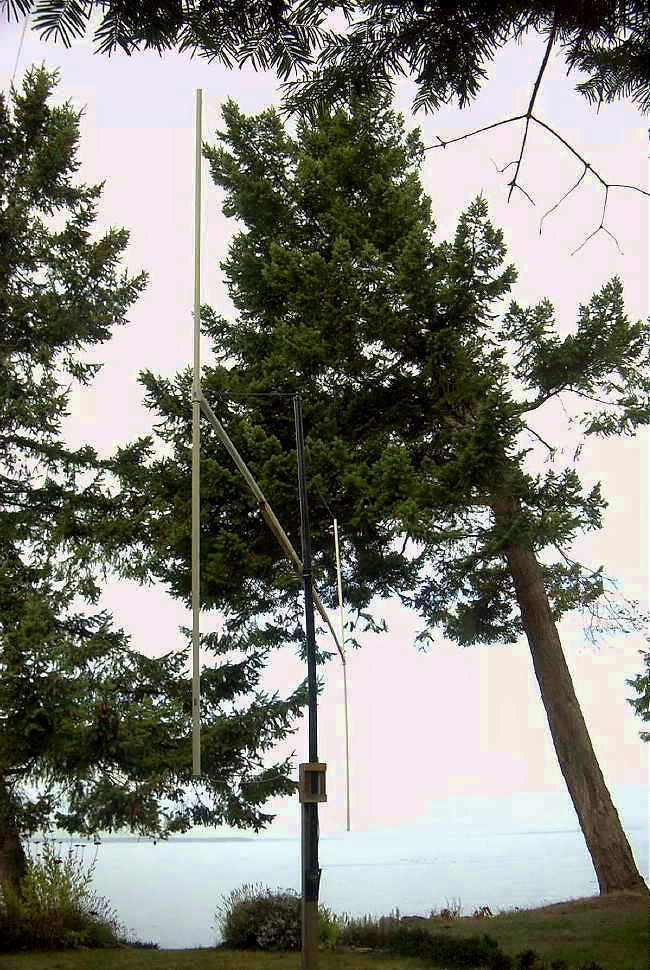
This particular frequency range (370-384.9kHz) is a tough one for me, since my local pest signal, 'AP' is on 378kHz, smack in the middle of the listening range. 'AP's antenna is just .4 miles (2100') from my antenna and its signal is about 60db over S9.... Very loud!
 |
| AP to me...Courtesy: https://www.google.ca/maps/ |
Using this 'deep null' position, I was (somewhat surprisingly) able to log another Canadian NDB (ZFA Mayo Airprt, Yukon Territory) on the same frequency as AP. The ident-tone modulation frequencies are separated by 10Hz (408Hz vs 418Hz) which was enough to allow the very narrow ~3Hz Perseus filtering, combined with two notch filters, to reveal the 'ZFA' identifier between the 'AP' identifier. Listen for the weak 'ZFA' ident after the loud keying artifacts of 'AP', when they are transmitting just a steady tone.
The other surprise was the logging of 'PVQ' in Deadhorse, Alaska, way up on the extreme northern slope oil fields.
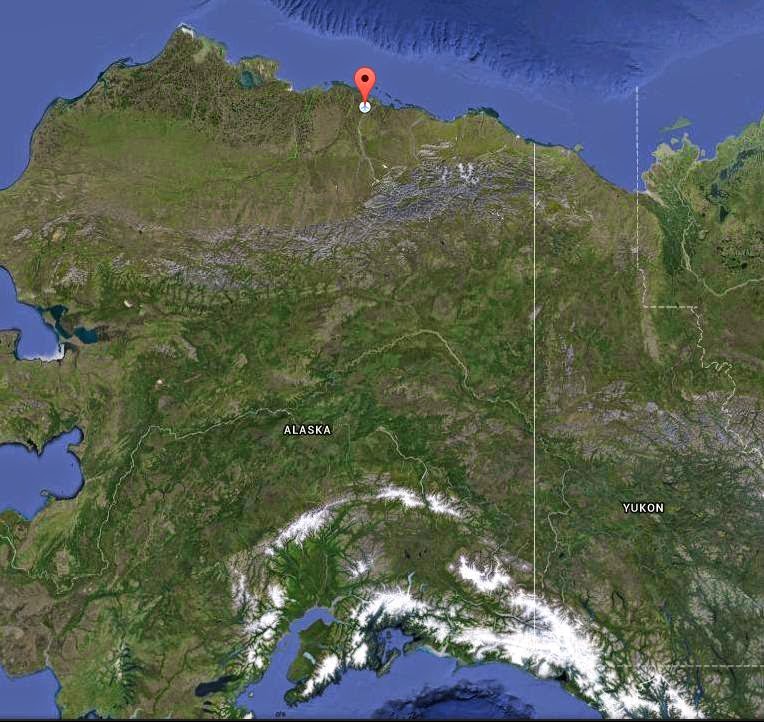 |
| Courtesy: https://www.google.ca/maps/ |
CLE organizer, Brian Keyte (G3SIA), reports 51 participants worldwide and over 2100 reception reports. All reports have been added to the RNA/REU beacon database.
As well, Brian will be publishing all results on the NDB Information page shortly.
All-in-all CLE188 was another enjoyable event....hopefully conditions will be better by this time next month and if you did not participate, maybe you will give it a try next time!













