Archive for the ‘ham radio’ Category
 Portable Goals and NPOTA!
 February 24th, 2016 |
  Author:
 I can’t believe it has been almost a year since I have posted here! I have lots of interests and tend to bounce around between them.
But for 2016 I want to be more consistently in ham radio. So I have set a goal…
There are about 45 weeks left in 2016, so my goal is to complete 45 portable activities this year and document them here on my blog!
Also, tomorrow, February 25th, 2016 I will be activating NPOTA TR07,TR11,TR14 (Oregon NHT + Santa Fe NHT + California NHT) from Lone Elm park in Olathe, KS.
I will be operating my KX3 5 watts CW (maybe SSB if time allows) into a vertical. 14.060+/- and 7.030 +/-. I plan to arrive about 19:00 UTC (1:00 pm local) and operate for a couple of hours.
If you hear me please spot me. This will be my first activation, and my CW is a bit rusty, so the sending speed will be slow! Be patient with me!
This park has historical significance because it was used as a major campground along these 3 trails. Originally it was about 80 acres, and so many trees were cut down by the campers it became known as “Lone Elm”.
That’s all for today, I will report back after the NPOTA activation tomorrow!
Portable Goals and NPOTA!
I can’t believe it has been almost a year since I have posted here! I have lots of interests and tend to bounce around between them.
But for 2016 I want to be more consistently in ham radio. So I have set a goal…
There are about 45 weeks left in 2016, so my goal is to complete 45 portable activities this year and document them here on my blog!
Also, tomorrow, February 25th, 2016 I will be activating NPOTA TR07,TR11,TR14 (Oregon NHT + Santa Fe NHT + California NHT) from Lone Elm park in Olathe, KS.
I will be operating my KX3 5 watts CW (maybe SSB if time allows) into a vertical. 14.060+/- and 7.030 +/-. I plan to arrive about 19:00 UTC (1:00 pm local) and operate for a couple of hours.
If you hear me please spot me. This will be my first activation, and my CW is a bit rusty, so the sending speed will be slow! Be patient with me!
This park has historical significance because it was used as a major campground along these 3 trails. Originally it was about 80 acres, and so many trees were cut down by the campers it became known as “Lone Elm”.
That’s all for today, I will report back after the NPOTA activation tomorrow!
January VHF Contest Plus SOTA
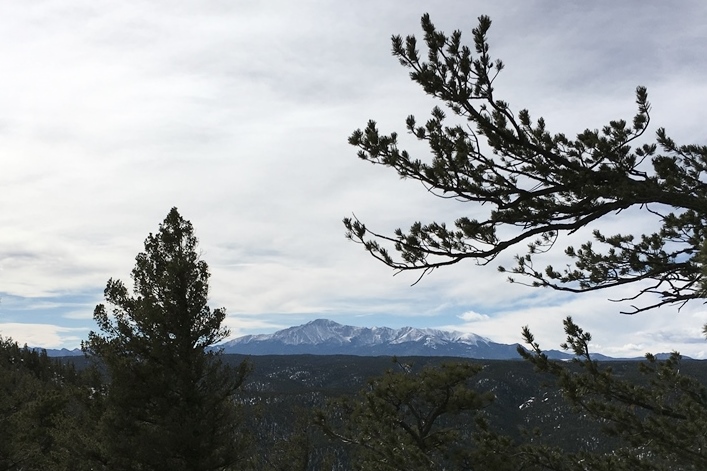
A view of Pikes Peak from Mt Herman.
It’s been a while since I’ve done a January VHF contest from a mountaintop so I decided to give it a try from Mount Herman this year. The ARRL recently changed the contest rules to allow the use of the national 2m fm calling frequency for contests. See Coming Soon: 146.52 MHz in ARRL VHF Contests. I wanted to see how this change would play out in practice when doing a combination VHF Contest plus SOTA activation. In previous attempts, I had to vector the SOTA activity to another 2m fm frequency for it to be a legal contact for the contest. The SOTA + Contest operation is attractive because it has all the elements of a fun SOTA hike coupled with the increased activity of a VHF contest. The contest brings out the weak-signal folks with very capable stations, increasing the probability of making some good DX contacts.
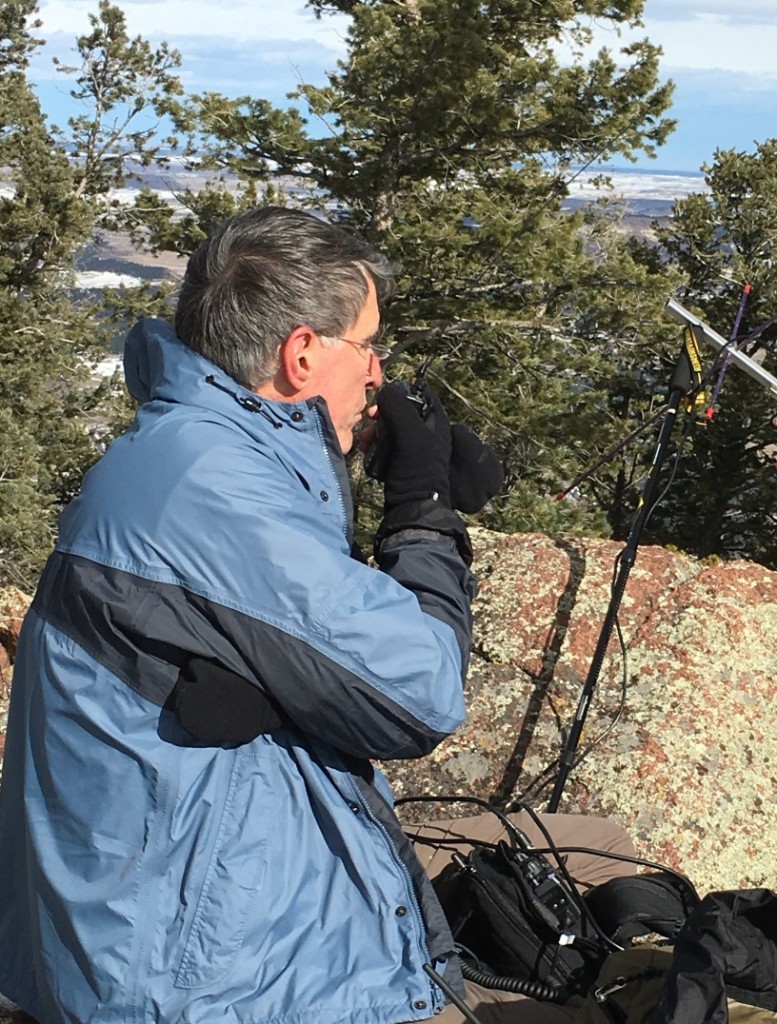
Bob K0NR using an HT to make contacts on 446.0 MHz FM.
Joyce KØJJW and I hit the trail at 10:30 AM local with the goal of being at the summit around noon (1900 UTC) for the start of the ARRL contest. The trail was icy, but manageable with the gripping devices on our boots. The weather was chilly but not bad for January. At the summit, I configured my FT-60 handheld radio for 146.52 MHz using a 2m half-wave vertical. My first call netted a QSO with Tim, KAØMWA in Castle Rock. I worked a few other stations on 2m fm and then set up the 2m ssb station (FT-817 plus Arrow II antenna). On 144.200 MHz SSB, I contacted two Wyoming stations in grid DN71, about 140 miles away. I also gave a call on 446.0 MHz fm and worked W3DHJ and KE0HBW mobile.
Freq    Mode    UTC     Call     Grid
146.52    FM    1900    KA0MWA   DM79
146.52    FM    1902    N0AXK    DM79
146.52    FM    1905    N0LP     DM79
146.52    FM    1905    K0GPA    DM79
146.52    FM    1905    WG0AT    DM79
146.52    FM    1920    N0ISB    DM78
146.52    FM    1923    N0LEA    DN70
144.2    SSB    1932    WY7KY    DN71
144.2    SSB    1935    K0ALE    DM79
144.2    SSB    1938    AB0YM/R  DM79
144.2    SSB    1939    KG0RP    DN70
144.2    SSB    1940    WA7KYM   DN71
144.2    SSB    1942    KC4YLV   DM79
446.0    FM     1948    W3DHJ    DM78
144.2    SSB    1949    WE7L     DM79
144.2    SSB    1951    N0SP     DM79
446.0    FM     2000    KE0HBW   DM79
The wind was strong at the summit and kept blowing everything around, making it difficult to operate the radio and manage the antennas. After an hour of operating, I decided to QRT and head on down. I know I missed a bunch of potential contacts, especially having not gotten on 70 cm and 6m ssb.
Except for the short operating time, the operation played out as expected. I was able to work the SOTA folks and 2m fm enthusiasts on 146.52 MHz. I made it a point to not hog the calling frequency, as there are quite a few folks that monitor there. Switching over to 2m ssb, I worked the contest crowd, typically with more capable vhf stations. My score is a whopping 114 points, in the single-op portable category.
Thanks to everyone that got on the air to play radio that day!
73, Bob KØNR
The post January VHF Contest Plus SOTA appeared first on The KØNR Radio Site.
2016 SOTA Activity Days
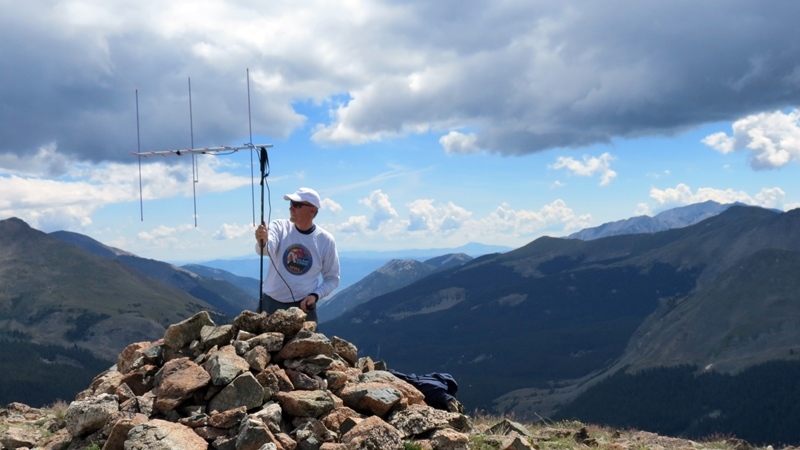 Summits On The Air (SOTA) operating events are a great way to promote activity and create opportunities for summit-to-summit radio contacts. Here’s the 2016 calendar, an update of the 2015 list suggested by Guy N7UN. Many of these dates are aligned with VHF events but there will be HF activity as well.
- Jan 30-Feb 1: ARRL Jan VHF Contest + NA SOTA Winter Activity Weekend
- Apr 16-17: North America SOTA Spring Activity Weekend
- Jun 11-13: ARRL June VHF Contest + NA SOTA Summer Activity Weekend
- Jul 16-17: CQ WW VHF Contest + optional for SOTA
- Aug 6-7: Colorado 14er Event + NA SOTA Rocky Mtn Rendezvous + W7 SOTA Activity Weekend + ARRL UHF Contest
- Sept 10-12: ARRL Sept VHF Contest + NA SOTA Fall Activity Weekend
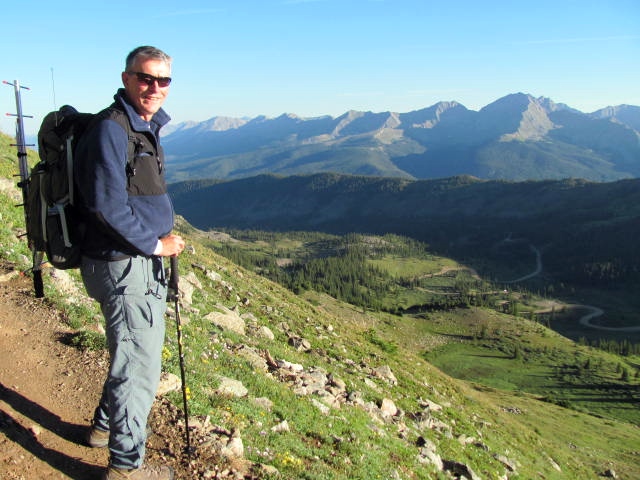 Of course, any day is a good day for SOTA activity. The August 6-7 weekend looks to be the alignment of the planets with four events happening around that weekend. Early August usually offers excellent conditions for hiking the highest peaks in Colorado, so come on out and play.
For more info on VHF SOTA, see How To Do a VHF SOTA Activation.
Get off the couch, put on your hiking boots, grab your backpack, grab your radio but most important: get on the air!
73, Bob K0NR
The post 2016 SOTA Activity Days appeared first on The KØNR Radio Site.
I Need You in My Log! SKCC K3Y/0 Special Event (January 2016)
I need your help!
Come meet me on the shortwave (HF) ham bands for the Morse code (CW mode) special event, the Straight Key Century Club (SKCC) celebration, with special callsign, K3Y. During the shifts (time slots) listed below, I am the control operator as K3Y/0.
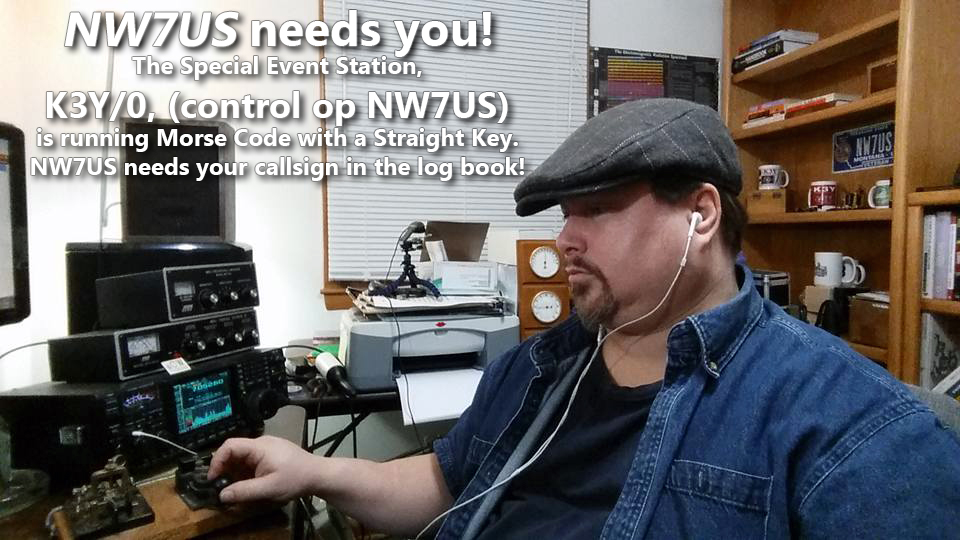 I need you to make a contact with me.
This special event takes place every year during January. We celebrate the legacy of Morse code, and promote Morse code and manual creation of the code by any non-electronic (digital) device and method. Which means that we love mechanical bugs, straight keys, two ends of a wire, or any other manual device, if Morse code is generated. The Straight Key Century Club is a free membership group. The link to their website is below.
I need you to make a contact with me, during my scheduled times, listed below.
NOTE: YOU DO NOT NEED TO BE A MEMBER OF THE (free) SKCC GROUP. To get into my logbook, you meet me on my frequency, and use Morse code to communicate with me. It is painless. If you must, you can use computer-generated Morse code. Or, you can tap it out on any Morse code signalling device, like a bug, a set of paddles, or a straight key; whatever you choose to make Morse code emanate from your HF transmitter.
HOWEVER: For those of you who want to get fully immersed in the spirit of this event, you are invited to use a straight key. And, as a bonus, you may and can join the SKCC group for FREE. Then, you would have your own SKCC number. That’d be cool; we SKCC members use that number in our exchange during our QSO information exchange. But, you don’t need that. Since it is free, why not?
What is needed is simply you, getting on the shortwave band, finding me, hearing me, and responding to me with Morse code. In other words, we need to have a QSO using Morse code. I am not a fast operator, so no problem if you are not very fast. I’ll meet your speed.
In any case, here are some of the times I will be on the air as K3Y/0… please dust off your straight key, bug, paddles, whatever, and make a QSO with me. Thanks!
My current schedule:
UTC Start/End (remember, these are NOT your local times, but are the UTC (GMT) times!)
(revised times, as of edit date)
 00:00 - 02:59 19-Jan-16
 00:00 - 02:59 20-Jan-16
 00:00 - 02:59 21-Jan-16
 00:00 - 02:59 22-Jan-16
 00:00 - 05:59 23-Jan-16
 14:00 - 18:59 23-Jan-16
 20:00 - 21:59 23-Jan-16
 00:00 - 02:59 24-Jan-16
 14:00 - 18:59 24-Jan-16
 21:00 - 21:59 24-Jan-16
 00:00 - 02:59 25-Jan-16
 00:00 - 02:59 26-Jan-16
 00:00 - 02:59 27-Jan-16
 00:00 - 02:59 28-Jan-16
 00:00 - 02:59 29-Jan-16
 00:00 - 05:59 30-Jan-16
 13:00 - 18:59 30-Jan-16
 20:00 - 21:59 30-Jan-16
 00:00 - 03:59 31-Jan-16
 13:00 - 23:59 31-Jan-16
Now, what frequency will I be on?
To find out what frequency I am on:
Visit http://g.nw7us.us/sched4SKCC and look on the right side for my callsign, NW7US. I usually post my frequency of operation right after my call sign.
Typically, evening operation is 30m, then 40m, and then possibly 80m.
If you are trying to alert me to your presence, you may message me on my personal Facebook profile, under my “Tomas David Hood” profile messages, but I may not see that right away.
Here is the detail covering the K3Y operation and the SKCC group: http://skccgroup.com/k3y
73 de NW7US
dit dit
This was last year:
https://www.youtube.com/watch?v=UfRvITFpTb4
..
..
ISO-TIP 7700 Soldering Iron Review
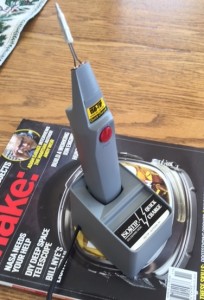
Model 7700 soldering iron
I recently had the opportunity to try out a new ISO-TIP 7700 soldering iron. This is a rechargeable soldering iron without a lot of extra features but it is plenty capable for small soldering tasks. Here’s a few specs from the ISO-TIP web site:
– Fully recharges in 3.5 to 4.0 hours
– Partially charged battery to full capacity in one to two hours
– Up to 125 soldering joints per charge during continuous use
– Withstands high-rate charging without damage
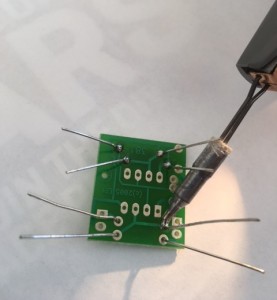
Soldering iron in action
Here’s a short video of the circuit blinking away, proving that I can solder together a simple circuit: Video of circuit blinking Yes, the circuit did work the first time.
The post ISO-TIP 7700 Soldering Iron Review appeared first on The KØNR Radio Site.
The Most Radio-Active Mountain in Colorado
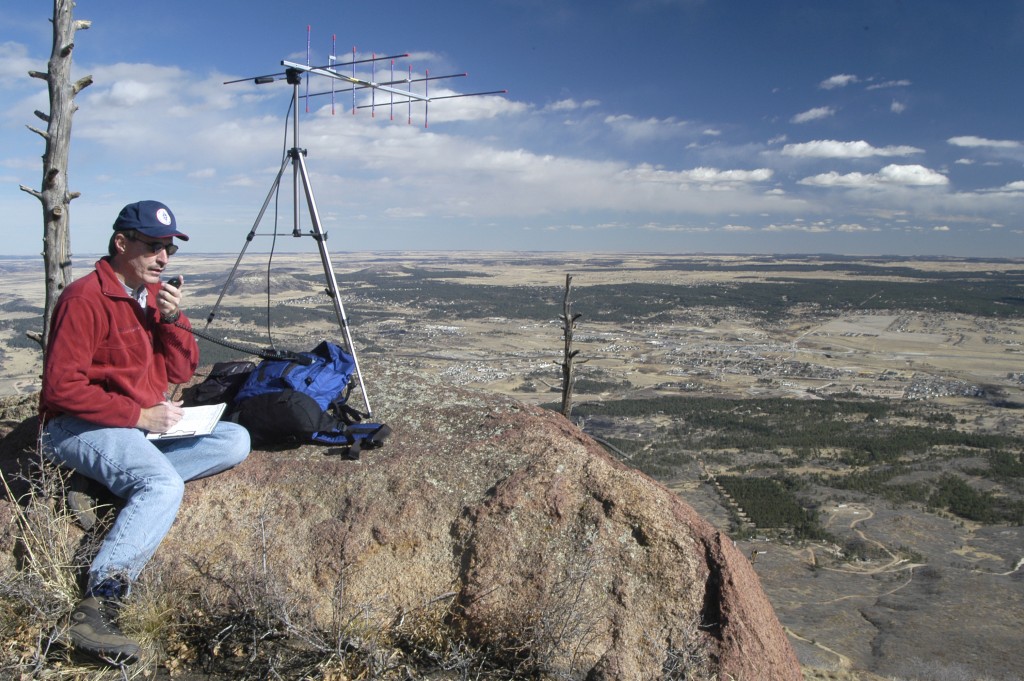
K0NR Operating VHF on Mt Herman (Photo: Ken Wyatt WA6TTY)
I’ve often said that Mount Herman (W0C/FR-063) is the most (ham) radio active mountain in Colorado. Many of us have operated from that summit for VHF contests, QRP events and Summits On The Air (SOTA). Of course, I didn’t have any data to back that claim…until now. A review of the cumulative SOTA activations in Colorado through Jan 1, 2016 shows these four summits as the most-activated SOTA peaks.
| Summit | SOTA Designator | Number of Activations |
| Mount Herman | W0C/FR-063 | 95 |
| Pikes Peak | W0C/FR-004 | 53 |
| Mount Evans | W0C/FR-003 | 33 |
| Squaw Mountain | W0C/PR-082 | 31 |
All of these summits are relatively close to the large population centers in the state. Also, they not that difficult to get to and some of them have roads that go to the top. Pikes and Evans are both 14ers but can be accessed via 2WD vehicles.
But what makes Mount Herman so special? It does not have a road to the summit — you definitely have to hike it, a little bit more than a mile one way with elevation gain of ~1000 feet. What makes the difference for Herman is that it is in the backyard of the well-known radio ham, goat hiker and SOTA enthusiast, Steve WGØAT. Steve has personally activated the summit more than 30 times AND he drags along mentors encourages other radio hams to join him. Frank KØJQZ did 22 activations, some with Steve and many on his own. (Frank just achieved SOTA Mountain Goat status, activating enough summits to earn 1000 SOTA points.) Fortunately for me, Mt Herman is about 4 miles as the GPS flies from my house, so I have worked that summit 31 times (usually Steve or Frank and always on 2 meters). I’ve also activated Mt Herman for SOTA three times, as described here: A Soggy Mount Herman SOTA Activation, Mt Herman: SOTA plus VHF Contest and Winter Assault on Mt Herman.
Here’s one of Steve’s fun videos that captures the first SOTA activation of Mt Herman, with his goat crew Peanut and Rooster (SK).
Frank and Steve, thanks for all of the Q’s from Mt Herman over the past years! See you on the air and on the trail.
73, Bob KØNR
The post The Most Radio-Active Mountain in Colorado appeared first on The KØNR Radio Site.













