Archive for the ‘dx’ Category
 Congratulations to Logbook of the World
 December 12th, 2014 |
  Author:
Congratulations to the ARRL Logbook of the World (LOTW) which just reached 100 million confirmed contacts. This is the same as an impressive 200 million QSL cards out of about 630 million uploaded contacts on LOTW.
LOTW was established way back in 2003. This was only 2 years after I got my license. Since I have never enjoyed much to fill in QSL cards I embraced LOTW very quickly. I have to say though that I will of course respond with a paper QSL for those who ask for one.
But LOTW has been my primary means of confirming contacts for a decade. My DXCC was confirmed with LOTW.

Now at the same time that LOTW is celebrating 100 millions confirmations, I am celebrating 8 bands with 100 or more contacts all confirmed via Logbook of the World. This is on all bands from 3.5 to 28 MHz. This has been my goal for many years. The last confirmation came from the TC0A contest station in Turkey on 80 m after last month’s CQ World Wide CW contest.
I consider myself lucky to have reached 100 confirmations even on the elusive 12 m band which we all know will shut down soon not reopen again until the next solar maximum in about 11 years time.
But as the saying goes “The journey is the reward“, so what to do next as a radio amateur?
Tromelin, Andamans and SOTA
So what's happened since I last blogged.
Tromelin Expedition FT4TA: The expedition team did a great job, making nearly all bands available with good signals, at least in South Texas. I enjoyed both working the expedition, to fill some band slots, but also the event. The daily news, conditions, the complaining, etc.... I worked them on 10m, 15m, 20m, 30m and 80m. All new bands except 20m. My practice, as I have written about here, is to try to work the expeditions, during the last days, QRP. I was not able to do that on this expedition. The pile-ups never really slacked off, which brings me to my point.
Now that many expeditions use Club Log and other online tools to post how many QSO's each caller has logged, the information is leading to much debate. I am on a particular reflector where an individual copied and posted the band scorecard for multiple individuals and berated them for making multiple band/mode contacts when so many needed Tromelin for an all time new one.
My thoughts on this one: As long as an individual doesn't dupe band/mode slots, working the expedition is fair game. If a DXer builds a station that is capable and puts in the time operating to work Tromelin on 20 band slots, why not. Telling him not to is like telling a guy with a Ferrari that he can only drive the speed limit. If, for whatever reason, a dipole is all you have, you know that working rare DX is a tough proposition. Why should the capable stations be made to wait on those not so capable. In my early days of DXing, not working an expedition motivated me to improve my station, improve my operating skills, improve my understanding of propagation, etc... Failure is often life's greatest teacher.
DX-peditions can control this somewhat by limiting the number of bands they operate on, but those guys paid their money, why shouldn't they have all the fun they can.
Andamans VU4CB and VU4KV: This team also did a nice job activating a pretty rare place, that from my part of the world, is difficult to work. I was able to get QSO's on a few bands and was impressed with the operation. I was not able to work these guys on QRP either. VU4VB operated from a rare IOTA which I also chased. So, please all around on this one.
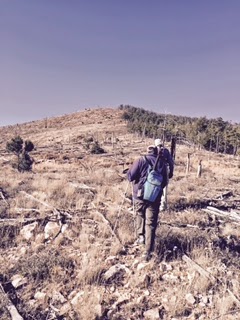
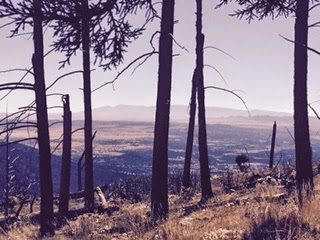
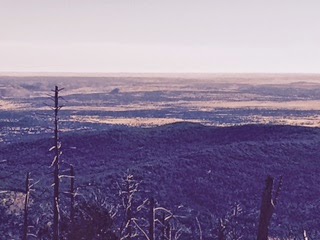
SOTA Activations: I did find time to get in four SOTA activations near my Santa Fe, NM QTH during November. I activated three peaks, along with Fred KT5X and John K1JD, southeast of Albuquerque, NM.
Some common sense, please!
Take for instance last night. I was trying to work Steve WX2S on 40 Meters who lives about 18 miles from me. Ground wave was strong enough that he was about a 229/339. The advantage was that not only could I hear him, but I could also hear the stations that were calling him. I ended up not working him, but even so, it was a unique opportunity to observe.
Steve was working split from the beginning and he was handling the pile up deftly. But I was left shaking my head, because so many times - all through the hunt, people continued throwing out their calls while Steve was engaging another station! I sat there, kind of dumbfounded. There was Steve, sending out "559 NJ STEVE 5W" to whomever, and all the while there were stations sending out their calls, over and over and over, without so much as taking a breath!
So here's the deal......if you can't hear the quarry well enough to realize he answered someone other than yourself - then why the heck do you continue to throw your call sign out there in the first place? Obviously, if by some miracle, he actually came back to you - would you be able to hear that well enough to realize it and complete the exchange? Something tells me ........no.
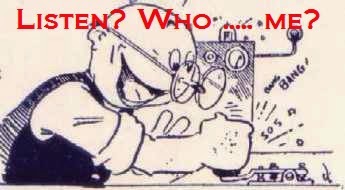
Listening. That seems to be a dirty word in the minds of a lot of folks.
Look, I know we all make mistakes and I've made my fair share, too. No one is perfect, and I can understand forgetting to turn the "split" function on or some other such thing. But deliberately sending your call over and over and over in the vain hope of somehow scatter-gunning the target is really just inexcusable, and rude and inconsiderate of your fellow Hams.
As always, this is just my humble opinion. Your mileage may vary.
72 de Larry W2LJ
QRP - When you care to send the very least!
Largest Sunspot Region (so far) in Sunspot Cycle 24
Look at this huge sunspot, the largest yet of Sunspot Cycle 24! It is about the same diameter as Jupiter! Notice how tiny Earth is, in comparison. Sunspots are regions on the Sun’s photosphere, formed by the “convection” of solar plasma deep inside the Sun, causing the twisting and shifting of magnetic fields. They look like spots on the photosphere because they are cooler than their surrounding solar material, giving them their dark, blemish-like appearance.

Close-up view of NOAA Active sunspot Region AR 12192 (short: 2192)
The sunspot is the largest since November 1990, and is larger than a monster sunspot that spawned a series of major solar flares over Halloween in 2003. AR 2192 was one of the biggest observed sunspots of all time, ranking 33rd largest of 32,908 active regions since 1874, according to NASA scientists C. Alex Young and Dean Pesnell.
Interestingly, this sunspot never released any major coronal mass ejection (CME), because the magnetic fields were too strong to let any significant plasma escape! However, this sunspot group unleashed a fair number of moderate to strong x-ray flares (see one of them in this video at < http://g.nw7us.us/1s7L0vF >). All told, AR 2192 popped off 26 M-class flares, and six X-class flares! Of course, during the last sunspot cycle, Cycle 23, there were many active sunspot regions unleashing flare after flare within hours of each other. That’s typical during the active phase of most sunspot cycles. This cycle, however, is one of the weakest on record, so this large sunspot with its many flares is exciting.

A Close-up of AR 2192
Each sunspot region gets a consecutive number assigned to it by the National Oceanic and Atmospheric Administration (NOAA). This sunspot region is NOAA AR (active region) Nr. 12192 (we often drop the first digit when speaking of a sunspot, so in this case, this region was often referred to as AR 2192).

One of the many x-ray flares originating from Active sunspot Region AR 2192 – this one seen in Extreme Ultraviolet at 131 Angstroms.
This sunspot region increased the ionization of the ionosphere, creating excellent conditions on all of the high frequency spectrum (shortwave, or HF). Even ten meters was alive with world-wide propagation. And, the best news is that this provided an exciting playing field for the CQ WW SSB contest in late October, 2014.
This sunspot region has now rotated away, but may return on about 24 days.
Credit: NASA/SDO/HMI
Check out: http://SunSpotWatch.com
Get the space weather and radio propagation self-study course: http://NW7US.us/swc
If this is what Autumn brings
I had two very nice DX QSOs during lunch today. These were not "UR 599 TU 73" QSOs, nor were they exactly ragchews. But they were a nice change of pace from the typical "wham, bam, thank you Ma'am" kind of micro-QSOs that seem to be so prevalent these days.
The first was with Vic SM7ZDI who answered my CQ on 18.086 MHz. Vic was using a Yaesu FT-1000D at 100 Watts to a Windom. He had a good 569 signal and gave me the same. Vic told me that it was about 8C (46F) in Sweden. I was very grateful for the 65F (18C) that we had today, when I had heard that.
It’s the little things that make life worthwhile
1) Like that yesterday was my daughter Cara's 13th birthday - she's officially a teenager now!
3) That while I was eating my chicken corn chowder in my Jeep, I managed to work DL4ISX in Germany (with some difficulty due to QSB) and HF37SONDA in Poland (who was super loud).
4) That I came home to a packet of QSL cards from the Bureau, including:
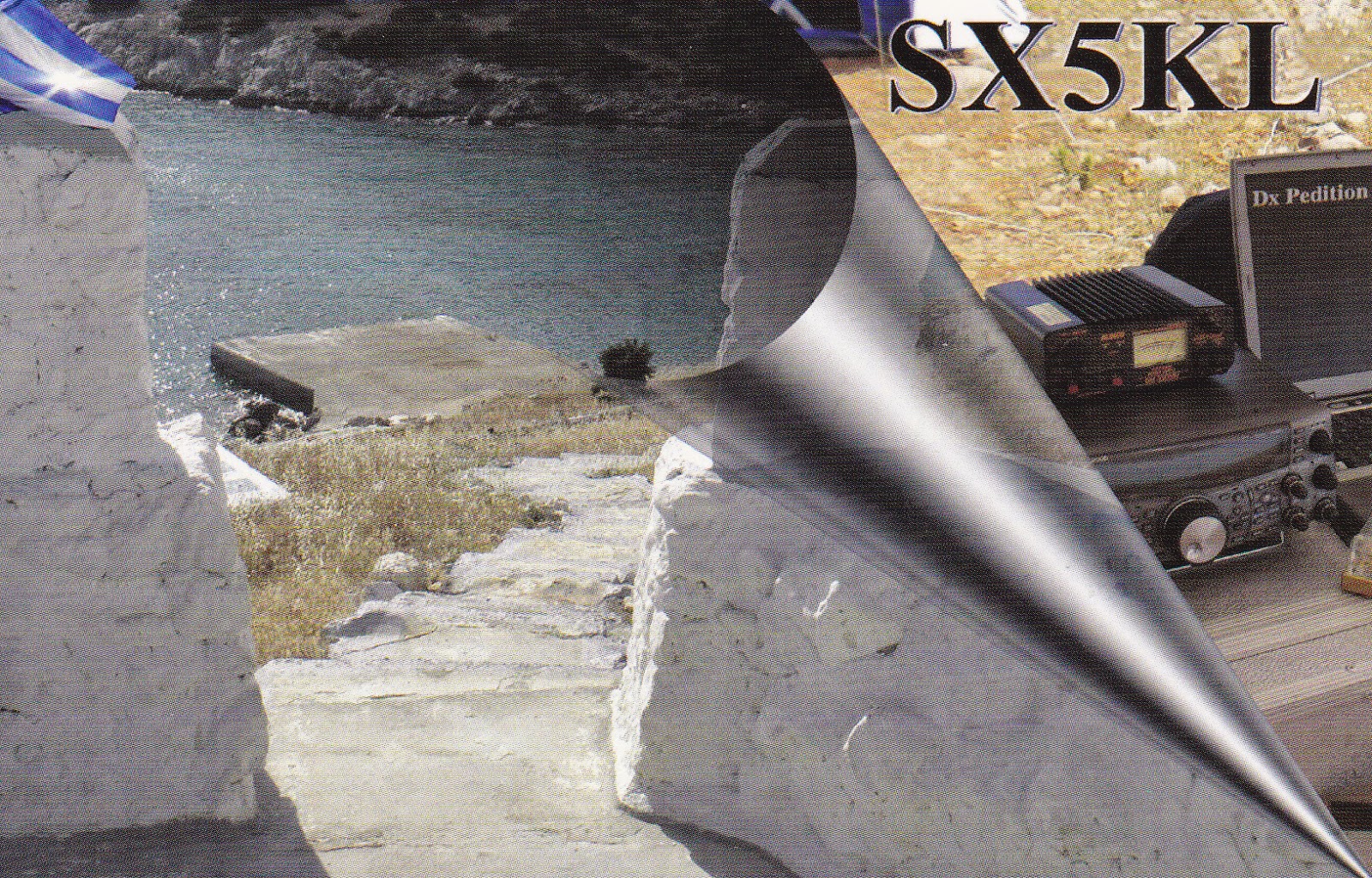

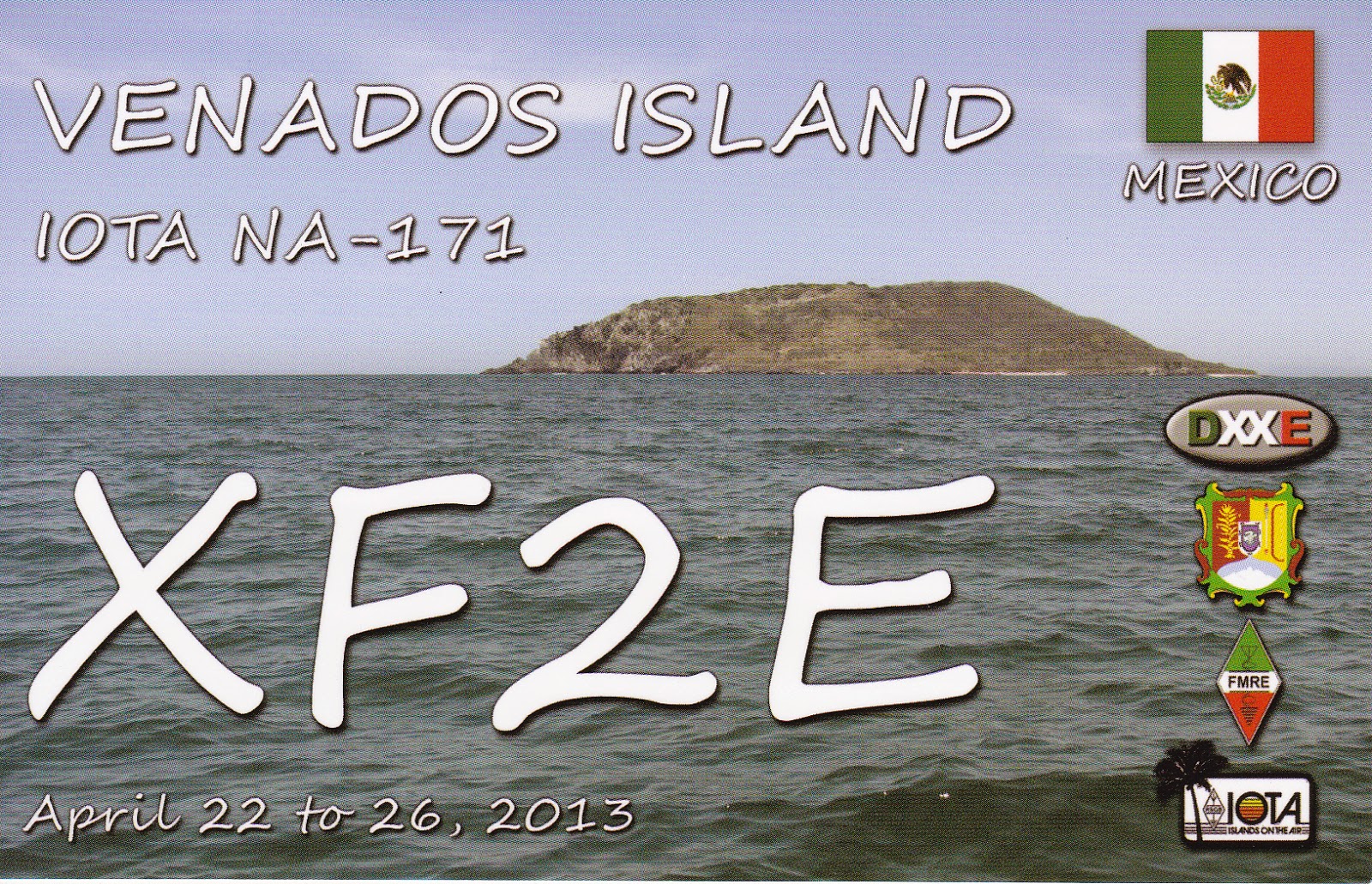
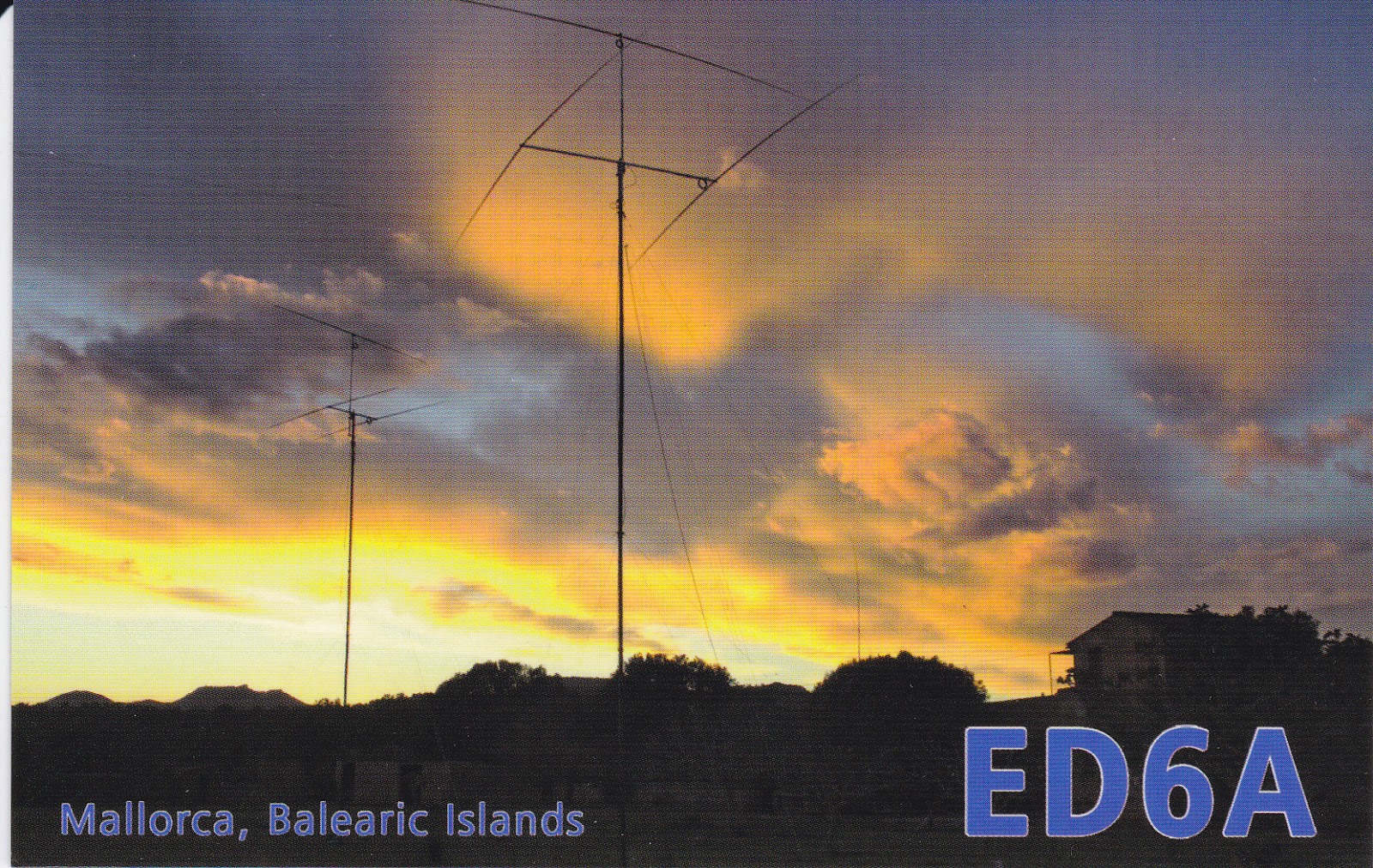
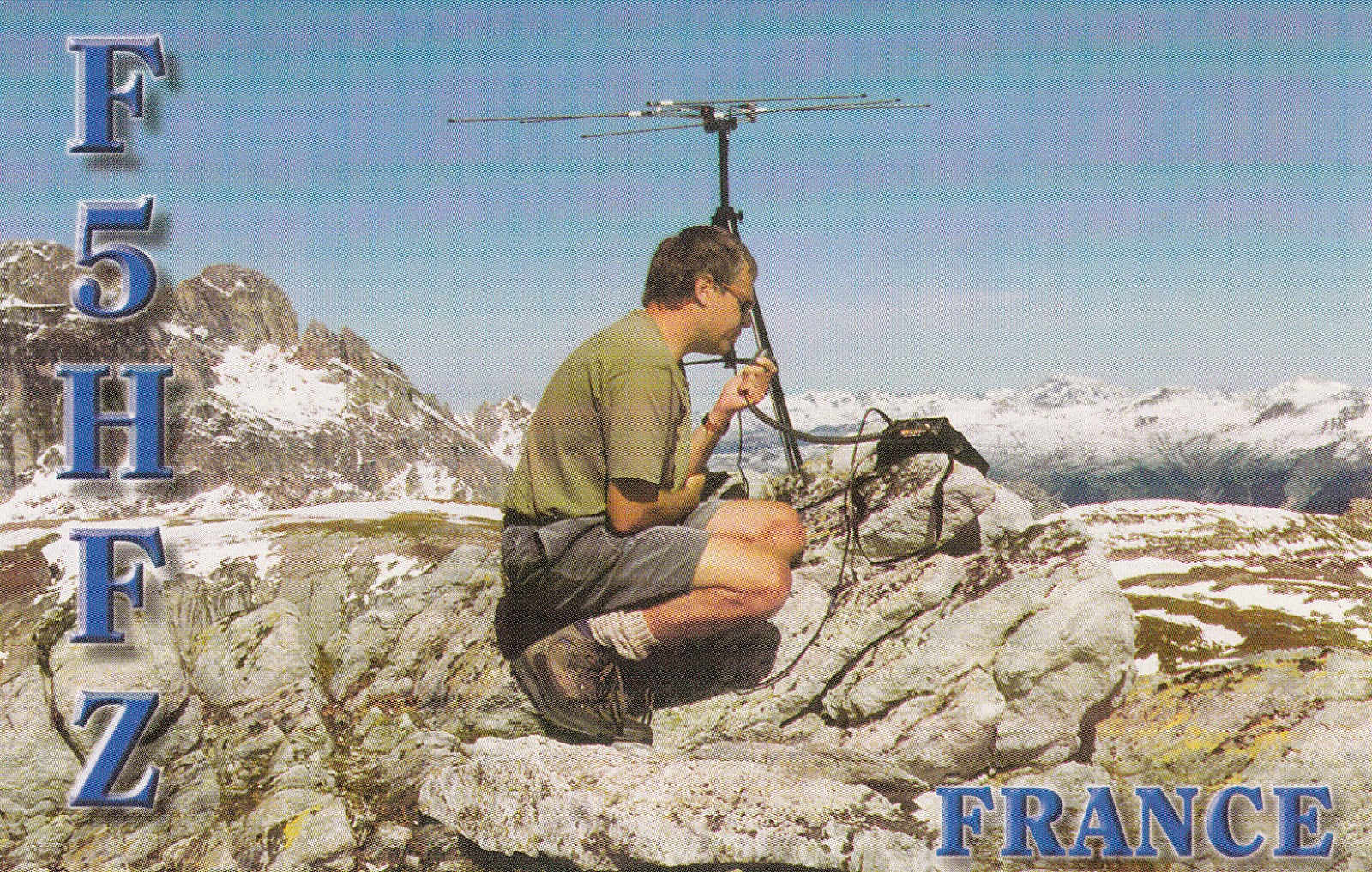
Yeah, it's the little things in life that are the absolute best!
72 de Larry W2LJ
QRP - When you care to send the very least!
HV0A
Holy pileup, Batman!
There was a H U G E pileup just above 18.077 MHz. Some listening revealed that it was indeed a "holy pileup" as the quarry of the hunt was HV0A - Vatican City. And he was loud - very loud! In 36 years of Ham Radio, this was about the second or third time that I have ever heard the Vatican on the air. I have never worked them before.

But today, with them being that loud (599+), I felt I stood a chance. In case you're wondering, wonder no more. My QRP sensibilities took a backseat and I pumped up the KXPA100 to its full 100 Watt setting. How many times have I heard the Vatican? Again, only once or twice before - it's rare for them to be on the air, for me to be home at the same time, and for propagation to be so favorable. I wasn't about to let some false sense of QRP Pride get in the way of getting a rare and new country in the log.
The operator was smooth and was handling the pileup quickly and efficiently. Operating split, he was running a standard racetrack pattern. He was listening slightly higher up after each QSO until he reached a certain frequency and then began listening down unilt he reached a frequency about 1 kHz above where he was transmitting. The he began listening up again, starting the whole cycle over again. Almost exacty like trying to work any of the ARRL Centennial stations - once I figured out his pattern and approximately how much higher he moved after each QSO, I made my plan to "get in his way". After about 6 or 7 attempts, I got in the log. If I ever hear the Vatican this loud again, then next time will be a QRP attempt, this time I'm just fat, dumb and happy.
According to the CW Ops e-mail reflector, the operator was Robert S53R, CW Op #492. Whomever, he was, he was good!
This is one QSL card that will be framed and hung on the shack wall, once I receive it.
Still stoked!
72 de Larry W2LJ
QRP - When you care to send the very least!














