Posts Tagged ‘QRP’
 The Joy of Homebrew
 May 18th, 2011 |
  Author: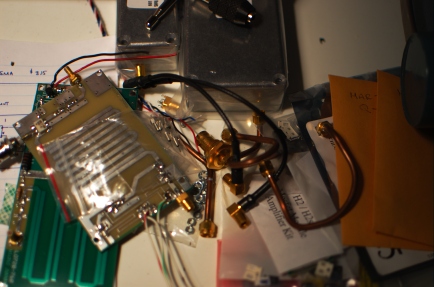
This is about building electronics, not making beer, at home; although, I am sure there are parallels. Three things brought me to writing this: 1. an eHam forum thread I responded to a few weeks ago; 2. the June 2011 issue of IEEE Microwave magazine (has articles by K2UYH, N2UO, and KK7B, perhaps others? thanks to W3KL via the PVRC reflector for bringing it to my attention since I let my IEEE/MTT membership lapse); and 3. a few minutes spent last night resuming a partially-completed Softrock kit gifted to me by a friend who decided to buy a FLEX-3000 instead.
Every once in a while, a thread appears on an amateur radio forum that goes a little bit like this, “Hi, I’m a new ham and I don’t have a lot of money to spend so I want to build an HF SSB station from scratch” or something similar. Somehow, somewhere, somebody has given the impression that it is less expensive to build your own amateur radio equipment than to buy it. That’s true in some circumstances, but certainly rarely for anything that is mature, mass-produced, and readily-available on the second-hand market. After all, there is nothing novel about a 100-watt superheterodyne HF SSB transceiver these days. The principal uncounted cost is the “engineering cost” associated with getting your first few projects working and keeping them working.
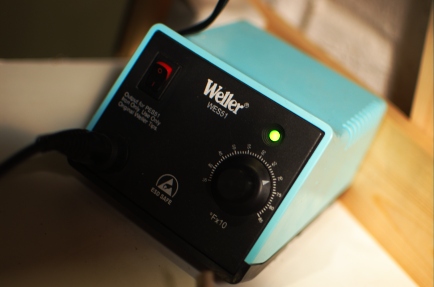
One of the first construction projects I undertook as a new ham was to build a Ramsey Electronics HR-20 (NE602-based) 20-meter receiver—$20 at a hamfest. It did actually work eventually—but this was a simple kit with maybe two dozen parts. Next, I built a ONER transmitter kit from now defunct 624 Kits. I think that was another $20. I never made any QSOs with that combination because I was always afraid of blowing out the receiver with the transmitter. The first thing that I built that I actually managed to make a QSO with was a Small Wonder Labs SW-40, which I still have. That set me back $55 and it did not work immediately. Suddenly, that’s over $100 by the time you include the money I spent on a soldering iron and solder. That’s one-third to half-way to a “real” used HF transceiver and I had two bands at 1 watt on CW only. Furthermore—these are all kits—they leverage economies of scale in purchasing parts from various vendors and they have instructions to help you along. And, I’d like to think that I was a relatively representative example of a recently-minted ham who had more ambition than money or skills…
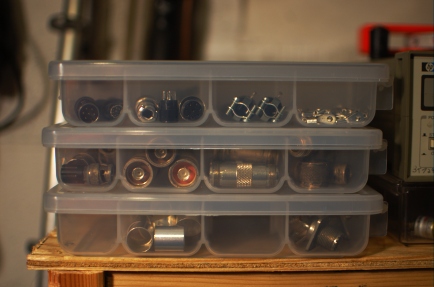
As I soldered down 1206-size (easy ones) SMT capacitors last night, I was thinking of times that I rushed through a homebrew or kit project just to get it on the air. In those instances the process was often, as I have belabored above, about saving money, not about the act of creating something. Last night was about creating, not saving, and that is the joy of homebrew.
QRP in the Park – Lakeland, Florida
QRP In the Park–Lakeland is your chance to show the rest of us how you do it!

Lots of ways to do QRP!
For the past several months we have considered traveling to nearby communities in Central Florida to help QRP operators connect with one another. We’ve gotten a good response from hams in Lakeland and Port Orange areas, and we hear of active groups in the Melbourne and Daytona Beach areas. Lakeland has an advocate, Ren KG4BAS who contacted us about getting together and a possible Central Florida QRP Group in Lakeland. WAHOO!
We’re excited to see the interest and look forward to our first meet up Saturday 14 May, 2011 at Lake Parker Park in Lakeland at 0900. Here’s directions from Ren:
I-4 West to exit 32.
Make left onto 98S and go .4 miles to Griffin Rd.
Make left and go .7miles to the end of Griffin Rd.
Make right onto Lakeland Hills Blvd and go .3 miles to Granada.
Make left onto Granada and go .2 miles to Gate 2 entrance of Lake Parker on left.
Hope you can join us. Bring something to drink and snack on, your QRP gear, operate, show n tell, get ideas for your portable ops and enjoy the outdoors.
Questions? Contact Ren or Kelly K4UPG. See ya in the park!
72,
Kelly K4UPG, Jim K4AHO, Ren KG4BAS and the Central FL QRP Group!
Why Do We Do It?
Another QRP To The Field is in the books. Some may wonder why we do it…why spend the time and energy to take our rigs outdoors and operate? Guess if you have never done it, you will never know! The weather made things tough for many parts of the country, but it was sure sweet to live in Florida for this one. Sunny and a warm 87F with a bit of breeze down by the lake made my day a very special one.

K4UPG QRP TTF Lake Fredrica 2011
The bands were fair to poor, but who cared? I was enjoying my hobby, making a few contacts, giving out points to the more serious contesters and spending time in the outdoors. It is a bunch of fun to make contacts with 2 watts and change, use a straight key and launch an antenna up about 35-40 feet in the pine trees.
Between QSO’s the ospreys provided some entertainment as they swooped down into the lake to snag a fish for their dinner while 4 guys on jet skis raced around our little lake. Not a bad way to spend a Saturday afternoon. That’s why I do it! How about you?
Stealth operation
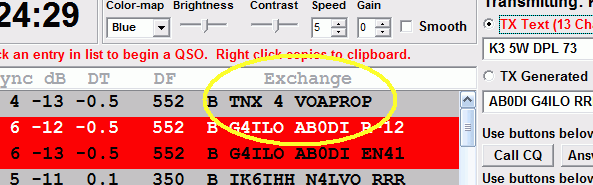
One of the problems with operating in the evening is that on most HF bands even a few watts of RF is enough to turn on the neighbours’ security lights. So there is an extra incentive to work QRP. This evening I tried JT65A at 2W on 30m, then moved to 20m with 5W. This map shows where my QRP signals were received.
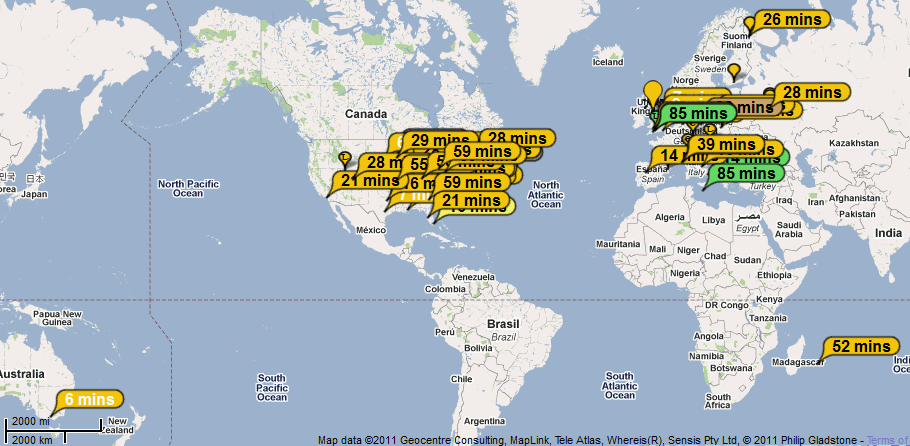
The antenna on 20m was the multiband attic dipole. Stations worked included K3AXR (FM28), KF4NX (EM83), AB0DI (EN41), VA3WLD (FN03) and KD2A (FN13). By the way, whoever said JT65A is not a chat mode!

Ham Radio Needs a Super Hero!
What if we had a super hero for ham radio? Many hams are sci-fi fans and love movies and TV shows like Star Trek, Star Wars, Superman and all those other great gadget filled plots. Who hasn’t grown up dreaming of flying to the rescue of the world?
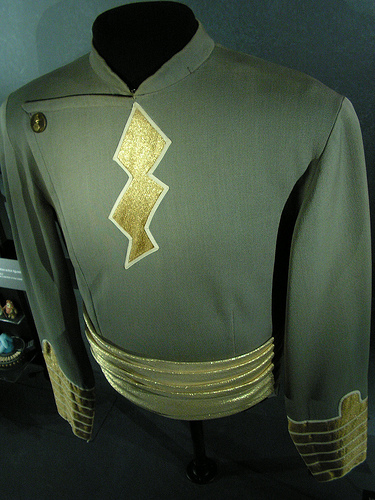
Wanted: Super Hero (tks to Wiki Commons)
If we were to design our own super hero, what would be the unique abilities and powers that he or she would have? Imagine the cw speed that a super hero could handle while building a surface mount kit using heat vision or x-rays. Hmmmm…. Antenna man? Sparks? Capt. Hertz? Contester Supremo? Commander QRP? Elmer? What would we call this super hero?
It’s your chance to sound off… let’s hear your thoughts. Leave a comment and dream on…
First 12m contact in a long time

Grand Cayman (photo by NASA)
On Wednesday I was working from home and took a little time on the K3 during a break. On 15m I heard a strong signal from ZF2UL who was making North American contacts one after the other. Bob, ZF2UL, then said they were going on to the 12m band and gave the frequency they were QSYing to. I followed and continued listening. After a short run of QSOs there was a brief hiatus in the replies to “QRZ?”, at which point I called with my 10W on SSB. I soon obtained a reply and a 55 report and my first contact with Grand Cayman was logged.
Good to see the higher frequency HF bands are opening up more regularly. It has been a long time since I made a contact on 12m.


Is technology good for ham radio?
Several ham radio blogs have linked to the Wired article Why Ham Radio Endures in a World of Tweets. “What is it about a simple microphone, a transmitter-receiver and the seductive freedom of the open radio spectrum that’s turned a low-tech anachronism into an enduring and deeply engaging global hobby?” the author asks. He goes on to describe the thrill of establishing a direct, person to person long distance contact and exchanging QSL cards, which he contrasts with “a world of taken-for-granted torrents of e-mails, instant messages and Skype video-chats.” It’s a point of view that QRP enthusiasts and many others will identify with.
In the comments to the article many have been keen to say that ham radio is not low tech, citing “VoIP Radio” and digital techniques as examples. They may be true, but I’m afraid the commenters miss the point. The more high-tech ham radio becomes, the less magic there is. Developments like D-Star are about as far from the concept of a simple transceiver and the freedom of the open radio spectrum as it is possible to get. It isn’t simple, it isn’t free (since it depends on a network controlled by someone else) and it isn’t open. Which is why it is anathema to many of us.
There is a danger that the pursuit of technology could turn ham radio into a poor copy of existing communications networks. Ham radio has endured because it has held on to its traditions involving relatively simple technology that most hams can understand and even build for themselves. If we ever lose sight of that the hobby is as good as dead.














