Posts Tagged ‘amateurradio.com’
 NPOTA – Brrrrrrrrr!
 January 19th, 2016 |
  Author:
 Of course, W2LJ picks one of the coldest, windiest days of the Winter season (so far) to do an NPOTA activation. Of course! But it was a blast (of cold air) nonetheless - even if I still haven't warmed up some hours later.
We got a light dusting of snow yesterday, which was a prelude to today. It was sunny and clear, but the winds were blustery and our high temperature for the day was reached last night at Midnight. Ever since then, the temperatures have been dropping. As I type this, it's currently 16F (-9C) outside. While I activated NPOTA, it was 24F (-4C).
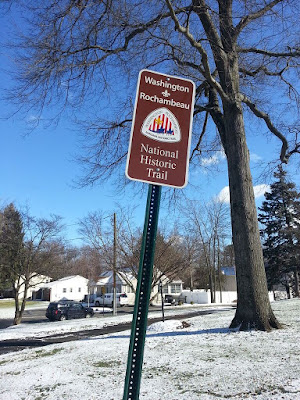
I headed out at 11:40 AM to the Washington-Rochambeau National Historical Trail TR23, which we know as Old Raritan Road in Scotch Plains, NJ. I wanted to set up at the historic Frazee House, but that part of Old Raritan Road is currently blocked off for repaving. I settled for operating at the entrance to the Ashbrook Country Club golf course in steady. It's right on the trail, as you can see from the photo above. At the entrance to the golf course is the remnants of a cannon that was used in the Battle of Short Hills in June 1777, as seen in the photo below.
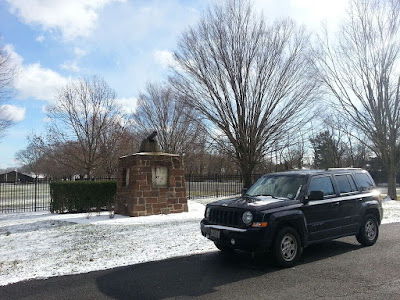
Set up was easy, I've done it so many times at lunchtime at work that I could do it in my sleep. The cold made things a tad more difficult, though; but I was ready to get on the air at Noon (1700 UTC), just as I had planned.
I started out on 20 Meters, using the Buddistick. It really helps to bring a cell phone along on these kind of outings. Having a smart phone enabled me to go onto the DX Summit Website and self spot. Within a few seconds of sending the spot, I was busy handling QSOs. There was never a really deep pileup, but there weren't many lulls either. When a lull hit, I used the opportunity to either change bands, or turn on the car to warm it up a bit. As an experienced QRPer, and being used to working weak signals, you get into the mindset to avoid as much background noise as possible. While I was operating, the engine was off. I would rather be a bit cold than miss another QRPer because of engine noise.
After 20 Meters, I operated on 17 Meters for a while. I had wanted to use 18.086 MHz, but I could tell that was pileup territory for one of the DXpeditions. So I "QRL"ed on 18.072 MHz, and not hearing any answer, I camped out there for a while.
When the Jeep interior cooled down as to start becoming uncomfortable (I'm ALL about comfort!), I took the opportunity to warm the interior up, and to switch from the Buddistick to the 40 Meter Hamstick. I get a better match with the Hamstick, only 1.3:1, which is lower that the 1.8:1 that I get with the Buddistick. I still have to work on finding the ideal combination of arms and whip length for 40 Meters on the Buddistick. 40 Meters was as productive as 20 Meters. Most of the QSOs were made on those two bands, although 17 Meters was not a slouch by any means.
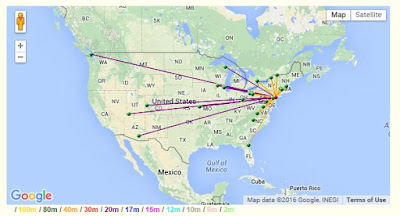
I called it a day at 3:00 PM (2000 UTC) just as I had planned. In the end, I made 88 QSOs, which is actually way better that any Bumblebee or Skeeter outing that I have had, and is not bad for 5 Watts to less than full sized antennas. My best DX was California, Arizona, Puerto Rico and two stations from Belgium. I worked a few of you readers that I know from here, and I thank you heartily for those Qs. I also worked my best friend and Ham Radio mentor, Bob W3BBO. I worked QRP notables Steve WG0AT, Guy N7UN, fellow QRP Fox hunter Chris KQ2RP, and I also worked Kay Craigie N3KN, outgoing President of the ARRL.
But the best QSO of the day was when I worked Dave KD2FSI, who I logged for at Jockey Hollow on Saturday. This was perhaps Dave's second or third CW QSO, maybe? It was a blast to be there and to hear his fist on the air!
All the QSOs have been uploaded to LoTW. I can't wait to activate another NPOTA entity. The bug has really bit now. As the seasons change, and the weather gets warmer, the strategy will change from antennas mounted on the Jeep, to perhaps wires tossed in the trees. The best is definitely yet to come! Thank you Sean KX9X and the ARRL for sponsoring this great program!
72 de Larry W2LJ
QRP - When you care to send the very least!
We got a light dusting of snow yesterday, which was a prelude to today. It was sunny and clear, but the winds were blustery and our high temperature for the day was reached last night at Midnight. Ever since then, the temperatures have been dropping. As I type this, it's currently 16F (-9C) outside. While I activated NPOTA, it was 24F (-4C).
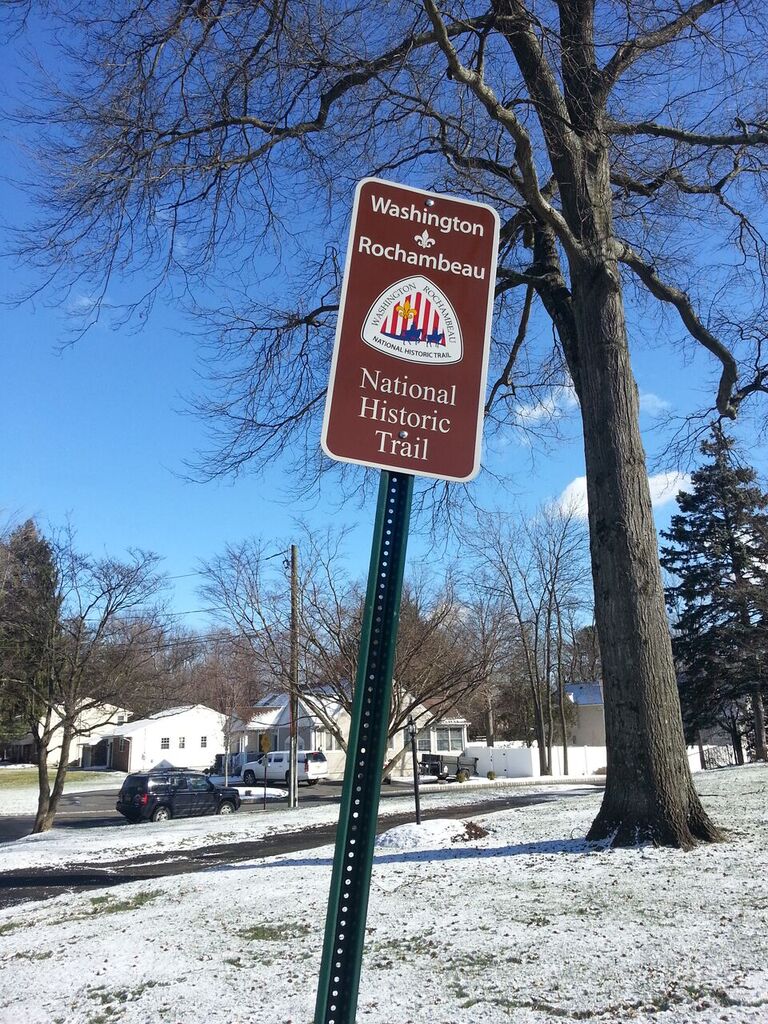
I headed out at 11:40 AM to the Washington-Rochambeau National Historical Trail TR23, which we know as Old Raritan Road in Scotch Plains, NJ. I wanted to set up at the historic Frazee House, but that part of Old Raritan Road is currently blocked off for repaving. I settled for operating at the entrance to the Ashbrook Country Club golf course in steady. It's right on the trail, as you can see from the photo above. At the entrance to the golf course is the remnants of a cannon that was used in the Battle of Short Hills in June 1777, as seen in the photo below.
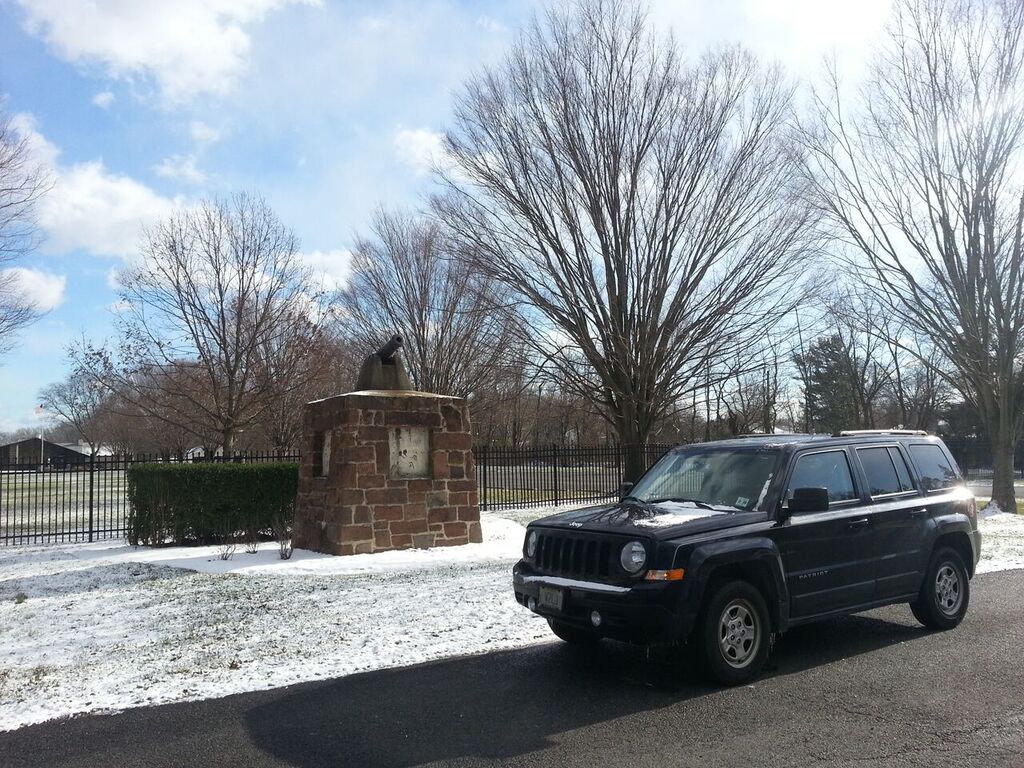
Set up was easy, I've done it so many times at lunchtime at work that I could do it in my sleep. The cold made things a tad more difficult, though; but I was ready to get on the air at Noon (1700 UTC), just as I had planned.
I started out on 20 Meters, using the Buddistick. It really helps to bring a cell phone along on these kind of outings. Having a smart phone enabled me to go onto the DX Summit Website and self spot. Within a few seconds of sending the spot, I was busy handling QSOs. There was never a really deep pileup, but there weren't many lulls either. When a lull hit, I used the opportunity to either change bands, or turn on the car to warm it up a bit. As an experienced QRPer, and being used to working weak signals, you get into the mindset to avoid as much background noise as possible. While I was operating, the engine was off. I would rather be a bit cold than miss another QRPer because of engine noise.
After 20 Meters, I operated on 17 Meters for a while. I had wanted to use 18.086 MHz, but I could tell that was pileup territory for one of the DXpeditions. So I "QRL"ed on 18.072 MHz, and not hearing any answer, I camped out there for a while.
When the Jeep interior cooled down as to start becoming uncomfortable (I'm ALL about comfort!), I took the opportunity to warm the interior up, and to switch from the Buddistick to the 40 Meter Hamstick. I get a better match with the Hamstick, only 1.3:1, which is lower that the 1.8:1 that I get with the Buddistick. I still have to work on finding the ideal combination of arms and whip length for 40 Meters on the Buddistick. 40 Meters was as productive as 20 Meters. Most of the QSOs were made on those two bands, although 17 Meters was not a slouch by any means.

I called it a day at 3:00 PM (2000 UTC) just as I had planned. In the end, I made 88 QSOs, which is actually way better that any Bumblebee or Skeeter outing that I have had, and is not bad for 5 Watts to less than full sized antennas. My best DX was California, Arizona, Puerto Rico and two stations from Belgium. I worked a few of you readers that I know from here, and I thank you heartily for those Qs. I also worked my best friend and Ham Radio mentor, Bob W3BBO. I worked QRP notables Steve WG0AT, Guy N7UN, fellow QRP Fox hunter Chris KQ2RP, and I also worked Kay Craigie N3KN, outgoing President of the ARRL.
But the best QSO of the day was when I worked Dave KD2FSI, who I logged for at Jockey Hollow on Saturday. This was perhaps Dave's second or third CW QSO, maybe? It was a blast to be there and to hear his fist on the air!
All the QSOs have been uploaded to LoTW. I can't wait to activate another NPOTA entity. The bug has really bit now. As the seasons change, and the weather gets warmer, the strategy will change from antennas mounted on the Jeep, to perhaps wires tossed in the trees. The best is definitely yet to come! Thank you Sean KX9X and the ARRL for sponsoring this great program!
72 de Larry W2LJ
QRP - When you care to send the very least!
Get a taste of the RF coming and going
Elecraft CP1 - A tasty RF treat
I had some time this afternoon to assemble another Elecraft mini-module kit. This time it was the Elecraft CP1 directional coupler.
 |
| Elecraft CP1 Kit |
Couple what?
Ah, so if your new to this like me you might be asking what does a coupler do? Well it sorta listens in on the signal going out (forward) and reflected (back) and is able to send an attenuated sample of the signal to other devices. It attenuates the sample by either 20db or 30db depending on how you build the kit.The 20db version is good for signals 25 watts and less so that's the way I built it. It was easy to build but my glue under the second toroid wasn't strong enough and you can see it popped up a bit. Also the Elecraft instructions had one confusing instruction concerning mounting the toroids. The instructions say "... When wound and mounted correctly, the enamel wire will emerge from the top of each core and connect to the top hole at each inductor location". Well when you wind a toroid only one of the wires can "emerge from the top of the core" while the other comes from underneath. This confused me for a minute until I finally just went on with the install. Anyway, if you're a stickler for following instructions that one may cause a moment of pause...
The switches for the two outputs forward, reflected (J3, J4) are in the up position when they are not in use. When the switch(es) are in the up position the 50 ohm 3 watt resistor(s) take the place of the switched off output. Don't disconnect an output and leave the switch in the bottom position. I'm not sure what will happen... maybe nothing, probably a bit of a mismatch on the SWR, or maybe it could be like "Crossing the streams" in Ghostbusters. Your mileage may vary.
My uses for a coupler
My old Ten-Tec Century 21 has an analog VFO dial that gives me a good guess at where I'm at but I use an external frequency counter to give me more information. I had it sorta rigged my frequency counter to sample the signal from RF leaked on the shield but I didn't really know how much power I was sending to the counter so this coupler allows it, as well as other devices, to be safely connected to the transmitted signal.I also plan to use the coupler for IMD tests using a oscilloscope and other projects. It's handy device to have in your collection.
My confusion
I will admit I am still such an idiot when it comes to understanding how this stuff works. After I built it I was testing continuity and saw that input/output (J1, J2) both showed a short from ground to center pin on both BNC connectors. I thought I'd mis-soldered something and spent the next two hours unsoldering components and trying to trace the fault...
There was no fault. The way this thing works is a bit of mystery to me but as best I can tell it simply reverses the phase of the signal coming in one side (J1) and leaving the other (J2) and as far as continuity tests go, EVERYTHING has almost zero impedance. I'm still bewildered but it's AC not DC so my continuity tests don't mean much.
But in the end - It works
I finally just resoldered it, scratched my head and thought I'd give it a try. I connected the coupler between my radio and a dummy load and transmitted a watt and noted that the SWR on the radio was fine. Then I hooked up my frequency counter and it worked like a charm sending an attenuated signal to J3 for the frequency counter.
My MFJ watt meter doesn't seem to be all that accurate but I did a power test with it both in-line and absent. My MFJ watt meter measures 300w / 30w so it isn't very accurate at QRP levels. But I noted a slight difference in power reported when the coupler was in-line. If I had to guess by "Mark-One-Eyeball" I'd say the coupler was stealing about 1/2 watt. Maybe a bit more so that's something to consider. I'll know better once I build my Elecraft watt meter since it's accurate down to a tenth of a watt.
That's all for now
So lower your power and raise your expectations
72/73
Richard, N4PBQ
Had a wonderful time today
My good friend Dave Hackett KD2FSI, fellow South Plainfield Amateur Radio Club member, decided to conduct an NPOTA activation. Yesterday, Dave posted on Facebook that he was going to travel up to Morristown, NJ to activate Morrsitown National Historical Park, HP28. I asked (tongue-in-cheek) if visitors would be welcome, and Dave answered in the affirmative, so I knew I had to get up there today.

If you saw Dave's setup, you would swear that you died and went to Ham Radio heaven. Dave recently purchased a minivan, which has become a custom outfitted portable communications center. Dave has hand crafted a wooden bed frame, with storage underneath that allows him to cart along everything he needs for portable Amateur Radio operations. If the need arises, Dave can operate quite comfortably from either inside or outside the van. He is equipped for just about any eventuality that you can think of, and if need be, he can "camp out" in semi-luxury as needed. I should have taken pictures for this post, but I was so excited about helping to activate an entity for NPOTA that I plumb forgot! (See my update below)
I got to the park shortly after Noon. It's been years since I've been up to Jockey Hollow and I took a few wrong turns. I ended up driving through Harding, NJ. Wow! Talk about seeing where the "1%" lives. What estates! But I digress.
I got to the Jockey Hollow parking lot and Dave was already good to go. He had his hybrid homebrew/commercial Buddipole on a painters pole at about the 15 foot level. He had just finished conducting a run when I drove up, so he was ready to take a break and stretch his legs for a bit when I arrived. We chatted for a bit while I admired his set up. Dave was using a Yaesu at 100 Watts off a deep cycle marine battery, and it was doing him in good stead.
Shortly after, we got back down to business. Dave folded down the seat, so I could set next to him (very comfortably) on his padded bed frame/bench seat/storage cabinet. I offered to log for him while he took the microphone. Dave called "CQ NPOTA" for a bit and we had a few bites. Then I decided to whip out my cell phone, bring up DX Summit and spot him on the cluster.
Quite literally, all Hell broke loose! It was like standing next to a dam when it decided to burst. We were at the business end of a pileup and were having the time of our lives. A little over an hour later, Dave decided to take another break, so I operated station KD2FSI for a few more QSOs, while he stretched his legs. When things quieted down, we both took a break to discover that we had made over 100 QSOs in that short amount of time. We worked all up and down the East coast and as far West as Arizona and New Mexico.
While Dave was operating solo, he also worked into Canada, the Netherlands and Belgium, I believe. It was a great time and I'm very grateful to Dave that he let me be his wingman for the day. As far as Amateur Radio goes, Dave is still considered a "rookie" as he is licensed for less than three years. Let me tell you, Dave is no rookie! Dave has taken to HF operating like a bird to the air or a fish to the water. He is completely at home behind the microphone for phone operations and behind the keyboard for digital operations.
And, oh yeah, he's also learning to get comfortable behind the key for CW operations. I'm hoping that he'll really be comfortable by Field Day!
UPDATE:
Dave posted some photos to the SPARC Facebook page, so I am going to do a little cross posting here, so you can see his wonderful set up.
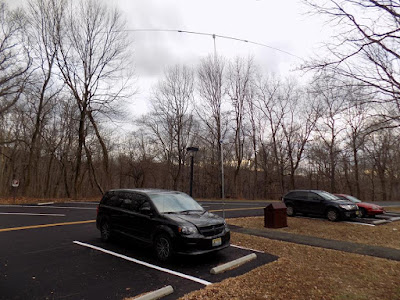
Dave's minivan parked on his homebrew mast holder. The mast is an extendable painter's pole. I'm guesstimating about 15 feet high. His Buddipole is a hybrid of homebrew and commercial W3FF parts. By his outing yesterday, it was obvious that Dave's concoction is a huge success!
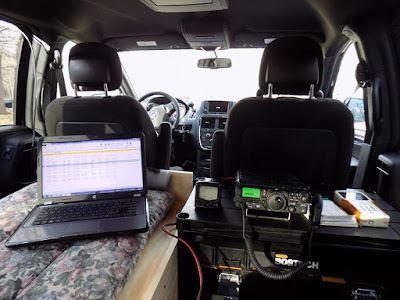
From the back of the minivan looking forward. Dave's laptop is sitting on his handcrafted bedframe/storage unit. As you can see, it also serves as a desk. He had only a thin cushion on it, as he was not spending an overnight at the park. For sleeping purposes, Dave has a much thicker and comfortable memory foam pad that his son gave him for Christmas. This thin pad was just the thing for using his bedframe as a bench when Dave was running stations while I logged for him.
72 de Larry W2LJ
QRP - When you care to send the very least!

If you saw Dave's setup, you would swear that you died and went to Ham Radio heaven. Dave recently purchased a minivan, which has become a custom outfitted portable communications center. Dave has hand crafted a wooden bed frame, with storage underneath that allows him to cart along everything he needs for portable Amateur Radio operations. If the need arises, Dave can operate quite comfortably from either inside or outside the van. He is equipped for just about any eventuality that you can think of, and if need be, he can "camp out" in semi-luxury as needed. I should have taken pictures for this post, but I was so excited about helping to activate an entity for NPOTA that I plumb forgot! (See my update below)
I got to the park shortly after Noon. It's been years since I've been up to Jockey Hollow and I took a few wrong turns. I ended up driving through Harding, NJ. Wow! Talk about seeing where the "1%" lives. What estates! But I digress.
I got to the Jockey Hollow parking lot and Dave was already good to go. He had his hybrid homebrew/commercial Buddipole on a painters pole at about the 15 foot level. He had just finished conducting a run when I drove up, so he was ready to take a break and stretch his legs for a bit when I arrived. We chatted for a bit while I admired his set up. Dave was using a Yaesu at 100 Watts off a deep cycle marine battery, and it was doing him in good stead.
Shortly after, we got back down to business. Dave folded down the seat, so I could set next to him (very comfortably) on his padded bed frame/bench seat/storage cabinet. I offered to log for him while he took the microphone. Dave called "CQ NPOTA" for a bit and we had a few bites. Then I decided to whip out my cell phone, bring up DX Summit and spot him on the cluster.
Quite literally, all Hell broke loose! It was like standing next to a dam when it decided to burst. We were at the business end of a pileup and were having the time of our lives. A little over an hour later, Dave decided to take another break, so I operated station KD2FSI for a few more QSOs, while he stretched his legs. When things quieted down, we both took a break to discover that we had made over 100 QSOs in that short amount of time. We worked all up and down the East coast and as far West as Arizona and New Mexico.
While Dave was operating solo, he also worked into Canada, the Netherlands and Belgium, I believe. It was a great time and I'm very grateful to Dave that he let me be his wingman for the day. As far as Amateur Radio goes, Dave is still considered a "rookie" as he is licensed for less than three years. Let me tell you, Dave is no rookie! Dave has taken to HF operating like a bird to the air or a fish to the water. He is completely at home behind the microphone for phone operations and behind the keyboard for digital operations.
And, oh yeah, he's also learning to get comfortable behind the key for CW operations. I'm hoping that he'll really be comfortable by Field Day!
UPDATE:
Dave posted some photos to the SPARC Facebook page, so I am going to do a little cross posting here, so you can see his wonderful set up.
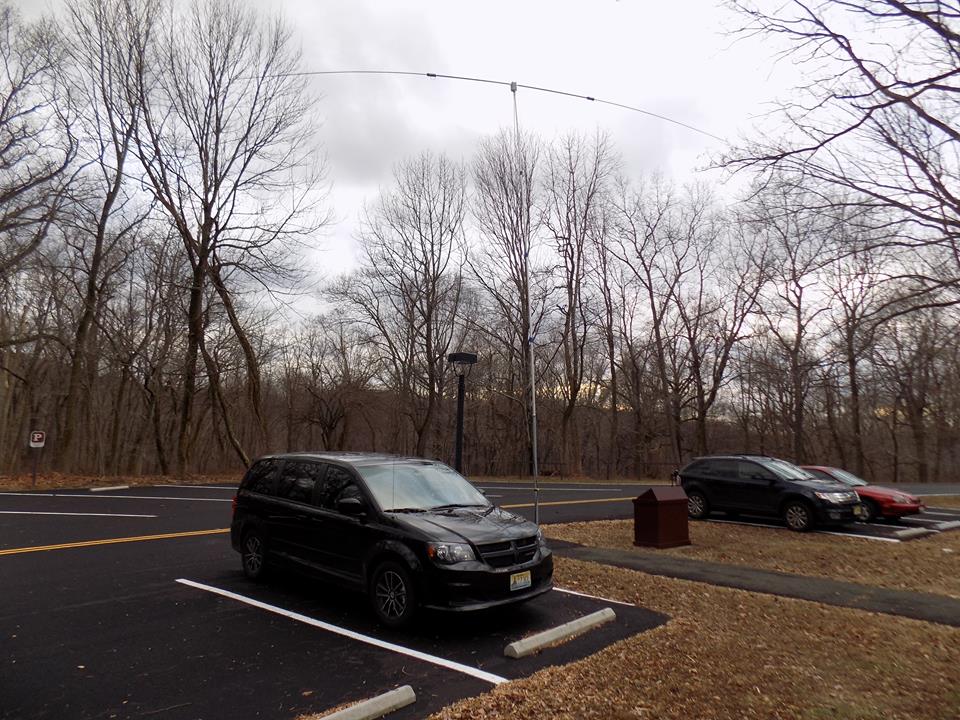
Dave's minivan parked on his homebrew mast holder. The mast is an extendable painter's pole. I'm guesstimating about 15 feet high. His Buddipole is a hybrid of homebrew and commercial W3FF parts. By his outing yesterday, it was obvious that Dave's concoction is a huge success!
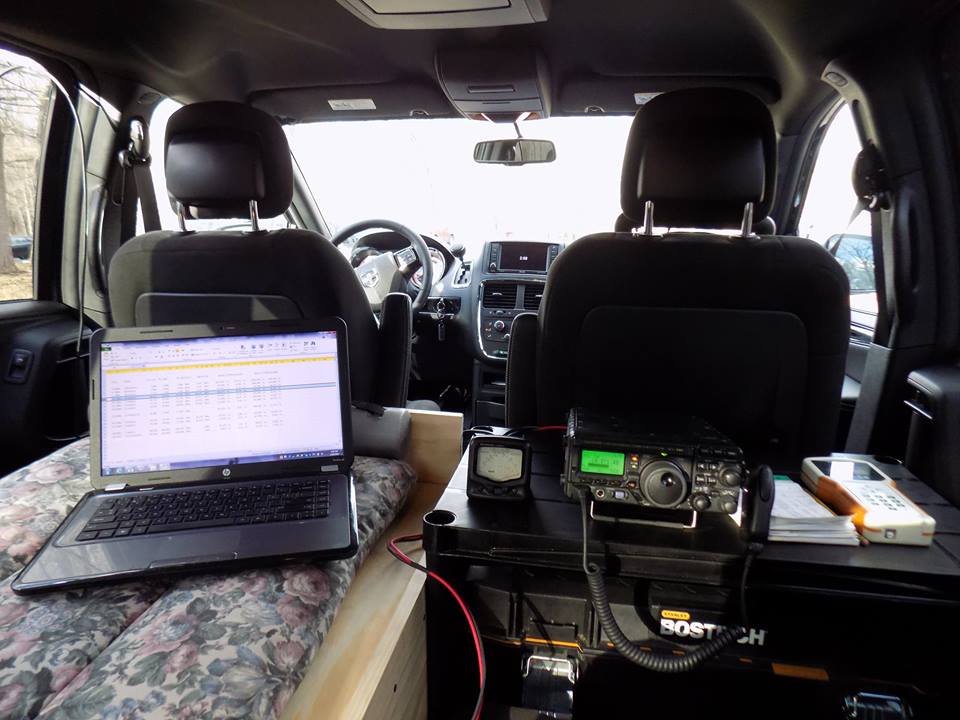
From the back of the minivan looking forward. Dave's laptop is sitting on his handcrafted bedframe/storage unit. As you can see, it also serves as a desk. He had only a thin cushion on it, as he was not spending an overnight at the park. For sleeping purposes, Dave has a much thicker and comfortable memory foam pad that his son gave him for Christmas. This thin pad was just the thing for using his bedframe as a bench when Dave was running stations while I logged for him.
72 de Larry W2LJ
QRP - When you care to send the very least!
Elecraft BL2
Two Baluns in One
Elecraft mini-module kits offer interesting and useful, little devices and I am learning a bit more about Ham Radio and electronics as I build them. I previously built the Elecraft AF1 audio filter and tonight I assembled the BL2 switchable balun.
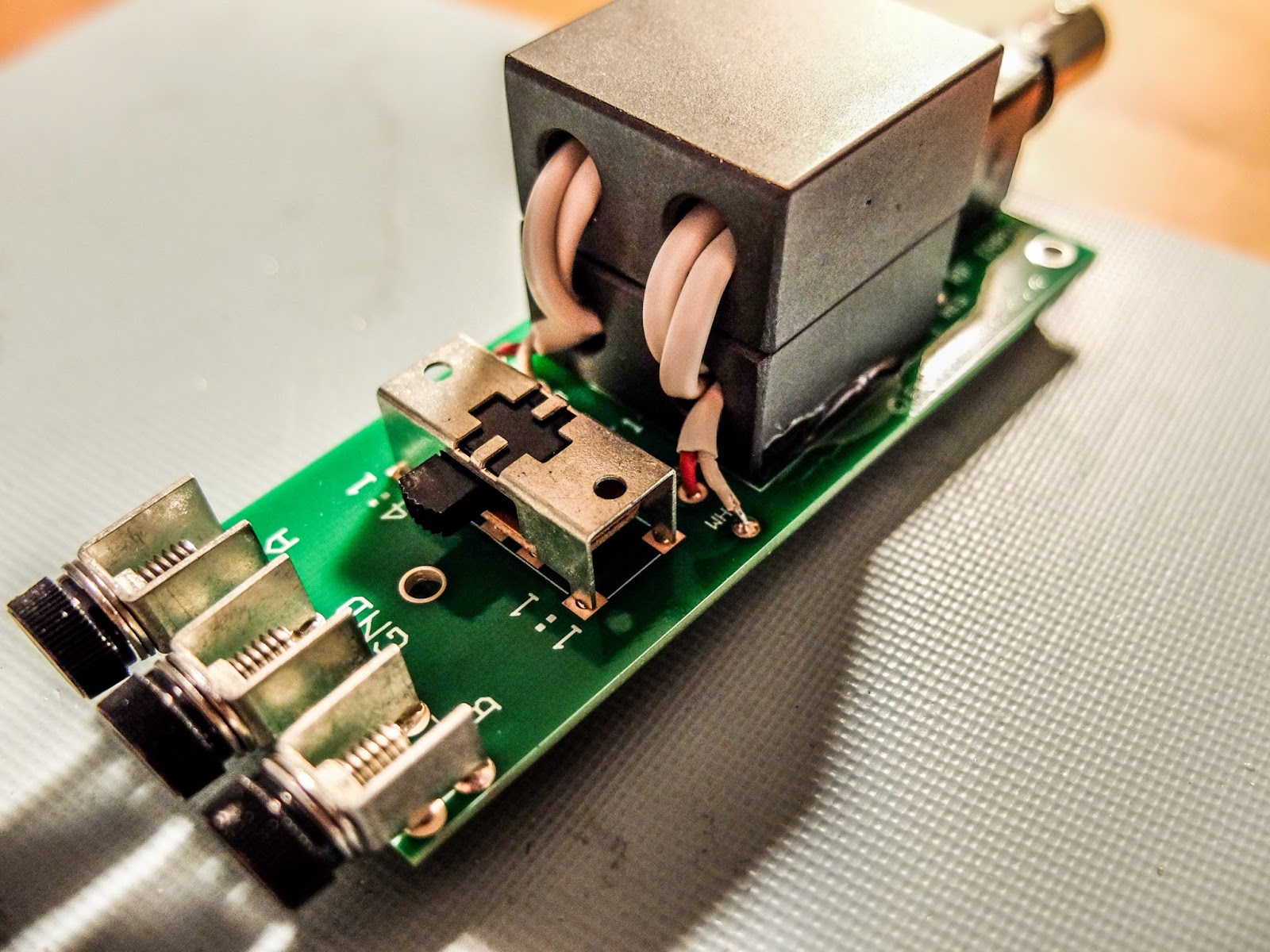 |
| Elecraft BL2 kit |
I wanted a small, low loss, balun for use with ladder line and end-fed antennas that I could switch between 1:1 and 4:1. MFJ makes a commercial pre-assembled switchable balun but I suspect that the quality of its cores do not match Elecraft's.
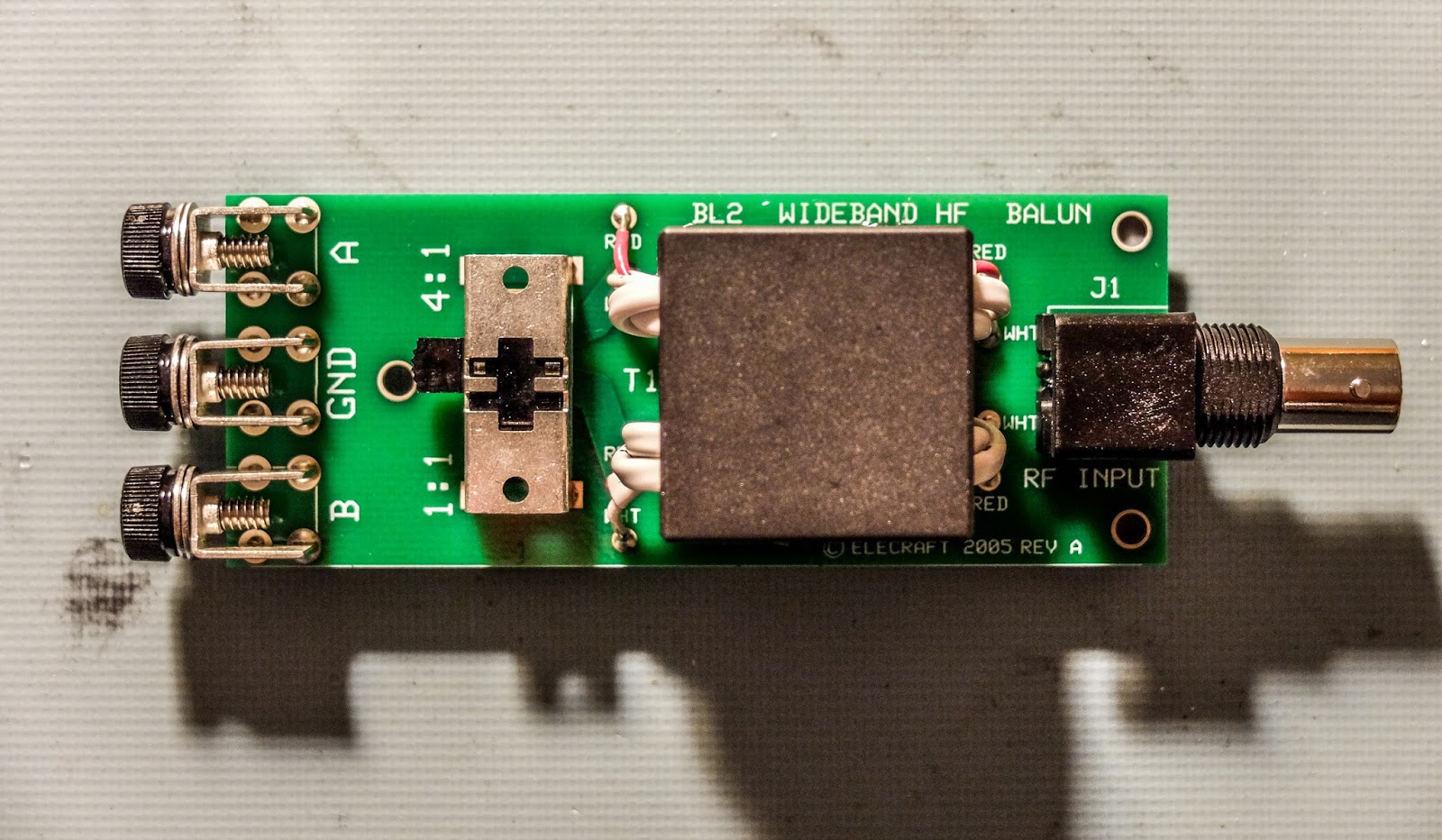
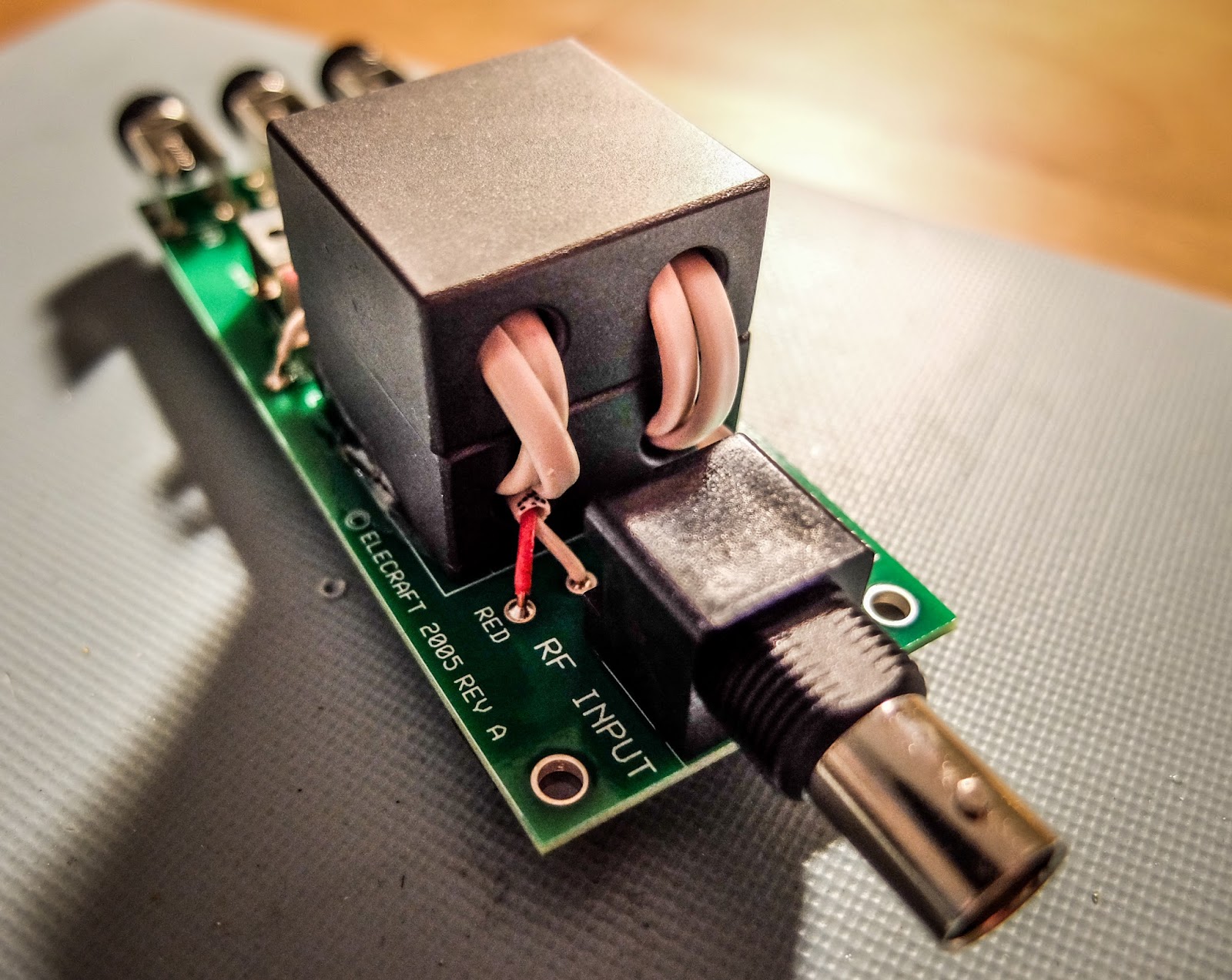
The kit is obviously an easy build. The most time consuming aspect is getting the four stripped wire ends from the core all equally inserted in their tiny holes.
I tried it out with my attic doublet and the ability to switch between 1:1 and 4:1 made a difference on difficult to tune bands.
According to an email correspondence with Gary (AB7MY) at Elecraft...
According to an email correspondence with Gary (AB7MY) at Elecraft...
- The ground lug is there to be used to bleed off static voltage on an antenna that is not DC or earth grounded.
- We don't recommend using the balun with an end fed wire. It will have too much loss. The balun is for use with a balanced antenna and a low impedance of 200-300 ohms or less.
Too Fragile?
The only drawback is the lack of an enclosure resulting in a relatively fragile mechanical connection to the antenna and coax. I had hoped the board would be thicker than average epoxy board with some mechanical reinforcement of the connectors but it's standard thickness and the connections are only held on by their solder points. 450 ohm ladder line is pretty stiff stuff and I saw the connectors flex on the board as I attached the antenna.
I will need to get it in an enclosure before much field use.
Summary
I enjoyed the simple build and winding the cores and tracing out the continuity. I've been studying for my Extra ticket and learning more about inductance. Building even something as simple as a balun is interesting to me.
Update 2-8-2016
N4HAY recently performed a thorough test on the BL2 to measure its loss and current balance capabilities in blog (http://zs6rsh.blogspot.com/) in this blog post.
So lower your power and raise your expectations
72/73
Richard, N4PBQ
Poetic justice?
Following my last post it is perhaps ironic that for the last few evenings I have been plagued by an increase in QRM.
Trying some JT65 on 40m I was being plagued by S8-S9 of local noise, it is noise I have had regularly (even before the purchase of my PLT devices) so I reconnected up the WiMo QRM Eliminator, which has been collecting dust, to see if I could improve matters.
Using just a short piece of wire as the auxillary 'noise' antenna managed to null out most of it to greatly improve reception. No commentary on the video below but hopefully you can see it working.
Interestingly the noise seems to abate around 11pm when people are off to bed.
Trying some JT65 on 40m I was being plagued by S8-S9 of local noise, it is noise I have had regularly (even before the purchase of my PLT devices) so I reconnected up the WiMo QRM Eliminator, which has been collecting dust, to see if I could improve matters.
Using just a short piece of wire as the auxillary 'noise' antenna managed to null out most of it to greatly improve reception. No commentary on the video below but hopefully you can see it working.
Interestingly the noise seems to abate around 11pm when people are off to bed.
Poetic justice?
Following my last post it is perhaps ironic that for the last few evenings I have been plagued by an increase in QRM.
Trying some JT65 on 40m I was being plagued by S8-S9 of local noise, it is noise I have had regularly (even before the purchase of my PLT devices) so I reconnected up the WiMo QRM Eliminator, which has been collecting dust, to see if I could improve matters.
Using just a short piece of wire as the auxillary 'noise' antenna managed to null out most of it to greatly improve reception. No commentary on the video below but hopefully you can see it working.
Interestingly the noise seems to abate around 11pm when people are off to bed.
Trying some JT65 on 40m I was being plagued by S8-S9 of local noise, it is noise I have had regularly (even before the purchase of my PLT devices) so I reconnected up the WiMo QRM Eliminator, which has been collecting dust, to see if I could improve matters.
Using just a short piece of wire as the auxillary 'noise' antenna managed to null out most of it to greatly improve reception. No commentary on the video below but hopefully you can see it working.
Interestingly the noise seems to abate around 11pm when people are off to bed.
Just stand up
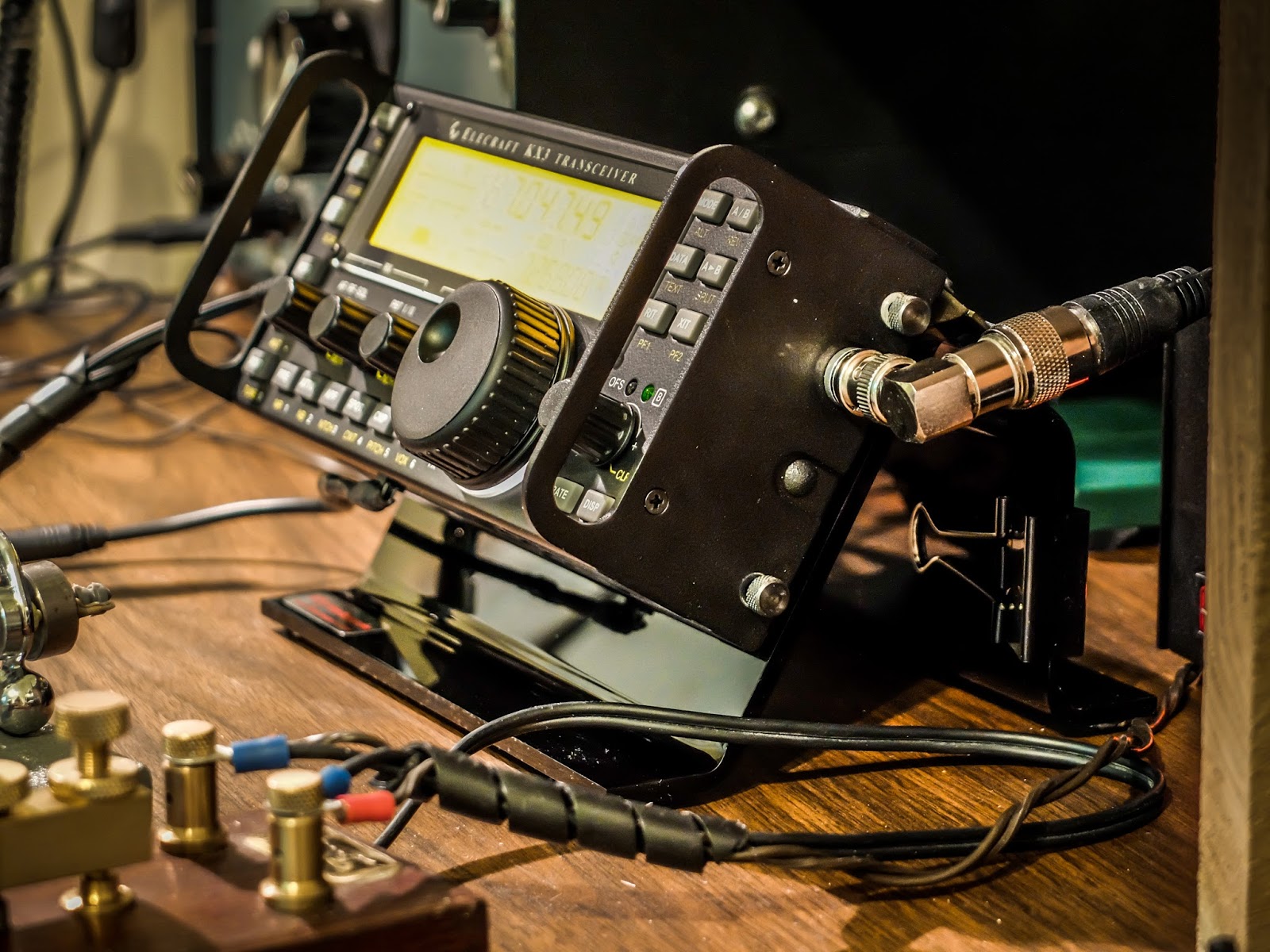
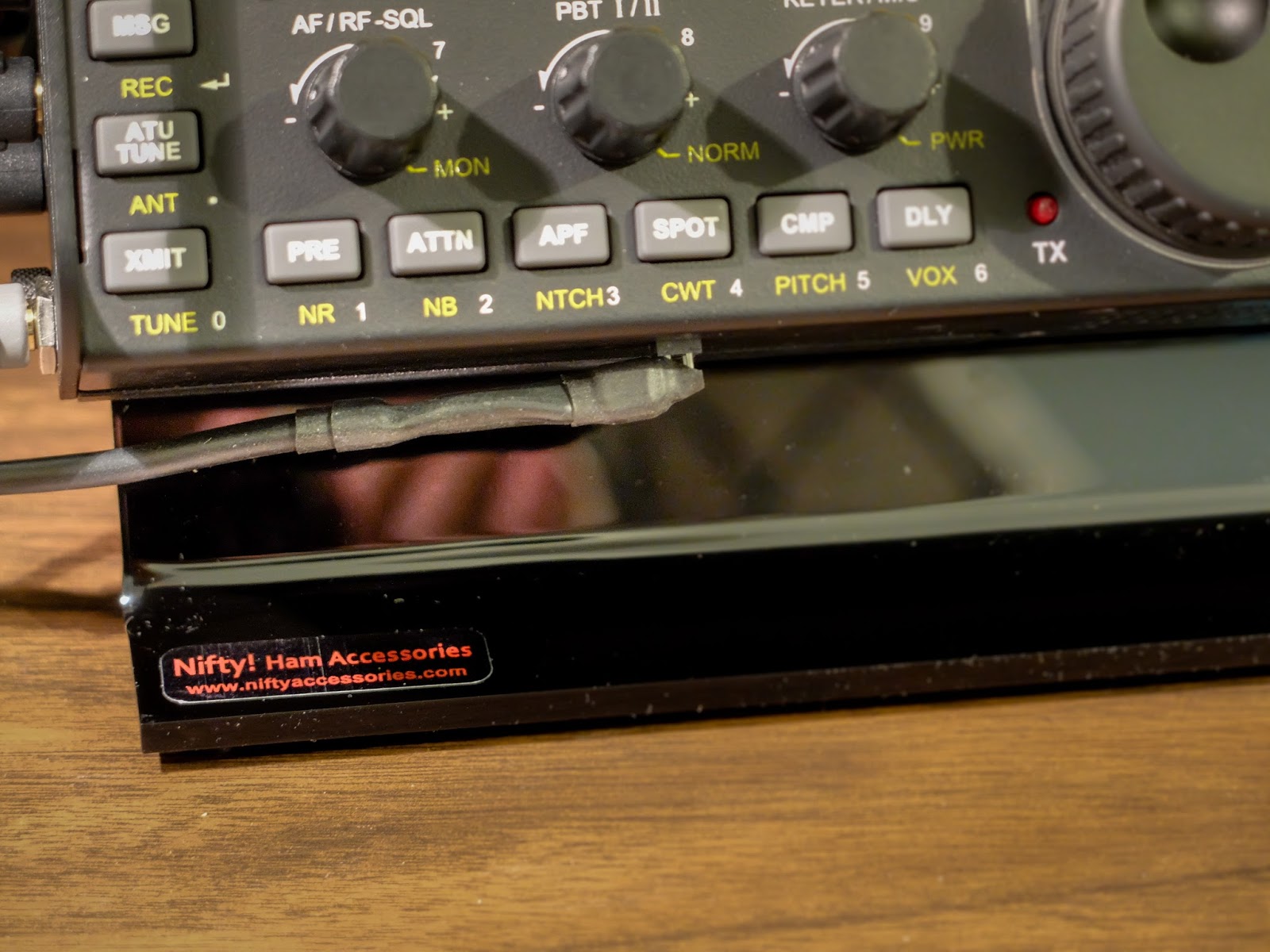
The "Nifty Accessories" KX3 stand
 |
| Nifty Accessories KX3 stand |
The Elecraft KX3 is naturally at home in the wild
My Elecraft KX3 is an incredible radio in many ways. It's small size makes it a marvel for portable operations.
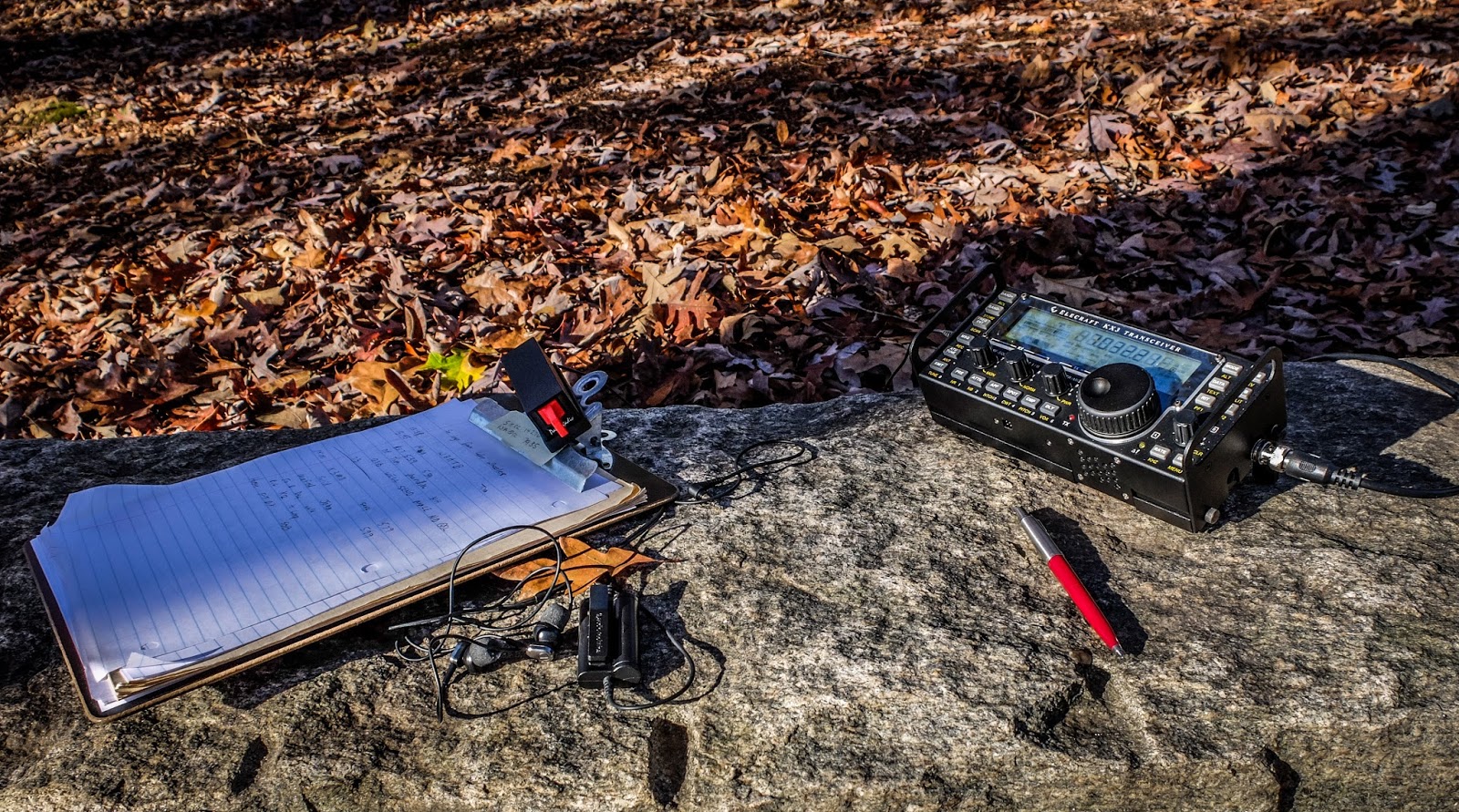 |
| The upward facing display of the KX3's short legs is ideal for remote, portable operations |
But on the desktop it's short stuff
But for desktop operation the short rear legs make for a laid back angle that makes the display difficult to see and the buttons awkward to operate. I home brewed a stand that I've used for the past few months. It angled the radio more vertically but it was still low to the desk.
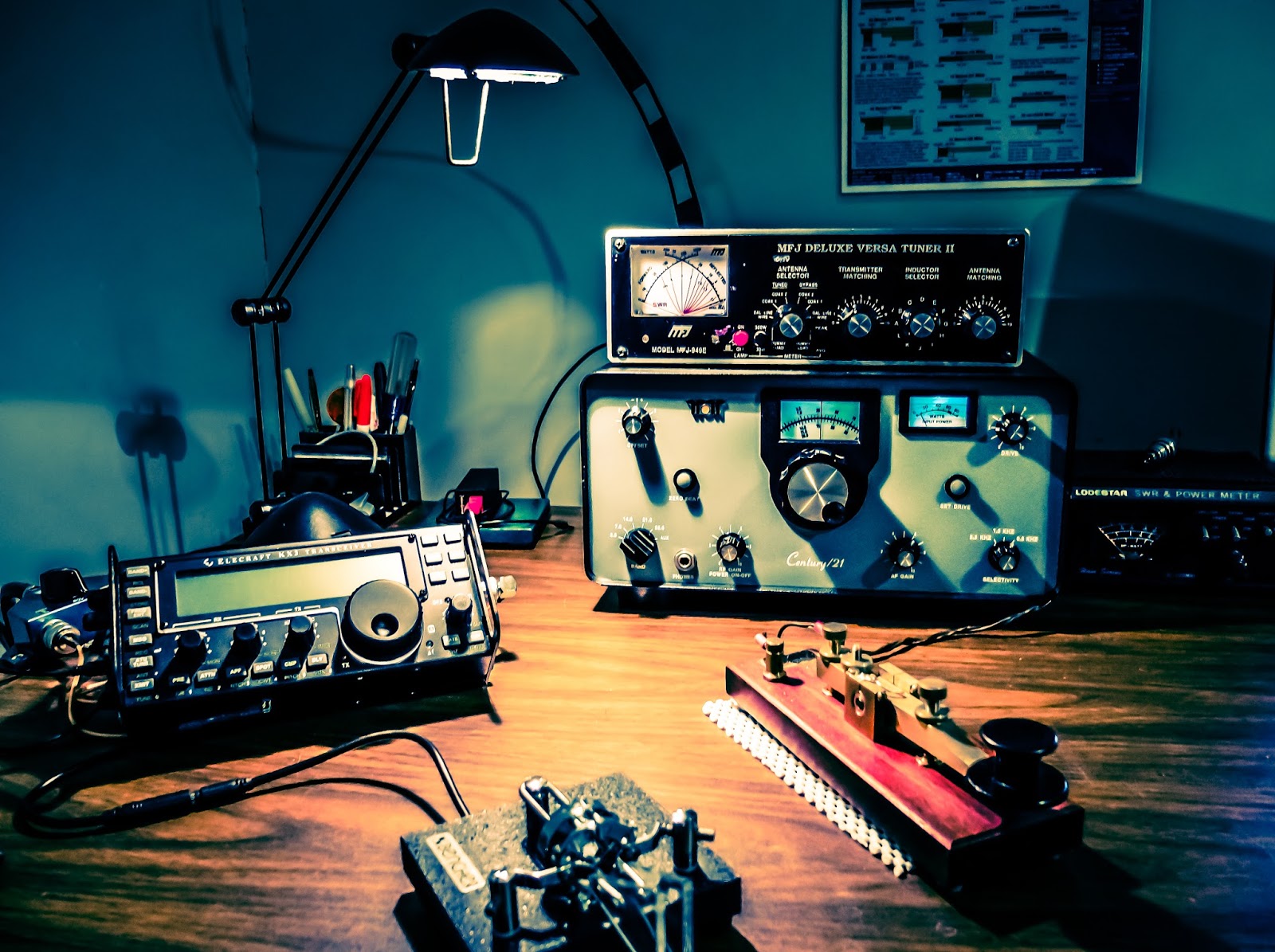 |
| The KX3 on my homebrew stand |
The KX3 "Iron Throne"
I finally felt it was time to give the KX3 some love and give it a proper throne chair for its little princely demeanor. The KX3 now has some height and sits more vertically. Access to the face of the radio is much improved.

Here's a closer view...
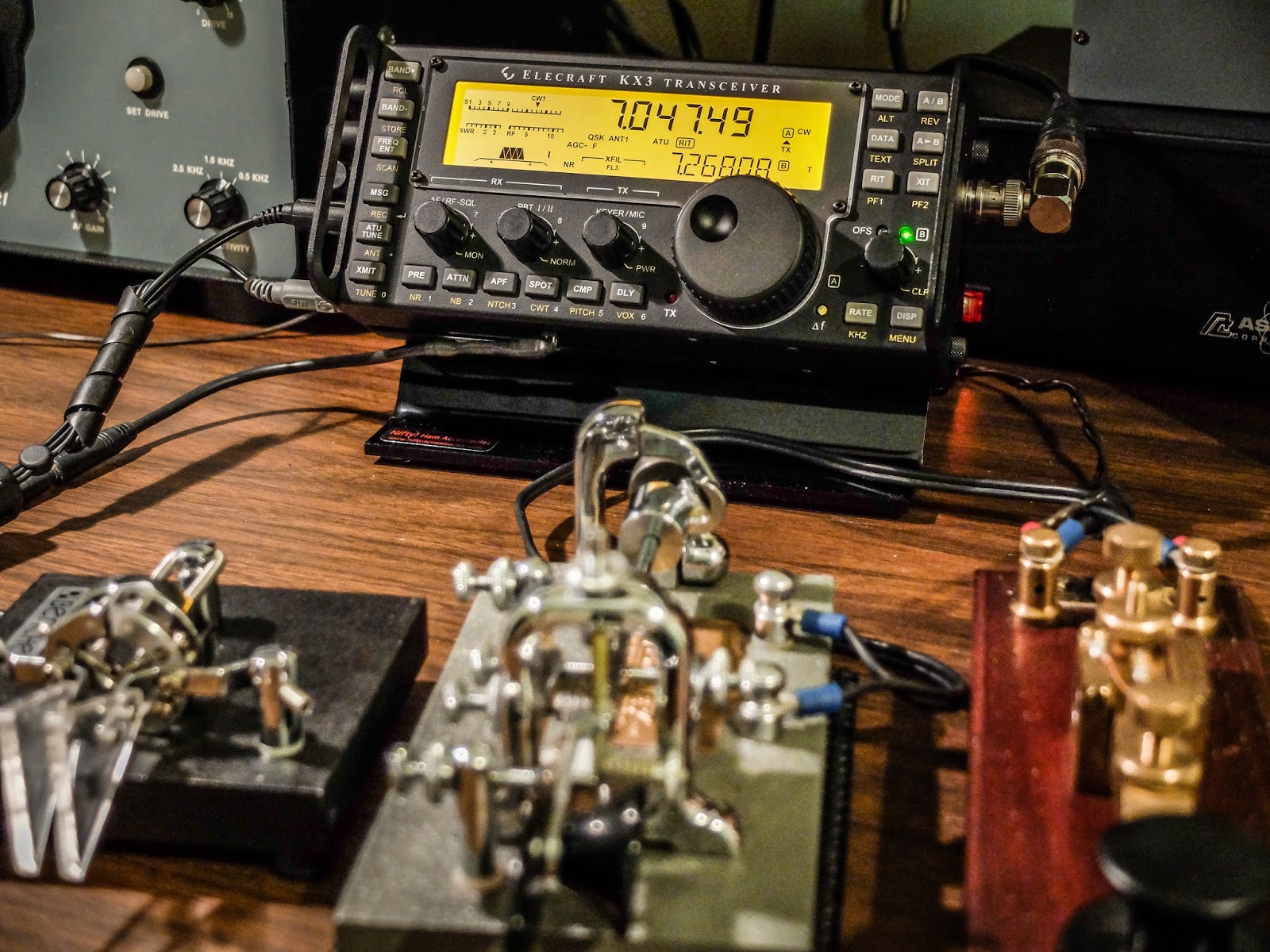
If you have a KX3 and use it on a desk in the shack the Nifty Accessories stand is a solid addition to improve the ergonomics of your little jewel. It can be ordered with enough space to clear an attached paddle or lower to the desk if you prefer but I wanted the additional height to get it above some of my taller keys.
One Suggestion... replace the paper clips
The stand comes with big paper clips to hold the KX3 to the stand. They are a a bit difficult to properly attach with all the cables exiting the KX3 on the left hand side and they look ugly.
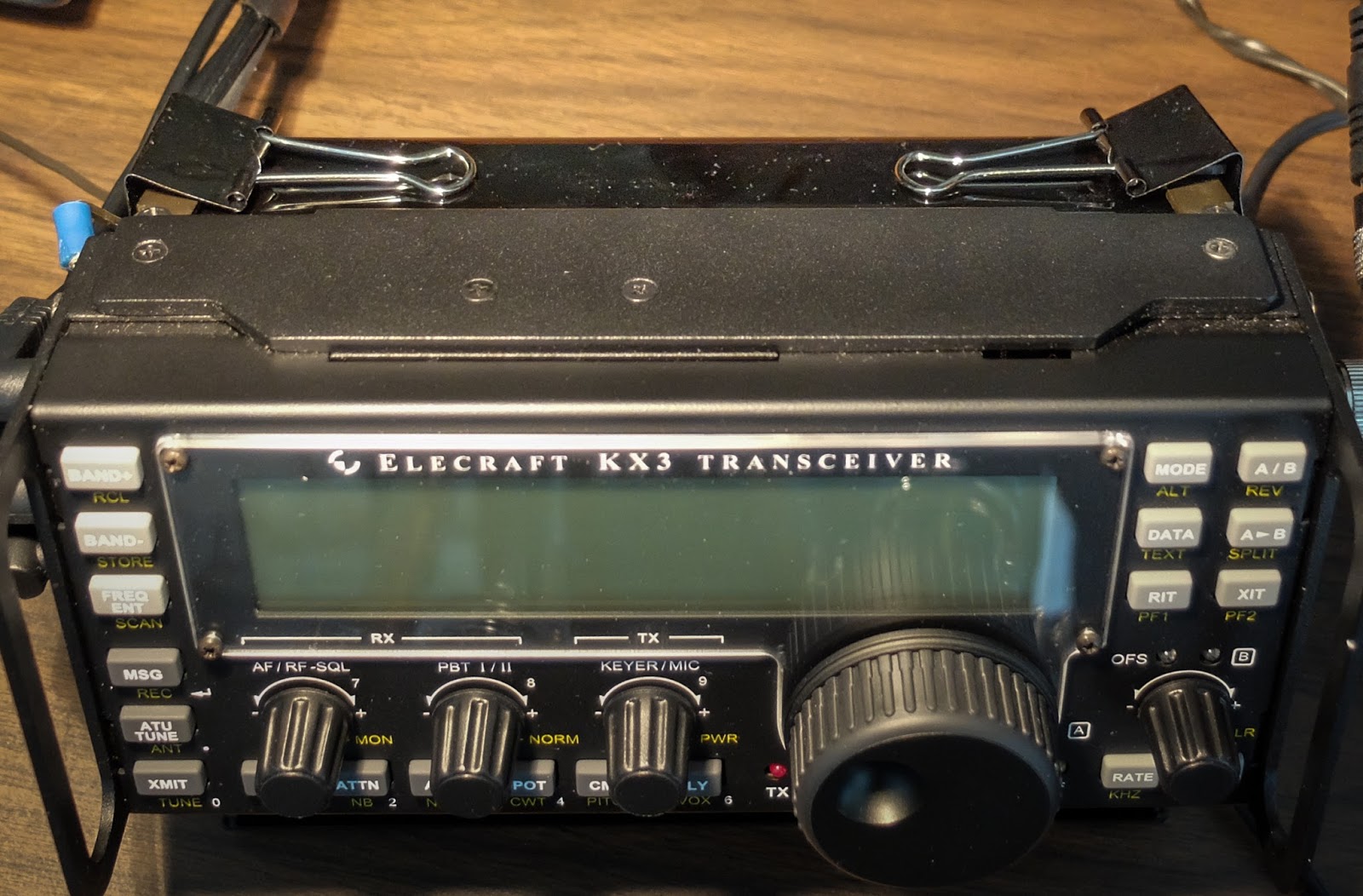
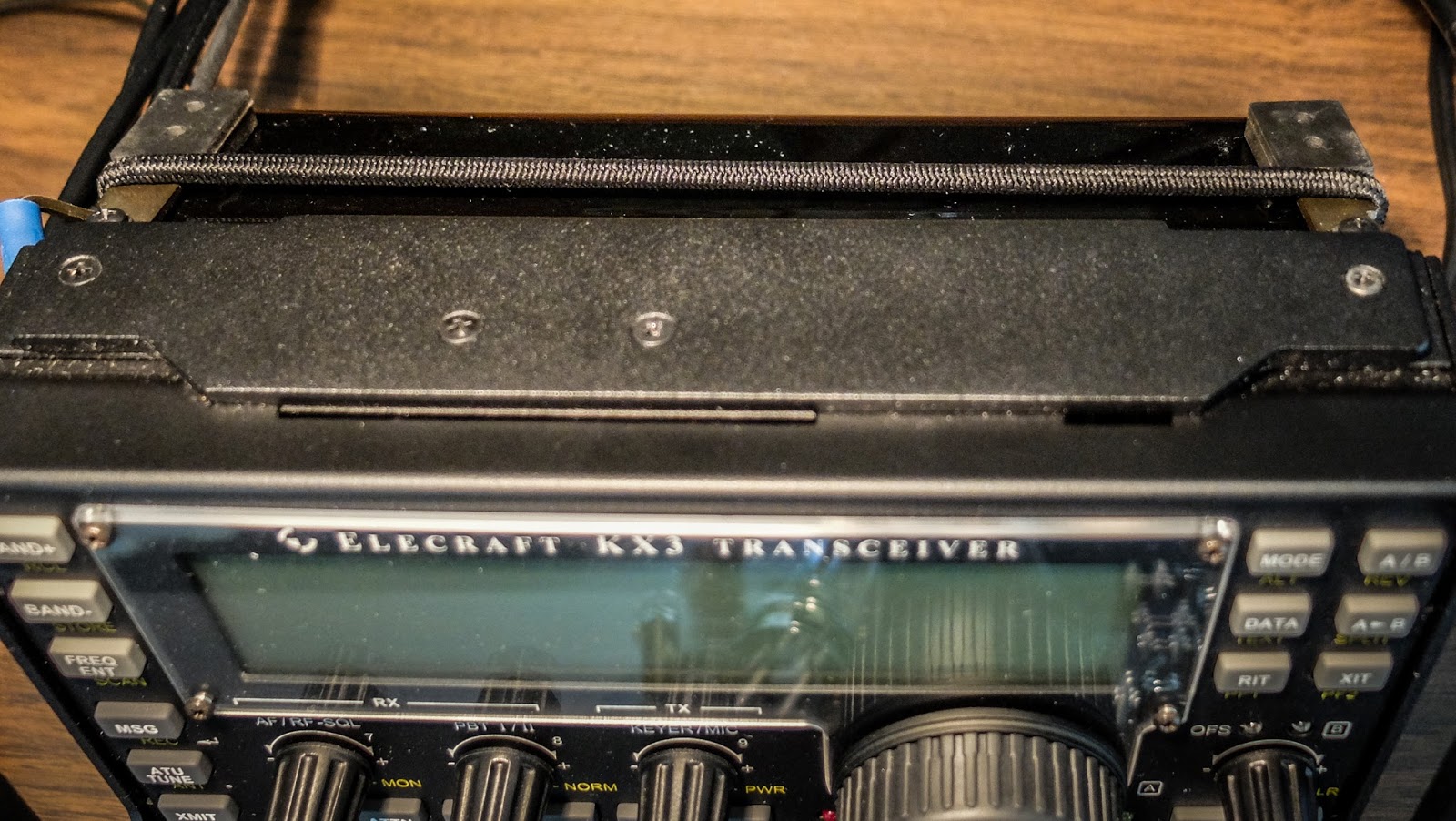
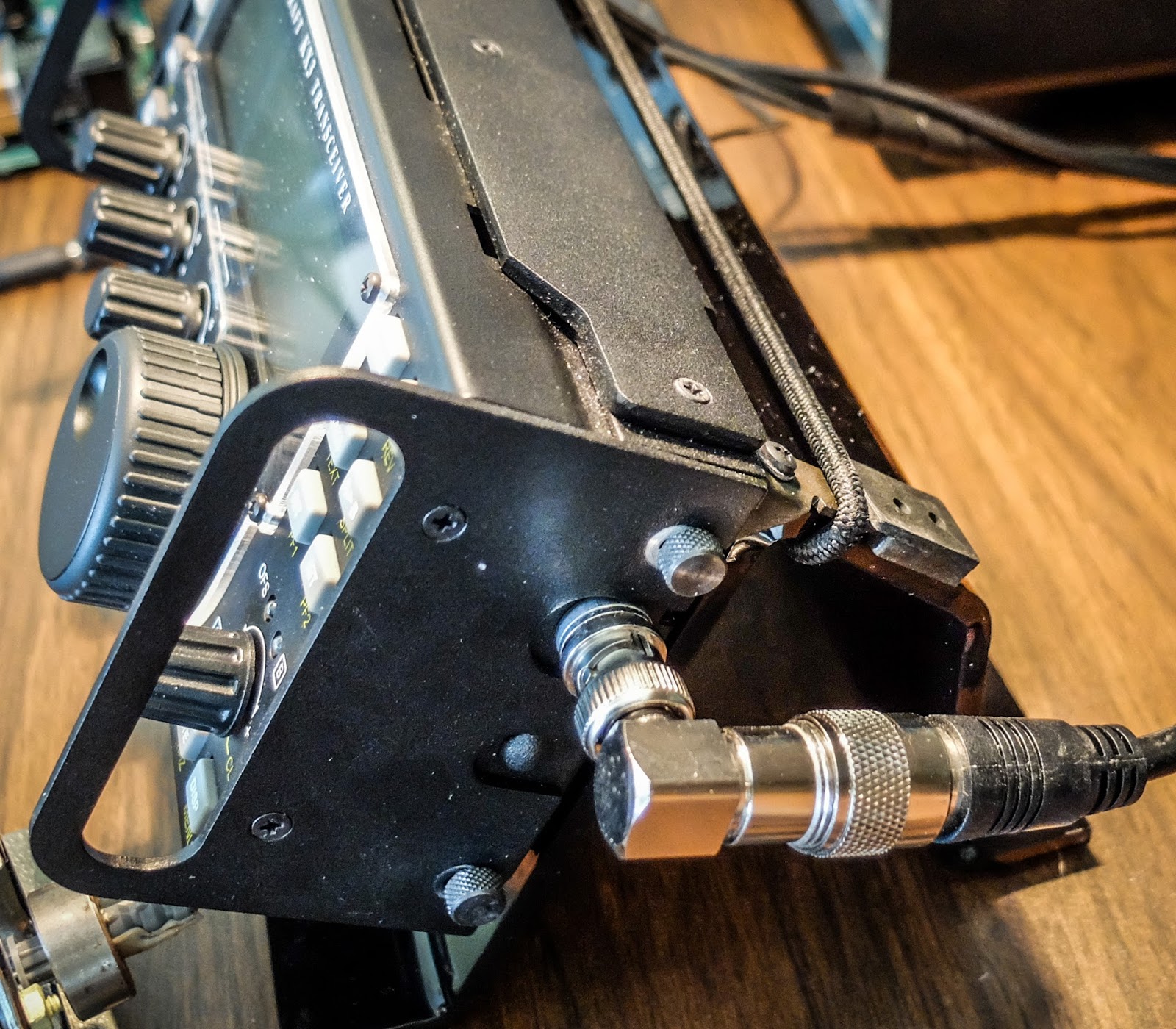
I replaced the two paper clips with a small bungee cord which I attach as a loop across the top of the stand. The bungee cord connects to itself underneath the stand...
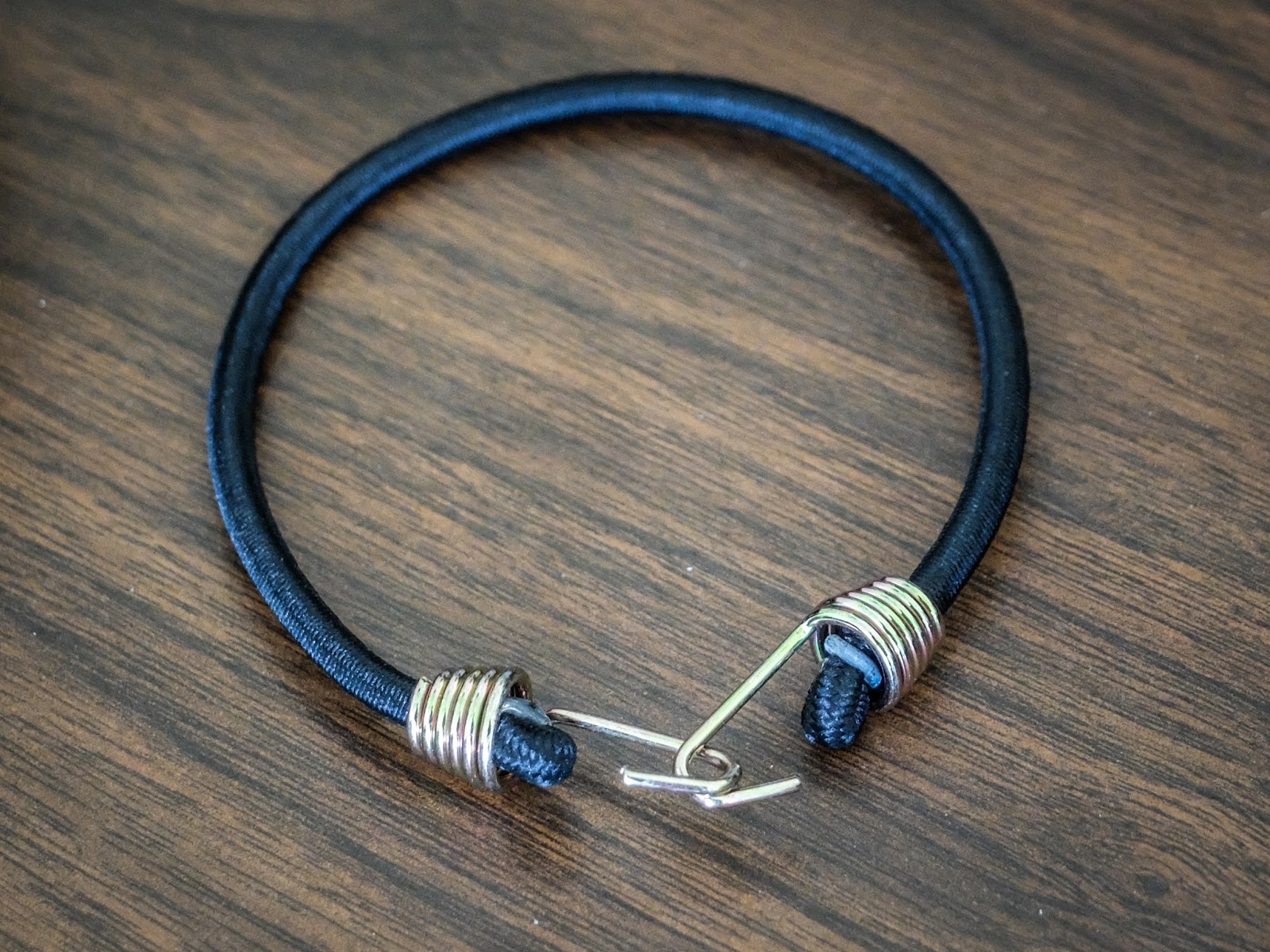
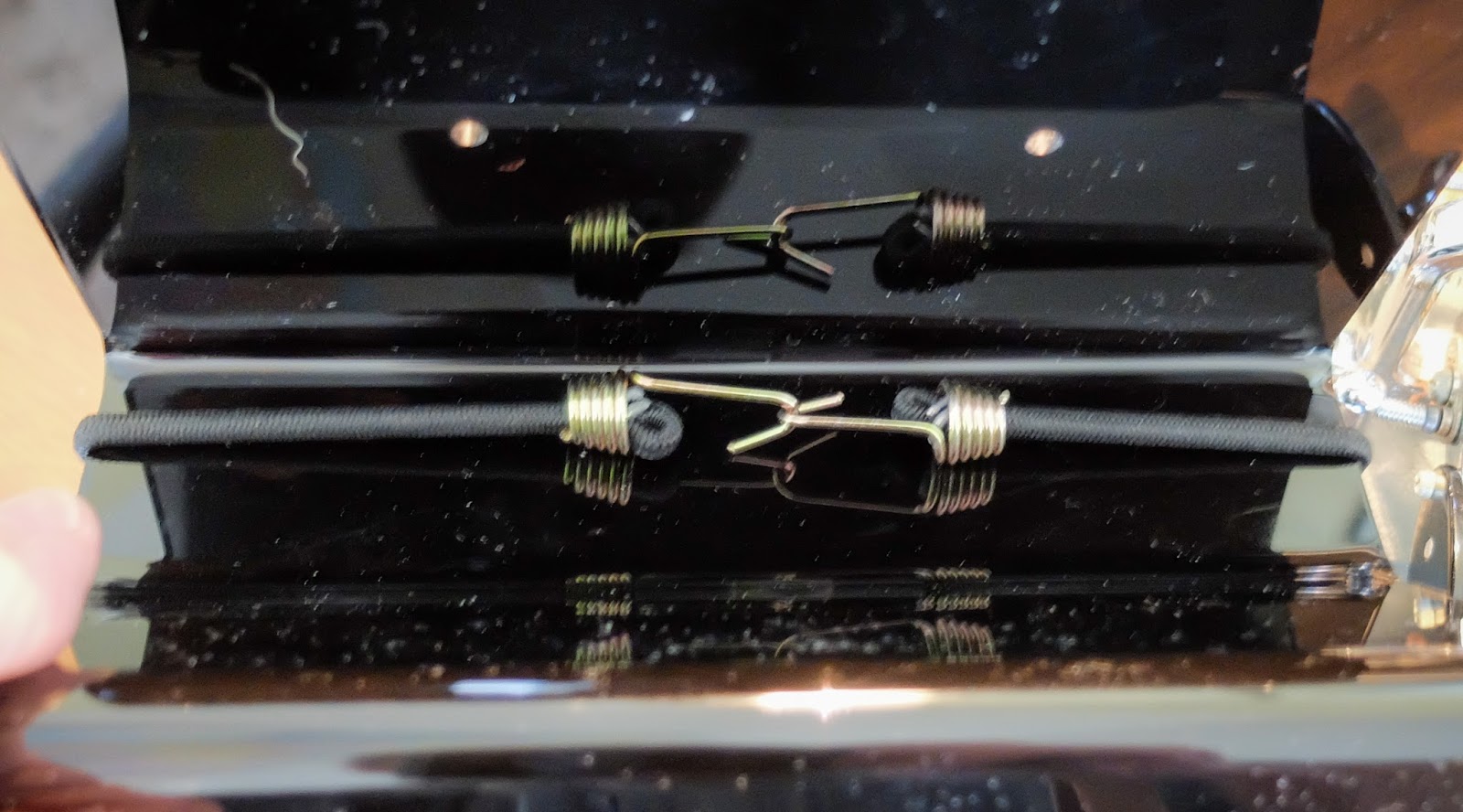
The feet of the KX3 then slip under the bungee cord. It seems to hold it sufficiently and is easier to attach and remove the radio. It looks nicer as well...
So lower your power and raise your expectations
72/73
Richard, N4PBQ













