Posts Tagged ‘amateurradio.com’
 Shortwave Radiogram
 August 14th, 2017 |
  Author:
 In March 2013 The Voice of America (VOA) started an experiment called the VOA Radiogram which transmitted digital text and images using the powerful 50 year old analog shortwave broadcast transmitter at the Edward R. Murrow Transmitting Station near Greenville, North Carolina.
The idea was anyone could receive the radiogram on any shortwave radio, even an inexpensive portable one with no SSB capability. By feeding the audio from the radio to a computer, either by a audio lead or even using the a microphone the listener could decode the text and images using simple software.
I had seen mention and reports on social media of people receiving them but somehow never got around to trying it myself.
VOA ended the experiment back in June this year a week before the retirement of the program producer Dr. Kim Andrew Elliott. An offer to continue the broadcasts on a contract basis was declined, so a follow-on show called Shortwave Radiogram began transmission from the WRMI Radio Miami International transmitting site in Okeechobee, Florida and Space Line in Bulgaria.
The Shortwave Radiogram transmission schedule is (at the time of writing and all times UTC)
Saturday 1600-1630 9400 kHz
Sunday 0600-0630 7730 kHz
Sunday 2030-2100 11580 kHz
Sunday 2330-2400 11580 kHz
All via WRMI except for 9400 kHz, which is via Space Line in Bulgaria.
I spotted a tweet a few weeks back (can't remember who from) mentioning the @SWRadiogram so my interest was piqued, I wasn't around for this weekends Saturday transmission in Europe but had a go on Sunday for the one from America. I wasn't expecting great things due to the levels of noise and poor conditions of late.
I have the decoding program FLdigi already installed on my computer for other datamodes and for information on how to decode the radiograms (sent using MFSK32) visit this page
On the 0600UTC transmission I managed just one poor image

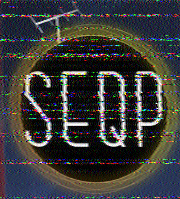
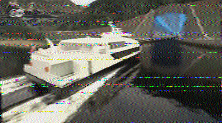
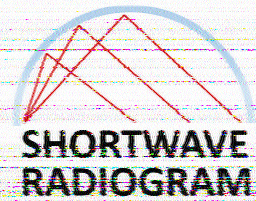
but during the Sunday 2030UTC transmission I got four decent images, the fifth was lost to QRM

I also made two short videos (on hand held mobile phone so a bit shaky) which show the incoming text and images.
The idea was anyone could receive the radiogram on any shortwave radio, even an inexpensive portable one with no SSB capability. By feeding the audio from the radio to a computer, either by a audio lead or even using the a microphone the listener could decode the text and images using simple software.
I had seen mention and reports on social media of people receiving them but somehow never got around to trying it myself.
VOA ended the experiment back in June this year a week before the retirement of the program producer Dr. Kim Andrew Elliott. An offer to continue the broadcasts on a contract basis was declined, so a follow-on show called Shortwave Radiogram began transmission from the WRMI Radio Miami International transmitting site in Okeechobee, Florida and Space Line in Bulgaria.
The Shortwave Radiogram transmission schedule is (at the time of writing and all times UTC)
Saturday 1600-1630 9400 kHz
Sunday 0600-0630 7730 kHz
Sunday 2030-2100 11580 kHz
Sunday 2330-2400 11580 kHz
All via WRMI except for 9400 kHz, which is via Space Line in Bulgaria.
I spotted a tweet a few weeks back (can't remember who from) mentioning the @SWRadiogram so my interest was piqued, I wasn't around for this weekends Saturday transmission in Europe but had a go on Sunday for the one from America. I wasn't expecting great things due to the levels of noise and poor conditions of late.
I have the decoding program FLdigi already installed on my computer for other datamodes and for information on how to decode the radiograms (sent using MFSK32) visit this page
On the 0600UTC transmission I managed just one poor image
but during the Sunday 2030UTC transmission I got four decent images, the fifth was lost to QRM
I also made two short videos (on hand held mobile phone so a bit shaky) which show the incoming text and images.
ARISS 20th Anniversary SSTV
This weekend has seen another SSTV event from the International Space Station, this time in commemoration of the 20th Anniversary of ARISS (Amateur Radio on the International Space Station)
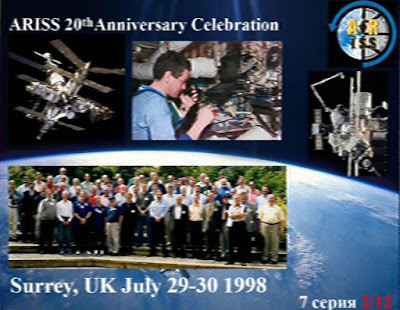
The 20 year history of ARISS was displayed through a collection of 12 images highlighting the accomplishments of the project over the last two decades.
As the ISS has orbited the world it has been transmitting the SSTV signals using FM on the usual downlink of 145.800 MHz, here at my QTH in the UK the passes have occurred late at night into the early morning, averaging 3 - 4 reasonable passes each day.
The signal has been very strong and so some excellent low noise images have been received by many people using just modest equipment. While not the greatest technical achievement in the world it nonetheless generates much needed interest in ARISS and amateur space communication.
My own system consisted of the Yaesu FT-857D and MMSSTV running on the shack PC and was left on automatic receive (I was tucked up in bed) and managed to get decent copies of all the images.
Image 8 reminded me of the fun I had back in 2011-2012 of receiving the ARRISAT-1 and was one of the key things that convinced me to finally get off my backside and actually get licensed, even if it took me another 12 months and to this day haven't really cracked satellites myself! My previous blog posts on that can be found at http://nerdsville.blogspot.co.uk/search/label/arissat-1
Here are the best of my images, for a full description of what each one depicts visit http://ariss-sstv.blogspot.co.uk/2017/07/anniversary-image-descriptions.html

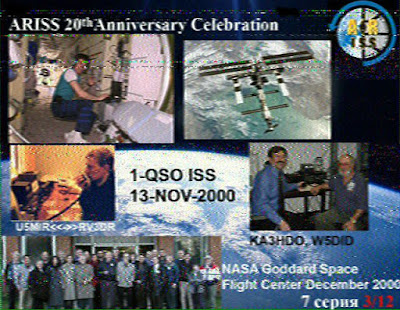
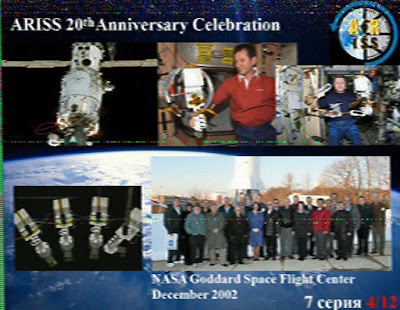
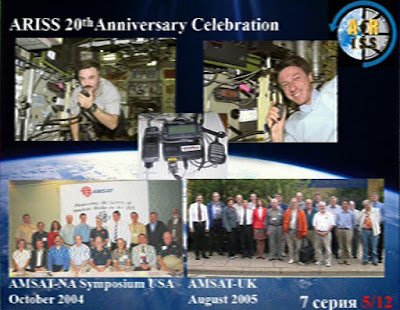


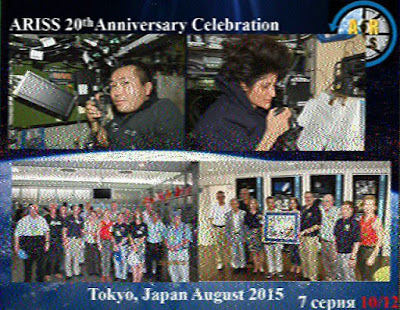

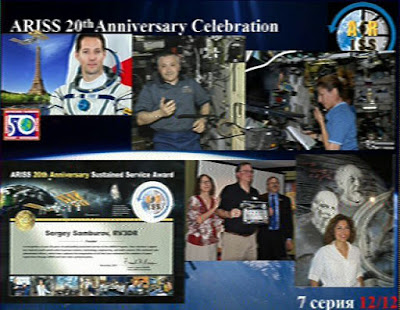
The 20 year history of ARISS was displayed through a collection of 12 images highlighting the accomplishments of the project over the last two decades.
As the ISS has orbited the world it has been transmitting the SSTV signals using FM on the usual downlink of 145.800 MHz, here at my QTH in the UK the passes have occurred late at night into the early morning, averaging 3 - 4 reasonable passes each day.
The signal has been very strong and so some excellent low noise images have been received by many people using just modest equipment. While not the greatest technical achievement in the world it nonetheless generates much needed interest in ARISS and amateur space communication.
My own system consisted of the Yaesu FT-857D and MMSSTV running on the shack PC and was left on automatic receive (I was tucked up in bed) and managed to get decent copies of all the images.
Image 8 reminded me of the fun I had back in 2011-2012 of receiving the ARRISAT-1 and was one of the key things that convinced me to finally get off my backside and actually get licensed, even if it took me another 12 months and to this day haven't really cracked satellites myself! My previous blog posts on that can be found at http://nerdsville.blogspot.co.uk/search/label/arissat-1
Here are the best of my images, for a full description of what each one depicts visit http://ariss-sstv.blogspot.co.uk/2017/07/anniversary-image-descriptions.html


ARISS 20th Anniversary SSTV
This weekend has seen another SSTV event from the International Space Station, this time in commemoration of the 20th Anniversary of ARISS (Amateur Radio on the International Space Station)
The 20 year history of ARISS was displayed through a collection of 12 images highlighting the accomplishments of the project over the last two decades.
As the ISS has orbited the world it has been transmitting the SSTV signals using FM on the usual downlink of 145.800 MHz, here at my QTH in the UK the passes have occurred late at night into the early morning, averaging 3 - 4 reasonable passes each day.
The signal has been very strong and so some excellent low noise images have been received by many people using just modest equipment. While not the greatest technical achievement in the world it nonetheless generates much needed interest in ARISS and amateur space communication.
My own system consisted of the Yaesu FT-857D and MMSSTV running on the shack PC and was left on automatic receive (I was tucked up in bed) and managed to get decent copies of all the images.
Image 8 reminded me of the fun I had back in 2011-2012 of receiving the ARRISAT-1 and was one of the key things that convinced me to finally get off my backside and actually get licensed, even if it took me another 12 months and to this day haven't really cracked satellites myself! My previous blog posts on that can be found at http://nerdsville.blogspot.co.uk/search/label/arissat-1
Here are the best of my images, for a full description of what each one depicts visit http://ariss-sstv.blogspot.co.uk/2017/07/anniversary-image-descriptions.html
The 20 year history of ARISS was displayed through a collection of 12 images highlighting the accomplishments of the project over the last two decades.
As the ISS has orbited the world it has been transmitting the SSTV signals using FM on the usual downlink of 145.800 MHz, here at my QTH in the UK the passes have occurred late at night into the early morning, averaging 3 - 4 reasonable passes each day.
The signal has been very strong and so some excellent low noise images have been received by many people using just modest equipment. While not the greatest technical achievement in the world it nonetheless generates much needed interest in ARISS and amateur space communication.
My own system consisted of the Yaesu FT-857D and MMSSTV running on the shack PC and was left on automatic receive (I was tucked up in bed) and managed to get decent copies of all the images.
Image 8 reminded me of the fun I had back in 2011-2012 of receiving the ARRISAT-1 and was one of the key things that convinced me to finally get off my backside and actually get licensed, even if it took me another 12 months and to this day haven't really cracked satellites myself! My previous blog posts on that can be found at http://nerdsville.blogspot.co.uk/search/label/arissat-1
Here are the best of my images, for a full description of what each one depicts visit http://ariss-sstv.blogspot.co.uk/2017/07/anniversary-image-descriptions.html
On this day, 48 years ago
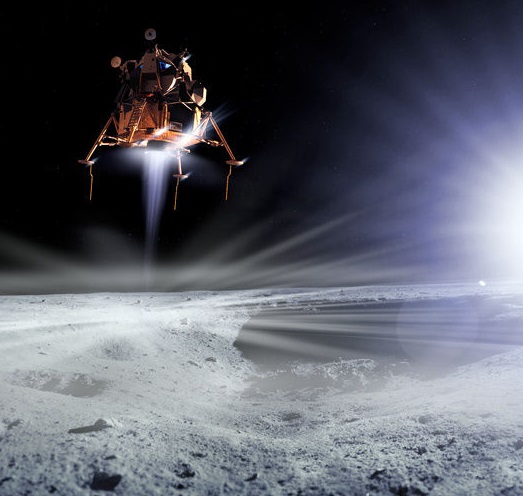
Here men from the planet Earth
First set foot upon the Moon
July 1969, A.D.
We came in peace for all mankind
Neil A. Armstrong Michael Collins Edwin E. Aldrin Jr.
Astronaut Astronaut Astronaut
Richard M. Nixon
President, United States of America
To read about the communications systems that the Lunar Module employed, here are two good links from the NASA Archives: https://ntrs.nasa.gov/archive/nasa/casi.ntrs.nasa.gov/19720023255.pdf and https://ntrs.nasa.gov/archive/nasa/casi.ntrs.nasa.gov/20090015392.pdf
The S-band transceiver was the primary transceiver used for TV, telemetry, biomedical data, and voice communications from the Lunar surface. It had an output power of 750 mW (QRPp!). That signal then went to the S-band power amplifier, which boosted the signal to an outstanding "QRO" signal of 18.6 Watts.
72 de Larry W2LJ
QRP - When you care to send the very least
On this day, 48 years ago
Here men from the planet Earth
First set foot upon the Moon
July 1969, A.D.
We came in peace for all mankind
Neil A. Armstrong Michael Collins Edwin E. Aldrin Jr.
Astronaut Astronaut Astronaut
Richard M. Nixon
President, United States of America
To read about the communications systems that the Lunar Module employed, here are two good links from the NASA Archives: https://ntrs.nasa.gov/archive/nasa/casi.ntrs.nasa.gov/19720023255.pdf and https://ntrs.nasa.gov/archive/nasa/casi.ntrs.nasa.gov/20090015392.pdf
The S-band transceiver was the primary transceiver used for TV, telemetry, biomedical data, and voice communications from the Lunar surface. It had an output power of 750 mW (QRPp!). That signal then went to the S-band power amplifier, which boosted the signal to an outstanding "QRO" signal of 18.6 Watts.
72 de Larry W2LJ
QRP - When you care to send the very least
Just noticed something
The graphic for Windows 10 Mail:

Do you see it?
72 de Larry W2LJ
QRP - When you care to send the very least!

Do you see it?
72 de Larry W2LJ
QRP - When you care to send the very least!
Just noticed something
The graphic for Windows 10 Mail:
Do you see it?
72 de Larry W2LJ
QRP - When you care to send the very least!
Do you see it?
72 de Larry W2LJ
QRP - When you care to send the very least!













