 |
 Comedy in the woods
 28 March 2010 | by
 As someone who likes a walk in the great outdoors I enjoy reading accounts of people who take their radios out into the countryside for a bit of QRP fun. Today I thought I would try to emulate them. However although I did make a few contacts the attempt was a bit of a disappointment on several counts. Even the photos I took with my camera self-timer were disappointing as the operator completely obscured the radio and a picture of myself sitting on the ground at the foot of a tree apparently talking to my hand is not something I feel should be preserved for posterity on the internet.
As the CQ WW WPX SSB contest was on I thought this would be a good opportunity to make some QRP SSB contacts. The batteries in the FT-817ND seemed to be less than fully charged, and the battery endurance of that radio is poor enough already thanks to its power-hungry receiver. I decided to take my K2 instead, which would give me the benefit of 10W output and really punchy audio. So the local dog walkers witnessed the odd sight of someone setting off up the forestry track into the woods near Watch Hill wearing boots and rucksack and carrying a small Pelican case.
Fifteen minutes later they would have witnessed the even odder sight of the same person trying to throw a stick with a bit of wire attached over a tree branch. Now I know why the MP-1 was invented! After about ten minutes of persevering I managed to get the wire over a branch about 12ft high. The stick hung down the other side tantalizingly out of reach and I spent the next five minutes trying to hook it with the end of my walking stick so that I could pull the wire taut and secure the end of it.
I had previously prepared two lengths of wire for my portable antenna. One is about 22ft long, and has a few feet of nylon cord attached to the end for tying to sticks or rocks to hurl over branches and then secure in position as the radiating element. The other is about 16ft long and is laid out along the ground as a counterpoise. They are fixed to the red and black terminals respectively of a BNC to binding post adapter which is plugged in to one of the antenna sockets of the K2. The reason for the selection of these particular lengths is that I seem to recall them being suggested by Elecraft as good lengths to use with the T1 portable auto-tuner.
There are no picnic benches or tables in the forest so I just sat down on the ground and used the Pelican case as a table. The K2 sat on that, and the antenna ran off directly behind it at about a 45 degree angle, over the tree branch and down a few feet at the other side. The counterpoise ran off at right angles.
I switched on the K2 which was still on 15m from my last mobile outing and immediately heard many strong signals. However signals didn’t seem as loud or as plentiful as I would have expected during a major contest. I pressed the Tune button and the K2 ATU whirred away and finally delivered its verdict: 9.9:1! It couldn’t match it!
I didn’t hear anything on 10m so that wasn’t worth trying. I got a usable SWR on 17m but there was hardly any activity on that band. On 20m the best SWR was between 2:1 and 2.5:1, and on 40m I managed to get 1.5:1. Unfortunately the K2 is a bit SWR-sensitive – something I never noticed during the years I used it as my main home station when I could always get a 1.2:1 or better – and it flashed up Hi Cur (high current) when I tried to use 10W on 40m. So I had to back my power down to use that band, which didn’t help matters.
I made nine contacts in less than an hour’s operating, which included a break to eat my sandwiches:
1130   7.113  ON5SY   59  609  59  001
1131   7.123  PI4Q    59  801  59  002
1133   7.167  PA6Z    59 1022  59  003
1138   7.123  SP4TKR  59 1130  59  004
1143  14.286  YL6W    59 2416  59  005
1212  14.292  HG1S    59 1821  59  006
1215  14.315  OG6N    59 1450  59  007
1217  14.321  SN2B    59 2772  59  008
1218  14.335  SP9LJD  59 1876  59  009
But these were not nice easy contacts like I made using the same radio and the same power from the car using the MP-1 antenna. My thanks, as well as my apologies to the stations that wasted valuable minutes trying to pull my call and serial number out of the ether.
It was getting a bit cold and I felt a few spots of drizzle so I decided to call it a day. I think I’ll stick to taking VHF on hikes in future.

Julian Moss, G4ILO, is a regular contributor to AmateurRadio.com and writes from Cumbria, England. Contact him at [email protected].
ICQ Podcast Series Three Episode Seven (28 March 2010) – Callsigns Uncovered
Series Three Episode Seven of the ICQ Amateur / Ham Radio Podcast. News Stories include:-
- Canadian access to 137 Khz
- Canadian Surfacewave HF Radar
- 5MHz for Danish hams
- Viet Nam DXpedition include satellite operation
- Iraq DXpedition
- 60M in Czech Republic
- Beeping Morse Code into business
- Changes to SA radio regulations
- New 8.97kHz DX record
- Hams of the Future Sourced
- Popular After-School Club
- Youngster receives DXCC certificate
- Society celebrates 50th Anniversary
- Installing transceivers in vehicles
- Lightning Predictor kit available
Your feedback and Martin (M1MRB) explains callsigns.
Colin Butler, M6BOY, is the host of the ICQ Podcast, a weekly radio show about Amateur Radio. Contact him at [email protected].
Antenna Party
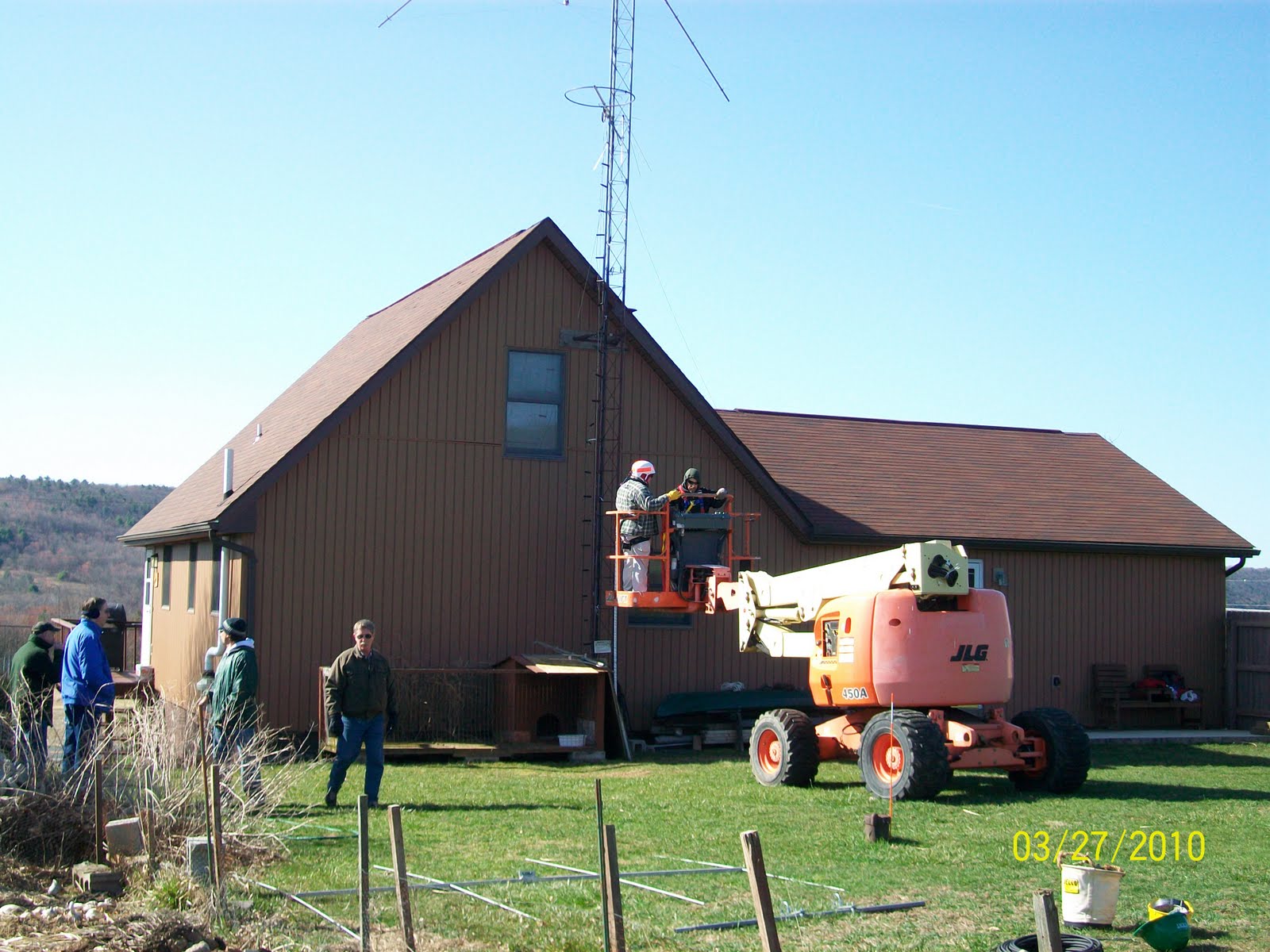
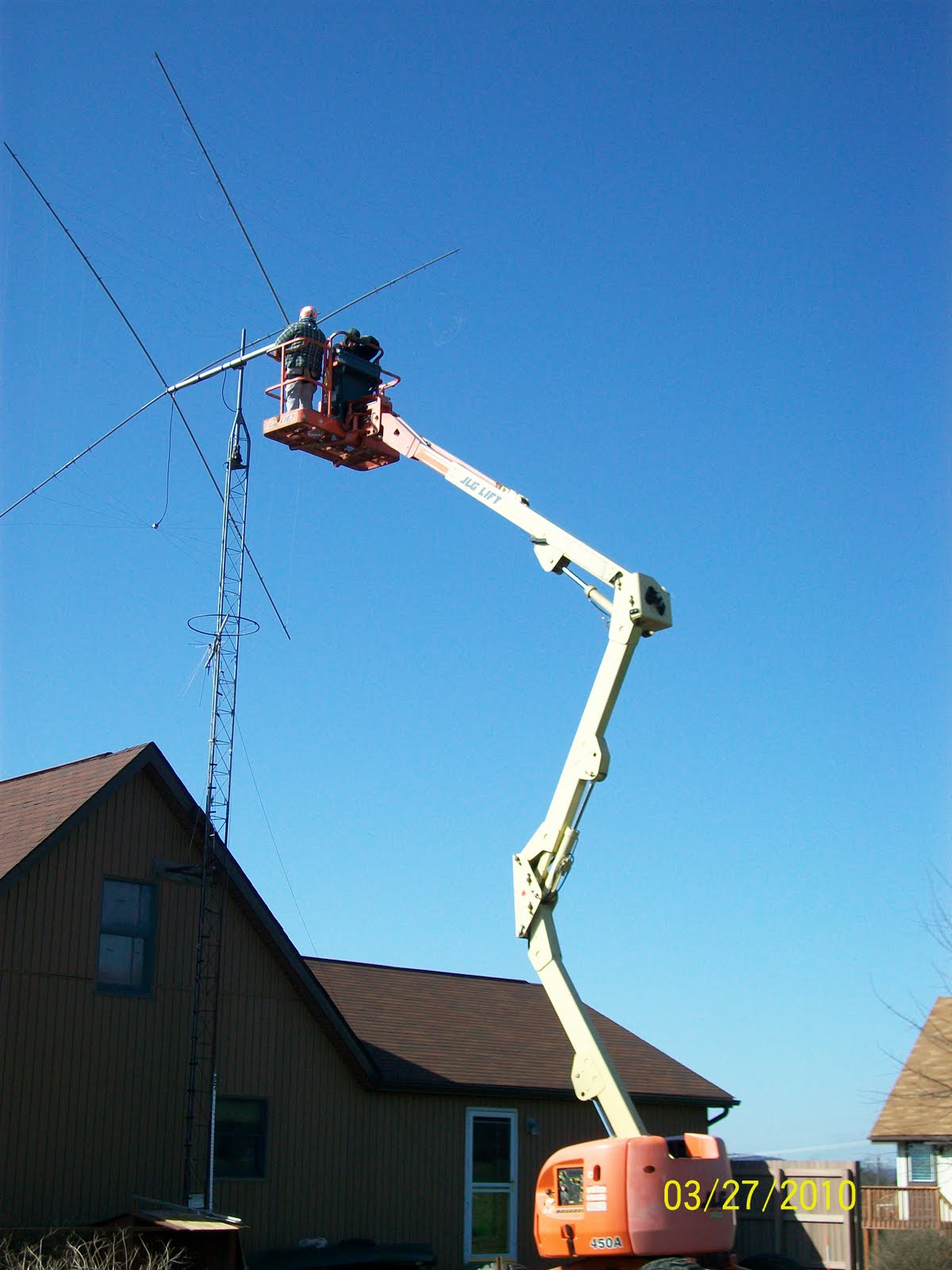
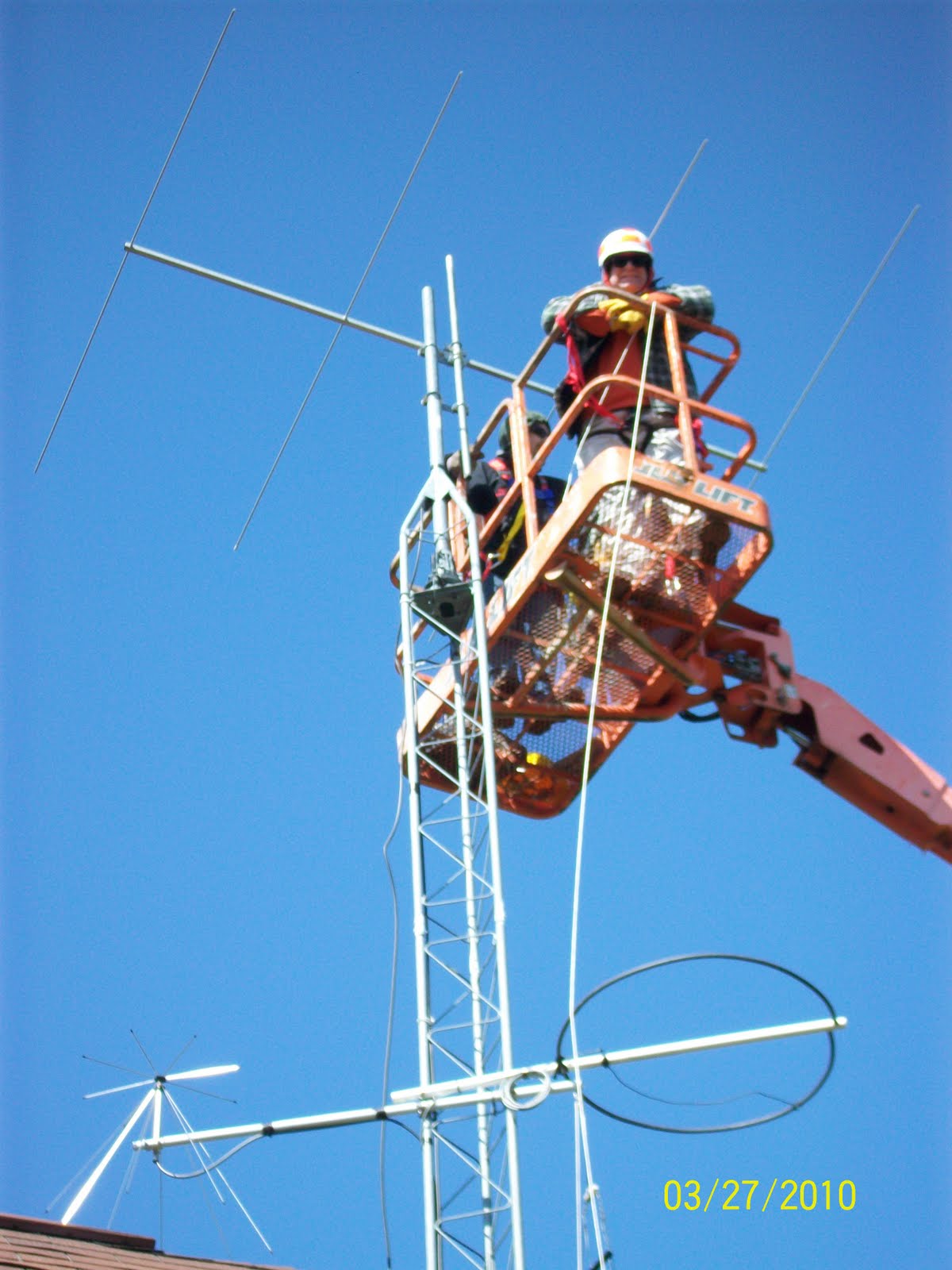
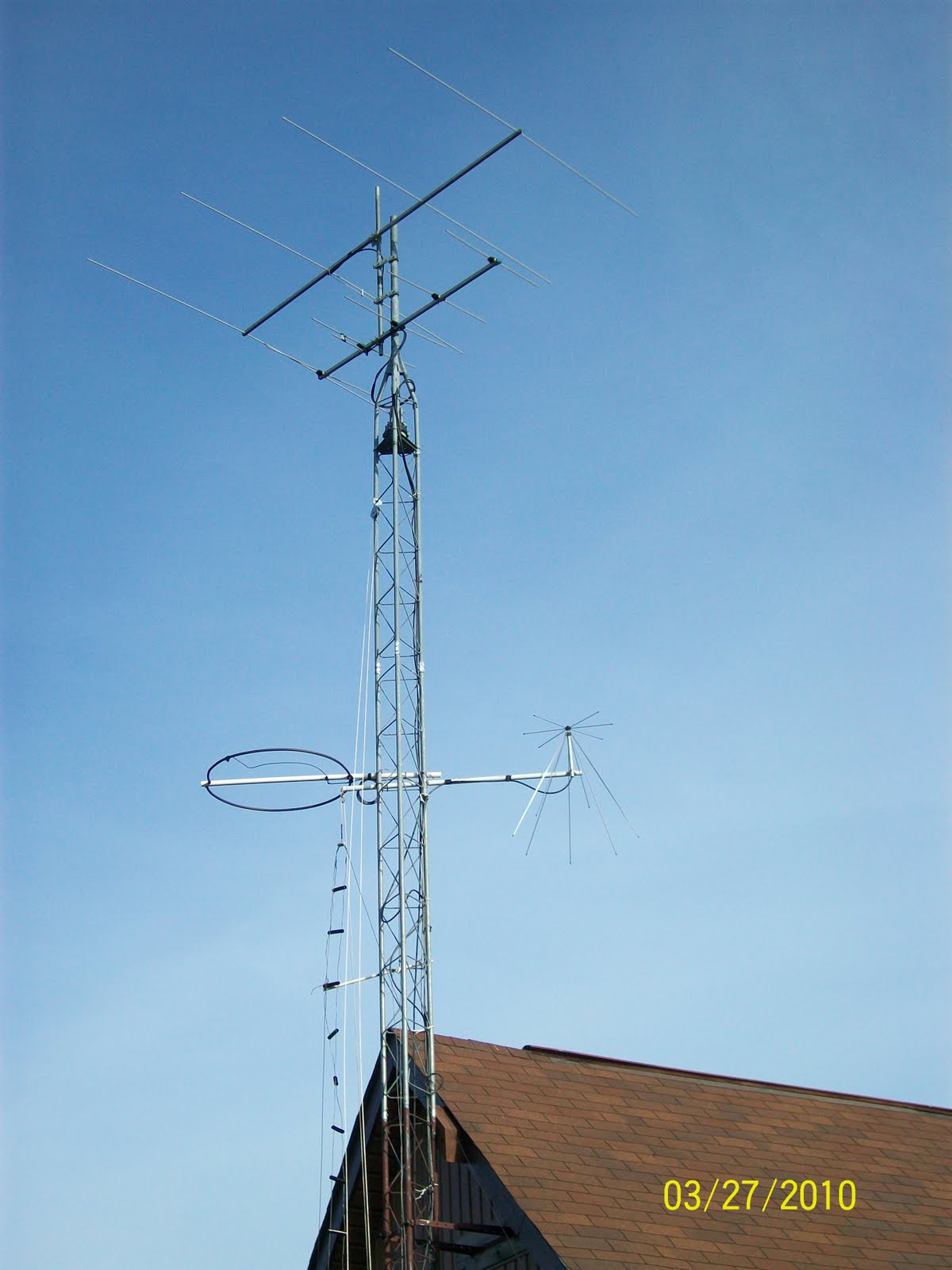
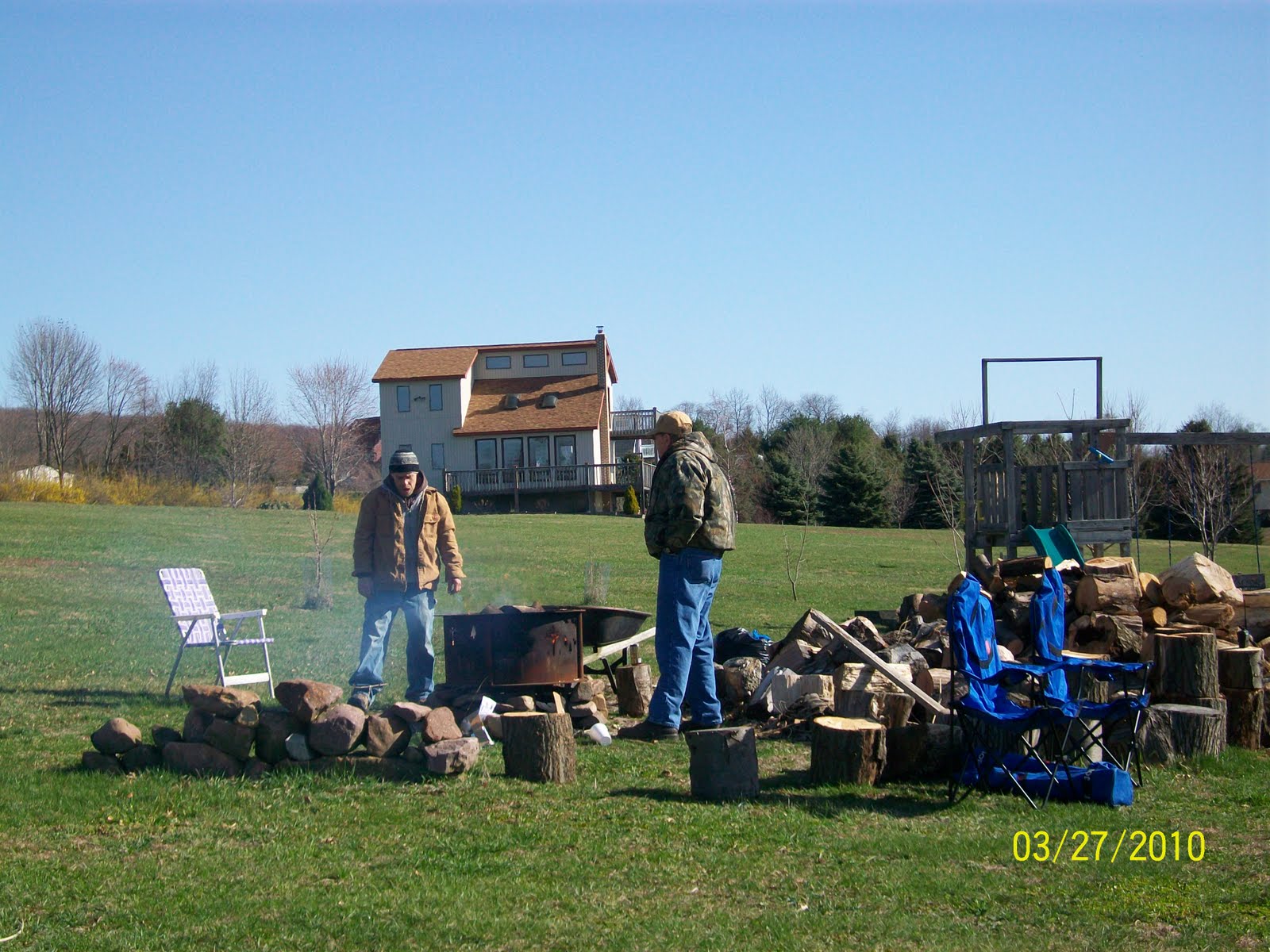
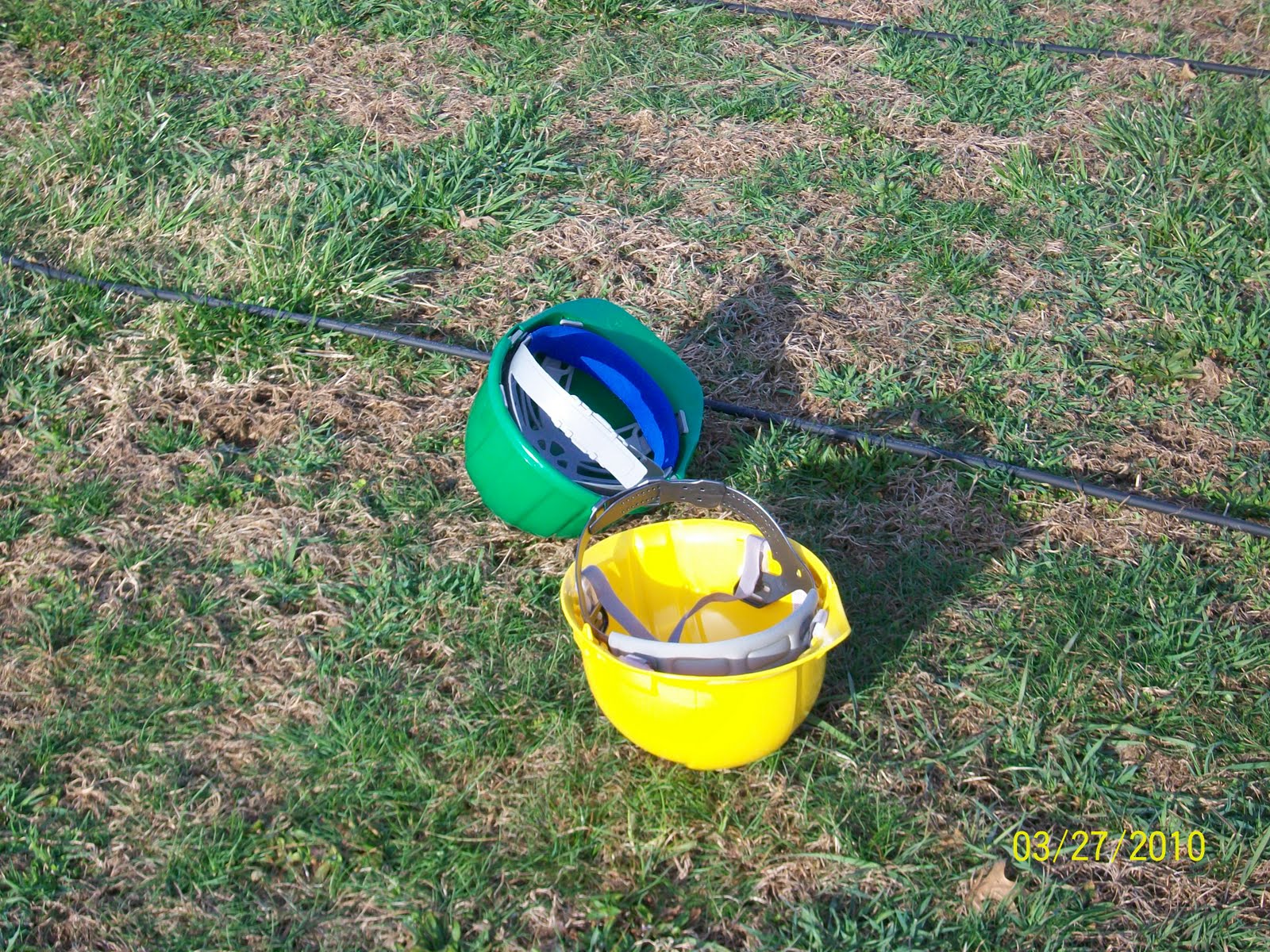
Rather than hinging down the 40' (12 m) Rohn tower as usual I rented a 45' (14 m) manlift locally. This was a good decision. This model had a 500 pound (227 kg) platform capacity, so two people plus gear could fit in it. Once I figured out how to operate the controls, it was a very nimble piece of equipment. We wore harnesses and clipped into the platform railing with lanyards for safety.

Anthony Good, K3NG, is a regular contributor to AmateurRadio.com and writes from Pennsylvania, USA. Contact him at [email protected].
The NA-034 operation that almost wasn’t, Part I
As I mentioned in my posting from last week, I spent a few days in Florida recently. I was down there visiting family, but had free time in the afternoons and had planned on operating for a few hours each day from Lido Key, which is IOTA designator NA-034. Briefly, IOTA (Islands On The Air) is a program where hams operate from various islands all over the world and make contacts with other hams. There’s an awards program for contacting various numbers of islands. The rules (link goes to a PDF file) for what qualifies as an island for IOTA purposes are a bit complex, but Lido Key, just west of Sarasota, Florida, qualifies. I’ve made a couple of trips down there in the past and had a lot of fun operating from that location.
My plan was to head out to the parking lot of Lido Beach and set up there, as I’ve done in the past.This location is very easy to get to, and the parking lot has never been full when I’ve been there, so I can take up as much space as I need. For this portable operation, instead of using hamsticks (which are very straightforward to use but since they are nearly 2 meters long, are hard to ship), I decided to use my Buddistick vertical antenna. I’ve written about the Buddistick quite a bit here before, you can do a search from the search box on the right of the blog home page for “buddistick” to see all the references. Because Sharon and I didn’t want to have to check baggage, I shipped the radio (my trusty Icom 706MkIIG), feedline, power cables, and Buddistick down to a relative a couple of days before we left NJ.
I set up the radio and initially mounted the antenna on the rear of the rental car, a Mazda 5, which seemed to be a good way to get it up fairly high and also allowed me to toss the counterpoise wire over a low tree branch.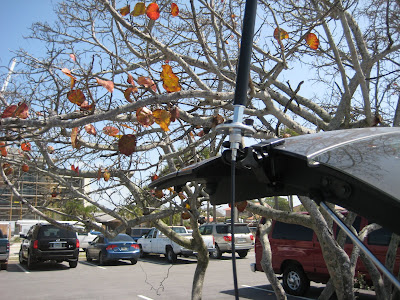 (It’s a bit difficult to see, but you can view the counterpose wire just above the bottom of the picture, it’s the very thin wire.) I set up the antenna, configured it for 20m, and checked it with the antenna analyzer, where I found that I had excellent SWR at my intended operating frequency of 14.260Mhz (one of the standard IOTA frequencies). I connected the antenna to the feedline, and used the built-in SWR testing in the radio to ensure that the SWR was still good (it was), found that my intended frequency was unoccupied, and started to call CQ. That’s when I discovered that I had a pretty serious problem.
The problem was that when I keyed the radio and called CQ, I could hear a lot of what sounded like RF feedback in the headset. My assumption was that for some reason, the transmitted signal from the transmitted signal from the radio was being fed back into the radio, and causing the noise that I was hearing in my headset. As it turned out, I was wrong about the source of the problem, but I didn’t find that out for another 24 hours. Working on that initial assumption, I tried to move the antenna to a slightly different location on the car, and even tried to use the very small Buddistick tripod to place the antenna on the ground much farther away from the car, but had no success. (By the way, that’s a wonderful little tripod, but it’s really not designed to work on a concrete parking lot surface where you can neither dig the legs in nor secure it to anything. All it took was a tiny breeze to knock over the antenna. Fortunately, no damage was done to the whip antenna, but I’ll be a bit more careful about trying that again.)
At that point, I had to take a break from troubleshooting to join a conference call at work. (Yes, even though I was on vacation.) After the call and a follow-up call, about 90 minutes had passed. I tried a few more attempts to play with the radial height, move the location of the radio, and to create an RF choke by coiling some feedline at the feedpoint of the antenna, but was still having no success. I decided to try to find another operating location, hoping to find a park where I could mount the antenna on a picnic table much farther away from the radio, hoping that any RF problems coming from the antenna would be significantly reduced by the distance. I looked at the GPS I’d brought with me and it appear to show a park farther south on the island, so I put all the gear in the car, and headed south.
The saga continues in Part II.

David Kozinn, K2DBK, is a regular contributor to AmateurRadio.com and writes from New Jersey, USA. Contact him at [email protected].
This Weekend In RadioSport | Aggro Prefix Time
 Who owns the single operator all band low power record? Is 60 million points possible for a multi-multi station? Who will log 1,528 prefixes or more this weekend?
It’s aggro prefix time for high frequency airwaves and operators are transmitting unusual prefixes from their callsign quivers. Everyone is a multiplier. It is important to listen first after clicking that flash spot before pushing to talk.
No one likes a busted call when log adjudication rolls around. One pays a penalty in points, ouch, especially when operators are chasing records or looking to establish a personal best.
Rules (link).
Have fun, double check receiver filter settings, check audio, and listen first. Everyone likes a clean log.
Contest on!

Scot Morrison, KA3DRR, is a regular contributor to AmateurRadio.com and writes from California, USA.
LHS Episode #036: Are We There Yet?
 We’ve managed to cobble together another round table discussion for Episode #034 of Linux in the HAM Shack. Thanks to Lord Drachenblut of Ten Buck Review and our party crasher, Jonathan, KB1KIX, for helping us out with this episode.
The format is a little bit different this time based on some feedback from listeners. If you like what you hear or would rather have us go back to the way things were, let us know. We’re interested in what you think. Our topic tonight is a thought provoking e-mail that we received before last episode from Jim, N2ENN. Hopefully we’ve given it an honest appraisal.
Please send us your feedback, your questions and your donations to obtain a noise gate for Richard. Also, enter our two contests for a chance to win real money! And stay tuned for our next recording. We have a very special guest interview coming up. You won’t want to miss it.
73 from the LHS Guys
Russ Woodman, K5TUX, co-hosts the Linux in the Ham Shack podcast which is available for download in both MP3 and OGG audio format. Contact him at [email protected].
To all of us old-timers
This isn’t original, though I’ve edited it a bit. It was sent to me as one of those chain emails, so my apologies if you have already seen it. But I thought it was so true, I just had to share it. I think everyone should read it.
To all who were born in the 1930s, ’40s, ’50s and 60s!
We were born to mothers who smoked or drank while they carried us and lived in houses full of asbestos. They took aspirin, ate blue cheese, raw egg products, bacon and processed meat, tuna from a can, and didn’t get tested for diabetes or cervical cancer.
Our baby cots were covered with bright coloured lead-based paints. We had no childproof lids on medicine bottles, doors or cabinets. We rode in cars with no seat belts or air bags. We rode our bikes without helmets or shoes.
The shops closed at 5pm and didn’t open on Sundays, but we didn’t starve! Our only take away food was fish and chips – no pizza shops, Burger King or McDonald’s. We ate crisps with salt in them, white bread with real butter, drank full cream milk and soft drinks with sugar in them, but we weren’t overweight because we were always outside playing!
We rode bikes or walked to school and didn’t get abducted. Our teachers would hit us with canes and gym shoes and bullies ruled the playground. It didn’t harm us.
When we wanted our friends we would just walk or ride round there and yell for them. No one was able to reach us all day. We would leave home in the morning and play all day, as long as we were back when the streetlights came on.
We collected old drink bottles and cashed them in at the corner store to buy toffees, gobstoppers, bubblegum and bangers to blow up frogs with. We would spend hours building go-karts out of old prams and then ride down the hill, only to find out we had no brakes. We built tree houses and dens and played in river beds with matchbox cars. We were given air guns and catapults for our birthdays. We fell out of trees, got cut and dirty, broke bones and teeth and there were no lawsuits from these accidents.
We did not have Playstations, Nintendo Wii, X-boxes, no video games at all, no 999 channels on satellite TV, no video/dvd movies, no mobile phones, no personal computers, no Internet, no Internet chat rooms. When we wanted to make friends we went outside and found them!
We had freedom, failure, success and responsibility and we learned how to deal with it. And you are one of them. Congratulations for surviving despite so many difficulties!

Julian Moss, G4ILO, is a regular contributor to AmateurRadio.com and writes from Cumbria, England. Contact him at [email protected].
 Ham Radio Deluxe |
 W5SWL Electronics |
 Ham Radio Prep |
 KB3IFH QSL Cards  Hip Ham Shirts  HamRadioAuctions HamRadioAuctions Reliance Antennas Reliance Antennas Enigma Shop Enigma Shop |  morseDX  Ni4L Antennas  R&L Electronics R&L Electronics antennas.us antennas.us QRV QRV |
- Matt W1MST, Managing Editor
