Archive for the ‘hf’ Category
 Expect Uptick in HF Propagation Even on 10m, This Week
 November 4th, 2013 |
  Author:
 New sunspot region, NOAA Active Sunspot Region Nr. 11890, far left on the solar disc, will produce flares, this week.
The Sun continues to produce sunspots, and this week looks active, too. Expect another uptick of activity on higher HF bands such as 10 meters, as a “new” sunspot region has now rotated into full view. It has a complex magnetic structure, so it could produce moderate and maybe strong x-ray flares. We expect flaring activity to pick up, as a result.

With all of the recent activity, and the continued train of spots, right now, it certainly appears to be a sign of a “second” peak in the cycle. Most cycles exhibit such double peaks. Is this one of them in this current Sunspot Cycle 24?
Enjoy the DX!
73 de NW7US (Your CQ Magazine and Popular Communications Magazine propagation columnist)
A Great Bag for the FT-817
One of my favorite rigs is the Yaesu FT-817, the QRP transceiver that covers HF through 70 cm. I use it for mountaintop VHF, including Summits On The Air (SOTA) activations.
At Pacificon, I came across this bag by AMP-3 which is custom designed for the FT-817. David KF7ETX did a great job designing this bag, which he explains in this video.
There are cheaper solutions out there but this is the best one I’ve seen.
73, Bob K0NR
Lost Island DX Society Mysteriously Reappears
 As reported here in this blog, the Lost Island DX Society has been missing in action for over a year. Various rumors propagated around the internet and amateur radio community concerning what happened to these LIDS. Recently, the Fi-Ni Report came to life and reported that the LIDS are actively planning (or at least discussing) working the CQ Worldwide DX Contest. Of course, this is the SSB version of the contest.
No explanation has been given for the year long absence of the LIDS and the Fi-Ni Report.
73, Bob K0NR
Digital Voice at Pacificon
Last weekend, I had the privilege of attending the Pacificon amateur radio convention in Santa Clara, something I have been trying to do for several years now. It is a great event, with good technical programs and a super venue.
The most interesting presentation I saw was the one on digital voice (DV) technology by Bruce Perens K6BP. The presentation was mostly about the digital voice known as FreeDV, an open source approach to DV that uses the Codec 2 voice codec for digitally processing/compressing speech.
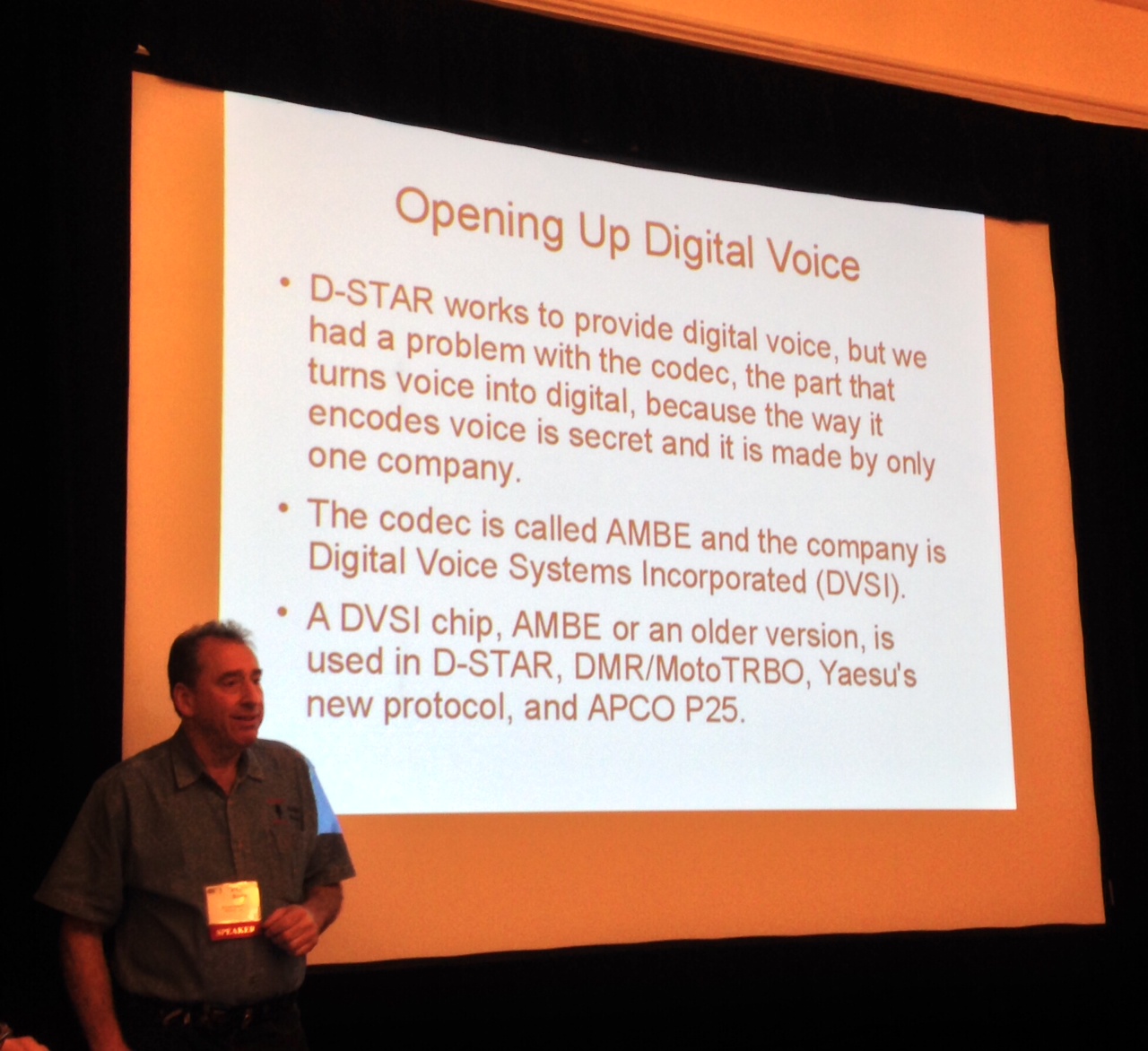
Bruce Perens K6BP talking about FreeDV
I won’t cover all of the technical details here but you can follow the links above to go deeper on the topic. The initial FreeDV efforts are focused on the HF bands, using the sound card plus computer approach to implementing DV. This is a good approach since it is a relatively easy way to adopt this technology. (Compare this to VHF/UHF where you need to solve the repeater infrastructure problem to make progress.) FreeDV operates with a bandwidth of 1.25 kHz, narrower that the standard 3 kHz or so SSB signal. FreeDV also has the benefit of degrading gracefully as the signal-to-noise ratio is decreased, with less of a digital dropoff that we see with D-STAR and other DV technologies.
Like many hams, Bruce pointed out the concerns and limitations of the proprietary AMBE chip used in D-STAR, DMR and now the new Yaesu DV system. I totally get this point and support the idea of a an open source codec. On the other hand, this work is coming more than a decade later than the creation of D-STAR. I like to refer to this phenomenon as ”our ideas are better than their products.”
Bruce introduced Chris Testa KB2BMH to talk about the “HT of the Future”. This is a handheld transceiver implemented using Software Defined Radio (SDR) and inspirations from the world of smartphones. As Bruce said, “Why isn’t your HT as smart as your smart phone?” This is similar to the Android HT idea that I blogged about a while back. See Chris’s blog and this HamRadioNow video for more information.
Another presentation that I attended was about D-STAR with several speakers, including Robin AA4RC. The innovation continues to happen in the D-STAR world with a strong theme of using Raspberry Pi computers to create D-STAR hotspots and repeaters. Robin described the “DV Pi” being developed…a DVAP-like daughter board that plugs into a Raspberry Pi. Jim Moen K6JM talked about the many ways you can implement a D-STAR Hotspot. For more info on that see his D-STAR Hotspot page.
There’s much innovation happening in the area of Digital Voice. It got me thinking about it again so I dug out my ICOM D-STAR HT and put my DVAP back on the air.
73, Bob K0NR
How To Do a SOTA Activation On Pikes Peak
This post was updated on June 4, 2022, after the summit house construction was completed.
Perhaps this should be called The Slacker’s Guide to Activating Pikes Peak since I am going to describe the easy way to do a Summits On The Air (SOTA) activation on America’s Mountain. If you plan to hike up, you have my complete support but this post is not meant for you.

Pikes Peak (W0C/FR-004) is about 10 miles straight west of downtown Colorado Springs. See the Pikes Peak website for useful tourist information. At an elevation of 14,115 feet, the mountain towers over Colorado Springs and the other front-range cities. (You may see the elevation listed as 14,110 but it was revised upward in 2002 by the USGS.) This means that it has an excellent radio horizon to large populated areas. On VHF, it is possible to work stations in Kansas, Nebraska, Wyoming and New Mexico. See VHF Distance From Pikes Peak and Pikes Peak to Mt Sneffels. On HF, you’ll do even better.

Getting There
Access to the summit has three options: hike up, drive up via the Pikes Peak Highway or ride the Pikes Peak Cog Railway. Most people will probably choose the highway since the cog rail only gives you 30 to 40 minutes on the summit. (Normally, you return on the same train that takes you to the top. You can try to schedule two one-way trips but that is a challenge.)
After a few years of turmoil and construction, the summit of Pikes Peak is now back to operating normally but with some changes. The new summit house/visitors center is open and it is a beautiful new facility. The Cog Railway is also operational with brand new equipment. There is a new boardwalk that allows easy strolling on the summit and improved views near the edge of the summit.
Pikes Peak Highway
The highway is at a well-marked exit off Highway 24, west of Colorado Springs. There is a “toll” to use the highway (~$15 per person, check the Pikes Peak Highway website for the latest information and a $2 discount coupon.) Starting in 2022, you must have a reservation (2-hour window) to drive to the summit (roughly Memorial Day to Labor Day). The specifics are likely to change, so be sure to check the Drive Pikes Peak page for the latest updates.
The road is paved all of the way to the top and is usually in good shape. The only caution on driving up is that some people get freaked out by sections of the road that have steep drop-offs without guard rails. It is very safe, but some folks can’t handle it. The main caution driving down is to use low gear and stay off your brakes. There are plenty of signs reminding you to do this and during the summer there is a brake check station at Glen Cove where the rangers check the temperature of your brakes.
It takes about an hour to drive to the summit, assuming you don’t dawdle. It is best to drive up during the morning and avoid the afternoon thunderstorms.
On The Summit
The W0C Association Reference Manual (the SOTA rules for Colorado) used to suggest a “qualifying hike” of 100 vertical feet but this item has been removed from the manual. If you decide to do such a hike, I suggest you proceed down Barr Trail which is the main hiking trail coming up from the east side of the peak. Do not try to walk along the road, as the rangers will stop you. The trail starts on the east side of the summit house (towards Colorado Springs) and is marked with a sign. You have to cross over the cog rail tracks to get to it. (Please try to avoid getting run over by the train as it scares the tourists and makes a mess.)
The summit of Pikes is broad, flat and rocky, so pick out a spot away from the buildings for your SOTA adventure. There are quite a few radio transmitters on the peak so expect some interference. Since this is way above treeline, your antennas will have to be self-supporting. For VHF, giving a call on 146.52 MHz FM will usually get you a few contacts and sometimes a bit of a pileup. Be aware that on top of Pikes you are hearing everyone but they can’t always hear each other. It can get confusing. Another VHF simplex frequency worth trying is 146.58 MHz (The North America Adventure Frequency). On the HF bands, pray for good ionospheric conditions and do your normal SOTA thing.
Your body and your brain will likely be moving a little slower at 14,000 feet due to the lack of oxygen. Don’t be surprised if you have trouble deciphering and logging callsigns. Take it slow and monitor your physical condition on the peak.
Bring warm, layered clothes, even in the summer, since Pikes Peak can have arctic conditions any time of the year. Keep a close eye on the weather since thunderstorms are quite common during the summer months. Lightning is a very real danger, so abandon the peak before the storms arrive.
73, Bob K0NR
Resources
SOTAwatch web site
W0C SOTA Website
Pikes Peak Tourist Information
Pikes Peak (W0C/FR-004) SOTA Page
Pikes Peak Webcams
The post How To Do a SOTA Activation On Pikes Peak appeared first on The KØNR Radio Site.
Trying Out the Buddistick Antenna
At the Dayton Hamvention, I had picked up the Buddistick™ Deluxe Package portable HF antenna. This antenna is very popular with the Summits On The Air crowd and other QRP enthusiasts. Usually when I am doing SOTA activations, its all about VHF. But being a self-proclaimed HF Slacker, I might get on HF sometime from a summit, so having a Buddistick available seems like a good idea.
I decided I better check this thing out to see if I can make it work on our back deck.
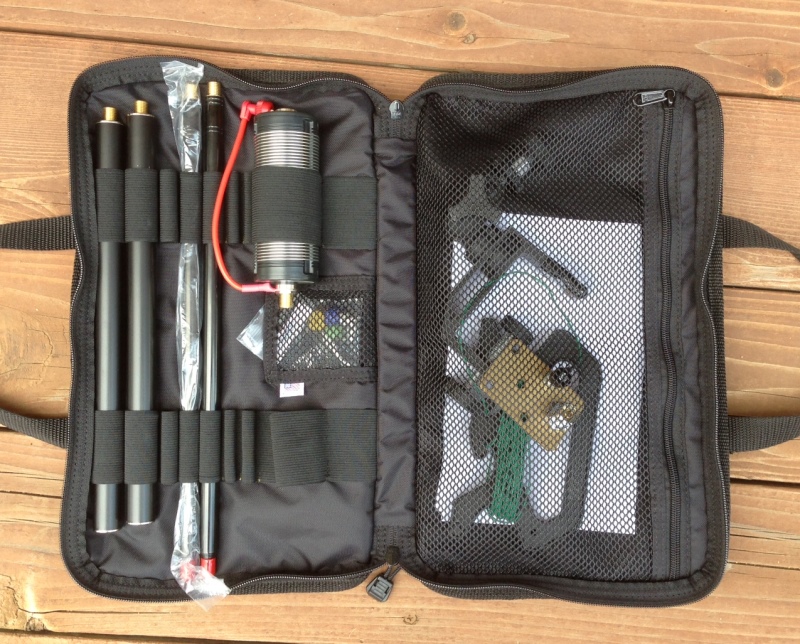
The Buddistick Deluxe Package
After actually reading the instructions, I assembled the antenna and used the clamp mount to attach the antenna on our deck railing. I strung the single radial out on the deck to the recommended length and connected up the transceiver using a short length of RG-8X cable.
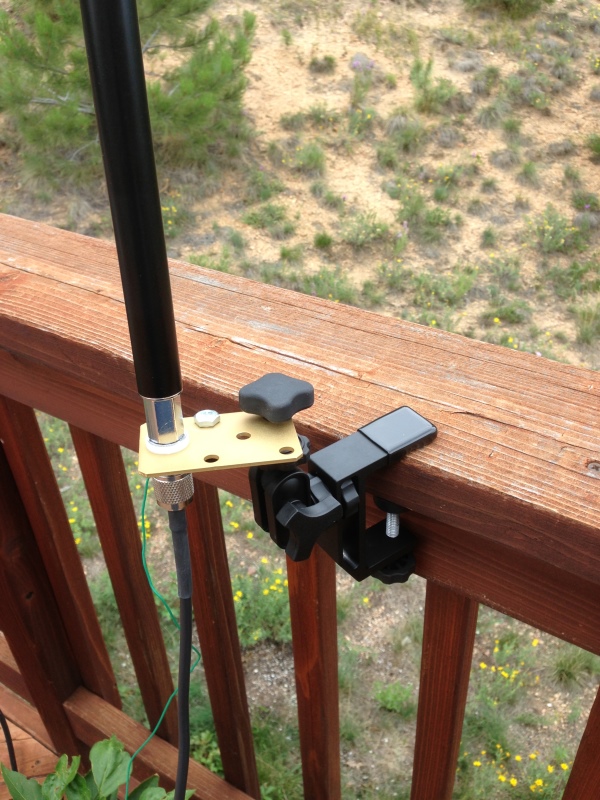
Then I used the “by ear” tuning technique to set the tap on the antenna coil. You basically just run the tap down the coil to find the spot that produces the highest noise level at the transceiver. I checked the match using the built-in SWR meter in the Yaesu FT-817 and verified that it was good.
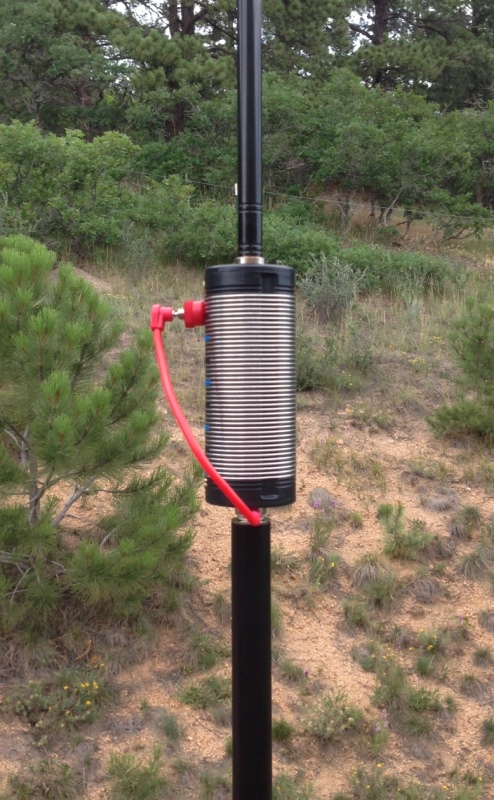
The tapped tuning coil
At first, I tried 20 Meters and discovered an S6 noise level. Not good. Retuning the antenna, I moved up to 15 Meters and found the noise level to be much lower. I also heard a few strong stations working the North American QSO Party.
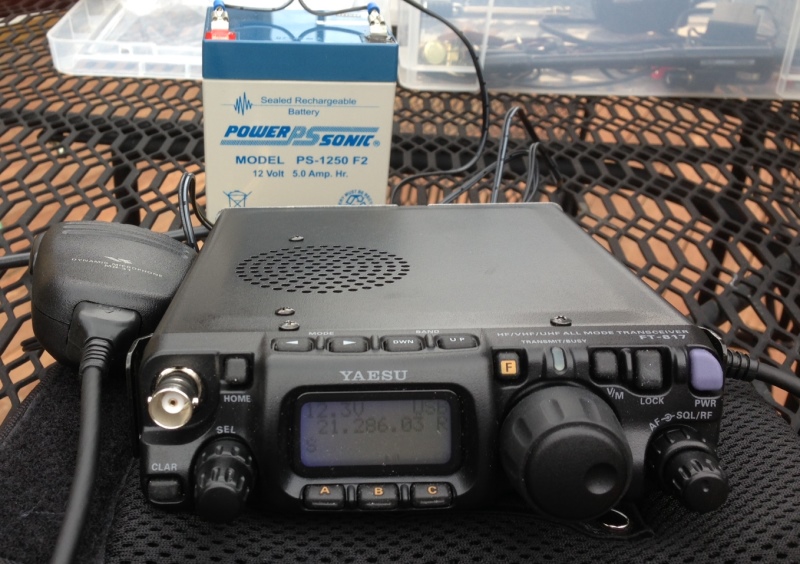
The mighty Yaesu FT-817 transceiver
I tuned around on the SSB portion of the band and found Bob N4BP calling CQ Contest so I gave him a quick call. He came back to me right away and I gave him the contest exchange of name and state. QSL and I was in his log, no problem! I heard N8II calling and repeated the same exchange, no sweat.
Hey, this QRP stuff really works!
So that was a great first experience with the Buddistick. Now I need to try it from a summit.
73, Bob K0NR
Get Ready For Field Day
 Attention all radio amateurs, this weekend is ARRL Field Day! Don’t forget to get on the air.
Field Day is a flexible event, so it can be anything you want it to be: camping weekend, stay at home, participate with your club, go mobile, whatever you desire. Remember to season to taste.
One more thing: Field Day is not a contest. But you can still keep score.
Oh, remember that the national simplex FM calling frequency of 146.52 MHz should not be used for making Field Day contacts. Like all contests…wait Field Day is not a contest. Whatever.
- 73, Bob K0NR













