Archive for the ‘hf’ Category
 Nifty I Phone Morse Code Decoder
 July 6th, 2015 |
  Author:
 HOT PAW
MORSE CODE DECODER FOR I PHONE

Screen Snap of Hot Paw Morse Code Decoder
I recently installed a ham radio station in my truck. Since then I’ve been having a lot of fun with it, using SSB mostly, since that is a novelty for me. Most of my operating has been using CW, but taking a side trip into PSK occasionally. Logging is somewhat cumbersome in a truck. I used big elastic bands to attach a small clip board to my leg so I could quickly write down a call sign and very basic information. This information would be then transferred to a computer log at home. I tried using the computer in the truck also, and that proved even more cumbersome, having the laptop jammed into the steering wheel.
I like to use a keyboard to send code but no matter what I used, it was a bit awkward in the truck. At the very least, the laptop stays put when its jammed into the steering wheel. Using the passenger seat would require my changing the radio head orientation, the antenna control and paddles which are all set up for easy use from the drivers seat.
Occasionally I’d switch to CW and fumbled for a pen to write down a call sign, time, and band. The guy I was chatting with on 40 meter CW was running just a tad too fast for me to copy ‘everything he sent’, so I missed some of it. It seems that the ‘buffer in my brain’ is smaller than I’d like it to be and with FIFO being the rule, the beginning of a word vanishes as I copy the ending.
(FIFO, First In, First Out’) Some folks may complain that using a ‘decoder’ is cheating somehow. Yes, for a contest, but for every day QSO’s its not cheating at all. If you don’t like it, don’t use it!
I discovered this app and tried it last night for the first time. Wowzah, can it copy code! Just lean it up against your radio, or just near it, and it copies CW. This is a really great help when someone is sending just a ‘tad faster’ than my ability to copy ‘everything’! Its also handy to ‘get the entire call sign’, while I was fumbling with other things in the truck! It works pretty well even in poor band conditions, and has Farnsworth Method as well as regular copy. It has ultra high speed copy, but I have not tried it. 1oo WPM code is hard to come by on the air.
This proves very useful in the truck, but my guess is that other hams will find it handy in other ways.
Weekly Propagation Summary – 2015 Jul 06 16:10 UTC
Here is this week’s space weather and geophysical report, issued 2015 Jul 06 0524 UTC.
Highlights of Solar and Geomagnetic Activity 29 June – 05 July 2015
Solar activity ranged from very low to moderate levels this period. Low levels were observed during the majority of the period with moderate levels observed on 03 July and very low levels on 05 July. The majority of the C-flare activity occurred from Regions 2373 (N16, L=141, class/area Dso/150 on 01 July), 2376 (N13, L=124, class/area Eai/150 on 01 July) and 2378 (S16, L=086, class/area Cso/090 on 04 July). Region 2378 produced the largest flare of the period, an impulsive M1/1n flare at 03/1251 UTC. New Region 2381 (N15, L=073, class/area Dao/100 on 05 July) emerged near the NE limb on 03 July and grew moderately on 05 July, however had not produced significant flare activity by the time of this report. No Earth-directed coronal mass ejections (CMEs) were noted during the period.
No proton events were observed at geosynchronous orbit, however there was an enhancement from 29-30 July as levels were decaying from the 10 MeV proton event that occurred from 26/0350 UTC through 27/0755 UTC associated with an M7/3b flare at 25/0816 UTC. Another enhancement to 5 pfu (Below S1-Minor) was observed from 01-02 July, likely due to flare/CME activity from beyond the west limb at 01/1436 UTC.
The greater than 2 MeV electron flux at geosynchronous orbit was at high levels from 29 June through 04 July reaching a maximum flux value of 9,670 pfu at 30/1725 UTC. Electron flux decreased to normal levels on 05 July in response to the arrival of a co-rotating interaction region (CIR) preceding a negative polarity coronal hole high speed stream (CH HSS).
Geomagnetic field activity was mostly quiet with solar wind parameters at nominal levels for the majority of the week. Solar wind speeds ranged from 300 km/s to 450 km/s and total field values were between 1 nT and 8 nT. By midday on 04 July, total field, density, solar wind speed and temperature all began to increase indicating the arrival of a CIR preceding the anticipated recurrent negative polarity CH HSS. Total field reached a maximum of 23 nT at 04/1901 UTC with the Bz component reaching a maximum southward deflection of -22 nT at 04/1911 UTC. Solar wind speed increased from the mid 300 km/s to 604 km/s by 04/2023 UTC before declining to just over 500 km/s by the end of the period. The geomagnetic field responded with G1 (Minor) to G2 (Moderate) storm periods late on 04 July though early on 05 July.
Forecast of Solar and Geomagnetic Activity 06 July – 01 August 2015
Solar activity is expected to be at low levels with a chance for M-class (R1-R2, Minor-Moderate) flares from 06 July through 24 July with the return of old Regions 2367 (S20, L=002) and 2371 (N13, L=302). Very low to low levels are expected from 25 July through 01 August.
No proton events are expected at geosynchronous orbit.
The greater than 2 MeV electron flux at geosynchronous orbit is expected to be at high levels from 07-08 July and again from 12-15 July in response to recurrent CH HSS activity.
Geomagnetic field activity is expected to be at active levels on 06 July as a recurrent negative polarity CH HSS persists. Unsettled to G1 (Minor) storm conditions are expected from 10-11 July due to the arrival of a recurrent positive polarity CH HSS. G1 (Minor) to G2 (Moderate) geomagnetic storm conditions are expected once again from 31 July through 01 August due to the return of the recurrent negative polarity CH HSS.
Don’t forget to visit our live space weather and radio propagation web site, at: http://SunSpotWatch.com/
Live Aurora mapping is at http://aurora.sunspotwatch.com/
If you are on Twitter, please follow these two users: + https://Twitter.com/NW7US + https://Twitter.com/hfradiospacewx
Get the space weather and radio propagation self-study course, today. Visit http://nw7us.us/swc for the latest sale and for more information!
Check out the stunning view of our Sun in action, as seen during the last five years with the Solar Dynamics Observatory (SDO): https://www.youtube.com/watch?v=zXN-MdoGM9g
We’re on Facebook: http://NW7US.us/swhfr
Weekly Propagation Summary – 2015 Jun 29 16:10 UTC

Here is this week’s space weather and geophysical report, issued 2015 Jun 29 0647 UTC.
Highlights of Solar and Geomagnetic Activity 22 – 28 June 2015
Solar activity was at low to high levels. The period began at high levels when Region 2371 (N13, L=302, class/area Fkc/1180 on 21 June) produced an M6/2b flare at 22/1823 UTC with an associated Castelli-U spectral burst, Type II radio sweep (1480 km/s), 1000 sfu Tenflare, and a full halo coronal mass ejection (CME) with an approximate speed of 1047 km/s. Solar activity returned to high levels again on 25 June as Region 2371 produced a long-duration M7/3b flare at 25/0816 UTC with associated Type II (2056 km/s) and Type IV radio sweeps, 3800 sfu Tenflare, and an asymmetric full halo CME with an approximate speed of 1500 km/s. Region 2371 remained relatively quiet and stable after 25 June, only producing low-level C-class flaring for the rest of the period.
A greater than 10 MeV proton event was in progress at the beginning of the period. The event began at 21/2135 UTC, likely associated with an M2/1n flare at 21/0142 UTC from Region 2371, reached a maximum flux value of 1070 pfu at 22/1900 UTC and ended 24/0705 UTC. A brief enhancement to the S3 (Strong) levels was observed due to a shock enhancement from the arrival of the 21 June CME. Another greater than 10 MeV proton event began at 26/0350 UTC in association with an M7/3b flare at 25/0816 UTC from Region 2371, reached a maximum of 22 pfu (S1-Minor) at 27/0030 UTC and ended at 27/0755 UTC.
The greater than 2 MeV electron flux at geosynchronous orbit was high levels through the period with the exception of 23 June. A maximum flux of 26,376 pfu was observed at 24/1620 UTC.
Geomagnetic field activity ranged from quiet to severe storm conditions. At 22/0451 UTC, a small shock was observed at the NASA/ACE spacecraft. Total field increased from 8 nT to 17 nT with a corresponding solar wind increase from 360 km/s to 431 km/s. The shock was associated with the arrival of the 19 June CME caused by a filament eruption in the SE quadrant observed in SDO/AIA imagery beginning at 19/0500 UTC. A geomagnetic sudden impulse (SI) of 19 nT (Guam) was observed at 22/0545 UTC. The geomagnetic field responded with unsettled to active levels. At 22/1759 UTC, another shock was observed in ACE data from the 21 June CME associated with a double peak M2 flare from Region 2371 at 21/0142 UTC. Total field increased to a maximum of 41 nT at 22/1935 UTC, solar wind speed increased to 737 km/s and the Bz component went negative to -39 nT at 22/1850 UTC. A prolonged period of mostly southward Bz occurred between 23/0013 UTC and 23/1246 UTC reaching as high as -25 nT. An SI of 48 nT (Hartland) was observed at 21/1650 UTC. The geomagnetic field responded with minor to major storm levels with severe storm periods observed between 22/1800-2100 UTC and 23/0000-0600 UTC. At 24/1258 UTC, the 22 June CME associated with the M6/2b flare on 22 June was observed in ACE data. Solar wind speeds increased from approximately 550 km/s to around 760 km/s with a relatively weak increase in total field from 5 nT to 13 nT. The Bz component was mostly positive during this event with negative values reaching a maximum of -11 nT between 25/0547 UTC and 25/1357 UTC. The geomagnetic field responded with only quiet to active periods on 24 June, but increased to minor to major storm levels mid-period on 25 June. Another CME associated with the M7/3b flare on 25 June arrived at 27/0223 UTC at the ACE spacecraft. Solar wind speeds increased from near 475 km/s to 860 km/s before slowly decreasing to 480 km/s by the end of the day. Total field reached a maximum of 13 nT at 27/0304 UTC and the Bz component was variable between +9 nT and -7 nT. As a result, the geomagnetic field never increased beyond unsettled conditions.
Forecast of Solar and Geomagnetic Activity 29 June – 25 July 2015
Solar activity is expected to be at low levels with a chance for M-class flare (R1-R2, Minor-Moderate) activity from 30 June through 24 July with the return of old Regions 2365 (S13, L=079) on 30 June, 2367 (S20, L=002) on 05 July, and 2371 (N13, L=302) on 11 July.
There is a chance for a greater than 10 MeV proton event from 11 July through 24 July with the return of old Region 2371 to the visible disk.
The greater than 2 MeV electron flux at geosynchronous orbit is expected to be at high levels from 29-30 Jun and again from 08-19 July due to residual CME effects and recurrent coronal hole high speed streams (CH HSS).
Geomagnetic field activity is expected to be at active to minor storm (G1-Minor) levels from 06-08 July and again from 11-12 July due to recurrent CH HSS activity.
Don’t forget to visit our live space weather and radio propagation web site, at: http://SunSpotWatch.com/
Live Aurora mapping is at http://aurora.sunspotwatch.com/
If you are on Twitter, please follow these two users: + https://Twitter.com/NW7US + https://Twitter.com/hfradiospacewx
Get the space weather and radio propagation self-study course, today. Visit http://nw7us.us/swc for the latest sale and for more information!
Check out the stunning view of our Sun in action, as seen during the last five years with the Solar Dynamics Observatory (SDO): https://www.youtube.com/watch?v=zXN-MdoGM9g
We’re on Facebook: http://NW7US.us/swhfr
LHS Episode #149: Coming Up Lemons
 Hello again, and welcome to Episode #149 of Linux in the Ham Shack. In this episode we tackle a number of interesting and diverse topics: Starting with Field Day and an online course on Climate Change, we move to software patent legislation, deep topics like buildroot and custom Linux images, and then to hardware reverse engineering for your benefit and a utility for helping you save battery power on your laptop. We even manage to get in an interview with our ambassador to SELF, Darrell, KI4LLA. Don't miss one action-packed second.
73 de The LHS Guys
Weekly Propagation Summary – 2015 Jun 22 16:10 UTC
Here is this week’s space weather and geophysical report, issued 2015 Jun 22 0548 UTC.
Highlights of Solar and Geomagnetic Activity 15 – 21 June 2015
Solar activity was at low to moderate levels. Weak to mid-level C-class flares were observed on 15-17 Jun from Regions 2360 (N15, L=129, class/area Eac/220 on 12 Jun), 2367 (S20, L=002, class/area Ekc/400 on 15 Jun), 2268 (S06, L=100, class/area Bxo/010 on 14 Jun) and 2371 (N13, L=302, class/area Fkc/1180 on 21 Jun). Activity increased to moderate levels (R1-minor) on 18 Jun. Old Region 2365 (S13, L=079) produced a long duration event (LDE) M1 flare at 18/0127 UTC. At 18/1736 UTC, Region 2371 produced an M3/1n LDE with associated Type IV and Tenflare (2200 sfu) radio emissions. Associated with this event was an asymmetric, full-halo CME first visible in LASCO C2 imagery at 18/1724 UTC.
19 Jun saw a return to low levels with weak to high-level C-class flares observed from Region 2371. At about 19/0500 UTC, a large filament eruption was observed in the SSE quadrant of the disk. Associated with this eruption was a partial-halo CME, first observed in LASCO C2 imagery at 19/0845 UTC. Moderate levels returned on 20 Jun with an M1/if flare observed at 20/0648 UTC. 21 Jun saw a total of 4 M-class class flares. Region 2371 produced an M2/1n flare at 21/0142 UTC with associated Type II (682 km/s) and Type IV radio emissions. Also associated with this event was a full-halo CME. Shortly afterward, this same region produced an M2.6 x-ray event. At 21/0944 UTC, Region 2367 produced an M3/2b flare followed by an M1 x-ray event at 21/1820 UTC.
A pair of 10 MeV at greater than or equal to 10 pfu proton events were observed at geosynchronous orbit. The first event began at 18/1135 UTC, reached a maximum of 16 pfu at 18/1445 UTC and ended at 19/0230 UTC. This event was associated with the M1 flare from old Region 2365 observed at 18/0127 UTC. The second event began at 21/2035 UTC and reached at peak of near 50 pfu at the end of the summary period and was still rising. This event was associated with the M1 flare from Region 2367 observed at 21/1820 UTC.
The greater than 2 MeV electron flux at geosynchronous orbit reached high levels through the entire summary period.
Geomagnetic field activity was at quiet to active levels through the period. Quiet to unsettled levels were observed on 15-17 Jun with isolated active periods observed on 15 and 17 Jun. This activity was due to positive polarity coronal hole high speed stream (CH HSS) effects. Solar wind parameters, measured at the ACE satellite, indicated wind speeds of near 600 km/s early on 15 Jun decreasing to about 450 km/s by the end of the 17th. Total field ranged between 4-8 nT while the Bz component varied between +/- 5 nT. Phi angle was in a predominately positive (away) orientation. Predominately quiet conditions were observed on 18 Jun through late on 21 June. Solar wind speeds decreased from about 450 km/s early on 18 June to near 275 km/s by 21/1540 UTC. During this same time frame, total field ranged between 1-6 nT, Bz varied between +4 nT to -3 nT and phi remained mostly positive. After 21/1540 UTC, wind speed increased to about 360 km/s, Bt increased to 12 nT, Bz varied between +8 nT to -7 nT and phi briefly rotated to a negative (towards) sector. This deviation indicated a possible co-rotating interaction region in advance of an anticipated positive polarity CH HSS.
Forecast of Solar and Geomagnetic Activity 22 June – 18 July 2015
Solar activity is expected to be at moderate to high levels (R1-R2, minor-moderate). Active Regions 2367 and 2371, and the return of old Region 2365 on 30 Jun, are expected to keep activity levels enhanced through the outlook period.
The 10 MeV at greater than or equal to 10 pfu proton flux at geosynchronous orbit is expected to remain at the S1 (minor) to S2 (moderate) levels through 24 Jun. Effects from the 21 Jun M1 flare, coupled with multiple shocks from the 18, 19 and 21 Jun CMEs, are expected to keep proton flux above event levels.
The greater than 2 MeV electron flux at geosynchronous orbit is expected to be at normal to moderate levels on 22 Jun through 06 Jul. Moderate to high levels are expected on 07-18 Jul due to CH HSS effects.
Geomagnetic field activity is expected to be at unsettled to severe storm levels (G1-G3, minor-strong) on 22-24 Jun. This activity is due to the expected arrival of the three CMEs from 18, 19 and 21 Jun. Unsettled to active periods are expected on 06-08 Jul, 12-13 Jul and 18 Jul, along with minor storm periods (G1-minor) on 05 and 11 Jul, due to CIR/CH HSS effects. Predominately quiet to unsettled levels are expected for the remainder of the outlook period.
Don’t forget to visit our live space weather and radio propagation web site, at: http://SunSpotWatch.com/
Live Aurora mapping is at http://aurora.sunspotwatch.com/
If you are on Twitter, please follow these two users: + https://Twitter.com/NW7US + https://Twitter.com/hfradiospacewx
Get the space weather and radio propagation self-study course, today. Visit http://nw7us.us/swc for the latest sale and for more information!
Check out the stunning view of our Sun in action, as seen during the last five years with the Solar Dynamics Observatory (SDO): https://www.youtube.com/watch?v=zXN-MdoGM9g
We’re on Facebook: http://NW7US.us/swhfr
Weekly Propagation Summary – 2015 Jun 15 16:10 UTC
Here is this week’s space weather and geophysical report, issued 2015 Jun 15 0323 UTC.
Highlights of Solar and Geomagnetic Activity 08 – 14 June 2015
Solar activity ranged from very low to moderate levels (R1-minor) with very low activity observed on 08 June, low activity observed on 09, 10 and 12 June and moderate activity observed on 11, 13 and 14 June. A majority of the flare activity occurred from Regions 2360 (N15, L=129, class/area Eac/220 on 12 June) and 2367 (S20, L=001, class/area Ekc/340 on 14 June). Region 2367, the largest region on the disk, produced an M1 flare at 11/0855 UTC. This region exhibited steady growth since first rotating onto the disk on 10 June. Region 2360 produced an M1/Sf flare at 13/0729 UTC and an M2 flare at 14/0059 UTC while exiting the west limb on the 14th. Multiple filament eruptions and eruptive prominences were observed throughout the week, but none resulted in Earth-directed coronal mass ejections.
No proton events were observed at geosynchronous orbit.
The greater than 2 MeV electron flux at geosynchronous orbit was at normal levels on 08-09 June. High levels on 10-13 June and moderate levels on 14 June were observed in response to an enhanced solar wind environment caused by the influence of a negative polarity coronal high speed stream (CH HSS).
Geomagnetic field activity was at predominately quiet to active levels with isolated minor storm levels (G1-minor) observed on 08 and 14 June and an isolated major storm period (G2-moderate) observed on 08 June. The summary period began with unsettled to major storm levels as Earth was under the influence of a negative polarity CH HSS. Effects from the CH HSS persisted through midday on 11 June with quiet to active conditions. Quiet to unsettled conditions were observed for the remainder of 11 June through 13 June. The period ended on 14 June with a co-rotating interaction region in advance of a positive polarity CH HSS that affected Earth's geomagnetic field with unsettled to isolated minor storm periods.
Forecast of Solar and Geomagnetic Activity 15 June – 11 July 2015
Solar activity is expected to be at low levels with a slight chance for M-class (R1-minor) flare activity from 15-24 June from Region 2367 (S20, L=001). As region 2367 rotates off the disk, very low to low levels are expected on 25-26 June. Activity levels are expected to increase to low with a slight chance for M-class flare activity on 27 June – 11 July as old Region 2360 (N15, L=129) rotates back on to the visible disk.
No proton events are expected at geosynchronous orbit.
The greater than 2 MeV electron flux at geosynchronous orbit is anticipated to reach moderate to high levels on 15-19 Jun and 07-11 Jul in response to an enhanced solar wind environment caused by the influence of coronal hole high speed streams (CH HSSs). Normal levels are expected for the remainder of the outlook period.
Geomagnetic field activity is expected to reach unsettled to active levels on 15-16 Jun and 06-08 Jul with minor storm levels (G1-minor) anticipated on 05 Jul and 11 Jul in response to recurrent CH HSS effects. Generally quiet field conditions are expected for 17 Jun-04 Jul.
Don’t forget to visit our live space weather and radio propagation web site, at: http://SunSpotWatch.com/
Live Aurora mapping is at http://aurora.sunspotwatch.com/
If you are on Twitter, please follow these two users: + https://Twitter.com/NW7US + https://Twitter.com/hfradiospacewx
Get the space weather and radio propagation self-study course, today. Visit http://nw7us.us/swc for the latest sale and for more information!
Check out the stunning view of our Sun in action, as seen during the last five years with the Solar Dynamics Observatory (SDO): https://www.youtube.com/watch?v=zXN-MdoGM9g
We’re on Facebook: http://NW7US.us/swhfr
We Call It “Tech Field Day”
For Field Day this year, the Tri-Lakes Monument Radio Association (WØTLM) is planning a one day event that combines our Tech Day training activities with normal Field Day radio operating. This Tech Field Day will have a strong emphasis on radio education and training, including an opportunity to make contacts on the HF bands under the supervision of an experienced radio ham.
click to expand
Sat June 27th, 2015 (8:00 AM to 5 PM)
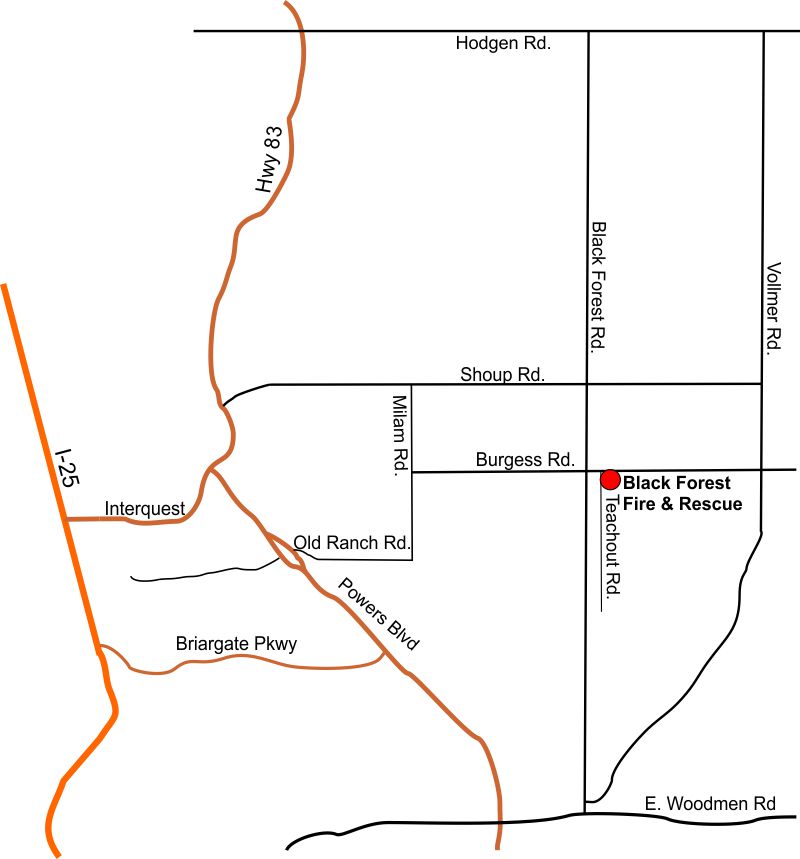
Location: Black Forest Fire Station 1
11445 Teachout Road, Colorado Springs
Come to our one-day education and radio operating event and learn from informative presentations of amateur radio topics. Operate a high frequency (HF) radio station with the helpful guidance of an experienced radio ham. Learn about emergency communications and public service. Most of all, have a bunch of fun messing around with ham radio stuff!
| Time | Activity | Presenter |
| 8:00 | Setup starts | |
| 8:30 | FM Simplex and Repeaters | Bob Witte, KØNR |
| 9:30 | Operating SSB on the HF Bands | Stu Tuner, WØSTU |
| 10:30 | Construction of Dipole Antennas | Larry Kral, NØAMP |
| 11:30 | Summits On The Air (SOTA) | Steve Galchutt, WGØAT |
| 12:00 | Start Field Day Operating | |
| 13:30 | Copper pipe antennas | Al Andzik, WBØTGE |
| 14:30 | Emergency Power for Ham Radio | Mike Hoskins, WØMJH |
| 15:30 | Ask an Elmer Panel | Bob Witte KØNR and crew |
| 17:00 | End of operations – tear down |
For more information, visit the W0TLM web site.
73, Bob K0NR
The post We Call It “Tech Field Day” appeared first on The KØNR Radio Site.













