Archive for the ‘hf’ Category
 Field Day 2017 with Ian Kahn, KM4IK – ETH071
 June 1st, 2017 |
  Author:
  The biggest hamfest is over, but the biggest ham radio on the air event is quickly approaching! Yes I am talking about Field Day 2017! Back in episode 67, I had Ian on and we talked about PSK31. During that interview he mentioned that he was the Field Day Chair for his radio club, the North Fulton Amateur Radio League, so I asked him to come back and talk to us about Field Day.
We had a great conversation about what Field Day is, some general information about it, what its like to be the Field Day Chairperson and be in charge of planning the event for your club and wrap it up with things that his club does during Field Day and what goes on afterwards.
Check out the show notes of this episode for more information about things that we talk about, links that we mention and probably some that we didn’t. The show notes can be found at:
2017 Colorado 14er Event with SOTA
 Amateur Radio operators from around Colorado will be climbing many of Colorado’s 14,000-foot mountains and Summits On The Air (SOTA) peaks to set up amateur radio stations in an effort to communicate with other radio amateurs across the state and around the world. Well, last year we celebrated the 25th annual event so this year it must be the 26th. We are continuing the all weekend approach on August 5 and 6. However, many mountaintop activators will hit the trail early in the morning with the goal of being off the summits by noon due to lightning safety concerns.
We still have the very cool 25 Year Anniversary t-shirts (and other great stuff) available at http://www.cafepress.com/wg0at
The 14er event includes Summits On the Air (SOTA) peaks, which add over 1700 now 1805 potential summits! If you aren’t up to climbing a 14er, there are many other summits to choose from (with a wide range of difficulty). See the W0C SOTA web page at w0c-sota.org
Radio operators who plan to activate a summit should post their intent on the ham14er Yahoo Group. To subscribe to the “ham14er” email list, visit the Yahoo groups site at http://groups.yahoo.com/group/ham14er/ . Also, be sure to check out the event information at http://www.ham14er.org It is also a great idea to post an ALERT on the SOTAwatch.org website.
Frequencies used during the event
Activity can occur on any amateur band including HF, VHF and UHF. The 2m fm band plan uses a “primary frequency and move up” approach. The 2m fm primary frequency is 147.42 MHz. At the beginning of the event, operators should try calling on 147.42 MHz. As activity increases on that frequency, move on up the band using the 30 kHz steps. Don’t just hang out on 147.42 MHz…move up! The next standard simplex frequency up from 147.42 MHz is 147.45 MHz, followed by 147.48 and 147.51 MHz. We try to stay off 146.52 MHz, the National Simplex Calling Frequency to avoid overload, but if you need to make a call there, go for it…and be brief.
| Frequency (MHz) | Comments | Frequency (MHz) | Comments |
| 147.42 | Primary 2m FM Frequency, then up in 30 kHz steps | 7.032 | 40m CW Frequency |
| 147.45 | Alternate 2m FM frequency | 7.185 | 40m SSB Frequency |
| 147.48 | Alternate 2m FM frequency | 10.110 | 30m CW Frequency |
| 147.51 | Alternate 2m FM frequency | 14.060 | 20m CW Frequency |
| 446.000 | Primary 70 cm FM frequency | 14.345 | 20m SSB Frequency |
| 446.025 | Alternate 70 cm FM frequency | 18.092 | 17m CW Frequency |
| 144.200 | 2m SSB calling frequency | 18.158 | 17m SSB Frequency |
| 50.125 | 6m SSB calling frequency | 21.060 | 15m CW Frequency |
| 1294.50 | 23 cm FM calling frequency | 21.330 | 15m SSB Frequency |
| Other Bands/Modes | Standard calling frequencies and/or band plans apply. | 28.060 | 10m CW Frequency |
| 28.350 | 10m SSB Frequency |
Warning: Climbing mountains is inherently a dangerous activity.
Do not attempt this without proper training, equipment and preparation.
Sponsored by The Colorado 14er Event Task Force
The post 2017 Colorado 14er Event with SOTA appeared first on The KØNR Radio Site.
ETH067 – I Think I Have The PSK31 Bug Thanks to Ian Kahn, KM4IK
Over the past 67 episodes of my podcast, there has been a couple episodes that have really peaked my interest and kind of lit a fire under me to do whatever that topic is myself. Things like APRS back in episode 6, and Broadband Hamnet in episode 29. However, neither of those got me back onto HF. My HF rig has basically gone unused for close to seven years or so and has been in a box for the last three years!!
I honestly have never been big on voice communications on HF. All of the times that I have operated on HF has either been at home calling CQ or looking for someone else calling it or during things like Field Day. At home I rarely got anyone to answer my CQ call; I think I was getting out. During field day it was, basically the exchange and on to the next contact. Neither of these things were very fun to me.
Digital modes, especially thing like PSK31, seem to be right up my alley! So I decided to look for someone that knew something about it, that I could learn from. I finally found Ian Kahn, KM4IK and he agreed to come onto my show and talk to me about it. We had a great conversation and I learned a lot. If you are interested in learning about PSK31, head over to the show notes of the episode, you can listen right on the page, or you can search for Everything Ham Radio on the major podcast directories.
2017 Mt Herman Winter Activation
On Saturday, we returned to the Most Radio Active Mountain in Colorado, Mount Herman (W0C/FR-063), for a combination VHF contest, SOTA activation and winter hike. Our radio crew consisted of Steve/WGØAT, Caleb/W4XEN, Joyce/KØJJW and me. I’ve worked Steve forty times on various summits and often when he was activating Mount Herman, but this is the first time we did an activation together. What a treat be on the same summit as the Goathiker! Not only that, Peanut goat came along to supervise the entire operation.
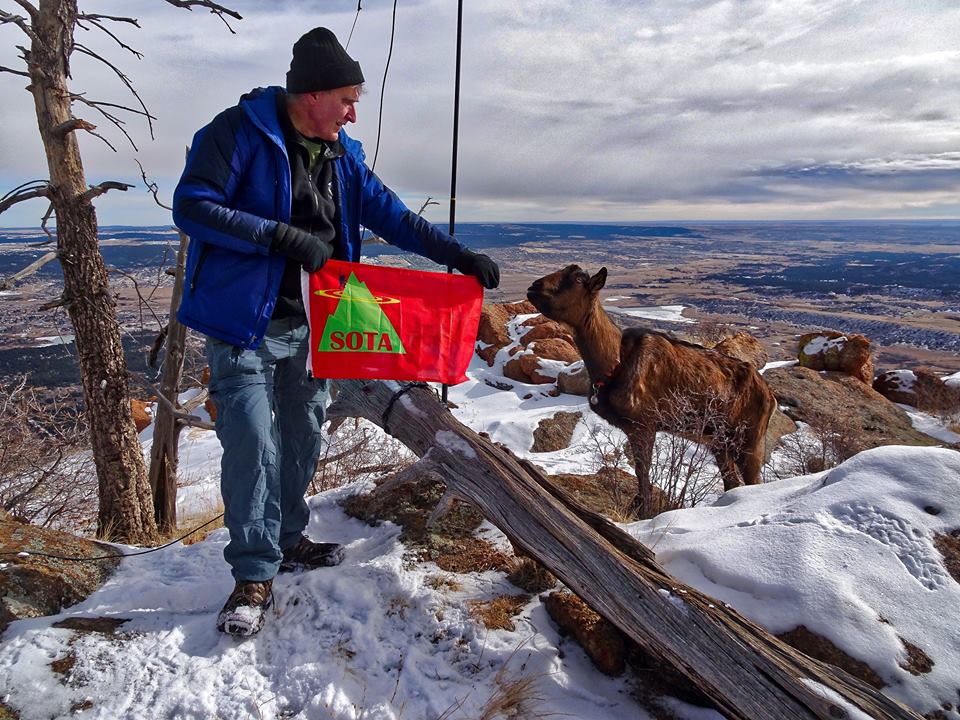
My objective for the day was to chalk up another VHF SOTA activation, while also making some Qs in the VHF contest. For most SOTA activations, I just focus on 2 meters. During a VHF contest, I bring more gear to cover the other bands. The main rig for SSB/CW was my FT-817 driving an Arrow II dualband yagi for 2m and 70 cm. For 6m, I used an inverted Vee dipole supported by a crappie pole. I also had two FT-1D handheld radios listening on 146.52 and 446.0 MHz.
I made 21 contacts on 6m, 2m and 70cm, with 7 grids/mults and a Single Operator Portable score of 164. Not that great of a contest score but it was only a few hours of operating. From a SOTA perspective, this is an attractive number of VHF QSOs in a relatively short time.
 Surprisingly, even during a VHF contest, most of the contacts were on FM with the usual SSB contest stations rather scarce. It was very handy to be able to use 146.52 MHz for the contest, finding a number of casual contesters on that frequency.
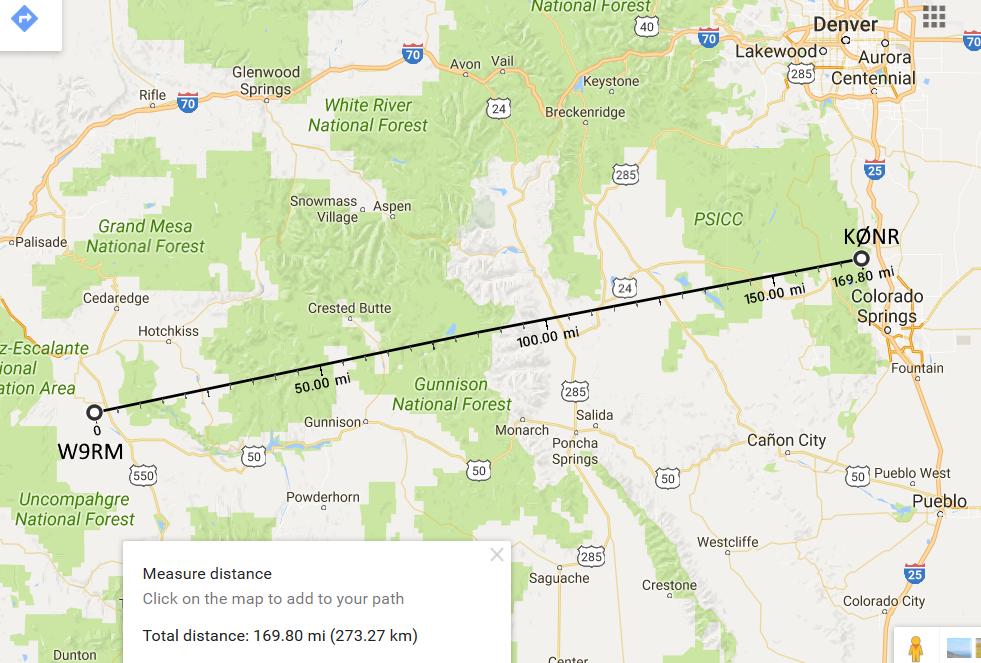
The high point of the day was working Jay W9RM on the other side of the state in DM58 using 2m CW on 144.210 MHz. The distance was about 170 miles on a path that went over or through several mountain ranges. Not too bad for QRP. (Oh, I guess it doesn’t hurt that W9RM has a serious weak-signal VHF station: 2M-5WL yagi at 50 feet.) This contact demonstrates the advantage of CW and SSB on 2 meters. Most VHF SOTA action is on FM due to the convenience of a 2m FM HT. But FM has poor weak-signal performance so much better range can be achieved with both CW and SSB. When is the last time you made a 170 mile QSO with an FM handheld?
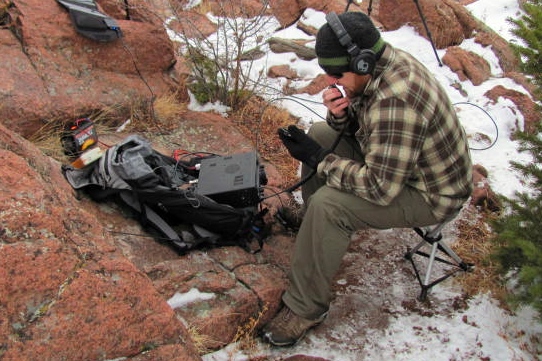
This was the first SOTA activation for Caleb/W4XEN. Judging by the smile on his face, it won’t be his last one either. While I played on VHF, Steve did his usual thing on HF using CW, using a KX3 to drive an end-fed antenna. Caleb did a bit of both HF and VHF, managing to get a nice pile up going on 20m SSB. Joyce made a few contacts on 2m FM but mostly took pictures and occasionally tossed GORP in my direction.
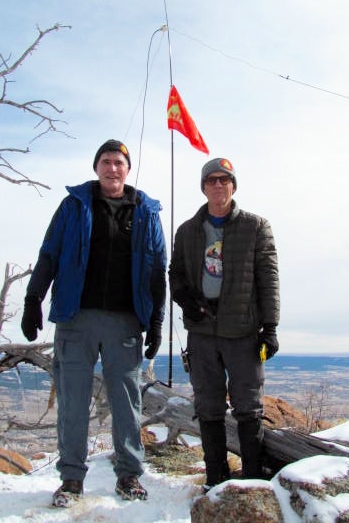
On my last winter activation, my iPhone quit in the cold, so I did not want to rely on it for logging this time. I had a clipboard with my paper log on it, also holding the dual-paddle key. The key moved around a bit and my Morse code sending was sloppy. I don’t work a lot of CW for SOTA but it does come in handy at times, so I’ll be looking at improving my setup.
The 6m inverted Vee worked out OK but it was a little inconvenient to run the coaxial cable to the apex of the antenna. I’ll be looking to swap that antenna out for an end-fed half wave, which is so common on the HF bands for SOTA.
Steve brought along a large umbrella for use as an instant-up wind shelter. That looks like a practical way to block the wind.
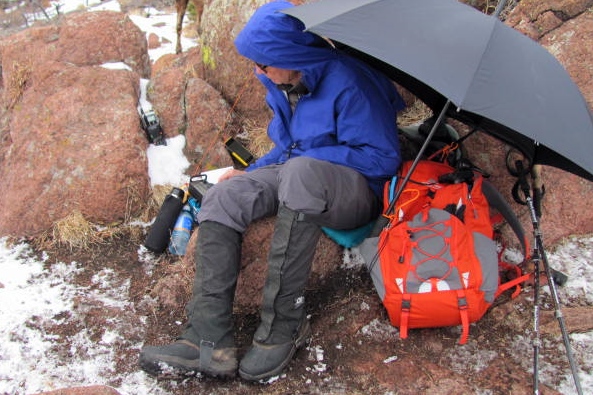
The weather was not great…we had a few patches of blue sky but it was mostly overcast and cold (probably 25 degrees F). We lasted about 2 hours before the cold started to take its toll, then we scooted on down the mountain.
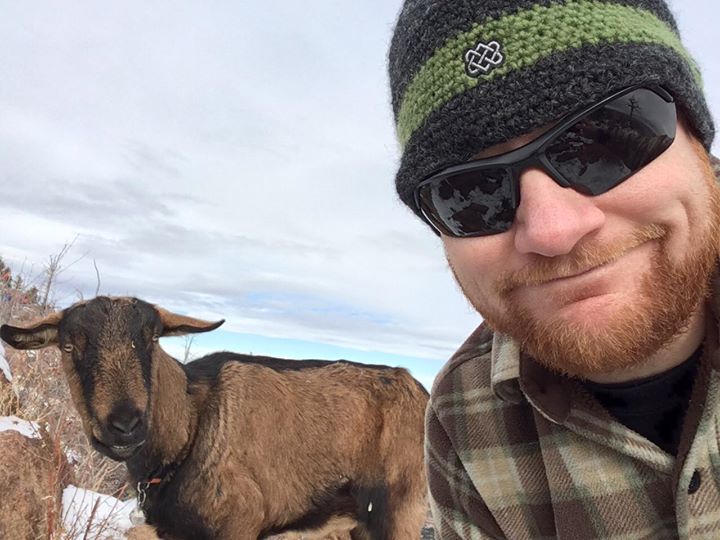
Thanks to Joyce, Steve and Caleb for a great day playing radio in the mountains.
73, Bob KØNR
The post 2017 Mt Herman Winter Activation appeared first on The KØNR Radio Site.
CQ – 630m Crossband Anyone?

A very beautiful QSL arrived in the mail last week, confirming my 630m crossband contact with Harry, WØLS, in Minnesota.
According to Harry's card, this was the first time he had ever listened on 630m and was very surprised to hear me, let alone complete the two-way contact.
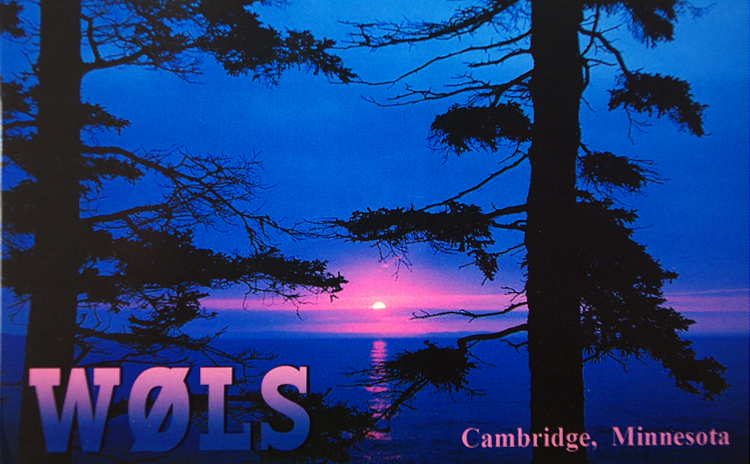
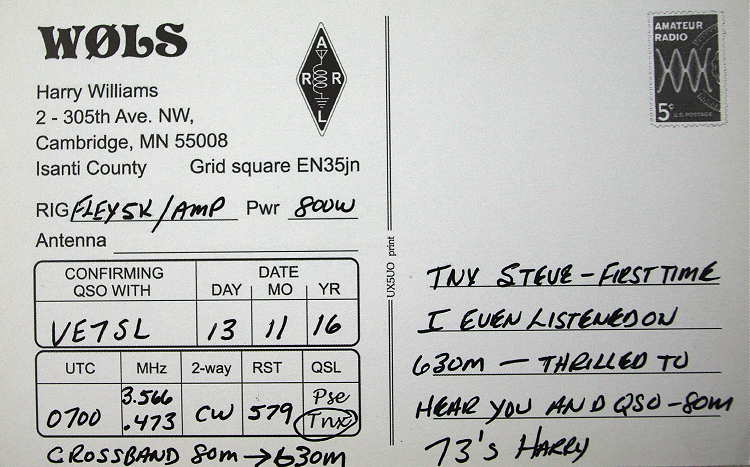
Harry was transmitting on 80m CW while I was transmitting on 630m, on 473.00 kHz. It really does not take too much to be able to hear signals on 630m, especially if you are not overwhelmed with a high noise floor ... most low band wire antennas will hear pretty well down there, when pressed into service.
This week, the card from Jeffrey, KGØVL in Iowa arrived. This one also confirmed a 630m crossband contact. Both of these QSO's were made during the November's 630m activity night.
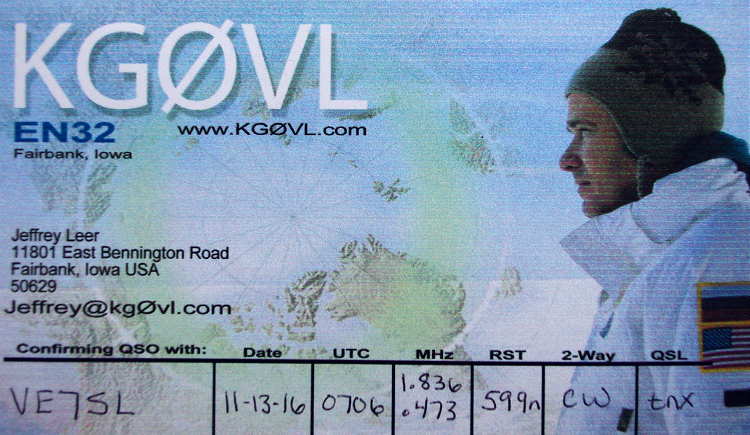
Jeffrey was transmitting on 160m while listening to my signal on 473.00 kHz with his 160m inverted-L.
It's not really necessary to wait for another activity night to have some fun, so ... if you would be interested in trying a crossband CW contact, I would be more than excited to give it a shot.
I can listen on 160, 80 or 40m for you, if you can listen on 630m for me! If we can arrange a sked, I could probably talk a few of the other local 630m VE7's into tagging-along so that you end up with a double or triple-header of VE7's in the logbook.
Please e-mail if you would like to try... ve7sl at shaw.ca
CQ – 630m Crossband Anyone?
A very beautiful QSL arrived in the mail last week, confirming my 630m crossband contact with Harry, WØLS, in Minnesota.
According to Harry's card, this was the first time he had ever listened on 630m and was very surprised to hear me, let alone complete the two-way contact.
Harry was transmitting on 80m CW while I was transmitting on 630m, on 473.00 kHz. It really does not take too much to be able to hear signals on 630m, especially if you are not overwhelmed with a high noise floor ... most low band wire antennas will hear pretty well down there, when pressed into service.
This week, the card from Jeffrey, KGØVL in Iowa arrived. This one also confirmed a 630m crossband contact. Both of these QSO's were made during the November's 630m activity night.
Jeffrey was transmitting on 160m while listening to my signal on 473.00 kHz with his 160m inverted-L.
It's not really necessary to wait for another activity night to have some fun, so ... if you would be interested in trying a crossband CW contact, I would be more than excited to give it a shot.
I can listen on 160, 80 or 40m for you, if you can listen on 630m for me! If we can arrange a sked, I could probably talk a few of the other local 630m VE7's into tagging-along so that you end up with a double or triple-header of VE7's in the logbook.
Please e-mail if you would like to try... ve7sl at shaw.ca
Weekly Propagation Summary – 2016 Oct 17 16:10 UTC
Here is this week’s space weather and geophysical report, issued 2016 Oct 10 0105 UTC.
Highlights of Solar and Geomagnetic Activity 03 – 09 October 2016
Solar activity was at very low levels with a few background flares observed from Regions 2598 (N14, L=174, class/area Dai/140 on 07 Oct), 2599 (S14, L=144, class/area Cko/460 on 05 Oct) and 2600 (N13, L=105, class/area Cso/110 on 09 Oct). On 08 Oct, between 08/1500-1700 UTC, a 10 degree long filament erupted in the NE quadrant centered near N38E40. A slow-moving, asymmetric, partial-halo CME was observed in LASCO C2 imagery, first visible at 09/0048 UTC.
No proton events were observed at geosynchronous orbit.
The greater than 2 MeV electron flux at geosynchronous orbit was at high levels during the entire summary period. A maximum of 32,138 pfu was observed at 03/1640 UTC.
Geomagnetic field activity was highlighted by mostly unsettled to active levels on 03-05 Oct. An isolated minor storm (G1-Minor) period was observed early on 04 Oct. Mostly quiet levels were observed from 04-09 Oct with isolated unsettled and active periods were observed early on 07 and 08 Oct, respectively. The enhanced geomagnetic activity was due to high speed winds from a recurrent positive polarity coronal hole. Some further enhancement occurred early on 04 Oct due to CME effects from an eruptive filament observed early on 01 Oct.
The solar wind environment began the period at about 500 km/s, increased to near 600 km/s midday on 04 Oct and slowly decreased to end the period at about 370 km/s. Total field generally ranged from 2-6 nT with a peak of 10 nt observed midday on 04 Oct. The Bz component was mostly variable between +/- 6 nT. Phi angle was in a general positive orientation throughout the period.
Forecast of Solar and Geomagnetic Activity 10 October – 05 November 2016
Solar activity is expected to be at very low levels with a chance for C-class flare activity throughout the outlook period.
No proton events are expected at geosynchronous orbit.
The greater than 2 MeV electron flux at geosynchronous orbit is expected to be at high levels on 10-11, 16-18, 24-26, 30-31 Oct and 01-06 Nov increasing to very high levels on 27-29 Oct. This is due to the anticipated influence of multiple, recurrent CH HSSs. Normal to moderate levels are expected for the remainder of the outlook period.
Geomagnetic field activity is expected to be at unsettled to active levels on 11-18, 23-31 Oct and 01 Nov. G1 (Minor) field activity is possible on 13-15, 17 and 23-31 Oct with G2 (Moderate) levels possible on 24-26 Oct. This activity is due to the anticipated influence of multiple, recurrent CH HSSs. Additional enhancement to the field is expected on 13-14 Oct due to CME effects from the 08 Oct filament eruption. Generally quiet to unsettled conditions are expected for the remainder of the outlook period.
Don’t forget to visit our live space weather and radio propagation web site, at: http://SunSpotWatch.com/
Live Aurora mapping is at http://aurora.sunspotwatch.com/
If you are on Twitter, please follow these two users: + https://Twitter.com/NW7US + https://Twitter.com/hfradiospacewx
Get the space weather and radio propagation self-study course, today. Visit http://nw7us.us/swc for the latest sale and for more information!
Check out the stunning view of our Sun in action, as seen during the last five years with the Solar Dynamics Observatory (SDO): https://www.youtube.com/watch?v=zXN-MdoGM9g
We’re on Facebook: http://NW7US.us/swhfr













