Archive for the ‘ham radio’ Category
 FM VHF: The Utility Mode
 January 6th, 2018 |
  Author:
  I’ve been referring to the VHF FM as the utility mode for quite a while now. I picked this up from Gary Pearce/KN4AQ when I inherited the FM column from CQ VHF magazine (no longer being published). Gary recently filled me in on the origin of this term, which he captured in his first FM column for CQ VHF.
Gary describes how he got hooked on VHF operating, especially 2m FM:
I’ve been a ham since 1965 (age 15). Today, I have an Extra class license, and I operate some HF (mostly SSB and digital, with cw limited to occasional bouts at Field Day). But since my first days as a Novice with a Heathkit Twoer, I’ve been a VHFer. I went through the 2 and 6 meter AM days with a Heath Seneca and Utica 650, and then SSB with a Gonset Sidewinder and Hallicrafter HA-2 transverter. But what really flipped my switch as an early ham was an old, single-channel Motorola 80D on 146.94 simplex, installed in the car of a teenage friend’s father. For you newer hams, this is an exercise in nostalgia that I don’t have space here to explain – I wish I could. I will note that the Motorola 80D was an FM radio that began life in a police car or taxi cab somewhere. It was a huge, heavy, all-tube radio that sat in the trunk and improved traction on the ice. Below the dash was a control head with volume, squelch, and the microphone and speaker.
It wasn’t long before I learned about repeaters, which enhanced the FM experience immeasurably (all four of them in the Chicago area at the time). My interest in VHF SSB waned…Getting involved in a local repeater group felt comfortable – this was someplace where I could really participate.
But then things shifted as time passed. Gary wrote:
While I wasn’t looking, FM became just another mode. At least that’s the consensus I got from some of the guys who have been doing Amateur Radio publishing a lot longer than I have…
Some columns devoted to sub-sets of Amateur Radio have lasted for decades. VHF-UHF is one. That’s the weak-signal side of VHF, not the FM side. Digital modes go through enough reincarnations to keep interest up. DX, contesting, QRP, holding their own.
But not FM/Repeaters? QST editor Steve Ford, WB8IMY, suggested why, and gave me the idea for this column’s “Utility Mode” tag line. He said, “Our research has shown that while FM users comprise a very large portion of the amateur community, the majority tend to perceive their FM activity more as a ‘utility’ function rather than a hobby.”
FM VHF is arguably the most common mode used in amateur radio. (Can I back that up with reliable data? Not sure, but I’m pretty sure it’s true.) I do see where it fits into the concept of a utility function or utility mode. Think about the electrical system in your house (a utility). For the most part, you just plug things in and use it but you probably don’t consider yourself a 120 VAC hobbyist. Well, a few of you might but that’s another issue. FM VHF is a lot like that…most hams have it and they just use it without too much consideration. Push the button and it works.
But that definition is a little bit derogatory…FM VHF is just there and no one appreciates it. The Eeyore of ham radio modes.
Another definition of utility (as an adjective) is:
Utility: having or made for a number of useful or practical purposes rather than a single, specialized one:
This fits my perception of FM VHF: very useful for many things. Whether you are providing communications for a bike race, handling talk-in for a local hamfest, working the ISS, chatting across town while mobile, the first choice is likely to be 2m (or 70 cm) FM.
And that’s why I’ve always been a FM VHF enthusiast: there are so many things you can do with it. Just use your imagination.
73, Bob K0NR
To see what Gary KN4AQ has been up to lately, visit HamRadioNow.
The post FM VHF: The Utility Mode appeared first on The KØNR Radio Site.
Demonstration: Using FLDigi to Communicate with Olivia Digital Mode on Shortwave
Are you interested in starting out with the amateur-radio digital modes on the high frequencies? Have you heard of FLDigi? FLDigi is a software control and modem suite that interfaces with your transceiver, your computer sound card, and other input/output interfaces so that you can receive and transmit one of many digital modes. For example, FLDigi allows you to operate using the Olivia digital mode.
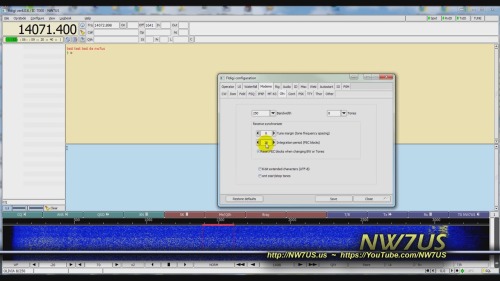
Demonstration: Using FLDigi to Communicate with Olivia Digital Mode on Shortwave
Unlike the JT/FT digital modes–modes that do an incredible job under marginal propagation conditions–there are other modes that offer keyboard-to-keyboard conversational QSO opportunities that can overcome rough shortwave radio propagation conditions. (The meaning of QSO on Wikipedia: An amateur radio contact, more commonly referred to as simply a “contact”, is an exchange of information between two amateur radio stations.)
While making quick work of getting DX stations into your logbook by exchanging callsigns, a signal report, and a grid square, the JT/FT modes (JT stands for Joe Taylor, the fellow that pioneered these modes) are limited. They cannot handle any additional communications beyond a callsign, a signal report, a grid square, and a very limited set of acknowledgments and sign-off messages.
When you desire to get to know people from other areas of the world, or if you need to establish networks around the world for passing information–perhaps an emergency net in support of the Red Cross–or if you are motivated by any other of a myriad reasons to establish a keyboard-to-keyboard conversation by way of the ionosphere, modes like Olivia are great candidates for your consideration.
In this video, contributing editor with CQ Amateur Radio Magazine, NW7US shares some starting points in the FLDigi software for Olivia keyboard-to-keyboard chat mode.
[embedyt] https://www.youtube.com/watch?v=ejSNfXiT8FE[/embedyt]
Current CENTER Frequencies With 8/250 in MHz:
1.8269, 3.5729, 7.0729, 10.1429, 14.0729, 18.1029, 21.0729, 24.9229, 28.1229, and so on. See the pattern?
By the way: The current suggested CENTER frequency With 16/1000 or 32/1000 on 20 meters is 14.1059.
(Why the …9 frequencies? Experts say that ending in a non-zero, odd number is easier to remember!)
Q: What’s a ‘CENTER’ Frequency? Is That Where I Set My Radio’s Dial?
For those new to waterfalls: the CENTER frequency is the CENTER of the cursor shown by common software. The cursor is what you use to set the transceiver’s frequency on the waterfall. If your software’s waterfall shows the frequency, then you simply place the cursor so that its center is right on the center frequency listed, above. If your software is set to show OFFSET, then you might, for example, set your radio’s dial frequency to 14.0714, and place the center of your waterfall cursor to 1500 (1500 Hz). That would translate to the 14.0729 CENTER frequency.
The FLDigi Manual of Operation is found here: http://www.w1hkj.com/FldigiHelp/
FLDigi can be downloaded here: https://sourceforge.net/projects/fldigi/
Join the Olivia movement:
1. Subscribe to the mailing list: https://Groups.io/g/Olivia
2. Join the Facebook group: https://www.facebook.com/groups/olivia.hf
For additional information on Olivia, check out:
http://blog.nw7us.us/post/168515010062/olivia-digital-mode-great-compromise
http://blog.nw7us.us/post/169114702522/are-you-an-amateur-ham-radio-operator-check-out
73 de NW7US
Top Five Underrated K0NR Blog Posts
 Normally at the end year, I list the five blog posts that got the most hits during the year. It turns out that this list does not change a lot from year to year. For completeness and consistency, these are the top five posts for 2017, in rank order:
Choose Your 2m Frequency Wisely , Getting Started on 2m SSB , Can I Use My Ham Radio on Public Safety Frequencies? , DMR Hotspot from SharkRF and Introducing the Android HT
What I’m doing different this year is to list the five posts that I think readers should read but haven’t made the most hit list. This is based on my personal opinion but what the heck. You’ll see a theme of trying to make sense of how amateur radio fits into our modern world.We’ve Got Some Explaining to Do
Amateur Radio is Not for Talking
That’s Not Real Ham Radio
Is the Internet Destroying Amateur Radio?
Amateur Radio: Narrowband Communications in a Broadband WorldHere is a sixth bonus article…very interesting story about Prisoners of War building radios in World War II.
POW Canteen Radio73 and Happy New Year! Bob K0NR The post Top Five Underrated K0NR Blog Posts appeared first on The KØNR Radio Site.
Amateur Radio: Narrowband Communications in a Broadband World
 For my day job in the test and measurement industry, I get involved in measurement solutions for wireless communications. Right now, the big technology wave that is about to hit is known as 5G (fifth generation wireless). Your mobile smartphone probably does 4G or LTE as well as the older 3G digital mobile standards. For more detail on LTE, see ExtremeTech explains: What is LTE?
5G will be the next cool thing with early rollouts planned for 2018. The design goals of 5G are very aggressive, with maximum download speeds of up to 20Gb/s. (See what I did there: I used the words “up to”, so don’t expect this performance under all conditions.) The actual user experience has yet to play out but we can assume that 5G is going to be blazing fast. For more details see: Everything You Need to Know About 5G. To achieve these high bandwidths, 5G will use spectrum at higher frequencies. Move up in frequency and you inherently get more bandwidth. The FCC recently allocated 11 GHz of new spectrum for 5G, including allocations at 28 GHz, 37 GHz, 39 GHz and 64-71 GHz: FCC 5G spectrum allocation demands 3 breakthrough innovations . Yes, those frequencies are GHz with a G…that’s a lot of cycles per second.
Amateur Radio
So my day job is focused on wider bandwidths and higher frequencies. Then I go home and play amateur radio which is a narrowband, low frequency activity. The heart of ham radio operation is on the HF bands, 3 to 30 MHz, almost DC by 5G standards. Many of us enjoy VHF and UHF but even then most of the activity is centered on 50 MHz, 144 MHz, maybe 432 MHz. I recently started using 1.2 GHz for Summits On The Air, so that at least gets me into the GHz-with-a-G category.
Not only does ham radio stay on the low end of the frequency range, we also use low bandwidth. The typical phone emission on the HF bands is a 3-kHz wide SSB signal. That’s kHz with a k. As we go higher in frequency, some of our signals are “wideband” such as a 16-kHz wide FM signal on the 2m band. In terms of digital modes, AX.25 packet radio and APRS typically use 1200 baud data rates but sometimes we go with a “super-fast” 9600 transmission mode. CW is still a very popular narrowband mode with bandwidths around 200 Hz, depending on Morse code operating speed. Lately, the trend has been to go even narrower in bandwidth to keep the noise out and operate at amazingly low signal-to-noise ratios. Some of the WSJT modes use bandwidths in the range of 4 to 50 Hz.
There are some good reasons that amateur radio remains narrowband. The two most important are:
- We love the ionosphere and what it does for radio propagation. The HF bands are great for making radio signals go around the world but they are narrow spectrum. For example, the 20m band is 350 kHz wide, going from 14.000 to 14.350 MHz. Operation is restricted to narrowband modes, else we’d use up the entire band with just a few signals.
- We just want to make the contact (and maybe talk a bit). For the most part, radio hams are just trying to make the contact. This is most pronounced during a DX pileup or during a contest when you’ll hear short exchanges that provide just the minimal amount of information. Some of us like to talk…rag chew…but that can be accomplished with narrowband (SSB) modulation with no problem. I suppose it would be handy from time to time to be able to send a 3 MB jpg file to someone I am working on 20m but that’s not the main focus of a radio contact.
Of course, not all amateur radio operation is below 1 GHz. There’s always someone messing around at microwave and millimeter wave frequencies. I’ve done some mountaintop operating at 10 GHz and achieved VUCC on that band. Recently, the ARRL announced a new distance record of 215 km on the 47 GHz band.
ICOM produced a D-STAR system at 1.2 GHz with a data rate of 128kbps, quite the improvement over AX.25 packet. However, adoption of this technology has been very limited and it remains a single-vendor solution.
There is significant work going on with High-Speed Multimedia (HSMM) Radio which repurposes commercially-available 802.11 (“WiFi”) access equipment. Broadband-Hamnet is focused primarily on using 2.4 GHz band to create mesh wireless mesh networks. Amateur Radio Emergency Data Network (AREDN) is doing some interesting work, mostly on the 2.4 GHz and 5.8 GHz bands. The HamWAN site has lots of information about a 5.8 GHz network in the Puget Sound area. The basic theme here is use commercial gear on adjacent ham bands…a common strategy for many VHF and higher ham radio systems.
Also worth mentioning is the FaradayRF work, currently aimed at creating a basic digital radio for the 33cm (902 MHz) amateur band. The raw data transfer rate is around 500 kbaud.
There are probably some other high-speed digital systems out there that I’ve missed but these are representative.
Infrastructure Rules
A critical factor in making LTE (and 5G) work is the huge investment in infrastructure by Verizon, AT&T and others. With cellular networks, the range of the radio transmission is limited to a few miles. One of the trends in the industry is toward smaller cells, so that more users can be supported at the highest bandwidths. With 5G moving up in frequency, small cells will become that much more important.
On the other hand, most amateur radio activity is “my radio talking to your radio” without any infrastructure in between. Most of us like the purity and simplicity of my station putting out electromagnetic waves to talk directly to fellow hams. In many cases, this simplicity and robustness has played well under emergency and disaster conditions.
FM (and digital voice) repeaters are a notable exception with the Big Box on the Hill retransmitting our radio signal. For decades now, FM repeaters have represented an infrastructure that individual hams and (more often) radio clubs put in place for use by the local ham community. There is a trend towards more infrastructure dependency in ham radio as repeaters are linked via the internet via IRLP, EchoLink and other systems. (Some hams completely reject any kind of radio activity that relies on established infrastructure, often claiming that it is irrational, unethical or just plain wrong.)
One interesting area that is growing in popularity is the use of hotspots (low power access points) for the digital voice modes (D-STAR, DMR, Fusion, etc.) In this use model, the ham connects a hotspot to their internet connection and talks to anyone on the relevant ham network while walking around the house with a handheld transceiver. See the Brandmeister web site to see the extend of this activity. It strikes me that this is the same “small cell” trend that the mobile wireless providers are following. You want good handheld coverage? Stick a hotspot in your house.
Looking at ham radio and broadband communications, I summarize it like this:
- The vast majority of ham radio activity is narrowband oriented, for reasons described above.
- There is some interesting ham radio work being done with broadband systems, mostly on 2.4 GHz and 5.8 GHz.
- Commercially available broadband technology (LTE, 5G, and beyond) will continue to increase total network bandwidth and performance increasing the difference between commercial broadband and narrowband ham radio.
Implications
The reason for writing this article is that the amateur radio community needs to recognize and understand this increasing bandwidth gap. We like to talk about the cool and exciting stuff we do with wireless communications but we need to also appreciate how this is perceived by someone with an LTE phone in their pocket. Just communicating with someone at a distance is no longer novel. After all, Amateur Radio is Not for Talking.
What do I conclude about this? Here’s a few options:
1. Don’t worry. We are all about narrowband and that’s good enough. This attitude might be sufficient as there are tons of fun stuff to do in this narrowband world. In terms of ham radio’s future, this implies that we need to expose newcomers to narrowband radio fun. We’ll need to get better at talking about how amateur radio makes sense in this broadband world.
2. Embrace commercially available broadband. Use it where it makes sense. This approach means that Part 97 remains mostly narrowband but we can make use of the ever-improving wired and wireless network infrastructure that is available to us.
3. Develop Part 97 ham radio broadband. I am initially a bit skeptical of this idea. How the heck does ham radio compete with the billions of dollars Verizon, AT&T and others poor into broadband wireless? But that may not be the point. Once again, I fall back to the universal purpose of amateur radio: To Have Fun Messing Around with Radios. Can we have fun building out a broadband network? Heck yeah, that sounds like an interesting challenge. Would it be useful? Maybe. Emergency communications might be an appropriate focus and some hams are already working on that. Create a network that operates independent from the commercial internet and make it as resilient as possible.
I think Option #3 is definitely worth considering. What do you think?
73, Bob K0NR
The post Amateur Radio: Narrowband Communications in a Broadband World appeared first on The KØNR Radio Site.
Update: More on Olivia, the Great Compromise Mode
Some HF digital modes were designed for long-distance (DX) radio-wave propagation via the ionosphere. One such keyboard-to-keyboard digital mode is Olivia.
Friday evening, 8 December 2017, at 0200 UTC {9-DEC}, Larry, N7ZDR, called an Olivia-mode 80-Meter digital roundtable net. The following video is a snapshot of about nine minutes of on-air net operations as received at my location in Omaha, Nebraska. My antenna is a wire run from an SEA marine autotuner mounted under the three-story-high roof’s eaves. I live in a high-RF environment within two miles of eight high-powered broadcast antenna facilities–TV, FM, AM–as well as business and public-service transmitters. All that RF desensitizes my receiver. The noise floor is also affected by industrial-level man-made RF noise.
No, Olivia is not lightening-fast keyboard-to-keyboard chatting, but it can get the job done. This following video shows some real-world operation in which the very weakest signals did not decode well. However, even with the 80-Meter band (center frequency is 3585 kHz) really difficult to work with, it did well in terms of what was available for the Ham Radio Deluxe DM780 software to decode.
Example QSO in Olivia Video:
[embedyt]https://www.youtube.com/watch?v=G7TlGEuStx4[/embedyt]
In 2005, SP9VRC, Pawel Jalocha, released to the world a mode that he developed starting in 2003 to overcome difficult radio signal propagation conditions on the shortwave (high-frequency, or HF) bands. By difficult, we are talking significant phase distortions and low signal-to-noise ratios (SNR) plus multipath propagation effects. The Olivia-modulated radio signals are decoded even when it is ten to fourteen dB below the noise floor. That means that Olivia is decoded when the amplitude of the noise is slightly over three times that of the digital signal!
Olivia decodes well under other conditions that are a complex mix of atmospheric noise, signal fading (QSB), interference (QRM), polar flutter caused by a radio signal traversing a polar path. Olivia is even capable when the signal is affected by auroral conditions (including the Sporadic-E Auroral Mode, where signals are refracted off of the highly-energized E-region in which the Aurora is active).
Currently, the only other digital modes that match or exceed Olivia in their sensitivity are some of the modes designed by Joe Taylor as implemented in the WSJT programs, including FT8, JT65A, and JT65-HF–each of which are certainly limited in usage and definitely not able to provide true conversation capabilities. Olivia is useful for emergency communications, unlike JT65A or the newly popular FT8. One other mode is better than Olivia for keyboard-to-keyboard comms under difficult conditions: MT63. Yet, Olivia is a good compromise that delivers a lot.
Join us — not just on the HF waterfall, but by joining our email-based group at:
or, on Facebook at:
–> https://www.facebook.com/groups/olivia.hf
Thanks for spreading the Olivia love! See you on the waterfall.
Addendum:
Current CENTER Frequencies With 8/250 (eight tones, 250-Hz bandwidth):
1.8269 MHz
3.5729 MHz
7.0729 MHz
10.1429 MHz
14.0729 MHz
18.1029 MHz
21.0729 MHz
24.9229 MHz
28.1229 MHz
See the pattern?
The current suggested CENTER frequency with 16/1000 or 32/1000 on 20 meters is 14.1059.
(Why the xxx…9 frequencies? Experts say that ending in a non-zero odd number is easier to remember!)
Q: What’s a ‘CENTER’ Frequency? Is That Where I Set My Radio’s Dial?
For those new to waterfalls: the CENTER frequency is the CENTER of the cursor shown by common software. The cursor is what you use to set the transceiver’s frequency on the waterfall. If your software’s waterfall shows the frequency, then you simply place the cursor so that its center is right on the center frequency listed, above. If your software is set to show OFFSET, then you might, for example, set your radio’s dial frequency to 14.0714, and place the center of your waterfall cursor to 1500 (1500 Hz). That would translate to the 14.0729 CENTER frequency.
The standard Olivia formats (shown as the number of tones/bandwidth in Hz) are 8/250, 8/500, 16/500, 8/1000, 16/1000, and 32/1000. Some even use 16/2000 for series emergency communication. The most commonly-used formats are 16/500, 8/500, and 8/250. However, the 32/1000 and 16/1000 configurations are popular in some areas of the world (Europe) and on certain bands.
These different choices in bandwidth and tone settings can cause some confusion and problems–so many formats and so many other digital modes can make it difficult to figure out which mode you are seeing and hearing. After getting used to the sound and look of Olivia in the waterfall, though, it becomes easier to identify the format when you encounter it. To aid in your detection of what mode is being used, there is a feature of many digital-mode software implementation suites: the RSID. The next video, below, is a demonstration on how to set the Reed-Solomon Identification (RSID) feature in Ham Radio Deluxe’s Digital Master 780 module (HRD DM780).
I encourage ALL operators, using any digital mode such as Olivia, to TURN ON the RSID feature as shown in this example. In Fldigi, the RSID is the TXID and RXID; make sure to Check (turn on) each, the TXID and RXID.
Please, make sure you are using the RSID (Reed Solomon Identification – RSID or TXID, RXID) option in your software. RSID transmits a short burst at the start of your transmission which identifies the mode you are using. When it does that, those amateur radio operators also using RSID while listening will be alerted by their software that you are transmitting in the specific mode (Olivia, hopefully), the settings (like 8/250), and where on the waterfall your transmission is located. This might be a popup window and/or text on the receive text panel. When the operator clicks on that, the software moves the waterfall cursor right on top of the signal and changes the mode in the software. This will help you make more contacts!
RSID Setting:
[embedyt]https://www.youtube.com/watch?v=lBIacwD9nNM[/embedyt]
+ NOTE 1: The MixW software doesn’t have RSID features. Request it!
+ NOTE 2: A problem exists in the current paid version of HRD’s DM780: the DM780 RSID popup box that lists the frequency, mode, and configuration with a link to click, does not work. HRD support is aware of the problem. You can still use the textual version that shows up in the DECODED TEXT window, a feature of RSID that you can select in the HRD DM780 program settings. This setting ensures that the detected RSID details appear in the receive text area. If you click the RSID link that comes across the text area, DM780 will tune to the reported signal, and change to the correct settings.
Voluntary Olivia Channelization
Since Olivia signals can be decoded even when received signals are extremely weak, (signal to noise ratio of -14db), signals strong enough to be decoded are sometimes below the noise floor and therefore impossible to search for manually. As a result, amateur radio operators have voluntarily decided upon channelization for this mode. This channelization allows even imperceptibly weak signals to be properly tuned for reception and decoding. By common convention amateur stations initiate contacts utilizing 8/250, 16/500, or 32/1000 configuration of the Olivia mode. After negotiating the initial exchange, sometimes one of the operators will suggest switching to other configurations to continue the conversation at more reliable settings, or faster when conditions allow. The following table lists the common center frequencies used in the amateur radio bands.
Olivia (CENTER) Frequencies (kHz) for Calling, Initiating QSOs
It is often best to get on standard calling frequencies with this mode because you can miss a lot of weak signals if you don’t. However, with Olivia activity on the rise AND all the other modes vying for space, a good deal of the time you can operate wherever you can find a clear spot–as close as you can to a standard calling frequency.
Note: some websites publish frequencies in this band, that are right on top of weak-signal JT65, JT9, and FT8 segments. DO NOT QRM weak-signal QSOs!
We (active Olivia community members) suggest 8/250 as the starting settings when calling CQ on the USB frequencies designated as ‘Calling Frequencies.’ A Calling Frequency is a center frequency on which you initially call, ‘CQ CQ CQ. . .’ and then, with the agreement of the answering operator, move to a new nearby frequency, changing the number of tones and bandwidth at your discretion. Even though 8/250 is slow, the CQ call is short. But, it is narrow, to allow room for other QSOs nearby. It is also one of the best possible Olivia configurations for weak-signal decoding.
– End of Addendum –
73
Radio Frequency Interference From 12V-to-USB Adapters
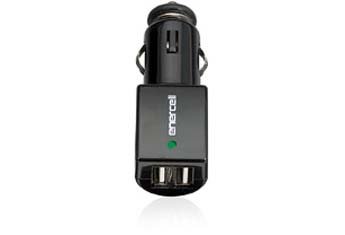 Many small electronic devices have switching regulators in them that can generate a bunch of Radio Frequency Interference (RFI). This is not my first encounter with RFI-spewing devices. See this article about a automotive 12V-to-USB adapter giving me trouble: This Interference Seems To Follow Me Everywhere
I recently bought a couple of adapters that are physically larger than the one I wrote about. I was thinking that a larger size might allow for a little more filtering and a design that does not radiate. I was half right: one of them works pretty well, the other is an RFI Bad Boy.
Take a look at this short video where I check them out.
This is an Amazon link to the adapter that works pretty well.
Enercell® 2-Port USB CLA Car Charger

73, Bob K0NR
The post Radio Frequency Interference From 12V-to-USB Adapters appeared first on The KØNR Radio Site.
Everything Ham radio podcast Ep 93 – NASA On The Air(NOTA)

I’m sure that you have heard of NPOTA, National Parks On The Air, and SOTA, Summits On The Air, and probably even POTA, Parks On The Air, The US program for the World Wide Flora and Fauna, but have you heard of the latest event that starts on Sunday, Dec 11, 2017?
Starting at 0000 UTC time on December 11, 2017 the new year long event celebrating multiple anniversaries for the NASA program will start. It is called NOTA or NASA On The Air.
With several NASA clubs doing several special event stations of the coming year, they decided to make a year long event where you, as the end user, can contact the stations to earn points through the year. You can even gets points during other events like Winter Field Day, the ARRL Field Day and others.
Losten to my latest podcast episode where I talk with Rob Suggs about it:













