Posts Tagged ‘SOTA’
 Activation Alert: WØ/FR-003 (Mount Evans) –4347m / 14,264ft
 July 2nd, 2012 |
  Author:
 Date: 3 July 2012
Time: Approx. 1700 UTC – 1800 UTC
Region: CO-Front Range
Elevation: 4337 m / 14,264 ft – 10 Points
Call Sign: KDØBIK
Frequencies: 14.342.5-ssb, 18.157.5-ssb, +/- 146.52-fm
Equipment: Elecraft KX3 (2nd activation / Buddipole versatee vertical
APRS Track: On Road / On Trail
My wife and I are on a staycation (vacation at home) this week and while I’ve spent some time working on the new basement ham shack, I also wanted to take a much needed break and go and explore a portion of Colorado I’ve never had the opportunity.
Mount Evans is very near I-70, I’ve driven past many times and I can see it from my office building in the Denver Tech Center. It is much like Pikes Peak in the sense that there is a paved road almost all the way to the top. I’m going to take my wife along for this SOTA adventure. We’ll drive to the top and I’ll hike down far enough and then back up to call it a legal SOTA activation and hopefully make a few HF contacts and take in the beauty of Colorado. We’ll then probably go to lunch in Idaho Springs. Perhaps Beau Jo’s Pizza.
Please listen for me on 20m around 1700 UTC (11 AM MT). I look forward to working you.
By the way. My Grandfather’s family name (and my Mom’s maiden name is Evans). I’ll be dedicating this SOTA activation in my Grandfather’s memory. If successful, this will be the first SOTA activation on Mount Evans.
Until next time….
73 de KD0BIK
How Not to Do a SOTA Activation
This weekend my wife and I were out exploring the San Juan Mountains near Ouray, Colorado. We found ourselves on a Jeep road to Engineer Pass. When we got to the pass, we stopped to have lunch and I examined the high peaks nearby. I saw some people on the summit of one of the peaks, which I determined was Engineer Mountain by looking at a topo map.
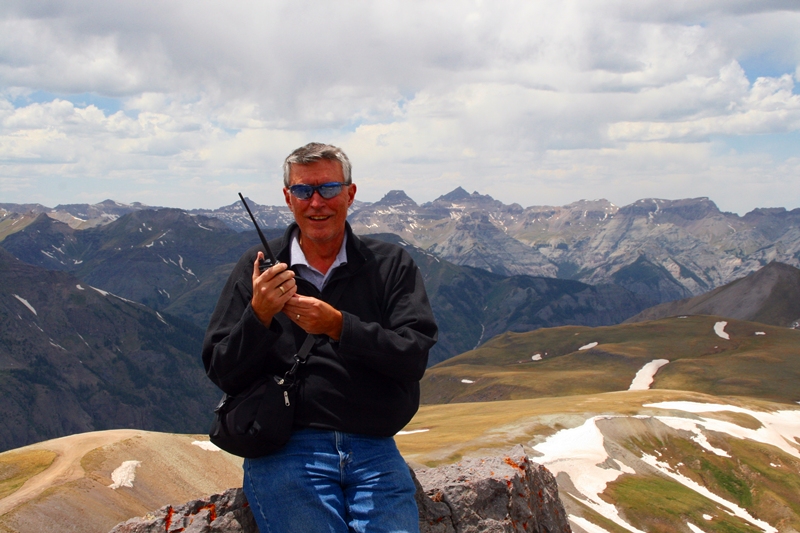
Hmmm, I said to myself, Engineer Mountain is a valid peak (W0/SJ-011, 12968 feet elevation) for a Summits On the Air (SOTA) activation. The only portable radio I had with me was a Yaesu VX-8GR with the stock rubber duck antenna. Not a great SOTA station. But if I could whistle up 4 contacts on 2M FM simplex, I would have a legitimate activation. We had already decided to climb to the summit, so any radio activity was just icing on the cake.
So off we went up the mountain. I got to the top and started calling on 146.52 MHz FM. Now it hits me that we are in the middle of a national forest, away from population centers and, to top it off, no one is expecting a SOTA activation here today. This might be a bit of a challenge to make 4 contacts. Then Thomas, KRØNK, answered my CQ. OK, there’s one contact. A little bit later Dave, AKØMR, comes on frequency and gives me a second contact. Both of these guys were in Grand Junction, CO, which is about 100 miles from Engineer Mountain. Not bad for a peanut-whistle HT using a standard rubber duck antenna.
I needed two more contacts. I tuned around for a repeater in the area and came across the 147.27 MHz machine which turned out to be a stones throw away from my location. It requires a CTCSS tone, so I fumbled around until I figured that out. No, I did not have a repeater directory with me…that was safely stored in the Jeep at the bottom of the mountain. I gave a quick call with my location and Ben WB5ITS came back to me. We QSY’d over to 146.52 to make my third contact. Anticipating a rough go of it, I asked my wife Joyce K0JJW to descend off the peak while I remained at the top, so she could be my fourth contact. (SOTA rules do not allow contacts between parties on the same peak.)
Somewhere along the way, I reach for a piece of paper to log the contacts, only to find that I did not have a writing utensil with me. Duh. I would have to remember the times and callsigns of the contacts and write them down later.
I completed the fourth contact and headed down. Later that evening I checked the ListsofJohn database and found that there are actually two peaks in the area called Engineer Mountain. Go figure. The SOTA database only recognizes one of them…of course, you guessed it, not the one I was on. It turns out that the Engineer Mountain I was on is subordinated by an adjacent peak: Darley Mountain (W0/RG-034, 13260 feet). However, since I operated from 13,218 feet on my Engineer Mountain, it is within the 75 foot vertical activation zone for Darley Mountain. So, this does count for a SOTA activation of Darley Mountain.
This is where I could claim that incredible skill, flexibility and a little luck ruled the day. I think a more appropriate analysis is to concede that a complete lack of planning and preparedness produced a marginal result.
What can we learn from this?
- Do your homework concerning the SOTA peak that you intend to activate before you start the climb. Make sure you know where it is and that you are really on it.
- Always keep a notepad and pen/ pencil in your backpack
- Even for casual hikes, take along a decent antenna for the HT. A half-wave vertical is way better than a stock rubber duck.
- Plan in advance so you can post your intended SOTA activation on sotawatch.org
- Have a repeater directory (or equivalent) available to identify repeaters in the area.
- And don’t forgot the normal hiking Ten Essentials
Beyond doing a SOTA activation, some of these items could be important if an emergency should occur. It runs out there was no mobile phone coverage in the area. I used to be pretty vigilant about taking an HT with spare batteries and extended antenna along on hikes but have gotten sloppy lately. See Rescue on Uncompahgre Peak, which describes an incident years ago when my radio turned out to be very useful during an emergency.
In the end, I did complete my first SOTA activation, so I can be happy about that. And it gave me the opportunity to relearn a few things about planning and being prepared.
73, Bob KØNR
P.S. The WØ SOTA guys recently created a great W0 SOTA page.
The KX3 Case – Decision Made
I’ve had in my possession my new Elecraft KX3 for over a month. I’ve watched and waited and watched some more. I’ve seen many of our fellow hams post pictures and such on the various reflectors about things that worked and things that didn’t work. Even I speculated on how an existing case would work using a short 2×4. I later realized I hadn’t taken into account the knobs with my 2×4 prototype. While the bag which works fine for my 817 does work, I wanted something a little more specific for the KX3.
My primary selection criteria was maximum protection. I really didn’t care how many other accessories I could cram into the case….I wanted something that was crush proof and water proof. In most circumstances, the KX3 case would always be carried inside the backpack I use for SOTA activations. I carry a smaller pouch which will hold the microphone, power cable etc.
While I would have gladly spent the $$ for a Pelican case, the size wasn’t right for my application. Again, I wanted something to protect the KX3…but I didn’t want the added bulk and weight. I also found a few, what I’ll call Pelican like models, but in the end they simply didn’t make the cut.
What I finally decided to purchase was the SIGG Aluminum Survival Kit Box. The large size measures 9.0” x 5.7” x 3.0”. The SIGG Aluminum Box is both durable and leak proof, so my two basic requirements are fulfilled. The lid locks in to place with two latches on each side and has a rubber gasket to keep moisture and dust out. Thanks to both Steve, wGØAT and Guy, N7UN for the idea.

While the inside of the box is just simply aluminum (no padding), working in the IT field does have its privileges. I receive weekly shipments of computers, servers and other computer hardware gadgets. I have a variety of different foam bits and pieces which will work perfectly to provide a nice comfortable nest for my KX3 to sit in.
Right now I’m still in basement construction mode. I start painting this weekend and there just is no time for SOTA activations. But I’m staying busy with conducting presentations to both local clubs and via remote connections to clubs outside the area. I’ll update once I have all the foam padding work completed in the new KX3 case.
Until then…
73 de KDØBIK
First impressions
Good conditions and a new toy to play with has resulted in a lack of time to write about them. Since my last post I have spent a lot of time getting to know the Elecraft KX3. For those of you on the waiting list all I can say is: it’s worth the wait. If you aren’t, then what are you waiting for?
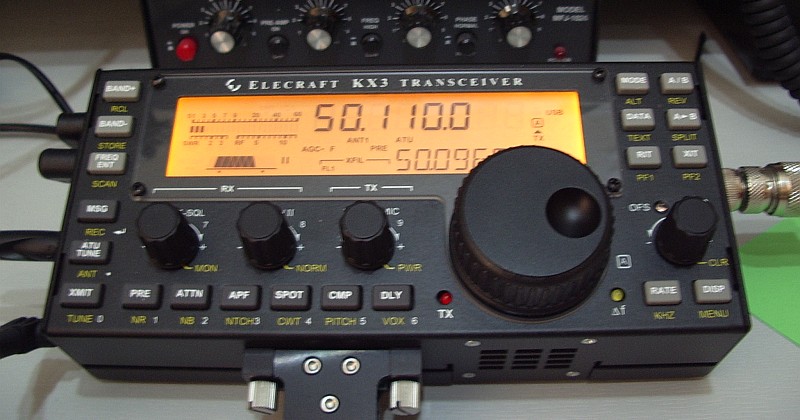
The KX3 really is the ultimate portable rig. It knocks the FT-817 into a cocked hat. It looks and feels like a baby K3. The only reservation I would have about its adoption by diehard SOTA enthusiasts who go out in all weathers is that it is rather an expensive radio to subject to the worst of the British climate. But as a fair weather walker I would have no such reservations. In fact I have already got a plastic toolbox with a foam insert into which I will soon be making a KX3-sized hole!
If you are a K3 owner then the KX3’s similarity to its parent means you will know what to expect. But there are also things where familiarity to the K3 is not an advantage, where functions are not in the same place. The KX3’s front panel is a little bit shorter and quite a lot less wide, but the same number of functions have been crammed into it. All the buttons have dual functions depending on whether they are pressed or long-pressed. The radio is powered on and off by pressing two buttons at once. Some of the knobs have three functions depending on whether you press them first or long-press the button below.
If it sounds complicated then it really isn’t and you’ll quickly get the hang of it. The only thing I can’t understand is the decision to make AGC Slow/Fast/Off an option on the configuration menu. The AGC button on my K3 gets a fair bit of use, mainly to turn AGC off when operating PSK with a wide bandwidth. But I don’t plan on using the KX3 for data modes much so this isn’t an issue I’m particularly bothered with.
The KX3 designers have made a few unusual choices of interface sockets, notably a 4-pole 3.5mm jack for the microphone. These jacks are a bit hard to obtain but don’t worry: you probably won’t need to. Four poles are only needed to support the up/down buttons of the Elecraft MH3 mic. You can actually plug a computer headset with its two 3-pole 3.5mm jacks into the phones and mic sockets (RF immunity not guaranteed.) You won’t have a PTT but you can use VOX instead or the XMIT button on the front panel. Ideal for windy hilltops (is there any other sort?
Some SOTA operators may be put off by the lack of 2m coverage. Elecraft has promised 2m will be available as an option, as it is for the K3. Hopefully it will perform better than the ubiquitous hand-helds and even the FT-817 when subjected to the large out of band signals experienced on British hilltops.
What many people will want to know is: what is the receiver performance like? “Better than an FT-817” But that would surprise no-one and in any case is only an educated guess. I don’t have the antennas or QTH to subject the KX3 to challenging input levels. All I can say is that the KX3 receiver is quiet and delivers clear and open-sounding audio. Just like a K3, in fact.

FT-790R, 1W of Forlorn Hope?
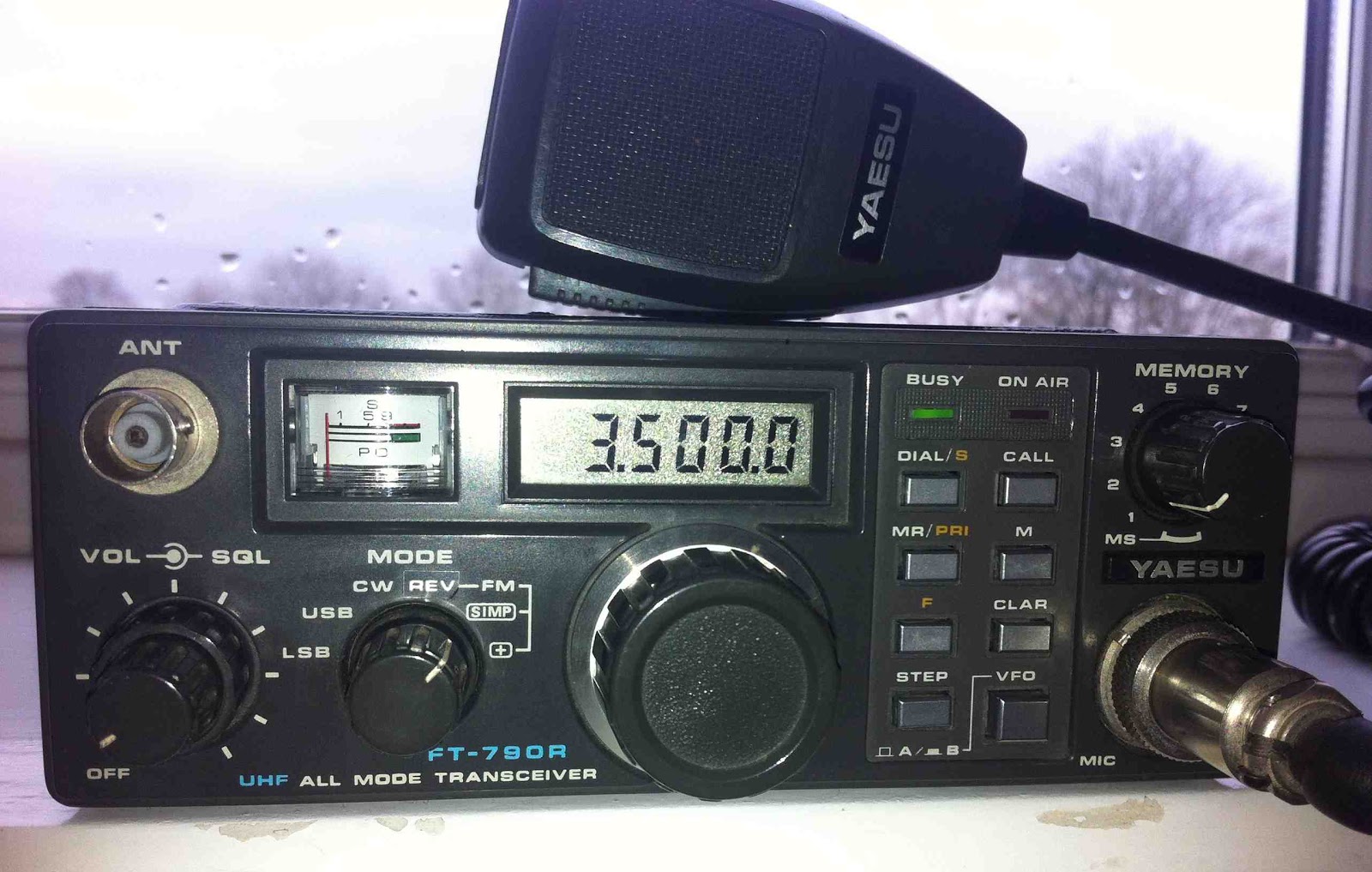 |
| FT-790, forlorn hope? |

Loving My Alinco DJ-G7
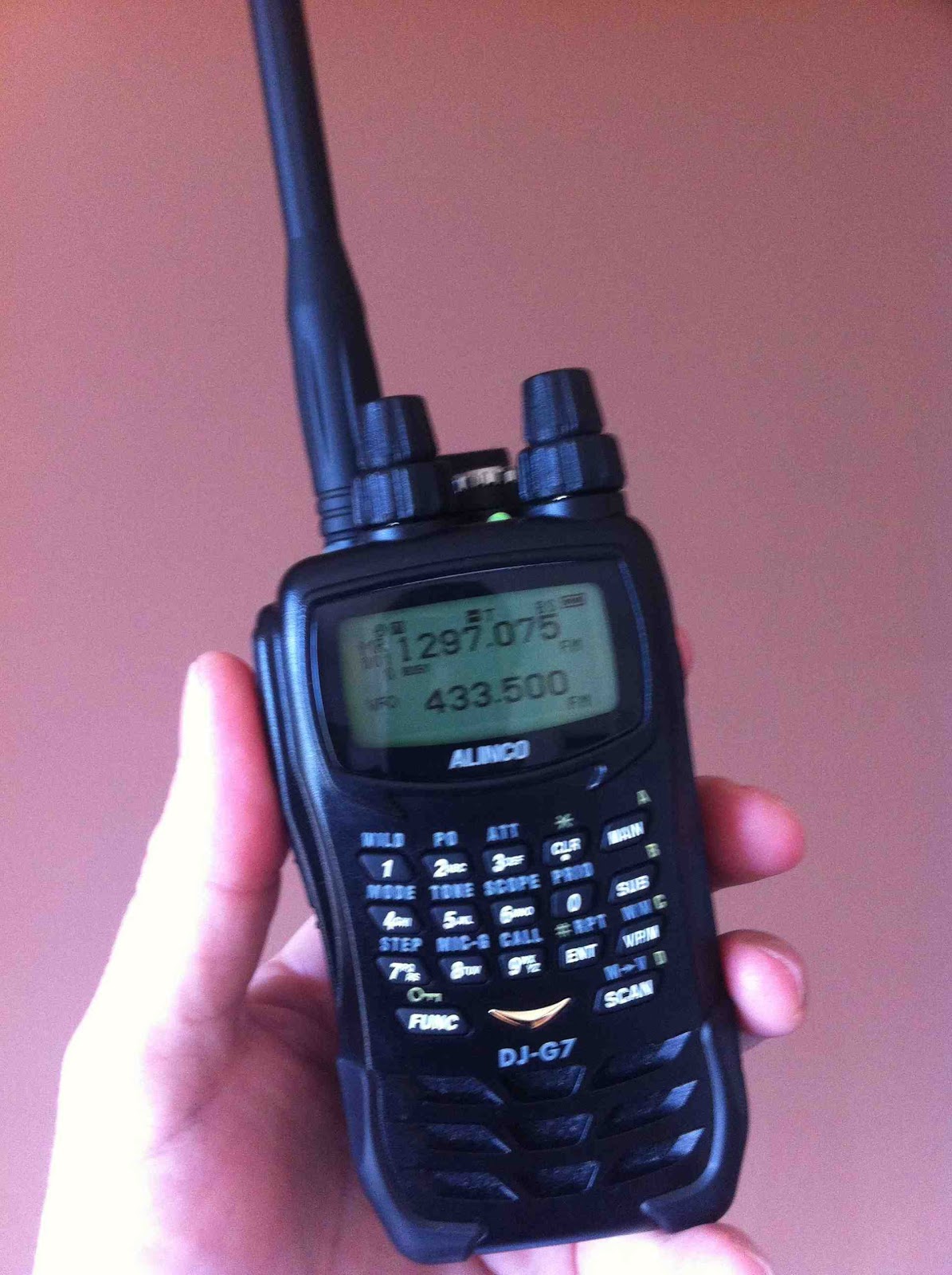 |
| Alinco DJ-G7 |
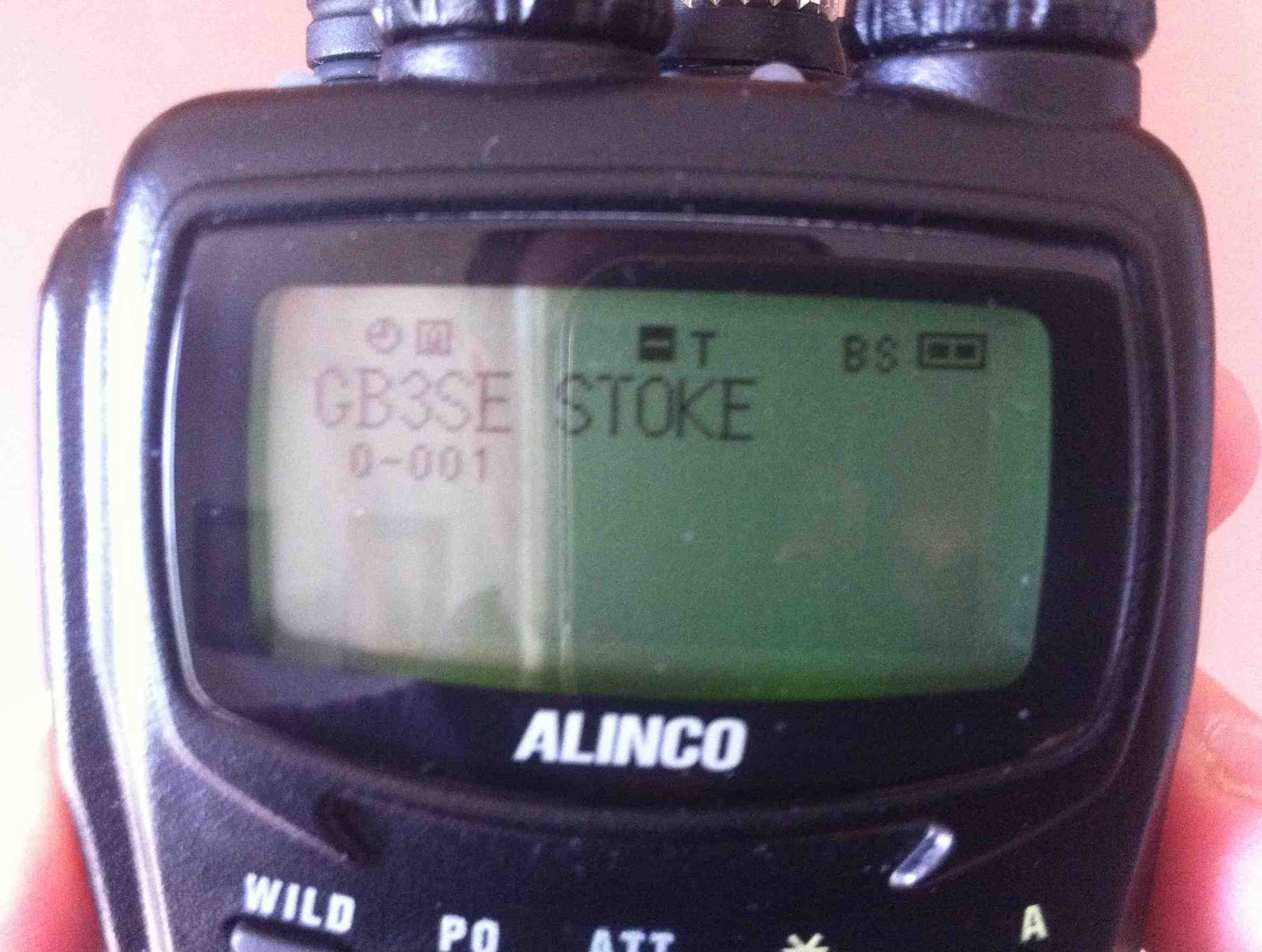 |
| Alphanumeric display |
Read Ross G6GVI's excellent review here: G6GVI Alinco DJ-G7
Update - here's a list of stations worked in my first week QRV on 23cm:
| GW4ZPL | John | Caernarfon |
| G7IEI | Shaun | Bolton |
| G6AOS | Steve | Blackpool |
| G6ODU | Bob | Ormskirk |
| 2E0DDD | Rob | Stoke |
| 2E0XYL | Karen | Wirral |

Sandpiper 23cm 19 Element Yagi
It didn't help that the elements were supplied in the wrong sequence with a couple of 'wild card' elements from another antenna design altogether. Marc, the manufacturer, was extremely apologetic and helpful in sending me the antenna measurements straight away by email. However, it meant the additional purchase of a metal rule and measuring callipers from our local excellent ironmonger to get cracking.
After what seemed an afternoon of measuring and re-measuring, the beam started to take form. This involved discarding one element and chopping down another to size. In the initial construction the reflector ended up as the first director. What was supposed as a reflector must have come from a 70cm design. No wonder the thing worked better sideways.
But now, all is well. Coupled with my 1W Alinco DJ-G7 I worked Stoke on Trent (2E0DDD) simplex from a local Anglesey hilltop thanks to a slight tropospheric enhancement. It seems to offer the best combination of gain and beam width. This means your calls will be heard reasonably widely with enough gain (17.1dBi). You won't be losing out too much due to de-pointing either. Its size also means that it can be supported by a modest pole/guys or tripod without offering too much windage.
I think it's possibly the most optimal solution for hilltop and portable operating.
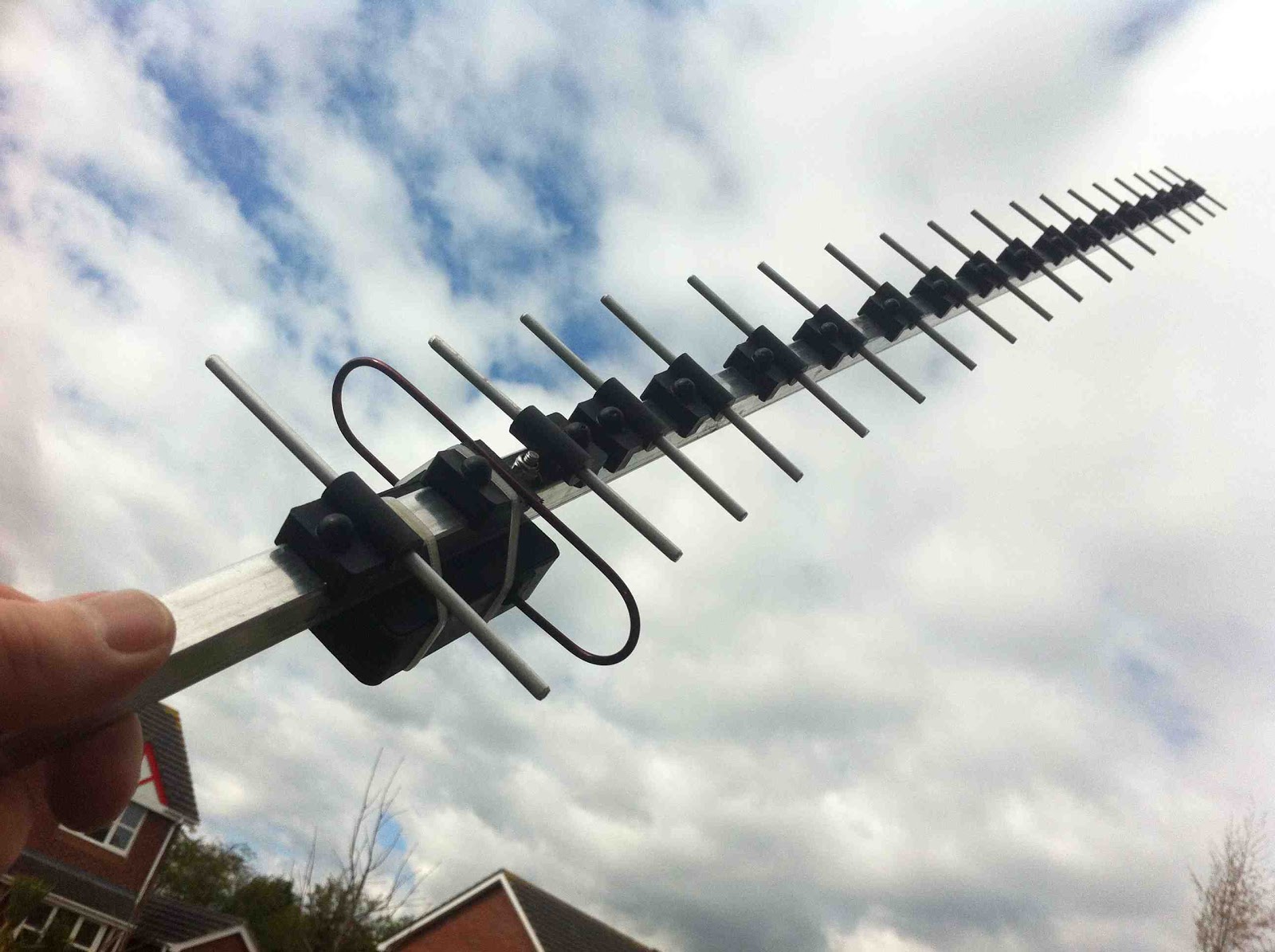 |
| The completed 19 element 23cm Sandpiper yagi |














