Posts Tagged ‘Propagation’
 630m VK’s Light-Up North America
 October 13th, 2016 |
  Author:
It seems that all of my blogspots of late have focused on 630m propagation ... but what has been happening down there recently has been both amazing and somewhat unexpected. With the growing number of active stations listening and transmitting, the band's propagation capabilities and mysteries are quickly revealing themselves.
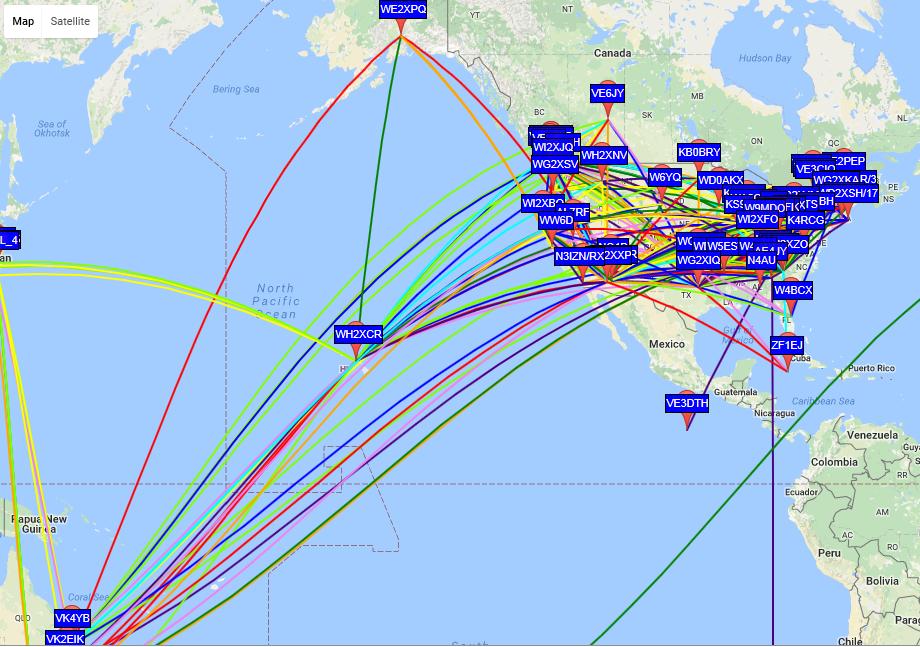
Last night was a great example but perhaps the WSPRnet prop map illustrates this best.
 |
| courtesy: http://wsprnet.org/drupal/wsprnet/map |
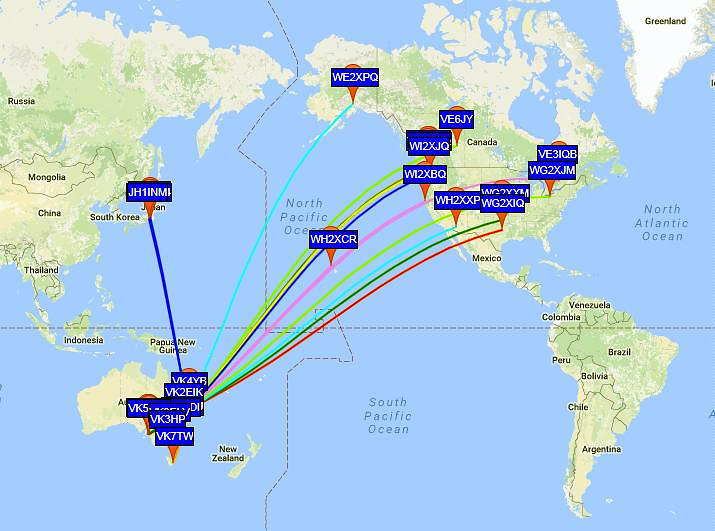
Particularly striking was the long haul propagation from VK to North America, with northernmost VK4YB leading the pack. His 90 watt signal made it all the way to VE3IQB, near Ottawa as well as to NO3M, in Pennsylvania! To provide further hope to those that have little room for big receiving antennas, VE3IQB uses a typical small active e-probe antenna, 20' above ground!
 |
| courtesy: http://wsprnet.org/drupal/wsprnet/map |
 |
| courtesy: http://www.swpc.noaa.gov/ |
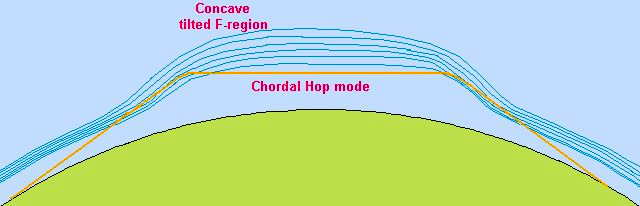
I'm theorizing that Roger's signal was arriving today at much lower angles than normal, evidenced by its far-reaching east coast reception and the fact that it couldn't get over my 600' local obstruction to the west. I've always believed that it takes higher angled signal arrival for me to hear Roger and today's events seem to support this.
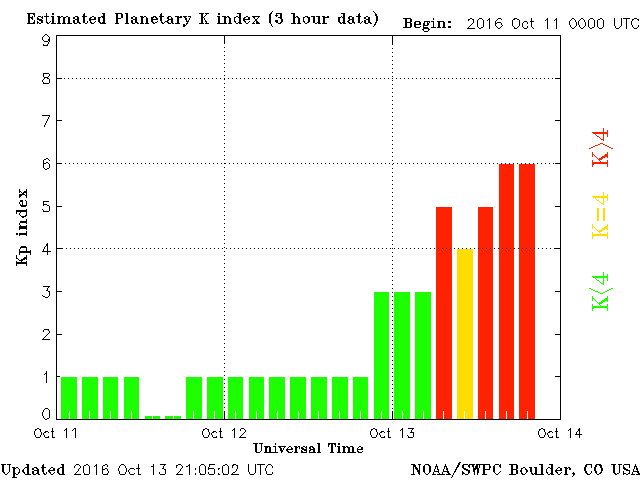
Exactly what would cause this to be the case, I'll leave to the experts but I imagine that the sudden surge in geomagnetic activity played a significant role in today's very different propagation paths.
Roger was not the only VK lighting-up the map today. A much more detailed account of all the action can be found on the KB5NJD's daily 630m report here ... all very inspirational and hopefully enough to spur even more new activity on the MF band.
Why not give a listen and see what you can hear?
CLE 211 Results
This past weekend's CLE saw noticeably improved conditions compared with the previous event.
With the fall DX season fast-approaching, the combination of diminishing thunderstorm activity and improved propagation provided some interesting catches. Friday night was the best with Saturday having a brief period of favorable prop, while no new stations were heard on Sunday night, the poorest.
It was particularly nice to hear strong signals from the eastern provinces on Friday, highlighted with an excellent signal from 'JT' (390 kHz) in Stephenville, Newfoundland. This long haul east-west propagation can only be found with quite geomagnetic conditions as was the case on Friday.

After examining the geomagnetic 'K' data for Saturday (25th), it's interesting to note that the four catches for that night all coincided exactly with the brief green bar (K= 0-3) centered on the hours around 0900 UTC (circled).
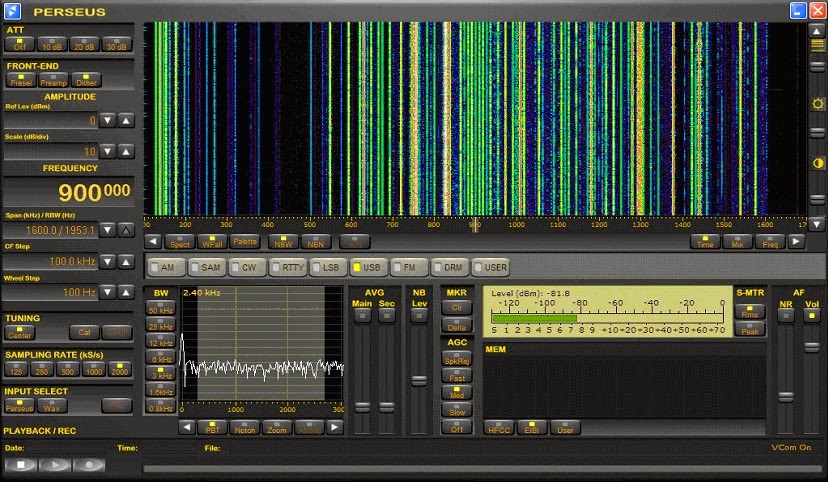
The following NDBs were heard using my Perseus SDR and 'inverted-L' resonated to ~ 300kHz:
24 06:30 385.0 WL Williams Lake, BC, CAN
24 13:00 385.0 OCC Yakutat, ALS
24 10:00 385.0 MR Pacific Grove, CA, USA
24 13:00 385.0 EHM Cape Newenham, ALS
24 08:30 386.0 SYF St. Francis, KS, USA
24 06:30 386.0 HAU Helena, MT, USA
24 06:00 386.0 4N Oxford House, MB, CAN
24 06:30 388.0 MM Fort Mc Murray, AB, CAN
24 09:30 388.0 JW Pigeon, AB, CAN
24 06:30 388.0 GLY Clinton, MO, USA
24 06:30 389.0 YWB Kelowna, BC, CAN
24 08:00 389.0 TW Twin Falls, ID, USA
25 08:30 389.0 EN Kenosha, WI, USA
24 06:00 389.0 CSB Cambridge, NE,USA
24 06:30 390.0 JT Stephenville, NL, CAN
24 06:00 390.0 HBT Sand Point, ALS
24 06:00 390.0 AES Northway, ALS
24 06:30 391.0 TK Telkwa, BC, CAN
24 13:00 391.0 EEF Sisters Island, ALS
24 06:00 391.0 DDP Dorado, PTR
24 06:30 391.0 4W Kelsey, MB, CAN
24 08:30 392.0 ZFN Tulita, NT, CAN
24 06:00 392.0 PNA Wenz, WY, USA
24 06:30 392.0 ML Charlevoix, QC, CAN
25 08:30 392.0 FMZ Fairmont, NE, USA
25 08:30 392.0 BAJ Sterling, CO, USA
24 06:00 392.0 AGZ Wagner, SD, USA
25 09:30 393.0 TOG Togiak, ALS
24 08:30 393.0 2M Opapimiskan Lake,ON, CAN
24 13:00 394.0 RWO Kodiak, ALS
24 08:30 394.0 DQ Dawson Creek, BC, CAN
24 08:30 395.0 YL Lynn Lake, MB, CAN
24 06:00 395.0 ULS Ulysses, KS, USA
24 08:30 395.0 L7 Estevan, SK, CAN
24 08:30 396.0 YPH Inukjuak, QC, CAN
24 13:00 396.0 CMJ Ketchikan, ALS
24 08:30 397.0 ZSS Saskatoon, SK, CAN
24 08:00 397.0 SB San Bernardino, CA, USA
24 08:00 397.0 CIR Cairo, IL, USA
24 08:30 398.0 YOD Cold Lake, AB, CAN
24 08:30 398.0 3D Cumberland House, SK, CAN
24 08:30 399.0 ZHD Dryden, ON, CAN
24 13:00 399.0 SRI St George, ALS
The results from all participants can be found at the NDB List website, or if you are a member of the ndblist Group, results have also been e-mailed and posted there.
The very active Yahoo ndblist Group is a great place to learn more about the 'art' of NDB DXing or to meet other listeners in your region. There is a lot of helpful information available there and new members are always very welcome. As well, you can follow and chat with other NDB chasers regarding antennas, techniques, unidentified signals and nightly propagation.
630m And Recent Geomagnetic Activity
High levels of geomagnetic activity have usually, but not always, been the kiss-off-death for LF/MF propagation.
These past few months have seen fairly regular field disturbances, often pushing the K index to a level '5' or higher. However, while usually attenuating the east-west and northerly polar paths, the Trans-Pacific path often seems to benefit from these events ... particularly last night.
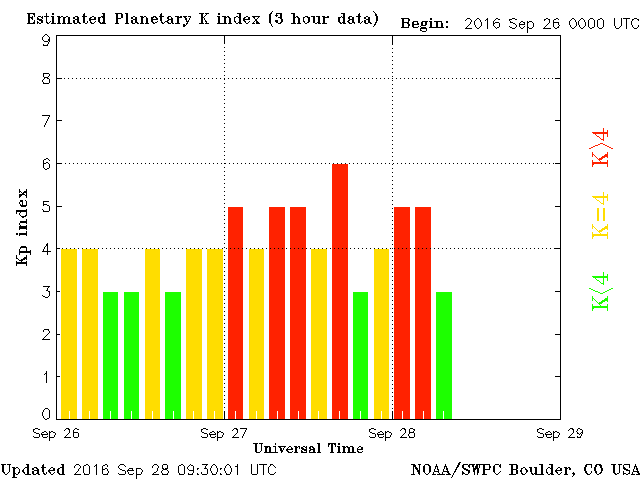
Perhaps it is related to the equinox's normal preference for this path or maybe the goop the sun is sending us at this point in the cycle is different or not as energetic as it is at mid-cycle. Nevertheless it's really encouraging to see that not all disturbances are detrimental to LF propagation.
For a daily summary of all overnight activity and much more, see KB5NJD's '630m Daily Reports'.
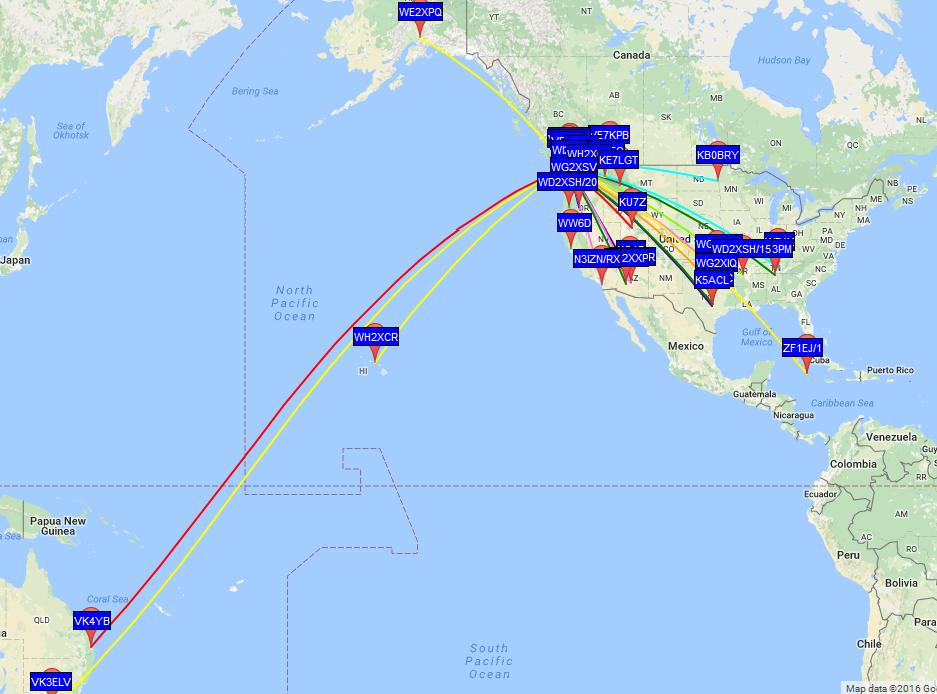
The WSPRnet map reproduced below shows the extent of reception during my own overnight WSPR 630m beaconing session. Missing are many of the normal spots from the eastern provinces and east coast states, indicating the attenuation on this path. Everything else seems enhanced.
 |
| courtesy: WSPRnet |
The path to down under, in-spite of my obstruction in that direction, perked-up as well, with VK4YB decoded here 19 times as well as VK3ELV's 150W and inverted-L near Wangaratta, Victoria.
13:56 VK4YB 0.4756 -28 QG62ku 11820
13:50 VK4YB 0.4756 -28 QG62ku 11820
13:44 VK4YB 0.4756 -24 QG62ku 11820
13:40 VK4YB 0.4756 -24 QG62ku 11820
13:30 VK4YB 0.4756 -27 QG62ku 11820
13:24 VK4YB 0.4756 -20 QG62ku 11820
13:18 VK4YB 0.4756 -24 QG62ku 11820
13:12 VK4YB 0.4756 -22 QG62ku 11820
12:42 VK4YB 0.4756 -26 QG62ku 11820
12:14 VK4YB 0.4756 -20 QG62ku 11820
12:02 VK4YB 0.4756 -23 QG62ku 11820
11:58 VK4YB 0.4756 -25 QG62ku 11820
11:52 VK4YB 0.4756 -25 QG62ku 11820
11:40 VK4YB 0.4756 -29 QG62ku 11820
11:32 VK4YB 0.4756 -26 QG62ku 11820
11:24 VK4YB 0.4756 -25 QG62ku 11820
11:12 VK4YB 0.4756 -22 QG62ku 11820
10:56 VK4YB 0.4756 -26 QG62ku 11820
10:54 VK4YB 0.4756 -25 QG62ku 11820
Merv, WH2XCR in Hawaii, was spotted here 56 times, with numerous transmissions at 'easy CW' levels. He even spotted me twice, with his 80m dipole, presently laying on the ground!
It was also encouraging to see 21 spots from Eden, ZF1EJ in the Cayman Islands, with several at CW levels.
The following stations all uploaded spots of my overnight WSPR signals, as nightly activity continues to grow with the DX season now at the doorstep. Given equal ERP, most of these stations would be workable on either CW or on JT9.
WH2XGP DN07dg 319 122
WG2XSV CN85sr 353 169
WI2XJQ CN87ts 138 150
NO1D DM34tn 1825 147
N3IZN/RX DM13ji 1796 161
WW6D CM88pl 1155 177
VE7CNF CN89ng 55 33
VA7MM CN89og 59 38
WE2XPQ BP51ip 2151 321
W5EMC EM10cl 2963 124
K5ACL EM10bd 2987 125
WG2XXM EM15lj 2610 115
ZF1EJ/1 EK99ig 4977 116
KE7LGT DN26xm 739 107
W3PM EM64or 3365 104
ZF1EJ EK99ig 4977 116
VE7KPB DN29cm 550 79
KU7Z DN41af 1227 129
WH2XCR BL11je 4295 236
KB0BRY EN17nc 1966 86
WD2XSH/20 CN83 598 178
WG2XIQ EM12 2841 120
WE4X EM65ut 3326 102
VE7BDQ CN89la 26 44
KB7W CN93jx 565 163
W6LEO DN17oq 498 103
WH2XAR DM33vp 1924 147
As interest in 630m continues to expand, many U.S. amateurs are already building their stations so they will be ready to go when the word finally comes. I suspect that 630m may soon sound like a small slice of 40m on a busy night ... will you be ready?
Magicband Morphs
 |
| Chordal Hop courtesy: http://g4fkh.co.uk/projects/lp-experiment/ |
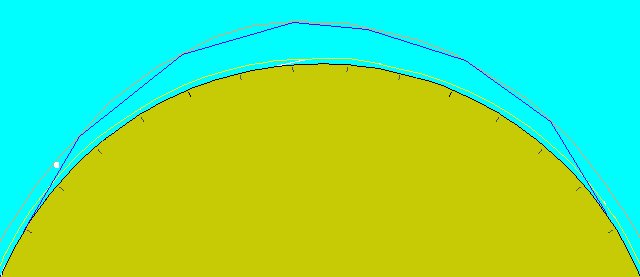 |
| Inter Layer Ducting courtesy: http://g4fkh.co.uk/projects/lp-experiment/ |
 |
| courtesy: http://www.dxmaps.com/ |
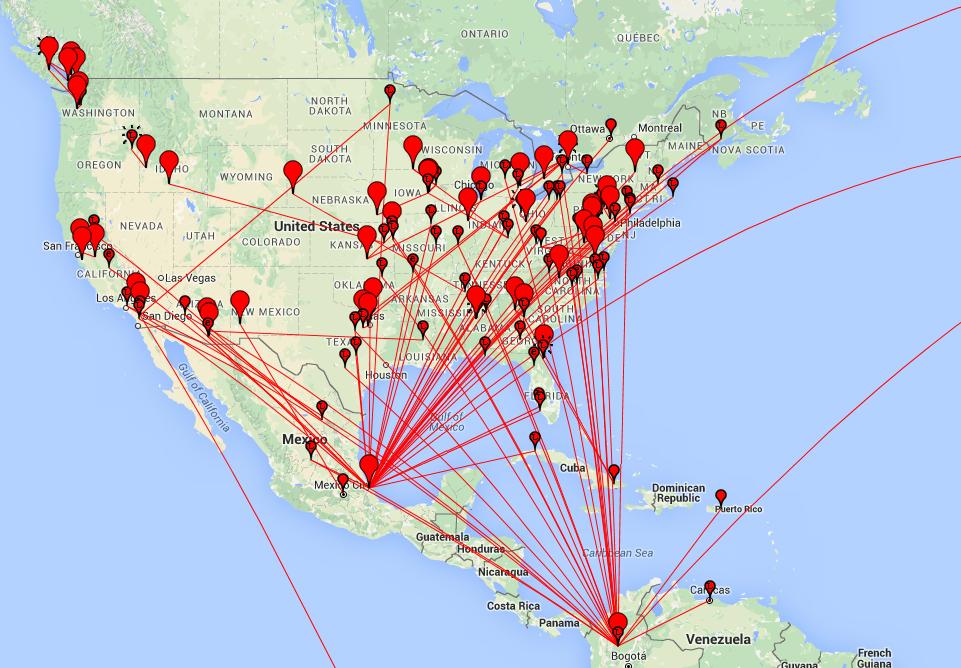 |
| courtesy: https://pskreporter.info/pskmap.html |
April’s Single-Yagi EME
A website that helps determine when these good days occur, is the Making More Miles On VHF eme page. A graphical display of several important elements will easily determine which days might be best to operate ...
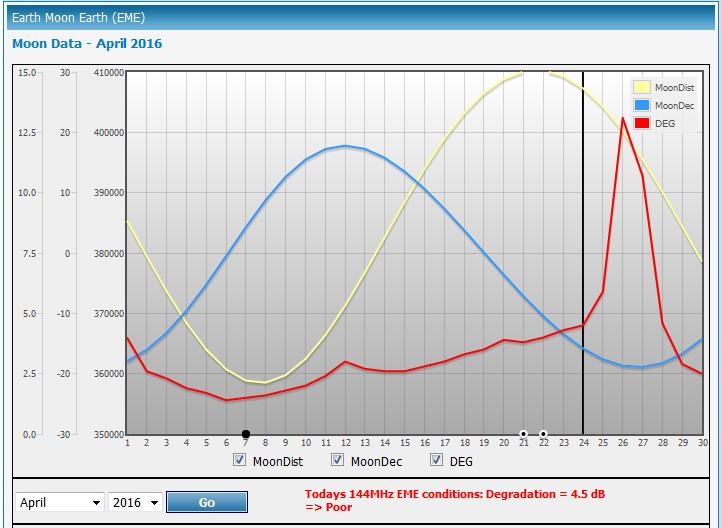 |
| courtesy: http://www.mmmonvhf.de/eme.php |
This month saw six EME contacts, some with stations worked previously, in 2007, and not 'new uniques', while three were new, bringing my uniques total to 73, with this small, horizon-gain assisted system.
G4SXW John 4 x 16el array #71 ... answered my CQ
KB8RQ Gary 24 X 13el array!! worked with moon at 1 deg high
UX5UL Oleg 4 x 16el array #72
UT6UG Val 4 x 32el array #73 Val and Oleg both live in Kyiv, Ukraine
RK3FG Anatoly 4 X 15el array
K9MRI Joe 8 X 28el array - Indiana
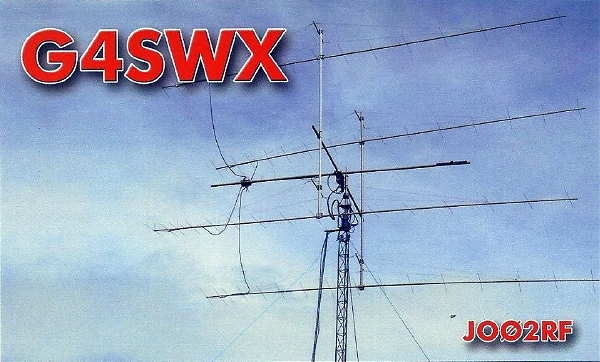 |
| G4SWX 4 x 16 el EME Array |
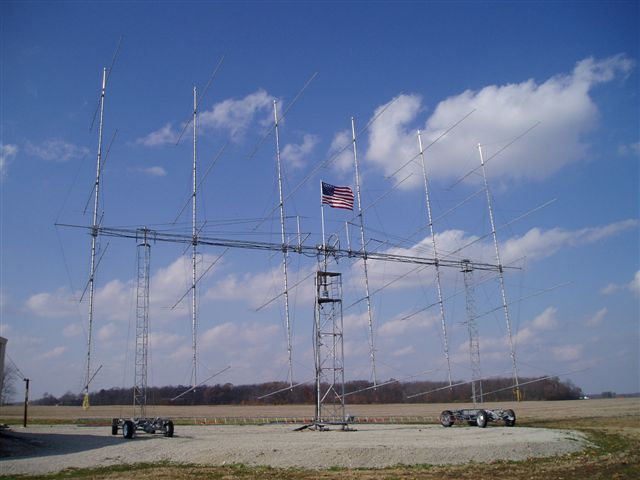 |
| KB8RQ 24 x 13 el EME Array |
As summer approaches, it will be interesting to see how favorable the above mentioned variables will come into play as many of the best northerly declination days will also closely follow the sun and its increased background skynoise ... not so much a problem for me but for those bigger stations trying to hear a very weak signal in a noisier sky.
Thirty Minutes of Dazzle: The Sun in UHD 4K by SDO (NASA)
Take a front-seat view of the Sun in this 30-minute ultra-high definition movie in which NASA SDO gives us a stunning look at our nearest star.
This movie provides a 30-minute window to the Sun as seen by NASA’s Solar Dynamics Observatory (SDO), which measures the irradiance of the Sun that produces the ionosphere. SDO also measures the sources of that radiation and how they evolve.
SDO’s Atmospheric Imaging Assembly (AIA) captures a shot of the sun every 12 seconds in 10 different wavelengths. The images shown here are based on a wavelength of 171 angstroms, which is in the extreme ultraviolet range and shows solar material at around 600,000 Kelvin (about 1 million degrees F.) In this wavelength it is easy to see the sun’s 25-day rotation.
The distance between the SDO spacecraft and the sun varies over time. The image is, however, remarkably consistent and stable despite the fact that SDO orbits Earth at 6,876 mph and the Earth orbits the sun at 67,062 miles per hour.
Scientists study these images to better understand the complex electromagnetic system causing the constant movement on the sun, which can ultimately have an effect closer to Earth, too: Flares and another type of solar explosion called coronal mass ejections can sometimes disrupt technology in space. Moreover, studying our closest star is one way of learning about other stars in the galaxy. NASA’s Goddard Space Flight Center in Greenbelt, Maryland. built, operates, and manages the SDO spacecraft for NASA’s Science Mission Directorate in Washington, D.C.
Charged particles are created in our atmosphere by the intense X-rays produced by a solar flare. The solar wind, a continuous stream of plasma (charged particles), leaves the Sun and fills the solar system with charged particles and magnetic field. There are times when the Sun also releases billions of tons of plasma in what are called coronal mass ejections. When these enormous clouds of material or bright flashes of X-rays hit the Earth they change the upper atmosphere. It is changes like these that make space weather interesting.
Sit back and enjoy this half-hour 4k video of our Star! Then, share. 🙂
73 dit dit
Never heard Heard
And I would guess I'm in the minority as I'm not in any of their logs. In fact, I never even heard them decently well enough to work them. There were a couple of times that I could tell they were on a given frequency, but they never loud enough that I would be able to hear my own call come back to me, on the off-chance that they would have heard me. It didn't seem right to just add to the QRM.
Am I disappointed? You're darn tootin' I am! Working VK0EK would have been an ATNO for me and I sure as heck would love to have them in my DXCC tally. But I'm not depressed about it.
It all goes back to that post a few weeks ago about balance. Yes, I do not have Heard Island as an entity worked. However, the sun is still shining, the birds are still chirping, our solar system is still plowing its way throughout the galaxy. I still have to go to work tomorrow and earn a living.
And while I didn't work them, and life goes on, I still applaud their effort. It's not easy to go to a remote island near Antarctica, and brave the elements and hardships to provide the rest of us Amateur Radio ops with a bunch of excitement and fun.
Thank you Team VK0EK - even though I'm not in your log - thank you for a job very well done, indeed!
72 de Larry W2LJ
QRP - When you care to send the very least!













