Posts Tagged ‘Operating’
 Thanks!
 February 13th, 2012 |
 Author:
Thanks to all of you here and on AmateurRadio.com who were so kind as to express condolences and kind words upon our Sadie’s passing.
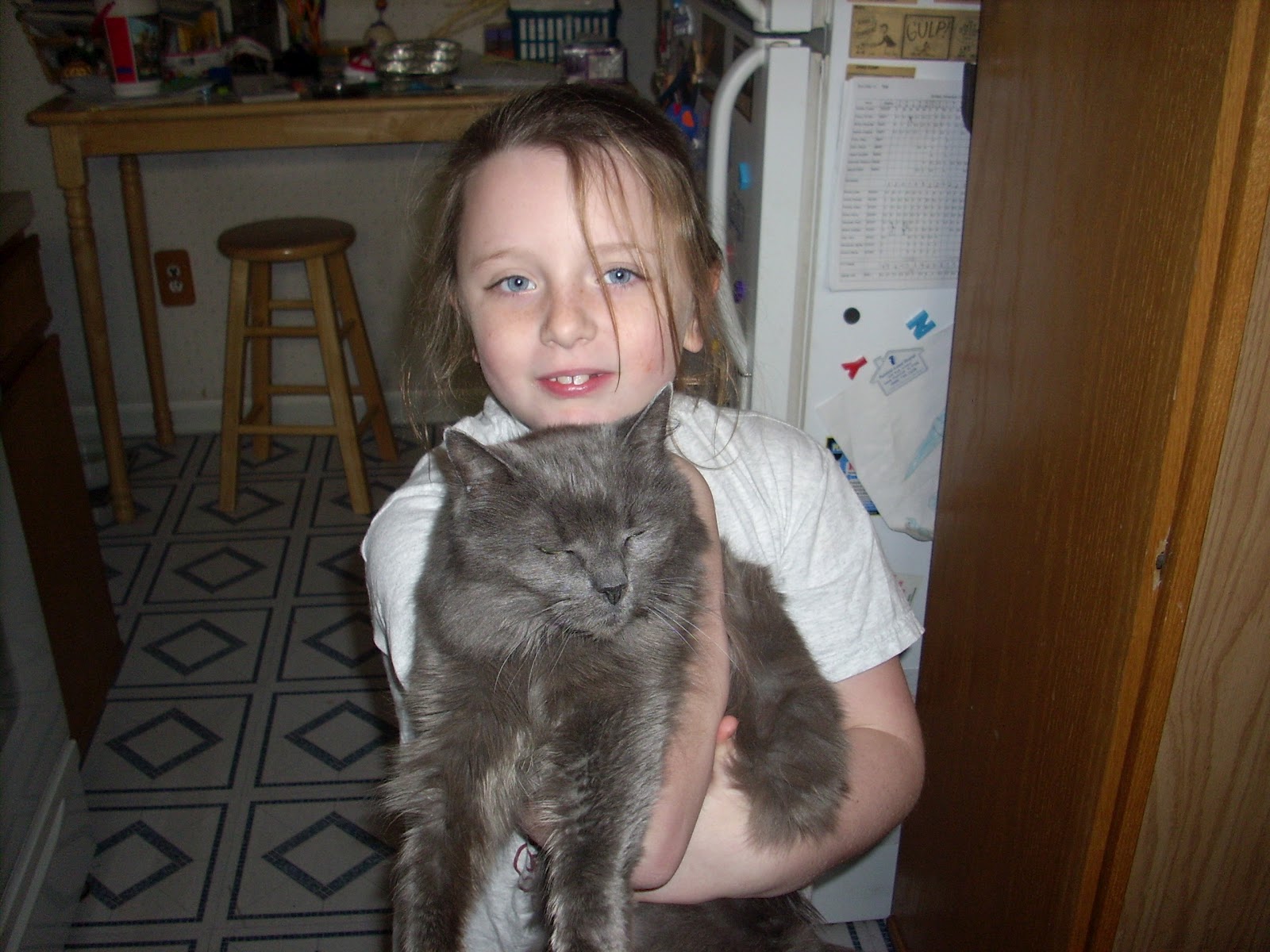
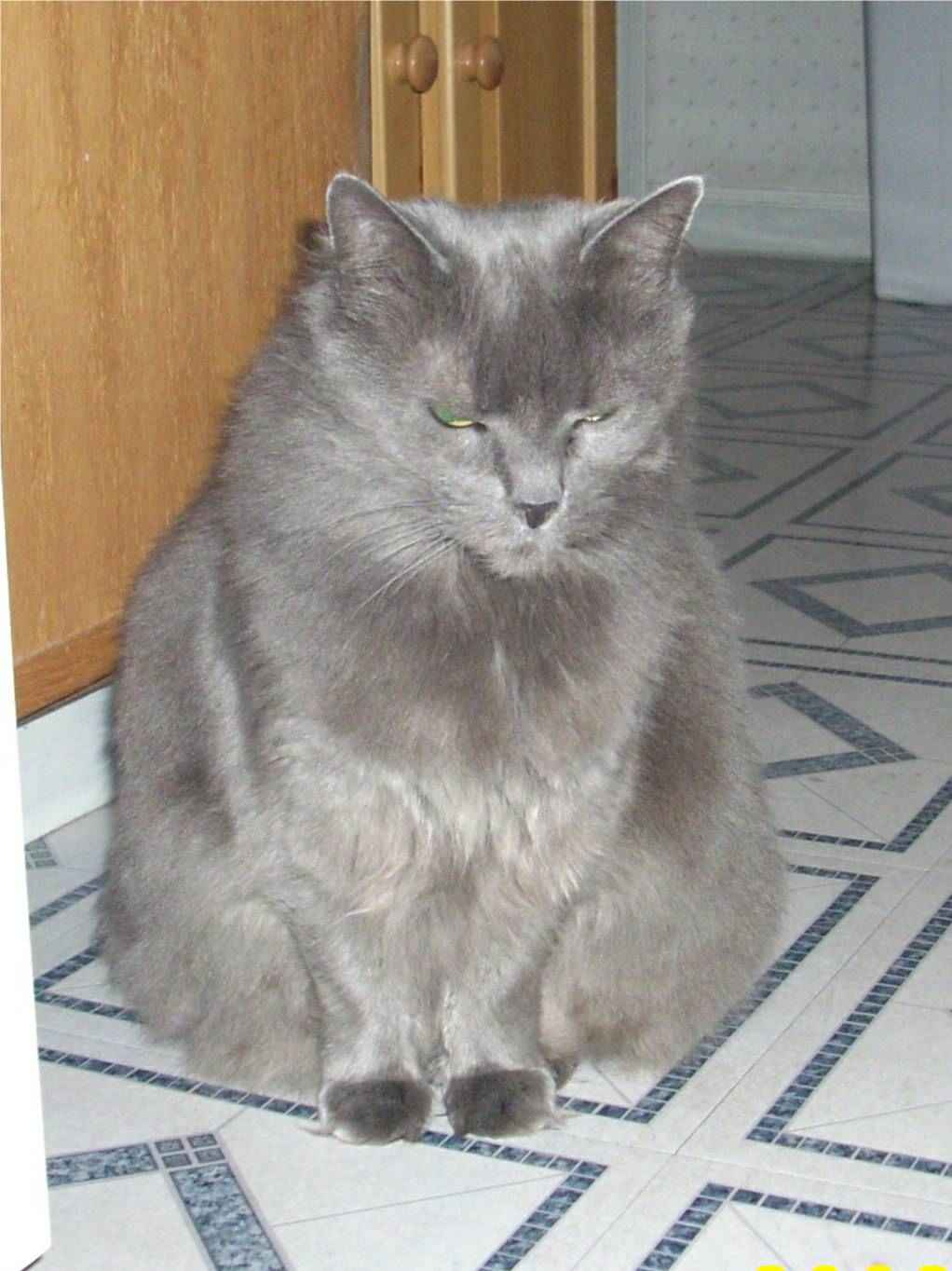
This is going to take a while to get over – but life does go on.
So …… on an Amateur Radio note, the bands did not seem to be active at all today. For a few brief minutes this afternoon, I was able to get on and listen. I heard and worked EI4AA on 12 Meters and was surprised by the fact.
Bernard was pretty weak hear – 569 or there abouts, maybe a little louder – 589 on QSB peaks, maybe? As I called him, I thought to myself, “There’s no way I am going to get an answer here.” But sure enough, I did and on my first call – and I received a 559 report for my efforts. And I was very happy to receive that. Then I went down to 20 Meters and worked a station in Texas who was working the SKCC Weekend Sprint.
After that, I had to QRT as my daughter Cara (holding Sadie above), who is a member of the children’s choir at Church, was part of a free concert this afternoon. The theme was “A Night on Broadway” and the children’s choir, the adult choir, the hand bell and hand chime choirs all participated, performing various Broadway tunes. It was a very enjoyable two hour event.
Today was very windy and cold – winter has come back to New Jersey with a vengeance. Yesterday, the forecast was for 1-3″ of snow, but that forecast was a bust. We barely got a dusting – and please don’t misunderstand – I am in no way complaining!
As soon as it turns to 2/13 UTC, I am going to head downstairs to see if I can get a daily QSO or two in and then off to bed.
72 de Larry W2LJ
QRP – When you care to send the very least!

Almost a fellwalk
It has been yet another fabulous summer day here in Cumbria. I’m in good spirits and physically feeling fitter by the day. I think the balance issues and “jelly legs” are more an effect of the brain operation than a lack of fitness. Perhaps the same reason my hands often shake badly and cause frustration when trying to attempt soldering.
We decided to go for a walk over the fields to the north of Cockermouth and have a picnic lunch. I took the Taiwanese twins in the hope of making a few radio contacts whilst we were out.
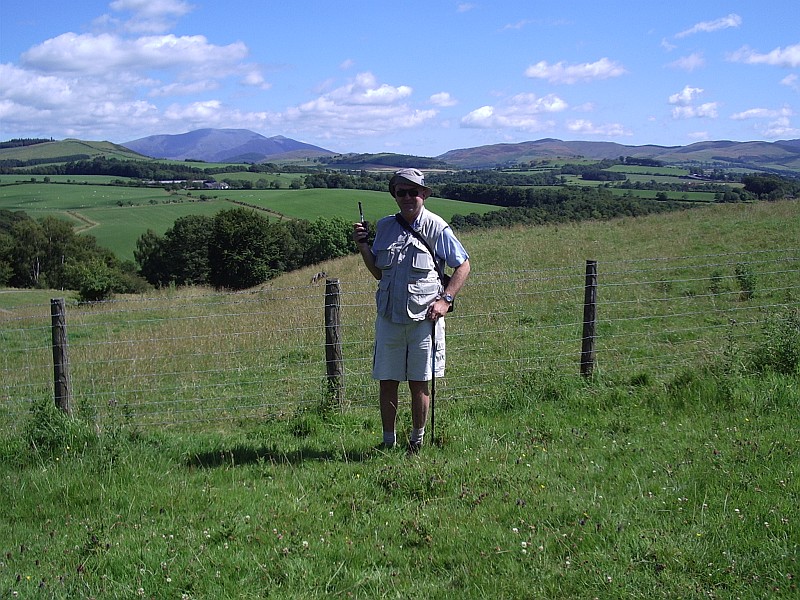
The walk involved some gentle climbing up from the valley. On the way I heard Alan M1EYO/P call on 2m to activate the SOTA summit of Watch Hill G/LD-054 which is almost literally in my back yard. You can see it on the far left of the picture behind me. When I was fit I could walk to Watch Hill though I never did as there was not much attraction in walking for an hour and a half to reach the summit when I could park the car within 15 minutes walk of the top. With no car unfortunately even Watch Hill is out of bounds.
After I worked Alan we carried on walking until we almost reached the Carlisle road, where we found a grassy south facing slope to have lunch. This is probably the only portable site that I can reach on foot from here, though it isn’t a very good site as it is still within the Derwent valley or “Cockermouth black hole” as I call it.
Checking 2m from time to time with a 5/8 telescopic whip on the 2m radio I heard Richard G1JTD/P activating Illgill Head G/LD-029. With a bit of help from Tony G1OAE Richard heard me and we made a contact. I had to use the monitor button to disable the fixed squelch on the H112PLUS which is set far too high. The receiver on the 5/8 telescopic seemed quite poor possibly due to intermodulation or overload. These really are terrible radios!
Alan was going to activate Binsey G/LD-041 a favourite of mine which was in fact the last summit I activated so we waited until he called on 2m and I had another contact. Alan told me he had discovered Rob G4RQJ on the other side of Binsey summit working 40m and setting up to try 4m. I pricked up my ears at the mention of four metres and about a minute later I heard Rob calling on the other H112PLUS so I was able to make my second-ever contact on 70MHz. Binsey is also line of sight from where I was so it was not a DX contact but it was still nice to make a contact on the 4m band.
After that we packed up and walked home. It was a pretty tiring day’s outing for me, definitely the furthest I have walked and the highest I have climbed since my operation. But it was quite a morale booster to get out on such a nice day and do some portable operation. There are even some trees there I could try to get some wire over for some HF operation with the FT-817 in the future, so that’s something to look forward to.

Ukrainians lose 30m and part of 20m
The Ukrainian government has confirmed new rules for its radio amateurs. Since 11th March 2011 Ukrainian amateurs may no longer use the following frequencies: 10100-10150kHz, 14250-14350kHz, 1240-1300MHz, 2300-2450MHz, 5670-5850MHz, 10-10,1 GHz, 10,15-10,5GHZ, 24,05-24,25GHz,76-77,5 GHz , 78-81GHz, 122.25-123.0 GHz, 134-136 GHz, 136-141GHz, 241-248GHz, 248-250GHz. Note the first two – that is all of 30m and half of the phone portion of 20m the Ukrainians can no longer use!
This is very sad for a country whose amateurs are among the most active on the HF bands. What is the point of denying the use of frequencies that will still be used throughout the world including by Ukraine’s neighbours? If it is intended to give these frequencies to other services (in defiance of ITU frequency allocations) then these services will find them unusable because of activity from elsewhere.
It is crazy. As my Ukrainian-born wife Olga would agree, surely the Ukrainian government has more important things it could be doing than meddling with amateur frequency allocations?
I’m hoping that this is just an April Fool that has got out of hand. I cannot find any information confirming this other than a few forum posts. Certainly someone in Ukraine kept enough of a sense of humour to make this little video about it in English. Hopefully some comments to this post will provide more details.

Wedding celebrations
The RSGB has negotiated with Ofcom to allow UK radio amateurs to use a special call to celebrate the wedding of H.R.H. Prince William and Catherine Middleton. The call may be used during a period of 11 days from the date of the wedding, 29 April 2011, until 9 May 2011. The call will use the letter “R” after the first letter of the call, replacing the regional designator for Scotland, Ireland, Wales etc. where used. So G4AAA would become GR4AAA, 2E0ABC would become 2R0ABC, GM3ZZZ would be GR3ZZZ and so on.
UK licensed amateurs wishing to use the special call must apply for a Notice of Variation (NoV) to their license. This NoV may only be applied for online using a simple online form and the NoV will be delivered by email. Who says that the RSGB is not progressive?
Personally I will be trying as much as possible to avoid all the ballyhoo over this wedding so I shan’t be applying, but I thought that the information may be of interest.

10m DX
Ten metres has been open this afternoon. I was alerted to this when someone on the Transmission1 radio forum mentioned that 27MHz was full of Russian taxis. I had a listen and sure enough their FM transmissions were clearly audible well up into the lower end of the amateur 10m band. This is one of the penalties of having CB radios that are easily modifiable for use outside their allowed band, I guess. And there’s no chance of anything being done about it in Russia, the land where the Kalashnikov and the bribe determine the rules.

I switched to SSB and quickly worked A61AM. One of the things I love about 10m is the number of times you hear a DX station, give your call and they come right back. I was not even running full power – 80w is normally all I use. True there were a couple of pileups apparently of pirates using calls that consisted of just two letters 🙂 but I avoided those. By the way, why is it that DX stations so rarely give their own call? Sometimes you have to listen for five minutes to hear it again and verify that you logged it correctly.
Propagation was obviously good into Russia but I also worked Mike, SV5BYR on Rhodes, Barney ZS6TQ, Burhan TA1BX and Norman 5B4AIF. It’s really great to hear 10m opening up, that’s for sure!

Taking part
On Saturday I blew the dust (literally!) off my K3’s microphone. After I had finished sneezing, I started making some contacts in the CQ WorldWide SSB DX Contest.
This was not intended to be a serious competitive effort. My intention was to spend all of the time I could spare that weekend making contest contacts and see how many stations I could work. I spent about an hour on Saturday morning before going with Olga to the garden centre, and a couple of hours in the afternoon. On Sunday I was up earlier than normal because the clocks went back overnight, so I operated for about three hours in the morning before lunch. I had intended to do some operating in the afternoon as well but the three hours in the morning had left me feeling a bit tired and stiff so I went for a walk after lunch and then fell asleep on my return home. Getting old is my excuse!
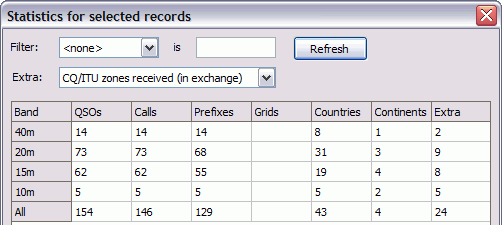
I made a total of 154 contacts in 43 different countries and 4 continents during my six hours or so of operating. The detailed breakdown, for those interested, is shown in the screen grab of the contest statistics dialog from KComm (the Extra field shows the number of CQ zones.) This would give me a claimed score of 17,487 points if my calculations are correct, which by comparison with last year’s results would place me well down the second half of the All Band Single Operator Low Power Unassisted results table.
This was the first time I had made such an effort for an SSB contest. Until now I hated turning on the radio during big SSB contests because the bands sounded like bedlam. But I had never tried with the K3 before. Instead of a mush of intermod, splatter and AGC pumping I could hear everything clearly. Sometimes I could hear two or three stations on the same frequency simultaneously, one in the foreground and a couple in the background. And the superb DSP filtering made it easy to shut out close-by stations so I could copy a weaker one. I often had the passband down to 1.8kHz and copy was still crystal clear.
Initially I started off just working the loud ones because I didn’t want to waste the serious contesters’ time by making them struggle to hear my call. But I found there was no hard and fast rule relating how strong a station was with whether they heard me. One Finnish station, 10dB over 9 with me, just kept on calling as if I wasn’t there. But many weaker ones came right back to my first call.
Frustratingly, a significant number of stations came back to me as “Golf 4 Lima India Oscar” – exactly the same error that was made when I ordered my QRSS beacon kit a couple of weeks ago. What is it about my call? This doesn’t happen on CW (though I used to get replied to as G3ILO very often as the holder of that call is a well known QRP CW operator.)
Conditions didn’t appear to be very good this weekend. I’d hoped to hear some interesting DX on 10m but I heard hardly anyone at all on the band. As always, 20m was the liveliest band, but I made almost as many contacts on 15m, probably because the QRM was less making it easier to make contacts.
I didn’t work any DX and I only worked one all time new DXCC entity – Svalbard, JW5E. I did hear a VK on 15m on Sunday morning but he had a big pileup going and after trying for about five minutes I decided not to waste any more time and move on.
Despite my unspectacular results I thoroughly enjoyed my few hours in the CQ WW DX SSB contest. No doubt QRZ.com and other online forums will be full of grumbles about contests taking over the band for the entire weekend, the only time working people can get on the air etc etc. But if you can’t beat them, why not join them?
My feeling is that contesting is one of the many different activities you can pursue and to get the most from the hobby you should try as many of those different activities as you can. As this post has hopefully shown, having indoor antennas is no obstacle to working a decent number of stations and earning a respectable score for the time spent. It’s not the winning, it’s the taking part that counts. I certainly felt like a real participant in this radiosport event and I look forward to seeing my call in the results table next year.

Fraternity?
Over the last few days a North American ham has been operating a beacon at the top end of the 30m band on the frequency that has been used for many years for HF APRS. At times this has made HF APRS operation impossible. After some difficulty, due to the fact that the beacon operator’s contact information was incorrect, someone managed to get in touch with him to point out the problems he was causing and ask politely if he would move the beacon. This is part of the reply that was received, copied verbatim from an APRS mailing list:
“Last week I moved the beacon when some other hams we’re bitching at me about ‘their’ all important!!! ham activity…… PSK, RTTY what ever!!! .
I move AGAIN then another cry baby bunch CRIES about ‘THEIR’ ALL IMPORTANT activities like weak signal CW QRRS CW whatever!
We have to SHARE the frequencies I will think about the QSY ….. if I get Bitching from so other ham ‘group’ like the DX cluster folks who are ‘DXing’ fish in a BARREL for some ALL IMPORTANT ‘certificate’ What am I to do??? I am an experimenter /builder when do I get to use a frequency????????
WHY is ‘APRS’ more important than MY activity? I look in the regs and I see NOTHING about one ham activity has priority over another!”
I have left out the individual’s details as I don’t want to start a personal attack that could be counterproductive by leading him to entrench his position. But whatever happened to good manners, politeness and consideration for one’s fellow amateur? When, as a young teenager, I first began listening on the amateur bands, I used to be impressed by the politeness and courtesy of the conversations I heard. No longer is amateur radio a gentleman’s hobby.
This OM is quite correct that we have to share the frequencies. It is a common courtesy that if a frequency is in use then you don’t use it, even if you have a net that has been meeting on that frequency every day since Marconi invented the spark transmitter.
But in the digital parts of the bands which can be used for more than conversations between two or more people, checking whether a frequency is in use may involve more than just sending “QRL?” or listening for a couple of minutes. Activities like APRS, packet radio, Winlink and so on are effectively nets that operate 24/7. If you don’t hear anything for a while that may just be because propagation isn’t sending anything your way at the moment.
This is how Chris, G4HYG prepared to select the frequency to use for APRS over PSK. He recently wrote: “Before I released the HF version of APRS Messenger I spent some time checking various frequencies on the 30m band. I found that the section from the 300 bd APRS frequency to the band edge appeared to be clear. I then started a period of monitoring the band from 10.1494 to 10.150 on a receiver with a digital mode program running with a very slow waterfall to catch anything I heard. This ran for a month from mid January to mid February.” It’s a pity the developer of the ROS digital mode that has caused so much disruption to other established activities could not have been as thorough and considerate in selecting operational frequencies.
To those who will trot out the response that activities like APRS have no more right to use a particular frequency than anything else I would say first of all that some types of activity need a specific frequency where other users can find it. It isn’t a matter of one activity being more important than another. If you had to hunt to find what frequency everyone is using today, some types of worldwide net operation would not be possible. In any case, a frequency that was clear in, say, North America might well be occupied in Europe. Allowing legitimate activities sole use of an established frequency by gentleman’s agreement is the only option. There is still plenty of room for other activities including ad-hoc beacons.
In activities like APRS, many dozens of stations all use the same frequency, making this a very efficient use of bandwidth. If users are driven off these frequencies or prevented from using these modes the result would be even less space left for other activities.
What people who object to this argument really mean is “I don’t have any interest in that mode and I don’t give a fig about those who do.” Is ham radio a fraternity? Yes, we are like a family of brothers who are forever breaking each other’s toys and beating the shit out of one another.