Posts Tagged ‘CW’
 2nd Midwinter 630m Activity Event
 January 29th, 2017 |
  Author:
One week from tonight, on Saturday Feb 4th, the 2nd Midwinter 630m Activity Event will take place.
The highlight of this event will be the opportunity for amateurs, throughout North America, to attempt crossband CW contacts with Canadian amateurs operating on 630m.
Canadian stations will call CQ on announced frequencies within the 630m band and listen on individual HF (QSX) frequencies for callers.
Due to the RTTY and Sprint activities on the same night, some of the QSX frequencies have been shifted from those that might normally have been used in the past.
There appears to be a lot of growing interest in 630m among American operators. It is hoped that the USA will soon have access to 630m as a ham band.
There will also be a large turnout of U.S. experimental activity, either in beacon mode or in two-way QSO mode with other experimental service stations.
In past events, Transcontinental crossband contacts have been completed. It is hoped that operating events such as this can serve to demonstrate the interesting propagation possibilities of this unique part of the spectrum and generate more new interest in the 630m band.
To read more about this event, please see the ARRL news announcement here.
This time out, there will be six Canadian stations, from Newfoundland to the west coast, hoping to work as many of you as possible!
Station: CF7MM (Mark) CN89 Coquitlam, British Columbia
Time: February 5, 0200-0700 UTC
Transmit frequency: 475.0 kHz
Receive (QSX) frequency: 1,801 kHz, 3,501 kHz, 3,528, and 7,028 kHz
Station: VE7BDQ (John) CN89 Delta, British Columbia
Time: February 5, 0300-0700 UTC
Transmit frequency: 474.0 kHz
Receive (QSX) frequency: 1,833 kHz, 3,533 kHz
Station: CG7CNF (Toby) CN89 Burnaby, British Columbia
Time: February 5, 0200-0800 UTC
Transmit frequency: 476.5 kHz
Receive (QSX) frequency: 1,827 kHz, 3,527 kHz, 7,027 kHz
Station: VE7SL (Steve) CN88 Mayne Island, British Columbia
Time: February 5, 0200-0700 UTC
Transmit frequency: 473.0 kHz
Receive (QSX) frequency: 3,526 kHz, 7,115 kHz
Station: VO1NA (Joe) GN37 Torbay, Newfoundland
Time: February 4, 2130 UTC, until February 5, 0130 UTC
After 0130 UTC, 5WPM CW beacon until 1000 UTC
Transmit frequency: 477.7 kHz
Receive (QSX) frequency: 3,525.5 kHz
Station: VE3OT (Mitch) EN92 London, Ontario
Time: February 5, 0000-0500 UTC
Transmit frequency: 477.0 kHz
Receive (QSX) frequency: 3,610 kHz, 7,105 kHz
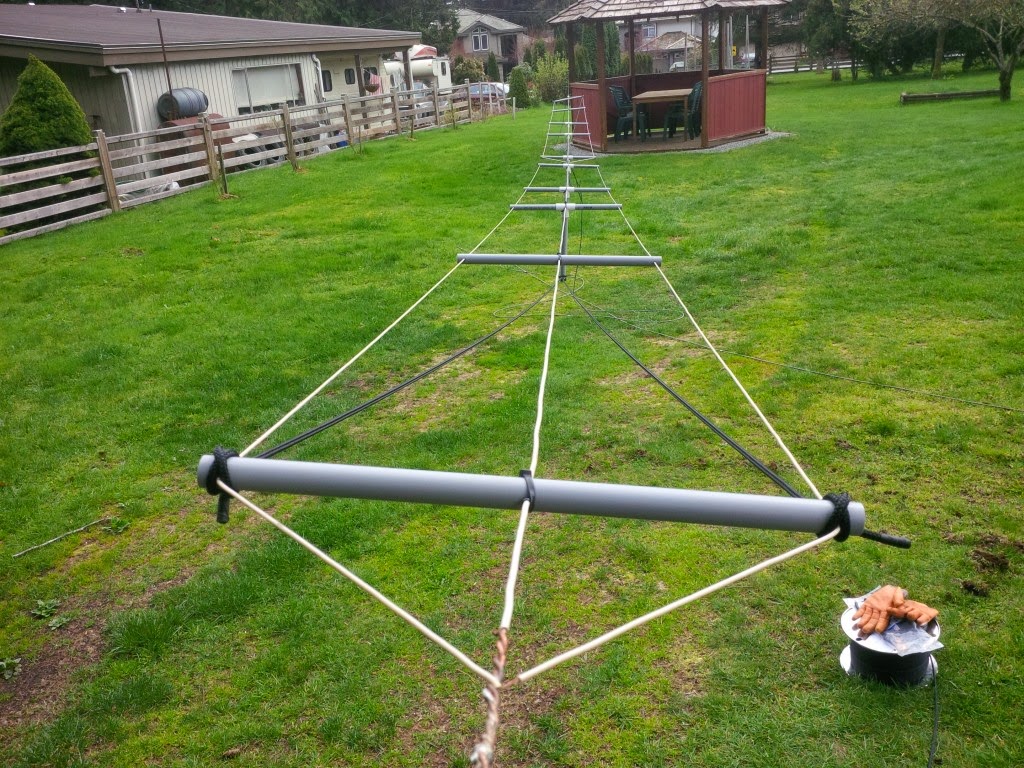 |
| VA7MM 630m Top Hat Under Construction |
630m Thriving
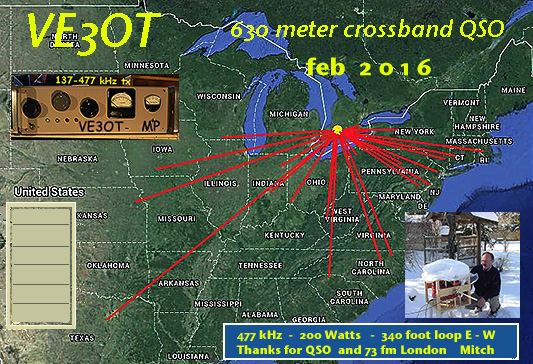
Fritz Raab, the ARRL's 600-Meter Experimental Group coordinator, recently released his quarterly report, with highlights being reported in the ARRL News.
In it, Raab tell us:
"Band activity has been very high, and there are often more WSPR stations — more than 110 stations — on 472 kHz than on 80 or 160 meters!"
"In a sense, 630 meters has become a mainstream ham band, in spite of not being authorized in the US".
"The paths to VK and JA have remained good. This was not the case last year, so perhaps it is an effect of the coming solar minimum. Many reports have been received for WSPR transmissions with relatively moderate power. There have been a number of polar and high-latitude openings to LA2XPA from North America. Many long-time operators say that they have never seen anything like that. There have also been a number of openings from the US west coast deep into Europe."
The ARRL's full report can be read here.
Also touched upon was the upcoming "Midwinter 630m Operating Activity", the second such February event ... this year to be held February 4-5th.
Stay tuned here for further details. Highlighting the event will be another opportunity for U.S. and Canadian amateurs to attempt CW crossband contacts with six Canadian stations operating on specified frequencies in the 630m band. Canadians will listen for callers on specified frequencies within the 160, 80 and 40m bands. Previous events have had much success, with Transcontinental and Transpacific CW crossband contacts being completed by many stations.
A detailed schedule of frequencies and times will be published as the event draws closer but in the meantime, see if you can keep February 4th (Saturday night) open for some 630m crossband excitement!
See You In The ‘Linc’!
 |
| courtesy: WØVLZ |
The Antique Wireless Association's (AWA) annual roll-out of the Linc Cundall (W2LC) Memorial CW Contest takes place this coming Wednesday and Saturday. Activity starts at 2300Z on both days and continues for 24 hours. Linc Cundall was one of the the three founders of the AWA, back in 1952, along with Bruce Kelley (W2ICE) and George Batterson (W2GB).
Over the decades, the AWA has been one of the chief proponents for the preservation of radio history, in all of its forms ... including the restoration and active use of vintage radio equipment. The AWA celebrates vintage amateur radio with several 'on-air' events each year including the premier event, the '1929 Bruce Kelley Contest'.
The annual 'Linc' CW party encourages all amateurs, including non-AWA members, to utilize their pre-1950 radios ... those designed and built before 1950 as well as homebrew reproductions of popular pre-'50's designs. Participants are encouraged to call 'CQ AWA AWA' on 160, 80 or 40m CW... suggested 'window frequencies' are outlined in the rules page which can be found here. Active discussion and promotion regarding the upcoming event may be found on Yahoo's AWAGroup reflector.
If you have an older radio (receiver or transmitter) that qualifies ... this includes any of your WWII surplus! ... hopefully you can spark-up for the event.
No older gear? Don't let that stop you from getting in on the fun, as modern rigs can be used as well, with the object of working as many AWA vintage stations as possible ... no excuses!
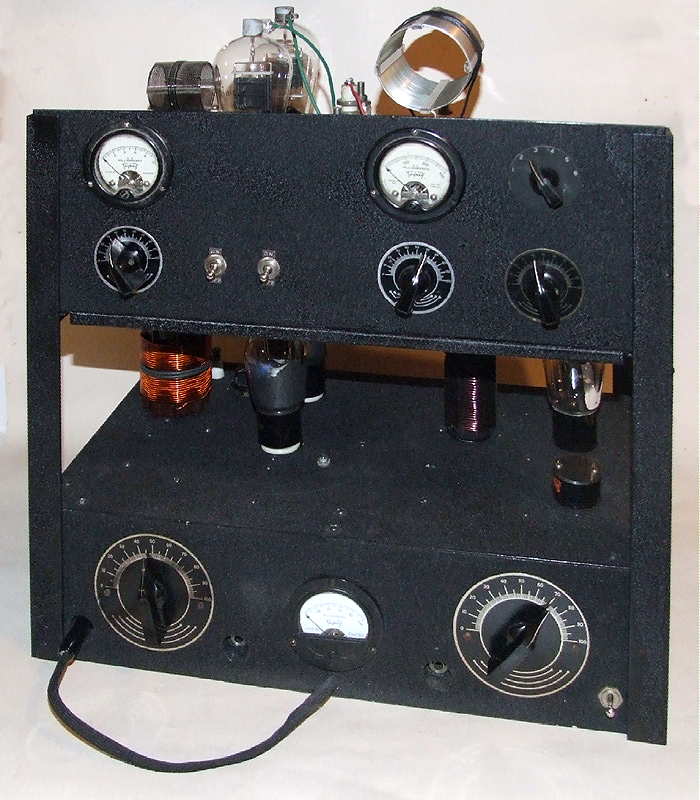
The above photo illustrates some of the beautiful homebrew work being done by Neil, WØVLZ, who was the chief inspiration for my own involvement in '29 activity. It will be hard to visit his amazing pages without getting hooked, so you have been warned!
My present 'vintage on-air' shelf beside the main operating table has been occupied now for several years by my Tri-Tet-Ten but with the likely demise of further 10m work, it's time to exchange it with something that I can use more often.
I hope to set up my homebrew 'Longfeller', shown below, inspired by the original design published in July, 1946 QST. My Longfeller operates on all bands from 160-10m, and should be ideal for the upcoming activity nights.
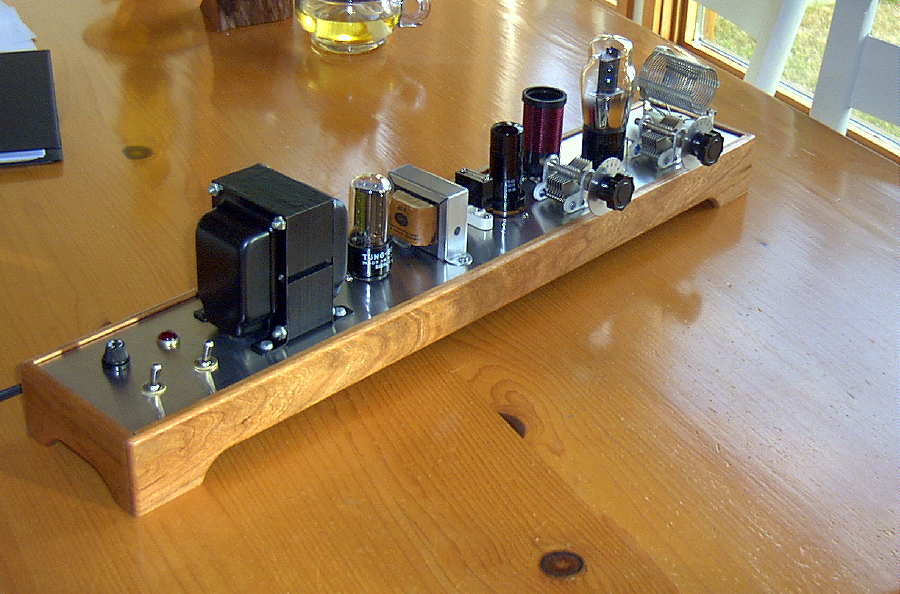
Please do consider getting on the air for this annual event, no matter what radios that you have ... it's especially nice to hear the sounds of these old radios that are fast disappearing. Events like this keep these great sounds alive.
See you in the 'Linc'!
See You In The ‘Linc’!
|
| courtesy: WØVLZ |
The Antique Wireless Association's (AWA) annual roll-out of the Linc Cundall (W2LC) Memorial CW Contest takes place this coming Wednesday and Saturday. Activity starts at 2300Z on both days and continues for 24 hours. Linc Cundall was one of the the three founders of the AWA, back in 1952, along with Bruce Kelley (W2ICE) and George Batterson (W2GB).
Over the decades, the AWA has been one of the chief proponents for the preservation of radio history, in all of its forms ... including the restoration and active use of vintage radio equipment. The AWA celebrates vintage amateur radio with several 'on-air' events each year including the premier event, the '1929 Bruce Kelley Contest'.
The annual 'Linc' CW party encourages all amateurs, including non-AWA members, to utilize their pre-1950 radios ... those designed and built before 1950 as well as homebrew reproductions of popular pre-'50's designs. Participants are encouraged to call 'CQ AWA AWA' on 160, 80 or 40m CW... suggested 'window frequencies' are outlined in the rules page which can be found here. Active discussion and promotion regarding the upcoming event may be found on Yahoo's AWAGroup reflector.
If you have an older radio (receiver or transmitter) that qualifies ... this includes any of your WWII surplus! ... hopefully you can spark-up for the event.
No older gear? Don't let that stop you from getting in on the fun, as modern rigs can be used as well, with the object of working as many AWA vintage stations as possible ... no excuses!
The above photo illustrates some of the beautiful homebrew work being done by Neil, WØVLZ, who was the chief inspiration for my own involvement in '29 activity. It will be hard to visit his amazing pages without getting hooked, so you have been warned!
My present 'vintage on-air' shelf beside the main operating table has been occupied now for several years by my Tri-Tet-Ten but with the likely demise of further 10m work, it's time to exchange it with something that I can use more often.
I hope to set up my homebrew 'Longfeller', shown below, inspired by the original design published in July, 1946 QST. My Longfeller operates on all bands from 160-10m, and should be ideal for the upcoming activity nights.
Please do consider getting on the air for this annual event, no matter what radios that you have ... it's especially nice to hear the sounds of these old radios that are fast disappearing. Events like this keep these great sounds alive.
See you in the 'Linc'!
Wow ….. just wow!
As stated in my earlier post this week, my intention was to come full circle and to end NPOTA as it began, with activations of both the Washington-Rochambeau Trail (TR23) and Morristown National Historical Park (HP28). The day started sunny and a bit cold as I made my way up to Morristown. I haven't been up there since last May, and since I take all back roads to get there, I was using my TomTom GPS unit to guide me there. About 1/3 of the way there, the TomTom gave up the ghost. Rebooting and resetting did no good. The map screen was nothing but a blank, white screen. Fortunately, I was able to retrace my steps without getting lost.
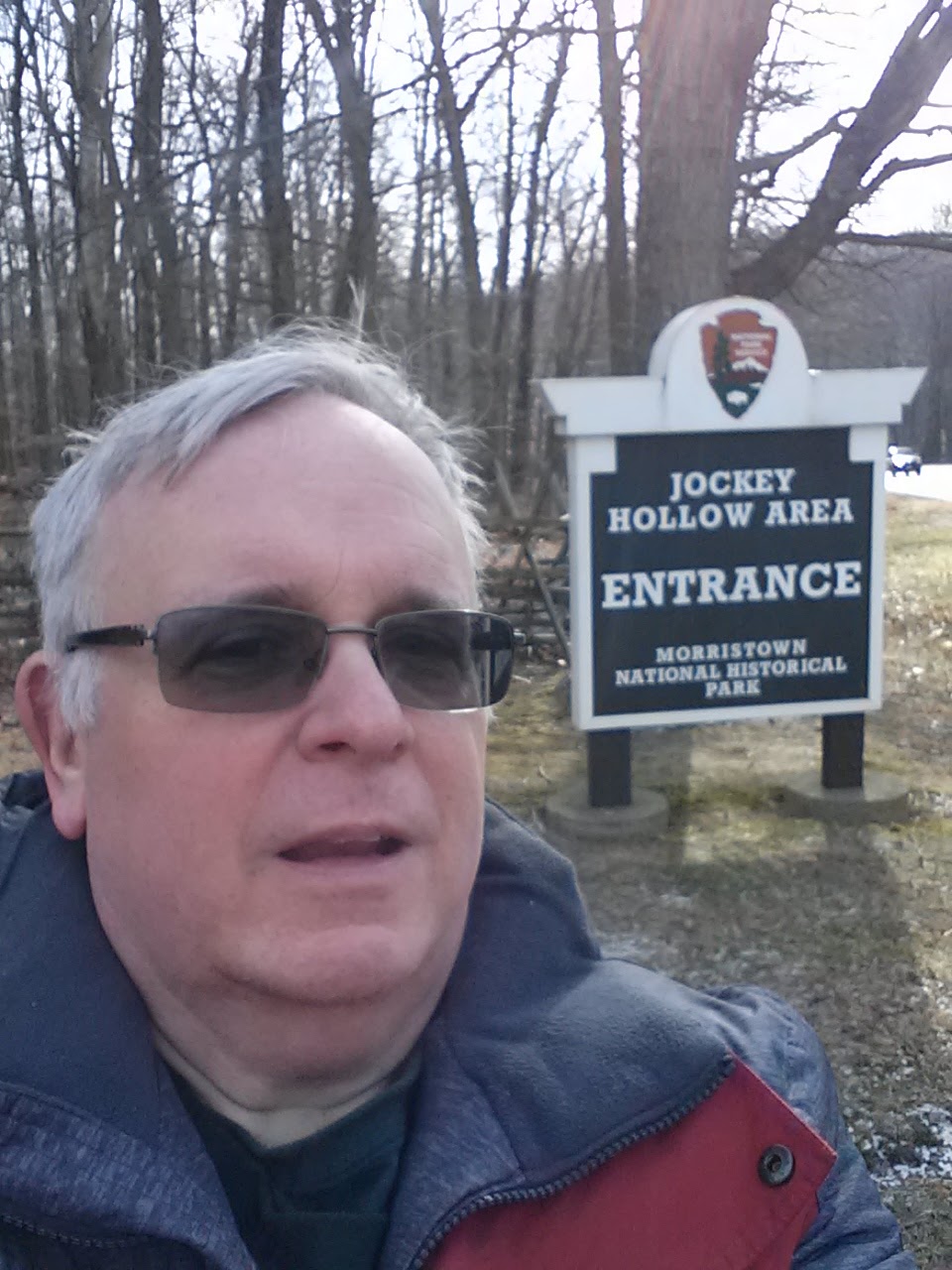
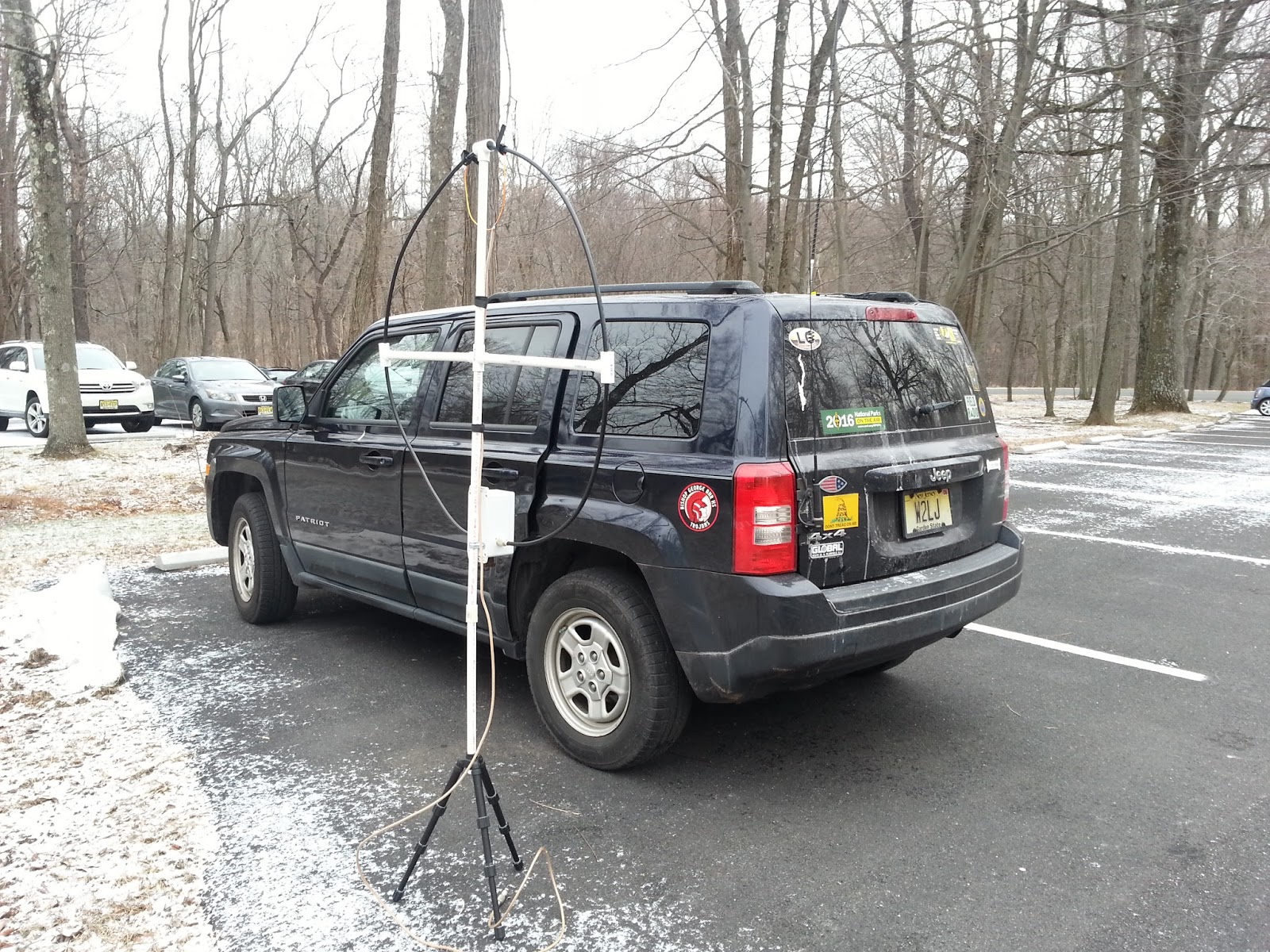
I set up in the parking lot and set up my 40 Meter Hamstick on the Jeep roof and the magloop right next to the Jeep. I was intending to start out on 40 Meter CW with the tried and proven Hamstick in order to get the 10 minimum QSOs that are needed for a valid activation; and only then switch over to the magloop for 20 Meters, as I really haven't used it enough to be confident in it as a proven performer.

About a 1/2 hour later, I arrived at the Frazee House in Scotch Plains, which is right on the Washington - Roachambeau Trail; and it was the same place I activated the Trail from during the NJQRP Skeeter Hunt. When I activated TR23 last January, I did it from the entrance to the Ashbrook Golf Course. It was open yesterday and I didn't want to cause any commotion, so I came back to the Frazee House which is only a couple of minutes farther down the road.


This time I decided to use another arrow from my antenna quiver, I also brought along my Joplin ARC antenna launcher and I got a line over a tree and made use of the PAR ENDFEDZ 40/20/10.

I ran the coax into the Jeep through a crack in the window and got down to business. I ran off a bunch of QSOs on 40 Meters and was about to switch over to 20 Meters when I noticed out of the corner of my eye that a vehicle had pulled up next to me. This time, it wasn't another Radio Amateur. This time, it was a member of the Scotch Plains Police Department. I guess I called some attention to myself, being the only car there, in an otherwise empty place. I got out of the car and walked a step or two to his rolled down window. I introduced myself and gave the spiel about NPOTA and how Raritan Road is part of the Washington - Rochambeau Trail, which he knew. What the Officer didn't know was that the trail is part of the National Parks System and he was very surprised by that. Then he told me about how his grandfather was a Ham, that in fact W2KKG was his call sign. We talked a bit, shook hands and he went on his way; and I returned to the Jeep for 20 Meters.
20 Meter CW proved to be a disappointment. Even with self spotting, I garnered only about 15 QSOs before the activity petered out, way too soon in my opinion. I sat there, with KX3 calling CQ, debating whether I should pack it in and go home. It was getting to be around 2:30 PM EST, and I only wanted to be out until around 3:00 PM as I had a previous commitment at 5:00 PM and I had to get ready for that. Wanting to get a least a few more Qs in the log; so I decided that I would give 20 Meter SSB a shot. With the deep cycle battery, I could boost the KX3's output to 10 Watts. The PAR was up in a tree about 50 feet up or so, so I figured, "What the heck!". I didn't even bother to spot myself, I just hooked up the microphone and started calling CQ on 14.340 MHz, figuring that what would be, would be.
Much to my surprise, about 60 QSOs later, the pileup ceased. With 10 Watts, I had worked all up and down the East Coast, across to California and Washington State and even up into Alberta, Canada. In all, there were only 1 or 2 instances where I had to repeat anything. It was pure bliss!
As it started becoming overcast and dusk started settling in, I packed everything up and headed home. I was in another world, walking in rarefied air. NPOTA turned out to be everything it was chalked up to be; and more. Thanks to Sean, Norm and all the ARRL staff who worked tirelessly behind the scenes to make NPOTA the success that it was. I have never been more proud to be a Life Member of the ARRL. Friendships that will last a lifetime; and new memories that will last a lifetime are the direct results of NPOTA. It just doesn't get any better than this.
Later, I was talking with my good friend Bob W3BBO on Skype, as we do just about every Saturday evenming, I had worked him earlier from HP28 and we talked about our QSO a bit more in depth and about the day in general. Bob stated that, in a way, he felt bad for me. As he tuned around 20 and 40 Meters, it seemed like it was just wall-to-wall NPOTA. He told me that he was sure I should have been at home boosting up my entities worked total. I told him not to feel bad, as not only had I worked a couple new ones via Park to Park QSOs; but there was nowhere in the world that I would have rather been - handing out QSOs as an Activator on the last and best day of NPOTA.
72 de Larry W2LJ
QRP - When you care to send the very least!
Wow ….. just wow!
As stated in my earlier post this week, my intention was to come full circle and to end NPOTA as it began, with activations of both the Washington-Rochambeau Trail (TR23) and Morristown National Historical Park (HP28). The day started sunny and a bit cold as I made my way up to Morristown. I haven't been up there since last May, and since I take all back roads to get there, I was using my TomTom GPS unit to guide me there. About 1/3 of the way there, the TomTom gave up the ghost. Rebooting and resetting did no good. The map screen was nothing but a blank, white screen. Fortunately, I was able to retrace my steps without getting lost.
I set up in the parking lot and set up my 40 Meter Hamstick on the Jeep roof and the magloop right next to the Jeep. I was intending to start out on 40 Meter CW with the tried and proven Hamstick in order to get the 10 minimum QSOs that are needed for a valid activation; and only then switch over to the magloop for 20 Meters, as I really haven't used it enough to be confident in it as a proven performer.
About a 1/2 hour later, I arrived at the Frazee House in Scotch Plains, which is right on the Washington - Roachambeau Trail; and it was the same place I activated the Trail from during the NJQRP Skeeter Hunt. When I activated TR23 last January, I did it from the entrance to the Ashbrook Golf Course. It was open yesterday and I didn't want to cause any commotion, so I came back to the Frazee House which is only a couple of minutes farther down the road.
This time I decided to use another arrow from my antenna quiver, I also brought along my Joplin ARC antenna launcher and I got a line over a tree and made use of the PAR ENDFEDZ 40/20/10.
I ran the coax into the Jeep through a crack in the window and got down to business. I ran off a bunch of QSOs on 40 Meters and was about to switch over to 20 Meters when I noticed out of the corner of my eye that a vehicle had pulled up next to me. This time, it wasn't another Radio Amateur. This time, it was a member of the Scotch Plains Police Department. I guess I called some attention to myself, being the only car there, in an otherwise empty place. I got out of the car and walked a step or two to his rolled down window. I introduced myself and gave the spiel about NPOTA and how Raritan Road is part of the Washington - Rochambeau Trail, which he knew. What the Officer didn't know was that the trail is part of the National Parks System and he was very surprised by that. Then he told me about how his grandfather was a Ham, that in fact W2KKG was his call sign. We talked a bit, shook hands and he went on his way; and I returned to the Jeep for 20 Meters.
20 Meter CW proved to be a disappointment. Even with self spotting, I garnered only about 15 QSOs before the activity petered out, way too soon in my opinion. I sat there, with KX3 calling CQ, debating whether I should pack it in and go home. It was getting to be around 2:30 PM EST, and I only wanted to be out until around 3:00 PM as I had a previous commitment at 5:00 PM and I had to get ready for that. Wanting to get a least a few more Qs in the log; so I decided that I would give 20 Meter SSB a shot. With the deep cycle battery, I could boost the KX3's output to 10 Watts. The PAR was up in a tree about 50 feet up or so, so I figured, "What the heck!". I didn't even bother to spot myself, I just hooked up the microphone and started calling CQ on 14.340 MHz, figuring that what would be, would be.
Much to my surprise, about 60 QSOs later, the pileup ceased. With 10 Watts, I had worked all up and down the East Coast, across to California and Washington State and even up into Alberta, Canada. In all, there were only 1 or 2 instances where I had to repeat anything. It was pure bliss!
As it started becoming overcast and dusk started settling in, I packed everything up and headed home. I was in another world, walking in rarefied air. NPOTA turned out to be everything it was chalked up to be; and more. Thanks to Sean, Norm and all the ARRL staff who worked tirelessly behind the scenes to make NPOTA the success that it was. I have never been more proud to be a Life Member of the ARRL. Friendships that will last a lifetime; and new memories that will last a lifetime are the direct results of NPOTA. It just doesn't get any better than this.
Later, I was talking with my good friend Bob W3BBO on Skype, as we do just about every Saturday evenming, I had worked him earlier from HP28 and we talked about our QSO a bit more in depth and about the day in general. Bob stated that, in a way, he felt bad for me. As he tuned around 20 and 40 Meters, it seemed like it was just wall-to-wall NPOTA. He told me that he was sure I should have been at home boosting up my entities worked total. I told him not to feel bad, as not only had I worked a couple new ones via Park to Park QSOs; but there was nowhere in the world that I would have rather been - handing out QSOs as an Activator on the last and best day of NPOTA.
72 de Larry W2LJ
QRP - When you care to send the very least!
Practicing CW QSO’s without RF
The bands are starting to make my cw practice pretty heavy going. I got one contact over the Christmas period with my ft-817 and end fed antenna and to be frank I made bit of a hash of it. Lots of errors mainly caused by a lack of practice time on the key.
I’m sure that I won’t be alone in saying that practice software goes a long way to getting rid of those errors and helps you move up from glacial sending and receiving speeds but nothing matches on air work . But what can you do when there’s no chance of a decent QSO / Sked. Well there may be an answer in iCW.  It is a Mumble based system that does away with all that pesky RF and simply allows you to connect you key (via a keyer or in my case from the audio out of my transceiver) to a computer and then hey presto you can practice with your friends to your hearts content.
There seem to be a couple of websites that cover the detail. The main one and a one that shows you a bit more detail. Its a bit confusing but having said that the setup is pretty straightforward and some really helpful video’s help get the finer points sorted.
So it dire times of s9 noise and no propagation. There’s plenty of opportunity to get some practice in.













