 |
 RadioSport History | CQ World Wide DX CW 1979
 22 April 2010 | by
 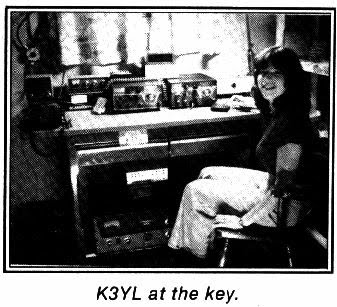 The rise of RadioSport talent begins in earnest and record makers are found throughout the pages of this article. Talent incubates somewhere albeit in the second chair while engaged in building the station that takes one or a team into the Box. They were younger men whose competitive spirit still burns brightly even today.
Operator Skill.
The captains of RadioSport like K3LR, K1AR, and N6RO are positioning themselves for long term success, essentially, as Cox and Brockman (1980) pointed out, “[I]ncreased operating skills were needed to cope with the onslaught…” (p 46)
Skill is an irreplaceable asset in any competitive sport. Technology continues augmenting and/or enhancing the enjoyment of our sport however it cannot diminish the importance of developing one’s RadioSport skill set. Physically sending Morse Code, listening before jumping into the swarm, understanding the vagaries of propagation, constructing antenna systems from one’s hands, are a few examples of skill building activities.
Controversy Rages On.
There is not much distance between 1979 and 2010 when reading about problems that plague competitive sports. RadioSport is not much different neither are we terminally unique when there are those who flagrantly violate the rules. Cox and Brockman cited infractions such as excessive power, unsportsmanlike operating techniques, and violations of the single operator category as problematic (1980).
I particularly like this quote, “When the statement you sign on the summary sheet becomes meaningless, it only serves to diminish the satisfaction of the achievement.” (Cox and Brockman, 1980, p 46).
Technology is now delivering the capacity to enforce rules from software defined receivers to audio recordings. I want the statement that reads I followed the rules to have credibility and meaningfulness at the end of the day.
Multi-Multi Titans in 1979 were K5RC, N4AR, and W3BGN.
Single Operator All Band in the United States was K1AR.
Single Operator All Band World was EA8AK.
Top Three Clubs in the United States were Frankford Radio Club, Yankee Clipper Contest Club, and Potomac Valley Radio Club.
Top Three International Clubs were Rhein Ruhr DX Association, Lithuanian Contest Club, and Voroshilovgrad Radio Club.
I’m still curious if any club west of the Mississippi garnered a top three position in the United States for at least two consecutive years? RadioSport history suggests otherwise and may explain the competitive importance of Sweepstakes for the West Coast.
73 from the shack relaxation zone.
Reference: Cox, B. K3EST, Brockman, L. N6AR (1980, October). CQ Magazine: 1979 CQ World Wide DX Contest: C.W. Results. pp. 46 – 64.

Scot Morrison, KA3DRR, is a regular contributor to AmateurRadio.com and writes from California, USA.
First sporadic-E of 2010
I heard a little bit of sporadic-E propagation on 10m this afternoon. Tuning around the beacon segment I heard the beacon DK0TEN on 28.257.5MHz quite strongly for about a minute before it faded away.
There have even been some contacts made and beacons heard on 6 metres, according to VHFDX.info. Let’s hope for some good openings on VHF this year.

Julian Moss, G4ILO, is a regular contributor to AmateurRadio.com and writes from Cumbria, England. Contact him at [email protected].
Switcher interference
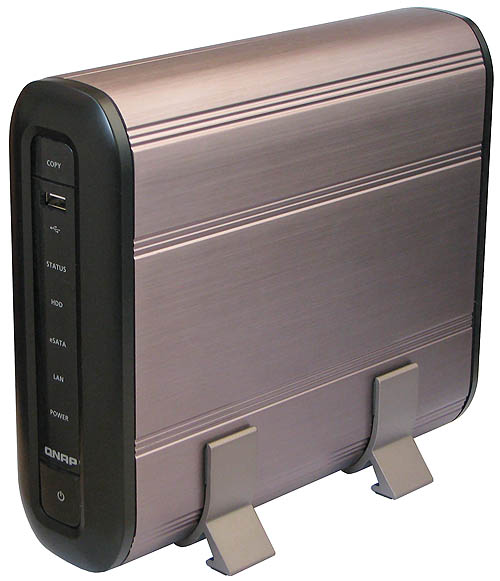 I was tuning around the top end of 10m yesterday and noticed a lot of strong bubbly warbly noises, the unmistakable sound of switched mode power supply interference. It didn’t take long to track this down to the power supply for my QNAP TS-109 Turbo Station.
The TS-109 is a network attached storage device. But it is actually a small computer with a big hard drive, running Linux. I use it mainly as a backup drive for all our PCs, but it also hosts the shared documents folder so that we can easily exchange files from one computer to another. It runs a script that updates DynDNS when our IP address changes, which it does quite often at the moment. I could even run a web server on it if I wanted. So it really needs to run all the time. But the amount of interference it produces isn’t acceptable. I tried adding some clamp-on ferrite suppressors but they didn’t make much of a difference.
The power supply for this device is a plug mounted switched mode supply rated at 12V 3A. This is probably over-generous as the specification for the TS-109 gives the power consumption as 14.4W in operation. There are plenty of alternative 12V switched mode supplies available but I have no way of telling whether they would be better or worse than the manufacturer-supplied one as regards RF interference.
The only transformer based power supplies capable of supplying this sort of power are CB radio power supplies such as those sold by Maplin which have a 13.8V DC output. QNAP doesn’t, unfortunately, specify a voltage range for the Turbo Station so I don’t know if this higher voltage would be permissible. It would be very convenient if I could use the power supply I made for my QRP K2, which these days just keeps the K2’s battery charged up, but the output from that is 14.2V.
Switched mode power supplies really are the bane of the radio amateur’s life. I don’t know how to solve this problem at the moment, except to switch off the TS-109, which is inconvenient.

Julian Moss, G4ILO, is a regular contributor to AmateurRadio.com and writes from Cumbria, England. Contact him at [email protected].
Handiham World for 21 April 2010
Welcome to Handiham World!
Did you miss us last week?

Image: Pat, WA0TDA, in the ham shack
Your weekly Handiham World E-Letter and the Friday audio notification were on holiday at the very same time that I was on Spring break. What a coincidence that was, eh? I am grateful for our volunteers who still help us to maintain continuity in the Handiham program even when paid staff are out of the office for one reason or another. Volunteers quite simply keep things running behind the scenes as they work with those who need text read into audio format, tapes made and sent out, or a friendly phone call to explain a learning concept or how to operate a radio. Volunteers who give us hands-on help with projects and equipment really make a huge difference in how we are able to serve our Handiham members. When Nancy or I, the Handiham program’s only paid staff, take vacation or have to attend meetings or training related to other aspects of our work, we do still get somewhat behind in our member contact and program administration duties. It can be a little frustrating to have so much work to do and so little time to get it all done. If it weren’t for the volunteers, the Handiham program would never have survived for all of these decades — since 1967. We are so grateful and appreciative for all of the hard work our volunteers do every day.
Thank you, volunteers!
Patrick Tice, Handiham Manager
[email protected]
Camp Courage to go on the air with a new repeater system

Image: ICOM 706 Mark 2G displaying the new repeater frequency of 145.23 MHz
Can you believe it? Handiham Radio Camp begins exactly one month from today, on May 21. As part of our preparations to build a solid amateur radio presence at Camp Courage, our new location near Maple Lake, Minnesota, we are ready to install a 144 MHz repeater that will be on the air 24-7, available not only during the week of camp but all the rest of the year, each and every day. Not only that, but the repeater will be Echolink-enabled. That will provide a valuable resource to any amateur radio operator living or traveling near Camp Courage.
We chose 2 m for several reasons. Many of our Handiham members already have 2 m handheld radios and can bring them to camp. A handheld radio will work perfectly at low power because the repeater will be right at camp and very easy to access. Another very practical reason is that a couple of years ago we received the gift of a used repeater. It needed some repair, and thanks to our volunteer Claire Robinson, K0CJ, we got it in excellent working order. It wasn’t actually put on the air because we didn’t really have a place for it. However, we did get it prepared to go on the air using a pair of 2 m frequencies that is shared and unprotected for purposes of repeater coordination here in Minnesota. Several weeks ago volunteer Don Rice, N0BVE, was helping me with another project at our new headquarters office and I showed him the repeater. Don has taken the initiative to locate the necessary repeater parts such as a duplexer so that we can get the repeater on the air prior to radio camp next month. Dave, N0KP, donated a tone board and tuned the duplexer. There was still the question of an antenna, and Matt Arthur, KA0PQW, has led an effort to procure a new 2 m antenna so that we can do the project right. Several donors have stepped up to the plate to help us with the cost of the antenna, and I will write more about them and the project later on, once we have done the installation. I will also have some photos to share with you.
This new repeater system is not intended to be a wide-area repeater, and the signal will probably not exceed a 20 mile radius from the transmitter. However, reception will be rock-solid at radio camp and the nearby surrounding area. Furthermore, the availability of Echolink on this repeater will make it a fantastic resource that will allow us to stay in touch with Handiham members who cannot make the trip to radio camp but who want to talk with their friends during radio camp week.
In recent years we have had a repeater system and a simplex Echolink node available at radio camp, thanks to Lyle Koehler, K0LR, and Don, N0BVE. These systems operated only during radio camp week and had to be set up and taken down for every camp session. This added to the work that we needed to do during every camp session. The addition of a permanent repeater system will be a welcome improvement to our new headquarters location at Camp Courage.
The new repeater will operate on a frequency of 145.23 MHz with a negative offset and a tone of 114.8 Hz. The antenna will be a Hustler G7 with a gain of seven DB.

Pat Tice, WA0TDA, is the manager of HANDI-HAM and a regular contributor to AmateurRadio.com. Contact him at [email protected].
Unique QRP Rig Design

Anthony Good, K3NG, is a regular contributor to AmateurRadio.com and writes from Pennsylvania, USA. Contact him at [email protected].
Measuring milliwatts
One K3 setup adjustment that I have never done is to check the power level of my K3 transverter output, because I don’t have an RF millivoltmeter. I do, however, have an Elecraft DL1 dummy load which has a test point fed by a 1N5711 diode and capacitor. You can take voltage readings there, and then calculate power using the formula:
Power = (( Voltage * 1.414) + 0.15) ^2 / 50
and I normally use this whenever I want an accurate power measurement rather than rely on the readings of analogue meters.
 What I don’t know is whether this is accurate enough to measure power at levels as low as 1mW. So I asked the question on the Elecraft email reflector, rashly forgetting that the function of of the reflector is for users to flame each other and speculate on or redesign Elecraft products. Don, W3FPR, who was usually good for an answer to a technical question, has left the reflector after he was flamed for some imagined breach of netiquette. Frankly, the reflector is now worthless. I wish Elecraft would create an announcements-only mailing list so that one could stay informed of new developments and firmware updates without having to see all the ego clashes and endless questions about problems with USB serial adapters.
When I measured, using the DL1 and my DVM, the output from the K3 transverter port with the level set to 1mW, I got a reading of 36mV. Plugging that into the formula, I get 0.8mW. But the 0.15 is, I presume, a “fudge factor” to compensate for the voltage drop in the detector diode, which gives me a result of 0.45mW even if zero voltage was detected. So I’m wondering if my 0.8mW is within the limits of error of my measurement method and that I should leave my transverter drive level as it is. I assembled my K3 myself and the transverter board was added later so I don’t believe the level has ever been set at the factory.

Julian Moss, G4ILO, is a regular contributor to AmateurRadio.com and writes from Cumbria, England. Contact him at [email protected].
Under the volcano
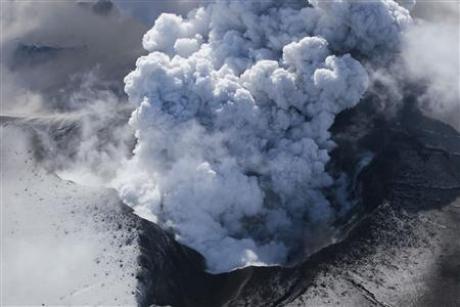 On a clear day from here you can normally see at any one time two or three vapour trails from transatlantic jets at 35,000 feet on their way to London’s airports. For five days there have been none. The weather has been fine and the sky blue, so blue that it’s easy to doubt whether the density of dust from the Eyjafjallajokull volcano in Iceland poses any real threat to aviation, or whether it is just bureaucrats being over-cautious.
Whatever the risk, the aviation ban is real and there can be no-one in Britain who has not been affected by it one way or another. The first effect we noticed was when we went to a classical music concert last Friday in Carlisle. The piano soloist was unable to get there so the Mozart piano concerto was played by a stand-in.
I received an email from one Hong Kong eBay seller to tell me that the programming interface for the Motorola radio I bought at Blackpool which I ordered from him would take longer to arrive. I expect other items I have ordered from eBay and elsewhere, including a transmitter module for my dedicated Echolink node radio, will be similarly delayed, as there is no air mail. We take for granted that we can order things from China or the USA and have them in a few days. Not any longer.
Friends of ours who are due to return from Ukraine tomorrow are probably not going to be able to make it unless London Luton airport is miraculously opened. They are due to return to work on Thursday and are very anxious not to provide their employers with an excuse to terminate their contracts.
That’s the situation now, but with seismologists saying that the volcano could continue to erupt off and on for the next year or two and even suggesting that another, larger Icelandic volcano is due for an eruption, what is the future for the airline industry? If there’s a high probablility of getting stranded abroad like so many people are now, how many are going to decide to change their travel plans and stay close to home for the next few months? I will, for sure.
I dare say canny investors will be selling airline shares and investing in shipping. And I don’t suppose it will be long before the first package holiday companies start going bankrupt because of all the refunds and cancellations. Like the banking collapse, I think this is another event that is going to have permanent repercussions.
Trust Nature to cut us down to size. We humans think we are so powerful we can end global warming, yet in a few hours the earth achieved what governments alone could never have managed – a complete grounding of aviation. I suspect that a really big volcanic eruption could have a bigger impact on global climate than any of the measures agreed by the politicians.

Julian Moss, G4ILO, is a regular contributor to AmateurRadio.com and writes from Cumbria, England. Contact him at [email protected].
 Ham Radio Deluxe |
 W5SWL Electronics |
 Ham Radio Prep |
 KB3IFH QSL Cards  Hip Ham Shirts  HamRadioAuctions HamRadioAuctions Reliance Antennas Reliance Antennas Enigma Shop Enigma Shop |  morseDX  Ni4L Antennas  R&L Electronics R&L Electronics antennas.us antennas.us QRV QRV |
- Matt W1MST, Managing Editor
