 |
 Could D-Star destroy ham radio?
 20 April 2010 | by
 In a comment to an old posting about D-Star in G4VXE’s blog, Lee N2LEE accuses me of being closed to new ideas. Does it matter that the AMBE codec is patented if it is the best one for the job, he asks? And how can you compare Echolink/IRLP to D-Star when D-Star is an digital end to end system with routing, linking and networking built in to the system so you can just enter someone’s callsign and the network will find them automatically?
To me, ham radio is not and never has been about reliable point to point communication. Communication is just the end-product of a process of experimentation and construction, or a pastime (think contests, DXing) where the unreliability and unpredictability of it is what makes it a challenge.
D-Star’s use of a proprietary codec closes that aspect of the system to experimentation. It doesn’t even permit interested amateurs to look at the code and see how it works. This is contrary to the spirit of amateur radio and the openness that has facilitated most developments to date by letting one idea lead to another. But to be honest I’m not all that bothered about the issue because codec technology, whether proprietary or not, is a closed book to most. I am more concerned about the possibility that digital voice modes might one day make analogue modes obsolete so that building a simple phone transmitter using SSB, FM or AM becomes a pointless activity. Ham radio does not have to slavishly adopt new technology, especially if that technology forces more of us to become appliance operators by making simple rigs that anyone can build obsolete.
As for digital end to end routing, why do we need it? We already have a system that can do that. It is called the mobile phone network. I didn’t get into ham radio in order to be able to do something ordinary people can already do. I want to be able to do things that they can’t. The unpredictability of propagation and the uncertainty of who you might work on a given band at any time are what makes a ham radio contact more interesting and more of an accomplishment than making a phone call. D-Star may be very clever technology but what it delivers is not what ham radio is about.
If the time ever comes when I think to myself “why am I struggling to make this contact on 20m SSB or whatever when I could simply type the guy’s call into my D-Star radio and have a comfortable chat” then that is the day I will give up the hobby for good. And I make no excuses for resisting the adoption of technologies that will bring that day closer.

Julian Moss, G4ILO, is a regular contributor to AmateurRadio.com and writes from Cumbria, England. Contact him at [email protected].
3830 Claimed Scores | 2010 NS Spring Ladder VIII | Low Power
 Atlantic Single Operator.
- NO3M | 45 Qs | 34 Mults | 1,530 Points [NCC].
- K4BAI | 44 Qs | 33 Mults | 1,452 Points [SECC].
- W4OC | 43 Qs | 32 Mults | 1,376 Points [SECC].
n = 10 scores submitted in this division.
East Central Single Operator.
- N4OGW | 54 Qs | 34 Mults | 1,836 Points [ACG].
- W9RE | 49 Qs | 31 Mults | 1,519 Points [SMC].
- K9BGL | 48 Qs | 30 Mults | 1,440 Points [SMC].
n = 14 scores submitted in this division.
West Central Single Operator.
- N3BB | 55 Qs | 40 Mults | 2,160 Points [CTDXCC].
- WD0T (@KD0S) | 51 Qs | 34 Mults | 1,734 Points.
- W0BH | 49 Qs | 30 Mults | 1,470 Points.
n = 9 scores submitted in this division.
West Single Operator.
- W7WHY | 41 Qs | 26 Mults | 1,066 Points [WVDXC].
- VA7ST | 25 Qs | 22 Mults | 550 Points.
- NG7M | 25 Qs | 17 Mults | 425 Points [Utah Contest Club].
n = 3 scores submitted in this division.
NCCC in CA/NV Single Operator.
- N6RO | 50 Qs | 34 Mults | 1,700 Points.
- W0YK | 48 Qs | 34 Mults | 1,632 Points [Loma Prieta Contest].
- N6ZFO | 46 Qs | 32 Mults | 1,472 Points.
n = 7 scores submitted in this division.
Thursday Night Madness resumes its eighth season and the fastest 30 minutes in RadioSport is better than ever. This week’s club banner position goes to the Central Texas DX and Contest Club lead by the looming 100 foot tower himself — Jim, N3BB.
His accomplishment was not a given with N4OGW and W9RE competing in round one of the NS Spring Ladder. Undoubtedly, Jim’s commitment to the mantra of practice, practice, practice paid handsome dividends both for himself and the club. An accomplishment well executed from his location.
Please take note, the fastest 30 minutes in RadioSport affectionately known as Thursday Night Madness, reorganized its divisions this season — West, West Central, East Central, and Atlantic.
Contest on!

Scot Morrison, KA3DRR, is a regular contributor to AmateurRadio.com and writes from California, USA.
GroundWave Video
The genesis for this project is local. The Union Express video captures a pair of surfers traveling the coastline of California from Los Angeles to San Francisco and back. The premise is anyone can do this, the trip is cost effective, and there is a story around every corner. Enjoy.
Live to surf, surf to live.
P.S. Still getting worked on the inside near beach break however I paddled into a reform wave that shaped up into a juicy right north of Pismo Pier. My session summed up as good exercise both cardiovascular and anaerobic.

Scot Morrison, KA3DRR, is a regular contributor to AmateurRadio.com and writes from California, USA.
Arecibo success
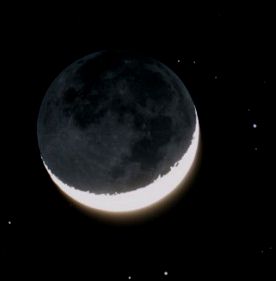 This evening I managed to hear signals bounced off the moon using an FT-817 and an antenna made from a stick and a few bits of wire.
I took the battery out of the clock / weather station to silence its interference and went down to the bottom of the garden with the home made antenna and the FT-817. I couldn’t see the moon this evening as it was cloudy – in fact, attempting to drizzle – but I pointed the beam in the same general direction as last time, turned it vertical to minimize the QRN and started tuning around 432.045MHz. After a minute or so I heard some weak CW.
If I had to give a signal report it would have been 319, the signal was about equal to the noise. Sometimes it would pop up a few dB above the noise for a second or two, and I heard the call KP4AO (though not all in one go), reports being sent, R, 73 and BK, but I couldn’t make out any other calls.
I had the computer interface plugged in to the FT-817 so I brought down the Samsung NC10 netbook which I have been using for my Echolink node and tried to make recordings of what I heard using Sound Recorder in order to listen to them again and even put some samples here. But for some reason when I played them back on my shack PC all I could hear was noise – the CW had all but disappeared. What a disappointment, to have no record of this rare event.
Then, on a sudden stroke of inspiration, I changed my computer sound card settings so that I was using the Realtek internal sound card – normally used for HF digital modes – to play back the audio in place of the cheap USB “dongle” I normally use for computer sound. What a difference! Instead of just hiss with a barely detectable hint that a CW signal might have been there, I now heard the KP4AO signal via the moon just as I heard it live off-air. I have converted a couple of samples to MP3 format without much loss of fidelity so you can hear for yourself what I heard:
- Here is a short sound clip from KP4AO recorded at 1937 UTC
- And here is a slightly longer one recorded around 1945 UTC
The CW certainly is weak but you can pick out letters now and again. If you manage to pick any calls out of those samples then you have better ears than me (which is certainly possible.)
An interesting evening’s experiment. Not just because I heard signals bounced off the moon for the first time ever but also for the unexpected demonstration of how weak signals get lost when you use a cheap sound card. I had been planning on using one of those USB dongles to make my own SignalLink interface. I think it’s back to the drawing board on that one.

Julian Moss, G4ILO, is a regular contributor to AmateurRadio.com and writes from Cumbria, England. Contact him at [email protected].
Noise generator
 I heard nothing during my attempt last night to receive signals from KP4AO bounced off the moon. Nothing, that is, except a lot of noise. Sitting at the bottom of the garden with my newly constructed hand-held 6 element 70cm beam, the Moon was above and just to the left of the roof of our house. And the nearer I moved the beam to the house, the greater the noise. This house is truly a disaster area for radio reception!
This afternoon I thought I would try to see where the noise was coming from. With the beam horizontally polarized the noise was a broadband hash, white noise, indistinguishable from band noise except that its level is much greater with the beam pointing towards the house. If I turned the beam vertical then the white noise faded out almost to receiver noise, but another pulsing noise came up. It went kerchunk chunk chunk chunk, kerchunk chunk chunk chunk, ad nauseum. And the level of this noise peaked up with the beam pointing right at the shack window!
I switched everything off in the house and it made no impact on the noise whatever. I decided that it must be something battery powered. There is a radio controlled alarm system in the house that has a built-in backup battery. Nothing I can do about that. However I could not hear any noise increase when I went near it with the TH-F7E and a whip antenna. The noise level goes up and down as you walk about the house, as does the kerchunk chunk chunk noise, as if the noise source is invisible.
Eventually I did locate the source of the kerchunk chunk chunk noise. It was coming from an Ascot radio controlled clock sitting on the shelf in the shack just above my radios. I removed the batteries and after a few seconds the noise stopped. I walked about the house some more and in places I heard it again! This sort of thing can make you start to doubt your sanity.
Eventually I found that exactly the same noise was coming from another clock / weather station in our conservatory. It’s a different brand, not radio controlled, and (probably not coincidentally) it receives temperature and humidity readings from the same external sensor. Presumably they have some electronics in common and this is transmitting a signal in the 432MHz band.
But I haven’t found the source of the broadband hash, which may or may not be related to the crackly S9 noise that plagues most of the HF bands. I think the noise problems at this QTH are beyond solution. I haven’t logged an HF band contact from here since 13th March. It isn’t that I can’t work anything on HF from here, it’s just the demoralizing effect of hearing this dreadful noise as soon as you switch on and knowing that there are interesting signals buried under it that I have no chance of hearing.

Julian Moss, G4ILO, is a regular contributor to AmateurRadio.com and writes from Cumbria, England. Contact him at [email protected].
Britain cut off, but Dunkirk spirit still alive
 Flights in or out of the UK are banned for a fourth day due to the alleged effects of dust from the Icelandic volcano. Flight restrictions have been just been extended until midnight tonight, with suggestions that they could extend for “several more days”. Britain is virtually cut off, with the Channel Tunnel and ferries to and from continental Europe fully booked. There is talk of an economic disaster, with some European airlines in serious financial difficulties as a result. Tens of thousands of people are stranded, unable to get home from their Easter holidays and facing financial ruin, loss of pay and even the loss of their job as a result. Travel insurance companies in most cases are refusing to pay out for additional accommodation or the cost of returning by alternative means.
However, the Dunkirk spirit is not dead. Just as in 1940 when Brits with small boats went across the Channel to bring our defeated troops back, TV presenter Dan Snow is today mounting an operation with inflatable craft to bring stranded Britons back from Calais to Dover. You couldn’t make it up. (Postscript: The attempt was halted by authorities, presumably for health and safety reasons. Oh well. Nice try.)
It is reported that the Dutch airline KLM has flown a Boeing 737 to 13km over Dutch skies with no adverse effects, whilst Germany’s Lufthansa has flown several planes from Frankfurt to Munich without any harm being caused to the windows, fuselage or engines. But Dutch and German airspace are also closed for the time being. However the Ukrainian International airline – which coincidentally Olga used on her recent trip to Ukraine – is to recommence flights at 0900 UTC today as it believes the skies are safe. Hooray for the Ukrainians! At least someone has some sense.
According to some aviation experts, the only time aircraft have suffered from volcanic ash is when they flew right through a plume of it as the volcano was erupting. The ash here is so thin that you can see the moon and stars when the sky is clear. Isn’t this just another case of out-of-control safety mania, with bureaucrats being afraid to make any decision that just might lead to them being blamed later on, regardless of the probability of risk? Isn’t it time for someone to use some common sense?

Julian Moss, G4ILO, is a regular contributor to AmateurRadio.com and writes from Cumbria, England. Contact him at [email protected].
The new ARRL website is disappointing
I’m going to stray a bit from my normal topics to discuss the newly updated ARRL website which after several attempts finally went live this week. My overall response was one of disappointment. I am well aware that any it’s often difficult to get pretty much anything right in Information Technology the first time. (In fact, I was commenting to one of my colleagues at work that if you think you’ve gotten something right on the first try, you have overlooked something). My fellow bloggers Dan, KB6NU and David, K2DSL have written posts describing some of the flaws, and I suggest you read them for the details.
David in particular enumerated a lot of the different issues, and while I’m not going to add anything to his list, I will mention that in particular, the two things that are particularly annoying are the fact that it seems that even with the “favorites” feature, nearly everything requires a lot more clicks to get to (which is one of the main things you don’t want to do if you want people to keep visiting your site) and that you no longer remain logged in for very long. (It looks like they may have adjusted this value since David wrote his blog, but in any case, it should allow you to remain logged in for at least a few weeks minimum; this isn’t a banking site.)
I want to make clear that I am a big fan of the ARRL, and that I really appreciate the advocacy they provide for our hobby. I know that an undertaking of this magnitude must have been quite difficult, but I think that they should have allowed ARRL members “preview” access much earlier in the process. (Yes, I’m aware that there was an article in QST, but static images are not the same as actually using the site.) I suspect that the reason for not doing so was a concern over the flood of input that they may would have received, but when you are developing something that is supposed to provide service to your members, you need to take their feedback into account.
I sincerely hope that the ARRL will listen to those of us who have been sending in feedback and will be able to make the changes to make the website at least as useful as it was before the changes. I also hope that we, the members, don’t hear that “it’s too far along in the process to change things”.

David Kozinn, K2DBK, is a regular contributor to AmateurRadio.com and writes from New Jersey, USA. Contact him at [email protected].
 Ham Radio Deluxe |
 W5SWL Electronics |
 Ham Radio Prep |
 KB3IFH QSL Cards  Hip Ham Shirts  HamRadioAuctions HamRadioAuctions Reliance Antennas Reliance Antennas Enigma Shop Enigma Shop |  morseDX  Ni4L Antennas  R&L Electronics R&L Electronics antennas.us antennas.us QRV QRV |
- Matt W1MST, Managing Editor
