 |
 My first new entity for 2010
 24 April 2010 | by
 Yesterday morning, I got a nice surprise. I was working from home in the morning and chatting on the computer with Larry, N4VA. He was also at home and told me that Jimmy, BX5AA was coming in very strong on 20 meters. Jimmy is located in Taiwan, and that’s a DXCC entity that I’d never worked before, so I was anxious to try to make a contact. I tuned to the frequency and at first, I only heard a very weak station, which I assumed was Jimmy, and figured that I wasn’t going to have a chance to work him. It wasn’t surprising that he’d be louder to Larry, since he’s got a beam on his tower instead of just a G5RV (wire) up in the air.
However, it turns out that I was hearing a local station that Jimmy was working, and when it was Jimmy’s turn to transmit I heard him very well. (I had heard him and tried to work him in the past, but the signals were much weaker.) Although he had a pretty good pileup, he heard part of my callsign (the “BK” part always seems to get through), and he asked just for the “Bravo Kilo” station. It took a few tries, but he was patient and eventually he got the complete and correct callsign, and gave me a 5×5 signal report. (I gave him a 5×9). That was that, and he moved on to working other stations.
I noticed on his website that he uses Logbook of The World, so that night I uploaded my contact with him, and to my surprise I found that he’d already uploaded his contacts and there was a confirmed QSL record generated. The time from contact to confirmation was probably under 12 hours. Not bad for a station from Taiwan!
I’ll be sending for a paper card anyway, as while I think LoTW is fantastic, there’s nothing like having an old-fashioned QSL card to look at.

David Kozinn, K2DBK, is a regular contributor to AmateurRadio.com and writes from New Jersey, USA. Contact him at [email protected].
ShackTech
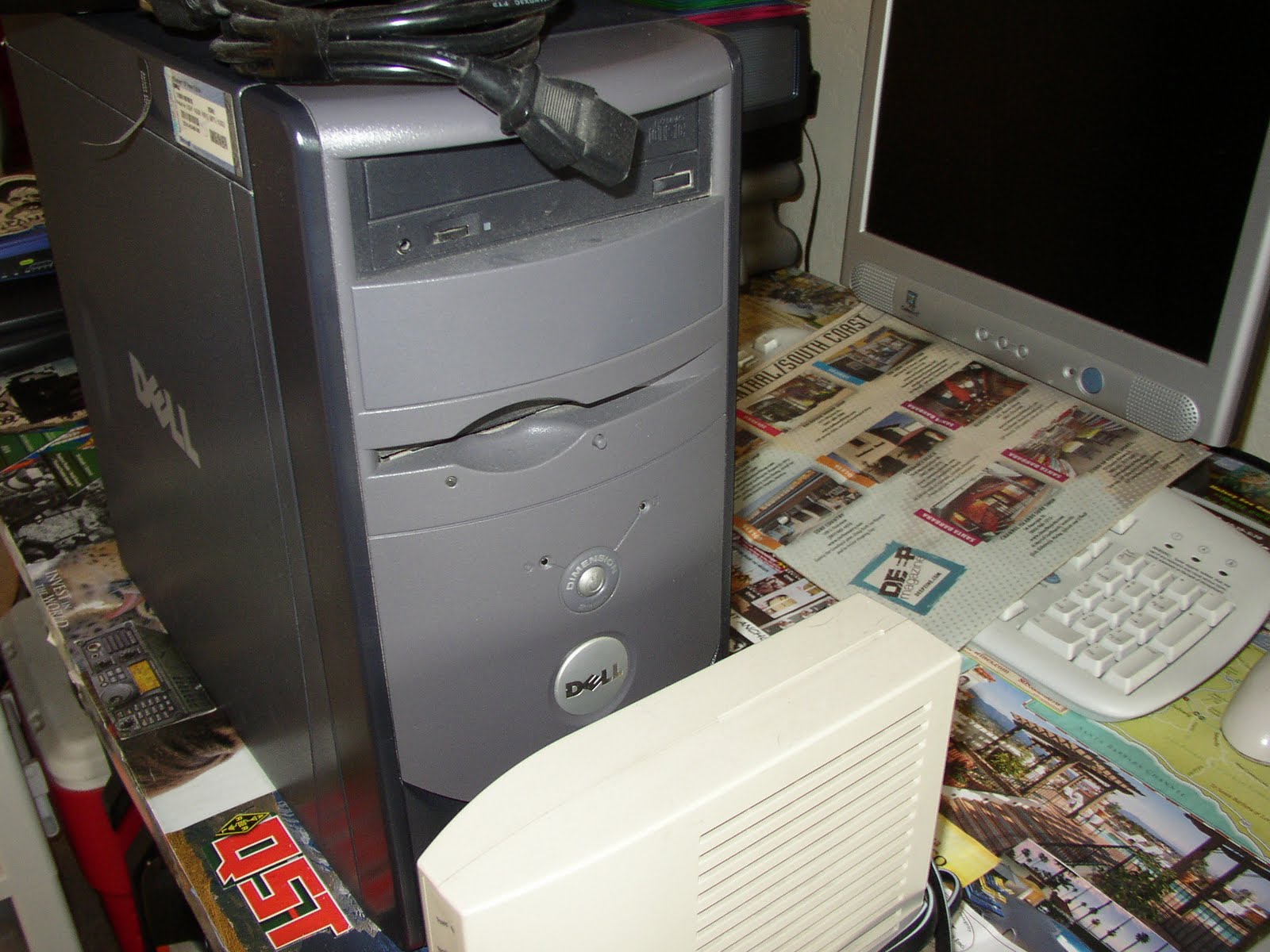 Photograph One is a retired Dell Dimension 2350 after my catastrophic hard disk failure. I could not depart with the machine keeping in mind the frugality of my Grandparent’s generation. I wondered why Grandpa collected those old screws, nails, nuts, bolts, and washers in baby food jars and his sensible wisdom is hot conventional wisdom in the shack relaxation zone.
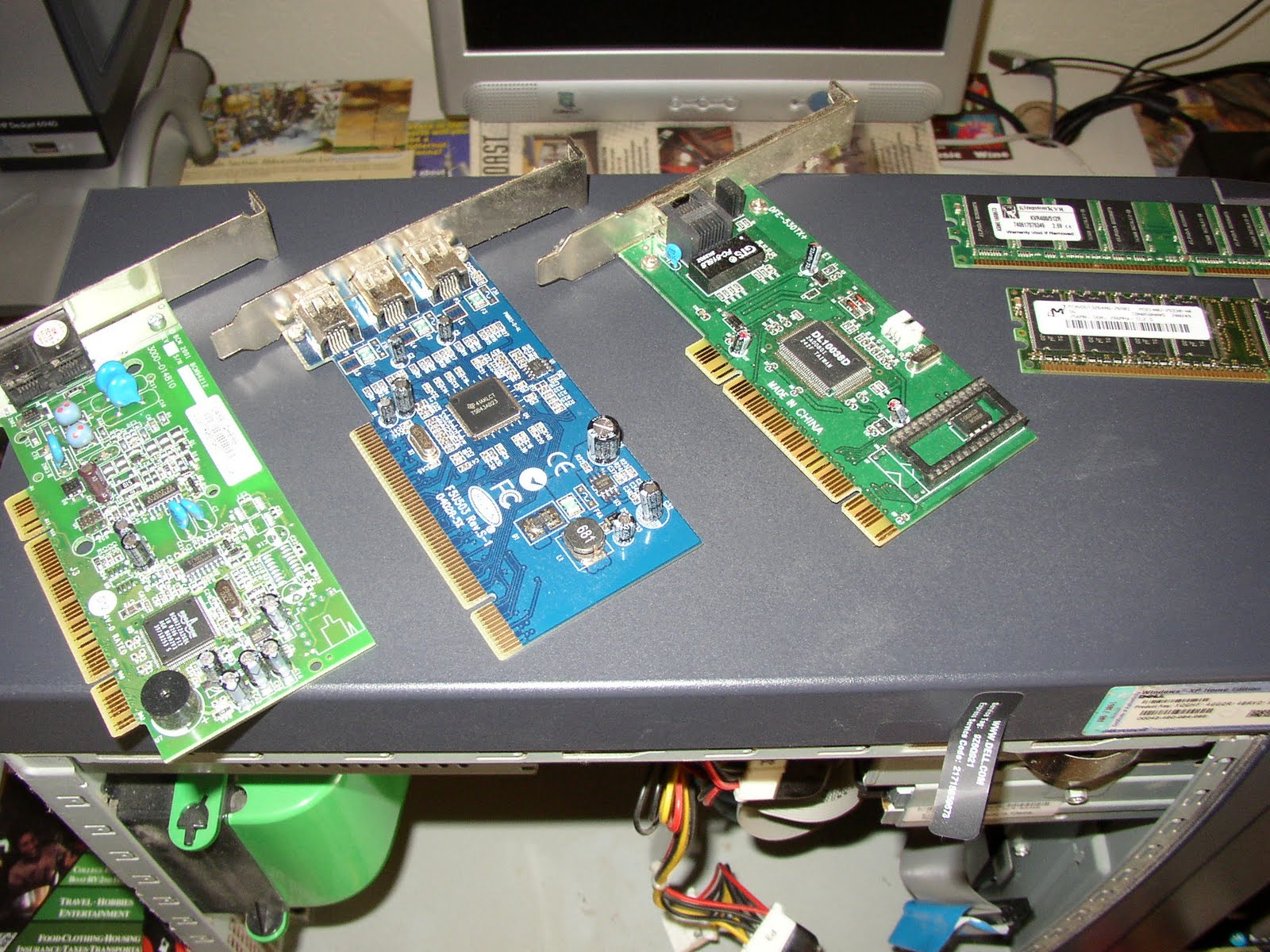 Photograph two taken of salvaged memory, fire wire card, ether net card, and video card. The only tool required was a Philips head screw driver, a flashlight for my tired eyes, and my pair of hands.
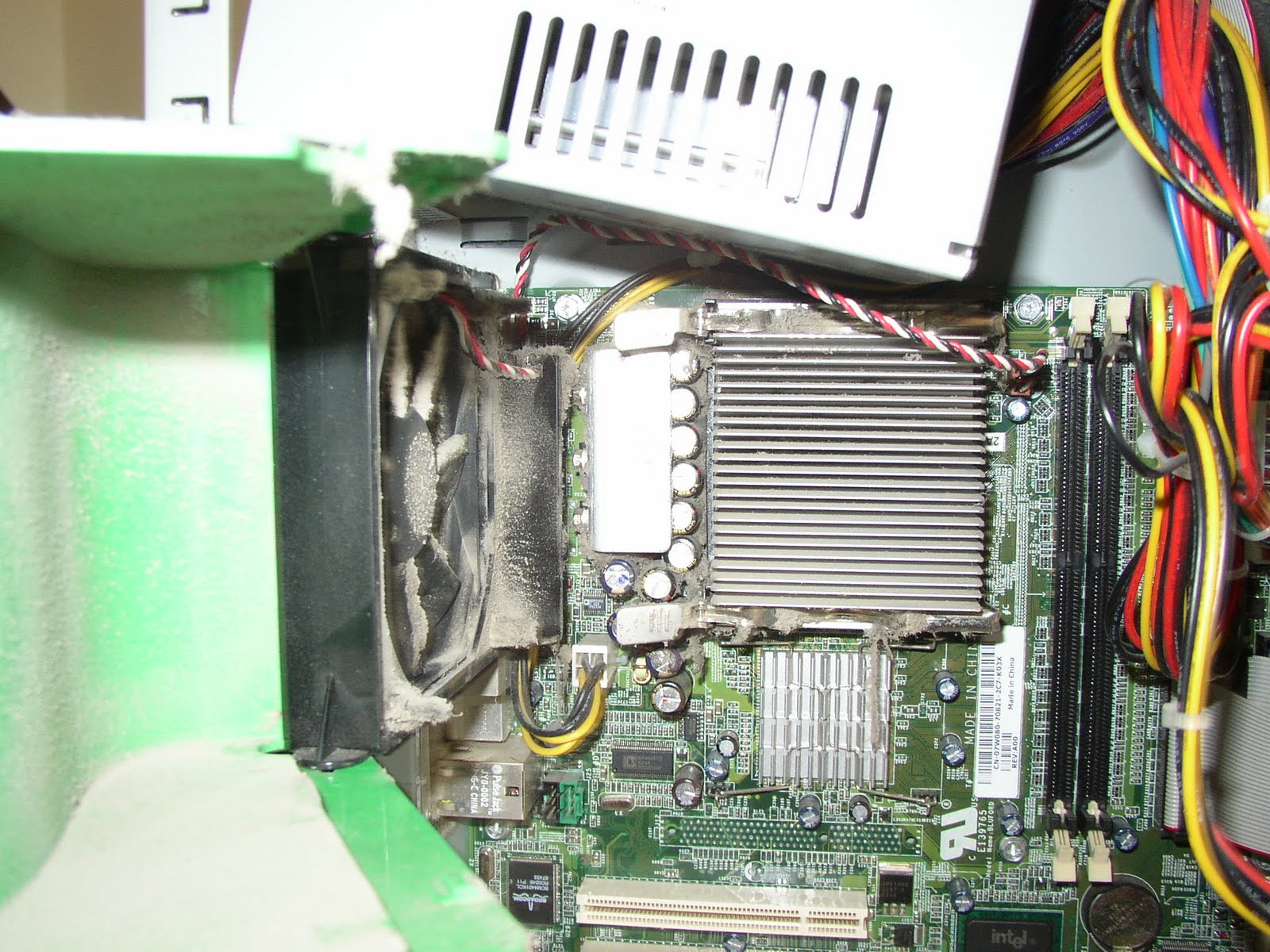 Photograph three looks at the central processing unit heat sink and hinged ducting for cooling air. The collection of dust on the components was astounding at least for this neophyte geek. An annualized desk top computer cleaning program goes into motion inside the shack.
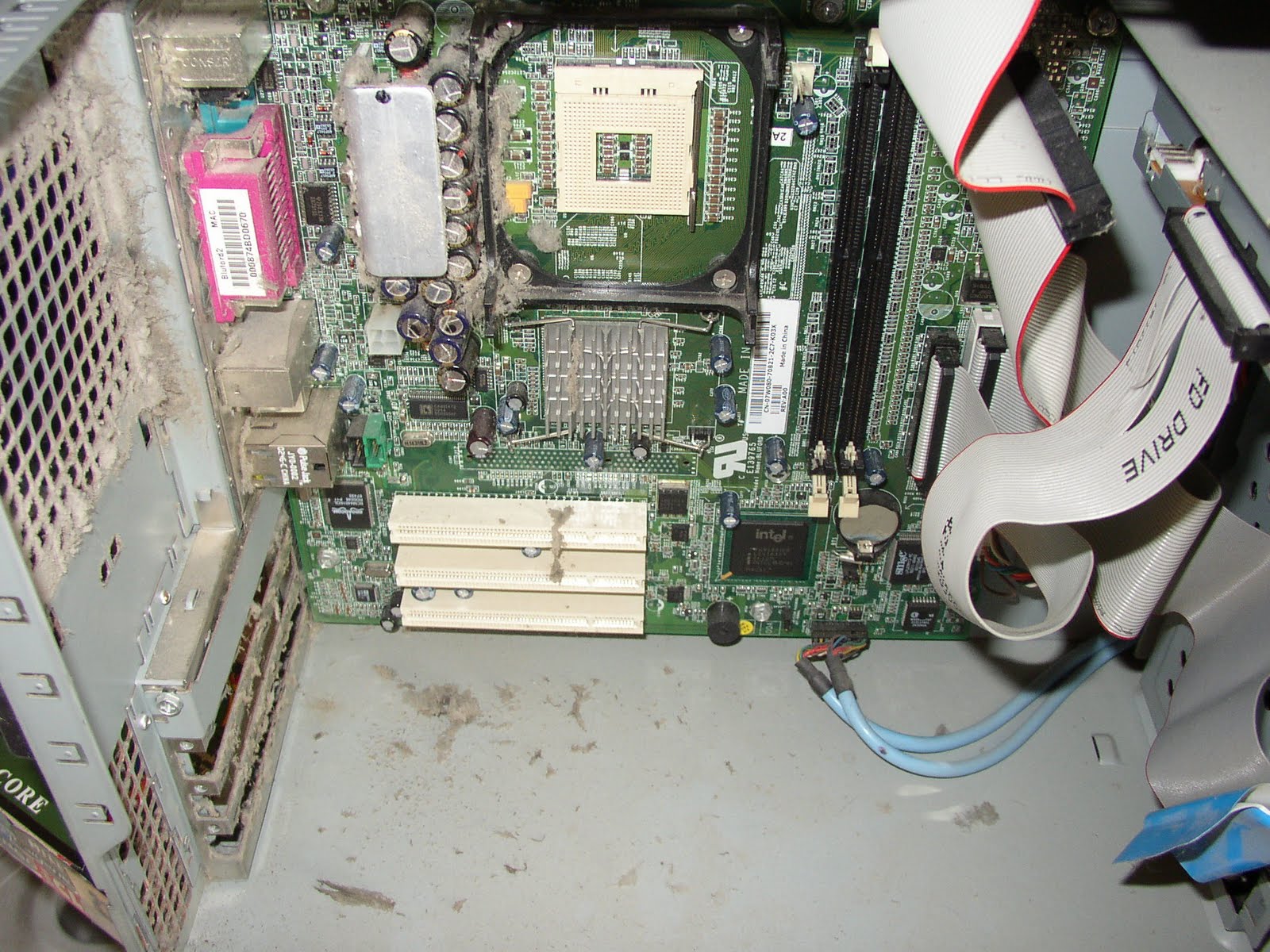 Photograph four reveals all plug-in cards removed in addition to the power supply and fan.
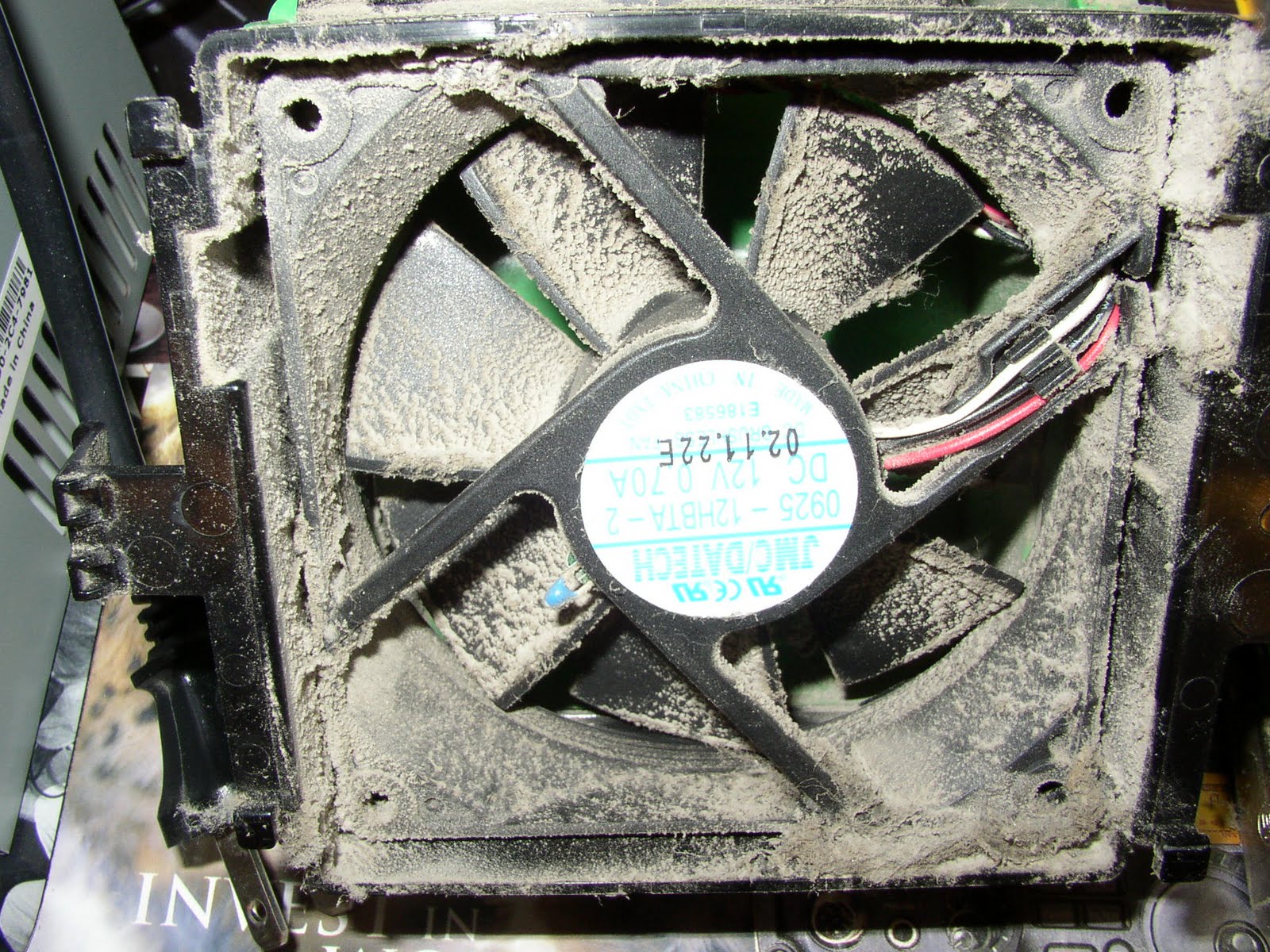 Photograph five illustrates how much dust really collects on one’s fan across several years. I recommend taking a serious look at cooling fans, especially, if one cannot recall its last scrubbing.
Additionally, rather than donate the Surfboard SB4100 Cable Modem as directed by Charter Communications, why not re-purpose this device? I want to thank NYC Resistor for their inspiration and my Grandfather for his relevant wisdom.
73 from the shack relaxation zone.

Scot Morrison, KA3DRR, is a regular contributor to AmateurRadio.com and writes from California, USA.
Temporary QRT
This afternoon I disconnected all the equipment in my shack and removed it. I shall be off the air for a while.
The room I use for my shack is very small and I have run out of space to store all my electronic parts, tools and books. There is no space to permanently set up all my radios, so my K2 and FT-817 rarely get used in the shack although they could be. The only solution is to make some proper built-in cupboards and shelving. Before I do that it makes sense to rip out the worn-out carpet and replace it with something better. So I have to completely dismantle the shack and remove everything.
Hopefully it won’t be too many days before I can get the radios and computer back up and running again. No doubt, whilst I am unable to take advantage of them, there will be some major band openings!

Julian Moss, G4ILO, is a regular contributor to AmateurRadio.com and writes from Cumbria, England. Contact him at [email protected].
Darnnit!

Anthony Good, K3NG, is a regular contributor to AmateurRadio.com and writes from Pennsylvania, USA. Contact him at [email protected].
This Weekend In RadioSport | Going Mobile
 RadioSport USA | Florida QSO Party.
This weekend presents a great opportunity to practice, practice, and practice one’s RadioSport skill set. Perhaps, instead of operating from the function keys, give those paddles a good workout — make’em sweat. I’d encourage trading the band map feed for spinning the dial — find’em and log’em but listen first.
State QSO parties are much like a beach club house party. Everyone is a little more relaxed and easy going. This is the time to work on skill development when there is less pressure not to make a mistake.
Rules (link).
 RadioSport USA | Nebraska QSO Party.
We’re in good shape this weekend with Nebraska filling the gap between the coasts. I remember logging W0BH/M during this event and how much fun it was when Robert activated a new county. Likewise, I logged a sense of satisfaction because mobile operators are pushing an envelope using vertically polarized antenna systems and battery power.
I’m going to challenge my station this weekend and log as many mobile stations as possible.
Rules (link).
SFI = 75 | A-index = 9 | K-index = 1 | Sunspot count is 0 @2111UTC.
See Also.
Radio-Sport dot Net | Sunshine State Showdown Looms With 2010 Florida QSO Party.

Scot Morrison, KA3DRR, is a regular contributor to AmateurRadio.com and writes from California, USA.
Detecting Sporadic-E on 2m
We are entering the Sporadic-E season, the favourite time of the year for those who enjoy operating the VHF bands. As Roger G3XBM suggested today, more stations this year will be using WSPR on the 10m and 6m bands, so many openings may be detected that would otherwise be missed. I am WSPRing on 10m at the moment, and will probably move up to 6m later on once 10m starts opening on a regular basis.
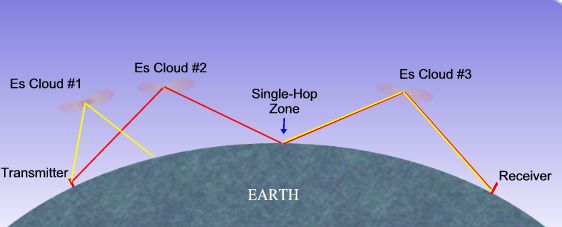 However, my first love will always be 2m. From this QTH surrounded by hills Sporadic-E is the only type of propagation that allows me to work DX on that band. On 2m, Sporadic-E openings are much rarer because much smaller patches of the Sporadic-E clouds are dense enough to reflect signals at this frequency. This makes propagation between two points on 2m much more fleeting. A station can be 59+ one minute and gone the next, which makes it essential to keep QSOs short and sweet: report, locator, and name only if you are sure you have got the time.
Some people are planning to use WSPR on 2m as well, but because of the fleeting nature of propagation I am not convinced that the 2 minute periods of WSPR make it the most appropriate method of detecting propagation on this band. I think it might be more fruitful to monitor 144.8MHz which is the APRS frequency in Europe.
APRS packets take only a second or two to send, so you don’t need propagation to be good for two whole minutes to receive one. Packets do need to be received clearly, but the “strong or gone” nature of Sporadic-E on 2m suits that quite well. The main difficulty is knowing the location of the station that sent the packet you heard, since it could well be a digipeater retransmitting a packet sent from somewhere else.
There used to be a website that displayed a propagation map based on APRS packets received. But in the last few days it appears to have gone QRT, which is rather a shame. But if you are in a location that doesn’t normally hear much APRS activity, even just hearing a number of signals going “braaap” on 144.8MHz could be the alert you need that some unusual propagation is about.
If anyone has any other ideas on how to improve the detection of Sporadic-E on 2m without sitting in front of the receiver listening to band noise for hours on end I’d be interested to hear them. If you aren’t familiar with this mode of propagation and how it works and would like to learn more about it then there is an article about Sporadic-E on my website.

Julian Moss, G4ILO, is a regular contributor to AmateurRadio.com and writes from Cumbria, England. Contact him at [email protected].
The Amazing KGD
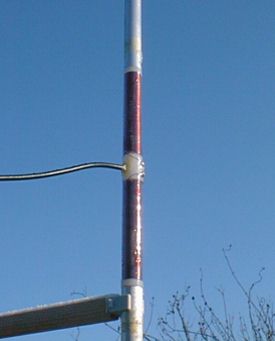 On the WSPRnet website DM1RG posted some results obtained using a 30m dipole 1.3m long, the “Kurz Geratener Dipol“. His 5W signal made it all the way from Germany to Australia. He finds the KGD to receive only 3 to 5dB worse than his “big vertical antenna.”
I tried translating the article about the KGD using Google but it didn’t make enough sense for me to understand how to make one. Perhaps someone will figure it out and publish a better explanation. It looks to me to be an interesting idea for anyone with antenna restrictions or simply wanting a second antenna so they can run WSPR or monitor a band while they operate somewhere else.

Julian Moss, G4ILO, is a regular contributor to AmateurRadio.com and writes from Cumbria, England. Contact him at [email protected].
 Ham Radio Deluxe |
 W5SWL Electronics |
 Ham Radio Prep |
 KB3IFH QSL Cards  Hip Ham Shirts  HamRadioAuctions HamRadioAuctions Reliance Antennas Reliance Antennas Enigma Shop Enigma Shop |  morseDX  Ni4L Antennas  R&L Electronics R&L Electronics antennas.us antennas.us QRV QRV |
- Matt W1MST, Managing Editor
