 |
 Noise generator
 18 April 2010 | by
  I heard nothing during my attempt last night to receive signals from KP4AO bounced off the moon. Nothing, that is, except a lot of noise. Sitting at the bottom of the garden with my newly constructed hand-held 6 element 70cm beam, the Moon was above and just to the left of the roof of our house. And the nearer I moved the beam to the house, the greater the noise. This house is truly a disaster area for radio reception!
This afternoon I thought I would try to see where the noise was coming from. With the beam horizontally polarized the noise was a broadband hash, white noise, indistinguishable from band noise except that its level is much greater with the beam pointing towards the house. If I turned the beam vertical then the white noise faded out almost to receiver noise, but another pulsing noise came up. It went kerchunk chunk chunk chunk, kerchunk chunk chunk chunk, ad nauseum. And the level of this noise peaked up with the beam pointing right at the shack window!
I switched everything off in the house and it made no impact on the noise whatever. I decided that it must be something battery powered. There is a radio controlled alarm system in the house that has a built-in backup battery. Nothing I can do about that. However I could not hear any noise increase when I went near it with the TH-F7E and a whip antenna. The noise level goes up and down as you walk about the house, as does the kerchunk chunk chunk noise, as if the noise source is invisible.
Eventually I did locate the source of the kerchunk chunk chunk noise. It was coming from an Ascot radio controlled clock sitting on the shelf in the shack just above my radios. I removed the batteries and after a few seconds the noise stopped. I walked about the house some more and in places I heard it again! This sort of thing can make you start to doubt your sanity.
Eventually I found that exactly the same noise was coming from another clock / weather station in our conservatory. It’s a different brand, not radio controlled, and (probably not coincidentally) it receives temperature and humidity readings from the same external sensor. Presumably they have some electronics in common and this is transmitting a signal in the 432MHz band.
But I haven’t found the source of the broadband hash, which may or may not be related to the crackly S9 noise that plagues most of the HF bands. I think the noise problems at this QTH are beyond solution. I haven’t logged an HF band contact from here since 13th March. It isn’t that I can’t work anything on HF from here, it’s just the demoralizing effect of hearing this dreadful noise as soon as you switch on and knowing that there are interesting signals buried under it that I have no chance of hearing.

Julian Moss, G4ILO, is a regular contributor to AmateurRadio.com and writes from Cumbria, England. Contact him at [email protected].
Britain cut off, but Dunkirk spirit still alive
 Flights in or out of the UK are banned for a fourth day due to the alleged effects of dust from the Icelandic volcano. Flight restrictions have been just been extended until midnight tonight, with suggestions that they could extend for “several more days”. Britain is virtually cut off, with the Channel Tunnel and ferries to and from continental Europe fully booked. There is talk of an economic disaster, with some European airlines in serious financial difficulties as a result. Tens of thousands of people are stranded, unable to get home from their Easter holidays and facing financial ruin, loss of pay and even the loss of their job as a result. Travel insurance companies in most cases are refusing to pay out for additional accommodation or the cost of returning by alternative means.
However, the Dunkirk spirit is not dead. Just as in 1940 when Brits with small boats went across the Channel to bring our defeated troops back, TV presenter Dan Snow is today mounting an operation with inflatable craft to bring stranded Britons back from Calais to Dover. You couldn’t make it up. (Postscript: The attempt was halted by authorities, presumably for health and safety reasons. Oh well. Nice try.)
It is reported that the Dutch airline KLM has flown a Boeing 737 to 13km over Dutch skies with no adverse effects, whilst Germany’s Lufthansa has flown several planes from Frankfurt to Munich without any harm being caused to the windows, fuselage or engines. But Dutch and German airspace are also closed for the time being. However the Ukrainian International airline – which coincidentally Olga used on her recent trip to Ukraine – is to recommence flights at 0900 UTC today as it believes the skies are safe. Hooray for the Ukrainians! At least someone has some sense.
According to some aviation experts, the only time aircraft have suffered from volcanic ash is when they flew right through a plume of it as the volcano was erupting. The ash here is so thin that you can see the moon and stars when the sky is clear. Isn’t this just another case of out-of-control safety mania, with bureaucrats being afraid to make any decision that just might lead to them being blamed later on, regardless of the probability of risk? Isn’t it time for someone to use some common sense?

Julian Moss, G4ILO, is a regular contributor to AmateurRadio.com and writes from Cumbria, England. Contact him at [email protected].
The new ARRL website is disappointing
I’m going to stray a bit from my normal topics to discuss the newly updated ARRL website which after several attempts finally went live this week. My overall response was one of disappointment. I am well aware that any it’s often difficult to get pretty much anything right in Information Technology the first time. (In fact, I was commenting to one of my colleagues at work that if you think you’ve gotten something right on the first try, you have overlooked something). My fellow bloggers Dan, KB6NU and David, K2DSL have written posts describing some of the flaws, and I suggest you read them for the details.
David in particular enumerated a lot of the different issues, and while I’m not going to add anything to his list, I will mention that in particular, the two things that are particularly annoying are the fact that it seems that even with the “favorites” feature, nearly everything requires a lot more clicks to get to (which is one of the main things you don’t want to do if you want people to keep visiting your site) and that you no longer remain logged in for very long. (It looks like they may have adjusted this value since David wrote his blog, but in any case, it should allow you to remain logged in for at least a few weeks minimum; this isn’t a banking site.)
I want to make clear that I am a big fan of the ARRL, and that I really appreciate the advocacy they provide for our hobby. I know that an undertaking of this magnitude must have been quite difficult, but I think that they should have allowed ARRL members “preview” access much earlier in the process. (Yes, I’m aware that there was an article in QST, but static images are not the same as actually using the site.) I suspect that the reason for not doing so was a concern over the flood of input that they may would have received, but when you are developing something that is supposed to provide service to your members, you need to take their feedback into account.
I sincerely hope that the ARRL will listen to those of us who have been sending in feedback and will be able to make the changes to make the website at least as useful as it was before the changes. I also hope that we, the members, don’t hear that “it’s too far along in the process to change things”.

David Kozinn, K2DBK, is a regular contributor to AmateurRadio.com and writes from New Jersey, USA. Contact him at [email protected].
World Wide Radio Operators Foundation, Inc.
 Vision. Leadership. Commitment.
World Wide Radio Operators Foundation, Inc. is a non-profit organization, “Dedicated to improving the skills of amateur radio operators around the world, utilizing education, competition, advancement of technology and scientific research, promoting international friendship and goodwill, and preparing them to better serve society in times of communication need.”
Board of Directors.
- Doug Grant, K1DG, Chair, Founding Director.
- John Dorr, K1AR, Vice Chair, Founding Director.
- Ralph Bowen, N5RZ, Treasurer, Founding Director.
- Tom Lee, K8AZ, Secretary, Founding Director.
- Mark Beckwith, N5OT, Founding Director.
- Bob Cox, K3EST, Founding Director.
- Tim Duffy, K3LR, Founding Director.
Believe in your signal.
See Also.
Radio-Sport dot Net | Formation of New Contest Operators Group Announced At 2010 Visalia DX Convention.

Scot Morrison, KA3DRR, is a regular contributor to AmateurRadio.com and writes from California, USA.
Is This The End Of Ham Radio As We Know It?
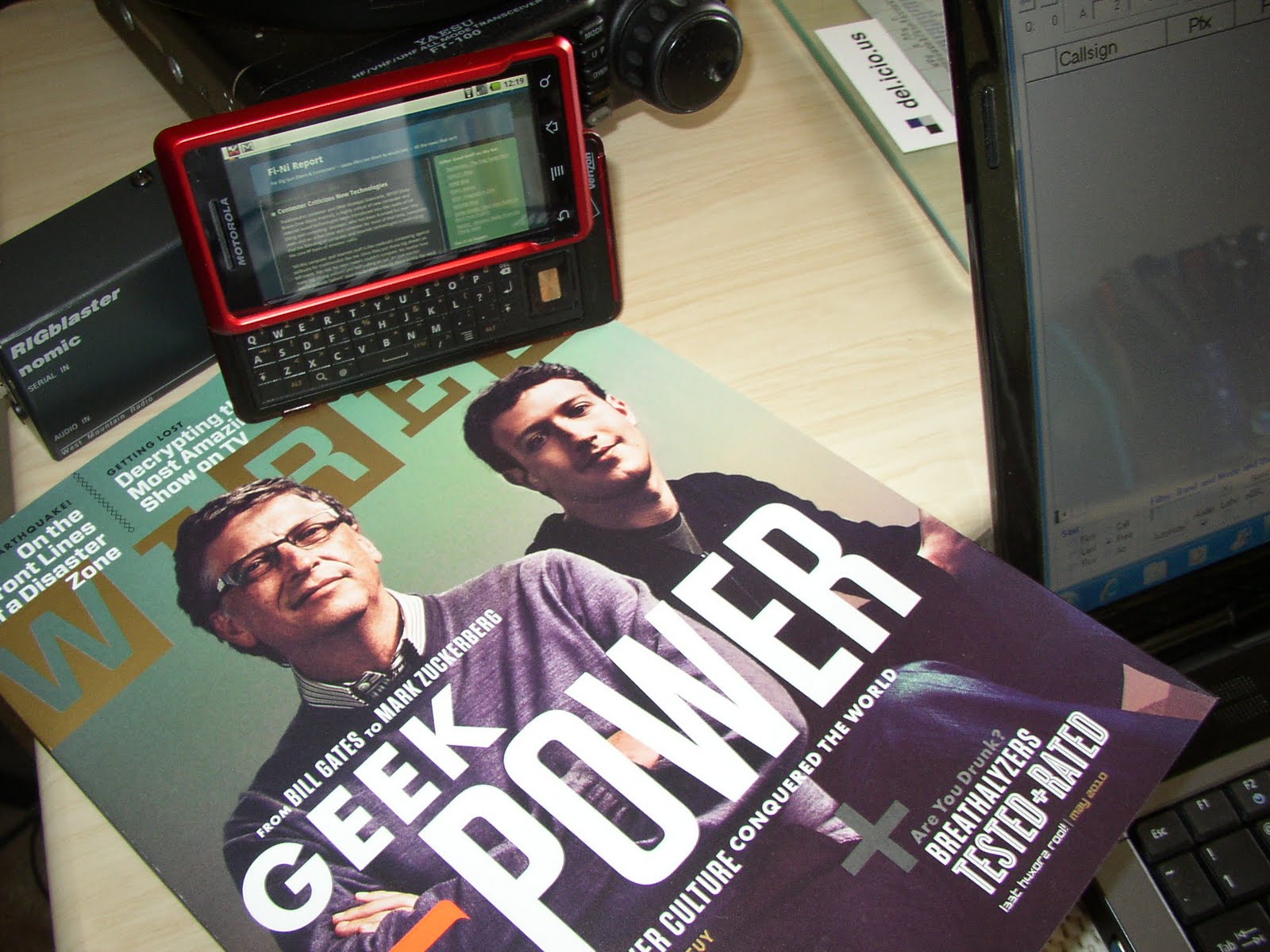 I applaud Pete Smith, N4ZR, Rick Walker, K4TD, Felipe Ceglia, PY1NB, and Nick Sinanis, F5VIH for their innovation — Reverse Beacon Network (RBN) Telnet Feed combines data output of all current RBN Skimmer receivers at no-charge for ham radio operators world wide.
Is this the end of ham radio as we know it?
Certainly, not.
Boomer And Millennial.
I’m a late Baby Boomer born in 1964 at the tail end of my generation. Some say, we are the silent cohort, our voices eclipsed by earlier Boomers and the later Millenials. However, what is not recognized; we witnessed and actively participated in all the infant technologies that are now beginning to mature.
I played Atari with its read only memory cartridges. I have dialed both a rotary and touch tone phone. I watched wireless television succumb to cable when Home Box Office was a big deal on the block. We used push button remotes tethered to a cable before the ubiquity of wireless remotes. Remember, when someone actually switched channels on an analog dial?
I pushed eight track cassettes into players before cassette tapes ruled one’s Sony walkman. I participated in the battle of beta and VHS for dominance in delivering home entertainment; renting a movie was a big deal. Today, format competition continues as Blu-Ray wrestles for market share against that of DVD.
Change is not a big deal for the silent cohort or those thereafter, perhaps, it is expected, sometimes begrudgingly, sometimes with fascination.
Disruption.
However, even beyond the CQ Contest Digest discussion, a chasm exists between keeping ham radio in its purist form and technological progress. I hear those who are steadfastly resolved that ham radio is nearing an apocalypse — robots will soon replace humans in RadioSport?
I’d like to know, how many still spin their dial, looking for a DXCC counter given the near efficiency of spotting networks? Can one with a reasonable commitment to occupation and family afford such a time consuming luxury? Retirees need not answer that question.
The same is said, dial tone replaced rotary, compact disc replaced VHS, and liquid crystal displays replaced cathode ray tubes. What happened to auto-patch? Essentially, at the end of the day, it is digital change and the anxiety that follows the disruption of long established comfort zones.
Conclusion.
The Reverse Beacon Network Telnet Feed is not the end of ham radio. It is technological progression perhaps at the level of software and digital signal processing. I did not immediately leap to the idea that it is the symbolic end of RadioSport, rather, RBN is the result of hard work by a group of men who care about the longevity of ham radio.
RBN is a beginning and not the end.
See Also.
Fi-Ni Report : Contester Criticizes New Technologies.

Scot Morrison, KA3DRR, is a regular contributor to AmateurRadio.com and writes from California, USA.
EME with a handheld
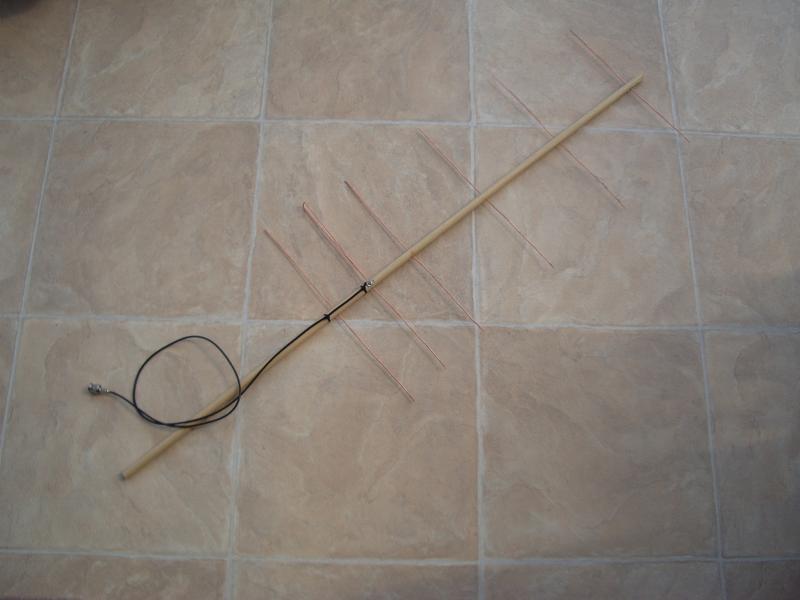
This morning I made a 6 element Yagi for 70cm using some 25A copper mains wire with the insulation stripped off and a length of wooden dowel. I copied the design from CT2GQV’s blog. The object is to see if I can hear radio signals bounced off the moon.
 If you didn’t know, a bunch of guys that include Joe Taylor K1JT of WSPR fame have got permission to use the 1000-foot dish of the Arecibo Radio Telescope (shown above) for a couple of hours each day over this weekend to make radio contacts via EME. Using full power their signals should be strong enough to be heard using a hand held yagi and it should be possible to work them using just 100W with the same antenna.
I only have the FT-817 with 5W so it isn’t possible to try to work them, but I thought I would try to hear them, which is why I made the antenna. I think you’ll agree that their antenna is more impressive than mine! There are, of course, no 70cm signals to test it on, but there are plenty of noises and the yagi seems quite directional. The SWR is about 1.7:1 at 432MHz and falls gently as you go lower in frequency, but I’m not sure how to adjust it so I’ll leave it as it is for the moment.
 The first session was yesterday. Unfortunately their PA blew up so they were only able to run 25W of power. Some contacts were made, but obviously not with people using low power and hand held antennas. Hopefully they will have got a PA working in time for the remaining two sessions, otherwise I am not going to hear a thing.
This evening they should be on between 1740 and 2020 UTC – that’s 1840 to 2120 BST. They will be transmitting on 432.045MHz using SSB or CW. Their call is KP4AO. The moon is only showing quite a thin crescent at the moment so it may not be easy to spot during daylight, even assuming the sky is clear as it is here. If you are in the UK the moon will be at an elevation of about 45 degrees to the south-west at the start of the session, declining to about 25 degrees due west by the end of it. If your QTH is elsewhere you can use this web site to locate it.
Tomorrow’s session is scheduled for 1840 to 2125 UTC – 1940 to 2225 BST. The moon will be in the same position relative to the start of the session.
Fingers crossed that they get the PA going so we can have a chance to hear something. If not, the antenna won’t be wasted as I’ve been meaning to have a try at satellite communications.

Julian Moss, G4ILO, is a regular contributor to AmateurRadio.com and writes from Cumbria, England. Contact him at [email protected].
Over-The-Air QSLing
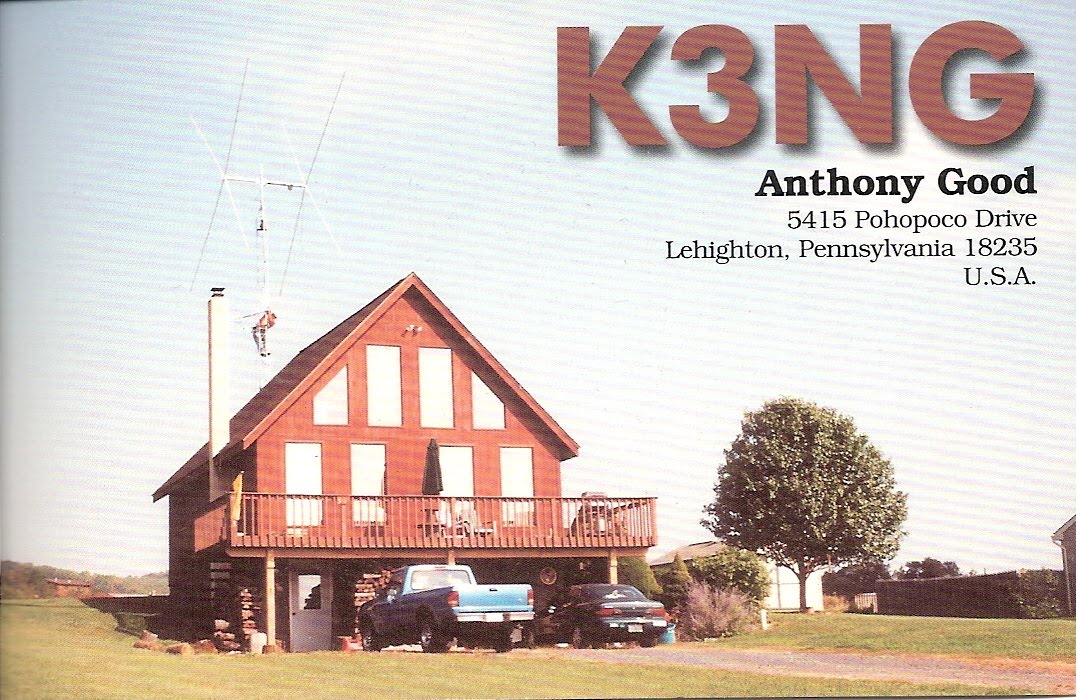
I love the KISS approach VA7VV has created, where you can just go to his site and print out a QSL card. I intend to take a similar approach soon, though not as "self-serve" as VA7VV has done, but migrating to a PDF format where I'll just email a QSL card to anyone who requests one.
But I was thinking the other day, why not just do over-the-air QSLing? With public/private key encryption it's easy to take some text or data and create a key that can be used to authenticate the information back to the originator. There could be a program or website to generate keys on the fly. I'm wondering if a key could be shaved down to maybe 10 alphanumeric characters that could be exchanged over the air like: "Here ya go Bob, here's yer QSL key: Gulf Delta Charlie One Foxtrot Zed Five Nine Yankee Three.... Good DX and 73!" You record that in your log and if someone wants to authenticate it back to the station, they can grab his public key off of the 'zed or at ARRL and plug it into the program or a website. I'm not sure how many bits the encryption would have to be decreased to to make the QSL key exchanged over the air short enough or make the encryption a reasonable enough level to prevent most forgeries.
Ah....maybe it's more trouble than it's worth and I should stick with emailing QSLs...

Anthony Good, K3NG, is a regular contributor to AmateurRadio.com and writes from Pennsylvania, USA. Contact him at [email protected].
 Ham Radio Deluxe |
 W5SWL Electronics |
 Ham Radio Prep |
 KB3IFH QSL Cards  Hip Ham Shirts  HamRadioAuctions HamRadioAuctions Reliance Antennas Reliance Antennas Enigma Shop Enigma Shop |  morseDX  Ni4L Antennas  R&L Electronics R&L Electronics antennas.us antennas.us QRV QRV |
- Matt W1MST, Managing Editor
