 |
 QRSS beacon progress
 15 October 2010 | by
 Yesterday I finished building the QRSS beacon kit board. The keyer chip sends the wrong callsign but it that was no reason not to build the kit. It’s a very easy kit to build although there are no fewer than five toroids to wind which is a lot for such a simple project. Some people hate winding toroids though I find them easy to do and can’t see what all the fuss is about.
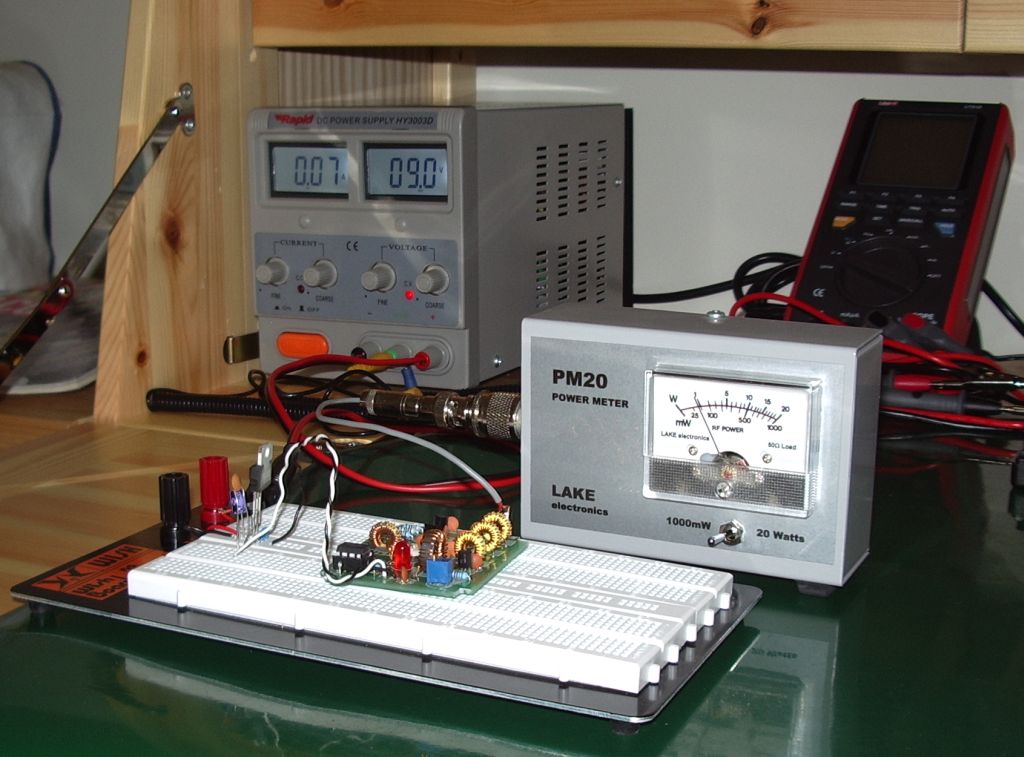
The only other slight difficulty with the kit is that the potentiometer for setting the output power has leads that are too big for the holes in the PCB. This is mentioned in the instructions, where it is recommended to use component lead offcuts to extend the originals. My junk box was supplemented a few months ago with a Maplin bargain pack of assorted potentiometers and lo and behold it yielded a wirewound trimpot of exactly the right value that perfectly fitted the PCB holes. So I used that instead.
When the board was finished I powered it up using my bench power supply and PM20 QRP absorption wattmeter. In the photo I have breadboarded a regulator from 9V down to 5V as I was toying with the idea of running the beacon from a rechargeable PP3 battery (the board will fit into a case I have which has an integral PP3 battery holder) and wanted to see how much heat the regulator would dissipate.
I found that I could get a maximum of just under 100mW from the beacon with about 120mA current drawn. This is a little less than the specification. The instructions suggest that a bit more than 100mW should be possible, but the shortfall isn’t enough to worry about. For longer battery life I will run the beacon at 50mW which draws a current of around 65mA.
To get the transmitter on frequency and set up the mark/space frequency shift I used my K3 and QRSS VD software. The signal, even on the dummy load of the power meter, was very loud which was helpful getting it into the ball park. I had to disconnect the antenna, switch in the attenuator and back off the RF gain to reduce the signal to a level where I could fine-tune the frequency and see what the signal would look like on the air.

And here it is, sending G4LIO! It’s a bit frustrating not being able to connect it to an antenna and put it on the air because of the wrong callsign. I’ve been promised a new chip and I practically snatched the post out of the hands of the postwoman but it hasn’t come yet. In the meantime I can think about putting the beacon into a nice box. Forget winding toroids, for me that is the hardest and least enjoyable part of any constructional project!

Julian Moss, G4ILO, is a regular contributor to AmateurRadio.com and writes from Cumbria, England. Contact him at [email protected].
144-MHz SoftRock
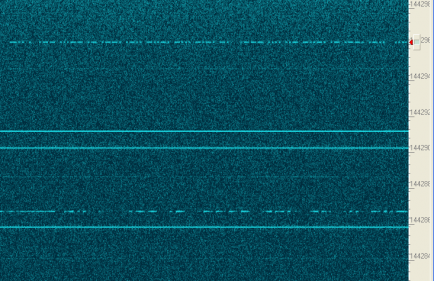
144-MHz SoftRock Ensemble II VHF by KB9YIG and VE3NEA Rocky 3.6. Yup, that’s W3APL/B (off the back of the beam) and WA1ZMS/B in the same waterfall. How cool is that?! More later… This has many implications for many projects!
Ethan Miller, K8GU, is a regular contributor to AmateurRadio.com and writes from Maryland, USA. Contact him at [email protected].
Wouxun go mobile with the KG-UV920R
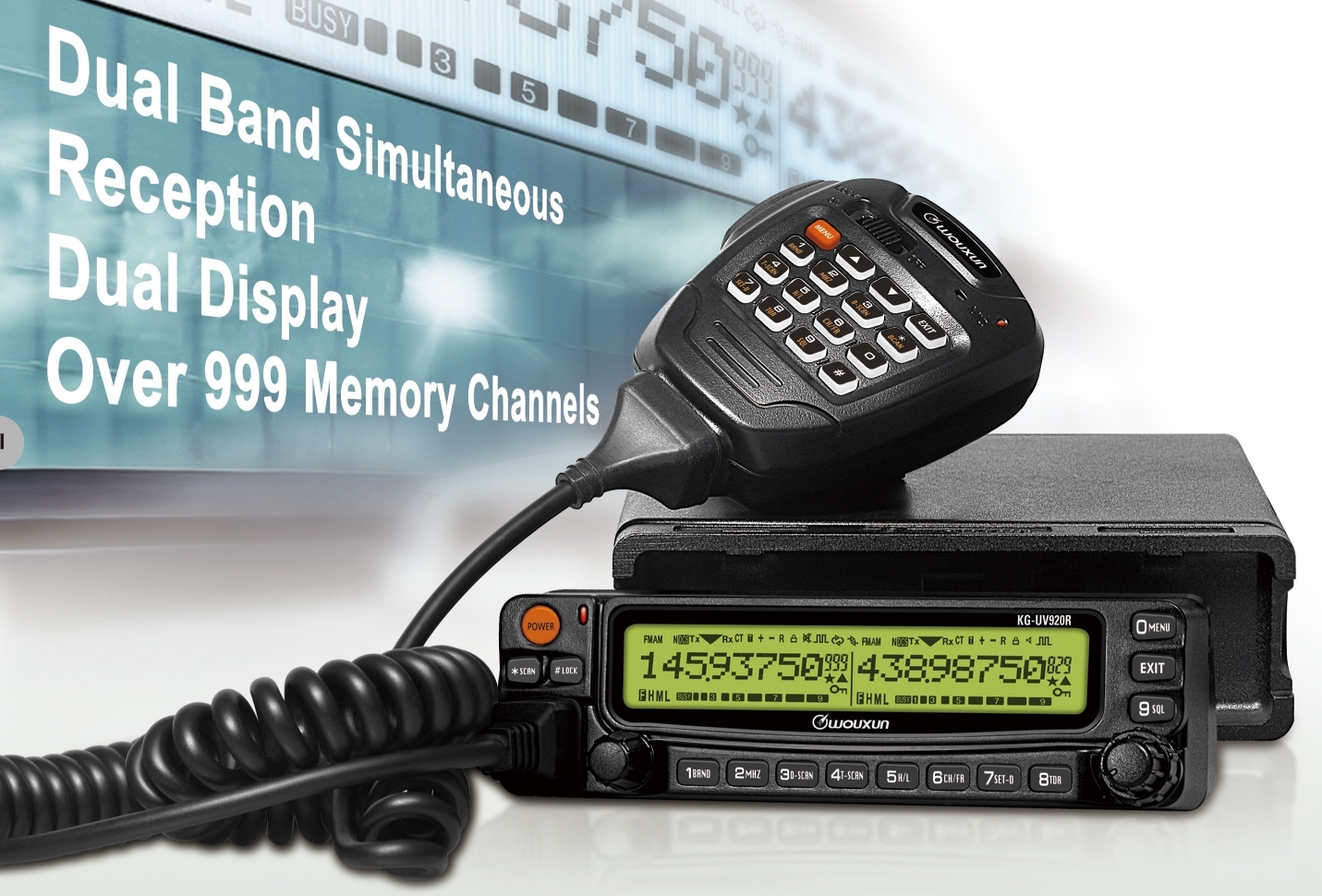
Alerted by posts by Patrick, WA0TDA and Steve, GW7AAV, I see that Wouxun have announced an entry into the mobile rig market, with their KG-UV920R rig covering 144/432MHz.
Based on the coverage that Steve mentions in his post, there is FM receive from 65-220MHz – so this rig could receive on 70MHz too! In fact, reading the posts, I was wondering whether Wouxun will, in time, consider a 70MHz capable mobile rig.
The Wouxun portables have proved excellent and I am looking forward to hearing more about the mobile rig in due course.

Tim Kirby, G4VXE, is a regular contributor to AmateurRadio.com and writes from Oxfordshire, England. Contact him at [email protected].
Tuesday night tropo…
I didn’t spend too much time on the radio on Tuesday evening, as the cats were requesting entertainment again – which was a pleasure to provide! Being the second Tuesday of the month, it was the 432MHz Activity Contest and there was still some tropo around. The best DX for me was DF0MU in JO32 – which I was more than happy with. It was also good to work GD8EXI (IO74) – the first time I have worked GD from Longworth on 432MHz. Interestingly, like last month, he was at his strongest when I was beaming southeast. A reflection, perhaps? I was also pleased to hear some northerly IO93/IO84 squares which are less common for me.
Oh. And a special mention to the contester, whose callsign I will not mention, who when I called him first, he only got my suffix. No problem. He asked if I could give my prefix. No problem, I did. Then he proceeded to moan that he hadn’t got my full callsign! I seem to remember mentioning when I wrote the contest column in RadCom, that it’s best to be nice to the people who call you – otherwise they might not call you again. This gentleman won’t be hearing from me for a while, then!
Tropo seems to have faded down mostly now, although there was something weak on 145.650 this morning, either GB3PO or ON0WV – I couldn’t tell. Apparently the forecast for the weekend could be favourable for more tropo. Let’s hope so!

Tim Kirby, G4VXE, is a regular contributor to AmateurRadio.com and writes from Oxfordshire, England. Contact him at [email protected].
Technology failure
Olga and I went to a dinner party last night and the topic of how we have become slaves to computers came up. When I was a child, the science books promised that technology and automation would make our lives easier so we would work less hours and have more time for leisure. What a joke that seems now. We all work longer hours and the impact of computing and modern communications technology is that people now expect answers instantly instead of when you can get around to it. When I mentioned another promise of the computer age, the paperless office, the entire table fell about laughing.
Kelly, K4UPG writes that he had just spent six hours running updates, fixing the problems the updates created and figuring out how to install the updates that wouldn’t install automatically. His verdict: Computers Do Not Save Time.
The last couple of mornings Acronis Non-stop Backup has displayed a message that it was not running. Kelly’s post made me wonder if this was caused by a recent Windows update. I decided to do a System Restore back to last Monday, before most of the updates occurred, and lo and behold Non-Stop Backup is running again. I don’t have the inclination to spend six hours installing updates individually to find which one caused the problem, nor to ferret through forums searching for a solution, so automatic updates have been switched off for the time being. Having a working backup is more important than receiving fixes to problems I haven’t experienced and probably never will.
The trouble with computers is you have to spend too much time being your own support technician, time you should be spending working, playing radio or whatever the computer is supposed to be helping you with. Once upon a time computers were simple, reliable and never needed updating. What was the name of the operating system they ran? Ah yes, MS-DOS.

Julian Moss, G4ILO, is a regular contributor to AmateurRadio.com and writes from Cumbria, England. Contact him at [email protected].
KN-Q10 SSB/CW 5W kit – US$280
Recently there was an interesting discussion here on vk2rh.com about some of the barriers to a wider takeup of the new wave of Chinese QRP or DIY ham radio kitset activity. One of the hurdles of course is language and the current lack of an English language user base to grow and deliver email support for kit builders.
Overnight Adam, BD6CR has made available an English translation of the construction manual for the KN-Q10 QRP kit designed by Ke Shi BA6BF. The KN-Q10 is a four band (3.5, 7, 14 & 21MHz) 5W SSB/CW transceiver kit.

The KN-Q10 4 band SSB/CW QRP kit designed by Ke Shi BA6BF
Adam has also revived the Yahoo group China_QRP -
“I have made a decision to turn this yahoo group into a forum to support overseas Chinese kit builders and merchants. We will see more overseas kit builders and merchants joining.”
John AE5X posted a report about the manual translation earlier today. He also included a link to a discussion thread about the kit on the Chinese language HelloCQ forum. The photos here are sourced from the designer Ke Shi, BA6BF’s own postings and give some sense of the finish and quality of the project. There’s a large number of photos of the Q10 under construction on the thread.

A view of the BA6BF designed KN-Q10
John AE5X noticed the current lack of a schematic & parts placement diagrams and an operating manual for the kit even though this appears to be referenced in the translation. Certainly this version of the manual doesn’t offer the comprehensive ‘hand-holding’ guidance Elecraft, SWLabs or Softrock kit builders are used to. John sees no inherent problem with this – as long as prospective buyers are aware. I see this manual translation as an important first step towards opening up this exciting DIY/QRP activity to a wider audience.
Today on the China QRP Yahoogroup Adam has explained that he is selling the KN-Q10 kit for US$280 which includes air parcel delivery anywhere worldwide and that he accepts PayPal. If you’re keen to buy, it might be best to contact Adam via the Yahoogroup to identify the appropriate email address for that.
UPDATE 15 October: Adam BD6CR has already posted an updated version of the manual and it now also includes photos and links to the schematic diagram of the KN-Q10 and a Chinese language document with photos illustrating the modification to the encoder.

One of the photos from the currently Chinese language KN-Q10 encoder modification guide
Stephen Rapley, VK2RH, is a regular contributor to AmateurRadio.com and writes from New South Wales, Australia. Contact him at [email protected].
Handiham World for 13 October 2010
Welcome to Handiham World!
It’s time for a new HF net.
When was the last time you thought about getting on 20 m and being part of the Handiham net? Don’t be embarrassed to admit that you haven’t thought about it for a long time. Neither have I, as a matter of fact, so you are not alone. The 20 m net died several years ago when our last regular net control volunteer Mike Knox, WA0KKE, finally had to throw in the towel.
What happened?
Like many things in our technologically-driven existence, there was no single cause for the demise of the Handiham net. A prime suspect certainly had to be the relentless, never-ending sunspot minimum that we are trying to claw our way out of with limited success, even now in 2010 when the sun should be really perking up. As most of you know, the higher solar activity associated with more sunspots creates ionospheric conditions that favor really good high-frequency radio propagation. In a really good solar maximum, the HF bands crackle with strong DX signals and one can “work the world” with just a few watts of power on bands like 10 and 15 m. Sad to say, it has been so long since we have seen those conditions that many operators have simply drifted away from regular HF operation, especially if they did not have room for wire antennas that would allow them to tune 160 through 40 m, bands that remain usable even during solar minimum conditions.
The 20 m band sits astride the critical part of the HF spectrum that just barely remains inside the “always useful” zone. At sunspot minimum, it is generally crowded with DX seekers and anyone else simply looking for an open band with capability of working stations at some distance during daylight hours. Even then, 20 isn’t always reliable when solar storms wipe out the bands. So what happened was that the conditions on 20 simply didn’t favor continued scheduled net activities. The net control station would be faced with terrible band conditions and fewer and fewer check-ins. In spite of my efforts to find another net control station, no one was interested, and I guess I don’t blame them. Who wants to preside over a net with no stations checking in?
But we can’t ignore other factors that came into play during the deterioration of the HF bands during the sunspot minimum. The rise of the Internet followed by the spread of broadband connectivity made EchoLink much more practical and reliable than HF communications. The VHF and UHF repeater systems with EchoLink capability came into their own as HF activity deteriorated. More and more people made the move to EchoLink. The Internet is also a huge factor in siphoning away people from ham radio – and most other leisure time activities. It’s not that the Internet is good or bad per se, it’s just that people only have so much time for all of the competing leisure time activities, and ham radio is simply finding a new “normal” in this very different world.
Another factor is that a daytime 20 m HF net is simply too hard to conduct when more and more people with disabilities are going to school and work, instead of the “bad old days” situation in which people with disabilities simply sat around housebound. We are glad that those days are gone, but Handiham members who work and go to school cannot be expected to have the time to check into a daytime net on any regular basis. You simply can’t count on enough folks having a day off from work or a school holiday to keep a critical mass of net participants.
So what to do?
I would suggest a change in net frequency and timing. We need at least consider moving our HF net to 160, 75, or 40 meters, and those bands are likely to be most useful in the evening. Because 160 requires a very long antenna, it is impractical for many users. 40 can get crowded, but requires the shortest antenna of the three. Of course we can consider reviving our 17 meter “non-net roundtable”, which was originally started by Alan, K2WS, but the sun will have to spit out a few more spots for that band to get where it needs to be. So what do you think? 160? 75? 40? Or something else? And what about the time and day?
I hope to hear from you about this suggestion soon. Please drop me an email, and I’ll share your thoughts with our readers and listeners.
New at the Hong Kong Electronics Fair: Wouxun KG-UV920R

The Hong Kong Electronics Fair opened today, October 13, and runs through October 16.
Amateur radio is about to be introduced to a brand-new entry in the mobile dual-band radio category, the Wouxun KG-UV920R. Although at this time we have little in the way of product specs, the Wouxun dual-band handheld radio that was demonstrated at Handiham Radio Camp early this year created quite a lot of interest because of its built-in speech frequency readout for blind users. The KG-UV920R features dual-frequency display and cross-band repeater capability. It comes with more than a thousand memory channels. It also includes an unusual receiver that covers the short-wave bands! We are waiting for a more detailed specification document so that we can tell if speech frequency readout will be a feature – and we sure hope that it is! At this time, no pricing is available.

Pat Tice, WA0TDA, is the manager of HANDI-HAM and a regular contributor to AmateurRadio.com. Contact him at [email protected].
 Ham Radio Deluxe |
 W5SWL Electronics |
 Ham Radio Prep |
 KB3IFH QSL Cards  Hip Ham Shirts  HamRadioAuctions HamRadioAuctions Reliance Antennas Reliance Antennas Enigma Shop Enigma Shop |  morseDX  Ni4L Antennas  R&L Electronics R&L Electronics antennas.us antennas.us QRV QRV |
- Matt W1MST, Managing Editor
