 |
 ICQ Podcast S04 E07 – Miltary Radio (27 March 2011)
 27 March 2011 | by
 Series Four Episode Seven of the ICQ Podcast has been released. News Stories include :-
- Future of New Zealand Magic Band
- Northern Ireland Amateur Radio Club of the Year
- New 2i0 calls at Lough Erne Rally
- Luxembourg 60m beacon LX0HF
- Russian Federation joins CEPT Radio Amateur License
- No increase in amateur radio licence fees
- ISS Amateur Radio Station helps Japan Earthquake
- New sub-9kHz Amateur Radio website
- Amateur radio society to open new premises
- Cork Radio Club
- Early Australian amateur radio callsigns
Your feedback, upcoming events and Martin (M1MRB) talks to Dennis Noe (M0NDJ) about Miltary / Clansman Radio.
Colin Butler, M6BOY, is the host of the ICQ Podcast, a weekly radio show about Amateur Radio. Contact him at [email protected].
ICQ Podcast S04 E07 – Miltary Radio (27 March 2011)
Series Four Episode Seven of the ICQ Podcast has been released. News Stories include :-
- Future of New Zealand Magic Band
- Northern Ireland Amateur Radio Club of the Year
- New 2i0 calls at Lough Erne Rally
- Luxembourg 60m beacon LX0HF
- Russian Federation joins CEPT Radio Amateur License
- No increase in amateur radio licence fees
- ISS Amateur Radio Station helps Japan Earthquake
- New sub-9kHz Amateur Radio website
- Amateur radio society to open new premises
- Cork Radio Club
- Early Australian amateur radio callsigns
Your feedback, upcoming events and Martin (M1MRB) talks to Dennis Noe (M0NDJ) about Miltary / Clansman Radio.
Colin Butler, M6BOY, is the host of the ICQ Podcast, a weekly radio show about Amateur Radio. Contact him at [email protected].
State of Electronics documentary
Karl Von Moller has been putting together a documentary called ‘State of Electronics – A discussion on the electronics industry in Australia’. This looks like a fascinating and thorough look at the electronics industry in one country. Although focussed on Australia much of the content and discussion will be recognizable and similar to other countries. The final version has not been released yet but it looks like it will be great viewing when it is. Seems it is growing to three parts. I’m looking forward to seeing the finished documentary.
Interesting point to note is the documentary has been filmed using a Canon D5 MarkII digital SLR.
Below is the trailer followed by the ‘roll call’ of people who appear in the documentary.


Alan Steele, VA3STL, is a regular contributor to AmateurRadio.com and writes from Ottawa, Ontario. Contact him at [email protected].
Two more northern fells
Yesterday I was out hiking round the back of Skiddaw in Wainwright’s Northern Fells to activate Great Sca Fell (LDW-114) and Brae Fell (LDW-134). One reason for being out and about in that area was that Phil G4OBK was planning to activate Great Calva (LDW-095) which is one of the three summits I need to complete the Northern Fells as a chaser. I’d have been less keen if the weather had been miserable, but Thursday was a glorious day, sunny but not too hot and without the breeze that can often make it icy cold on the tops even when it is warm in the valleys.

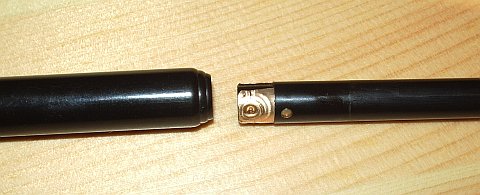
It is a long, steady plod up from Longlands and I reached the summit of Great Sca Fell around 12:30. I put up the WOTA Pole and then sat down to eat my lunch. To raise the height of the antenna I used my walking pole for the bottom section. This didn’t give me as much extra height as I’d hoped as the inner sections of the telescopic pole slid up inside the PVC tubing so I had to collapse it and just use the thickest, topmost section.

I connected the VX-8GR to the antenna to beacon my position on APRS while I ate the lunch Olga had made me. I tuned around whilst I was eating and heard a couple of distant stations. I observed their signals being desensitized intermittently. Clearly the VX-8GR receiver is not up to being connected to a good antenna in a good location.
After lunch I connected the Motorola GP300 – which has a much more robust receiver – to the antenna and began calling CQ WOTA. I worked 11 stations in all from Great Sca Fell, but they were all from the northen area as signals to the south were blocked by the great bulk of Skiddaw and Blencathra. I waited for Phil G4OBK to arrive on his first summit of the day, Bakestall, so we could have a summit-to-summit contact. I then called upon Mark MM1MPB and Colin 2E0XSD to help with my second objective of the day, which was to do some tests to see how much difference the WOTA Pole made to my signal compared to other antennas.
First I compared the signal between the WOTA Pole (which is a Slim Jim made of 300 ohm ribbon cable inside some PVC electrical conduit) and the 5/8 wave telescopic Black Whip antenna from jeepbangkok on eBay. I’d been pretty impressed with the 5/8 telescopic on previous activations but the reports from Mark and Colin suggested that the WOTA Pole was a couple of S-points better.
Unfortunately while extending the telescopic antenna to make the test I broke it! That’s the end of that, which is a pity because I’m sure there will be circumstances – such as on busy summits or rocky ones where there is no earth to drive the guy pegs in – where the telescopic would still be useful.
For an additional test I tried an 8 inch long single band helical “rubber duck” which I’d previously established to be comparable to a quarter wave whip and a noticeable improvement over the stock dual band antenna that comes with Japanese handhelds. Colin couldn’t hear me on the helical at all, while Mark’s verdict on my signal was “awful.” So the WOTA Pole is very definitely worth the trouble of erecting it and enables me to give points to stations that would not otherwise be able to hear me.
I packed everything up and made my way over to Brae Fell which was half way back to the car by another route. I set up the antenna and finished the rest of my coffee. A lone skylark, perhaps the first of the year, circled calling overhead. I began calling on the radio. Again there were plenty of takers. I worked 12 stations in all including another summit to summit with G4OBK/P on Great Calva.

So a successful day out (apart from breaking an antenna.) I just need to work someone on Mungrisdale Common and Souther Fell to complete the Northern Fells. They have been activated before: unfortunately they are not workable from home due to being of only moderate height and on the other side of Skiddaw. As they are probably the two most boring hills in the entire Lake District they are not often visited so I may have a bit of a wait until I can claim my Wainwrights On The Air Northern Fells chaser certificate.

Julian Moss, G4ILO, is a regular contributor to AmateurRadio.com and writes from Cumbria, England. Contact him at [email protected].
LHS Show Notes #058
Introduction:
- Indiana LinuxFest promo, March 25-27, 2011.
Announcements:
- Jerry Taylor, KD0BIK, has announced that he will be recording new episodes of The Practical Amateur Radio Podcast. Welcome back, Jerry!
- The Mid-America GNU/Linux Networkers Conference (MAGNet Con) has been postponed until Spring of 2012.
- Check out the Resonant Frequency podcast.
- Linux in the Ham Shack will be at the Indiana LinuxFest, March 25-27, 2011 in Indianapolis. Stop by and say hello. LHS will also be at the SouthEast LinuxFest and the Ohio LinuxFest.
Feedback:
- Ilan Rabinovitch writes to tell us about the Southern California Linux Expo (SCALE 9X), February 25-27, 2011.
Thanks, Ilan. Sorry we couldn’t include this earlier. - Kevin, KB9RLW, writes in response to Episode 51 that he agrees that Linux is a good fit for the amateur radio community for several reasons: added flexibility, security, and more choices. Even Windows 7 is still vulnerable and he points to a recent Sophos test. He keeps a WindowsXP virtual machine, in VirtualBox for those Windows applications he must run, though WINE usually works fine. He’s also a fan of The GIMP, OpenOffice, Inkscape, and Scribus. Good points, Kevin, thanks.
- Dave, KA6YQ, points us to instructions for running the DX Lab suite in Linux, which, unfortunately, just says that you can run their software in a Windows XP virtual machine, which isn’t the same as running it on Linux.
- Rick, K9AO, tells us of a native Linux EchoLink client SvxLink. Russ uses the Windows EchoLink program under WINE, but checked out the program. He tried building it from source, because he’s running Debian instead of Fedora, using the posted instructions, without success, but he’ll keep trying.
- Joseph C. sent a donation to the LHS Dayton Hamvention fund. Thank you very much, Joseph!
- Jonathan Nadeau of Frostbite Systems says that if you want to install the extra codecs in Debian, you must first add the multimedia repository to your sources list file (/etc/apt/sources.list). Add the repo, then install the codecs you want. Linux Mint Debian does much of this by default.
Richard spent most of a day trying to uninstall Gnash and install Flash… without success. And it’s true that IceWeasel and IceDove are the same as Firefox and Thunderbird, but they are one release back. Richard prefers running the current versions. - Russ tells us that by adding the following line to your /etc/app/sources.list file
deb http://www.debian-multimedia.org testing main non-free
and then doing an apt-get update, you’ll be able to install the non-free codecs.
- Russ and Richard then talk about removing Gnash:
dpkg --remove --force-all gnash
- Russ recommends GhostBSD if you’d like to play with BSD.
- John, EI7IG, writes that Episode 53 was a “cracker” and that he’s a fan of fldigi, too. He also tells us of APRSISCE32, an APRS client for Windows written by Lynn, KJ4ERJ. John has been running IPV6 in the shack and points us to this article by Geoff Huston. Thanks, John.
- Larry Bushey and Tom Chaudoir of the Going Linux podcast send their regards.
- Russ gives an impromptu review of the Linux Reality podcast by Chess Griffin.
- LHS is a sponsor of the upcoming Indiana LinuxFest, and Lord D. sent his appreciation.
- Mogens, OZ1AKN, asks for help on a couple of topics.Question: Is it possible to automatically start a program under WINE?
Russ responds with:To make a program under WINE start at boot, look at /etc/rc.d/skeleton for a sample. Copy the skeleton file to the name of the WINE app you want to start, then edit it to start whatever you want to start, such as /usr/bin/wine/echolink.If you want a program to start when the X session starts, click:
menu -> system -> preferences -> statup applications -> Add a startup app
In the dialog, give it a name and add the command: /usr/bin/wine <application path>Question: How do you reinstall Windows in a dual-boot setup?
Russ responds with:
It’s easier to install Windows first, then Linux, as the Linux boot loader will automatically detect Windows and include it in the boot menu. If you install Linux first, then Windows, Windows will overwrite the Linux boot loader.
Otherwise, if you’re trying to repair a dual-boot system, try booting with a system rescue CD to repair GRUB.
Google “linux boot ntldr ” to find instructions to tell the Windows NTLDR to also boot Linux.
- Tom H. sent a donation to the Dayton Hamvention fund. Thanks, Tom!
- Frazer writes that the LHS Facebook fanpage seems to be geoblocked in Canada. (Russ has fixed the problem. Thanks, Frazer.)
- Jim, KG9EQ, discovered the podcast while searching for QSSTV and wrote to share his appreciation for the website. Thanks, Jim.
- B.B. in the chat room asked if Jerry Taylor has resumed the Practical Amateur Radio podcast. (Richard’s comments were recorded before Jerry resumed recording episodes.)
- Paul, KC9QYB, has resumed his Teen Radio Journey podcast.
- Brady and Rich recently released another episode of the Low SWR podcast.
- Finally, a note to the ICQ Podcast: We encourage Colin to talk more!
Contact Info:
- Contact Richard at [email protected], Russ at [email protected], or both at the same time at [email protected].
- Listen to the live stream every other Tuesday at 8:00pm Central time. Check the LHS web site for dates.
- Leave us a voice mail at 417-200-4811, or record an introduction to the podcast.
- Sign up for the LHS mailing list.
- Sign up for the MAGNetcon mailing list.
- LHS merchandise is available at the SHOP! link on Web site. Check out the Badgerwear or buy one of the other LHS-branded items at PrintFection.com/lhs or Cafe Press. Thanks!
- Thanks to Dave from Gamma Leonis for the theme music.
Russ Woodman, K5TUX, co-hosts the Linux in the Ham Shack podcast which is available for download in both MP3 and OGG audio format. Contact him at [email protected].
Firefox 4 just works
Following my rant about Internet Explorer 9 this morning I noticed that Firefox 4 had now been released so I decided to update my 3.6 version. The update took less than half the time, there was no disabling of security software or restart required, it checked my add-ons for compatibility and automatically updated those as well. And all the pages I have tried to view display perfectly. A flawless, hassle-free update, just as it should be.
Remind me again why Microsoft is so successful?

Julian Moss, G4ILO, is a regular contributor to AmateurRadio.com and writes from Cumbria, England. Contact him at [email protected].
Handiham World for 23 March 2011
Welcome to Handiham World!
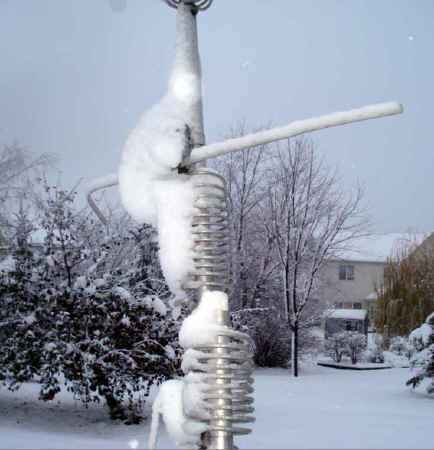
The power of ice combined with wind is evident once again! As those of us whose antennas have had to weather many winters can tell you, there is little worse for an antenna system than ice combined with wind. I was reminded of this earlier today when I opened my email and found a message from AA9BB in Lacrosse, Wisconsin. It had a link to a story about the 2,000 foot WEAU TV transmitting tower that collapsed near Fairchild, WI during the ice and wind storm that moved through last night. We are still having a pretty terrible Spring blizzard from the same weather system here in the Twin Cities. Fortunately no one was hurt in the tower collapse, which was only discovered when the station engineer paid a call to the transmitter site to determine why the station had gone off the air. While there will obviously need to be an investigation into exactly why this tall tower fell, my money would be on the wind and ice combination causing the design limits to be exceeded.
When the wind blows, most amateur radio antennas will not be damaged. Wire antennas have little wind loading area, and beam antennas are made to flex in the wind. The problem comes when weather conditions are just exactly right to allow freezing rain to fall and turn to ice upon hitting the ground or your ham radio antenna. The extra weight of the ice can be several times the weight of the antenna itself, putting considerable strain on the supporting system components like insulators, guy wires, masts, and towers. This is bad enough, but then suppose that the wind picks up. As storm fronts move through, the weather conditions will change. There can be periods of regular rain followed by freezing rain as the temperature plummets, and then the wind can shift and pick up as the freezing rain picks up or turns to snow. Imagine the terrible wind load and strain on the supports as the antenna whips in the wind, pushed all the more by the greater wind loading due to the coating of ice. When the design limits are reached, the antenna or its supporting structure will fail.
What can you do about ice and wind? My feeling is that moving to someplace with a better climate might be the only sure-fire answer. Some places are more prone to ice storms than others, though, and about all you can do is build your wire antennas to withstand greater loads by using compression-style insulators instead of the “dog bone” style. Compression insulators are much less likely to break because more pull on the wires actually compresses the insulators instead of pulling them apart. Better quality wire can help, too, as can good, heavy-duty hardware at all supporting points. Antenna towers that telescope down during high wind conditions can help protect your antenna investment. At least the antenna will be closer to the ground where the wind may be less, and the entire structure presents less of a wind load when telescoped in the down position.
My wire antennas are not that great. One is a commercial Windom about 125 feet long and the other is an end-fed wire, also about 125 feet. Neither one was mounted with heavy-duty hardware, so if they come down in an ice storm with lots of wind, I wouldn’t be surprised. What I am doing is sort of playing the odds, since we don’t get those conditions together too often here. My Butternut vertical can pretty much take care of itself because it has almost no horizontal surfaces to collect heavy ice. Flexing in the wind just breaks the ice off and it falls harmlessly to the ground around the base. It is really the horizontal surfaces that you have to protect the most from icing. How much is an airline ticket to Florida? Can’t afford that? Try getting some compression insulators – they’re a lot cheaper.
Patrick Tice, WA0TDA
Handiham System Manager
[email protected]

Pat Tice, WA0TDA, is the manager of HANDI-HAM and a regular contributor to AmateurRadio.com. Contact him at [email protected].
 Ham Radio Deluxe |
 W5SWL Electronics |
 Ham Radio Prep |
 KB3IFH QSL Cards  Hip Ham Shirts  HamRadioAuctions HamRadioAuctions Reliance Antennas Reliance Antennas Enigma Shop Enigma Shop |  morseDX  Ni4L Antennas  R&L Electronics R&L Electronics antennas.us antennas.us QRV QRV |
- Matt W1MST, Managing Editor
