 |
 WØ/FR-194 (Genesee Mountain) 2520m / 8268ft
 10 April 2012 | by
 As mentioned in the activation alert from last week, I attended a local amateur radio club meeting on Saturday morning and presented Summits On The Air (SOTA) to the club membership. My presentation covers all aspects of both chasing as well as activating and I had available all my normal activation gear on hand. There were approx. 25 members on-hand for the presentation and I would estimate by the amount of questions, that at least half (perhaps more) will become active chasers.
After the meeting and a brief lunch, six of the members accompanied me on the activation of Genesee Mountain. Genesee Mountain is part of the Denver Parks and Recreational System. It is a well maintained area with a paved road providing an easy walk about 90% of the way.
The six other amateurs accompanying me wanted a nice leisurely first SOTA experience and that is exactly what I wanted to provide them. The original plan was to drive all the way to the top, park and then hike down 100 vertical feet, then back up. However, Genesee Mountain park road wasn’t open all the way the highest parking area. The main parking area is less than 1 mile (0.8 to be exact) from the summit with an elevation gain of about 200 feet. Everyone in the group felt comfortable with this hike and we took a nice easy stroll to the top. I handled packing the communications equipment needed for the activation.
We reached the summit just before 2100 UTC (3 PM local) and quickly began setting up the Buddipole Versatee Vertical for 20m. I briefly explained the setup and began calling CQ at 2115 UTC. Within just a few minutes I had the first QSO in the log and we took turns working each station until everyone had their four (or more) QSO’s in the book.
I (we) worked a total of 10 stations including N1EU, K7ASQ, K7ATN (S2S), WA2USA, ND9Q, KK1W, AD5A, WB9WHQ, K6ILM and W5DLD.

In the above photo, KDØBIK (red shirt) helping NØHIO work his first SOTA activation. I would like to thank NØHIO for providing the photo and video of the activation.
I’m fairly certain those who participated in the activation will all perform their own activations in the near future. I’m also hoping to get another SOTA activation planned in the next couple of weeks. The KX3 should arrive (hopefully) in the next 2-3 weeks and of course I will need to test it out and the best way I know of doing that is Summits On The Air.
Until next time…
73 de KD0BIK
Jerry Taylor, KD0BIK, is a regular contributor to AmateurRadio.com and writes from Colorado, USA. He is the host of the Practical Amateur Radio Podcast. Contact him at [email protected].
A Wasted Trip Thoroughly Unwasted
Last Saturday I picked up Andrew (KCØYFY) and his wife Joleen (KDØDOT) at 8:00 A.M. and headed for the monthly meeting of the West Central Minnesota Amateur Radio Club. It’s a 45 minute drive from Granite Falls, so we had plenty of time to talk. But once we got to the location of the meeting, our conversation took an abrupt turn. We were the only ones there!
Andrew asked, “You don’t think the meeting got canceled because of Easter weekend?”
I groaned. No way! “Here,” I said, grabbing my cellphone, “let me give Dean a call.” Dean (NYØI), the fellow who first invited me to join the club, is the Energizer bunny rabbit of ham radio — especially when it comes to building and maintaining the VHF/UHF repeaters out our way. But we quickly discovered that none of us had his phone number.
“Wait a minute!” I said. “We’re HAMS! Let’s call somebody on the radio!” What a novel idea. To think of using a radio instead of a cell phone to call another ham! I put down my cellphone and grabbed my HT. “NØIP monitoring,” I called on the local repeater.
“NYØI,” came back Dean! “The meeting has been rescheduled to next Saturday,” he explained when I inquired. “We published it on our Facebook page and announced it on the net. Sorry!” Again, I groaned. Down in Granite Falls I can’t hear the repeater they use for their net, and I long ago suspended my infernal Facebook account. “But how about I meet you for breakfast?” Dean asked.
I looked at Andrew and Joleen, who nodded. “Sure!” I replied. “Where do you want to meet?”
After getting directions to a small-town diner just up the street, we headed there and found a table. Within minutes, Dean arrived. When the waitress came by, he asked, “What’s your birthday special?”
“It’s your birthday?!” I asked. Sure enough, it was his birthday, and he had dropped everything to meet us at a moment’s notice. What a guy!
After a great conversation that ranged from ham radio to church life, Dean invited us up to the repeater site on the edge of town. We piled into our cars and headed over to the tower of the local FM broadcast station, where Dean pointed out three verticals mounted partway up. These were the antennas for the two repeaters he had there, he explained. Two huts crouched at the foot of the tower; one was the FM broadcast station’s, and the other the local sheriff’s (for their own repeater which used an antenna at the very top of the tower). Dean took us into this second hut, which also contained his two repeaters — one on 2 meters, and the other on 75 cm.
I had never seen a repeater in my life. Dean explained how they worked, and he told us about past equipment and current plans to improve what they had. Having been an HF CW guy all my life, I felt like a tourist in a foreign country — and I enjoyed every minute of it! After thanking Dean, the three of us headed back to Granite Falls.
On the long drive home, we continued the conversation we’d begun on the way there. The local ARES® Emergency Coordinator position is open, and Andrew is wondering if I might consider taking it. I promised him I’d contact the DEC and learn more about what is involved. Lots to think about!
As far as attending the club meeting that never happened, I suppose it was a wasted trip. But thanks to Andrew, Joleen, and Dean it most definitely was not wasted! After all these years as a ham, I’m finally meeting fellow hams in person. I wish I’d done it sooner.


Todd Mitchell, NØIP, is a regular contributor to AmateurRadio.com and writes from Minnesota, USA. He can be contacted at [email protected].
Lido Key 2012 Wrap-up, Part 3
You might want to read Part 1 and Part 2 of this series if you haven’t already done so.
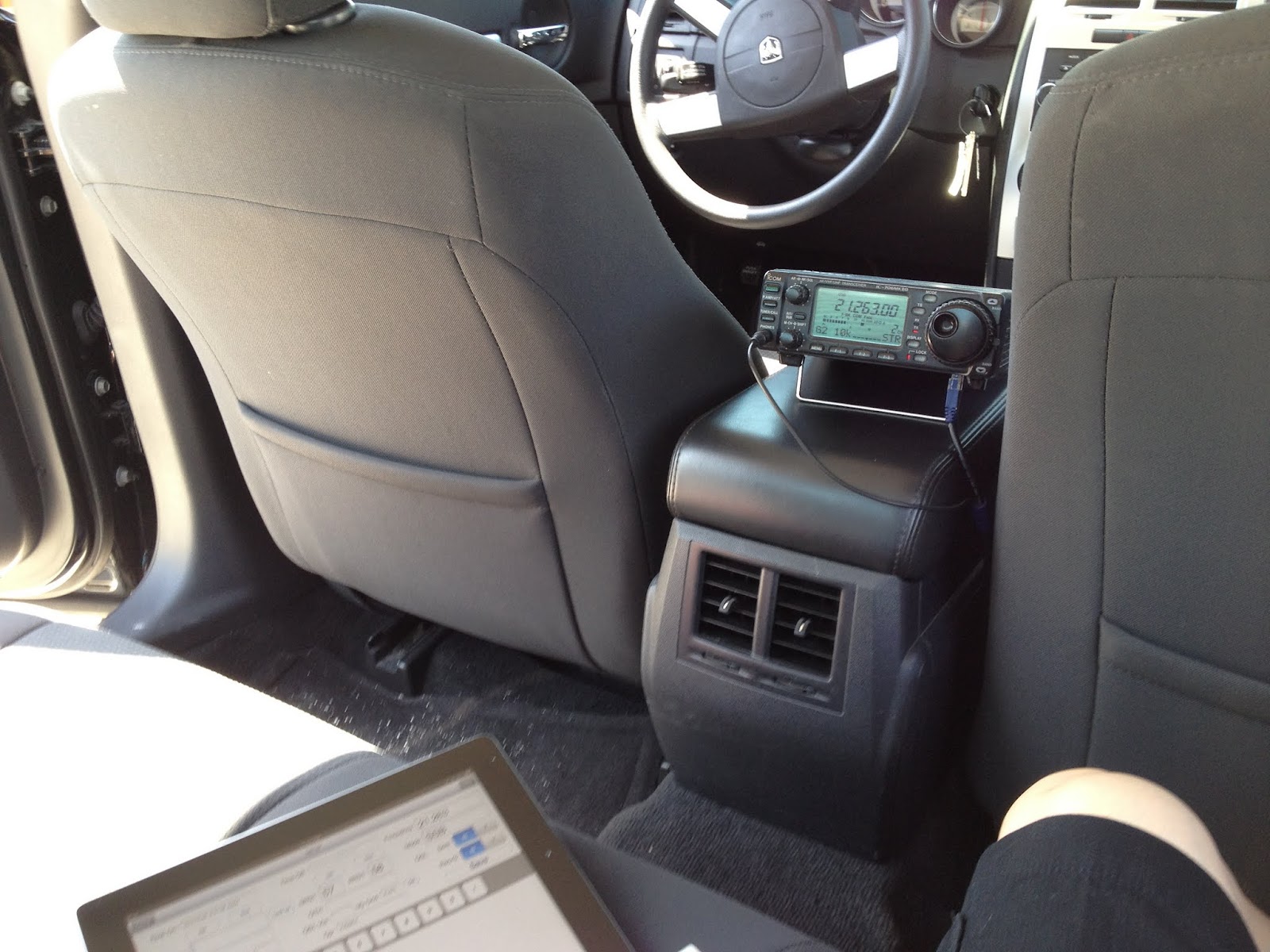 Originally, my wife Sharon and I were going to spend the full day “playing tourist” together on our last day of the trip, and I hadn’t planned on doing any additional radio operations. However, things changed and since Sharon had plans with her Mom, I decided to head back to South Lido Beach for one more day of operating. I got a much earlier start than the previous days, and set up in the same place that I did before, operating from inside the car. I was on the air at just around noon local time, but I got off to a very slow start, with only three contacts in that first half-hour. However, thanks to the magic of the packet cluster network, once I got spotted (initially by N8ZI, thanks!) things got a lot busier, and with more spots there were a lot more stations calling, who in turn spotted me again which brought another wave of stations calling. For that afternoon, ignoring the initial “slow start”, I wound working a station about every 2 minutes over the next 2 1/2 hours. Considering that in a few cases (one of which I’ll mention specifically) I stopped and chatted for several minutes, I was extremely pleased with that rate.
Unlike the previous days, the final day of operation went very smoothly, with no hitches at all. I operated entirely on 15m, and aside from some fairly deep QSB (fading) that was problematic from time to time, propagation seemed to be very good into central Europe as well as both the northeast and western United States.
One of the more memorable contacts I made was with Budd, W3FF. Budd is the “Budd” in Buddipole, and while we’ve emailed back and forth on several occasions, this was the first time we’d ever had a contact on the radio. When he first called me I had some trouble hearing him due to the previously mentioned QSB. He’d tried to work me on the previous day while “pedestrian portable” (that’s walking around with an HF radio and antenna), but I wasn’t able to hear him. For this contact, he was working from his home station, and he had to turn on his amplifier so that I could hear him more clearly. It was fun getting to speak to Budd, and after a while we finished and I went on to work more stations.
After returning home, a little quick analysis of my log showed the I made 119 contacts with 116 different stations (I worked 3 stations twice each) located in 24 different countries. As of the time that I’m writing this, I had 33 of those contacts confirmed via Logbook of The World and another dozen who send me QSL cards directly through the mail, including 3 DX stations. (I won’t see any bureau cards for at least another 6 to 12 months). With the help of my son Brett who did the design work, I was able to print out the cards needed to confirm those contacts, making sure to include both the IOTA number and island name as part of the card. (This is a requirement of the IOTA programme and and I wanted to ensure that the folks who got a card for me were able to use it for confirmation of their contact with NA-034.)
All in all, I had a great time operating, and I look forward to doing it again.
Here’s the list of countries that I contacted:
| Prefix | Country name |
| CT | Portugal |
| DL | Federal Republic of Germany |
| EA | Spain |
| EA6 | Balearic Islands |
| EA8 | Canary Islands |
| ER | Moldova |
| F | France |
| FG | Guadeloupe |
| G | England |
| HA | Hungary |
| HB | Switzerland |
| HC | Ecuador |
| HI | Dominican Republic |
| HR | Honduras |
| I | Italy |
| K | United States of America |
| KP4 | Puerto Rico |
| OE | Austria |
| OK | Czech Republic |
| SM | Sweden |
| SV | Greece |
| UA | European Russia |
| VE | Canada |
| YU | Serbia (ex-Yugoslavia) |
Lido Key 2012 Wrap-up, Part 2
This is part 2 of this series. You might want to read Part 1 first if you haven’t already done so.
When I woke up for the second day of my operation, for some reason I had a feeling that I hadn’t remembered to pack up all my equipment the day before. I was sure that I had the radio, the antenna, and the mast, but I didn’t remember actually packing the tent stakes and guy lines. I was hoping that I’d forgotten and done that anyway, but I headed to the car to check the equipment, and found that I had indeed forgotten those small but important items. I did have some spare line with me, so the only thing I’d need to do is to figure out how to anchor that line, possibly with some rocks. I decided that I’d head to where I’d set up and figure out if maybe the missing items were still there. If not, I’d try to find a local store that sold what I needed.
When I arrived at the location where I’d set up the day before, I discovered the good news and the bad news: The good news was that the line and carabiners were lying on the ground. The bad news was that the bright-yellow tents stakes were gone. I took the line and carabiners and decided to have lunch while I mulled my options.
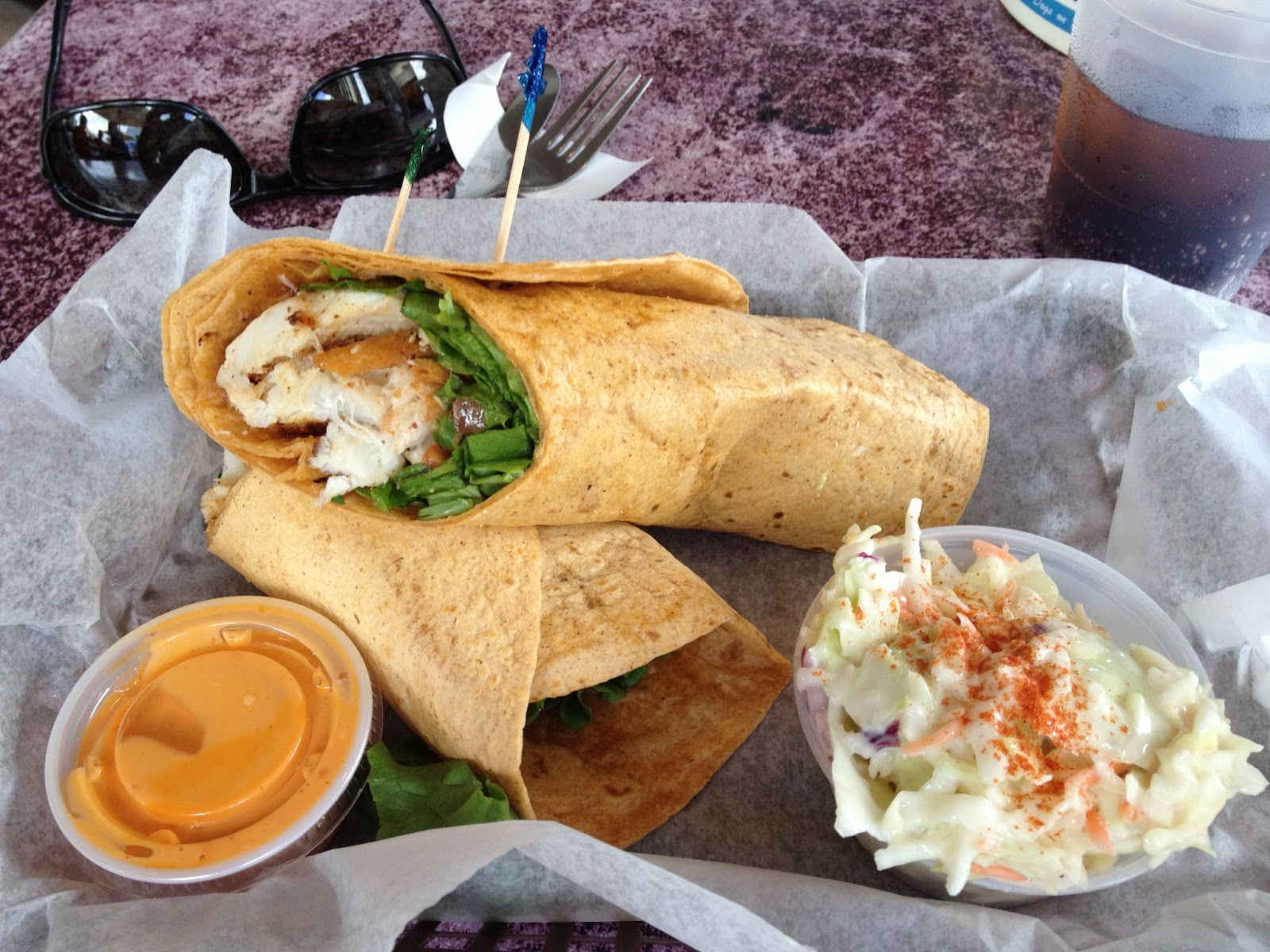
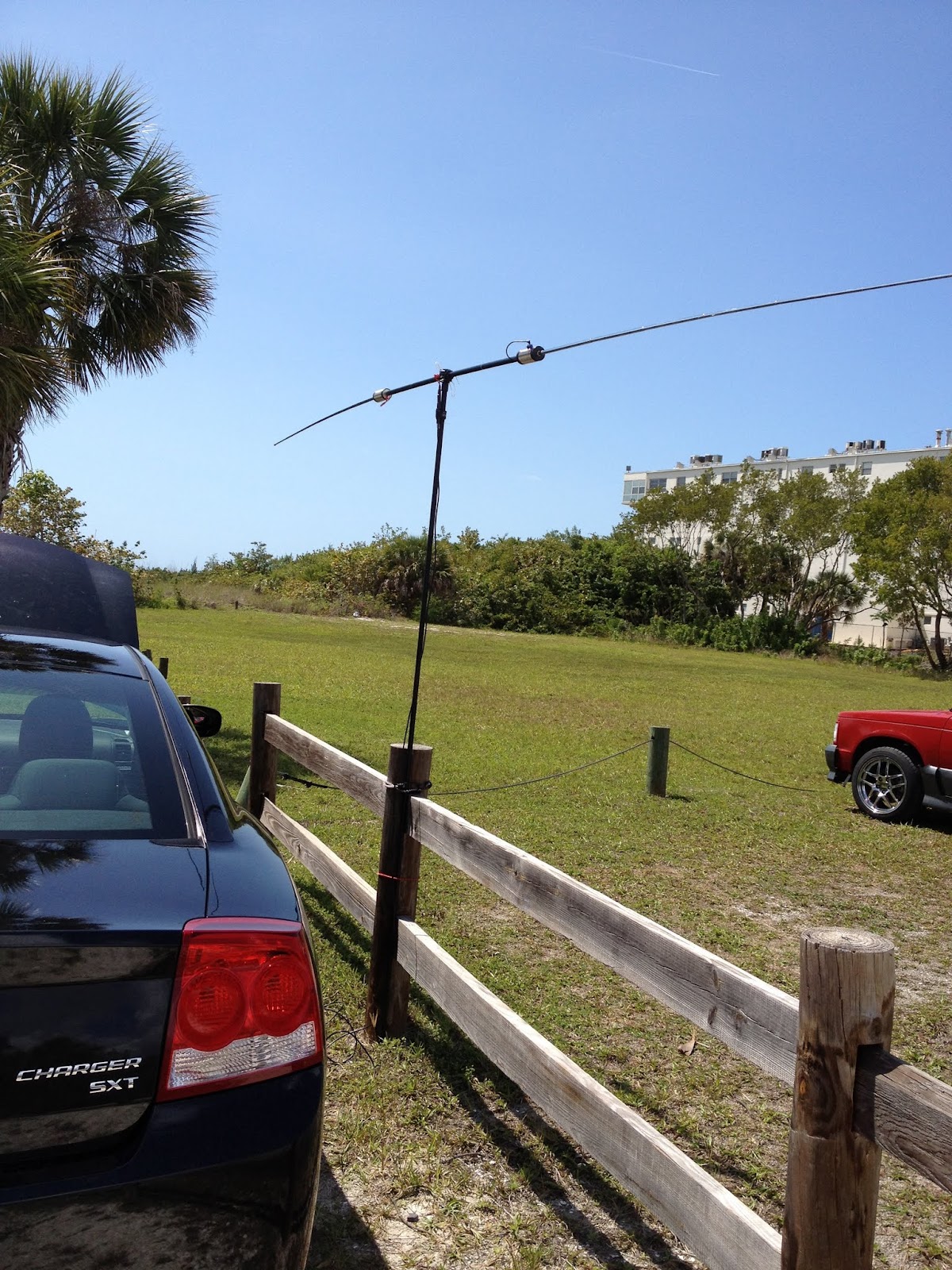
As I’ve done in the past, I headed to my favorite place for lunch, The Old Salty Dog, located just a few minutes away. As I was waiting for my blackened Grouper “Firecracker Wrap”, I used my iPhone to try to find a place that sold camping supplies. There was nothing at all nearby, with the closest place, a Wal-Mart, being over 10 miles away. I live in northern New Jersey and I’m used to traffic, but Sarasota County in the middle of the day during tourist season is awful. I figured that the amount of time that it would have taken to get the stakes and back just wasn’t worth the effort, so I tried to figure out an alternative. Thinking about how I’d set up on the first day, out in the direct sunlight, I realized that ideally I’d be able to set up where I could get a little shade. There was a section of the park where I’d set up on the previous trips that was shaded, but with the park being much busier than in the past, I couldn’t use that location. I then figured out that I could use a couple of bungee cords that I had with me to lash the mast to a fence that bordered the parking lot. I found a suitable location in the lot, with the only drawback being that there was no shade and no place to sit. (This second location is marked in green on the map in my first post of this series.)
Although not as nice as sitting outside, I figured that I could set up the radio and logging computer inside the car, and with the doors open to help get a little air circulating through the car, it was pretty warm, but tolerable. To stay out of the sun, I wound up sitting in the back seat which also let me stretch out a bit. There was room for the radio on the console between the front seats, and by setting up the iPad (used for logging) and the keyboard carefully, I was able to log relatively easily while operating.
With the logistics out of the way, I decided to concentrate on 15m since the propagation seemed to be cooperating and the antenna was tuning up nicely on that band. Things started off fairly slowly, but after about an hour of operating I got spotted on the packet cluster by a few stations in Europe, and that brought in a lot more callers. Most of the time, the stations were far enough in between that I had a chance to chat a little bit with folks, but occasionally, usually after getting spotted, I’d have 3 or 4 stations call in at once. While hardly a pileup by most standards, I really enjoy working hard to pull individual callsigns out to work the stations. What was particularly enjoyable for me was being able to help out stations who needed NA-034 either for an “all-time” new IOTA entity, or to increase their scores for the IOTA Marathon event sponsored by Radio Society of Great Britain.
Unfortunately, because of the time spent trying to figure out how to set things up, (and of course the all-important lunch), I only wound up being on the air for about 90 minutes that day. I made about 35 contacts during that time, so for a lightweight, low-power operation I was very happy.
QRP ARCI Spring QSO Party
As I thought, I did not have any real time to devote to this contest, this being Easter weekend.
In about an hour and a half total operating time, I made 18 QSOs – the best DX being EA2LU, Jorge in Spain. One QSO was made on 40 Meters, and the rest were made on 20 and 15 Meters. 15 Meters was the pleasant surprise. There was a decent amount of activity there and the signals were nice. QSB was a fast and furious beast to deal with, though.
If it were any other weekend, I probably would have been able to devote more time. But it is what it is.
72 de Larry W2LJ
QRP – When you care to send the very least!

Larry Makoski, W2LJ, is a regular contributor to AmateurRadio.com and writes from New Jersey, USA. Contact him at [email protected].
Part II: Say Goodbye to the BNC
I had previously commented on the how most of the handheld radios are adopting SMA connectors instead of BNC connectors. See Say Goodbye to the BNC. For example, the Yaesu FT-60 uses a female SMA connector for the antenna connection. I’d say this is the standard approach for the amateur radio market.
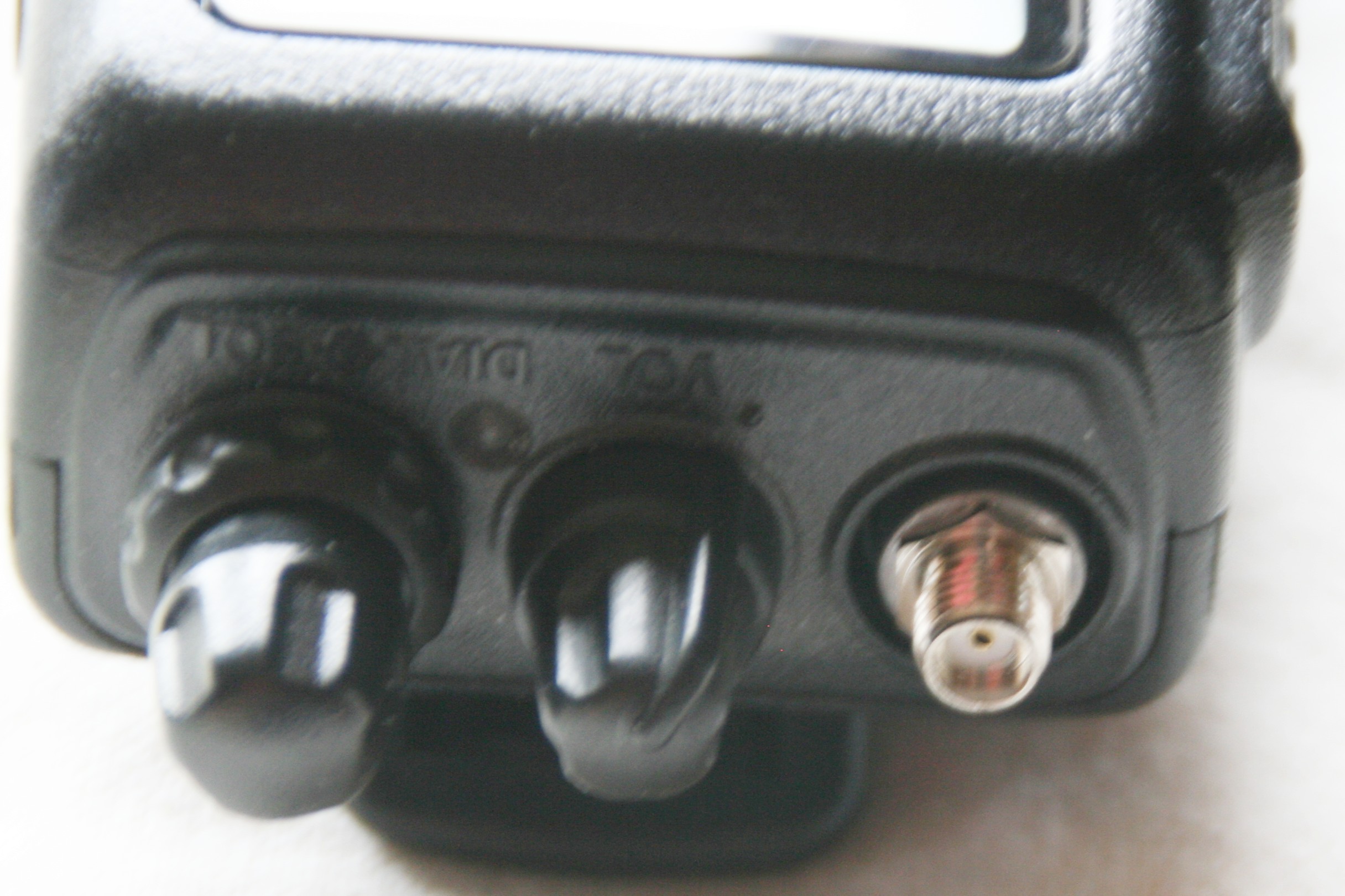
Female SMA on Yaesu FT-60
A few manufacturers have decided to use the male SMA connector as the antenna connection for their handheld radios. I suspect that these manufacturers are following the lead of commercial manufacturers (e.g., Motorola) who use the male connector.
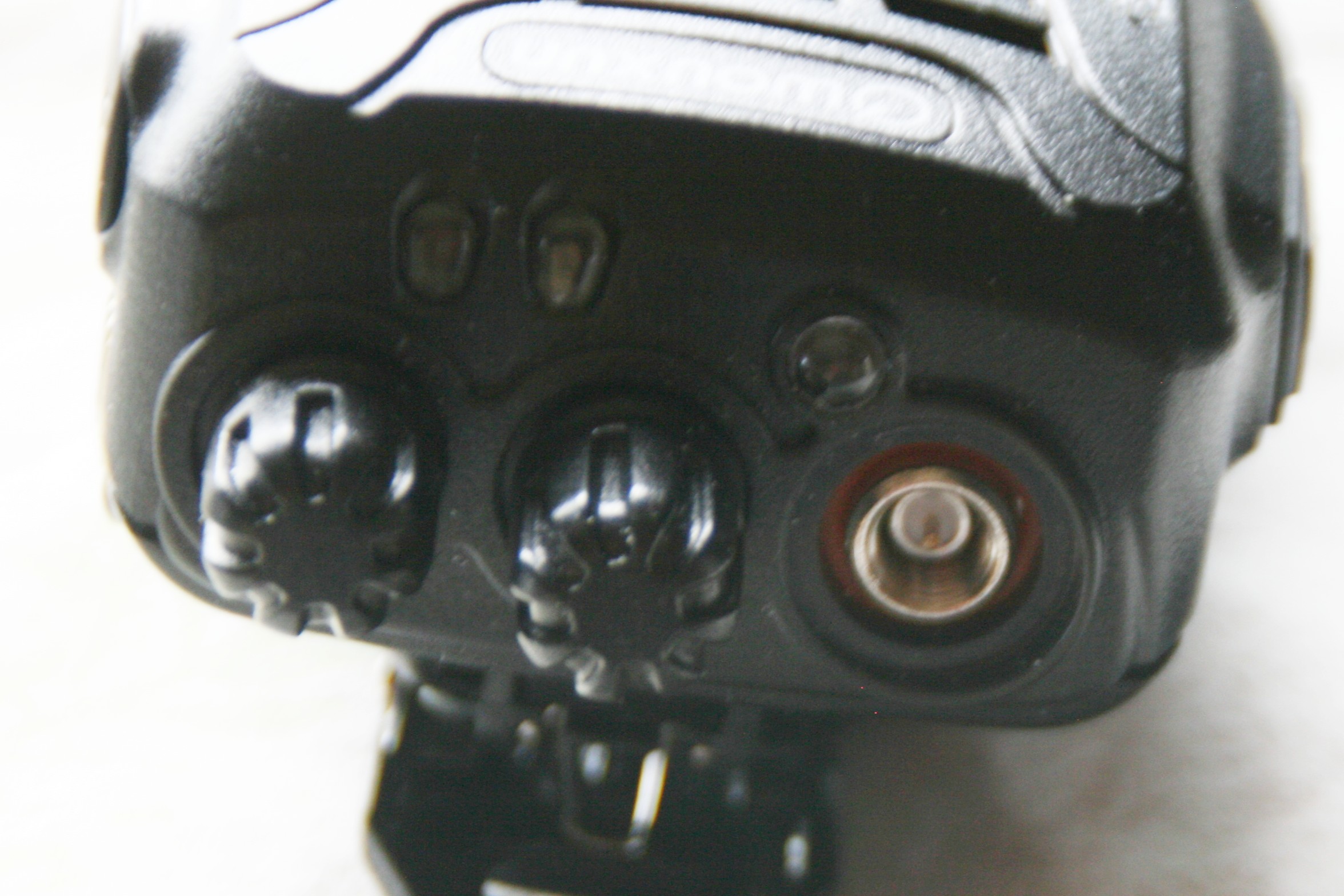
Male SMA on Wouxun KG-UV2D
Many hams will want to adapt these SMA connectors back to the good old BNC, to connect to existing BNC connectors or HT antennas. I had commented that these adapters are mechanically weak but recently I have come across some more sturdy adapters.
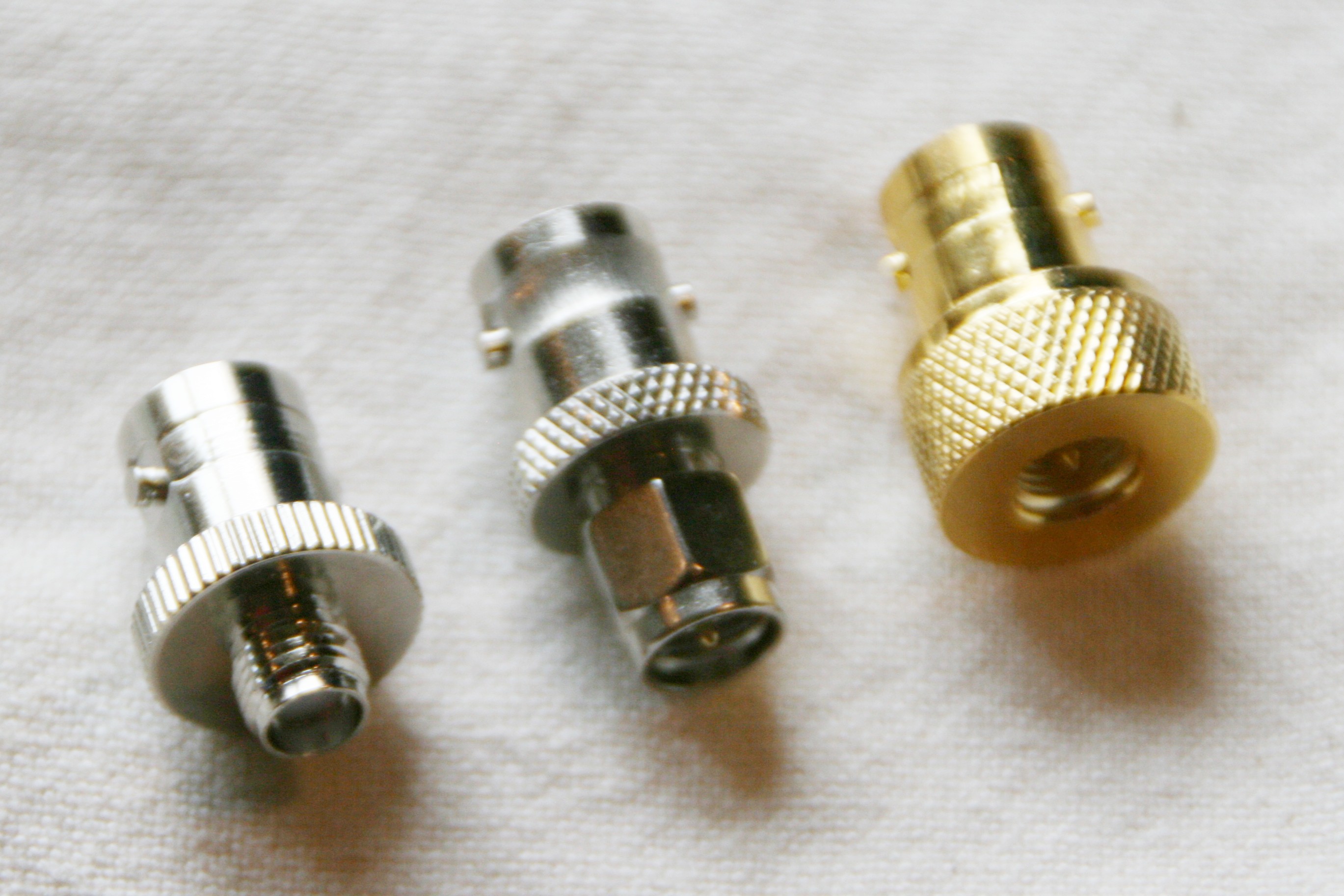
SMA-BNC Adapters
The adapter in the center is the common adapter for cable use but arguably mechanically weak for adapting HT antennas. The adapter on the left adapts BNC antennas to an HT with a male SMA connector. The adapter fits snugly on the top of the HT and provides mechanical support. Similarly, the adapter on the right adapts BNC antennas to an HT with a female SMA connector.
The adapter on the left is available from Import Communications. The other two adapters came from Affordable Radio.
I have just started to use these more capable adapters so I am not sure how reliable they are in regular use. In any case, it makes sense to be careful to minimize the strain on any radio connector.
73, Bob K0NR
Bob Witte, KØNR, is a regular contributor to AmateurRadio.com and writes from Colorado, USA. Contact him at [email protected].
ICQ Podcast S05 E08 – Young Ham Balloon Project (08 April 2012)
Series Five Episode Eight of the ICQ Podcast has been released. News Stories include :-
- Radio Stations for London 2012 Olympic and Paralympic Games
- Titanic special event callsign - GB100MGY
- Optical marking amateur radio exams
- 50W for Foundation holders in Belgium
- Amateur Radio Stamp for Luxembourg
- Ottawa relaxes rules for personal antennas
- New Irish Radio Enthusiast website launched
- Renewal of UK beacon and repeater public/products liability insurance
- V51VHF Beacons
- Lightning strike survivor feels lucky to be alive
Australian report from Ed Durrant VK2ARE and Martin M1MRB discusses a Young Hams Balloon Project with Alex M0WOJ.
Colin Butler, M6BOY, is the host of the ICQ Podcast, a weekly radio show about Amateur Radio. Contact him at [email protected].
 Ham Radio Deluxe |
 W5SWL Electronics |
 Ham Radio Prep |
 KB3IFH QSL Cards  Hip Ham Shirts  HamRadioAuctions HamRadioAuctions Reliance Antennas Reliance Antennas Enigma Shop Enigma Shop |  morseDX  Ni4L Antennas  R&L Electronics R&L Electronics antennas.us antennas.us QRV QRV |
- Matt W1MST, Managing Editor
