Archive for the ‘Uncategorized’ Category
 A pile of QSL cards
 October 8th, 2011 |
  Author: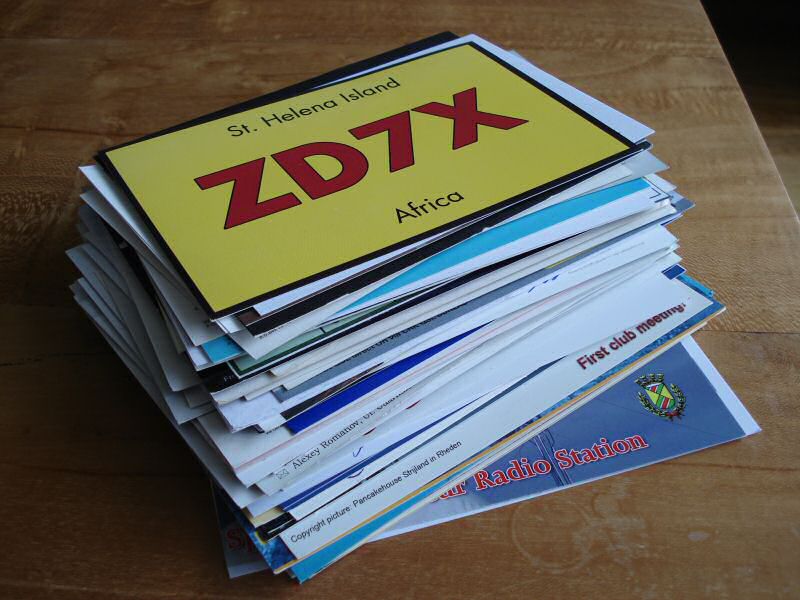
Still like the QSL side of the hobby. Last time I attended the local radioclub there was pile of QSL cards waiting. Along them a long awaited card from ZD7X Tom who was operating from St.Helena in 2007. I got him confirmed now on 20, 17, 12 an 10m. When setting up WSPR this morning I heard a lot of Japanese stations booming in on 12m and 10m. But since I got a father-daughter day today I had no opportunity to make a QSO. Left WSPR on at 10m.
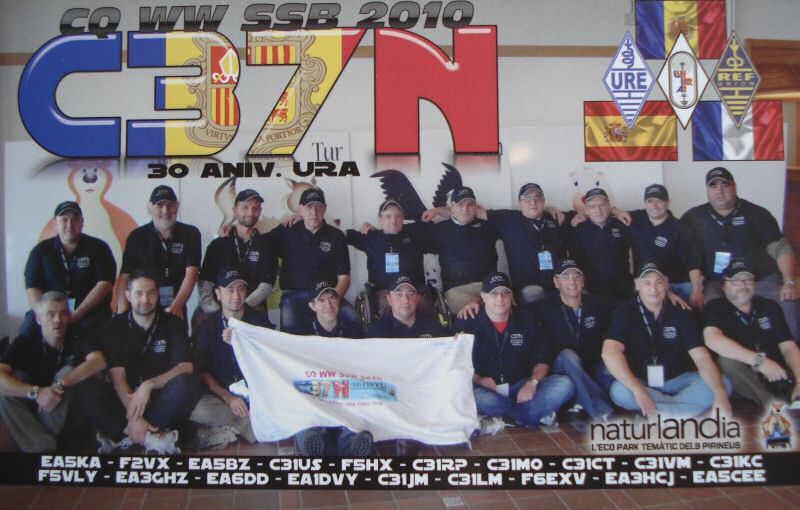
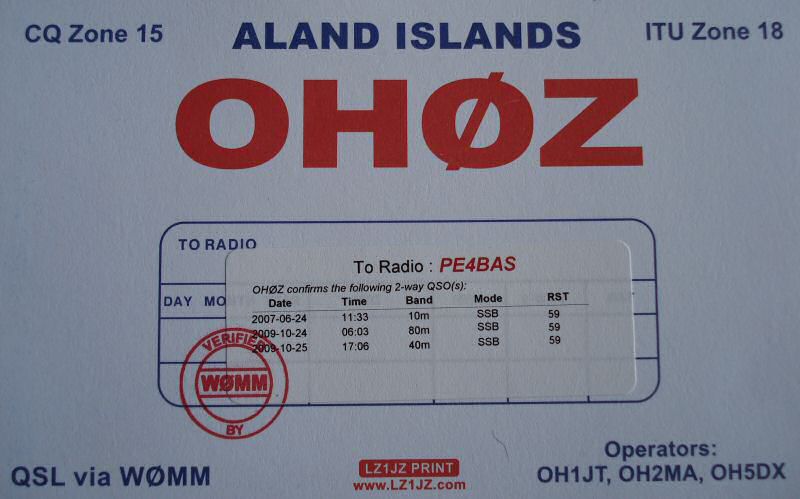

Just like in Europe
In the year that I was a ham in Europe I found that there was always a fellow radio nut available to talk with. I am not picky, so when I wanted to have a rag chew I did it in any mode available (except CW, because my keying is still painfully slow) and on any band. I found the French and Norwegians the nicest to chat with, despite the language difficulties.
Here in East Asia the bands are rather empty, especially in the day time. A simple wire dipole won’t get you far if the sunspots are non-existent; you need something better. So I do feel a little bit lonely sometimes when I scan the bands and there is no one out there. But with the old CB whip on the balcony, 15 Watts to put into it, I do need some spot on the sun to get somewhere. Tonight I did get somewhere however: 10 meters was open to Europe and I had two successful QSO’s with France and Germany in psk31. Alas, only 599 exchanges. But 17 meters was also open and I had to smile when I heard VK4BX having a QSO in SSB with a German station. After all, I am BX2ABT and my Dutch call is PA2BX. So I called him and immediately felt like I was back in Europe: steady signals, good modulation and we both wanted to chat. Of course we both commented that the combination of B and X is the best in the world, no question about it. 10 Minutes later I felt like a million dollars and the tiredness of the work-week was totally gone. What a great start of the weekend and all because of a 10 minute chat with Chris. Cheers, mate.
By the way, if you have had contact with BV100 then remember that coming Monday is the 100th birthday of the Republic of China, the reason for the special call. Over here we call it “Double-10 day” and there are a lot of celebrations planned. If you haven’t worked them yet then you have till the end of the year. Zai jian from Taiwan.
Meeting old and new radioamateurs
 |
| Dragonfly photographed in our garden in the evening sun |
The weather was beautifull the last 2 weeks. Temperatures around 20-24 C without that much wind, a real nice autumn. Unfortenately work had to be done both at the job and at home. Not much time for radio, although… at monday I heard a few locals on 10m. They seem to have a kind of net there on 28.400 USB. I heard some known voices and decided to jump in. After a short hello I discovered a couple of them were old friends from the CB years. I did a lot of 11 Mtr DX about 20 years ago with one of them and now he got his license as PD1BM. I remember Bert very well as we did a lot of DX together, I even visited him now and then after school back then just to do some DX. Bert has a ear for special DX and also has a exceptional location between 2 large canals which apparently gives him a advantage. I welcome him on the amateurbands and hope he enjoys it a lot. Bert already made some very nice DX with his 4 element LFA yagi for 10 Mtr. Last friday we had a meeting from our radioclub VERON dep. Hunsingo, there was a pile of QSL cards waiting for me. Another pile was for a neigbour HAM PC5F which I had to deliver to another local HAM. Very complicated….end of the story he made a telephone call to me and met me at my job to get his cards. Never spoke this guy although he is living in the same street that was my QTH for 12 years. So, I decided to e-mail him for a sked. We did meet at 80m PSK31 at Tuesday evening and had a chat for a while. PC5F Ferdinand has all his antennas inside the house on the attic, and makes some very nice DX for instance to North America on 10m! And with Hawaii on 20m! That is really nice, why do we need all those big antennas??
EBG

Sad picture, isn’t it? For those of you that know the Kenwood TS-440S well it is a familiar picture: VFO#5 covered in “Evil Brown Glue“, or EBG as it is mostly referred to. As I wrote in my last post, I counted my unfinished projects and fixing my TS-440S was highest on my list, so I took it apart yesterday. Mine is actually not covered in much EBG at all, but that is because I already removed a lot of the stuff some time ago. But now that the shroud is off you can clearly see that the EBG has crept under most components. No wonder the VFO was unstable or not working at all.
I prepared everything well, so the actual disassembly of the rig and the VFO was a piece of cake. I put some more photo’s on my website for you to enjoy. I already discovered that I don’t have one of the transistors which needs to be replaced. Will have to get them next weekend when we go up to Taipei. In the mean time I’ll keep myself busy with removing the components and cleaning the PCB, which is a little more work than I anticipated. I’ll keep you posted. 73 de Hans
P.S. lots of rain and wind the last couple of days, which we haven’t had for a while. Apparently it cleaned the power lines of dust and grime…..and the arcing. The bands are nice and clean again.
Luddite…or just a traditionalist
There is quite a debate raging over on eHam.net about a service provided to amateur radio operators by the ARRL. With the Internet and computer being an integral part of most of our shacks, the ARRL created Logbook of the World, an electronic way to do confirmations of QSOs, a function previously done by QSL cards through the mail. Some say they went overboard on the security aspect of their system. It does require a security certificate with an applicant’s call sign and location verified through the Federal Communications Commission before it is granted to the user. Many hams have had difficulties setting up the system on their computers or moving it to a different machine when necessary and are having a fit about having to jump through such hoops for what they see as no real good reason.
The thrust of the eHam comments–and those with a negative view tend to dominate this discussion just as they do any Internet forum–is that LoTW is too complex, that it threatens the traditional printed, post office-delivered QSL card, and even that it threatens the “privacy” of anyone who uses the system since the League could sell that info or it could be subpoenaed by some nefarious government agency.
This type of debate seems to be quite common these days anytime there is a new-fangled way to do anything in our society. I suspect a big part of it is simple resistance to technological change. People still have a choice in most things technical. You don’t have to use a smart phone, join Facebook, have an email address, or use an online QSO confirmation service. But I understand why anyone with an aversion to change or a distrust–however well placed or dismally unfounded it might be–of all this technology is reluctant to accept it.
I enjoy getting a QSL card from a new country in Africa or one that bears a picture of a ham’s antenna farm in rural Belgium. I hope we never lose that personal touch. But I also enjoy the convenience and cost savings of being able to confirm contacts electronically. Stamps to mail to some parts of the world are expensive. It can take years to send and receive back a card. Stations in rare locations get tons of requests for confirmations and that can run into big expense for them, too. Some even ask for “green stamps”to offset their expenses, but putting cash into an envelope is risky, especially in some spots where an envelope bound for a ham radio operator is routinely opened because everyone knows there are bucks in there.
But the real reason I endorse LoTW and similar services is that it allows me to easily and inexpensively extend the courtesy of a confirmation to anyone and everyone who wants it for whatever reason. I still get paper cards and I display them on the wall in my office/”shack.” I enjoy looking at them. I hope they never stop coming. But I also recognize that there is a way that is better in most aspects and that allows me to benefit from the service. And I believe there are enough people like me who still like the card that they will probably not go away.
And isn’t that what new technology is supposed to do? I love the fact that I can download a book on my Nook, but I also still enjoy the traditional book. I also think both methods will still be around for a long, long time.
But I also understand that all this change is scaring the bejesus out of some folks.
HRO launches new auction site

I was perusing HRO’s website this morning and noticed that they’ve apparently launched an auction page. It looks like they’ve gone to an auction model to move damaged box and scratch’n’dent merchandise. You’ll have to watch closely, however, as you can’t see the price that previous items sold for. It also doesn’t look like it will notify you if someone outbids you. Will be interesting to see if there are any deals to be had.
I’m Struck…
…by the thing that most people are struck with nowadays: noise. With the wife on a business trip and I having to take care of the kids there was little time to spend in the shack last week. But when I did turn on the radio last weekend I was met by an S3 to S6 noise floor. And I thought moving out into the country would prevent me from suffering something like this. Alas, I moved to “gridlock” county, with grid being the power grid. Taoyuan county is full of high voltage power lines coming from the south and going to the capital Taipei in the north. The noise sounds a lot like RF noise generated by arcing power lines and I have seen defective insulators before in the area. I took my (t)rusty ATS-909 for a walk on Monday night and the whole neighbourhood is suffering. I haven’t located the source yet, but I will. In the mean time I’m QRT as the noise is so intense that I can’t stand it for even a couple of minutes.
Now while this whole noise problem is something most people will be upset/angry/disappointed/frustrated/depressed about, nowadays I take the Buddhist approach: don’t long for things that aren’t there, but see opportunities in the things that are in front of you. (I know, not really a Buddhist saying, but one I made up myself. It does reflect the spirit, though). Just like KD0BIK with his unfinished dummy loads I started counting my unfinished projects: 2 BiTX transceivers, a variable power supply, my TS-440S with the dots problem, an AA0ZZ keyer, the VFO for my Pixies, a cloud temp sensor and a home brew Buddipole. Not to mention the antenna’s I still have to erect for 2m/70cm and NOAA-APT reception. Oh yes, my 1-wire weather station is also still packed up, waiting to be installed. Being QRT might just be the push to get my house in order and get something “really” done. By the time I am done the noise will probably have disappeared, too. I’ll see you in a bit.













