Archive for the ‘radio’ Category
 LHS Episode #138: Being David Rowe
 January 14th, 2015 |
  Author:
 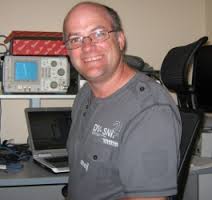 How about that: It's the first episode of Linux in the Ham Shack for 2015! We hope everyone is having a great new year so far. In this episode, we talk with David Rowe, VK5DGR, of Adelaide, South Australia. David is an audio engineer, Ph.D. scholar, inventor of Codec2 and co-author of FreeDV, among his many accolades. We talk to David about his projects, Linux, amateur radio, life in Australia, LinuxConf AU, the new SM1000 FreeDV device, the amount of energy it takes to make a Krispy Kreme donut, home built electric cars, and much more. Until next time...
73 de The LHS Guys
LIDS_CW
 Whilst twittering / tweeting / wasting time on twitter (delete as applicable) I came across a group @lids_cw . This is an informal twitter based group of CW and low impact data mode fans in the UK that seem to have their heads screwed on. The idea behind it is that the group encourages general radio chit chat then suckers you into having a go at CW.
Morse is not something I decided I wanted to do when I started out in radio, Hence the G7 callsign (For those unsure, G7’s in the 1990’s were VHF only because we couldn’t be bothered with CW. Hence the 19th Century rules at the time kept us away from HF as were weren’t proper or some such daftness). But over the years I’ve hankered after at least one QSO in CW. I’m only browsing, for research purposes, I wont be giving up VHF officer!
Sunday at 16:00hrs GMT see’s their net on 40m. I listened in and attempted to decode what was beeping through the speaker an got the occasional character. I cheated a bit and used HRD to decode some more of the text and fill in the gaps. It wasn’t until I let slip on Twitter I was listening in I heard my callsign being called by MW0IAN. Fortunately I had no way of returning the call (otherwise we might still be at it exchanging signal reports now!).
For those of us who struggle with CW but are too scared to admit it, there are others like you. For those of you who had the 5wpm RSGB cassette and never got further than ‘it’,’meant’,’mine’ and ‘nineteen’ but fancy spending hours listening to bleeps but secretly want to have a go. Watch out LIDS or Less Involved Data Society as it’s known will get you. Keyer at the ready for next Sunday. Snails will be faster.
Celebration of SKCC – K3Y Special Event
Special event, “K3Y,” the Straight Key Century Club’s annual January celebration, commemorates the Straight Key Century Club’s founding in 2006 following the American Radio Relay League’s “Straight Key Night” (SKN). A small group of participants wanted to extend the fun of SKN throughout the year. The Straight Key Century Club (SKCC) is the result.
For the first three years, the club’s founders used the special event callsigns of K1Y, K2A, and K3Y as the celebration’s special-event calls. But, someone cleverly noticed that a ‘3’ is nothing more than a backwards, curvaceous ‘E’. This “KEY” event has operated under the special event callsign of ‘K3Y’, ever since.
The on-air party is open to members and non-members alike. It runs from 0000 UTC Jan. 2 through 2359 UTC Jan. 31. It’s a great time to introduce others to the joys of hand-crafted Morse code using straight keys, bugs, and side swipers.
In this video, you can “sit in” with NW7US, the control operator of the regional activation of special event station, “K3Y/0”, during one of the many shifts during January (2015).
+ The SKCC website is at http://skccgroup.com
+ The K3Y special event page is http://www.skccgroup.com/k3y/index.php
+ The NW7US website is at http://NW7US.us
+ Some more CW/Morse code resources can be found at http://cw.hfradio.org
IC7000 CAT control….flaky at best
I’ve just about had enough of rig CAT control with my IC7000. After buying 4 different CAT interfaces and attempting for numerous hours to get the things working, some of which do for a while, I’ve stripped away the (lack of) capability.
One of the more frustrating aspects of this hobby is that whilst some areas move on, some just relentlessly remain steady in the mediocre. The argument between serial and USB is about as dead as it can be but us with serial to USB converters get short shrift.
I like my IC7000. Its my main rig but when it comes to rig control with a PC then its been a complete disaster, working one minute then not, then back to working again. Oddly enough my IC703 before it wasn’t too bad but this one refuses to behave for any length of time.
The last straw was to plump for a complete reset, removing all my memories and leaving me with a blank rig and still no CAT control.
Anyone want to buy a partially used G4ZLP digimaster pro?
DStar and Digital Networks
If your pockets are deep and your mind open then DStar offers some useful opportunities to connect to other amateurs via a very robust network. I on the other hand am a cheapskate with very shallow pockets and a healthy distrust of proprietary stuff. So how does one get involved in a changing view of amateur radio? There seem to be a few options that are more that dongles for your PC.
FreeDV is one way. It promises a way of connecting up your existing analogue radio to the digital networks. A very brief look at it this afternoon gave the impression that if there was a signal to be heard (On 14.236Mhz) then it would decode it and display the QSO on the screen. Trouble is there where no HF signals.
DV3000 bridge is another way to connect your radio to and existing set up (Analogue VHF)
Jonathan Naylor, G4KLX also has spawned a range of hardware and software that makes use of digital voice that appears through the link.
All these little bits of knowledge came from an a hour or so when the kids were at their quietest (which is not often) so there’s clearly a bit to learn. I hadn’t paid much attention to DStar or its friends as at face value it was asking me to buy more stuff at £300+ . That was a turn off. But if there are options at a lower price point then I could be persuaded to join in the digital voice game.
Just a quickie
Nice to see that SatNOGS won the hackaday prize this evening. A little sad that PortableSDR didn’t win as well. They both prove that Ham Radio is alive and kicking and has a very well rooted place in the 21st century……As if it was ever in doubt

Pinched from hackaday.com
SatNOGS
I remember reading something about this on the Southgate ARC news a while ago. When I tried to find it I couldn’t. Thanks to Hackaday.io I found it again.
So what is it. The website has some big ideas on it but, to me it is a homebrew, simple Az El rotator using open source software and 3D printed parts. Something that, funding willing, I will be able to do over the winter. Info on availability seems a bit scarce but I’ve emailed regarding PCB’s.
Here’s a few links and a video













