Archive for the ‘radio’ Category
 January Special Event – Straight Key Century Club and K3Y/0
 March 10th, 2015 |
  Author:
 All month long, during January 2015, a group of volunteers using the special event callsign, “K3Y” with a slant-region number (i.e., “K3Y/3” or “K3Y/0”), were on the amateur radio HF bands (and some, on six meters). I was one of these volunteers, operating nearly every day of the month for at least one hour, but some times a few hours per day.
“K3Y,” the Straight Key Century Club’s annual January celebration, commemorates the club’s founding in 2006 following the American Radio Relay League’s Straight Key Night. A small group of participants wanted to extend the fun of SKN throughout the year. The SKCC is the result.
For the first three years, the club’s founders used K1Y, K2A, and K3Y as the celebration’s special-event calls. But someone cleverly noticed that a 3 is nothing more than a backwards, curvaceous E. This “KEY” event has operated under the K3Y call ever since.
The on-air party is open to members and non-members alike. It runs from 0000 UTC Jan. 2 through 2359 UTC Jan. 31. It’s a great time to introduce others to the joys of hand-crafted Morse code using straight keys, bugs, and side swipers.
In this video, you can see this operation at my ham radio shack, as I am the control operator of the special event station, “K3Y/0”, during one of the many shifts. “K3Y” is the special event callsign of the Straight Key Century Club (SKCC). The special event operates each January.
In the following video, you can see some of the QSL cards associated with this year’s operation, and then some other QSL cards in my collection.
https://www.youtube.com/watch?v=gOsNjT7OCyc
+ The SKCC website is at http://skccgroup.com
+ The “K3Y” special event page is http://www.skccgroup.com/k3y/index.php
+ My page is at http://NW7US.us
+ My Morse code page is http://cw.hfradio.org
Pictures from KH8 (second trip)
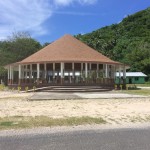
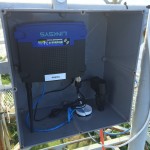
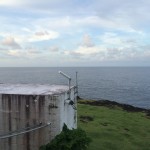
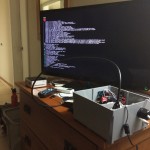
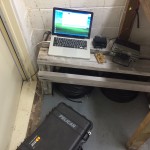
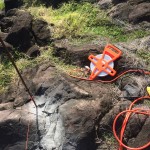
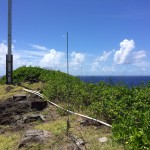
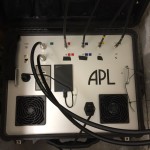
I made another trip to American Sa’moa (KH8 for the radio amateurs in the audience) to deploy instrumentation. It was a tight timeframe but the instruments seem to work and I managed to make a few ham radio contacts as well.






The Hallicrafters SX-88: a rare find and a gem of engineering
[Note: this post first appeared on my shortwave radio blog, the SWLing Post.]
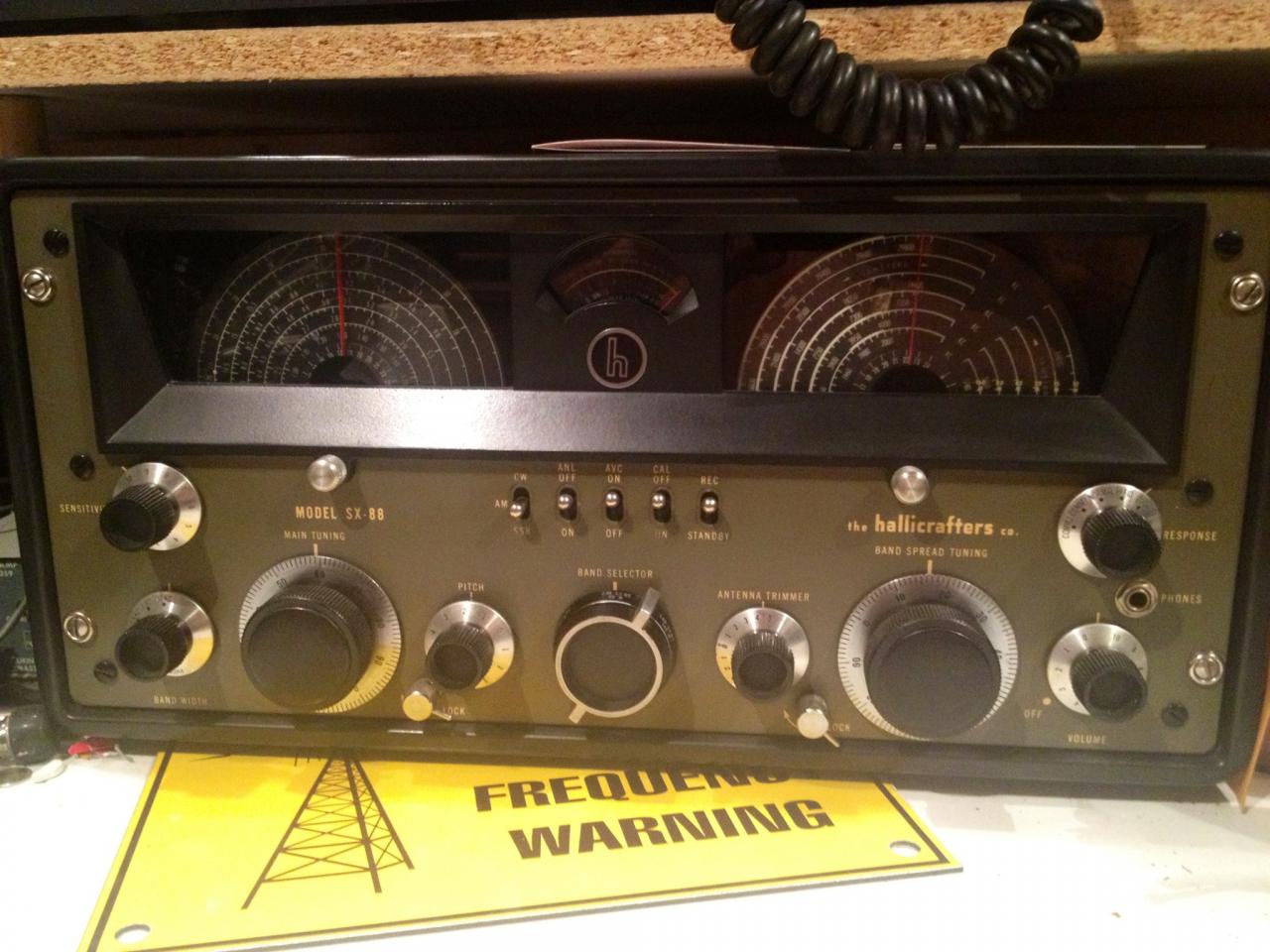
Yesterday while glancing through the QTH.com classifieds ads, I noticed a rare boat anchor for sale: the Hallicrafters SX-88.
The seller, Jeremy, describes this SX-88 as follows:
Hi [t]here, I have one SX88 in minty shape and is one of a handful that came in military green on [the] front panel for evaluation by the military. This is an exceptional radio in amazing condition. I can provide pics for someone who is seriously interested. I am open to a fair offer on radio. Please, no low-ballers. We all know what [it’s] worth…
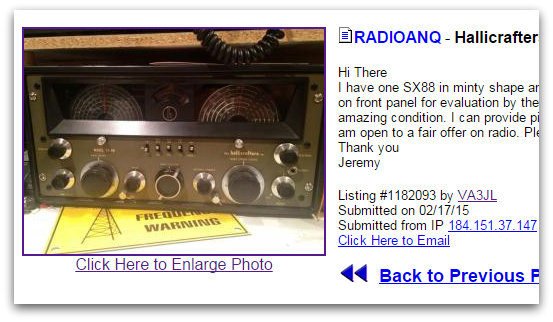 “We all know what it’s worth“–?
Well, it just so happened that my good friend (and Elmer, or ham radio guru) Mike Hansgen (K8RAT) had recently provided me with a little history lesson on the subject of the SX-88, so I did know what this rig is worth: a great deal of money.
But curiosity got the best of me, so I contacted Jeremy (a nice fellow, by the way) and asked what he was expecting to receive in exchange for his Hallicrafters SX-88? Jeremy’s reply:
“…$5,500 USD will take it. It is a very rare unit; it was… only one of about 6 [painted green]…for presentation to the military for evaluation.
That price is firm. [I] will not negotiate downward, and shipping [from Ontario, Canada] is extra.”
After receiving this response from Jeremy, I happened to think that I have the reference guide to rare/used shortwave receivers: Fred Osterman’s Shortwave Receivers Past and Present 4th edition. (Click here for more info.)
Osterman’s wonderfully comprehensive guide mentions that the SX-88 is a “highly regarded, rare and collectible model.” As for the rarity of the SX-88, he describes it thus: “Extremely Scarce.” The used price range he gives is from $3,500-7,000 US.
I also have Chuck Dachis’ book, Radios By Hallicrafters; in it, he states that the SX-88 is, “the most sought-after Hallicrafters model.” Wow.
After thanking Jeremy for his response, he replied:
“It’s a lot of money for a receiver for certain, but it is a fantastic shortwave receiver as the audio that comes out of it is amazing.
It has 10 watts of audio and into a big speaker–it is second to none. The fidelity is amazing and it is the king of its kind. [For those who like] tube rigs, it is the best of its kind.
For ham purposes on AM it is amazing, and on CW I find it incredible to use.
[W]hen they built this thing they intended to pull all [the] stops out and build the best radio they could for the day with the military in mind. It was an engineering marvel for the day.
Anyway, I have played with it for years now and need to thin out the herd.”
Impressive. And while I just don’t have that kind of money to fork out for a receiver, I did ask myself the question: “If I had $5,500 to blow, would I get that Hallicrafters SX-88?”
And my answer? Yes. In fact, I would personally drive to Jeremy’s home in Ontario and bring it back; no way I’d trust it to a parcel carrier or the post office…
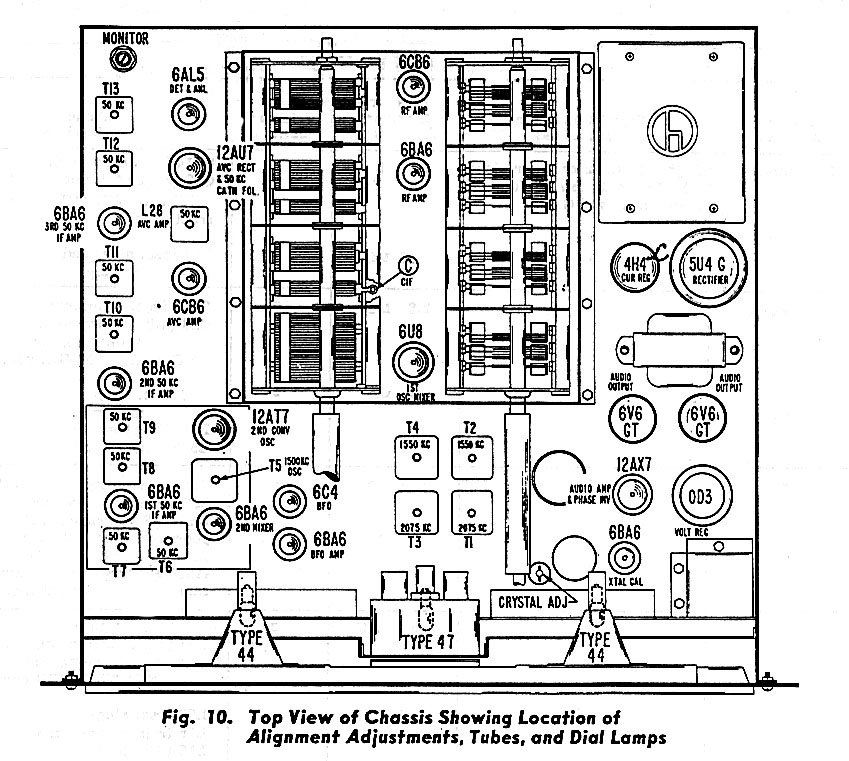
Click to enlarge (Source: AntiqueRadio.org)
Come on, you may say. For a guy who rarely pays over $50 for a vintage receiver, how could you possibly justify that kind of financial and time commitment–?
Well, let’s think of it this way. I remember when when I paid well over two thousand for my first laptop in college. How much is it worth now? Maybe twenty dollars–?
Many people have retirement funds in investments, some of which are in a variety of innovative companies that they actually patronize–for example, Apple or Microsoft. But how often can you find an investment that you can actually play with? One which you can turn on, tune in, work the controls, and enjoy?
Yes, I’m sure this is just the sort of justification voiced by many a vintage car collector…So, why not for a museum-worthy radio? After all, they’re not making these anymore.
I expect this Halli will not only hold its value, but will probably increase in value over time.
Ah, well; fun to ponder. My question to you: Would you buy a $5,500 vintage receiver if you had it to spare?
If your answer is yes, and you do have the money, then you might want to contact Jeremy.
I’m very curious if there are any SX-88 owners among our readership? If so, please comment with your thoughts about the ’88!
And for the rest of us, just so we can revel in the vicarious pleasure of ownership, I’ve included some additional information about the Hallicrafters SX-88 below, including two videos.
Resources (courtesy of Jeremy):
[youtube http://www.youtube.com/watch?v=ozclVUwZ_mM]
[youtube http://www.youtube.com/watch?v=clF5HsewTnU]
Duck broken
So that’s it, I’ve broken my duck (I think those across the pond have something to do with cherries). Thanks to David, G7AGI I had an error and gap strewn QSO as part of the LIDS net. It took a little over 20 minutes to complete the basics and a bit of a rag chew at glacial speeds.
It took a lot of brain power but as I got into the QSO it got easier. The only sad point was some DQRM at the start which forced us to QSY.
A thoroughly enjoyable moment and something I’ll not forget in a hurry. Next stop the world at 50wpm!
CW QSO’s
To a novice it could sound worse. But to a seasoned operator I’ll bet is sounds like the equivalent of a rusty nail being used to score poorly formed tones in your ear hole. I’m referring to my CW style.
When I say amateurish I mean it in a couple of ways, firstly I am a radio amateur. This means I’m not getting paid for it (which, as my wife points out, is good as I would be bankrupt quickly). I’m also not a high performing (but talented amateur) mixing it with the pro’s. This means I’m somewhere down the peloton. Holding the latern rouge.
To carry on my cycling analogy. Mostly because I ride a bike as well. My gear isn’t a pinarello dogma, its not the latest shimano Di2. But its adequate, its circa 2007 and it works. My fitness is average but I can, when pushed, climb some steep hills.
The steepest hill I could find it morse code. So far I have spent nearly every lunch time since Christmas using LCWO to attempt to copy at 15wpm. This week marks the end of the letters. I can pretty much copy them all without too much trouble providing there is enough thinking gap.
I thought I’d have a go at sending tonight (Thanks Ian MW0IAN for the ear). CQ sounded like CQ in my head, but came out like QQ, T, K and a few other characters that I hadn’t intended to send but I’m hoping an operator on the other end will see through this. Just like when I hear bad practice or mistakes with SSB I hear operators ignoring their mistakes I’m hoping the same will happen with CW.
So forgive me. I have created some shocking characters. But stay with me because one day this year I will complete a QSO without making any mistakes. That much I promise! If you want to join me in rubbish CW then I can recommend it as a way to diet. I’ve enjoyed the learning so much I forgot to go for something to eat a couple of times. If you hear me calling CQ and respond only to get a seemigly random response, don’t worry its not you, its not me, its my novice brain not getting it right all the time.
January Phase Noise
Radio activity around here was asymptotically approaching zero until this past weekend when I managed to put about two hours into the ARRL January VHF contest. In brief, here’s what’s happening around K8GU:
- 47Q x 17G on 6 (8/2), 2 (29/11), and 432 (10/4) in ARRL January VHF. The 6-meter QSOs were all made with an HF antenna. I ran 100 watts on 432 so I’m ineligible for the 3-band category. Heard, but didn’t work, N1GC (EM59), K1TEO (FN31, whom I almost always work), and VE3??? (FN03, I had the whole call at the time but forgot, working K1RZ).
- I did not work EP6T on any bands and really don’t care. I didn’t hear much of the jamming when I did listen (on 40 and 80). To paraphrase KE9V quoting JA1NUT, “I’m kind of over DXing.” Who has time for this, anyway?
- Speaking of the seedy underbelly of DXing…do you know what a “QSL grubber” is? I’ve experienced a couple of different variations on this in the past year and it’s disturbing. One guy was asking about specific QSOs and provided detailed description of (my) signal characteristics. Nevermind the fact that I never operated on the band he mentioned during that operation. He sent similar e-mail to several friends. As if DX operators don’t talk to each other? The DXCC desk has been notified. I wonder if anybody actually falls for it or gives in, though?
- I made token efforts in NAQP CW and Phone to chalk up a participation multiplier for PVRC in the three-way PVRC-SMC-NCCC competition.
- No homebrewing or repair work has been undertaken since the summer.
- The baby can crawl and wants to walk so badly she can’t stand it. The end is near.
- I took Evan to the Odenton Hamfest on Sunday morning. The highlight for him was stopping for donuts…and stopping at a playground on the way home. Bought some Snap-N-Seal F-type compression connectors for a work project, part of my quest to find the perfect F-connector for the perfect RG-6 type cable (quad-shielded, flooded). More on this in a future post.
- It seems there are plenty of Elecraft K2’s on the market these days. As the price slips below 1000 USD for a loaded K2/100, this radio is becoming a good buy. As a secondary note, they all seem to be “professionally constructed by a well-known builder.” This leads me to wonder what fraction of K2s were built by someone other than the owner (I estimated this fraction once to be about 1/3 of them). I also wonder if people who built their own K2s hold onto them longer?
And so it goes, time to punch my card…
Amateur Radio Newsline Report 1949 January 24 2015
- WE'RE BACK!
- Michigan gets its own PRB One antenna law
- A launch date for the Fox 1 hamsat is announced
- ARES called out in Ohio to assist after phone outage
- The flight of the V-K around-the-world floater balloon falls short of its round-the-world trip
- The K-one-N Nevassa Island DXpedition will be on the S-Oh 50 ham radio satellite
- And old Sol is at it again!
THIS WEEK'S NEWSCAST













