Archive for the ‘radio’ Category
 Something that’s been bothering me
 May 10th, 2015 |
  Author:
 For a little while I’ve been pondering a problem on, or rather mostly off.
 My SOTAbeams SB270 is a 2m & 70cm antenna that used a fairly unique way of holding the antenna elements. There are a set of elements for 2m and a set for 70cm. Each element had a hollow nylon cap head screw with a knurled end that was screwed into the plastic antenna boom. Unfortunately Richard can’t supply these as spares.
My SB270 is useful for, well SOTA, and the occasional VHF contest but what is makes up for in portability it lacks in gain. So I’ve thought about making a single boom version that covers 6m, 2m and 7ocm. The idea seems reasonable but the crucial aspect of mounting the antenna elements is a sticking point. Here’s a brief design brief.
1. Doesn’t need tools to assemble in the field
2. Must stay in place once installed
3. Must be easy to replicate (Just in case anyone else wants a go). So no need for specialist fabrication skills.
4. Must keep with the ‘elements live in the tube when not in use’ principle, So no big bulky parts
I have used standard pipe clamps and they get knocked about and blown around in our strong winds. Stauff type clamps need tools so they’re out. Some 3D printed parts are available on thingiverse but they look like they are for permanent installations or don’t really float my boat.
So, here’s the plea. Any ideas other than the one below?
The current thinking is to use some thicker walled ABS pipe (like durapipe which is cheap and easily found) and some threaded inserts for the parasitic elements. Only feeding the driven element is making me think a bit. May need a cut out or permanent part which has feeder and (ugly) balun.
Thinking caps on!
New Sunspot Region: Flare Activity Expected This Week
There is a new sunspot region rotating into view, producing moderately-strong (M-class) x-ray flares. This video shows you the first 11 hours of May 5, 2015
Expect flares throughout this week, which will degrade HF propagation DURING the flare, but enhance propagation overall (due to the higher Radio Flux). There might be occasional coronal mass ejections, too.
CW
 Since Christmas I have been attempting (again) to learn CW. There are plenty of people to whom this comes naturally. I, on the other hand, had a promising career as a CW radio operator cut short by a tragic lack of talent (to steal someone else’s joke).
So, why bother? Well to be honest I quite like the simplicity, portability and cost of rigs that focus on CW. As the price and complexity of rigs increase it moves me to reduce my interest in this exotica. So to keep the hobby alive in my shack and to carry on learning about RF I thought it’d be nice to try some new stuff out. I can use what I have as a base (Icom IC-7000) and get out and about for UKAC VHF contests when I fancy it. But CW was always a bit of a step beyond me.
I’ve used a bunch of resources to help but by far the most useful was hooking up with a group on twitter called @lids_cw. Along with the plethora of software the encouragement from them has been excellent. What I have found out is that my sending has improved no end by getting on air but my receiving is stubbornly refusing to come together. Practice make perfect. The Goal for me is a Morse proficiency test at the Norbreck rally next year. Hopefully at 15wpm
Talking Back To Home
Having an EchoIRLP node here at home allows me the option of communicating with the XYL (who holds a Tech license) when I am on the road. I found this very useful when I was stationed in Korea. With the time difference, the end of my day was the beginning of hers. I could check APRS to see when she started her morning commute and then connect to my home node. This allowed me to check in with her as well as saying “Hi” to the kids.
With the Summer Trip, the XYL will not be with us the whole time. Therefore, IRLP may well offer a solution.
Time change will not be a significant factor – which means the best times to schedule IRLP QSOs with the XYL would be during the commute times. That should work fairly well because I do not plan to be on the road either too early in the morning or much past the late afternoon.
What is the availability of IRLP nodes along the route I am taking and will they be near our overnight stops? Enter the ARRL’s Repeater Directory. I remember my dad almost always having the shirt-pocket version of this directory by his easy chair along with his HT and a mechanical pencil that he used to make notes. I have consistently followed his lead, although I usually keep a copy in my truck as I am not too much of an HT guy. Another difference is my excitement about the Desktop Edition of the Repeater Directory. I find the shirt pocket edition way too tiny and difficult to use. The Desktop Edition is the Business Class of directories…. spacious, roomy, and comfortable.
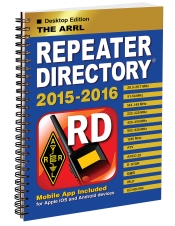
I took advantage of ARRL’s birthday coupon to purchase the 2015-2016 directory and am using that to start my IRLP node research. Without digging up my maps and looking too much at the surrounding areas, here is what I found:
Sioux Falls, SD, IRLP Node #7346, 444.2, 82.5
Gillette, WY, IRLP Node #3307, 449.75, 123
Cody, WY, IRLP Node #7194, 146.85, 103.5
Great Falls, MT, IRLP #7908, 147.3
Great Falls, MT, IRLP #5670, 147.36, 100
Bozeman, MT, IRLP #3692, 448.35, 100
Billings, MT, IRLP #3398, 449.75, 100
What I will probably do is use my home node to connect to these nodes to see if they are in operation and get an idea as to what their coverage areas are.
LHS Episode #144: Amateur Radio Resources
 Hello, folks! We're happy to say that Pete has rejoined our crew for this episode of the show, and he brings with him some excellent information for all you listeners out there. We take a look at several great video and audio resources for amateur radio adventures this fortnight. On top of that, we give a detailed description of YFKtest in action during a contest, and an overview and introduction to the latest version of the Tucnak logger. Lots more news, reviews and excitement as well. Please enjoy!
73 de The LHS Guys
What to do during a contest
With the exception of the UKAC events, weekends are the only time I get on the radio really. I occasionally sneak on during the week but it generally attracts a groan from ‘er indoors. This weekends CQWPX contest is a great opportunity to chase a bit of DX. I got my first and so far only VK contacts from home with my homebrew loft mounted Cobwebb during a contest so I can’t complain.
But what else is there. Well apart from the CW portions of the bands there are other things to do on the air. One of them is something I’ve never even looked at before Wefax.
Normally my weather information comes from t’internet nowadays and maybe this kind of thing is a bit legacy and perhaps not long for the airwaves but I’m sure it serves a purpose for shipping and perhaps far off places.
So how do you ‘do’ Wefax? In my case I tuned to 8,039.100 USB (Have a look here for a good primer and the frequencies and schedules are here) with the trusty Angelia SDR and coaxed the audio in fldigi with a less than ideal set of patch leads and a rather noisy Soundblaster USB souncard. The Angelia is a great receiver so it gave the best chance for this compromised solution. Fldigi will decde Wefax for you so its just a case of selecting the Wefax mode and aligning the signal on the waterfall, nothing to it.

After some awful screeching and scrawing that reminded me of when fax machines were in offices and hey presto images started coming through. Adjusting the slant and horizontal alignment is easy with fldigi and as you can see the raw images are pretty good.

And here is the output. I’m guessing its going to rain!

So if you’re thinking that SSB contesting isn’t for you and you’re at a loss as to what you might want to do with your expensive rig, then have a scout about the bands outside of the usual ham bands. You never know what you might find.
Rockmite
As I’m moving towards CW as an operating mode I took the plunge and bought a Rockmite kit from Kanga. Lets just say its not working quite as I had anticipated. This time I was very careful to look at the various instructions. Lid everything out and then checked every component as I assembled it.
 Next time I’ll throw these things together in the usual manner. I might have a bit more success. Power on and I get little in the way of audio, a gentle hiss but not much else. So troubleshooting has to begin. Fortunately there is quite a bit of help for this but to be honest I’m not holding out much hope as I did such a thorough job of checking the first time round. Must be a faulty (insert component here)
All good fun and not as if the world will end if I have to spend some time on it.













