Archive for the ‘radio’ Category
 New antenna
 November 29th, 2015 |
  Author:
 My shack is fairly spartan. Just the IC7000 as a main rig. The antenna farm is equally so with all antennas in the loft bar a 2m & 70cm colinear.
Its a fairly spacious loft mind you. Enough room for a Watson 80 plus 2 dipole (Which they don’t seem to make any more) with extra elements for 30m and a 4 element 10m band yagi. But 80m is really not working for me.
So with a few hours to spare this weekend and a bit if ladder line I pulled together a W3EDP antenna. Its nothing new and a very cost effective antenna. So without going through all the detail it was either that or nothing at all for 80m. I just simply don’t have the space for a windom ( which is what I would have preferred) and G7FEK limited space antenna would have meant more stuff in the garden to annoy the XYL.
Needless to say I got the chance to try it out, firstly with the Hack Green SDR and shortly afterwards a nice QSO with Peter, G4LHI in Huntingdon.
So for a couple of hours work I can recommend the W3EDP. Noting of course the current at the end and need for a good counterpoise / earth. I can also say that even in a lash up configuration it withstood some pretty big winds here in IO84 this weekend.
So where to find out more:
 Well a simple Google will give you most of the info you need but you could do worse than invest in the the Stealth Antennas book. I have a copy of the older version,
I see the new one has a different cover, I’m not sure if there was much change in the insides between editions but there’s something in there for everyone. From ultra small weird looking things to some old favourites like loops and verticals all the way to ultra cheapo types.
Its not all good news though. The XYL isn’t happy with the wire. The Watson 80 plus 2 (whose inspiration came from the G4ILO section of this book) didn’t quite meet my expectations and I didn’t quite get the G7FEK constructed. Maybe next time.
If you’re stealthier on 80m then I’m sure I won’t be the only one who is interested in finding out how you did it. If not then lucky you for having enough garden and don’t forget to listen out for the weak signals. 
Kay Everett Calls CQ

All aboard for ADVENTURE! I purchased this book a while back and I finally dug it off the shelf. Kay Everett Calls CQ, by Amelia Lobsenz, is about a young college girl who takes a summer road trip from North Carolina out to the West with three friends, a travel trailer, and ham radio. For me, this book has several things going for it: (1) strong female protagonist (I have two daughters), (2) HF mobile (I need to get my rig installed in my new vehicle), and (3) a travel trailer trip to Yellowstone National Park, Idaho, and the Colorado Rocky Mountains. The plot centers around a jewel thief, who is also roaming the West, and Kay learning about the amateur radio hobby. Ham radio plays a critical role in several places and the author has the main characters explore several aspects of the hobby (… they even go to a hamfest).
The author, Amelia Lobsenz, was an experienced ham, licensed in 1941. After a stent in publishing, she ran her own public relations firm. She based some of the characters on her actual friends, to include Theresa Korn, K7JGU. In the story, Terry, a YL and pilot, takes two of the girls flying over Idaho (aeronautical mobile, where they end up directing smokejumpers into a wildfire). The protagonist, Kay, is named after Ms. Lobsenz’s own daughter.
Ms. Lobsenz used a 1940’s trip out West to serve as inspiration for Kay’s trip. Among the many places the girls go include:
– National Elk Refuge National Wildlife Refuge
– Grand Teton National Park
– Yellowstone National Park
– Craters of the Moon National Monument
– The Great Salt Lake in Utah
– Rocky Mountain National Park
Amelia became a Silent Key in 1992, but I think her written work will live on.
National Parks On The Air

From the ARRL: “Throughout 2016, Amateur Radio will be helping the National Park Service celebrate their 100th anniversary. Hams from across the country will activate NPS units, promote the National Park Service and showcase Amateur Radio to the public.”
This should be an exciting event for me. This past summer I got to enjoy some extended travels through a few of our national parks (visited a total of 5). This coming summer I am planning the same but hopefully am going to be able to visit even more.
While I do not intend to conduct any extended activations, I do plan on getting onto the HF bands from my mobile while I am at the parks.
I am getting closer to locking in my summer travel’s calendar. Most parks start taking reservations at six months out… just about there.
ARRL is already selling quite a bit of National Parks On The Air (NPOTA) swag. One item that I have ordered is the NPOTA map, which I’ll post in the room where I will do my trip planning.

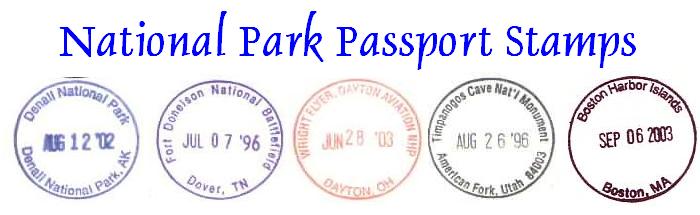
I will need to think through how I cam going to do my logging. For QSL cards, I can use postcards from the park and stamp them with each park’s National Park Passport stamp.
What is the big deal with amateur radio? What is it that you hear? (Part 1)

Shortwave radio has been a source for great sci-fi plots, spy intrigue novels, movies, and so on, since radio first became a “thing.” But, what is the big deal, really? What is it that amateur radio operators listen to?
In this video, I share some of the types of signals one might hear on the high frequencies (also known as shortwave or HF bands). This is the first video in an on-going series introducing amateur radio to the interested hobbyist, prepper, and informed citizen.
I often am asked by preppers, makers, and other hobbyists, who’ve not yet been introduced to the world of amateur radio and shortwave radio: “Just what do you amateur radio operators hear, on the amateur radio shortwave bands?”
To begin answering that question, I’ve taken a few moments on video, to share from my perspective, a bit about this shortwave radio thing:
Link to video: https://youtu.be/pIVesUzNP2U — please share with your non-ham friends.
From my shortwave website:
Shortwave Radio Listening — listen to the World on a radio, wherever you might be. Shortwave Radio is similar to the local AM Broadcast Band on Mediumwave (MW) that you can hear on a regular “AM Radio” receiver, except that shortwave signals travel globally, depending on the time of day, time of year, and space weather conditions.
The International Shortwave Broadcasters transmit their signals in various bands of shortwave radio spectrum, found in the 2.3 MHz to 30.0 MHz range. You might think that you need expensive equipment to receive these international broadcasts, but you don’t! Unlike new Satellite services, Shortwave Radio (which has been around since the beginning of the radio era) can work anywhere with very affordable radio equipment. All that you need to hear these signals from around the World is a radio which can receive frequencies in the shortwave bands. Such radios can be very affordable. Of course, you get what you pay for; if you find that this hobby sparks your interest, you might consider more advanced radio equipment. But you would be surprised by how much you can hear with entry-level shortwave receivers. (You’ll see some of these radios on this page).
You do not need a special antenna, though the better the antenna used, the better you can hear weaker stations. You can use the telescopic antenna found on many of the portable shortwave radios now available. However, for reception of more exotic international broadcasts, you should attach a length of wire to your radio’s antenna or antenna jack.
Get crackalackin’
As Fall is here, it is time to put together a To Do list of everything I have been putting off all Summer and the beginning of the school year.
TM-D710A

I have four of these rigs and they need some TLC. I need to make sure they have the updated firmware on the main unit, TNC, and operating panel.
The latest versions:
TNC: 1.02 – May 2011
Operating Panel: 2.12 – Janurary 2015
Main unit: 2.10 – May 2011
For the benifit of emergency operations, I have been performing the modificiation to the TM-D710As to open the frequency range.
Standard frequency plan. I developed a spreadsheet of the repeaters in the greater Kansas City area, frequecies for FRS/GMRS, the Kansas City Airport (MCI), Sherman Army Airfield, and various national park frequency plans. This is the first step in standardizing the configuration across all four of the TM-D710As. I can additionally take the spreadsheet and use it for programming my HTs. This should allow for a memory channel standardization that will make my life easier.
Weather Station

The current Davis Vantage Pro2 I have installed on the roof needs maintenance. Wouldn’t it be nice to get the top of the line version?
For some time I have been talking about finding a weather station setup that will work with a linux-based computer. That quest continues. I have read about a piece of software called Meteo that is suppose to work with Xastir.
And if I can’t get Xastir to work with the Vantage Pro2… is there another comparable weather station that WILL work with Xastir? Life would be a lot easier without Windows.
HF Antenna for home
I need to string up the Carolina Windom I have had sitting on the shelf for the last few years. The G5RV that is up now is showing its age (not to mention one of the legs is drooping badly). Now that the leaves have fallen, I should be able to get the Windom up there without too many problems (… famous last words).
HF setup in the mobile
Time to get going. I have all the materials I need. What I don’t have is an installation plan… mainly for the Tarheel antenna. I can’t do a hitch mount because I need the hitch for pulling my travel trailer. Two possible options: (a) get a swinging gate for the back bumper where you could mount a spare tire and a water can or (b) find some way to afix a mount coming out behind the left rear tire.
Autumn = projects time
I usually cycle to work. Wow I hear you say, what a guy….Well thanks but I hadn’t finished the introduction. Cycling means you notice the seasons a lot more than if you drive. Its still the season for shorts and after some very mild days we’re definitely heading towards fully developed autumn. So what?
Well its time to spend fewer hours outside (because you’ll be blown across the street) and more time preparing for those murky days when projects are preferable to souwesters.
This year I have got a couple of PCB’s that need populating. 1 of them is the Budd Churchward Morseduino. The other is the Minima Transceiver.
Budd created a neat little barebones arduino and morse code decoder and he kindly gave me the gerbers. It is essentially a very simple device that will allow audio to pass through and it will give a reasonable decode of CW. I say reasonable because it is never going to be as good as your purists ears but it’ll help get the less talented on the air (hopefully). This video gives you a flavour
Project 2 it the Minima Transceiver, by Ashran Farhan of BitX fame. It is my first foray into complete rig build for the experimenter so I’m expecting some tinker time. Essentially it is a Arduino controlled simple transceiver (Any spot the link here?). This will be a lot more involved and I’m just getting my head around the schematic.
There seems to be a lot of useful information about so if I get stuck then google will no doubt be my friend! Here’s a little taster.
Toyota Transition
This blog started in conjunction with my return to the United States in 2005 and purchase of a Toyota Tundra. After being away from the US for four years, I celebrated my return by the purchase of the new truck and a (mostly) circumnavigation of the lower 48. My first encounter with Toyota was through my friend Robb and a 1980s Toyota 4×4 he had. Robb was going to school at Cal Poly, San Luis Obispo. Robb was fond of taking his truck to Pismo Beach and enjoying the beach and dune experience. Robb loved his truck.
After spending a year in Monterrey, CA learning Russian at the Defense Language Institute and a few months honing my listening abilities at Goodfellow Air Force Base near San Angelo, TX, I got my follow on orders to Fairbanks, Alaska (Fort Wainwright). I didn’t have a car. I was an enlisted Army soldier making not a whole lot of money. Heading way, way up north. I figured I needed a 4-wheel drive vehicle to make my life a bit more comfortable. My first thought was a Ford Ranger. But it ended up being too expensive. The most reasonable costing 4-wheel drive vehicle was a Toyota 4×4. It was 1993 and the Tacoma had not come along yet. 1993 Toyota 4×4. Manual locking hubs. Manual windows. AM/FM radio. Bench seat. No A/C. 4 cylinders. That truck was to go on to perform flawlessly in Alaska, transported me from Alaska to Georgia and several cross-country trips. Arizona. Washington State. Texas. And California. For seven years, that truck never let me down. I was heading off to Korea for a year to be followed by three in Germany. I sold the truck.


When I was planning my return to the US, I knew I wanted to get another Toyota. I settled on the Tundra. But instead of the minimum package, I was able to swing a 2005 Toyota Tundra Limited Double Cab 4×4. This truck offered to support a newly forming family. I broke the truck in with a trip around the US. I continually upgraded my ham radio installation in the truck, further enhancing my mobile enjoyment. The Tundra performed flawlessly. Never an issue.


The Tundra proved to be the hero of the 2015 Summer trip. Five national parks. From Kansas to Montana, Wyoming, out to California and back. Pulling a travel trailer. No issues, no problems. Over 120,000 miles.

It was time to think about the future. A future of summer travel. Exploration of national parks in the west. Colorado. Arizona. Utah. Maybe an upgrade to the travel trailer. The 2005 Tundra had an older drive train and a towing capacity topping out at 4,200 lbs. Comparing the aging 2005 Tundra to the current available 4x4s… the 2005 had a hard time measuring up.
I wanted to find something that was as reliable and dependable. Offered increase towing capability. But maybe smaller? Truth be told, I often had difficulty parking the Tundra. The turning radius was… challenging. Was there something available in a smaller package, yet offering increased performance and towing capabilities? Oh… did I mention that it has to be a Toyota?













