Archive for the ‘hf’ Category
 New Transceiver from ICOM: IC-7100
 August 26th, 2012 |
  Author:
 ICOM has shown the new IC-7100 at the JARL show in Tokyo. The interwebz is buzzing with information, including a preliminary data sheet.
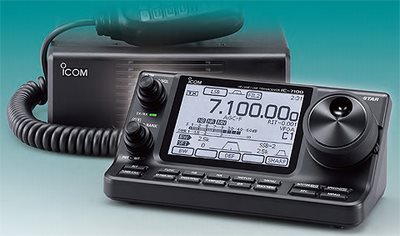
My scan of the preliminary datasheet indicates that this radio is in the class of the IC-7000 or even the IC-706. It covers all modes on HF plus 6 Meters, 2 Meters and 70 cm. (It also has the 70 MHz band which is a nice add for the European countries that have that band.) The radio includes DV (D-STAR) modulation capability and has a new touchscreen user interface. The slanted control panel is meant to make the touchscreen more accessible.
A new HF plus VHF/UHF radio always gets my attention (see my plea for an FT-950 with 2 Meters). I am starting to think that the real benefit of this rig is the addition of D-STAR capability, which would a good but not essential feature to have.
What do you think?
73, Bob K0NR
Update (30 Aug 2012): Universal Radio has the radio on its website.
There’s a good video look at the radio here.
TechDay 2012 – Your Start in Amateur Radio
 Come join us on Saturday, September 15th, 2012 (9:00 AM to 2:00 PM) at the Tri-Lakes Monument Fire Administration Complex at 166 Second St. in beautiful Monument, CO for a half day workshop aimed primarily at the new Technician Licensees to help them get started in ham radio. While you’re here you’ll learn what it takes to be a ham radio operator, brush up on your DXing skills, test your own ham radio equipment, check out some sweet mobile radio installations, and ask an Elmer “What’s so cool about 10 meters?”
Getting started in ham radio has never been so much fun!
Presentations
9:30 am – Youth DXpedition to Costa Rica
by Anna Veal WØANT
10:30 am – Mountaintop Operating
by Steve Galchutt WGØAT
11:30 am – Home Station Setup
by Anna Veal WØANT
12:30 pm – Getting On the Air
by Brandon Hippe KDØPWF
1:30 pm – Radio Equipment 101
by Shel KFØUR
* Each presentation is approximately 15 minutes with 5 minutes of Q&A at the end. Events subject to change
Booths – Open 9AM to 2PM
Get Your Radio Programmed with Local Repeater Freqs by RT Systems
hosted by Kyle Hippe KYØHIP & Cole Turner WØCOL
Check Your Radio Performance
hosted by Bob Witte KØNR
See an HF Station
hosted by Dan Scott WØRO & Stu Turner WØSTU
Ask Any Question – The Elmer Booth
hosted by Paul Swanson AAØK & Shel KFØUR
Understand Mobile Installations
hosted by James Bucknall KDØMFO & Ethan Bucknall KDØMFP
Getting Your Ham Radio License
hosted by Brandon Hippe KDØPWF & Eric Hippe NØHIP
Ham Radio & Public Service
hosted by Randy Meadows KNØTPC
Sponsors
Tech Day 2012 is proudly sponsored by the WØTLM Amateur Radio Club and the Pikes Peak Radio Amateur Association.
Get the one page flyer in pdf format here.
Direct any questions to Bob KØNR
LHS Episode #085: David Rowe on Codec2
 Please join us for a special episode of Linux in the Ham Shack. In Episode #085, the hosts interview a vibrant and brilliant engineer from Adelaide, South Australia, named David Rowe. He is the mastermind behind the codec2 open voice codec among several other worthy and equally brilliant open source projects. He dabbles in VoIP, hardware, Open Source advocacy, engineering, voice compression, amateur radio and other endeavors far too numerous to name. David Rowe is definitely one of the more special people occupying our planet and our interview with him is nothing short of amazing. Please tune in and have your mind blown. We look forward to the overspray.
73 de The LHS Guys
The Man Who Fishes For DX
 |
| One of Dave's many QSL cards |
 |
| Red Wharf Bay, Anglesey |
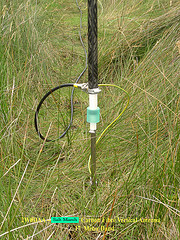 |
| Base section of carbon fibre vertical in situ |
Follow Dave’s simple formula and you too can become a fisher of men and the stuff of legend.

2012 ARRL Field Day Information Packet Available
 ARRL Field Day is the single most popular on-the-air event held annually in the US and Canada. Each year over 35,000 amateurs gather with their clubs, friends or simply by themselves to operate.
The information packet for Field Day is now available on the ARRL web site.
- Bob K0NR
More Summits On The Air (SOTA) Info
 I recently wrote about the Summits On The Air (SOTA) program gaining traction here in Colorado. Catching up on some of my podcast listening, I came across Jerry KD0BIK’s Practical Amateur Radio Podcast (PARP) on the topic of SOTA. It turns out that Jerry has gotten hooked on the SOTA program and has been out activating some of the Colorado peaks in December.
Operating a ham radio on top of a mountain during winter may seem like the act of a person with only one oar in the water (or shall we say one half of a dipole in the air?). But actually, we’ve had quite a few days of favorable weather that have been begging us to get outdoors in December. Still, I am on guard for an activation by Jerry in the middle of a blizzard, as he seems a bit smitten by this SOTA thing.
Episode 49 of PARP introduces the SOTA concept near the end of the episode, which is followed by a deeper SOTA discussion in Episode 50. These two episodes run about 25 minutes each, so take some time out to give them a listen.
73, Bob K0NR
Don’t Get Stuck On 2 Meters
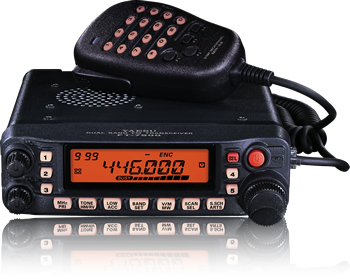 When I first got started in amateur radio (many years ago), one of the engineers that I was working with at a summer job told me “Don’t get stuck on 2 Meter FM”. At the time I was a college student and felt lucky enough to have 1) found time to pass my Novice exam, including Morse Code test, 2) found time to travel 150 miles to the regional FCC office and pass my Technician exam, and 3) scraped up enough money to buy a basic 2 Meter FM mobile rig. I was in Technician ham heaven, playing around on 2 Meter FM, both simplex and repeaters. Oh, and we had this cool thing called autopatch that let you make actual phone calls from your car. I really wasn’t worried about getting “stuck on two”.
Even though my discussions with this Old Fart Experienced Radio Amateur revealed that he didn’t see 2 Meter FM as Real Ham Radio, I could see that he had a point. Two meter FM is only small part of the ham radio universe and it would be easy to just hang out there and miss out on a lot of other things. I was reminded of this recently by K3NG’s post: Things I Wish I Knew When I Was A Young Radio Artisan. I agree with most of his comments with the exception of this one:
Don’t get your start on 2 meter repeaters.
This took me back to the comments from the Experienced Radio Amateur from years ago. I get the point — starting out on 2 Meter FM and Repeaters can give you a limited view of ham radio — but I see it as the perfect platform for getting started. Here’s what is working in my area with new Techs: get them started with a dualband FM rig (usually an HT) so they have some on-the-air success. This also puts them in touch with the local ham community, where we not-so-subtlely expose them to other bands, modes and activities. They hear the other guys talking on the repeater about working DX on 10 Meters and start thinking about how to pursue that as a Tech. From there, it just expands out to all kinds of bands and modes.
Just for the record, I guess I did follow the advice of the Experienced Radio Amateur and managed to not “get stuck on two” (i.e., I’ve worked all of the bands from 80M to 10 GHz, earning WAS, WAC, DXCC and VUCC.)
73, Bob K0NR













