Archive for the ‘hf’ Category
 Show Notes #104
 May 20th, 2013 |
  Author:
 Episode #104 Audio (Listen Now):
Introduction:
- Pete is back on the show along with Russ
Announcements:
- Hamvention 2013 is happening May 17-19, 2013 in Dayton, Ohio. LHS reached the donation goal and thus will be in the Hara Arena. Thanks to Sierra Radio Systems for their incredibly generous donation that put us over the top. We will be talking with George from Sierra and Nick from Pignology in Episode #105. It’s a show you DO NOT want to miss.
- Bill, KA9WKA, has announced that he is also going to be on hiatus for a while. Therefore, we now have an opening for a show notes taker and keeper of all knowledge! If you’d like to be that person, please send us an e-mail or get in touch with Pete or I in the IRC channel.
- Website that lists known Linux Events.
- http://answers.oreilly.com/topic/3507-list-of-known-linuxfest-events/
Topics:
- We have a pre-recorded interview with Steve Nichols, G0KYA (also AB8ZV) the Author of STEALTH ANTENNAS an RSGB publication.
- http://g0kya.blogspot.com
- http://www.infotechcomms.co.uk
- HF Propagation Report Podcast
- Factors in HF Propagation
- Sunspots
- Flares
- CMEs
- Propagations changes over daily and monthly bases
- Solar Cycle 24 and its progress
- HF Propagation programs
- HamCap (Windows 32-bit)http://www.dxatlas.com/hamcap
- VOACAP (Linux, MacOS X, Windows)http://www.voacap.com
Feedback:
- Topic for short discussion: How is Ham Radio Free and Open Source?
- http://www.linuxjournal.com/ham (2010)
- http://www.linuxjournal.com/content/open-source-ham-%E2%80%93-free-range-chicken (2009)
- Both articles are more of a teaser for Linux Journal’s HAM section.
- Pro arguments:
- Home-brew your own
- Communications open worldwide
- No need for outside infrastructure
- Con arguments:
- Need a license from “The Man” to operate
- Many restrictions (band plan, op procedures, etc)
- Not Free, as in beer (license, equip, etc)
- Therefore, is it the ‘YANG’ to Linux’s ‘YING’?
- Due to the length of the interview with Steve Nichols, feedback will be moved to after the interview in Episode #105.
Contact Info:
- Contact Russ at [email protected] or [email protected].
- Listen to the live stream every other Tuesday at 8:00pm Central time. Check the LHS web site for dates.
- Leave us a voice mail at 1-909-LHS-SHOW (1-909-547-7469), or record an introduction to the podcast.
- Sign up for the LHS mailing list.
- LHS merchandise is available at the Merch link on Web site. Check out the Badgerwear or buy one of the other LHS-branded items at PrintFection.com/lhs or Cafe Press. Thanks!
- Thanks to Dave from Gamma Leonis for the theme music.
Music:
- “Alive” by Bright September
- “So Called a Hero” by Bright September
- http://www.brightseptember.com
LHS Episode #104: Propagation 101 with G0KYA
 We sometimes on this show attempt to bring you interesting interviews with people who are both computer literate and ham radio literate at the same time. In this case, we bring a scholar, physics buff, aerospace engineer and brilliant guy, Steve Nichols (G0KYA), to discuss the science of radio wave propagation. No need to turn the show off before it even begins. Steve makes understanding the Earth’s atmosphere, its magnetic field, and a ton of stuff about the sun simple and approachable. No mind-bending equations, no physics lectures, just some great information for anyone interested in learning how a radio signal gets from here to there. A bunch of follow-up information in the form of books and Web sites are provided as well, links to which will be in the show notes, for anyone who wants to further their education. Thank you as always to our loyal listeners. Make sure to tell a friend next time you’re out for a cold one. The more the merrier.
73 de The LHS Guys
Multi-Band 4 Foot Magnetic Loop with Gamma Match

4 Foot Diameter Magnetic Loop In Operation
As my mag loop projects progress, I’m learning a lot about building them and using them. This antenna works on 17, 20, and 30 meters, with the best bandwidth on 20 meters. The bandwidth on 17 and 30 is quite small but usable. There is a 20 KHz bandwidth on 20 meters. I used a vacuum capacitor to build this particular loop for 100 watt operation. The air capacitors are good for QRP but will arc over using much power over QRP levels.

4 Foot Magnetic Loop Antenna with Gamma Match
This photo was taken before I trimmed the Gamma Match.
I didn’t know how long the Gamma Match should be, so I made it long enough to allow for trimming after the match to 50 Ohms was made.
This is the first mag loop that I made with a Gamma match. I like this match better than the usual Faraday feed loop that is featured in my previous mag loop antennas. Matching is easy and building the Gamma match is not difficult. I’m planning to build other smaller loops that will also feature the Gamma match. The smaller loops will target 10, 12, and 15 meters. Loop size determines which band its best suited too. Although it is possible to get more bands on one loop, the bandwidth is small and the tuning ‘dip’ is very sharp. I found it better to limit the number of bands in favor of wider bandwidth and antenna efficiency.
Please look up my previous posts for more details on parts and plans.

Here is a good close up of the clamp.
(Before Trimming)
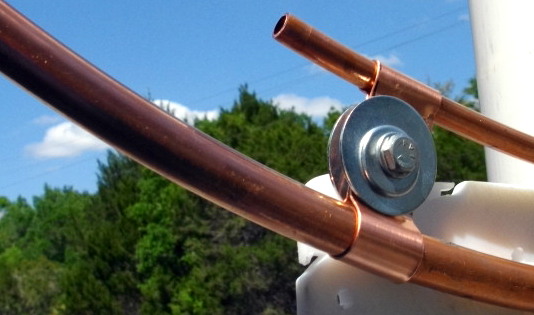
Gamma Match After Trimming. This enables a 50 Ohm Match for all three bands.

Gamma Match on the left, PL 259 in the center and, Tuning Aid Stick (PVC) pipe , on the right.
The vacuum capacitor is ‘tuned’ by twisting the PVC pipe that is attacked to it with a cotter pin.
Tuning the cap to the ‘loudest noise’ on the air will put you in the ball park for operating.
You can also use an antenna analyzer if you want to know the exact SWR, and RR of the antenna.
Tuning with a radio attached is fast and easy.

Making the clamp for the Gamma Match

Soldering The Back Plate and PL 259

Removing The Oxidation Before Soldering
The main loop is 5/8 inch, soft copper tubing.

Close Up of PL 259 to Gamma Match Joint
The center of the PL 259 had a #10 solid copper wire inserted and soldered in place.
The Gamma match is 3/8 inch soft copper tubing.
This part of the job was done with a soldering iron, the rest was done with a plumbers torch.

Handy ‘third hand’. A clamp to hold the Gamma match in place while I soldered it.
My town was going to hire a ‘Mad Scientist’ but it couldn’t afford one, so they settled for a ham radio operator instead. Me!
73 de AA1IK
Ernest Gregoire
HF Slacker Works the CQ WPX Contest
 This past weekend, I had to great time working the CQ WPX (SSB) Contest. I am pretty much an HF Slacker but I do like getting on the air once in a while for these contests. The attraction seems to be the opportunity to make lots of contacts in a short time and picking up a few new countries. The format for this contest is really fun…multipliers are based on the callsign prefix, so “everyone is DX”…sort of. CQ has an awards program (CQ WPX Award) that is also based on prefixes worked, so the contest is a good way to pursue that award. The ARRL recently added CQ WPX Award support to Logbook of the World, which will help with confirming contacts. Us HF Slackers don’t like messing around with actually sending QSL cards when transferring a few bytes electronically is sufficient.
I operated from our mountain cabin, with just 100W to a trap dipole up in the trees. Not a Big Gun station, especially not in this contest. There were quite a few stations on the Caribbean, many of them contest DXpeditions. Conditions were pretty good on 20M and 15M, with 10M also quite usable during portions of the day.
        Band    QSOs     Pts  WPX
           7      39      69   30
          14      71     142   59
          21      81     163   54
          28       9      24    6
       Total     200     398  149
       Score : 59,302
The last time I submitted a log for CQ WPX was in 2011 with roughly the same station. That year, I made 98 QSOs for a score of 18,920. So this year’s score is an improvement over that effort.
But the most important thing is to have fun messing around with radios.
73, Bob K0NR
5 Foot Diameter Magnetic Loop Antenna

A bonus picture here. The one on the left is a 3 foot in diameter loop.
Note: The little box at the bottom of the small one contains an air variable capacitor for tuning.
Compare it to the 5 foot in diameter loop on the right. ‘

5 Foot Mag Loop
I made a QRP CW contact with this mag loop from right where it stands in my drive way.
 Small Loop Feeds the Big One

Home Made Capacitor Clamps.
Home made cap clamps. The clamps are soldered to keep the contact resistance low.
This is very important with High Q antennas.

5 to 150 Pfd capacitor
Russian capacitor. It is available at E-Bay for about $150

Easy to Make PVC Pipe Stand
Where would hams be without PVC pipe!
This stand is made from 2 1/2 inch sewer pipe.
This is a fun antenna to build and use. I made my first contact with W9GY this afternoon on 20 meters. I used 5 watts, he used 10. RST out was 459, RST in was 579. The antenna was in my drive way in front of the garage that you see here. And Jeff was in Indiana. What a hoot! Making contacts on a home made antenna is great fun. The parts are readily available and with a little planning and shop time you can have a Magnetic Loop antenna to play with.
This is my second Mag Loop. The first one is 3 feet in diameter and covers from 20 through 15 meters. I’m planning another for 17 meters through 10 meters. Mag Loop calculator is available at http://aa5tb.com/index.html
Yahoo has Mag Loop groups that are very helpful to get you started. http://groups.yahoo.com/group/MagLoop/
and http://groups.yahoo.com/group/MagneticLoopAntenna/
Copper foil or strapping is available at http://stormgrounding.electrical-insulators-and-copper-ground-bars.com/copper-foil-2.html
If you’d like more information about Mag Loops, please feel free to contact me. [email protected]
73 De AA1IK
Ernest Gregoire
How to Get a $10,000 FCC Fine
 The ARRL web site reported on this Notice of Apparent Liability for Forfeiture from the FCC. That’s government talk for “we are fining you.”
In case you are wondering how you can get fined by the FCC, here’s the sequence of events that resulted in a $10,000 fine for this person:
- Get a Technician License and then let it expire.
- Repeatedly transmit on 14.312 MHz, interfering with licensed radio amateurs.
- Have FCC agents track the signal to your house
- When the FCC agents enter your house to inspect your radio station, leave the transmitter sitting on 14.311 MHz.
- Tell the FCC agents that you will remove the microphone from the transmitter and only use it as a receiver.
Hmmm, why does 14.312 MHz sound like a familiar frequency? 
73, Bob K0NR
More of a Shout than a Whisper…..
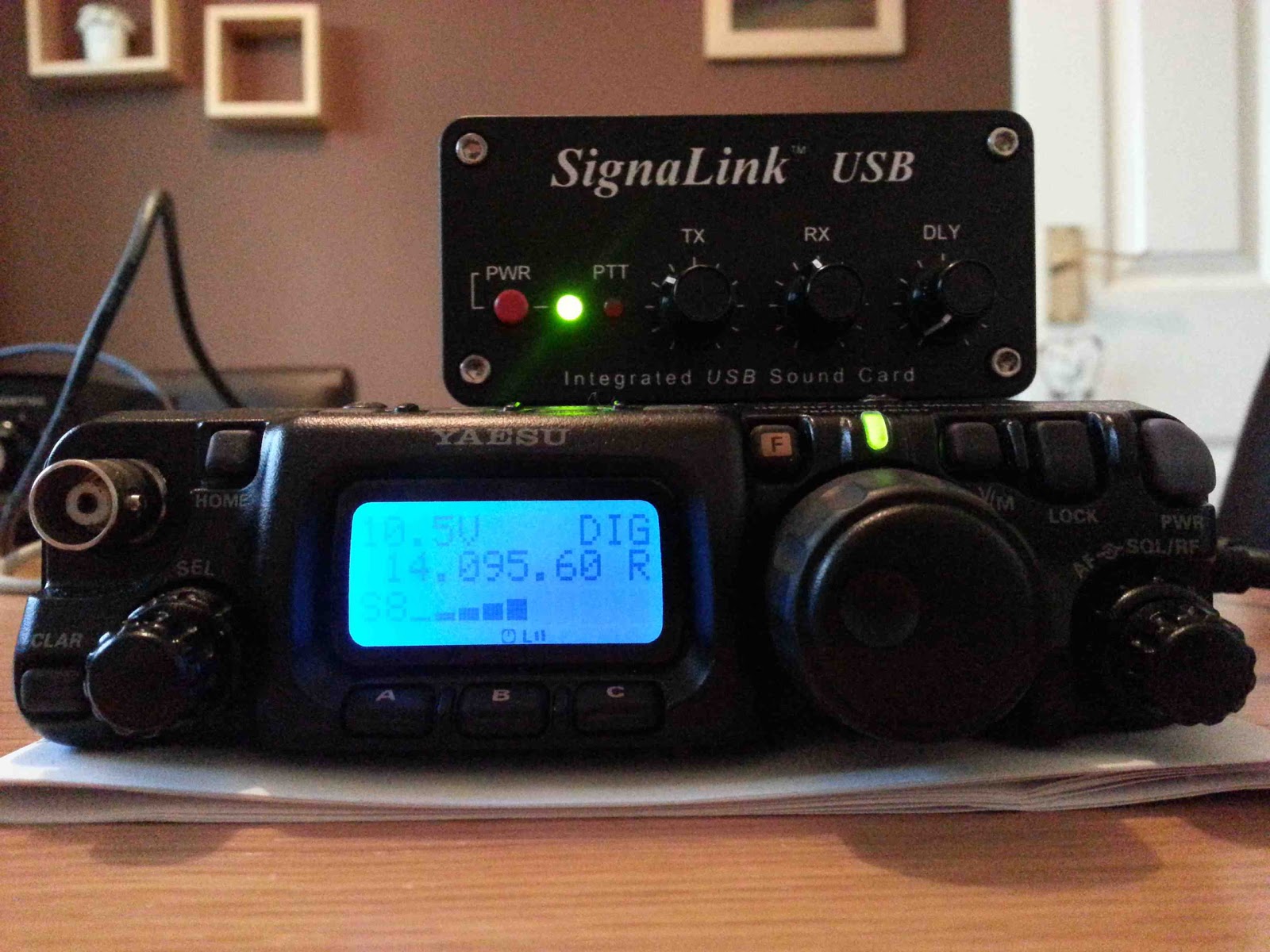 |
| FT-817 and Signalink USB Interface |
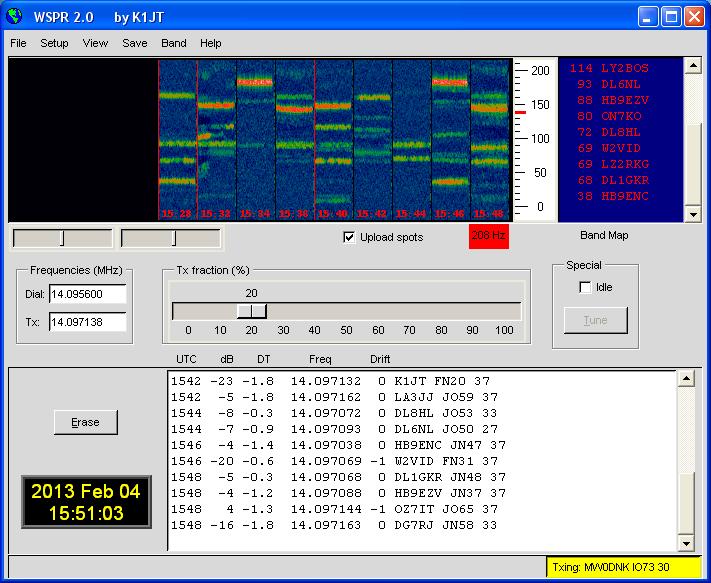 |
| WSPR Control Software |
 |
| 10 mins on 17m! |
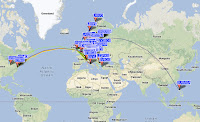 |
| 10 mins on 20m! |













