Archive for the ‘dx’ Category
 Wow ….. just wow!
 January 1st, 2017 |
  Author:
 I'm not sure how to even begin this post. Yesterday, the final day of NPOTA was such a good day, there was no time to be sad or mourn its end. If NPOTA was the gift of a great big cake to Amateur Radio in 2016 - then December 31, 2016 will go down as the icing on the cake. It was definitely one of the best days in Amateur Radio that I have ever had. If it wasn't the best, it was right up there in the Top 10 .... maybe the Top 5.
As stated in my earlier post this week, my intention was to come full circle and to end NPOTA as it began, with activations of both the Washington-Rochambeau Trail (TR23) and Morristown National Historical Park (HP28). The day started sunny and a bit cold as I made my way up to Morristown. I haven't been up there since last May, and since I take all back roads to get there, I was using my TomTom GPS unit to guide me there. About 1/3 of the way there, the TomTom gave up the ghost. Rebooting and resetting did no good. The map screen was nothing but a blank, white screen. Fortunately, I was able to retrace my steps without getting lost.

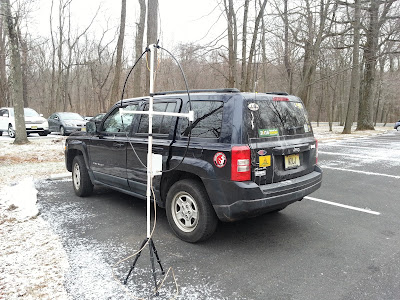
I set up in the parking lot and set up my 40 Meter Hamstick on the Jeep roof and the magloop right next to the Jeep. I was intending to start out on 40 Meter CW with the tried and proven Hamstick in order to get the 10 minimum QSOs that are needed for a valid activation; and only then switch over to the magloop for 20 Meters, as I really haven't used it enough to be confident in it as a proven performer.
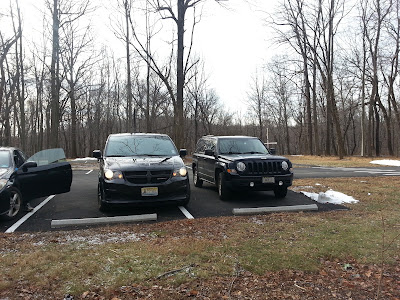
While we were shooting the breeze, we both noticed a group pf people a little bit over in the same parking lot. They had set up tables and had some drinks and some food that they were enjoying. One of the women from the group came up to us and asked what we were doing and was my magloop "Some kind of antenna?" We explained NPOTA and Amateur Radio and that's when she invited us over to join her friends for a warm drink and to explain to all of them what we were doing. It seems they were a group of Norwegian descendants who usually get together, either on Christmas Eve or New Year's Eve to enjoy some food, drink and fellowship outdoors. They gave Dave and me a hot cup of Glug, which was a mixture of red wine, almonds and raisins. While we sipped we gave a good talk about Amateur Radio, NPOTA, the ARRL and the National Parks System as well as a few points about Emergency Communications. They thanked us and we thanked them and then Dave and I headed back to our cars. He left to get back to Morris Plains, and I packed up to head back home to TR23.
About a 1/2 hour later, I arrived at the Frazee House in Scotch Plains, which is right on the Washington - Roachambeau Trail; and it was the same place I activated the Trail from during the NJQRP Skeeter Hunt. When I activated TR23 last January, I did it from the entrance to the Ashbrook Golf Course. It was open yesterday and I didn't want to cause any commotion, so I came back to the Frazee House which is only a couple of minutes farther down the road.
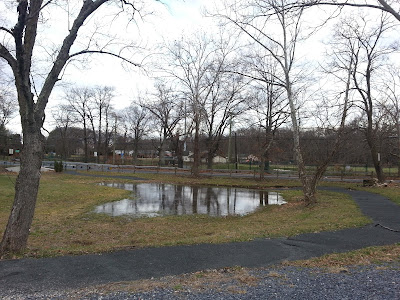
This time I decided to use another arrow from my antenna quiver, I also brought along my Joplin ARC antenna launcher and I got a line over a tree and made use of the PAR ENDFEDZ 40/20/10.
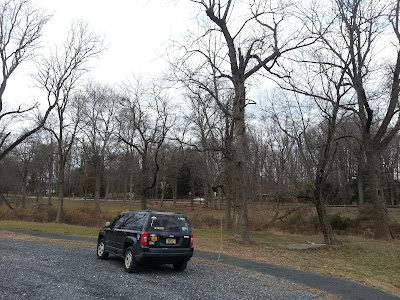
I ran the coax into the Jeep through a crack in the window and got down to business. I ran off a bunch of QSOs on 40 Meters and was about to switch over to 20 Meters when I noticed out of the corner of my eye that a vehicle had pulled up next to me. This time, it wasn't another Radio Amateur. This time, it was a member of the Scotch Plains Police Department. I guess I called some attention to myself, being the only car there, in an otherwise empty place. I got out of the car and walked a step or two to his rolled down window. I introduced myself and gave the spiel about NPOTA and how Raritan Road is part of the Washington - Rochambeau Trail, which he knew. What the Officer didn't know was that the trail is part of the National Parks System and he was very surprised by that. Then he told me about how his grandfather was a Ham, that in fact W2KKG was his call sign. We talked a bit, shook hands and he went on his way; and I returned to the Jeep for 20 Meters.
20 Meter CW proved to be a disappointment. Even with self spotting, I garnered only about 15 QSOs before the activity petered out, way too soon in my opinion. I sat there, with KX3 calling CQ, debating whether I should pack it in and go home. It was getting to be around 2:30 PM EST, and I only wanted to be out until around 3:00 PM as I had a previous commitment at 5:00 PM and I had to get ready for that. Wanting to get a least a few more Qs in the log; so I decided that I would give 20 Meter SSB a shot. With the deep cycle battery, I could boost the KX3's output to 10 Watts. The PAR was up in a tree about 50 feet up or so, so I figured, "What the heck!". I didn't even bother to spot myself, I just hooked up the microphone and started calling CQ on 14.340 MHz, figuring that what would be, would be.
Much to my surprise, about 60 QSOs later, the pileup ceased. With 10 Watts, I had worked all up and down the East Coast, across to California and Washington State and even up into Alberta, Canada. In all, there were only 1 or 2 instances where I had to repeat anything. It was pure bliss!
As it started becoming overcast and dusk started settling in, I packed everything up and headed home. I was in another world, walking in rarefied air. NPOTA turned out to be everything it was chalked up to be; and more. Thanks to Sean, Norm and all the ARRL staff who worked tirelessly behind the scenes to make NPOTA the success that it was. I have never been more proud to be a Life Member of the ARRL. Friendships that will last a lifetime; and new memories that will last a lifetime are the direct results of NPOTA. It just doesn't get any better than this.
Later, I was talking with my good friend Bob W3BBO on Skype, as we do just about every Saturday evenming, I had worked him earlier from HP28 and we talked about our QSO a bit more in depth and about the day in general. Bob stated that, in a way, he felt bad for me. As he tuned around 20 and 40 Meters, it seemed like it was just wall-to-wall NPOTA. He told me that he was sure I should have been at home boosting up my entities worked total. I told him not to feel bad, as not only had I worked a couple new ones via Park to Park QSOs; but there was nowhere in the world that I would have rather been - handing out QSOs as an Activator on the last and best day of NPOTA.
72 de Larry W2LJ
QRP - When you care to send the very least!
As stated in my earlier post this week, my intention was to come full circle and to end NPOTA as it began, with activations of both the Washington-Rochambeau Trail (TR23) and Morristown National Historical Park (HP28). The day started sunny and a bit cold as I made my way up to Morristown. I haven't been up there since last May, and since I take all back roads to get there, I was using my TomTom GPS unit to guide me there. About 1/3 of the way there, the TomTom gave up the ghost. Rebooting and resetting did no good. The map screen was nothing but a blank, white screen. Fortunately, I was able to retrace my steps without getting lost.
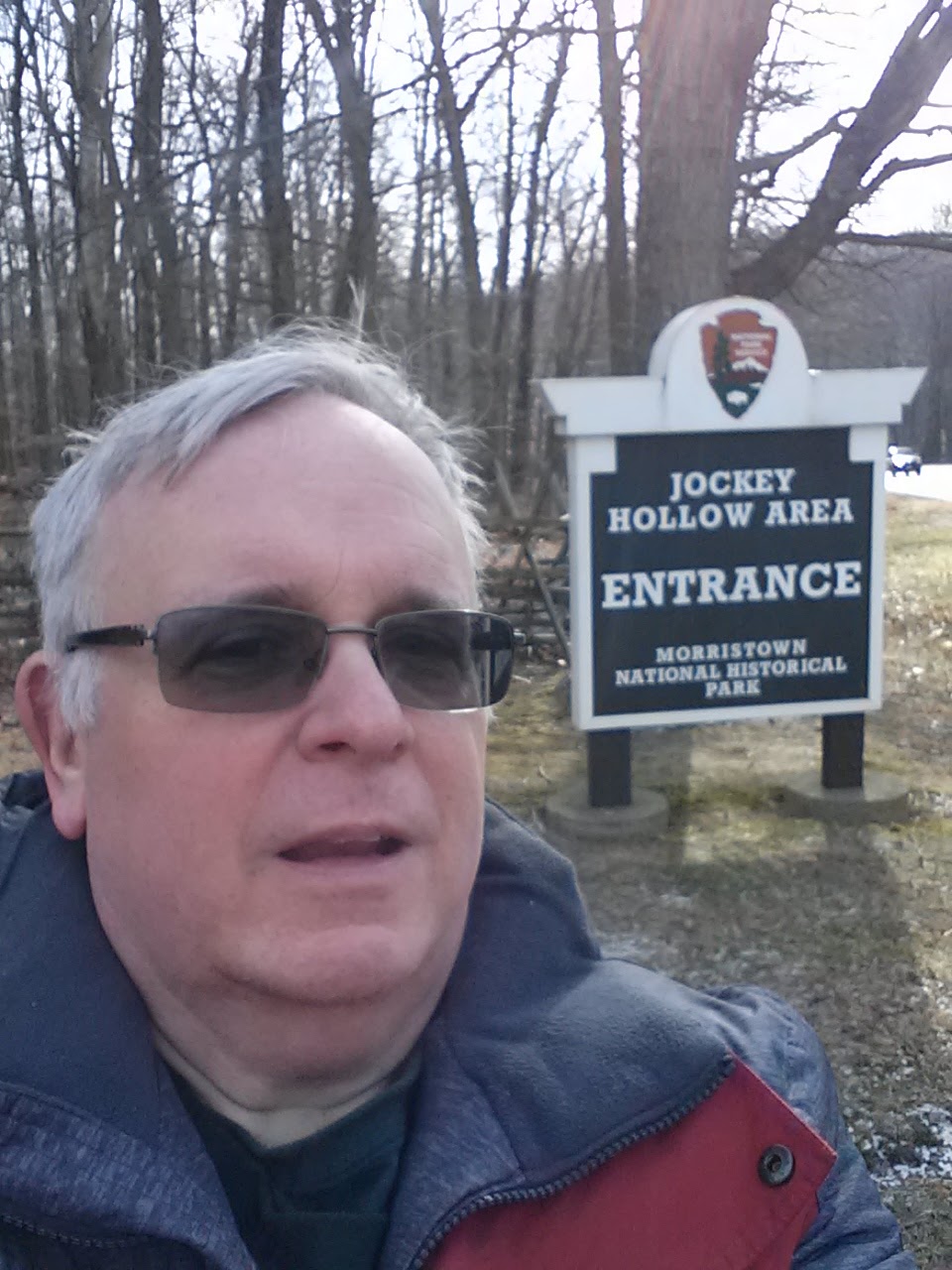
I set up in the parking lot and set up my 40 Meter Hamstick on the Jeep roof and the magloop right next to the Jeep. I was intending to start out on 40 Meter CW with the tried and proven Hamstick in order to get the 10 minimum QSOs that are needed for a valid activation; and only then switch over to the magloop for 20 Meters, as I really haven't used it enough to be confident in it as a proven performer.
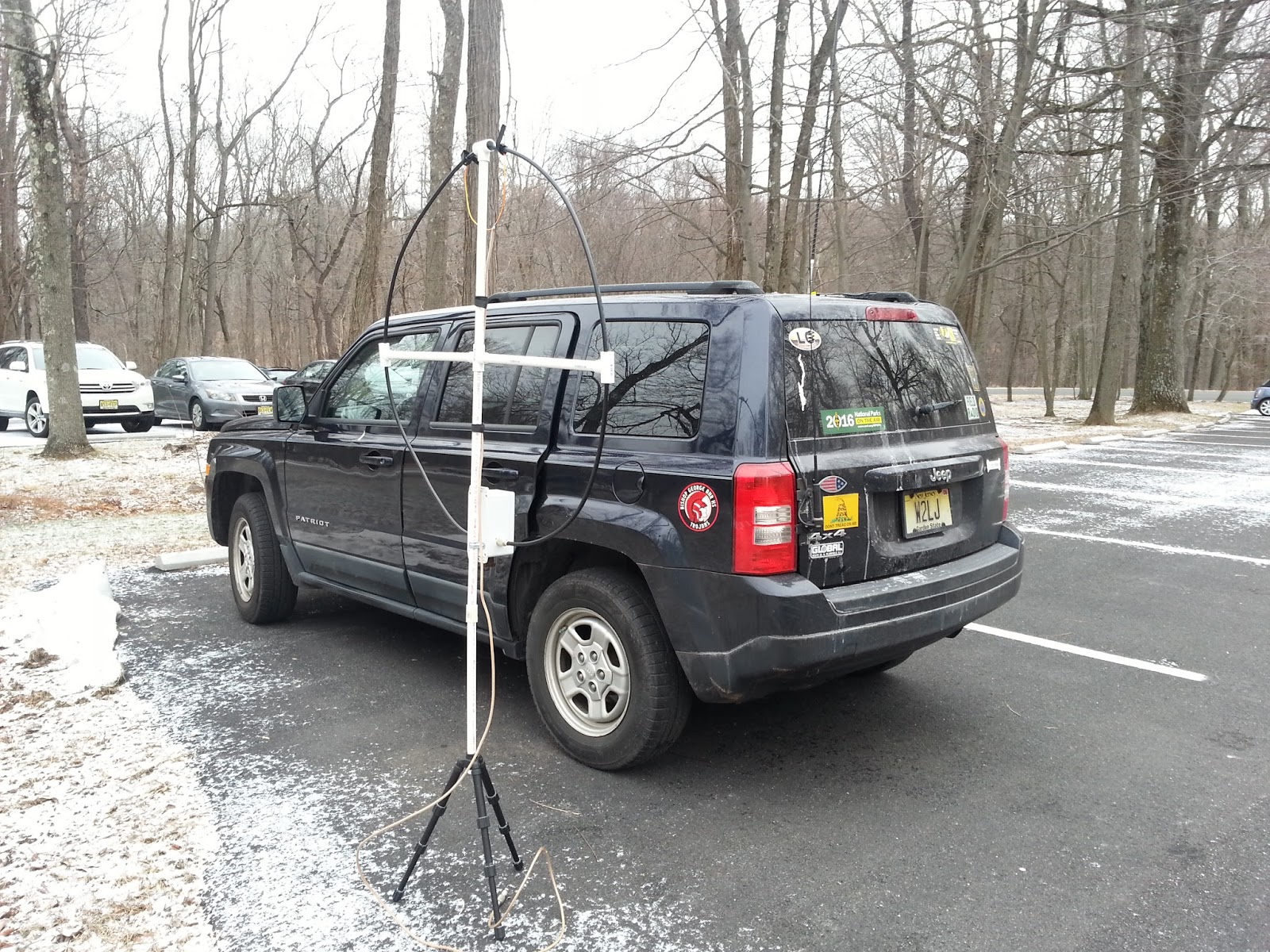
After getting everything set up, I made myself comfortable and self spotted my activity on both DX Summit as well as the NPOTA page on Facebook. I was rewarded with 38 QSOs on 7.038 MHz and then called CQ for a bit until the activity died out. Then I switched over to the SSB portion of the band in order to find an empty frequency. My goal was to work Dave KD2FSI who was staying in nearby Morris Plains. Dave and I have a history as far as NPOTA goes. When he activated HP28 last January, I drove up to lend him some assistance. Together, we both coached several fledgling members of the South Plainfield Amateur Radio Club during an activation of TR23. And when Dave would activate an NPOTA entity during his travels throughout the year, he kept me abreast of his agenda and gave me several ATNOs.
To work Dave on the last day of NPOTA would have been a privilege and an honor. Gladly, it came to fruition; and I was able to have a brief sideband contact with him on 7.220 MHz (gladly, I thought enough to bring the microphone along, which turned out to be very important). After working Dave, I turned my attention to 14.061 MHz and the magloop. With the 6:1 reduction drive, it seemed to take forever to find a noise peak, but eventually I did. After carefully turning for peak noise, I hit the auto tune button on the KX3, thinking that I would "clean up" and lingering SWR. The auto tuner clicked and clacked for about a millisecond as I was already there - the KX3 showing me that I had a 1:1 match. Now the proof would be in the pudding, Was my home brew magloop as good as advertised; or would be just a waste of my time and money?
The magloop turned out to be a great performer, way beyond what I thought was possible. With only 5 Watts, I was getting great signal reports from California, Idaho, Montana, Colorado, the Azores and Italy! Wow! Something that I built from scratch actually worked and it ended up costing me substantially less than a commercial unit. To say that I was pleased would be an understatement. I was more akin to walking on air.
Then then next hour even topped that! Much to my surprise, Dave KD2FSI drove up next to me and parked in the space next to mine. I got out of the Jeep and greeted him and we had ourselves a very nice time talking and discussing NPOTA and the day's events.

About a 1/2 hour later, I arrived at the Frazee House in Scotch Plains, which is right on the Washington - Roachambeau Trail; and it was the same place I activated the Trail from during the NJQRP Skeeter Hunt. When I activated TR23 last January, I did it from the entrance to the Ashbrook Golf Course. It was open yesterday and I didn't want to cause any commotion, so I came back to the Frazee House which is only a couple of minutes farther down the road.


This time I decided to use another arrow from my antenna quiver, I also brought along my Joplin ARC antenna launcher and I got a line over a tree and made use of the PAR ENDFEDZ 40/20/10.

I ran the coax into the Jeep through a crack in the window and got down to business. I ran off a bunch of QSOs on 40 Meters and was about to switch over to 20 Meters when I noticed out of the corner of my eye that a vehicle had pulled up next to me. This time, it wasn't another Radio Amateur. This time, it was a member of the Scotch Plains Police Department. I guess I called some attention to myself, being the only car there, in an otherwise empty place. I got out of the car and walked a step or two to his rolled down window. I introduced myself and gave the spiel about NPOTA and how Raritan Road is part of the Washington - Rochambeau Trail, which he knew. What the Officer didn't know was that the trail is part of the National Parks System and he was very surprised by that. Then he told me about how his grandfather was a Ham, that in fact W2KKG was his call sign. We talked a bit, shook hands and he went on his way; and I returned to the Jeep for 20 Meters.
20 Meter CW proved to be a disappointment. Even with self spotting, I garnered only about 15 QSOs before the activity petered out, way too soon in my opinion. I sat there, with KX3 calling CQ, debating whether I should pack it in and go home. It was getting to be around 2:30 PM EST, and I only wanted to be out until around 3:00 PM as I had a previous commitment at 5:00 PM and I had to get ready for that. Wanting to get a least a few more Qs in the log; so I decided that I would give 20 Meter SSB a shot. With the deep cycle battery, I could boost the KX3's output to 10 Watts. The PAR was up in a tree about 50 feet up or so, so I figured, "What the heck!". I didn't even bother to spot myself, I just hooked up the microphone and started calling CQ on 14.340 MHz, figuring that what would be, would be.
Much to my surprise, about 60 QSOs later, the pileup ceased. With 10 Watts, I had worked all up and down the East Coast, across to California and Washington State and even up into Alberta, Canada. In all, there were only 1 or 2 instances where I had to repeat anything. It was pure bliss!
As it started becoming overcast and dusk started settling in, I packed everything up and headed home. I was in another world, walking in rarefied air. NPOTA turned out to be everything it was chalked up to be; and more. Thanks to Sean, Norm and all the ARRL staff who worked tirelessly behind the scenes to make NPOTA the success that it was. I have never been more proud to be a Life Member of the ARRL. Friendships that will last a lifetime; and new memories that will last a lifetime are the direct results of NPOTA. It just doesn't get any better than this.
Later, I was talking with my good friend Bob W3BBO on Skype, as we do just about every Saturday evenming, I had worked him earlier from HP28 and we talked about our QSO a bit more in depth and about the day in general. Bob stated that, in a way, he felt bad for me. As he tuned around 20 and 40 Meters, it seemed like it was just wall-to-wall NPOTA. He told me that he was sure I should have been at home boosting up my entities worked total. I told him not to feel bad, as not only had I worked a couple new ones via Park to Park QSOs; but there was nowhere in the world that I would have rather been - handing out QSOs as an Activator on the last and best day of NPOTA.
72 de Larry W2LJ
QRP - When you care to send the very least!
Wow ….. just wow!
I'm not sure how to even begin this post. Yesterday, the final day of NPOTA was such a good day, there was no time to be sad or mourn its end. If NPOTA was the gift of a great big cake to Amateur Radio in 2016 - then December 31, 2016 will go down as the icing on the cake. It was definitely one of the best days in Amateur Radio that I have ever had. If it wasn't the best, it was right up there in the Top 10 .... maybe the Top 5.
As stated in my earlier post this week, my intention was to come full circle and to end NPOTA as it began, with activations of both the Washington-Rochambeau Trail (TR23) and Morristown National Historical Park (HP28). The day started sunny and a bit cold as I made my way up to Morristown. I haven't been up there since last May, and since I take all back roads to get there, I was using my TomTom GPS unit to guide me there. About 1/3 of the way there, the TomTom gave up the ghost. Rebooting and resetting did no good. The map screen was nothing but a blank, white screen. Fortunately, I was able to retrace my steps without getting lost.
I set up in the parking lot and set up my 40 Meter Hamstick on the Jeep roof and the magloop right next to the Jeep. I was intending to start out on 40 Meter CW with the tried and proven Hamstick in order to get the 10 minimum QSOs that are needed for a valid activation; and only then switch over to the magloop for 20 Meters, as I really haven't used it enough to be confident in it as a proven performer.
While we were shooting the breeze, we both noticed a group pf people a little bit over in the same parking lot. They had set up tables and had some drinks and some food that they were enjoying. One of the women from the group came up to us and asked what we were doing and was my magloop "Some kind of antenna?" We explained NPOTA and Amateur Radio and that's when she invited us over to join her friends for a warm drink and to explain to all of them what we were doing. It seems they were a group of Norwegian descendants who usually get together, either on Christmas Eve or New Year's Eve to enjoy some food, drink and fellowship outdoors. They gave Dave and me a hot cup of Glug, which was a mixture of red wine, almonds and raisins. While we sipped we gave a good talk about Amateur Radio, NPOTA, the ARRL and the National Parks System as well as a few points about Emergency Communications. They thanked us and we thanked them and then Dave and I headed back to our cars. He left to get back to Morris Plains, and I packed up to head back home to TR23.
About a 1/2 hour later, I arrived at the Frazee House in Scotch Plains, which is right on the Washington - Roachambeau Trail; and it was the same place I activated the Trail from during the NJQRP Skeeter Hunt. When I activated TR23 last January, I did it from the entrance to the Ashbrook Golf Course. It was open yesterday and I didn't want to cause any commotion, so I came back to the Frazee House which is only a couple of minutes farther down the road.
This time I decided to use another arrow from my antenna quiver, I also brought along my Joplin ARC antenna launcher and I got a line over a tree and made use of the PAR ENDFEDZ 40/20/10.
I ran the coax into the Jeep through a crack in the window and got down to business. I ran off a bunch of QSOs on 40 Meters and was about to switch over to 20 Meters when I noticed out of the corner of my eye that a vehicle had pulled up next to me. This time, it wasn't another Radio Amateur. This time, it was a member of the Scotch Plains Police Department. I guess I called some attention to myself, being the only car there, in an otherwise empty place. I got out of the car and walked a step or two to his rolled down window. I introduced myself and gave the spiel about NPOTA and how Raritan Road is part of the Washington - Rochambeau Trail, which he knew. What the Officer didn't know was that the trail is part of the National Parks System and he was very surprised by that. Then he told me about how his grandfather was a Ham, that in fact W2KKG was his call sign. We talked a bit, shook hands and he went on his way; and I returned to the Jeep for 20 Meters.
20 Meter CW proved to be a disappointment. Even with self spotting, I garnered only about 15 QSOs before the activity petered out, way too soon in my opinion. I sat there, with KX3 calling CQ, debating whether I should pack it in and go home. It was getting to be around 2:30 PM EST, and I only wanted to be out until around 3:00 PM as I had a previous commitment at 5:00 PM and I had to get ready for that. Wanting to get a least a few more Qs in the log; so I decided that I would give 20 Meter SSB a shot. With the deep cycle battery, I could boost the KX3's output to 10 Watts. The PAR was up in a tree about 50 feet up or so, so I figured, "What the heck!". I didn't even bother to spot myself, I just hooked up the microphone and started calling CQ on 14.340 MHz, figuring that what would be, would be.
Much to my surprise, about 60 QSOs later, the pileup ceased. With 10 Watts, I had worked all up and down the East Coast, across to California and Washington State and even up into Alberta, Canada. In all, there were only 1 or 2 instances where I had to repeat anything. It was pure bliss!
As it started becoming overcast and dusk started settling in, I packed everything up and headed home. I was in another world, walking in rarefied air. NPOTA turned out to be everything it was chalked up to be; and more. Thanks to Sean, Norm and all the ARRL staff who worked tirelessly behind the scenes to make NPOTA the success that it was. I have never been more proud to be a Life Member of the ARRL. Friendships that will last a lifetime; and new memories that will last a lifetime are the direct results of NPOTA. It just doesn't get any better than this.
Later, I was talking with my good friend Bob W3BBO on Skype, as we do just about every Saturday evenming, I had worked him earlier from HP28 and we talked about our QSO a bit more in depth and about the day in general. Bob stated that, in a way, he felt bad for me. As he tuned around 20 and 40 Meters, it seemed like it was just wall-to-wall NPOTA. He told me that he was sure I should have been at home boosting up my entities worked total. I told him not to feel bad, as not only had I worked a couple new ones via Park to Park QSOs; but there was nowhere in the world that I would have rather been - handing out QSOs as an Activator on the last and best day of NPOTA.
72 de Larry W2LJ
QRP - When you care to send the very least!
As stated in my earlier post this week, my intention was to come full circle and to end NPOTA as it began, with activations of both the Washington-Rochambeau Trail (TR23) and Morristown National Historical Park (HP28). The day started sunny and a bit cold as I made my way up to Morristown. I haven't been up there since last May, and since I take all back roads to get there, I was using my TomTom GPS unit to guide me there. About 1/3 of the way there, the TomTom gave up the ghost. Rebooting and resetting did no good. The map screen was nothing but a blank, white screen. Fortunately, I was able to retrace my steps without getting lost.
I set up in the parking lot and set up my 40 Meter Hamstick on the Jeep roof and the magloop right next to the Jeep. I was intending to start out on 40 Meter CW with the tried and proven Hamstick in order to get the 10 minimum QSOs that are needed for a valid activation; and only then switch over to the magloop for 20 Meters, as I really haven't used it enough to be confident in it as a proven performer.
After getting everything set up, I made myself comfortable and self spotted my activity on both DX Summit as well as the NPOTA page on Facebook. I was rewarded with 38 QSOs on 7.038 MHz and then called CQ for a bit until the activity died out. Then I switched over to the SSB portion of the band in order to find an empty frequency. My goal was to work Dave KD2FSI who was staying in nearby Morris Plains. Dave and I have a history as far as NPOTA goes. When he activated HP28 last January, I drove up to lend him some assistance. Together, we both coached several fledgling members of the South Plainfield Amateur Radio Club during an activation of TR23. And when Dave would activate an NPOTA entity during his travels throughout the year, he kept me abreast of his agenda and gave me several ATNOs.
To work Dave on the last day of NPOTA would have been a privilege and an honor. Gladly, it came to fruition; and I was able to have a brief sideband contact with him on 7.220 MHz (gladly, I thought enough to bring the microphone along, which turned out to be very important). After working Dave, I turned my attention to 14.061 MHz and the magloop. With the 6:1 reduction drive, it seemed to take forever to find a noise peak, but eventually I did. After carefully turning for peak noise, I hit the auto tune button on the KX3, thinking that I would "clean up" and lingering SWR. The auto tuner clicked and clacked for about a millisecond as I was already there - the KX3 showing me that I had a 1:1 match. Now the proof would be in the pudding, Was my home brew magloop as good as advertised; or would be just a waste of my time and money?
The magloop turned out to be a great performer, way beyond what I thought was possible. With only 5 Watts, I was getting great signal reports from California, Idaho, Montana, Colorado, the Azores and Italy! Wow! Something that I built from scratch actually worked and it ended up costing me substantially less than a commercial unit. To say that I was pleased would be an understatement. I was more akin to walking on air.
Then then next hour even topped that! Much to my surprise, Dave KD2FSI drove up next to me and parked in the space next to mine. I got out of the Jeep and greeted him and we had ourselves a very nice time talking and discussing NPOTA and the day's events.
About a 1/2 hour later, I arrived at the Frazee House in Scotch Plains, which is right on the Washington - Roachambeau Trail; and it was the same place I activated the Trail from during the NJQRP Skeeter Hunt. When I activated TR23 last January, I did it from the entrance to the Ashbrook Golf Course. It was open yesterday and I didn't want to cause any commotion, so I came back to the Frazee House which is only a couple of minutes farther down the road.
This time I decided to use another arrow from my antenna quiver, I also brought along my Joplin ARC antenna launcher and I got a line over a tree and made use of the PAR ENDFEDZ 40/20/10.
I ran the coax into the Jeep through a crack in the window and got down to business. I ran off a bunch of QSOs on 40 Meters and was about to switch over to 20 Meters when I noticed out of the corner of my eye that a vehicle had pulled up next to me. This time, it wasn't another Radio Amateur. This time, it was a member of the Scotch Plains Police Department. I guess I called some attention to myself, being the only car there, in an otherwise empty place. I got out of the car and walked a step or two to his rolled down window. I introduced myself and gave the spiel about NPOTA and how Raritan Road is part of the Washington - Rochambeau Trail, which he knew. What the Officer didn't know was that the trail is part of the National Parks System and he was very surprised by that. Then he told me about how his grandfather was a Ham, that in fact W2KKG was his call sign. We talked a bit, shook hands and he went on his way; and I returned to the Jeep for 20 Meters.
20 Meter CW proved to be a disappointment. Even with self spotting, I garnered only about 15 QSOs before the activity petered out, way too soon in my opinion. I sat there, with KX3 calling CQ, debating whether I should pack it in and go home. It was getting to be around 2:30 PM EST, and I only wanted to be out until around 3:00 PM as I had a previous commitment at 5:00 PM and I had to get ready for that. Wanting to get a least a few more Qs in the log; so I decided that I would give 20 Meter SSB a shot. With the deep cycle battery, I could boost the KX3's output to 10 Watts. The PAR was up in a tree about 50 feet up or so, so I figured, "What the heck!". I didn't even bother to spot myself, I just hooked up the microphone and started calling CQ on 14.340 MHz, figuring that what would be, would be.
Much to my surprise, about 60 QSOs later, the pileup ceased. With 10 Watts, I had worked all up and down the East Coast, across to California and Washington State and even up into Alberta, Canada. In all, there were only 1 or 2 instances where I had to repeat anything. It was pure bliss!
As it started becoming overcast and dusk started settling in, I packed everything up and headed home. I was in another world, walking in rarefied air. NPOTA turned out to be everything it was chalked up to be; and more. Thanks to Sean, Norm and all the ARRL staff who worked tirelessly behind the scenes to make NPOTA the success that it was. I have never been more proud to be a Life Member of the ARRL. Friendships that will last a lifetime; and new memories that will last a lifetime are the direct results of NPOTA. It just doesn't get any better than this.
Later, I was talking with my good friend Bob W3BBO on Skype, as we do just about every Saturday evenming, I had worked him earlier from HP28 and we talked about our QSO a bit more in depth and about the day in general. Bob stated that, in a way, he felt bad for me. As he tuned around 20 and 40 Meters, it seemed like it was just wall-to-wall NPOTA. He told me that he was sure I should have been at home boosting up my entities worked total. I told him not to feel bad, as not only had I worked a couple new ones via Park to Park QSOs; but there was nowhere in the world that I would have rather been - handing out QSOs as an Activator on the last and best day of NPOTA.
72 de Larry W2LJ
QRP - When you care to send the very least!
Thursday’s Moonrise
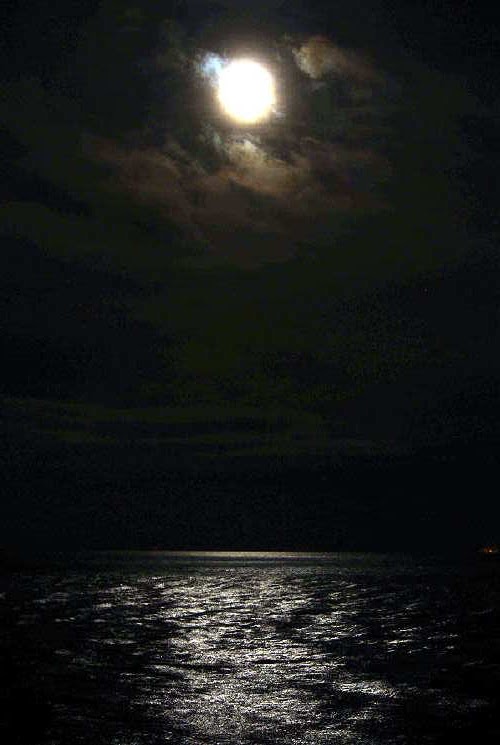
I couldn't hold out any longer! The sight of a full-moon rising over the ocean a few nights ago was just too difficult to resist ... I would have to spark-up my 2m mini moonbounce system and see what was happening.
The QSLs are now all in from my last eme adventures in the early summer, bringing my total number of contacts to 80.
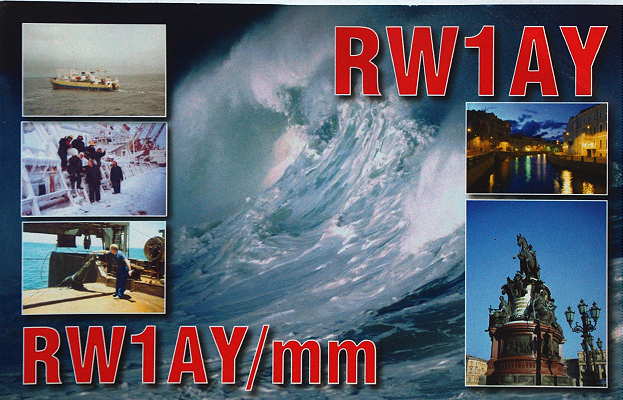 |
| RW1AY used an 8 x 15el cross-polarized array |
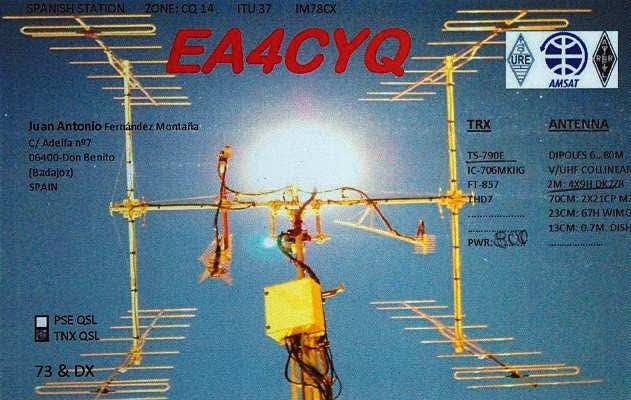 |
| EA4CQ's 4 x 9el DK4ZB yagis |
 |
| YU7AA's 8 x 13el nested array |
 |
| NC2V used a 4 x 20el cross-polarized array |
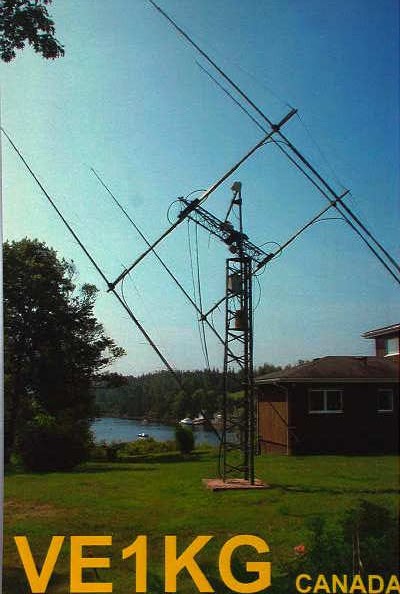 |
| VE1KG's 4 x 17el yagi array |
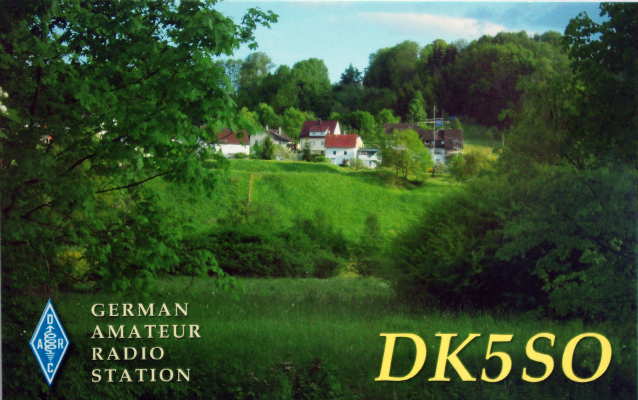 |
| DK5SO used four 20' long yagis and 750W |
My simple system uses a single 9el m2 yagi and an old third-hand 140W brick amplifier and built-in GaAsFET preamp. The yagi is mounted atop my 50' tower and fed with about 100' of RG-213 cable, along with its 2+ db of loss.
Looking directly out over the saltwater of Georgia Strait seems to provide the near theoretical 'sea-gain' of 6db, making the little yagi behave more like a box of four in terms of gain. As well, there are no noise sources when pointing out over the water at the rising moon. Not being able to elevate the antenna means 'moonrises' only, and usually gives me about 90 minutes per session before the moon gets too high.
Last night was surprisingly active, mostly with U.S. stations, as it was still early evening here but there were also several early-rising Europeans on the band.
One outstanding signal was from a station I had not worked before, OK1DIG, who was running a 4 x 15 element yagi array. I called him a few times when his signal was easily audible (-15db) but he seemed to only hear me later, replying to one of my 'CQ's, with his signal starting to drop here. This is often the case on 2m eme as a reciprocal two-way path is not always the rule. He was my only contact of the evening (#81) but also heard were K9SLQ, UT3MD, PA3FYC, all of whom I have yet to work.
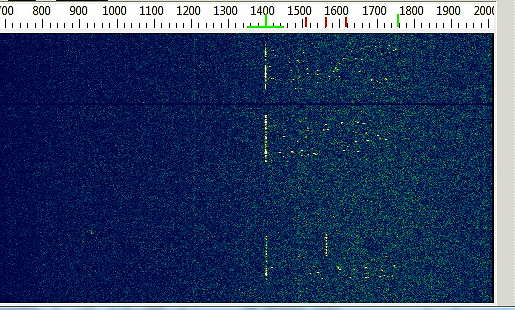 |
| OK1DIG's audible JT65B CQs |
Thursday’s Moonrise
I couldn't hold out any longer! The sight of a full-moon rising over the ocean a few nights ago was just too difficult to resist ... I would have to spark-up my 2m mini moonbounce system and see what was happening.
The QSLs are now all in from my last eme adventures in the early summer, bringing my total number of contacts to 80.
|
| RW1AY used an 8 x 15el cross-polarized array |
|
| EA4CQ's 4 x 9el DK4ZB yagis |
|
| YU7AA's 8 x 13el nested array |
|
| NC2V used a 4 x 20el cross-polarized array |
|
| VE1KG's 4 x 17el yagi array |
|
| DK5SO used four 20' long yagis and 750W |
My simple system uses a single 9el m2 yagi and an old third-hand 140W brick amplifier and built-in GaAsFET preamp. The yagi is mounted atop my 50' tower and fed with about 100' of RG-213 cable, along with its 2+ db of loss.
Looking directly out over the saltwater of Georgia Strait seems to provide the near theoretical 'sea-gain' of 6db, making the little yagi behave more like a box of four in terms of gain. As well, there are no noise sources when pointing out over the water at the rising moon. Not being able to elevate the antenna means 'moonrises' only, and usually gives me about 90 minutes per session before the moon gets too high.
Last night was surprisingly active, mostly with U.S. stations, as it was still early evening here but there were also several early-rising Europeans on the band.
One outstanding signal was from a station I had not worked before, OK1DIG, who was running a 4 x 15 element yagi array. I called him a few times when his signal was easily audible (-15db) but he seemed to only hear me later, replying to one of my 'CQ's, with his signal starting to drop here. This is often the case on 2m eme as a reciprocal two-way path is not always the rule. He was my only contact of the evening (#81) but also heard were K9SLQ, UT3MD, PA3FYC, all of whom I have yet to work.
|
| OK1DIG's audible JT65B CQs |
CLE 213 Results
As usual, the wonderful LF and MF conditions experienced during the week went into the dumper as the CLE weekend arrived.
Looking back, most of this can be blamed on our monthly (~28 days) repetitive schedule which nicely matches the rotation of the Sun. It seems that the same large coronal hole stream that whacked us during CLE 212, is the same one that showed up for CLE 213 right on schedule. Perhaps we need to shift our schedule by a week in case it wants to hang around for yet another rotation.
Conditions were not as bleak as I make them sound but they were a far cry from those enjoyed earlier in the week. The skip seemed fairly long on all three nights, but most signals were on the runty side, with only a few making strong appearances here on the left coast.
As shown below, conditions were quite 'flat' for the entire weekend and propagation did not vary much in quality other than favoring slightly different regions each night. Interestingly, 'YLH - 247' in Landsdowne House, Ontario, whose antenna was pictured on my last blog, was not heard at all on both Friday or Saturday but had a booming signal on Sunday night.
Date 27 27 27 27 27 28 28 28 28 28 28 28 28 29
UTC 0900 1200 1500 1800 2100 0000 0300 0600
SFlx 81 81 81 81 83 83 83 83 83 83 83 83 85 85
A-in 12 12 12 12 10 10 10 10 10 10 10 10 7 8
K-in 3 3 2 1 2 2 2 2 2 1 2 3 2 3
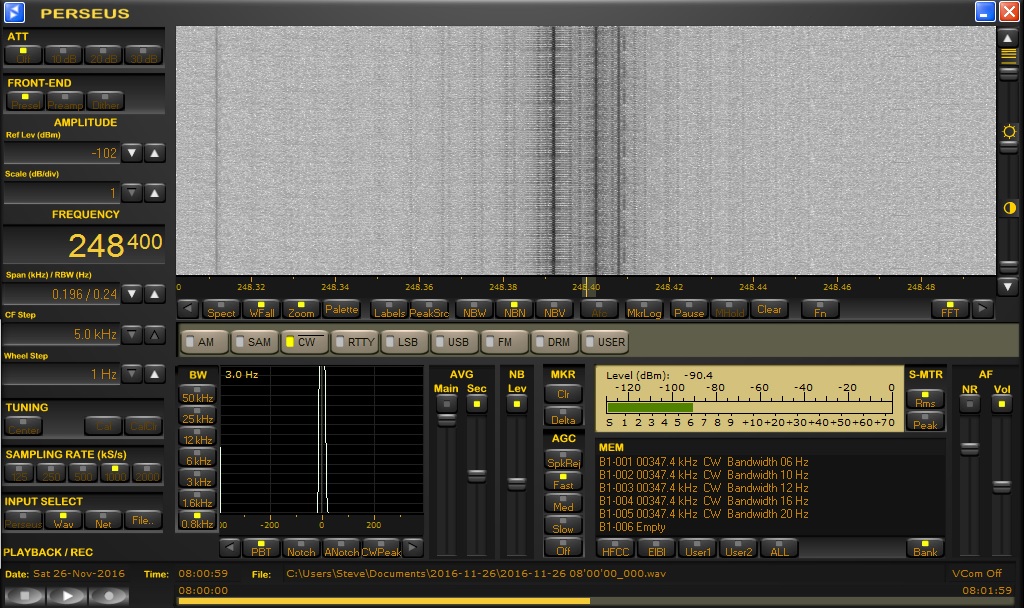
My usual procedure with the Perseus SDR is to record the CLE segments of the band for two minutes, every hour and every half-hour, from shortly after sunset to local sunrise. It then requires several hours of carefully going through the recordings to see what CLE signals were recorded ... sometimes spending up to an hour on one frequency only, sorting out what was coming through.
I have also found that the classic blue-screen waterfall does not yield the best contrast for finding weak signals ... the 'photo-negative' screen shown above is far superior, with signals in black appearing on a white background.
26 02:00 240.0 BVS Burlington, WA, USA
26 03:00 241.0 YGT Igloolik, NU, CAN
27 03:00 242.0 ZT Port Hardy, BC, CAN
26 03:00 242.0 XC Cranbrook, BC, CAN
27 08:00 242.0 MMI Athens, TN, USA
26 07:30 242.0 EL El Paso, TX, USA
27 06:30 244.0 TH Thompson, MB, CAN
27 06:30 245.0 YZE Gore Bay, ON, CAN
28 15:00 245.0 HNS Haines, ALS
27 06:30 245.0 CRR Circle, MT, USA
27 06:00 245.0 CB Cambridge Bay, NU, CAN
27 09:30 245.0 AVQ Marana, AZ, USA
27 04:00 246.0 ZXJ Fort St. John, BC, CAN
27 09:00 247.0 YLH Lansdowne House, ON, CAN
27 08:00 248.0 ZZP Queen Charlotte Is, BC, CAN
27 08:00 248.0 QL Lethbridge, AB, CAN
27 08:00 248.0 QH Watson Lake, YT, CAN
27 07:30 248.0 PQF Mesquite, TX, USA
27 06:30 248.0 GLA Gulkana, ALS
27 08:00 248.0 FRT Fairmont, SC, USA
27 08:00 250.0 FO Flin Flon Municipal, MB, CAN
27 08:00 250.0 2J Grand Forks, BC, CAN
27 08:00 251.0 YCD Nanaimo, BC, CAN
27 15:00 251.0 OSE Bethel Apt, ALS
28 08:00 251.0 JZY Macomb, IL, USA
27 06:30 251.0 BR Brainerd, MN, USA
27 08:00 251.0 AM Amarillo, TX, USA
27 10:00 253.0 GB Marshall, MN, USA
27 08:00 254.0 ZYC Calgary, AB, CAN
27 08:00 254.0 SM Fort Smith, AB, CAN
27 04:00 254.0 EV Inuvik, NT, CAN
27 04:00 256.0 LSO Kelso, WA, USA
27 14:00 256.0 EB Edmonton, AB, CAN
27 14:00 257.0 XE Saskatoon, SK, CAN
27 05:00 257.0 SQT Melbourne, FL, USA
27 07:00 257.0 SAZ Staples, MN, USA
27 08:30 257.0 PEA Pella, IA, USA
27 07:00 257.0 MB Saginaw, MI, USA
27 14:00 257.0 LW Kelowna, BC, CAN
27 12:00 257.0 HCY Cowley, WY, USA
27 08:00 258.0 ZSJ Sandy Lake, ON, CAN
27 06:30 420.0 V7BE2 XOC, XUU
27 08:00 420.0 PK Olathe, KS, USA
27 08:00 420.0 FQ East Chain, MN, USA
27 04:00 421.0 VLY McKenney, TX, USA
27 08:30 422.0 EA Kearney, NE, USA
27 06:30 424.0 RVJ Reidsville, GA, USA
27 06:00 425.0 PFL Fort Sill, OK, USA
27 06:00 426.0 FTP Fort Payne, AL, USA
27 08:00 426.0 EN Council Bluffs, NE, USA
27 07:30 428.0 POH Pocahontas, IA, USA
27 07:00 432.0 IZN Lincolnton, NC, USA
The logging at 0630Z of 'V7BE2' is a large drill ship, the "Deepwater Thalassa", located near the center of the Gulf of Mexico.
CLE 213 Results
As usual, the wonderful LF and MF conditions experienced during the week went into the dumper as the CLE weekend arrived.
Looking back, most of this can be blamed on our monthly (~28 days) repetitive schedule which nicely matches the rotation of the Sun. It seems that the same large coronal hole stream that whacked us during CLE 212, is the same one that showed up for CLE 213 right on schedule. Perhaps we need to shift our schedule by a week in case it wants to hang around for yet another rotation.
Conditions were not as bleak as I make them sound but they were a far cry from those enjoyed earlier in the week. The skip seemed fairly long on all three nights, but most signals were on the runty side, with only a few making strong appearances here on the left coast.
As shown below, conditions were quite 'flat' for the entire weekend and propagation did not vary much in quality other than favoring slightly different regions each night. Interestingly, 'YLH - 247' in Landsdowne House, Ontario, whose antenna was pictured on my last blog, was not heard at all on both Friday or Saturday but had a booming signal on Sunday night.
Date 27 27 27 27 27 28 28 28 28 28 28 28 28 29
UTC 0900 1200 1500 1800 2100 0000 0300 0600
SFlx 81 81 81 81 83 83 83 83 83 83 83 83 85 85
A-in 12 12 12 12 10 10 10 10 10 10 10 10 7 8
K-in 3 3 2 1 2 2 2 2 2 1 2 3 2 3
My usual procedure with the Perseus SDR is to record the CLE segments of the band for two minutes, every hour and every half-hour, from shortly after sunset to local sunrise. It then requires several hours of carefully going through the recordings to see what CLE signals were recorded ... sometimes spending up to an hour on one frequency only, sorting out what was coming through.
I have also found that the classic blue-screen waterfall does not yield the best contrast for finding weak signals ... the 'photo-negative' screen shown above is far superior, with signals in black appearing on a white background.
26 02:00 240.0 BVS Burlington, WA, USA
26 03:00 241.0 YGT Igloolik, NU, CAN
27 03:00 242.0 ZT Port Hardy, BC, CAN
26 03:00 242.0 XC Cranbrook, BC, CAN
27 08:00 242.0 MMI Athens, TN, USA
26 07:30 242.0 EL El Paso, TX, USA
27 06:30 244.0 TH Thompson, MB, CAN
27 06:30 245.0 YZE Gore Bay, ON, CAN
28 15:00 245.0 HNS Haines, ALS
27 06:30 245.0 CRR Circle, MT, USA
27 06:00 245.0 CB Cambridge Bay, NU, CAN
27 09:30 245.0 AVQ Marana, AZ, USA
27 04:00 246.0 ZXJ Fort St. John, BC, CAN
27 09:00 247.0 YLH Lansdowne House, ON, CAN
27 08:00 248.0 ZZP Queen Charlotte Is, BC, CAN
27 08:00 248.0 QL Lethbridge, AB, CAN
27 08:00 248.0 QH Watson Lake, YT, CAN
27 07:30 248.0 PQF Mesquite, TX, USA
27 06:30 248.0 GLA Gulkana, ALS
27 08:00 248.0 FRT Fairmont, SC, USA
27 08:00 250.0 FO Flin Flon Municipal, MB, CAN
27 08:00 250.0 2J Grand Forks, BC, CAN
27 08:00 251.0 YCD Nanaimo, BC, CAN
27 15:00 251.0 OSE Bethel Apt, ALS
28 08:00 251.0 JZY Macomb, IL, USA
27 06:30 251.0 BR Brainerd, MN, USA
27 08:00 251.0 AM Amarillo, TX, USA
27 10:00 253.0 GB Marshall, MN, USA
27 08:00 254.0 ZYC Calgary, AB, CAN
27 08:00 254.0 SM Fort Smith, AB, CAN
27 04:00 254.0 EV Inuvik, NT, CAN
27 04:00 256.0 LSO Kelso, WA, USA
27 14:00 256.0 EB Edmonton, AB, CAN
27 14:00 257.0 XE Saskatoon, SK, CAN
27 05:00 257.0 SQT Melbourne, FL, USA
27 07:00 257.0 SAZ Staples, MN, USA
27 08:30 257.0 PEA Pella, IA, USA
27 07:00 257.0 MB Saginaw, MI, USA
27 14:00 257.0 LW Kelowna, BC, CAN
27 12:00 257.0 HCY Cowley, WY, USA
27 08:00 258.0 ZSJ Sandy Lake, ON, CAN
27 06:30 420.0 V7BE2 XOC, XUU
27 08:00 420.0 PK Olathe, KS, USA
27 08:00 420.0 FQ East Chain, MN, USA
27 04:00 421.0 VLY McKenney, TX, USA
27 08:30 422.0 EA Kearney, NE, USA
27 06:30 424.0 RVJ Reidsville, GA, USA
27 06:00 425.0 PFL Fort Sill, OK, USA
27 06:00 426.0 FTP Fort Payne, AL, USA
27 08:00 426.0 EN Council Bluffs, NE, USA
27 07:30 428.0 POH Pocahontas, IA, USA
27 07:00 432.0 IZN Lincolnton, NC, USA
The logging at 0630Z of 'V7BE2' is a large drill ship, the "Deepwater Thalassa", located near the center of the Gulf of Mexico.
Hunting For NDBs In CLE 213
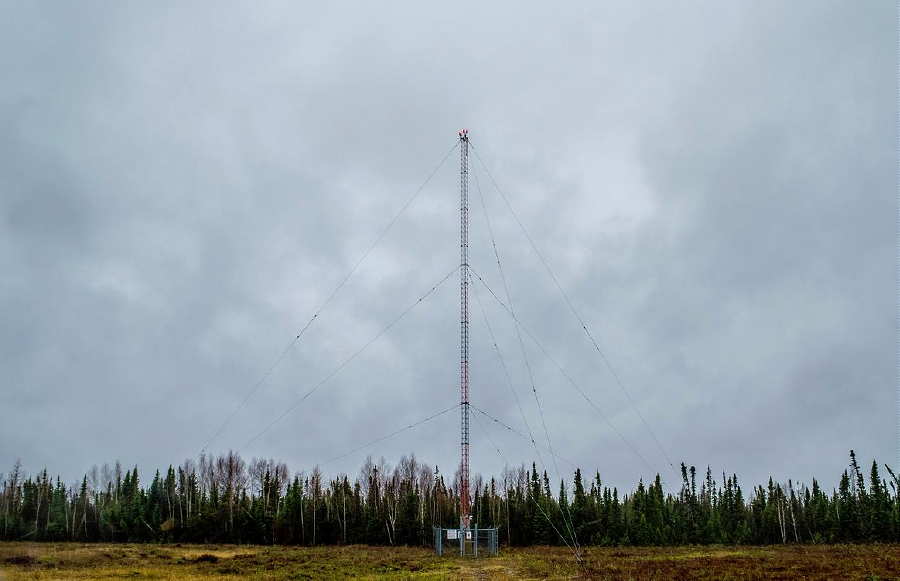 |
| 'YLH' - 247 courtesy: http://www.ve3gop.com/ |
This coming weekend will see another CLE challenge, this time in two ranges: 240.0 - 259.9 kHz plus 420.0 - 439.9 kHz.
A 'CLE' is a 'Co-ordinated Listening Event', as NDB DXers around the world focus their listening time on one small slice of the NDB spectrum.
A nice challenge in this one is to hear the Lansdowne House, Ontario, NDB, 'YLH' on 247 kHz. This one runs 250 watts and gets out well, having been logged from coast to coast. Listen for it on 247.417 kHz with your receiver in the CW mode.
From CLE organizer Brian Keyte, G3SIA, comes the usual 'heads-up':
Hi all,
Here are the final details for our 213th co-ordinated listening event this
weekend. First timer logs too? Yes, please!
Days: Friday 25 Nov. to Monday 28 Nov.
Times: Start and end at midday, your LOCAL TIME
Range: 240.0 - 259.9 kHz plus 420.0 - 439.9 kHz
(BOTH ranges are for ALL listeners)
Please log NDBs that you can positively identify in the ranges, plus any
UNIDs that you come across there.
The lower frequency range will be really hard for most Europe listeners,
the higher range not at all easy for most others.
Send your CLE log to the List, if possible as a plain text email and
not in an attachment, with CLE213 at the start of its title.
Show on EVERY LINE of your log:
# The Date (or day 'dd') and UTC (the day changes at 00:00 UTC).
# kHz - the beacon's nominal published frequency (if you know it).
# The Call Ident.
Please show those main items first on each line, BEFORE any optional
details (Location, Offsets, Cycle time, Distance, etc.)
If you send interim logs, do make sure that you also send a 'Final' log
containing all your loggings. As always, please make your log useful and
interesting to everyone by including your own location and brief details
of your receiver, aerial(s) and any recording equipment that you used.
I will send the usual 'Any More Logs?' email at about 18:00 UTC on
Tuesday so that you can check that your Final log has been found OK.
Do make sure that your log has arrived on the List at the very latest
by 09:00 UTC on Wednesday 30th November.
I hope to complete the combined results later on that day.
To help you with your search you can find lists of your target NDBs at
http://www.ndblist.info/cle.htm Select the SEEKLIST link there.
(To also see a MAP of the seeklist NDBs, just change 'List' to 'Map',
select 'All Results' and uncheck 'Clustering')
Good listening
Brian
----------------------------------------------------------
From: Brian Keyte G3SIA ndbcle'at'gmail.com
Location: Surrey, SE England (CLE co-ordinator)
----------------------------------------------------------
(Reminder: You could use any one remote receiver for your loggings,
stating its location and owner - with their permission if required.
A remote listener may NOT also use another receiver, whether local or
remote, to obtain further loggings for the same CLE).
These listening events serve several purposes. They:
- determine, worldwide, which beacons are actually in service and on-the-air so the online database can be kept up-to-date
- determine, worldwide, which beacons are out-of-service or have gone silent since the last CLE covering this range
- will indicate the state of propagation conditions at the various participant locations
- will give you an indication of how well your LF/MF receiving system is working
- give participants a fun yet challenging activity to keep their listening skills honed
Final details can be found at the NDB List website, and worldwide results, for every participant, will be posted there a few days after the event. If you are a member of the ndblist Group, results will also be e-mailed and posted there.
The very active Yahoo ndblist Group is a great place to learn more about the 'Art of NDB DXing' or to meet other listeners in your region. There is a lot of good information available there and new members are always very welcome. As well, you can follow the results of other CLE participants from night to night as propagation is always an active topic of discussion.
If you are contemplating getting started on 630m, listening for NDBs is an excellent way to test out your receive capabilities as there are several NDBs located near this part of the spectrum.
You need not be an ndblist member to participate in the CLEs and all reports, no matter how small, are of much value to the organizers.
'First-time' logs are always VERY welcome!
Reports may be sent to the ndblist or e-mailed to either myself or CLE co-ordinator, Brian Keyte (G3SIA), whose address appears above.
Please ... give the CLE a try ... then let us know what NDB's can be heard from your location! Your report can then be added to the worldwide database to help keep it up-to-date.
Good hunting!













