Archive for the ‘amateur’ Category
 Amateur Radio Newsline Report 1949 January 24 2015
 January 23rd, 2015 |
  Author:
- WE'RE BACK!
- Michigan gets its own PRB One antenna law
- A launch date for the Fox 1 hamsat is announced
- ARES called out in Ohio to assist after phone outage
- The flight of the V-K around-the-world floater balloon falls short of its round-the-world trip
- The K-one-N Nevassa Island DXpedition will be on the S-Oh 50 ham radio satellite
- And old Sol is at it again!
THIS WEEK'S NEWSCAST
LHS Episode #138: Being David Rowe
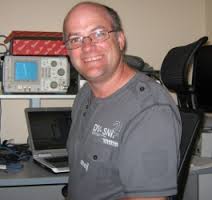 How about that: It's the first episode of Linux in the Ham Shack for 2015! We hope everyone is having a great new year so far. In this episode, we talk with David Rowe, VK5DGR, of Adelaide, South Australia. David is an audio engineer, Ph.D. scholar, inventor of Codec2 and co-author of FreeDV, among his many accolades. We talk to David about his projects, Linux, amateur radio, life in Australia, LinuxConf AU, the new SM1000 FreeDV device, the amount of energy it takes to make a Krispy Kreme donut, home built electric cars, and much more. Until next time...
73 de The LHS Guys
Celebration of SKCC – K3Y Special Event
Special event, “K3Y,” the Straight Key Century Club’s annual January celebration, commemorates the Straight Key Century Club’s founding in 2006 following the American Radio Relay League’s “Straight Key Night” (SKN). A small group of participants wanted to extend the fun of SKN throughout the year. The Straight Key Century Club (SKCC) is the result.
For the first three years, the club’s founders used the special event callsigns of K1Y, K2A, and K3Y as the celebration’s special-event calls. But, someone cleverly noticed that a ‘3’ is nothing more than a backwards, curvaceous ‘E’. This “KEY” event has operated under the special event callsign of ‘K3Y’, ever since.
The on-air party is open to members and non-members alike. It runs from 0000 UTC Jan. 2 through 2359 UTC Jan. 31. It’s a great time to introduce others to the joys of hand-crafted Morse code using straight keys, bugs, and side swipers.
In this video, you can “sit in” with NW7US, the control operator of the regional activation of special event station, “K3Y/0”, during one of the many shifts during January (2015).
+ The SKCC website is at http://skccgroup.com
+ The K3Y special event page is http://www.skccgroup.com/k3y/index.php
+ The NW7US website is at http://NW7US.us
+ Some more CW/Morse code resources can be found at http://cw.hfradio.org
VLF amateur radio
Being involved in VLF amateur radio is a very specialised activity requiring special (but low cost) kit to be successful. Casual listening is highly unlikely to be successful. Long distance reception of amateur VLF signals usually involves looking for signals using Spectrum Laboratory software locked to a VLF MSK signal so that very narrow bandwidths can be looked at for hours or days on end.
Most amateur VLF tests are done on 8.27kHz as this is unallocated spectrum in many countries.
News about amateur VLF activity can be found at https://sites.google.com/site/sub9khz/ . There has been very little amateur VLF work done this year but amateur VLF signals have crossed the Atlantic.

Tests using utilities assisted earth-mode do not involve big loading coils. Just under 6km has been achieved with just 5W using this mode, before I had my stroke! The kit was simple too. See https://sites.google.com/site/sub9khz/earthmode .
One of the things I am really looking forward to, when fit again, is some more field work with VLF using earth-mode.

Largest Sunspot Region (so far) in Sunspot Cycle 24
Look at this huge sunspot, the largest yet of Sunspot Cycle 24! It is about the same diameter as Jupiter! Notice how tiny Earth is, in comparison. Sunspots are regions on the Sun’s photosphere, formed by the “convection” of solar plasma deep inside the Sun, causing the twisting and shifting of magnetic fields. They look like spots on the photosphere because they are cooler than their surrounding solar material, giving them their dark, blemish-like appearance.

Close-up view of NOAA Active sunspot Region AR 12192 (short: 2192)
The sunspot is the largest since November 1990, and is larger than a monster sunspot that spawned a series of major solar flares over Halloween in 2003. AR 2192 was one of the biggest observed sunspots of all time, ranking 33rd largest of 32,908 active regions since 1874, according to NASA scientists C. Alex Young and Dean Pesnell.
Interestingly, this sunspot never released any major coronal mass ejection (CME), because the magnetic fields were too strong to let any significant plasma escape! However, this sunspot group unleashed a fair number of moderate to strong x-ray flares (see one of them in this video at < http://g.nw7us.us/1s7L0vF >). All told, AR 2192 popped off 26 M-class flares, and six X-class flares! Of course, during the last sunspot cycle, Cycle 23, there were many active sunspot regions unleashing flare after flare within hours of each other. That’s typical during the active phase of most sunspot cycles. This cycle, however, is one of the weakest on record, so this large sunspot with its many flares is exciting.

A Close-up of AR 2192
Each sunspot region gets a consecutive number assigned to it by the National Oceanic and Atmospheric Administration (NOAA). This sunspot region is NOAA AR (active region) Nr. 12192 (we often drop the first digit when speaking of a sunspot, so in this case, this region was often referred to as AR 2192).

One of the many x-ray flares originating from Active sunspot Region AR 2192 – this one seen in Extreme Ultraviolet at 131 Angstroms.
This sunspot region increased the ionization of the ionosphere, creating excellent conditions on all of the high frequency spectrum (shortwave, or HF). Even ten meters was alive with world-wide propagation. And, the best news is that this provided an exciting playing field for the CQ WW SSB contest in late October, 2014.
This sunspot region has now rotated away, but may return on about 24 days.
Credit: NASA/SDO/HMI
Check out: http://SunSpotWatch.com
Get the space weather and radio propagation self-study course: http://NW7US.us/swc
Check out the sunspots!
Just before the 4th of July, several sunspot regions rotated into view. Today, they are significant players in elevating the solar output of Extreme Ultraviolet energy — the energy helpful in ionizing the F-region of our Earth’s ionosphere. That, in turn, means better propagation conditions, even on higher shortwave frequencies.

As seen by the Solar Dynamics Observatory, the Sun is sporting quite a few sunspots, today. These are helping elevate the 10.7-cm flux, which is a proxy for solar output that strengthens the ionospheric propagation of higher frequencies in the shortwave spectrum. Expect good conditions on HF, this weekend.
73 and best DX!
Space Weather, HF Radio Propagation – The Interview on ‘Ham Radio Now’
Why would an amateur radio operator be interested in space weather? Is it worth the time and resources to forecast propagation, in the daily operation of a typical ham radio station?
Gary, host of the popular ‘Ham Radio Now’ video podcast, talks with Tomas Hood (NW7US), propagation and space weather columnist for CQ Amateur Radio Magazine (and in the late ‘Popular Communications Magazine’ as well as ‘CQ VHF Quarterly Magazine’) and The Spectrum Monitor Magazine. Gary discusses with Tomas how scientists forecast space weather, and how the average ham radio operator can also make predictions, and what propagation forecasting can bring to the daily operations of an amateur radio enthusiast.
Watch on YouTube: ‘Ham Radio Now’ Episode 156: Propagation…

Tomas, NW7US, talks about radio propagation on shortwave (HF) as well as space weather.













