Author Archive
 Newsflash: Not Everyone Is Going to Be an Expert
 March 10th, 2012 |
  Author:
 You’ve probably run into this situation…some of the more experienced radio amateurs commenting about how so many of the newer hams are incompetent. “Yeah, they’ve dumbed down the FCC exam, so now anyone can get a license. Back when I got my license, I had to copy Morse Code in my head, design a triple-feedback-loop vacuum tube amplifier and recite the Gettysburg address backwards in front of an FCC examiner.”
A while back, I wrote about the time when a newbie on an email list asked a simple electronics question and got this reply: Not to pick on you, but is there any requirement these days to have a basic knowledge of electricity and/or radios to get a ham license?
Often this shows up as an elitist attitude of If you don’t pursue the hobby my way or at my level, then you are doing it wrong.
Since amateur radio consumes most, but not all, of my hobby time, it is easy to lose perspective on this. And, yes, I am sure I have complained about clueless newbies and LID operators from time to time.
It’s interesting to put the shoe on the other foot and think about activities that I pursue with much less time and intensity. In other words, think about activities where I am not that experienced and certainly not an expert.
For example, I enjoy fishing but I am really not that skilled at it. For me, fishing is just an excuse to sit next to a stream and enjoy the scenery. If I catch fish, that is a plus (but I always throw them back in anyway). When I encounter Real Fisherpersons, they are usually friendly and helpful, passing along a few tips on what they using for bait, etc. Sometimes I will encounter That Fly Fishing Guy that looks down his nose at any form of fishing that does not meet his high standard.
I also enjoy photography. I have a decent Canon DSLR camera with a few lenses and I manage to capture some reasonably good photos that way. (This probably has more to do with the quality of the camera than the photographer.) My interest is mostly to capture experiences and events in my life and create photos that I can use in my various writing activities. But I know a number of people that are infinitely more skilled than I am. They are generally very helpful and I usually manage to learn something from them. Come to think of it, I have not encountered very many condescending photographers — most of them have been very helpful. Maybe I have just been lucky.
Although it’s a cliche, Life is Too Short. There are so many things we can choose to do with our time and, really, so little time to do it. People must make choices about how deep they get into any activity, all while balancing family time and demands at work. It shouldn’t surprise us when some people choose to be part-time hams and don’t aspire to be the expert in all things radio.
And the final point is, if you think you have something to offer to the newbies, make sure you come across as helpful and make sure it looks like you are having fun. Being the Old School Grumpus will not attract people to your favorite activity. Having fun and inviting them in will!
73, Bob K0NR
Use WPtouch to Create Mobile WordPress Site
 I’ve been using WordPress for my weblog for years now and just turned on a mobile version of the blog. The WordPress plugin WPtouch makes this very easy to do. It took about 5 minutes to get it up and running.
The WPtouch plugin automatically detects when the user is browsing with a smartphone and implements the mobile interface. The user has the option of turning the mobile presentation off.
Highly recommended!
73, Bob K0NR
Say Goodbye to the BNC
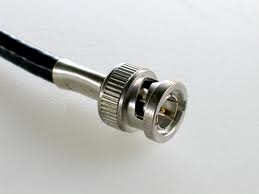 There was a discussion on Google+ the other day about how a particular handheld transceiver has an SMA connector, instead of the venerable BNC connector. I noted that many of the newer HTs are going with SMA, presumably because of the smaller size. In fact, I started thinking about it…I didn’t think you can buy an HT anymore with a BNC.
I took at look at some of the ham radio dealer websites to see if I was right. These radios all have SMA connectors: Alinco DJ-175T, DJ-C7T, DJ-G7T, DJ-G29T, DJ-V17T, DJ-V57T; ICOM IC-80AD, IC-92AD, IC-T70A, ID-31A: Kenwood TH-D72A, TH-F6A, TH-K20A; Yaesu FT-60R, FT-250R, FT-270R, VX-3R, VX-6R, VX-7R, VX-8R. The Wouxun radios are SMA but with a male connector on the radio (opposite gender compared to the other manufacturers…a topic for another day.)
But I did find three ICOM models that have BNC connectors: IC-V80, IC-V82, IC-U82.
The trend line is clear…the BNC is on the way out for amateur radio handheld transceivers.
Do I care?
Well, yes, I do.
I have a collection of extended length antennas that are much more efficient than the standard dummy load rubber duck. These are great for portable operation, mountaintopping, etc. I have not found very many of these antennas available with SMA connectors. Even if they were available, I am not sure I’d want to attach them to an SMA connector on an HT. For example, a 1/2-wave 2-Meter antenna is about 38 inches long — I am skeptical that an SMA provides enough mechanical strength to support it. Even with a BNC, I have always been very careful to not put too much strain on the connector.
We will have to see where this leads but it seems that the BNC will fade away for amateur use. Most mobile and base rigs use PL-259 and/or N connectors so HTs have been the main application for a BNC.
Goodbye, BNC, I am going to miss you.
73, Bob K0NR
Update on Feb 24: I’ve had several people suggest to me “just use a BNC-to-SMA adapter.” This certainly takes care of making a good electrical connection but mechanically they are generally weak.
This Spewed Out of the Internet #21
 There’s lots of information spewing forth from the interwebznet. Here are a few items of interest.
Dan KB6NU has started doing an Extra Class Question of the Day on his blog. I think this is a great idea. I may need to borrow steal reuse this idea on my blog.
The Fi-Ni Report did their usual outstanding job of educating the ham community, this time via A Short History of QSLing. Just because something is fictional,doesn’t mean that it’s not real.
The ARRL announced that the Logbook of the World is going to support the CQ Awards. This is great news for the ham community. The more awards that are supported, the more usage LoTW will get, making it more useful for additional awards.
Buried in the minutes of the July 2011 ARRL Board of Directors Meeting, the Board “authorizes staff to proceed with planning and negotiating a vendor agreement for a Digital QST edition, to be approved by the CEO, General Counsel and the Administration & Finance Committee.” So QST will be available in digital format soon.
You know, I think this internetz thing is starting to catch on!
73, Bob K0NR
2012 ARRL Field Day Information Packet Available
 ARRL Field Day is the single most popular on-the-air event held annually in the US and Canada. Each year over 35,000 amateurs gather with their clubs, friends or simply by themselves to operate.
The information packet for Field Day is now available on the ARRL web site.
- Bob K0NR
Via The Buro
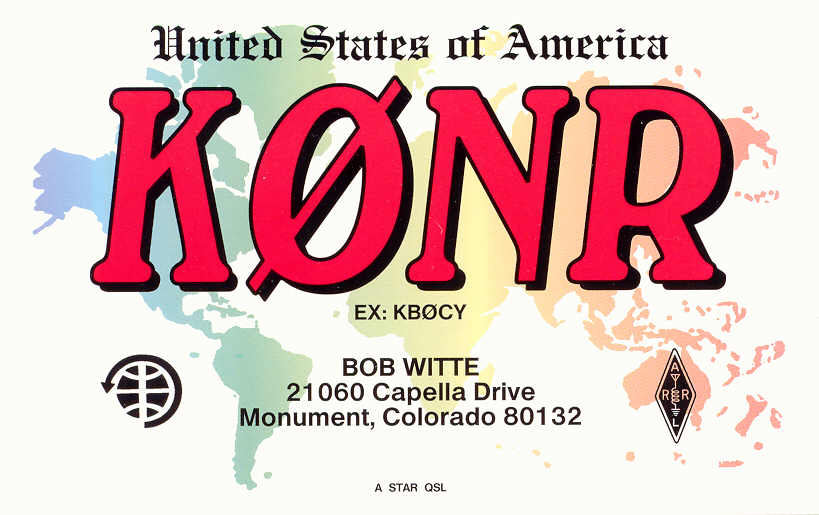 At our local radio club meeting this week, I did a presentation on amateur radio operating awards. The emphasis was on the most common awards: Worked All States (WAS), Worked All Continents (WAC), DX Century Club (DXCC) and VHF/UHF Century Club (VUCC).
I talked a bit about how to obtain a QSL card for written confirmation of a radio contact. As I discussed using the QSL Bureau, it became clear that this is the kind of thing that a new ham might not learn on their own. In fact, they might not know this even exists.
The “Buro”, as it is often called on CW, is really two separate systems: The Outgoing QSL Bureau and the Incoming QSL Bureau. To use the Outgoing QSL Bureau, you need to be an ARRL member and send your outgoing cards to ARRL HQ. They are forwarded on from there to the other country and ultimately to the other amateur. See the Outgoing QSL Bureau information on the ARRL web site for the full story.
The Incoming QSL Bureau delivers cards coming in from other countries. This work is handled by various radio clubs, organized by call area. You do not need to be an ARRL member to use the incoming service. You can find the incoming QSL bureau for your call area here on the ARRL web site. My callsign is KØNR, so I use the WØ QSL Bureau which has this web site: http://www.zeroburo.org/ The WØ QSL Bureau is operated by the Mississippi Valley DX/Contest Club. Thanks, Guys!
Now here is the important part:
If you have worked any DX stations, you may have QSL cards waiting for you at the buro. You should supply your QSL bureau a Self-Addressed Stamped Envelope, which they will use to send you any cards that are waiting.
Look up your Incoming QSL Bureau and follow their specific instructions concerning supplying them with envelopes.
73, Bob K0NR
Technician License Class – April 2012
 Monument, Colorado
Saturday April 21 and Saturday April 28 (8 AM to 5 PM) 2012
Location: Tri-Lakes Monument Fire Station 1
Sponsored by the Tri-Lakes Monument Fire Radio Association
The Technician license is your gateway to the world-wide excitement of Amateur Radio…
- Earn your ham radio Technician class radio privileges
- Pass your FCC amateur radio license exam right in class on the second day
- Multiple-choice exam, No Morse Code Required
- Live equipment demonstrations
- Learn to operate on the ham bands, 10 Meters and higher
- Learn to use the many VHF/UHF FM repeaters in Colorado
- Find out how to participate in emergency communications
There is no cost for the class (donations accepted)
However, students must have the required study guide:
Gordon West Technician Class guide, 7th Edition $20.95
And pay the FCC Exam Fee: $15.00
Advance registration is required (no later than April 15th, earlier is better!)
To register for the class, contact: Bob Witte KØNR
Email: [email protected] or Phone: 719 659-3727
For more information on amateur (ham) radio visit www.arrl.org or www.wedothat-radio.org













