Author Archive
 Top Five K0NR Blog Posts from 2014
 December 30th, 2014 |
  Author:
  It’s always interesting to see which of my blog posts are getting the most attention. According to my website stats, these posts got the most views in 2014. It turns out that most of these were written before 2014 but they are still getting lots of hits.
The top post was 2012 Jeep Wrangler Radio Install. When it comes to doing mobile radio installations, I’ve often found it helpful to search the web for information. There’s nothing like seeing how someone else did their radio install to get some help and guidance. With this post, I tried to repay the favor and it seems that lots of people have gotten use out of it.
The second most popular post is Can I Use My Ham Radio on Public Safety Frequencies? I wrote this one back in 2012 but always seems to get a lot of hits. It is getting a bit out of date, so I should probably update it.
Next up is Solving the Baofeng Cable Problem. This article explains how to solve one of the biggest challenges of programming those low cost HTs from China. Also on the subject of low cost HTs is this popular post: Yet Another HT From China (Baofeng UV-B5).
Another popular post is my list of favorite ham radio iPhone apps: The Incomplete List of Ham Radio iPhone Apps. This post from 2011 is definitely out of date but keeps getting lots of hits. I’ve updated this list a couple of times now and the most recent post is here: The Completely Updated Incomplete List of Ham Radio iPhone Apps. For some reason, the obsolete post still gets viewed the most.
Well, that is the top five posts but I am including a sixth bonus post at no extra charge. The FM/VHF Operating Guide is arguably one of the best time-tested articles I’ve written, originating way back in the twentieth century. It has taken many forms and revisions over the years and is now a static page on k0nr.com.
Thanks for stopping by k0nr.com and have a Happy New Year.
73, Bob K0NR
The post Top Five K0NR Blog Posts from 2014 appeared first on The KØNR Radio Site.
Hey, Should I Buy the Baofeng Radio?
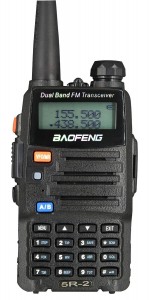 I keep getting asked about the Baofeng radios. Especially the new hams seem to be attracted to the low price. Even though I own several of them and make good use of them, I have been a little reluctant to recommend them. I put together my thoughts on these radios and a few tips to get started. Read the full story here on HamRadioSchool.com.
73, Bob K0NR
The post Hey, Should I Buy the Baofeng Radio? appeared first on The KØNR Radio Site.
This Spewed Out of the Internet #30
 Reporting on more critical information spewing forth from the interwebz, here’s some stuff you just can’t live without.
In a surprise move, Baofeng introduces yet another dualband HT, but this one might be the best yet. Maybe. See the PD0AC first impressions of the GT-3 Mark II.
Yaesu has announced a new dualband HT, the FT2DR, that has a Big Honking Display and touchscreen interface.
The crack reporting team over at Ham Hijinks keeps cranking out ham radio news: Turkey Takes Toll on Ham.
The ARRL is looking into changing some of the VHF contest rules. The first proposal includes allowing self-spotting and the use of non-amateur assistance. I say “heck yeah!”
If you ever thought it would be a good idea to use a banana as a Morse code keyer, check out this video. Meanwhile, Burger King has recognized the importance of ham radio for space communications (video).
The QRZNow web site got caught “borrowing” content from other ham radio web sites without permission or providing attribution.
Stu W0STU over at HamRadioSchool.com has been straining his brain on the topic of complex impedance. If you need some help understanding this (ahem) complex topic, take a look at his three part article on the subject: Part 1, Part 2, Part 3.
If you are worried about exposure to excessive EMF (Electromagnetic Field), you’ll want to consider this device over at Amazon.com. Be sure to read the reviews to get the full entertainment value.
73, Bob K0NR
The post This Spewed Out of the Internet #30 appeared first on The KØNR Radio Site.
How About a New 12 Volt Automotive Connector?
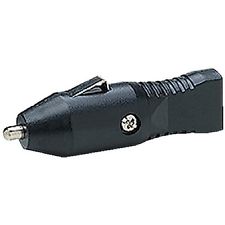 Don’t get me wrong — I do like standard connectors. A while back, I wrote about how the micro-USB connector became the standard power/data connector for mobile phones. Well, that is unless you own an iPhone.
The good news is that we do have a standard power connector for 12 VDC in automobiles. The bad news is that it is an ugly behemoth derived from — can you believe it? — a cigarette lighter. For some background and history, see the Wikipedia article. The Society of Automotive Engineers (SAE) has a standard that describes this power connector (SAE J563). Alan K0BG correctly warns us to “never, ever use existing vehicle wiring to power any amateur radio gear” including the 12 volt accessory plug. (I always follow this advice, except in the cases when I don’t.) I also found this piece by Bill W8LV on eham.net that describes the crappiness of these connectors.
Well, there is a new standard power connector showing up in cars: the USB port. These ports provide the data and power interface for mobile phones, integrating them into the auto’s audio system. Standard USB ports (USB 1.x or 2.0) have a 5V output that can deliver up to 0.5A, resulting in 2.5W of power. A USB Charging Port can source up to 1.5A at 5V, for 7.5 W of power. This is not that great for powering even low power (QRP) ham radio equipment.
Now a new standard, USB Power Delivery, is being developed that will source up to 100W of power. The plan is for the interface to negotiate a higher voltage output (up to 20V) with 5A of current. Wow, now that is some serious power. We will have to see if this standard is broadly adopted.
Two things are obvious to me: 1) the old cigarette lighter connector needs to go away and 2) it is not clear what the replacement will be.
What do you think? Any ideas for the next generation of 12V automotive connector?
73, Bob K0NR
The post How About a New 12 Volt Automotive Connector? appeared first on The KØNR Radio Site.
Announcing the January 2015 WØTLM Technician License Class
 Ham Radio Two-Day License Class
Sat Jan 31 and Sat Feb 7 (8 AM to 5 PM) 2015
Location: Black Forest Fire Station 1, Black Forest, CO
The Technician license is your gateway to the world-wide excitement of Amateur Radio …
- Earn your ham radio Technician class radio privileges
- Pass your FCC amateur radio license exam right in class on the second day
- Multiple-choice exam, No Morse Code Required
- Live equipment demonstrations
- Learn to operate on the ham bands, 10 Meters and higher
- Learn to use the many VHF/UHF FM repeaters in Colorado
- Find out how to participate in emergency communications
There is a non-refundable $25 registration fee for the class.
In addition, students must have the required study guide and read it before attending the two-day class: HamRadioSchool.com Technician License Course $20.95
(make sure you get the most recent edition of this book, updated for the new FCC exam questions)
Advance registration is required (no later than one week before the first session, earlier is better! This class usually fills up weeks in advance.)
To register for the class, contact: Bob Witte KØNR
Email: [email protected] or Phone: 719 659-3727
Sponsored by the Tri-Lakes Monument Fire Radio Association
For more information on amateur (ham) radio visit www.arrl.org or www.wedothat-radio.org
The post Announcing the January 2015 WØTLM Technician License Class appeared first on The KØNR Radio Site.
Twisted Phonetic Alphabet
 Stu W0STU just posted an article on HamRadioSchool.com about the use of phonetic alphabets. I had previously posted a Shack Talk article on the same subject.
The “standard” phonetic alphabet is the ITU alphabet but I am starting to think that we might need to get a little more creative on our use of phonetics. Why not innovate in this area, just like we innovate on the technical front?
Towards that end, I was reminded of his phonetic alphabet listed over at netfunny.com:
        A  Are               N  Nine
        B  Bee               O  Owe
        C  Cite              P  Pseudonym
        D  Double-U          Q  Queue
        E  Eye               R  Rap
        F  Five              S  Sea
        G  Genre             T  Tsunami
        H  Hoe               U  Understand?
        I  I                 V  Vie
        J  Junta             W  Why
        K  Knot              X  Xylophone
        L  Lye               Y  You
        M  Me                Z  Zero
Even this creative alphabet can be improved on. For example, I think H should be Honor.
What do you think?
73, Bob
The post Twisted Phonetic Alphabet appeared first on The KØNR Radio Site.
SOTA Activation: Kaufman Ridge HP (W0C/SP-081)
It was a nice fall day, so Joyce K0JJW and I decided to go for an easy hike up Kaufman Ridge HP (W0C/SP-081) and do some SOTA operating. Well, maybe the hike was her idea and the Summits On The Air thing was my contribution to the plan. The hike is less than a mile and has about 900 feet in elevation gain, depending on where you start the hike.
This definitely a slacker operation: easy access, easy hike, great weather and 2m FM activation via a handheld radio and the 1/2-wave whip.

Note that there are two SOTA peaks with the “Kaufman Ridge” name: Kaufman Ridge North (W0C/SP-085) and Kaufman Ridge HP (W0C/SP-081), located near Trout Creek Pass in Colorado. Today we headed to SP-081 which we reached by following County Road 318 from Trout Creek Pass, which is also called Buckrake Drive and then Windmill Drive. These roads pass through private property to reach the San Isabel National Forest, where there is a gate that closed from December to April (see map). At this point, the road is easy 4WD, most 2WD high clearance vehicles will do fine. You can also approach from the south on FS 308 through Mushroom Gulch. 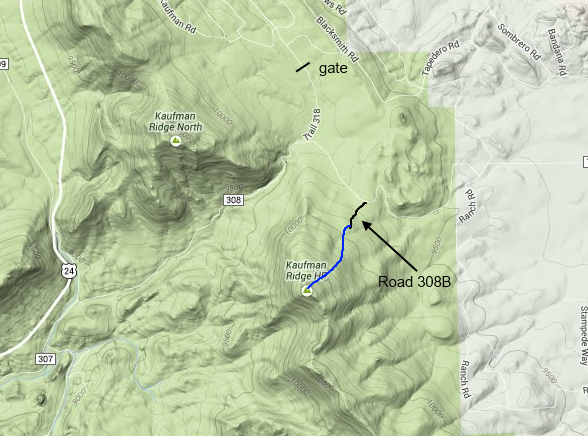
We turned left onto FS 308 and then took a short side road FS 308B toward the summit. There are several over turn offs but 308B seems the best (shown in black on map). The road is blocked for vehicular traffic at 38.858659° N / 105.933921°W. You can continue walking on the road a ways or just head straight for the summit. While the hike is short and not that steep, there are plenty of downed logs to give you a challenge.
You never know who is going to show up on 146.52 MHz in the mountains but I had put the word out via email to some of the local hams to let them know I was doing a SOTA activation. When I got to the summit, I had a few stations already calling me and I quickly worked Ron N0MQJ, Fred N0VXE, Dave K0HTX, Jim KD0MRC, Bob W0BV and Don K0DRJ. Don was my “best DX”, about 60 miles away in Woodland Park with a few mountains in the way. Thanks to everyone that came on frequency and contacted me.
Side note: if you want to activate SP-085, go north on a forest service road (not shown on map) near where 318 and 308 intersect. Just drive a short ways north, find a parking spot and bushwack your way up the summit. You could easily activate both summits in one day.
73, Bob K0NR
The post SOTA Activation: Kaufman Ridge HP (W0C/SP-081) appeared first on The KØNR Radio Site.













