Author Archive
 POW Canteen Radio
 November 25th, 2015 |
  Author:
 Earlier this year, I was talking ham radio stuff with Brian Hutchison, AI6GH. Brian mentioned that his father was a Prisoner of War (POW) in World War II and built a radio while in a Japanese prison camp. I’ve read articles about vintage and spy radios from WWII, but I’ve never been that interested in the topic. When Brian told me about his father, I thought “Holy Grid Current! He built a radio as a POW? Now that’s interesting.” The more I learned about the story, the more I became fascinated by it.
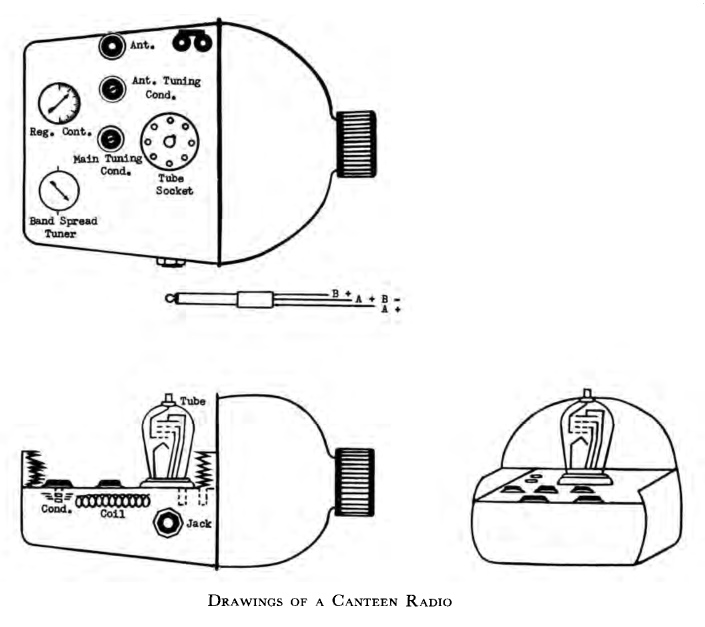
Canteen radio drawing from the book: The Signal Corps: The Outcome.
Brian pointed me to some great resources that tell the story. I started with the March 2013 Newsletter of the Palo Alto Amateur Radio Association. Hiro Kato AH6CY has an interesting article describing two different clandestine radios, one of them built by Captain Russell J. Hutchison, Brian’s father. It was a one-tube shortwave receiver intended to keep the prisoners informed about the progress of the war. Mostly, they wanted to know when the invasion of Japan would occur. The radio was built into and disguised as an ordinary water canteen, obtaining its power from an electric light socket.
The book Prisoners of the Japanese: POWs of World War II in the Pacific by Gavan Daws provides some insight into Hutchison’s parts procurement:
At Davao the Japanese camp commandant put out a call for a prisoner who could fix radios. Hutchison got the job, plus a commission from the senior POW officer to build a secret shortwave set. The camp machine shop was a happy hunting ground for him. He fixed the commandant’s personal radio, an American Zenith. The other Japanese brought in their looted sets, Sears, Roebuck and Montgomery Ward brands, also a 35-millimeter Simplex movie projector with a sound amplifier that needed work. Every chance Hutchison got, he liberated parts. From a broken-down car radio he lifted a couple of tube sockets. He scrounged capacitors and condensers and resistors and a voltage meter, a headset that had survived a fire, everything up to four new tubes still in their packages.
My next stop was the website of Tim Sammons N6CC, who built a replica of the shortwave canteen receiver. This single-tube regenerative receiver has a regeneration control, a main tuning capacitor, bandspread tuning capacitor and an antenna tuning capacitor. See N6CC’s webpage for a schematic and other interesting technical details.
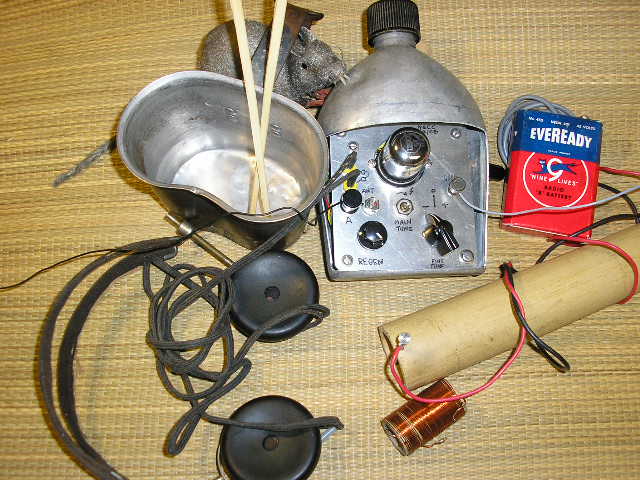
N6CC Replica Canteen Radio
This book is available online: The Signal Corps: The Outcome by Thompson and Harris that provided further background (and the figure at the top of this article). Another valuable resource is First Into Nagasaki: The Censored Eyewitness Dispatches on Post-Atomic Japan and Its Prisoners of War.
This is a intrigung story of technological innovation under the most extreme circumstances. Most of us have never experienced such adversity that these POWs endured. Some of them managed to also built clandestine radios. A truly amazing story to consider as we enjoy the Thanksgiving holiday.
73, Bob K0NR
The post POW Canteen Radio appeared first on The KØNR Radio Site.
Kids are Not the Future of Ham Radio
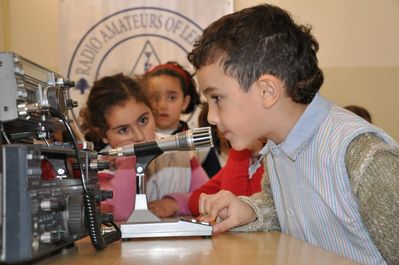 You’ve heard it a million times: our kids are the future. That statement gets applied to almost everything, including amateur radio. How can you argue with an obvious fact like that?
But I am starting to think it is incorrect.
We’ve had really good success on creating new hams of all ages in our Technician License Class (at the Tri-Lakes Monument Radio Association). We’ve been doing this for a while now and I think I am seeing a pattern emerge. We’ve been able to attract middle schoolers to the class and help them get their ham radio license. I’ve talked to many of them on the air. They’ve helped out with public service events. They seem to have fun playing with radios.
Then this thing called high school happens. The high school phase in the US is filled with tons of stuff to do: studying, homework, AP classes, science competitions, sports, dating, movies, driving and after school jobs. Way too much stuff. Ham radio starts to take a backseat to these normal high school activities. Then we don’t see the kids at the radio club meetings or chatting on the local repeater because they are busy doing other things. Have we lost them forever? Not sure.
High school is often followed by college which has its own set of challenges: a totally new environment, away from home, a new set of people, new studies, etc. There might be a ham radio club on campus but maybe not. If a kid is not off to college they are (hopefully) out doing something to establish themselves in this world. Eventually they emerge on the other side, get a job, get themselves established, sometimes with a spouse and maybe a kid or two. By this time they are 25 to 30 years old, depending on the individual.
I recently posted about the demographics of our students in the Tech License Class. The chart below shows the age distribution of our students from our most recent class. Hmmm, clearly most of our students are 30 or older. (Sorry, we have not collected age data with finer resolution.) This particular class is light on the under 18 crowd…sometimes we have a clump of kids in the mix.
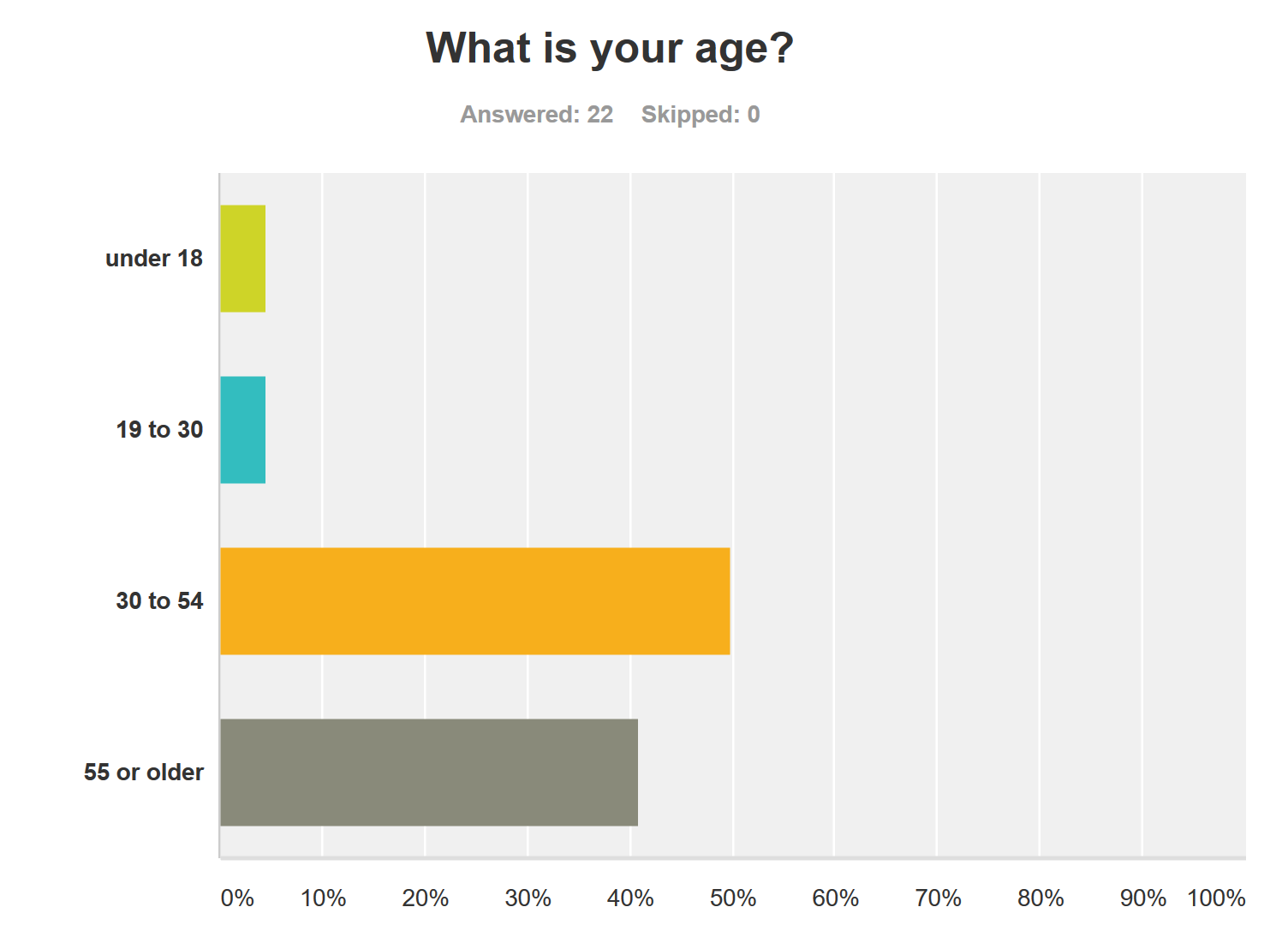 For whatever reason, it seems that most people find themselves in a situation as an adult that causes them to say “I want to get my ham radio license.” When asked why they want to get their ham license, the top response is always emergency/disaster communications, followed by backcountry communications, pursuing electronics as a hobby and learning about radio communications. I suspect that starting to be established in a community and having some disposable income also play a role.
My hypothesis is that the most effective way of growing a vibrant ham radio community is to target adults ages 25 to 40.
This age range is more equipped and ready to be ham radio operators and are still young enough that they will be around for a while. Of course, we still want to work with all age groups, including kids and retirees. We’ve all seen very young hams get the bug for ham radio early and carry it throughout their life. And we also see plenty of older folks get interested in the hobby as they approach or enter retirement. We don’t want to miss out on either of those groups.
So that’s my read on the situation. I’ve got some data to support my theory but I can’t really prove it. What do you think? What are you seeing in your ham radio community?
73, Bob KØNR
The post Kids are Not the Future of Ham Radio appeared first on The KØNR Radio Site.
Where Are The New Technicians Coming From?
 We just wrapped up our Technician license class sponsored by the Tri-Lakes Monument Radio Association. Thirty people took the Technician exam with 27 passing (90%). Four people went on to pass the General exam.
We offer the class twice per year and it always fills to capacity. Invariably, we wonder “where are these new hams coming from?” and instituted a survey to try to find out. Here’s the data from the most recent class, which is typical of previous classes.
Demographics
The class was almost all male (90%) and mostly above the age of 30. From time to time, we’ve had groups of Boy Scouts come through the class which shifts the age profile a bit lower.
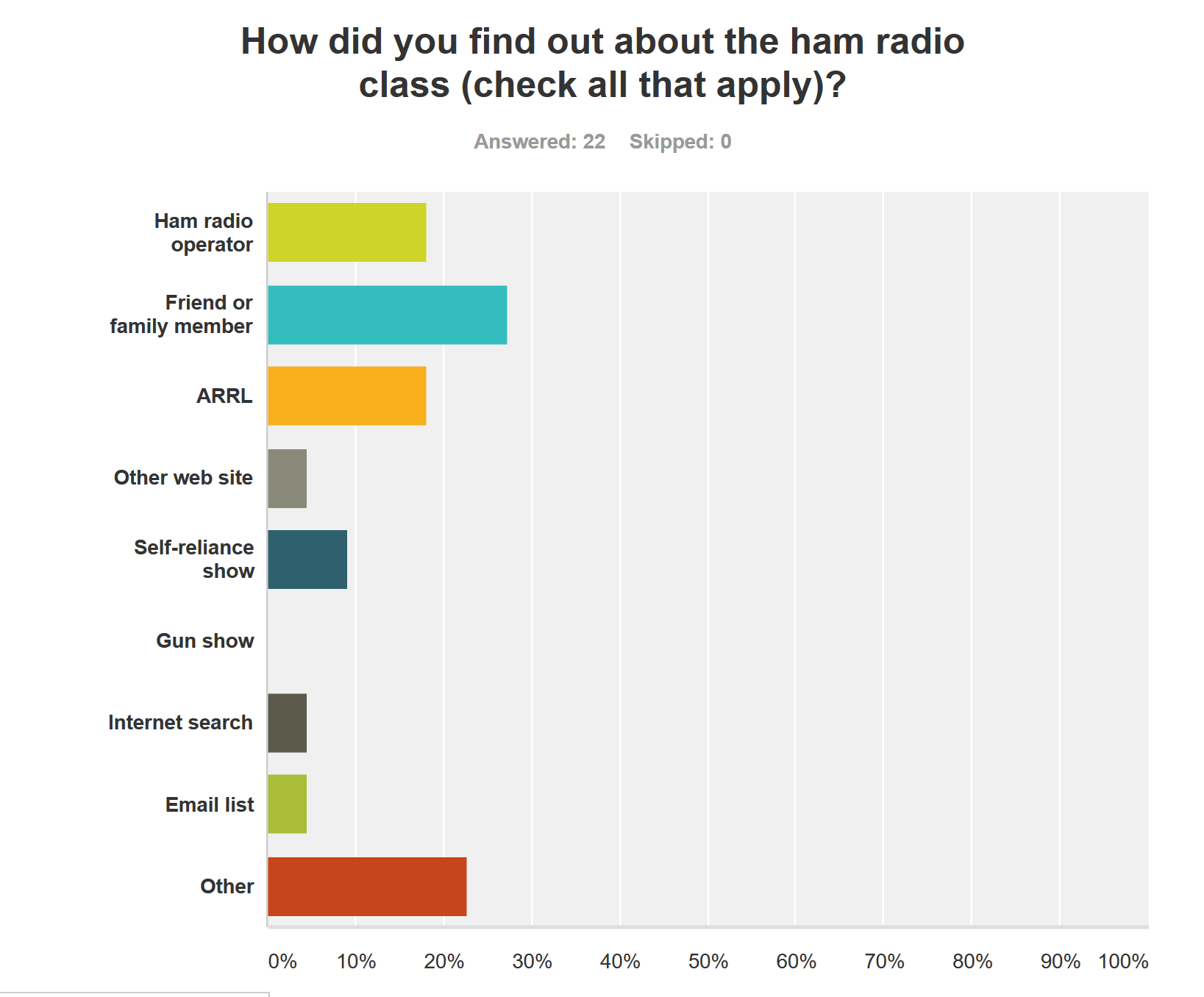
We ask about how they found out about the class. These responses overlap so we have them check all that apply. Most of these people find out about the class through normal “ham radio channels”, including the ARRL web site. A few people in the “other” category mentioned notices published in local weekly newspapers.
 Here’s where it gets interesting. Why do they want to get their amateur radio license? Disaster and emergency communications continues to be the most common answer at almost 90%. This is followed by the closely-related Backcountry/Remote Communications (about 80%). About 60% of the respondents selected radio and electronics as a hobby. More than half said they want to learn about radio communications.
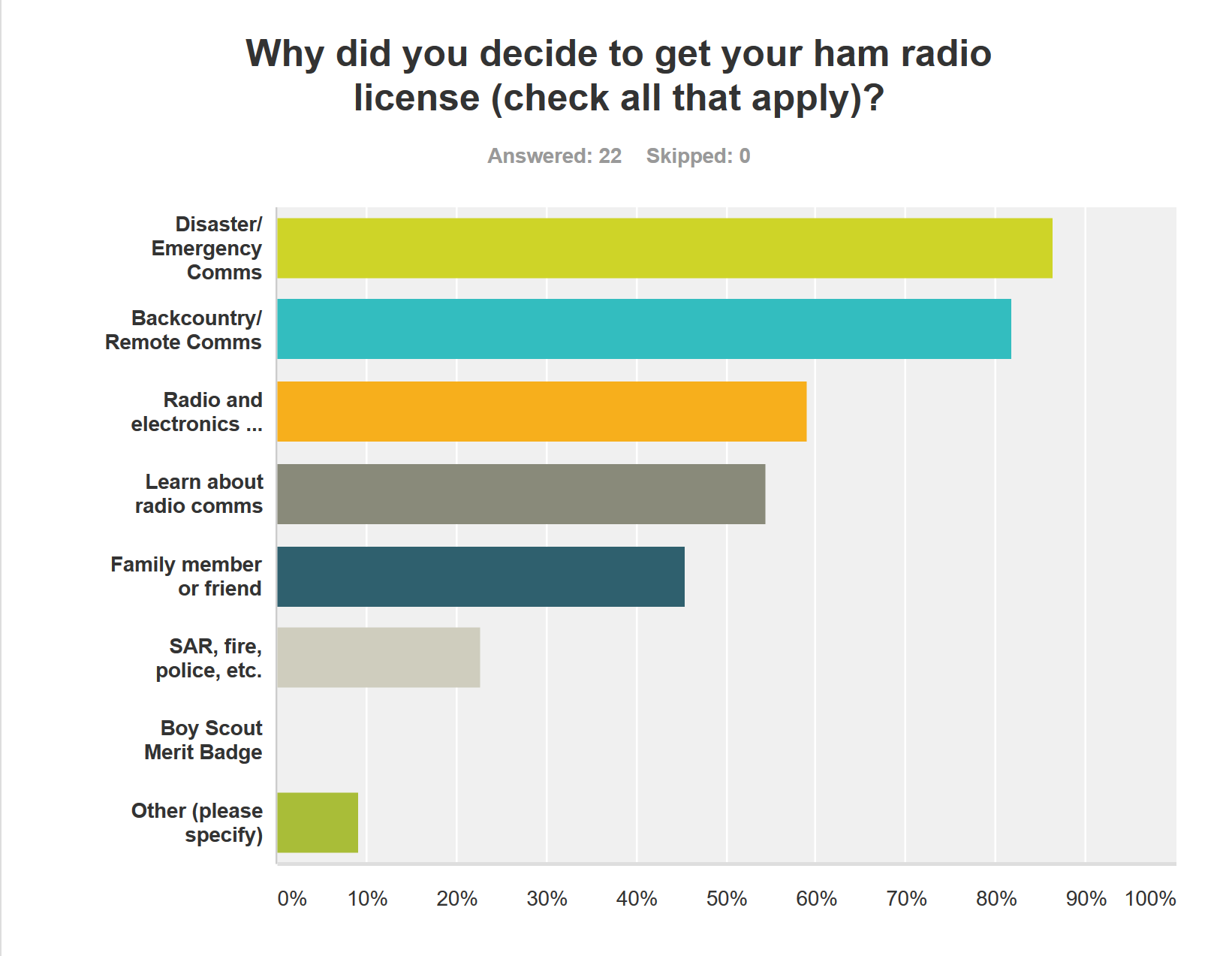 Not to be overlooked is the influence of family and friends at 45%. We often see family members of current radio hams that were
 badgered encouraged to get their radio license. We do see more than 20% that see a ham radio benefit to their involvement with fire, search and rescue, law enforcement and similar agencies.
Summary
Emergency and disaster preparedness rank high in the reasons why these people are interested in amateur radio. This may be fueled locally due to the recent devastating wildfires in Colorado. Many people experienced first hand what happens to the mobile phone and landline systems when disaster strikes. When All Else Fails. The other major motivation is the traditional hobby aspect of amateur radio. People like to learn about technology and have fun experimenting with it. Lately, this has taken the form of the Maker Movement.
73, Bob K0NR
The post Where Are The New Technicians Coming From? appeared first on The KØNR Radio Site.
HF Slacker Operation for CQ WW SSB
The CQ Worldwide DX SSB contest was last weekend and I applied my signature HF Slacker™ operating methodology to this event. Most of the HF gear I have is kept at our cabin in the mountains but I had to be at the house this weekend due to some commitments. I decided to apply Field Day principles and rig up whatever I could with equipment on hand.
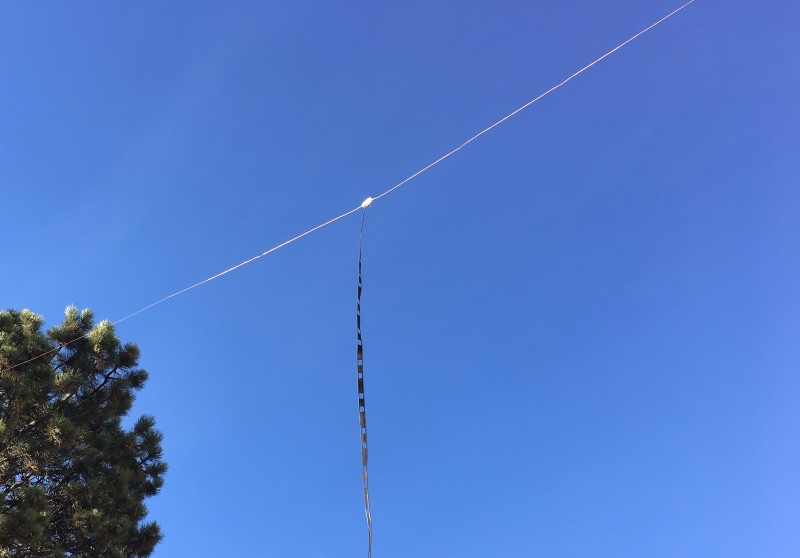
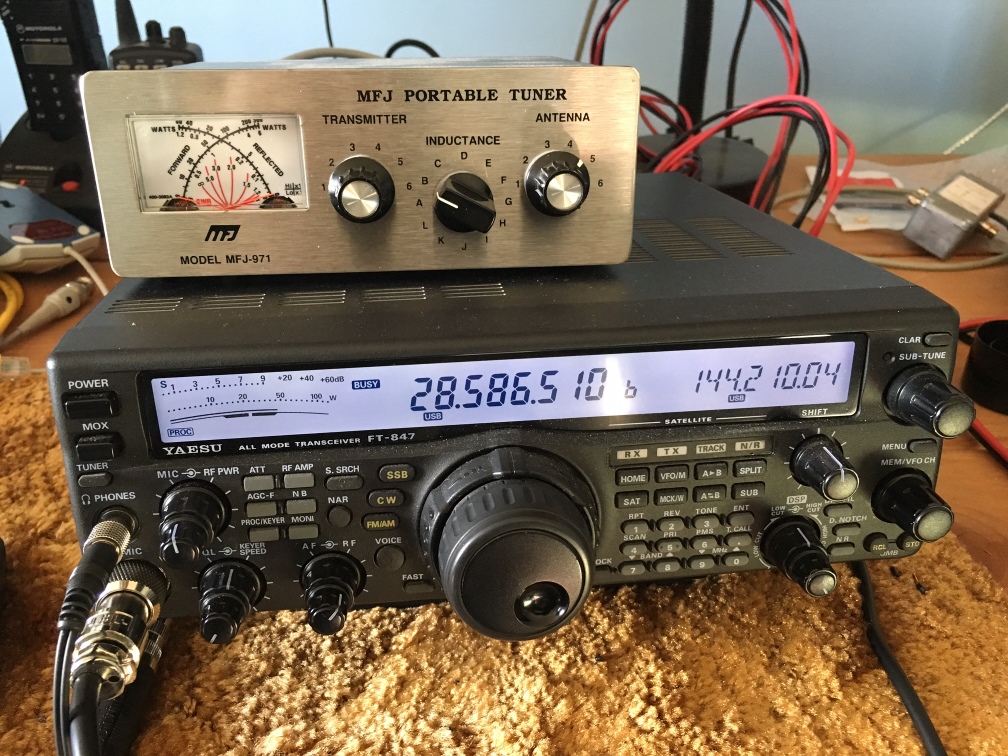 I dug out the Yaesu FT-847 transceiver, an MFJ antenna tuner and a half-size G5RV antenna to configure a basic HF station. Using a fishing pole to cast a steel washer over a tall tree in the back yard, I rigged up the antenna between the tree and the house. The G5RV is a compromise antenna…I’d much rather have something like a trap or fan dipole. But it’s what I had on hand, so I made it work. The impedance presented by this antenna is all over the map, so a decent antenna tuner is a must.
 I started out on 15m with a few contacts to Europe and Central America. Later I moved up to 10m and made even more contacts there. I was mostly searching around for the best DX but still working a few stateside stations. Later in the afternoon, the bands swung towards the west and I managed to work KH7CW and JR3NZC before going QRT for the day.
Sunday morning brought more propagation, first to Europe, then the Caribbean and South America. The high point was working AHØBT in the Mariana Islands and VK2GGC in Australia. AHØBT was not real strong, maybe S5 at my location so I thought I’d struggle to punch through the noise and QRM on the band. However, it only took a couple of calls to make the contact. That’s what I like about the 10m band!
I used the N1MM logging program during the contest. A snapshot of the log is shown below.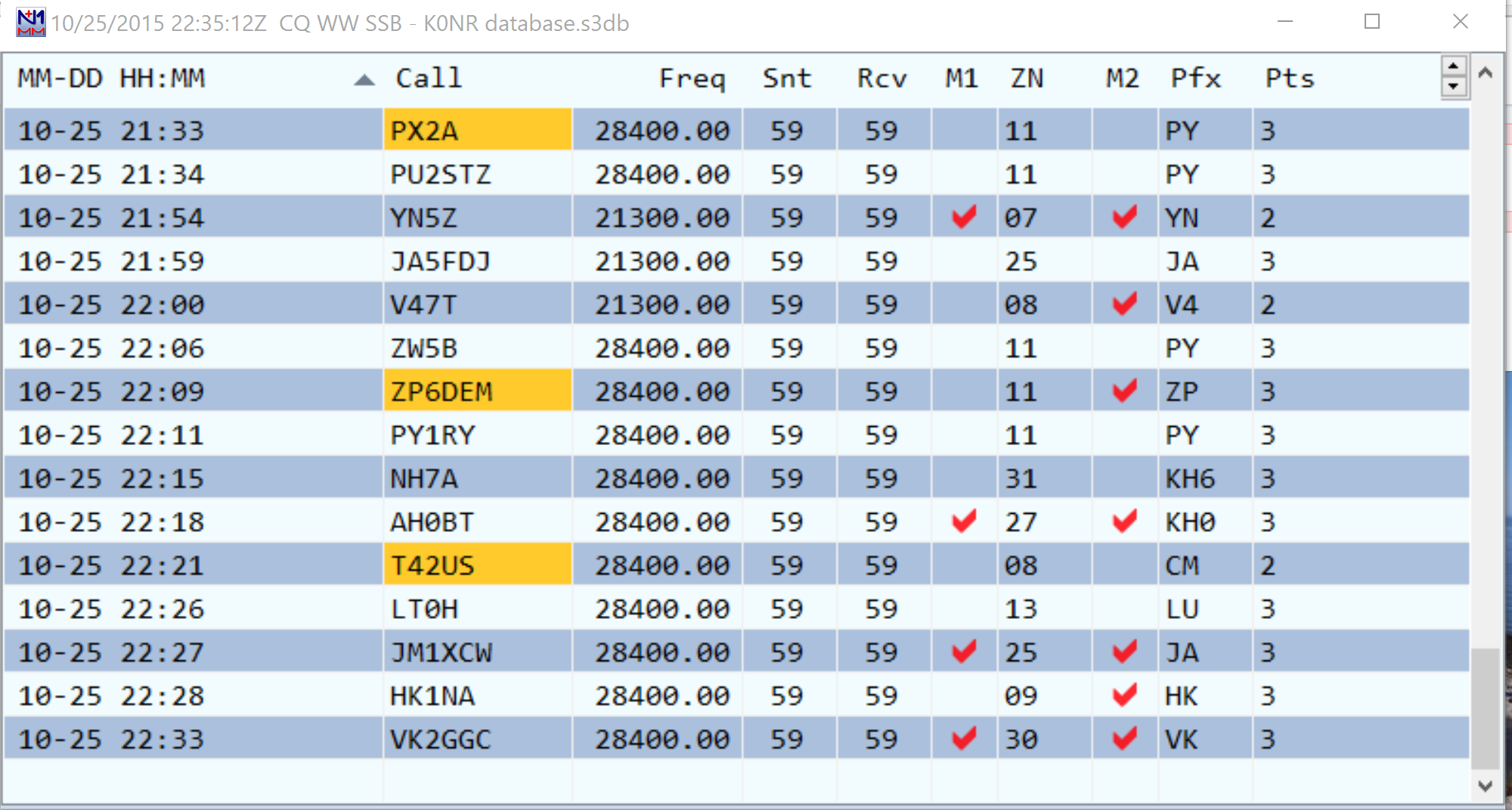 I only worked the contest intermittently on Saturday and Sunday, maybe 5 or 6 hours total operating time. Still, I managed to work 49 countries and 30 CQ Zones. That’s half way to DXCC on one weekend with a very basic HF station. Radio contests stimulate activity and DX contests bring out the DX. I point this out to encourage others to give it a try, even if they don’t have huge antennas on a tower and a linear amplifier. Almost all of my contacts were on 15m and 10m, which tend to be more productive when conditions cooperate. Twenty meters gets jammed with high power stations so it is often tough going for the little pistols.
 Band     QSOs     Pts  Zone  Country
    14       2       3    2    2
    21      30      70   13   21
    28      52     136   15   26
 Total      84     209   30   49
Score: 16,511
Another weekend of having fun messing around with radios. Even if I’m an HF Slacker™. 
73, Bob K0NR
The post HF Slacker Operation for CQ WW SSB appeared first on The KØNR Radio Site.
Digital Voice Balkanization
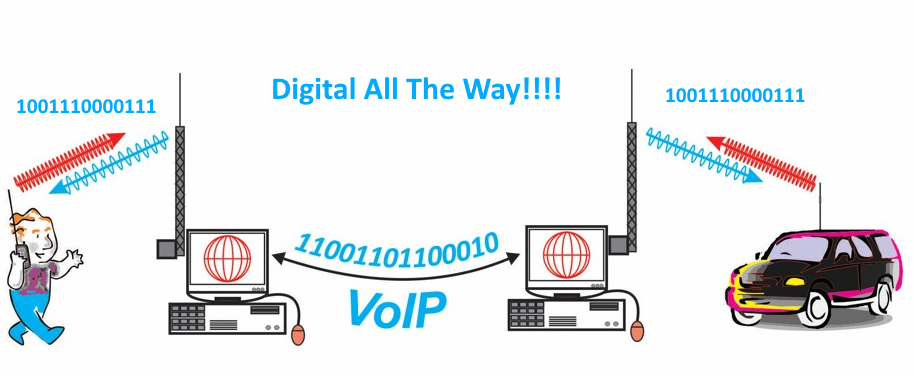 Wouldn’t it be cool if we had one digital communications format for the VHF/UHF amateur bands with all equipment manufacturers offering compatible products? The basic modulation and transport protocol would be standard with manufacturers and experimenters able to innovate on top of that basic capability. There would be plenty of room to compete based on special features but all radios would interoperate at a basic level. You know, kind of like analog FM.
Yeah, we don’t have that. 
73, Bob K0NR
Graphic: Adapted from HamRadioSchool.com
The post Digital Voice Balkanization appeared first on The KØNR Radio Site.
Religion and Ham Radio
 We need to get the religion out of ham radio. No, I am not talking about the HF nets that support missionaries or similar activities. (Those people might actually be doing something good for the world.) I am talking about the religious debates concerning new technology…this technology is better than that technology.
Amateur radio is a technical hobby, one based on technology, hobbyist pursuits and mutual interest. One might think that this means issues are looked at objectively and discussions are based on logic, scientific principles and facts. Of course, this is completely wrong. What often shows up in ham radio are religious debates about technology or operating modes.
Here’s a definition of Religion:
a specific fundamental set of beliefs and practices generally agreed upon by a number of persons or sects: the Christian religion; the Buddhist religion.
You can tell when you are stuck in a religious debate…the facts quickly fade and statements like “this is the right way to do it” become louder. Underneath this is a fundamental belief trying to come out that the person may not even be aware they have.
A long running example of a religious debate is Linux versus Windows. On the surface, people argue about which one has more defects, which one is more secure and which one ultimately serves their needs better. Underneath the surface is the religious belief: software should be free, Microsoft is evil, etc. Then there are those Mac enthusiasts (you know who you are)….these folks tend to act like a cult as they attempt to convert other people to their group. (Where is the line between enthusiast and cult member?)
The latest one on the ham radio front is the debate over digital technology in the VHF and higher bands: D-STAR versus DMR (and now Fusion). The debate starts out rational with a discussion of the merits of each but soon the deeply-held beliefs come out: D-STAR is bad because ICOM is pushing it, DMR is good because it is the commercial standard, D-STAR is good because it is an amateur radio standard, D-STAR uses a proprietary vocoder chip so it is bad, etc. Then don’t forget the guys that say “all digital is bad, analog FM is good.”
Again, you can tell when the religion kicks in because the facts start to fade and the beliefs rise to the surface. Usually, these arguments can’t be resolved because you can’t really debate beliefs. What you get instead are flame wars on the various email groups.
What other religious debates are out there? Android versus iOS, Open Source Software versus Commercial Software, My favorite rig versus Your favorite rig, … what else?
-73, Bob K0NR
This post is recycled and updated from a 2007 post. Some things never change.
The post Religion and Ham Radio appeared first on The KØNR Radio Site.
New Satellite (Fox-1A/ AO-85) is Operational
 Congratulations to AMSAT for the successful launch and initial deployment of the Fox-1A amateur radio satellite.This bird has been designated AO-85 and has an FM transponder on board (435.180 MHz uplink, 145.980 MHz downlink).
I have not heard or worked this satellite yet but early reports indicate that it has a strong signal on the downlink. So start out by trying to hear the bird on 145.980 MHz. To find out when it will be overhead, use the AMSAT pass prediction page or your favorite satellite tracking software.
Download the Special Issue of the AMSAT Journal to get the full story.
73, Bob K0NR
The post New Satellite (Fox-1A/ AO-85) is Operational appeared first on The KØNR Radio Site.













