Author Archive
 Visitors Book Spam
 November 19th, 2010 |
  Author:
 I received two emails this morning from people who had received spam from someone who claimed to have got their profile from my website G4ILO’s Shack. I don’t have user profiles on my site. The only place the spammer could have got the email address is from the visitors’ book, and sure enough when I checked both these people had made entries in it.
The visitors book uses the common trick to obfuscate the email address of encrypting it and using a Javascript function to display it in the user’s browser. This worked on the assumption that spammers email harvesting bots simply grabbed the raw HTML pages and didn’t use an actual browser so the Javascript didn’t run and the email addresses remained hidden from the spammer.
I guess it was only a matter of time, given that computers are now much faster, before spammers started using embedded web browsers to load web pages before scanning them for email addresses. That is the only explanation I have for this. I have removed the display of the email address from the visitors book comments entirely, which should prevent this happening in future.
Some visitors ask questions or mention something interesting in their comments and I thought it would be useful for those who read them to be able to reply if they wish. But I doubt that many people take advantage of this so removing the email address is probably no great loss.

DSP TNC
The winds of economic change are starting to have an effect on our online business. Because of that I am spending a lot more time on the computer trying to maintain our search engine positions and think of new revenue streams, with the consequence that I have less time or enthusiasm for blogging and other radio-related activities.
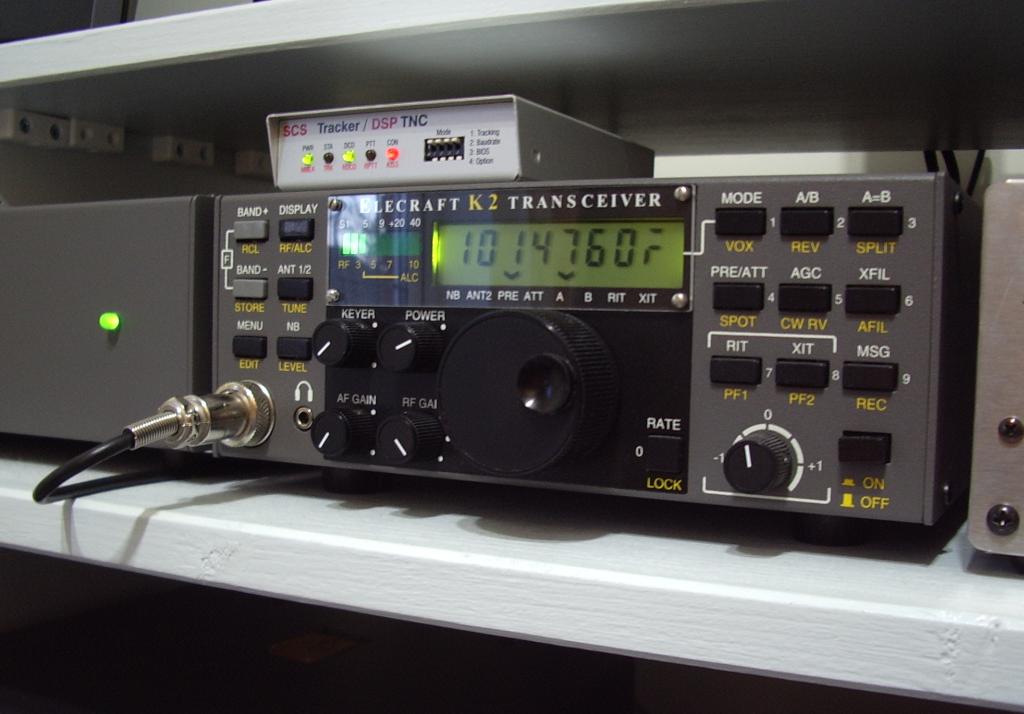
The only noteworthy item of radio news at G4ILO has been the acquisition of an SCS Tracker / DSP TNC for HF APRS packet. It is shown in the picture sitting atop my K2. When I find the time, I will write a review of this TNC for my main (non-blog) website. For the time being, all I will say is that I did a side by side comparison with the best of the PC sound card decoders and it was very quickly apparent that the SCS TNC decoded many stations the sound card software didn’t. Considering what it cost, I’d have been very disappointed if it hadn’t.

Curse Yaesu
… for making the power connector for the FT-817 a nonstandard and apparently unique size. I sacrificed the power cable of a multi-voltage wall-wart which had a set of interchangeable tips to make a cable I could use to run the ‘817 from my lab bench supply for an experiment. One of the tips looked to my eyes exactly the same as the one on the Yaesu charger, even down to having a yellow plastic insulator at the tip. But stupid me I didn’t think to check it would actually go in before severing the cable from the wall-wart and now I find that it doesn’t. So not only did the wall-wart lose its cable in vain but I now can’t do my experiement, since it would have taken longer than the ‘817’s woefully inadequate batteries would permit. Grrr!!
I can’t even find an FT-817 power cable on eBay.

Tracker trouble
Today was one of those perfect days you sometimes get in winter. It was too good to stay indoors, especially as rain is forecast for tomorrow, so after lunch I packed my APRS tracker and Motorola GP300 in my rucksack and went for a short hike up Binsey, one of the Wainwright hills in the northern Lake District.

There had been a frost overnight and even now in the early afternoon the temperature was only a degree or two above freezing. Looking towards the central Lake District across Bassenthwaite Lake you could see the distant hills were covered with a light dusting of snow.
On the way up to the summit of Binsey I observed that my tracker was not transmitting. The tiny red LED on the GPS was flashing to say the receiver was working but the GPS OK light on the tracker itself was out. If I switched the unit off and then on it would send its position as soon as GPS lock was obtained, but that was usually all I got. When the beacon was sent I also heard a few noises from the Motorola receiver. None of this had happened during testing in the shack, but a cold fell-top is not the ideal place for troubleshooting. The lack of position reports received during my walk on Sunday was probably not due to conditions

On my descent I enjoyed the view of the snow-dusted Skiddaw range against an almost cloudless blue sky. To think, some people are stuck in an office on a day like this! (OK, I know, I don’t have to rub it in!)
Back home I connected up my tracker on the bench and it worked perfectly again. I then put it in my rucksack as it had been while I was out and it started to behave as it had while I was out. Some braaps were accompanied by a sort of farting sound that was probably RF feedback. I’m pretty sure RF is getting in somewhere and causing the tracker board to misbehave, but the question is: where?
I’ve tried moving cables about and clipping ferrites on the leads but so far I’m not sure what is the cause. I hate this kind of problem which can have you going round in circles thinking you’ve fixed it and then it recurs. I’m not sure yet if the RF is being picked up on one of the cables – both the PS/2 GPS cable and the curly Motorola cable are quite long for this application – or whether it is getting to the module directly since it is only in a plastic case. Perhaps I should try it in a die cast box. Any ideas?

Two new continents on 40m
I popped up to the shack after watching some evening TV and decided to have a listen to what was happening on JT65A on 40m. I tuned my K3 to 7.076MHz and had only been listening for a couple of minutes when I saw a CQ call from VK6BN appear on the screen. I only just managed to set up a reply before the start of the transmit period and you could have knocked me down with a feather when he came back with a report! We completed the QSO in the minimum 6 minutes.
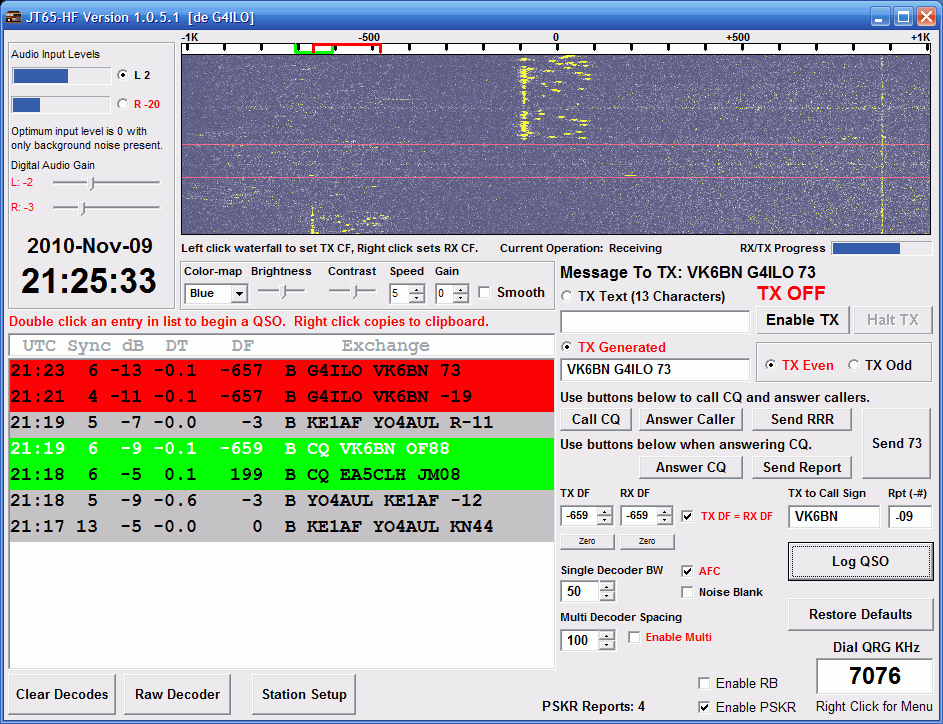
I’ve been reported in VK before using WSPR, that’s nothing unusual, but this is my first ever two-way contact with Australia on any band or mode and I’m pretty amazed to have achieved it on 40m of all bands using just 30 watts to my attic dipole. JT65A really is amazing!
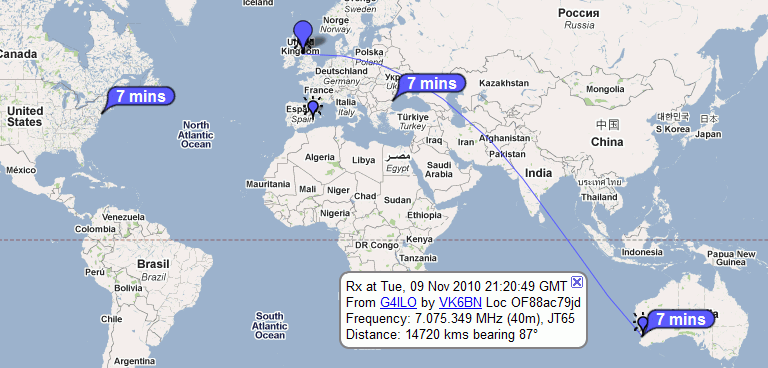
As if that wasn’t enough, I then worked KE1AF for my first contact with North America on 40m. So I shall be going to bed this evening feeling pretty pleased!

Autumn walk
Sunday was a fine but cold autumn day and Olga and I went for a walk near Loweswater. In my rucksack I took the Motorola GP300 and the FoxTrak APRS tracker. This is a somewhat more bulky arrangement than using the VX-8GR, however this hobby has for me always been more about providing a reason to build and tinker about with stuff than using the latest, most efficient technology and using this home-built tracker with a radio I bought for £1 at a rally is just somehow more fun than using Yaesu’s latest gadget.

I had obtained a cable for the Motorola with the correct two-pin plug to make up an interface. I cut the tip off the 3.5mm jack so that inserting the plug did not cut off the speaker and I programmed a channel on the radio with 144.800 as the transmit frequency and 145.500 as the receive frequency. This meant that I could hear anyone calling CQ during the periods between transmitting position beacons. The downside is that the FoxTrak cannot tell if the APRS frequency is clear before transmitting. But many dumb trackers do that already because they don’t have a receiver. In any case, the APRS activity level here is so low that the chances of a collision occurring are about the same as winning the lottery.
Although the path we walked along was quite high, this was not a very good location for radio. Only one position beacon was received by a gateway and I made just one voice contact – with Phil M0AYB/P activating the summit of Blencathra for WOTA. (Phil later went on to activate Mungrisdale Common which completed activations of all of Wainwright’s Northern Fells. I’m doubly sorry to have missed contacting him there, but congratulations Phil on the achievement.)

Our walk took us down through the woods to the lake shore and then back to the car. The autumn colours were wonderful – my pictures don’t really do justice to them. I expect most of the leaves have now gone. Last night there was a gale and this morning through the overcast we could see wet snow on the mountains down to quite a low altitude. I doubt that there will be many more opportunities for a walk like this before the end of the year.

Spot on
Having an interest in weak signal narrow band modes, not to mention APRS which requires you to park your receiver on a specific frequency, I have always wished that the frequency readout on my radios could be relied upon. The QRSS band, for example, is only 100Hz wide. If your dial reading is out by that much, you’ll miss it completely.
Many people try to calibrate their transceivers using WWV but that is not often a very good signal over here, and what with all the other carriers around 10MHz – many of them locally generated – you can never be sure that you have tuned to the right signal. I have wanted an accurate frequency reference for some time so a couple of weeks ago, following a comment by QRSS enthusiast Steve G0XAR, I ordered an Efratom LPRO-101 rubidium frequency standard on eBay. It arrived in about a week.
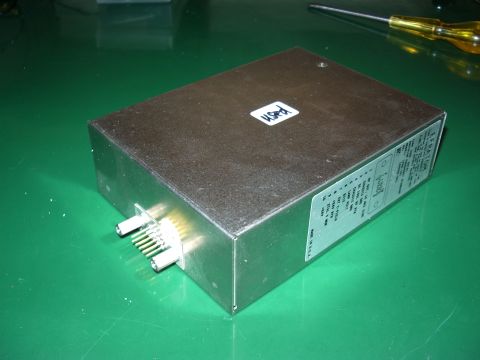
The unit I bought cost about £50 and came with a plug for the 10-pin connector and a 24V switched-mode power supply. These second hand units are widely available. New, they cost over $1,000 even in quantity. They are used in cellular base stations and are manufactured to have a maintenance-free life of ten years. To ensure reliable service the cellphone network providers take the equipment out of service before the ten years is up after which it is presumably shipped to China for reclamation. The used units should have several years of life in them, especially in occasional amateur use.
Rubidium frequency standards work by locking a crystal oscillator to the very precise frequency at which the amount of light from a rubidium lamp dips due to a phenomenon known as the hyperfine transition. A synthesizer locked to a reference oscillator is swept through this frequency until the dip is detected. The LPRO-101 includes an oven for the reference crystal, circuits to detect the dip and lock the oscillator, an output that tells you when the unit is locked, and the frequency reference output at 10MHz. The connector also provides signals that can tell you the state of health of the rubidium lamp. Once that fails you may as well scrap the unit because it can only be replaced by the manufacturer at a cost far in excess of what you paid for it.
To use the LPRO-101 you could simply attach a 24V supply and connect a cable to the 10MHz output. However, it’s useful to have a circuit that shows you when the unit is locked on frequency. I used one shown in an article by KA7OEI built up on a piece of Veroboard, which uses a dual-colour LED to light red when the reference oscillator is unlocked and green when it is locked. You can see the circuit board inside the partially assembled case.
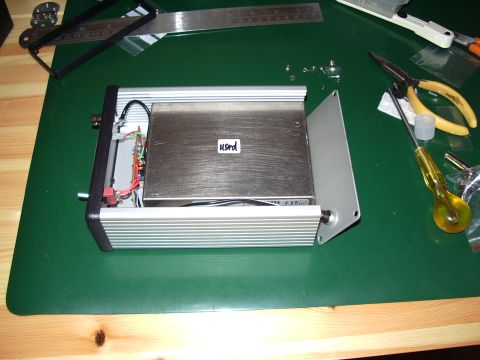
The voltage regulator and crystal oven inside the LPRO-101 generate a lot of heat so the unit is intended to be mounted on a heat sink. I purchased a Hammond extruded aluminium case to use for the project, which should provide reasonable heat sinking for the module.
One thing I learned from researching on the internet is that the LPRO-101 will run cooler when operated from its minimum recommended supply of 19V. This just so happens to be the output voltage of the power supply for an old Toshiba laptop whose screen failed so I decided to use that instead of the 24V supply that was sent by the seller.
The other thing I learned is that the rubidium lamps wear out with time. When they are made, the manufacturer ensures that they contain sufficient rubidium to achieve the stated maintenance free life of ten years, so the expected life in continuous use would be ten years less the use it has already had.
If I ran the unit all the time my rig is on – for example as an external frequency reference for a transceiver – then it is going to fail sooner or later. If I only use it for frequency calibration purposes, switching it on only when needed, then it will probably outlast me. The TCXO in my K3 is pretty stable so I should be able to obtain adequate accuracy for my purposes by manually calibrating the master oscillator using the rubidium standard and repeating this as often as necessary. How often that turns out to be, we’ll see.
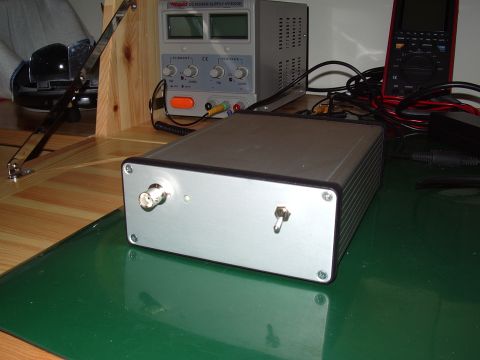
Here is the finished unit. Annoyingly, I messed up the front panel of the rather expensive Hammond case. Originally I had intended to use an SMA socket for the output but I didn’t get the holes for its two mounting screws in the right place and after filing to fit it looked unsightly. So I fitted a BNC socket instead which is what I should have done in the first place. Unfortunately you can see the two holes for the SMA mounting screws either side of the BNC socket. So my frequency standard doesn’t look quite as professional as this one built by DL2MDQ. Oh well, it’s only a piece of test equipment!














