Posts Tagged ‘SOTA’
 Activation Alert: W0/FR-063 (Mt. Herman) –2757m / 9045ft
 November 16th, 2011 |
  Author:
 Date: 19 November 2011
Time: Approx. 1700 UTC – 2000 UTC
Region: CO-Front Range
Elevation: 2757 m / 9045 ft – 4 Points
Call Sign: KD0BIK/qrp
Frequencies: 14.315-ssb +/- 146.52-fm
Equipment: FT-817ND / Buddipole versatee vertical
APRS Track: On Road / On Trail
So here it is! My first SOTA activation alert. I selected Mt. Herman as my first activation summit for a couple of reasons. First, I’ve watched a few Youtube videos from Steve Galchutt, wG0AT operating from Mt. Herman and I’ve chased this particular summit as well. While it may not be the easiest summit, it’s also not the most difficult. Second, as I’m still learning the ins and outs of SOTA activations, I’m still also unclear to the private land versus public land access. Since Mt. Herman is on public land and it’s been activated a few times before, I figure the only thing stopping me from this being a success is my ability to make it to the summit, HF propagation and how well my batteries hold out.
Speaking of batteries. as I write the activation alert I’m not 100% certain what battery setup will accompany me on my trip. As I blogged recently about my first SOTA QSO, I had been researching the nanophosphate technology battery packs from Buddipole. The research all pointed to these packs being very well built with exceptional life and performance. While expensive (compared to SLA types) the lighter weight and longer life ended up selling me on the concept. I placed an order for one of the packs and charger from Buddipole. Just not sure if it will arrive in time.
So having said that, plan “B” will be to carry along a single sealed lead acid battery along with my fully charged FNB-85 battery pack installed in the FT-817. As a safety net, I will also carry along a rollup solar panel. The extra weight is minimal and may come in handy if I have a nice sunny day.
I have changed my mind a few dozen times (or what seems like it) on whether to leave the FT-817 behind and instead take the FT-857. After all, I can always turn the power on the 857 down, but can’t increase the power on the 817. However, I’m going to stick with my 817 and 5w of power.
As I make out my gear lists (which will eventually be posted on this site) I feel like Santa (making his list, checking it twice) I can only hope in the end it proves I’ve been nice and not naughty. Having said that, I’ve setup my buddipole versatee vertical several times when operating portable. I’ve also setup everything outside just to make sure I haven’t forgotten anything. So it should all go together fairly quickly once I get to the top.
If I feel I have a weak link, it will surely be around my power setup. If I have to go with “plan B” (the 5+ pound SLA) it is an older battery. But I’ve tested it here in the shack and it charges, holds a charge and has powered my 817 for over 3 hours operating WSPR.
What else will be in my pack? When I’ve operated portable in the field, I’ve only been no greater than 100 feet from my truck. Forgot a pen? No problem…run to the truck. Need to carry a deep cycle marine battery? No problem. All this changes with a SOTA activation. If I reach the summit and realize I’ve forgotten a pen or the cold zaps the battery, I’m stuck. So my first SOTA activation might include a few things I may or may not need. On my checklist, I have a place to check that I have the gear in my pack, used the gear on the summit etc. I’ll review this have versus used to see what needs to come off the list.
One other point and I’ll close this activation notice. This is not my first hiking trip, nor is it my first mountaineering adventure. However, it is my first hiking/mountaineering adventure where I’ve combined amateur radio on this scale. How I view my post success/failure results might differ from others who activate SOTA stations. Of course, I’ll leave this for the after trip report.
Until next time….
73 de KD0BIK
My Introduction to SOTA

I can’t honestly say that I knew a whole heck of a lot about SOTA prior to a week or so ago. Sure I figured it had something to do with activating mountain tops and had figured out what the acronym stood for. By the way, SOTA stands for Summits On The Air. The general idea of SOTA is much of that with IOTA (Islands On The Air) or LOTA (Lighthouses On The Air). Ironically, the same weekend I worked my first SOTA station, I also worked my first lighthouse. Since there aren’t very many lighthouses in Colorado, I decided I would read up on and become more familiar with SOTA. I believe I’ll be able to find a few summits here in the Centennial State to keep me busy for a while.
My first SOTA QSO sort of came by accident. I had been tuning up and down the band looking for W3T which was the Nikola Tesla special event station operating out of New York. I had noticed W3T spotted on a few of the DX clusters, but never heard them or the stations I did hear operating on the posted frequency were clearly not W3T. I turned to Twitter to see if anyone else had either worked W3T or heard them. I was just about to send my tweet when I saw a twitter posting from K0BAM. Jim lives over in Delta, Colorado. Anyway, his Twitter posting read something like W7IMC operating QRP SOTA from Idaho 14.343. I gave the big dial on the front of my Yaesu FT-950 a spin up to 14.343 and listened for a few minutes.
The bands have been in fine shape most of the day. I had worked several US stations and even a JA on 10m just before this. The signal I was hearing from Idaho sounded like it was coming from Idaho Springs, Colorado (just up I-70 from me). I listened a few seconds more and the mountaintop station called Whiskey, Seven, India, Mike, Charlie QRZ. I quickly came back with Kilo, Delta, Zero, Bravo, India, Kilo and just like that I was in QSO with my first SOTA station.

As I previously stated, Scott’s (W7IMC shown right) 5w signal was booming into Colorado and we quickly exchanged pleasantries and he told me he was located on Regan Butte and provided the SOTA identifier of W7/SR-181. I knew Scott had others who wanted to work him and I wished him luck with his activation and said my 73 and logged the QSO in my logbook. I stayed on frequency and listened for another three or four QSO’s and picked up more information about the SOTA program. Of course, I quickly pulled up Google (Google is our friend) and soon found a couple of interesting websites.
The first website is the SOTA main home on the web. SOTA actually began over in the UK and slowly migrated throughout Europe and eventually we caught on over here. SOTA refers to each particular area as an association and there are 54 such associations around the world. Each association is managed by a volunteer called an association manager. The association which serves the Denver Front Range area is W0. W0 is managed by wG0AT, Steve Galchutt. You may know Steve from his Youtube videos featuring Rooster and Peanut his two pack goats.
Each association will have anywhere from a few qualifying summits and some have several thousands. In the case of W0, we have 1,791 qualifying summits. Enough to keep me busy for a long time. All total there are over 42,000 qualifying summits world wide.
Now we have two different ways to participate in the SOTA program. We can lace up our hiking boots, grab our portable gear and activate a qualifying summit. This is called an activator. Or we can grab a cup of coffee, head down to our comfortable shack. This is called a chaser. Obviously the success of the program requires both types of participants. Of course, an activator can work other mountain top activations.
Both activators and chasers can log their contacts into the SOTA database. Points are awarded for both categories. For what I hope is an obvious reason, those performing the activator role earn more points than those chasing. In addition, each qualifying summit may have different points earned based on degree of difficulty.
With winter coming on with a bang in the Colorado high country, I’ll spend the next few months learning more about SOTA and working other SOTA station activations as I can. Check out the SOTAwatch database for upcoming activations and current spots.

Finally, if you’re an iOS user (iPhone, iPad, iPod Touch). Check out the Pocket Sota app. It’s .99 cents in the iTunes App Store. The app provides a listing of all the associations which you can drill into to find detailed information about each of the qualifying summits including a map view.
The image to the left represents 219 qualifying summits in the Front Range region of the W0 association. While some of these are 14,000+ peaks, many are not. Those that aren’t just might be accessible even in the early winter months and I might just have to investigate a possible activation as KD0BIK/P. However, before I really get serious about this, I need to update my portable power setup.
I’m looking at the nanophosphate technology so many of our fellow amateur’s are raving about. Unlike the 12v 7.5Ah batteries I use today, which weigh in at a whopping, back breaking 5+ pounds. The 9.2Ah version is only a little over 3 pounds. Also, as I understand…the nanophosphate batteries last until the last milliamp is gone from the battery, all while holding their voltage. Yes the cost is much greater than SLA models. But I feel this could be well worth it.
Until then, I’ll be watching the SOTAwatch database for activations as well as keeping my ears open for any I happen to hear on the bands. I’ll make sure to document any such activities be it chasing or activations right here.
Until next time….
73 de KD0BIK (Jerry)
North America’s Summits On The Air Day with K2FR
I can’t believe I missed this. I’ve written about Summits on The Air before, but Andrew, K2FR hiked up Hunter mountain in the Catskills for S.O.T.A., Summits on The Air and made some contacts when he reached the top. While hiking up, he made a video. This is of course that video. Andrew talks about what he has in his pack and how he slimmed it down considerably, for this hike to save on weight. On the way up, Andrew stops stops and, we get a view of the valley below. Sadly, it’s past peak for the leafs so no bright autumn colors. And because of fog at the summit, no view of the mountains and area. Andrew also has a bunch more videos on his YouTube channel. Some are S.O.T.A. videos. The description from this video says..
Cool weather, turned into cold weather at the top. A completely fogged in summit made for no views or any cool photos. My new battery pack worked great, Im quite happy I dropped over 10 pounds of weight from my pack by using that instead of the SLA ones, well worth the investment.
73.
Rich also writes a Tech blog and posts stories every Tuesday and Thursday on Q103, Albany’s #1 Rock Station website, as well as Amateur Radio stories every Monday thru Friday on AmiZed Studios and hosts a podcast called The Kim & Rich Show with his fiance’ Kim Dunne.
Almost a fellwalk
It has been yet another fabulous summer day here in Cumbria. I’m in good spirits and physically feeling fitter by the day. I think the balance issues and “jelly legs” are more an effect of the brain operation than a lack of fitness. Perhaps the same reason my hands often shake badly and cause frustration when trying to attempt soldering.
We decided to go for a walk over the fields to the north of Cockermouth and have a picnic lunch. I took the Taiwanese twins in the hope of making a few radio contacts whilst we were out.
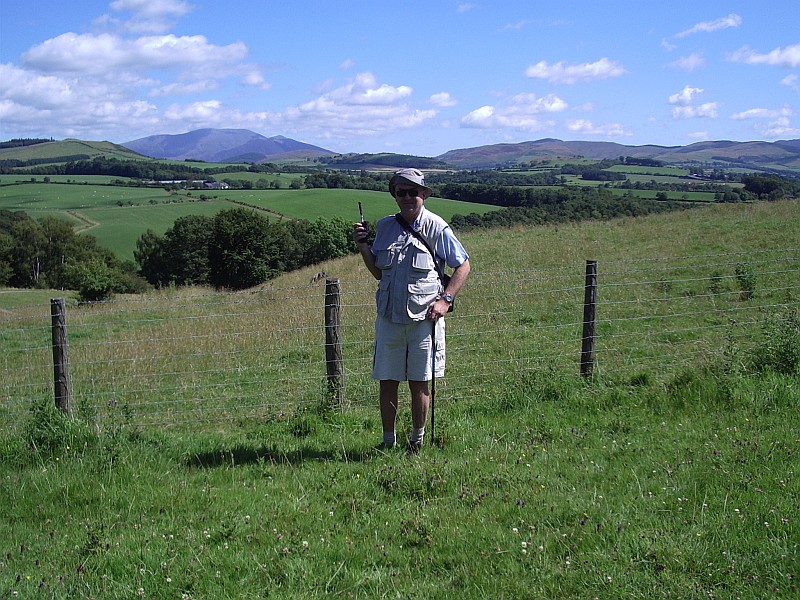
The walk involved some gentle climbing up from the valley. On the way I heard Alan M1EYO/P call on 2m to activate the SOTA summit of Watch Hill G/LD-054 which is almost literally in my back yard. You can see it on the far left of the picture behind me. When I was fit I could walk to Watch Hill though I never did as there was not much attraction in walking for an hour and a half to reach the summit when I could park the car within 15 minutes walk of the top. With no car unfortunately even Watch Hill is out of bounds.
After I worked Alan we carried on walking until we almost reached the Carlisle road, where we found a grassy south facing slope to have lunch. This is probably the only portable site that I can reach on foot from here, though it isn’t a very good site as it is still within the Derwent valley or “Cockermouth black hole” as I call it.
Checking 2m from time to time with a 5/8 telescopic whip on the 2m radio I heard Richard G1JTD/P activating Illgill Head G/LD-029. With a bit of help from Tony G1OAE Richard heard me and we made a contact. I had to use the monitor button to disable the fixed squelch on the H112PLUS which is set far too high. The receiver on the 5/8 telescopic seemed quite poor possibly due to intermodulation or overload. These really are terrible radios!
Alan was going to activate Binsey G/LD-041 a favourite of mine which was in fact the last summit I activated so we waited until he called on 2m and I had another contact. Alan told me he had discovered Rob G4RQJ on the other side of Binsey summit working 40m and setting up to try 4m. I pricked up my ears at the mention of four metres and about a minute later I heard Rob calling on the other H112PLUS so I was able to make my second-ever contact on 70MHz. Binsey is also line of sight from where I was so it was not a DX contact but it was still nice to make a contact on the 4m band.
After that we packed up and walked home. It was a pretty tiring day’s outing for me, definitely the furthest I have walked and the highest I have climbed since my operation. But it was quite a morale booster to get out on such a nice day and do some portable operation. There are even some trees there I could try to get some wire over for some HF operation with the FT-817 in the future, so that’s something to look forward to.

Unreliable connection
The webmaster of Summits On The Air kindly gave me permission to access the SOTA Spots RSS feed from the Wainwrights On The Air website so that spots for SOTA summits that are also Wainwright summits can automagically appear in the WOTA system. I started work on that the day before yesterday. I also noticed that APRS objects for the position of Mads, M/LA1TPA/P, were not appearing because the length of his call exceeded the maximum length of an APRS object name. I implemented a fix for that by lopping off the /P if the name would exceed 9 characters. Yesterday morning I did not receive any SOTA alerts over APRS at all so I wondered if I had broken something.
It didn’t help that I had trouble accessing aprs.fi to see whether the APRS spots were getting out. That might have given me a clue as to where the problem lay. As it was, it took quite a lot of time before I realized that the problem was my internet connection. Although the ADSL was up and working, I was having trouble connecting to various sites including the APRS-IS Tier 2 servers and packets were being lost along the way.
This forced me to address another problem. Currently all the APRS packets are sent by the WOTA website calling a file on a web server running on a network attached storage (NAS) backup device running in G4ILO’s shack which is actually a little Linux computer that runs Apache. This server hosts the script that sends the packet to the APRS network. I had tried running the script on the WOTA web server itself but it hadn’t worked and I didn’t know why so I decided to go for the path of least resistance since life is too short for making computers work the way I want them to.
Apart from the problem of connectivity with this solution there is also one of continuity. I don’t like to run computers 24/7 because it adds a significant amount to an electricity bill that is already high due to the fact that there are two people using even more computers and equipment home all day. Also, Olga is not happy about leaving any equipment running when we go away. Whilst it is unlikely that anyone will activate summits in the middle of the night they are certainly going to do so while we are on holiday. So I really need to send the APRS alerts entirely from the web server.
After another couple of hours of getting nowhere I filed a support ticket with the web hos. They replied that they block port 8080 which is the one used to post APRS packets to the network using HTTP. When you are paying $8 a month for web hosting there is a limit to the amount of help you can expect particularly when it comes to changing the configuration of the server (which no doubt hosts hundreds of sites) just for my convenience. The last reply said “please try now” but I did and it still didn’t work. So it looks as if I might have to live with having APRS spot functionality that goes QRT when we are on holiday.
Meanwhile I am waiting for someone to activate a SOTA summit in the Lake District so I can see whether my script to check the SOTA spots RSS file is doing what it supposed to.

Microlight QRP
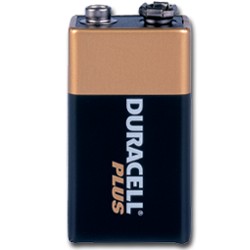
Keen followers of SOTA will have read about this on the SOTA Reflector, but during the last couple of months Richard G3CWI has been activating summits using a 30m transceiver powered by a 9V PP3/MN1604 battery. This apparently is in response to a challenge set by another keen SOTA activator: Kjell, LA1KHA (who visited us in October 2009.)
I couldn’t find many details of the challenge, so I’m just assuming that it was simply to see how many activations could be made using a radio powered by one of these small batteries. Kjell is believed to be using a Small Wonder labs RockMite but Richard built his own transceiver especially for the challenge. The receiver uses a two-crystal ladder filter at the signal frequency, an NE602 mixer, a low noise AF amplifier and active lowpass filter using CMOS op-amps. The transmitter has a crystal oscillator, bipolar buffer, bipolar amplifier and FET class E PA giving 300mW output and an internal Tick1 keyer.
With this transceiver Richard has now activated 10 summits making more than 100 contacts, still using the original PP3 battery! Having established that a PP3-powered transceiver is adequate for reliable activating Richard is now looking for ultra-lightweight HF antennas to get the weight of his portable station down to the absolute minimum.
I think this is a fascinating challenge and hope that Richard will write up the experience in more detail one day, perhaps in his RadCom Portable column or in the G-QRP Club magazine Sprat. This is really what QRP is all about, reducing the equipment to the bare essentials. It also shows the value of CW as the only mode that allows you to use such simple equipment.

Barely making contact
I was reflecting on what I wrote yesterday about the EchoLink app for Android and why I find it and similar developments disturbing. I thought it was because it made me uneasy having to face the fact that the internet and a cellphone appears to make ham radio redundant by allowing us to make the same contacts so much more easily without using the ham bands at all. Then I had a blinding revelation. Ham radio is not about making contacts. It is about not making contacts, or making them only with luck and some difficulty.
I almost stumbled across this truth a few months ago after I sold my first VX-8R to do APRS on a smartphone using Lynn KJ4ERJ’s excellent APRSISCE software. It worked far better than the 2m radio, allowing me to be tracked and exchange messages in places where there was no 2m signal. But I went back to using RF for precisely that reason. The smartphone didn’t provide the interest of allowing me to see how VHF RF propagates around the local terrain. The disappointment of not being tracked as I slogged up the mountain was balanced by my surprise when a beacon was gated from a location I wouldn’t have thought possible and the interest created in working out how it happened. There is also the technical challenge of finding ways to improve coverage and get a radio signal out of difficult locations, for which buying a smartphone is simply a cop-out.
When you look at other ham activities that remain popular or are even gaining in popularity it’s obvious that the interest is not in how easy it is to make contacts, but how hard. DXing isn’t about pressing the PTT and ticking another entity off the list a minute later, it’s about what you have to do – buy equipment, improve your antennas, learn about propagation, develop operating skills, be patient – in order to achieve it. People boast about the DX they’ve worked, but what keeps them interested in DXing is the places they haven’t worked and how hard it will be to work them. Dialling up a contact using an internet application has nothing to do with it.
Contesting isn’t popular because it’s easy to amass a winning score but because you need the best equipment, the best antennas and lots of skill to get even close. It isn’t meant to be a level playing field. That’s why many people dislike developments like reverse beacons and skimmers that take away some of the skill required.
QRP pursuits like WSPR or MEPT beaconing aren’t about making contacts at all, but just about seeing how far a whiff of RF can go. The excitement isn’t in being received by someone for the nth time, it’s that first barely detectable trace on the screen of someone or somewhere new that makes you punch the air (if QRPers go in for such QRO expressions of emotion.)
The thing about VHF FM activity is that for the most part it isn’t about the achievement of the contact at all. It’s just about being able to converse with people. When I was first licensed, before mobile phones and inclusive call packages, chatting on 2m FM was actually the best and certainly the cheapest way of keeping in contact with my local ham friends. But things have changed over the last 35 years and I haven’t been paying attention. I’m the dinosaur who wouldn’t disclose his mobile number to the radio club database because I felt that if someone wanted to talk to me about radio they could wait until they can contact me on the radio. But I suspect that everyone else has moved on. If they want to speak with one of their ham buddies they pick up the phone. Which may partly explain why the VHF bands these days are almost dead. Or even the development of D-Star, which provides some of the convenience of calling someone on the phone without totally abandoning use of the ham bands.
In only a handful of pursuits like SOTA and WOTA where the point is to make a contact direct using radio is 2m FM still used in what I would call a traditional manner. People will struggle to hear their signal report even if the activator is right down in the noise and get a feeling of having accomplished something when they are successful.
So EchoLink on a smartphone really doesn’t change anything. It already changed. Whether hams call one another on the phone using their phone number or their EchoLink node number really makes no difference. It has just been blinkered thinking on my part to have felt that if people hold ham radio licenses they ought to talk to each other using ham radio even if it isn’t the most convenient way of doing so.














