Posts Tagged ‘SOTA’
 SOTA plus NPOTA on Signal Mountain (W7Y/TT-161)
 September 13th, 2016 |
  Author:
 Signal Mountain (W7Y/TT-161) is now my favorite spot in the Grand Teton National Park. The summit is well-marked on the Grand Teton NP map, on the east side of Jackson Lake. It has a paved road to the top and it provides excellent views of Jackson Hole and the surrounding mountains. Oh, and it’s a great location for ham radio.
On this summit, I did a combination Summits On The Air (SOTA) and National Parks On the Air (NPOTA) activation. Well, sort of. It turns out that when I packed for the trip, I included my usual SOTA gear, which is all VHF. For NPOTA, I loaded up my HF DXpedition gear that needs a pretty hefty power source. These means that the HF stuff uses my car battery, so it is not SOTA-compliant. Oh well.
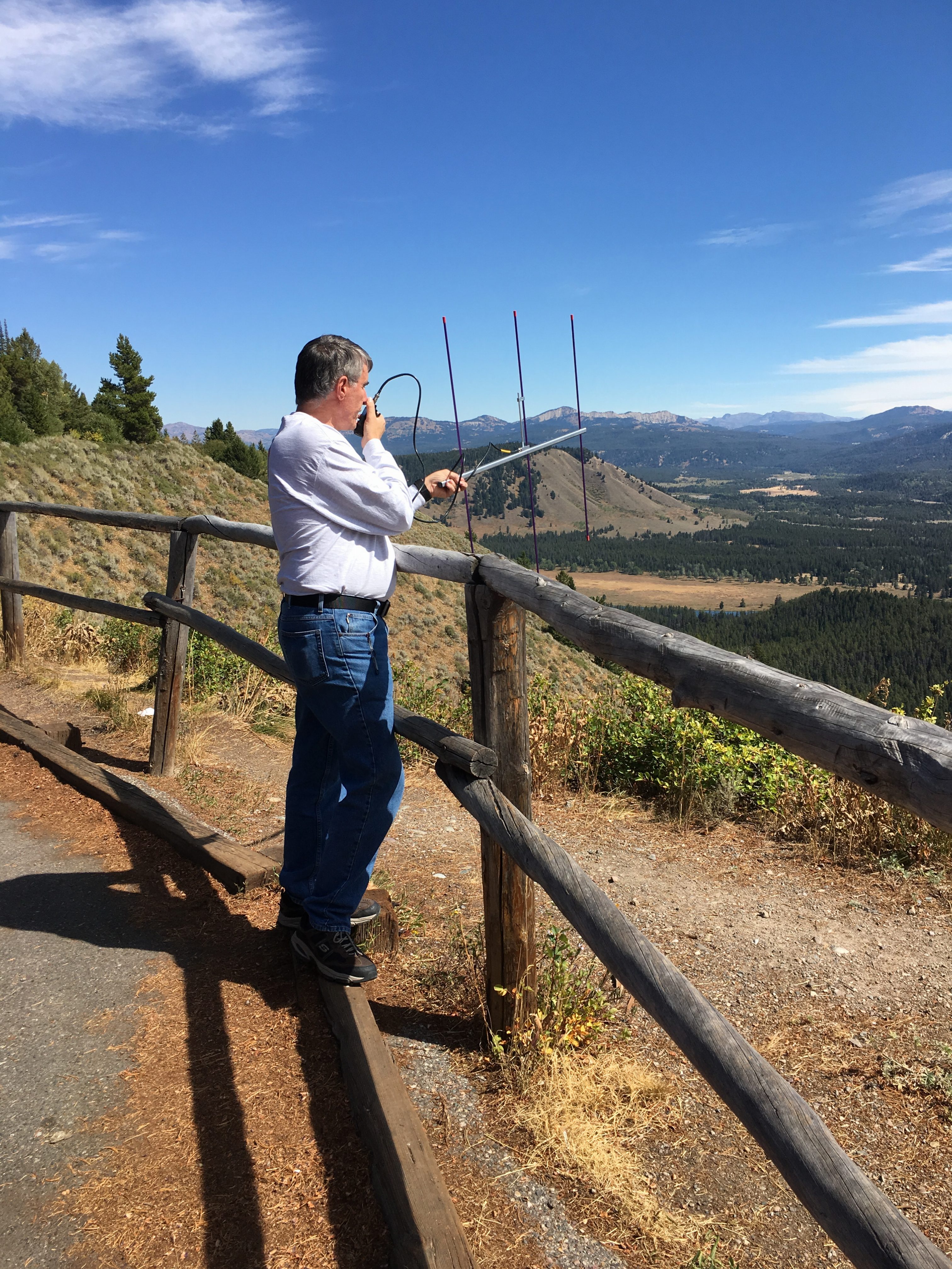
For the SOTA activation, I used the Yaesu FT-1DR and my 3-element Arrow yagi antenna to work a handful of stations on 146.52 MHz. I was a little concerned about finding enough stations listening on 52, but once again a little bit of patience payed off and I made my four QSOs.
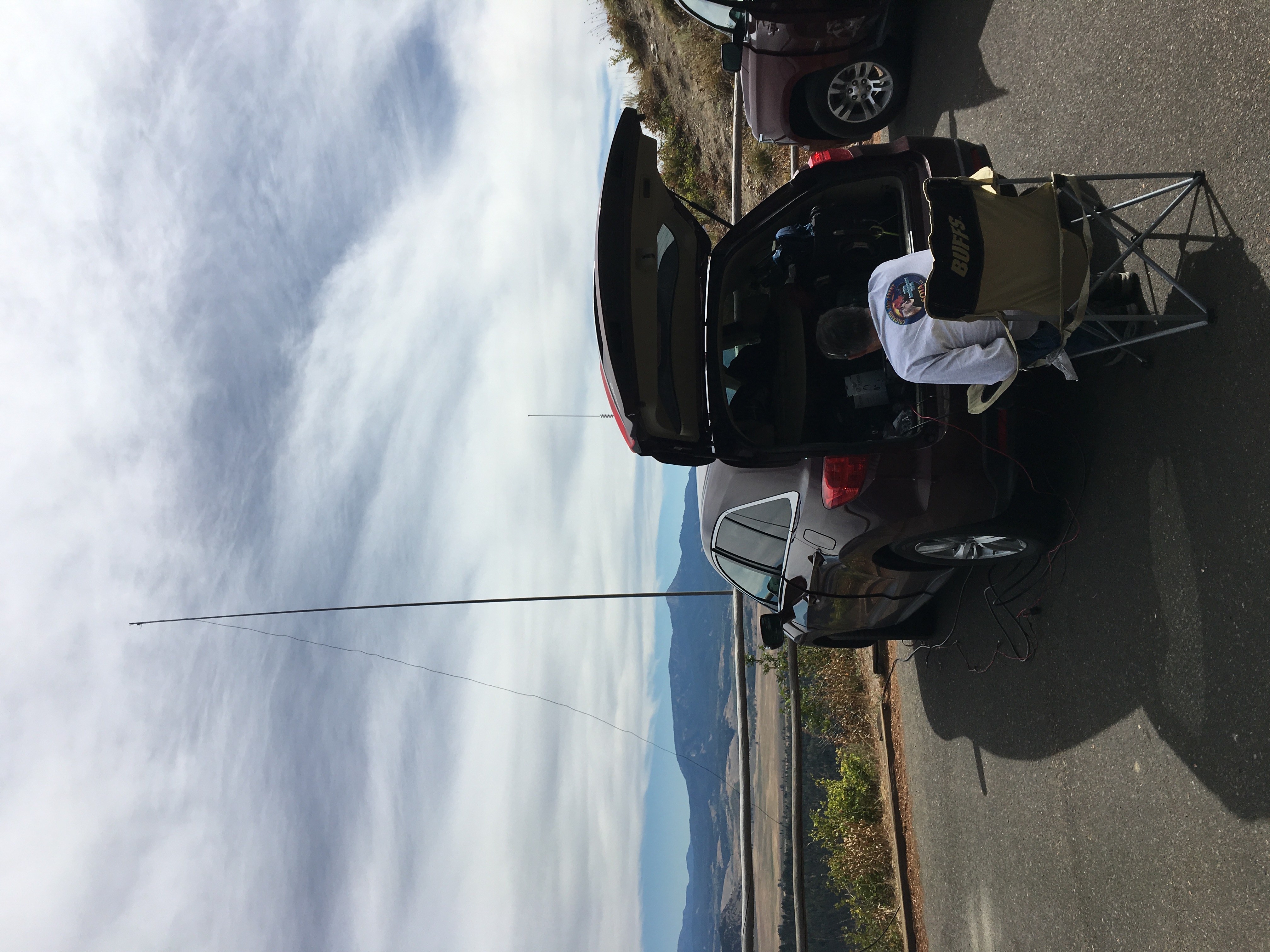
Then I set up the NPOTA station to activate Grand Teton National Park (NP23). My equipment was a Yaesu FT-991 driving an end-fed half-wave for 20m from LNR Precision. I’ve tried a number of different portable antennas over the years but have found that a half-wave radiator up in the air is a pretty effective antenna. This could be a center-fed dipole antenna but that can be a challenge to support, depending on the physical location.
The end-fed half-waves (EFHW) from LNR Precision are easily supported using a non-conductive pole such as the 10m SOTABEAMS pole. The top two sections of the pole are too thin to support much of antenna, so I have removed them. This makes my pole about 9 meters in length which is still long enough to support a 20m halfwave. (The antenna angles out a bit as shown in the photo but its pretty much vertical.) I attached the pole to a fence post using some hook/loop straps. I don’t fiddle with the length of the antenna, I just let the antenna tuner in the FT-991 trim up the match. This is the same configuration I used in Antigua (V29RW), where it worked great.
The FT-991 is a great little radio for this kind of operation. The SUV we were driving is not set up for HF operation so I just located the radio in the back of the vehicle and plopped down on a folding camp chair. For power, I clipped directly onto the vehicle battery with fused 10 gauge wires.
I started by making a few calls on 20m ssb. As soon as I was “spotted” on the usual web sites, I had a good pileup going. I worked 40 stations in about 40 minutes, so averaged one QSO per minute overall. Thanks to everyone that worked me; all contacts have been uploaded to Logbook of The World.
Oh, and it was a lot of fun.
73, Bob K0NR
The post SOTA plus NPOTA on Signal Mountain (W7Y/TT-161) appeared first on The KØNR Radio Site.
Slacker SOTA Activation in the Tetons (W7Y/TT-061)
The Grand Teton National Park has plenty of mountains for Summits On The Air (SOTA) activations, so I wanted to activate a few of them as we enjoyed the park. I am still recovering from a fractured ankle, so I was definitely looking for an easy-peasy summit to activate on our trip. It turns out there is a summit right at the top of the Jackson Hole Arial Tram that operates during the summer months (W7Y/TT-061). (This tram serves the ski area during the winter.)
The SOTA database shows this summit as unnamed and refers to it by elevation, 10450. The locals may refer to this as Rendezvous Mountain, not to be confused with Rendezvous Peak (W7Y/TT-035). For SOTA purposes its just “10450”.
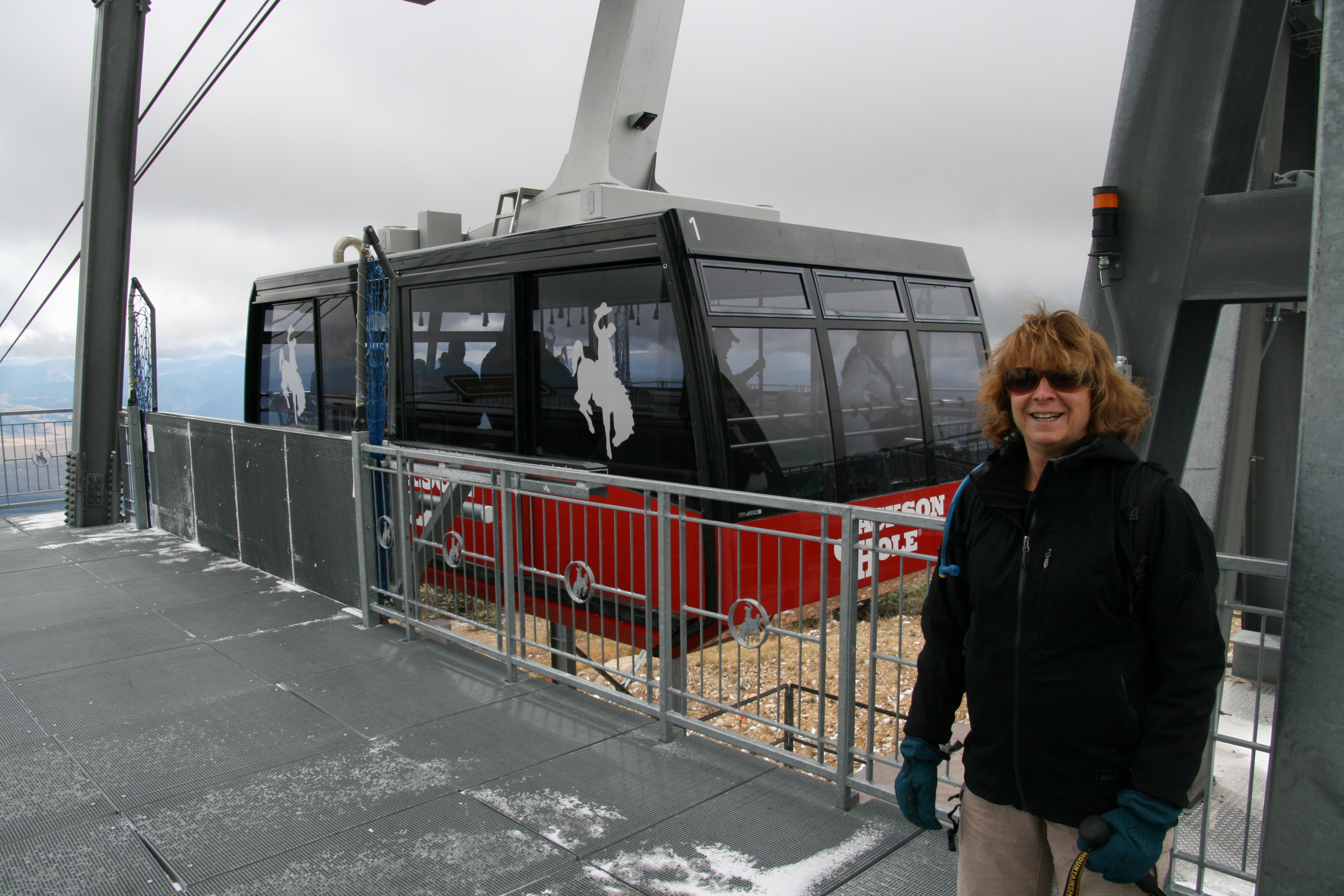
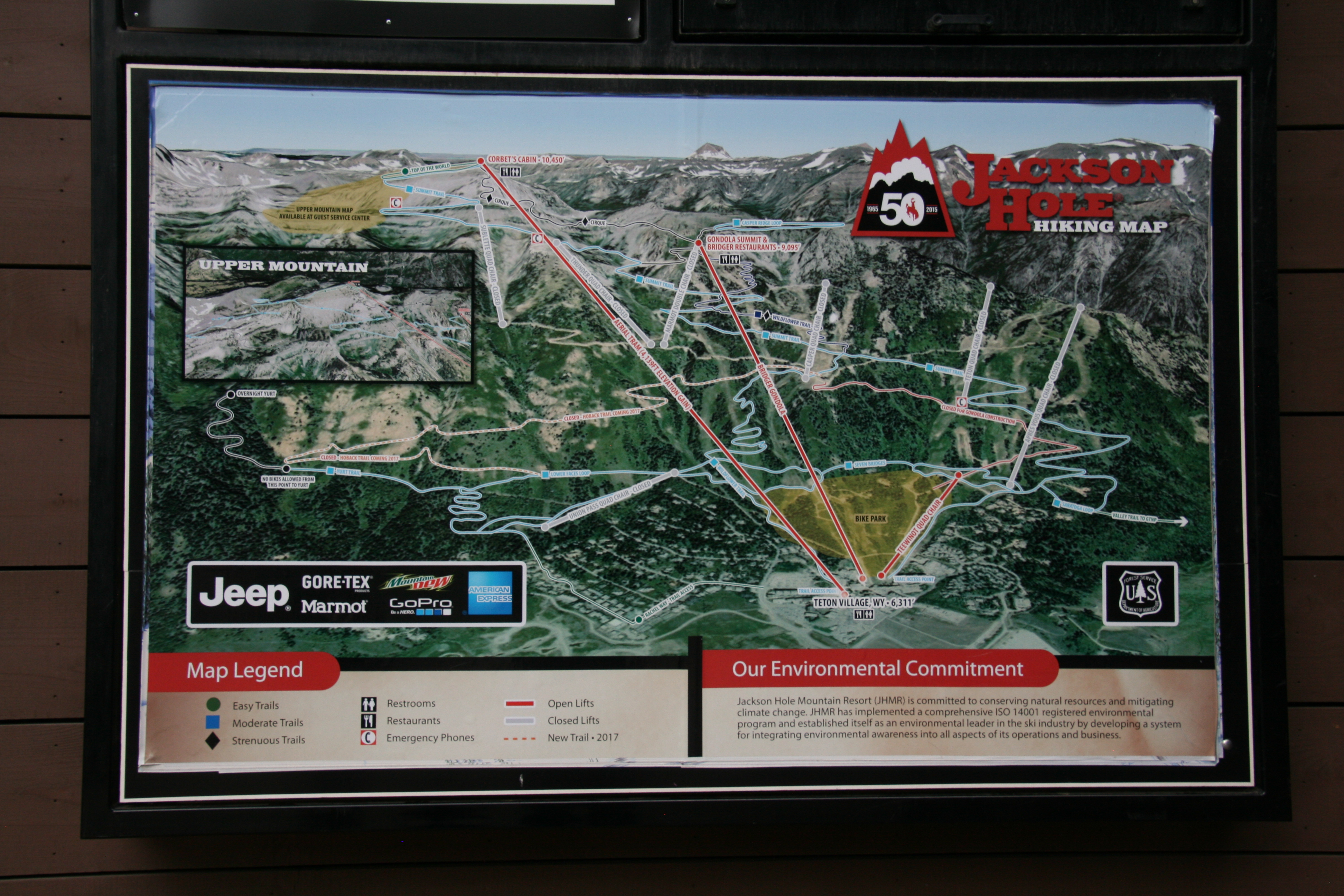
Well, this sounds pretty awesome…ride the tram to the top and play ham radio. Now the bad news: the ticket for the tram is $42. It’s an all day pass that gives you access to other lifts and plenty of hiking trails but still it is expensive. OK, slightly better news: if you purchase online you can get the pass for $32. There are senior and other pricing options, so check out the web site for the latest info.
The September weather was overcast and cold at the summit. I opted for a simple VHF activation using my Yaesu FT-1DR and a half-wave vertical antenna. I had my 3-element 2m yagi with me but I didn’t deploy it. I figured that my ability to contact folks on 2m fm would be limited more by who happens to be monitoring…signal strength would not be a major factor.
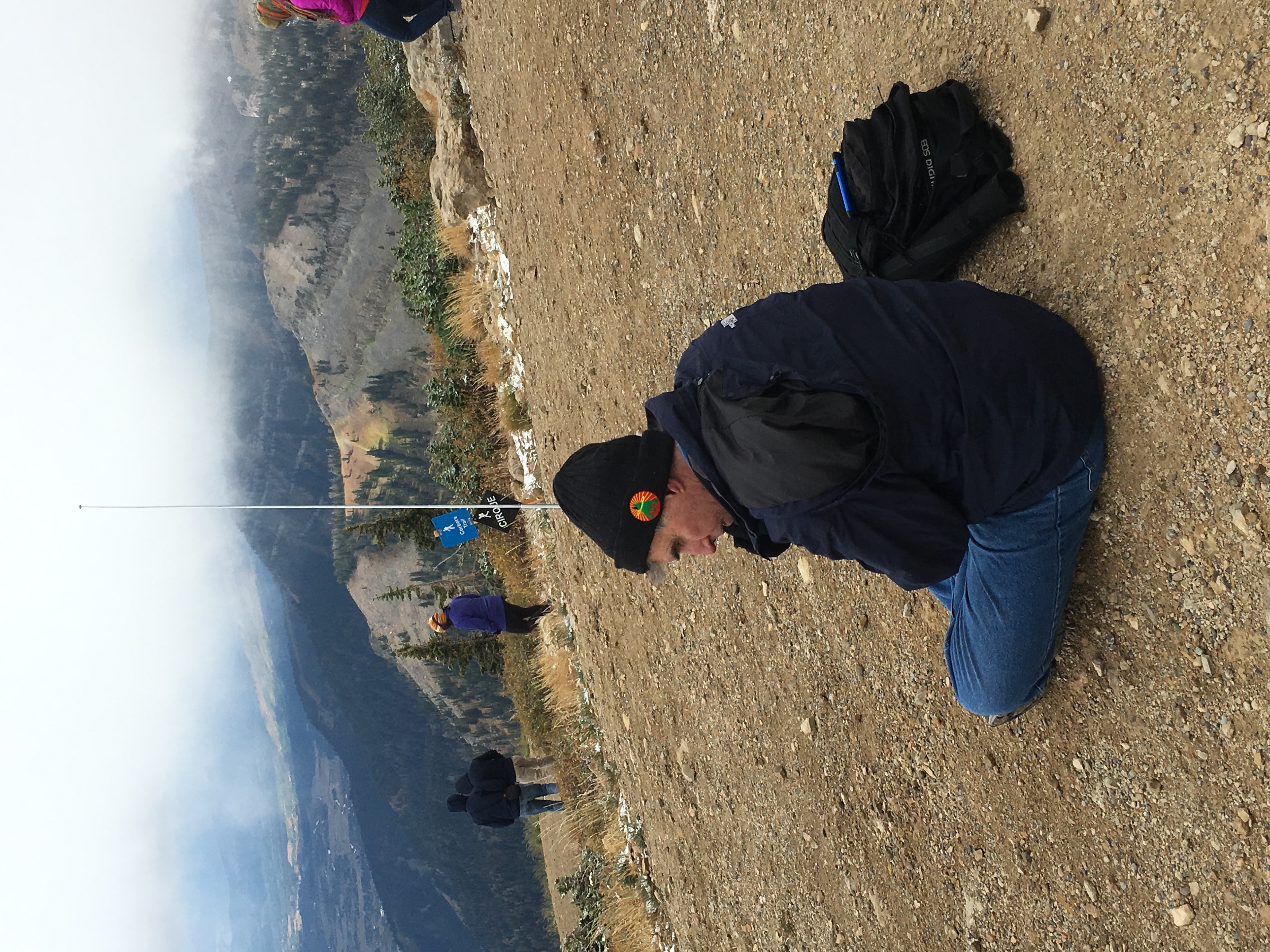
It was cold at the top and I was glad that I packed my gloves, hat and a decent jacket. I made five contacts by calling on 146.52 MHz.
The tram ride was quite enjoyable with good views of the Jackson Hole area. However, this may go down in history as my most expensive SOTA activation.
73, Bob K0NR
The post Slacker SOTA Activation in the Tetons (W7Y/TT-061) appeared first on The KØNR Radio Site.
Monarch Ridge South SOTA Activation (W0C/SP-058)
For the 2016 Colorado 14er Event, I had to choose really easy SOTA summits to activate because I had fractured my ankle earlier in the summer. At this point, I was able to hobble around with a protective boot but walking more than a few hundred feet was difficult. On Saturday, we drove up Pikes Peak and took a short stroll away from the vehicle to operate. On Sunday, we decided to activate Monarch Ridge South (W0C/SP-058), using the sight-seeing tram that goes to the top.
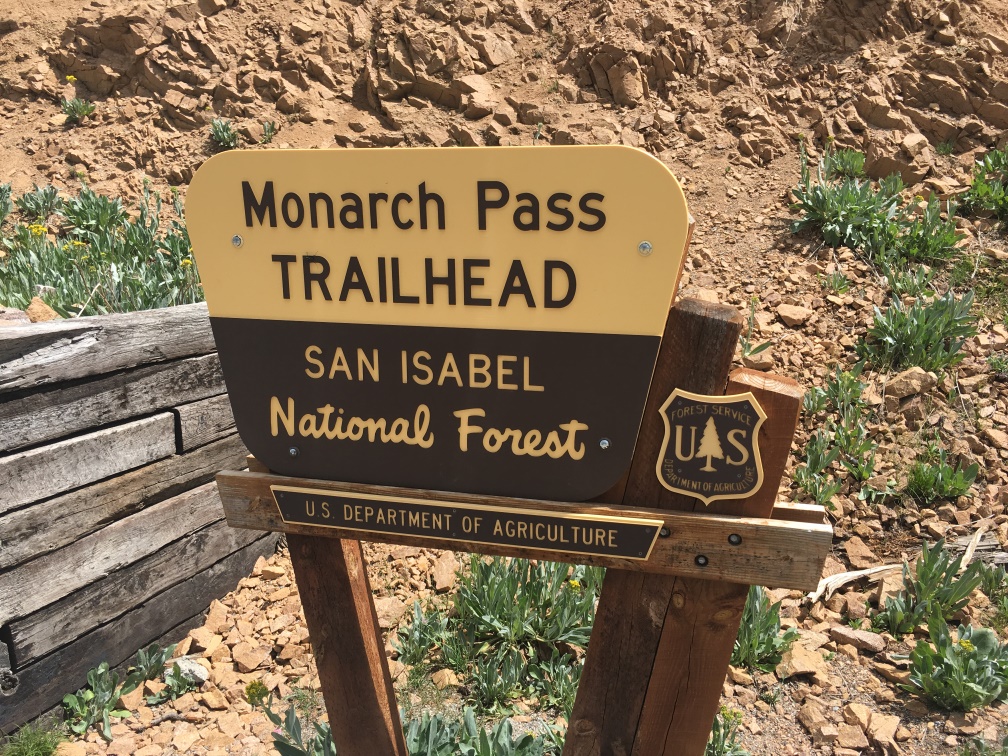 Access is right off Monarch Pass (Hwy 50), where there is a large parking lot. There is a trail that goes to the top and we’ll be back to hike that some other time. (Actually, Joyce K0JJW and I already tried to snowshoe to the top in blizzard conditions but that is another story for another day.) The trail is a popular mountain bike route, so we saw lots of bikers in the parking lot unloading gear. Monarch Pass is oriented north/south and the trail heads off to the east (behind the tram building).
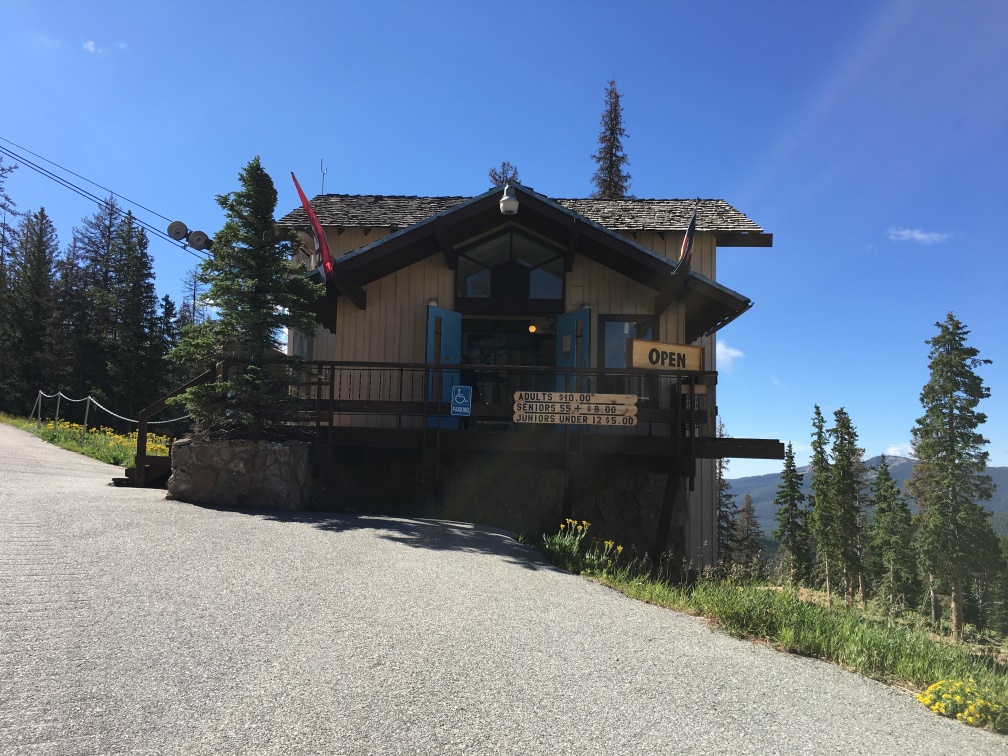 The tram boarding location is inside this building at the bottom of the tram. We purchased tickets in the nearby gift shop, which is worth a look if you need a map, book, ice cream cone or trinkets. See their website for latest schedule and pricing.
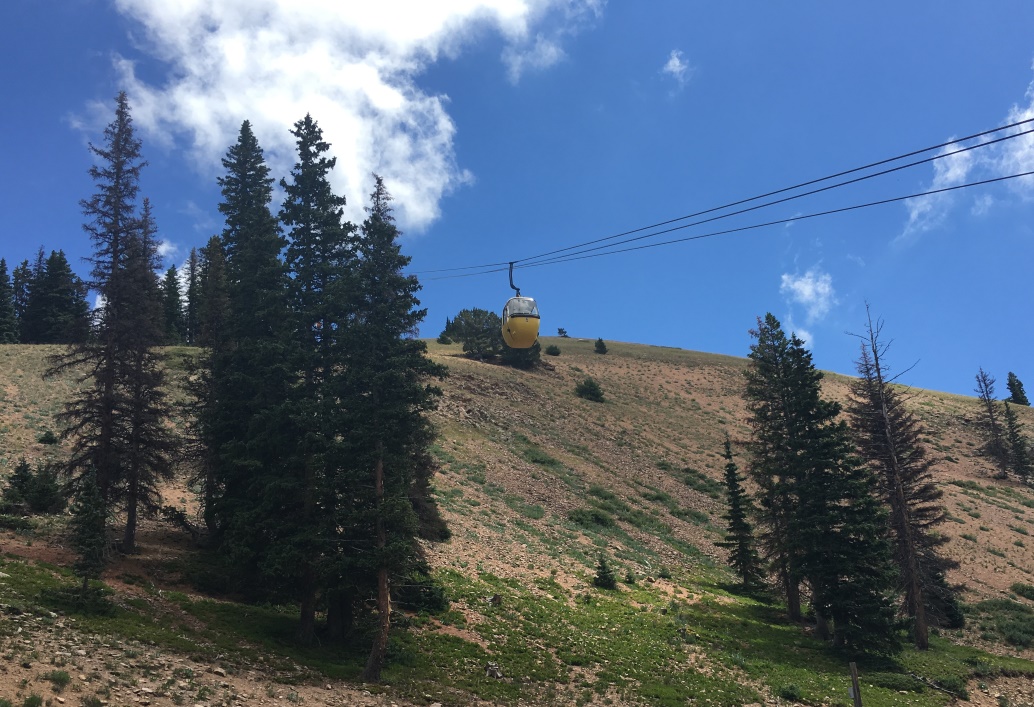 Here’s a photo of the tram going up the side of the mountain. Of course, the views are great and the ride takes about 10 minutes. The tram car holds four people and a reasonable amount of SOTA gear.
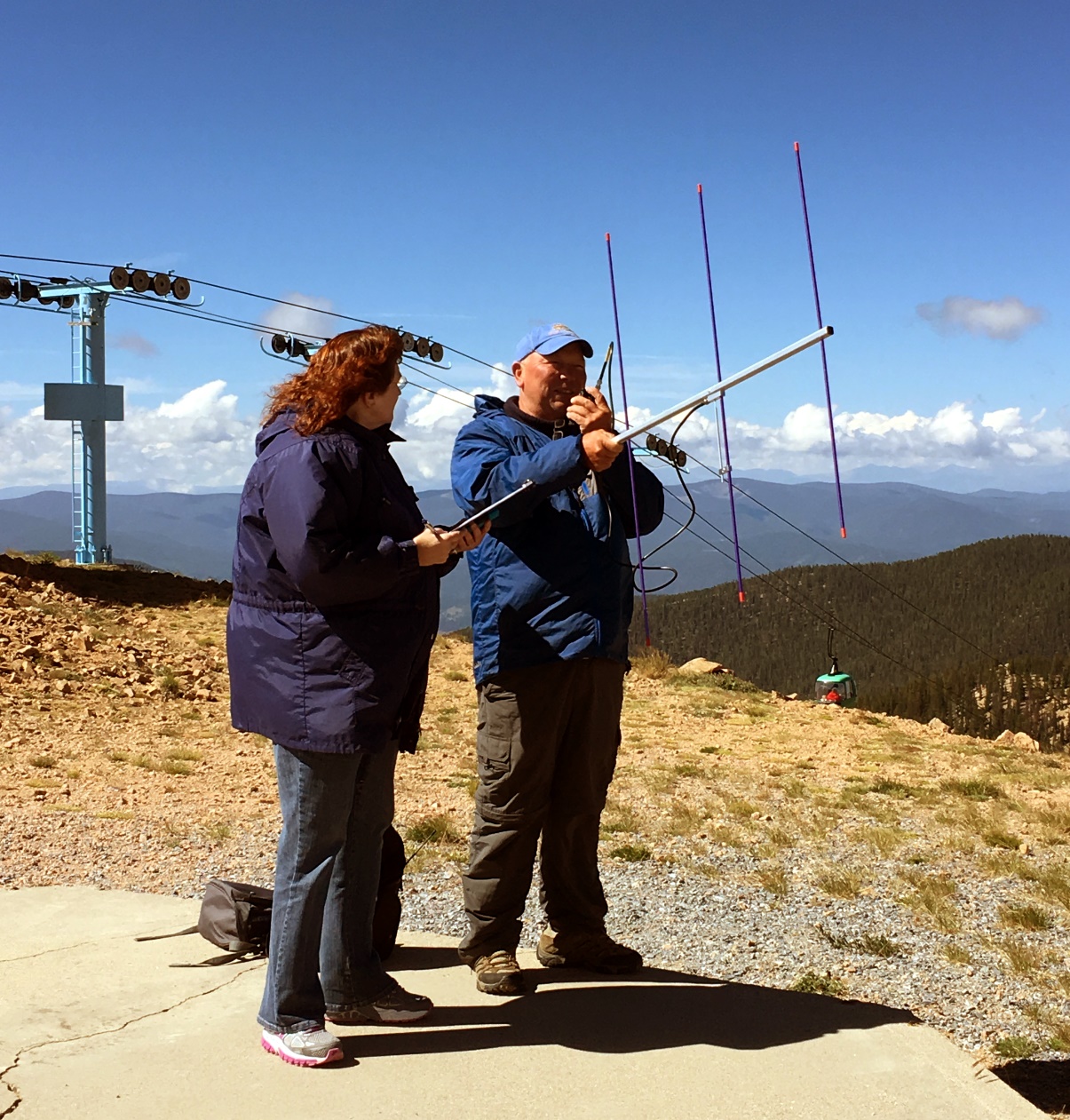 At the top, Denny KB9DPF made contacts on 2m FM, aided by expert logger Kathy KB9GVC. The actual summit is a ways to the south of the tram, maybe a tenth of a mile, but we operated from a concrete pad on the north side. The ridge is flat and we judged the activation area to be very large.
We made a total of 13 contacts on 2m and 70cm, including 5 other SOTA summits (S2S).
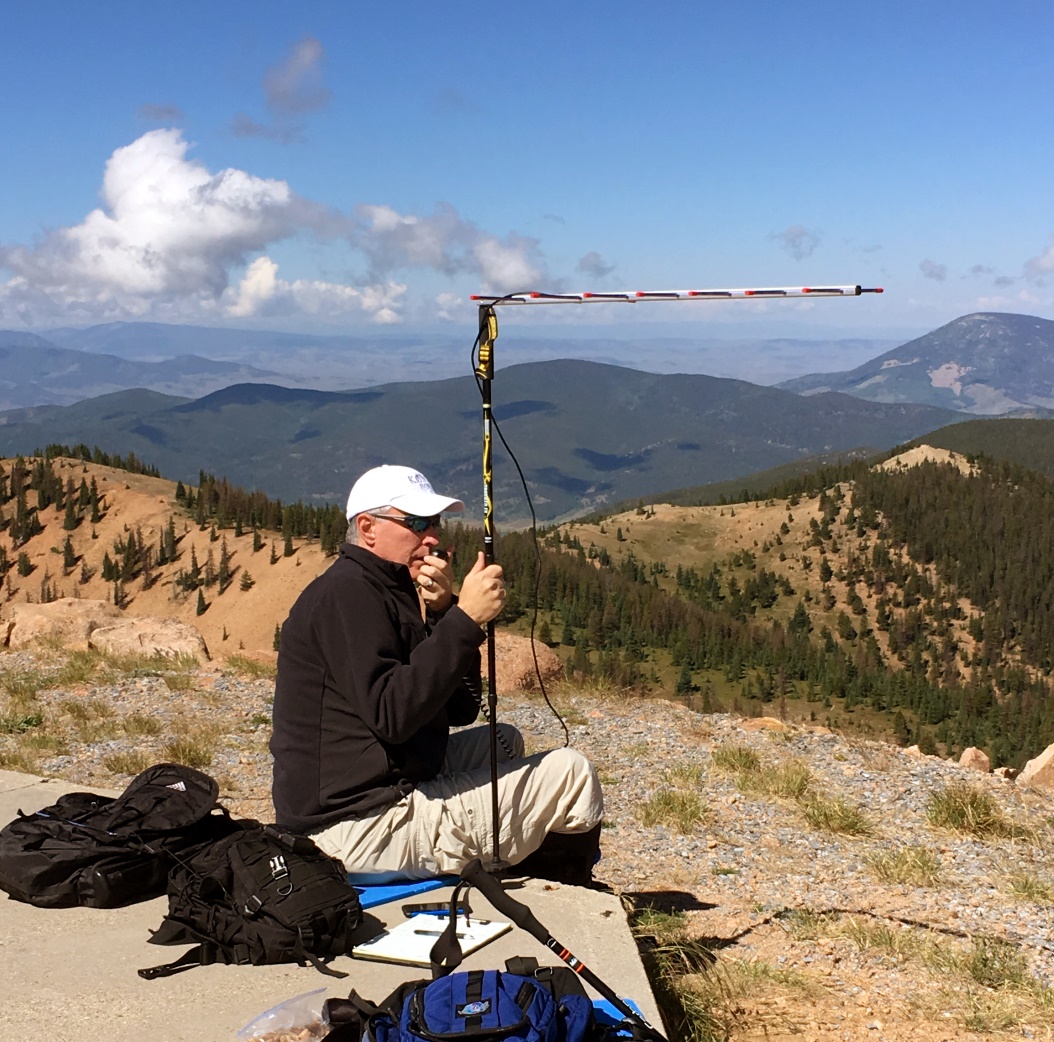 I used my Yaesu FT-817 on 432.100 MHz SSB, hoping to find someone in the UHF contest that is happening concurrently with the 14er event. I didn’t work anyone on 70cm SSB but I did work K3ILC in Colorado Springs on FM at a distance of ~90 miles. Not too bad. The Arrow antenna is attached to my hiking stick via the camera mount thread.
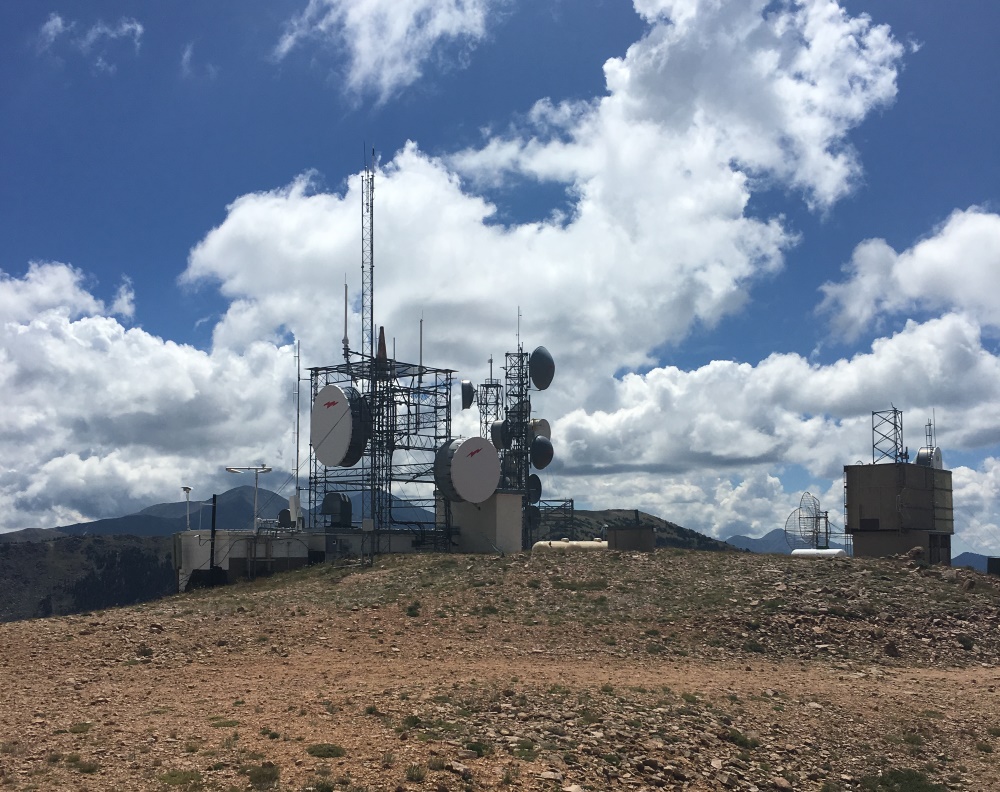 There is a substantial radio site on Monarch Ridge that did provide some RF interference to us on 2 meters. The 70 cm band seemed to be unaffected but I can’t be sure. The “bad boy” transmitter is the KMYP automated weather station (AWOS) transmitting continuously on 124.175 MHz. Well, at least we could receive current weather information. We did relocate to put some distance between us and the transmitters but my lack of mobility kept us from going too far.
If you are looking for an easy access SOTA summit near Monarch Pass with excellent views, this is it. The hike up should not be very difficult but the tram makes it even easier. If you plan to operate 2 meters, expect some interference. Next time, I’ll try locating even further away from the transmitter site. I might even bring along some bandpass filters. Other SOTA enthusiasts have reported no problems on the HF bands.
At the time of this post, there are plans to put a 2m amateur repeater at this site on 145.325 MHz.
73, Bob K0NR
The post Monarch Ridge South SOTA Activation (W0C/SP-058) appeared first on The KØNR Radio Site.
WØC/FR-030 (Chief Mountain) 3569m / 11709ft
On Sunday, 7 August 2016 I completed my 9th SOTA activation. Which I realize doesn’t sound like very many considering I completed my very first SOTA activation in November of 2011. Between November 2011 and November 2012 I added seven more to the list. Then I got sick, got busy, had some personal issues and before I knew it the summer of 2016 was quickly slipping away.
For those who have followed my other blog and my podcast (Practical Amateur Radio Podcast), you are aware I started exercising and eating better to get in better shape and lose weight. While I’ve taken over 10 million steps, walked just short of 5,000 miles and climbed 22,000 floors since I started wearing my Fitbit in the summer of 2013, today was the first SOTA activation I had attempted since losing over 50 pounds. While I’m presently in a weight holding pattern, I still make every effort to complete 10,000 steps per day. This walking has kept me in pretty good shape considering where I was just a few years ago. Best I can remember, it took me over 2 hours to hike to the summit of Chief Mountain in 2013.
The trailhead of Chief Mountain is about 40 minute drive from my QTH. As Chief Mountain is extremely popular with hikers/peak baggers I wanted to get an early start. I arrived at the trailhead just after 6:30 AM. With my boots tightly laced and my pack strapped to my back, I hit the trail at 6:45 AM.

The above trail sign is approx. 1 mile from the trailhead parking area and 2 miles below the summit.
One hour and five minutes later I’m standing on the summit of Chief Mountain. The total trail length is approx. 3 miles with a total elevation gain of just under 1,000. This is a great hike and I highly recommend it.
My SOTA HF setup hasn’t changed since 2012. If it works, why mess with it? I use a Buddipole vertical setup with a single wire counterpoise. For this activation I setup for the 20 meter band. I pack enough hardware to create a full-size 1/4 wave length vertical (no coil) along with a 1/4 wave length elevated counterpoise. With band conditions being less than desirable, I believe the extra weight of the two aluminum arms (versus the coil) was worth the effort.

My Buddipole vertical setup with my SOTA flag flying proudly.
Of course, my Elecraft Kx3 (serial number 057) running 10 watts is still very much my pride and joy of my QRP setup and I power it all with my 4+ year old Buddipole A123 Nanophosphate Battery Pack (13.2v, 9.2Ah). However, I must admit I was a little worried if my A123 battery pack would still work after all this time. But I would not be disappointed. They performed just as expected.
HF Contacts (20m SSB)
In just a little over 45 minutes I worked 24 stations from across the US and Canada. Many stations were familiar from previous activations along with many new ones. New Hampshire was the furthest QSO made during this activation.
Thanks to W0MOS, AD1C, N1CC, N1KB, NE4TN, KG3W, K7ZO, VE2JCW, WG0AT, W9MRH, KI4SVM, K2JB, N9FZV, W0MNA, NS7P, VA6FUN, K3SAE, W9RCJ, KK6GMN, KB5IMK, WA9BNZ, N1RCQ, KX3DX, KD0HRM.

A quick “selfie” from my operating position.
VHF Contacts (2m FM)
I don’t always pack along the Elk 2m/440 5 element log-periodic antenna. But as this was the 25th Annual Colorado 14er and SOTA weekend, I wanted a chance to make as many summit to summit (S2S) QSO’s as possible. Again, the added weight paid off. I made an additional six VHF QSO’s with four of those being S2S QSO’s.
Thanks to KD0WHB, WB9KPT, N0BCB, KK6JQV, KC1EPN
Summit to Summit (S2S)
As an activator, we often have the opportunity to work other mountaintop stations in what are known as Summit to Summit (S2S) QSO’s. As this was the 25th annual Colorado 14er and SOTA weekend, I knew my chances of working several Colorado mountain top stations would be good. During the 90 minutes I spent on Chief Mountain I managed to work eight stations on seven different mountain tops. Including two stations out of state (California and Oregon).
All-in-all this was very much a successful SOTA activation. While the HF band conditions were not perfect, the time spent on the air from almost 12,000 ASL was certainly worth it. Anytime I take amateur radio outdoors it always ends up being about the experience and not about anything else. Just the way it should be….
Until next time…
73 de KDØBIK (Jerry)
WØC/FR-030 (Chief Mountain) 3569m / 11709ft
On Sunday, 7 August 2016 I completed my 9th SOTA activation. Which I realize doesn’t sound like very many considering I completed my very first SOTA activation in November of 2011. Between November 2011 and November 2012 I added seven more to the list. Then I got sick, got busy, had some personal issues and before I knew it the summer of 2016 was quickly slipping away.
For those who have followed my other blog and my podcast (Practical Amateur Radio Podcast), you are aware I started exercising and eating better to get in better shape and lose weight. While I’ve taken over 10 million steps, walked just short of 5,000 miles and climbed 22,000 floors since I started wearing my Fitbit in the summer of 2013, today was the first SOTA activation I had attempted since losing over 50 pounds. While I’m presently in a weight holding pattern, I still make every effort to complete 10,000 steps per day. This walking has kept me in pretty good shape considering where I was just a few years ago. Best I can remember, it took me over 2 hours to hike to the summit of Chief Mountain in 2013.
The trailhead of Chief Mountain is about 40 minute drive from my QTH. As Chief Mountain is extremely popular with hikers/peak baggers I wanted to get an early start. I arrived at the trailhead just after 6:30 AM. With my boots tightly laced and my pack strapped to my back, I hit the trail at 6:45 AM.

The above trail sign is approx. 1 mile from the trailhead parking area and 2 miles below the summit.
One hour and five minutes later I’m standing on the summit of Chief Mountain. The total trail length is approx. 3 miles with a total elevation gain of just under 1,000. This is a great hike and I highly recommend it.
My SOTA HF setup hasn’t changed since 2012. If it works, why mess with it? I use a Buddipole vertical setup with a single wire counterpoise. For this activation I setup for the 20 meter band. I pack enough hardware to create a full-size 1/4 wave length vertical (no coil) along with a 1/4 wave length elevated counterpoise. With band conditions being less than desirable, I believe the extra weight of the two aluminum arms (versus the coil) was worth the effort.

My Buddipole vertical setup with my SOTA flag flying proudly.
Of course, my Elecraft Kx3 (serial number 057) running 10 watts is still very much my pride and joy of my QRP setup and I power it all with my 4+ year old Buddipole A123 Nanophosphate Battery Pack (13.2v, 9.2Ah). However, I must admit I was a little worried if my A123 battery pack would still work after all this time. But I would not be disappointed. They performed just as expected.
HF Contacts (20m SSB)
In just a little over 45 minutes I worked 24 stations from across the US and Canada. Many stations were familiar from previous activations along with many new ones. New Hampshire was the furthest QSO made during this activation.
Thanks to W0MOS, AD1C, N1CC, N1KB, NE4TN, KG3W, K7ZO, VE2JCW, WG0AT, W9MRH, KI4SVM, K2JB, N9FZV, W0MNA, NS7P, VA6FUN, K3SAE, W9RCJ, KK6GMN, KB5IMK, WA9BNZ, N1RCQ, KX3DX, KD0HRM.

A quick “selfie” from my operating position.
VHF Contacts (2m FM)
I don’t always pack along the Elk 2m/440 5 element log-periodic antenna. But as this was the 25th Annual Colorado 14er and SOTA weekend, I wanted a chance to make as many summit to summit (S2S) QSO’s as possible. Again, the added weight paid off. I made an additional six VHF QSO’s with four of those being S2S QSO’s.
Thanks to KD0WHB, WB9KPT, N0BCB, KK6JQV, KC1EPN
Summit to Summit (S2S)
As an activator, we often have the opportunity to work other mountaintop stations in what are known as Summit to Summit (S2S) QSO’s. As this was the 25th annual Colorado 14er and SOTA weekend, I knew my chances of working several Colorado mountain top stations would be good. During the 90 minutes I spent on Chief Mountain I managed to work eight stations on seven different mountain tops. Including two stations out of state (California and Oregon).
All-in-all this was very much a successful SOTA activation. While the HF band conditions were not perfect, the time spent on the air from almost 12,000 ASL was certainly worth it. Anytime I take amateur radio outdoors it always ends up being about the experience and not about anything else. Just the way it should be….
Until next time…
73 de KDØBIK (Jerry)
Activation Alert: WØC/FR-030 (Chief Mountain)–3569m / 11709ft
Date: 7 August 2016
Time: Approx. 1500 UTC – 1800 UTC
Region: CO-Front Range
Elevation: 3569 m / 11,709 ft – 6 Points
Call Sign: KDØBIK
Frequencies: 14.342.5-ssb, 18.157.5-ssb, 28.327.5-ssb, +/- 147.42-fm
Equipment: Elecraft KX3 / Buddipole versatee vertical & Yaesu VX-8 / Elk Log-Periodic Antenna
APRS Track: On Road / On Trail
Can you believe it? It’s been almost four years since my last Summits on the Air activation. I’ve really missed it. The last SOTA activation was a multi-activation of both Chief Mountain (yes, I’m repeating) and the nearby Squaw Mountain (WØC/PR-082).
Of course the really big news is not the fact that I’m doing my first SOTA activation in almost four years, it truly is the fact that this year is the 25th Annual Colorado 14er Radio Event. A few years ago the event was slightly modified to also include all the SOTA summits which of course are not always 14,000 foot summits.
While band conditions in recent days have been really poor, the fact my operating position will be almost 12,000 feet in altitude is of course encouraging me to go ahead and pack all my gear. So I do plan to setup for HF operations, but I will also spend more time (more time than usual) working hams on neighboring peaks on 2m and 70cm FM frequencies.
At the present time, 23 hams have posted their plans for operating over the two day weekend. I’m sure over the next 24-36 hours even more will post their intentions.
I’m really looking forward to combining my love of hiking, radio and even geocaching (there is a geocache on the summit of Chief). Please point your antennas towards Colorado this weekend. I hope to work you from the summit of Chief Mountain WØC/FR-030.
Until next time…
73 de KDØBIK (Jerry)
Activation Alert: WØC/FR-030 (Chief Mountain)–3569m / 11709ft
Date: 7 August 2016
Time: Approx. 1500 UTC – 1800 UTC
Region: CO-Front Range
Elevation: 3569 m / 11,709 ft – 6 Points
Call Sign: KDØBIK
Frequencies: 14.342.5-ssb, 18.157.5-ssb, 28.327.5-ssb, +/- 147.42-fm
Equipment: Elecraft KX3 / Buddipole versatee vertical & Yaesu VX-8 / Elk Log-Periodic Antenna
APRS Track: On Road / On Trail
Can you believe it? It’s been almost four years since my last Summits on the Air activation. I’ve really missed it. The last SOTA activation was a multi-activation of both Chief Mountain (yes, I’m repeating) and the nearby Squaw Mountain (WØC/PR-082).
Of course the really big news is not the fact that I’m doing my first SOTA activation in almost four years, it truly is the fact that this year is the 25th Annual Colorado 14er Radio Event. A few years ago the event was slightly modified to also include all the SOTA summits which of course are not always 14,000 foot summits.
While band conditions in recent days have been really poor, the fact my operating position will be almost 12,000 feet in altitude is of course encouraging me to go ahead and pack all my gear. So I do plan to setup for HF operations, but I will also spend more time (more time than usual) working hams on neighboring peaks on 2m and 70cm FM frequencies.
At the present time, 23 hams have posted their plans for operating over the two day weekend. I’m sure over the next 24-36 hours even more will post their intentions.
I’m really looking forward to combining my love of hiking, radio and even geocaching (there is a geocache on the summit of Chief). Please point your antennas towards Colorado this weekend. I hope to work you from the summit of Chief Mountain WØC/FR-030.
Until next time…
73 de KDØBIK (Jerry)













