Posts Tagged ‘Mountains’
 Monarch Ridge South SOTA Activation (W0C/SP-058)
 August 9th, 2016 |
  Author:
 For the 2016 Colorado 14er Event, I had to choose really easy SOTA summits to activate because I had fractured my ankle earlier in the summer. At this point, I was able to hobble around with a protective boot but walking more than a few hundred feet was difficult. On Saturday, we drove up Pikes Peak and took a short stroll away from the vehicle to operate. On Sunday, we decided to activate Monarch Ridge South (W0C/SP-058), using the sight-seeing tram that goes to the top.
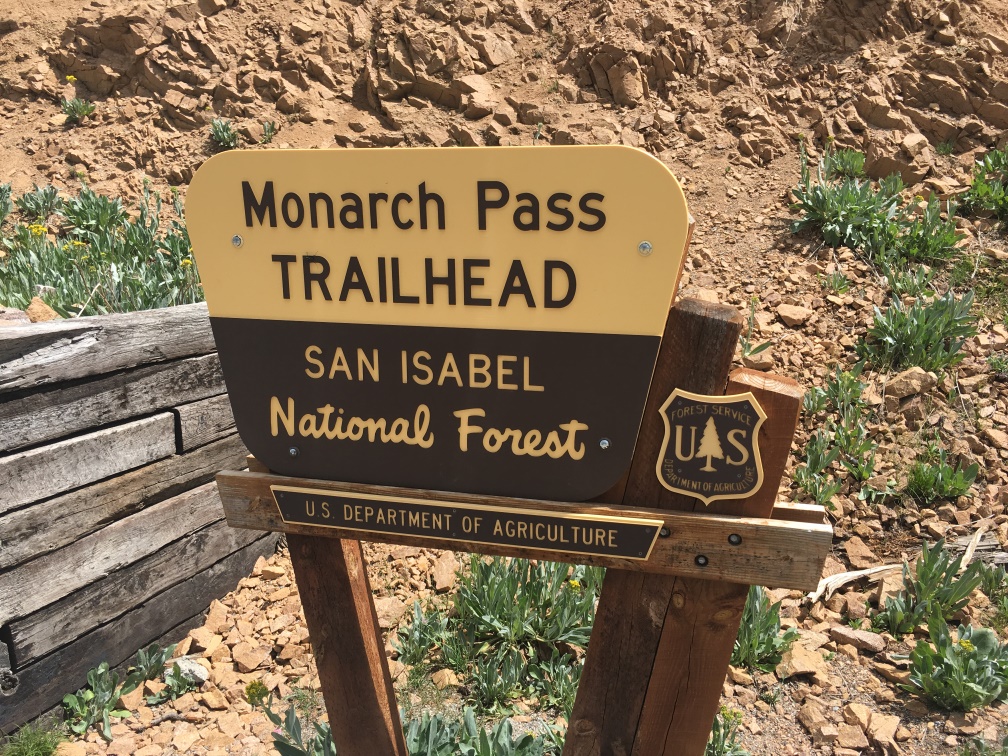 Access is right off Monarch Pass (Hwy 50), where there is a large parking lot. There is a trail that goes to the top and we’ll be back to hike that some other time. (Actually, Joyce K0JJW and I already tried to snowshoe to the top in blizzard conditions but that is another story for another day.) The trail is a popular mountain bike route, so we saw lots of bikers in the parking lot unloading gear. Monarch Pass is oriented north/south and the trail heads off to the east (behind the tram building).
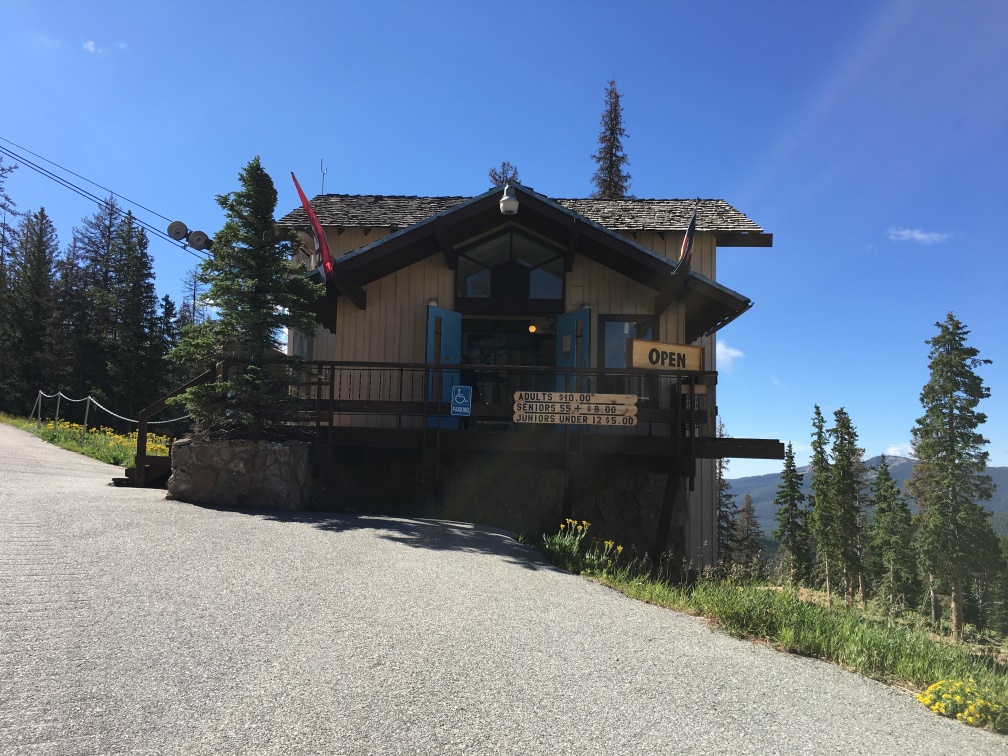 The tram boarding location is inside this building at the bottom of the tram. We purchased tickets in the nearby gift shop, which is worth a look if you need a map, book, ice cream cone or trinkets. See their website for latest schedule and pricing.
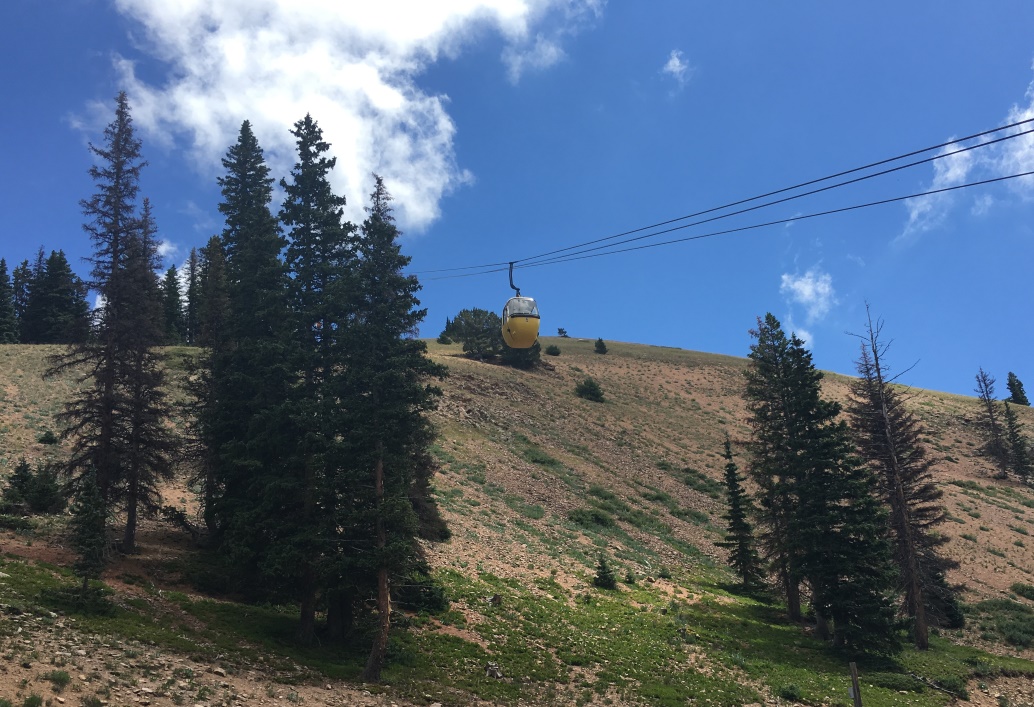 Here’s a photo of the tram going up the side of the mountain. Of course, the views are great and the ride takes about 10 minutes. The tram car holds four people and a reasonable amount of SOTA gear.
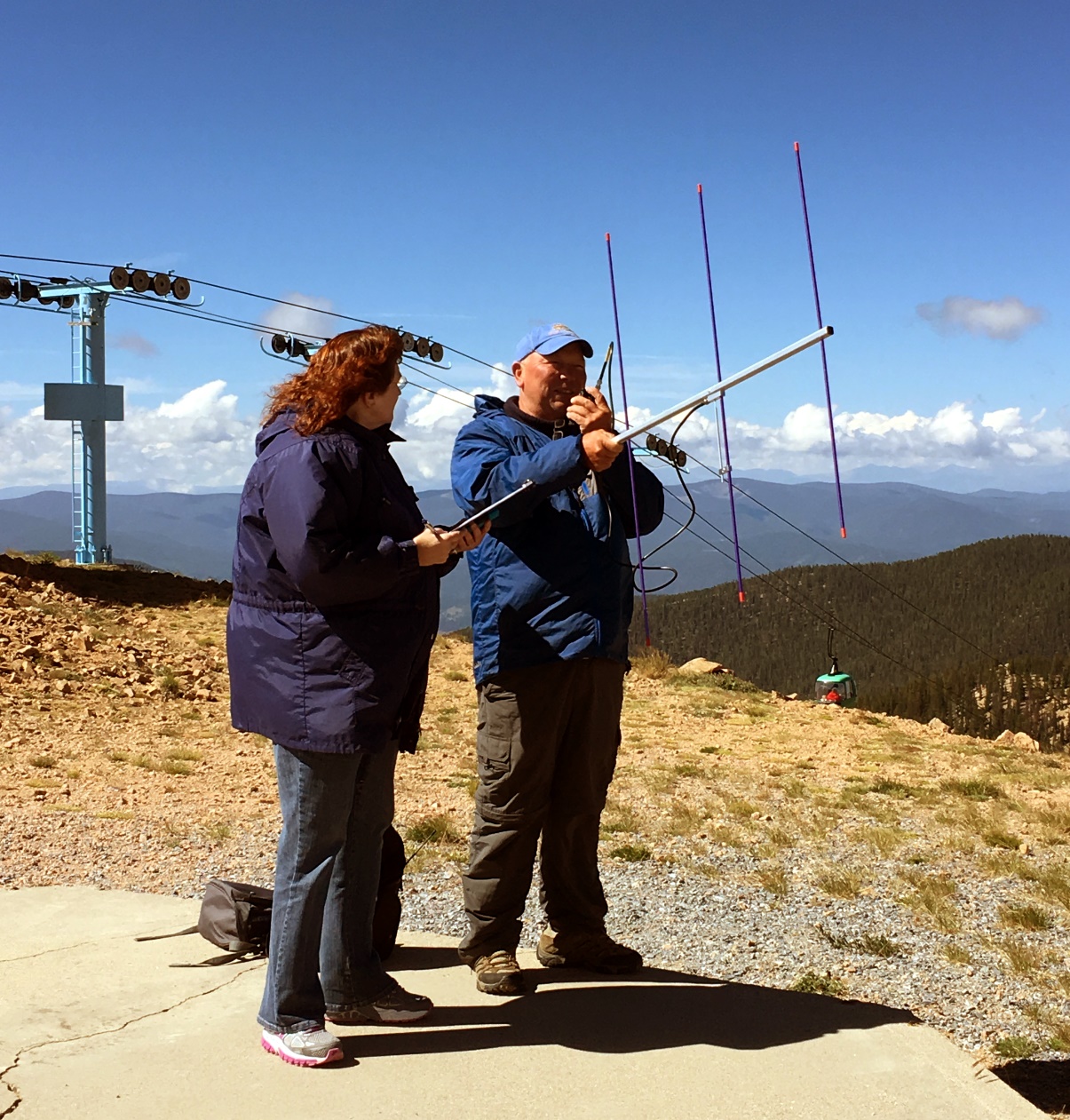 At the top, Denny KB9DPF made contacts on 2m FM, aided by expert logger Kathy KB9GVC. The actual summit is a ways to the south of the tram, maybe a tenth of a mile, but we operated from a concrete pad on the north side. The ridge is flat and we judged the activation area to be very large.
We made a total of 13 contacts on 2m and 70cm, including 5 other SOTA summits (S2S).
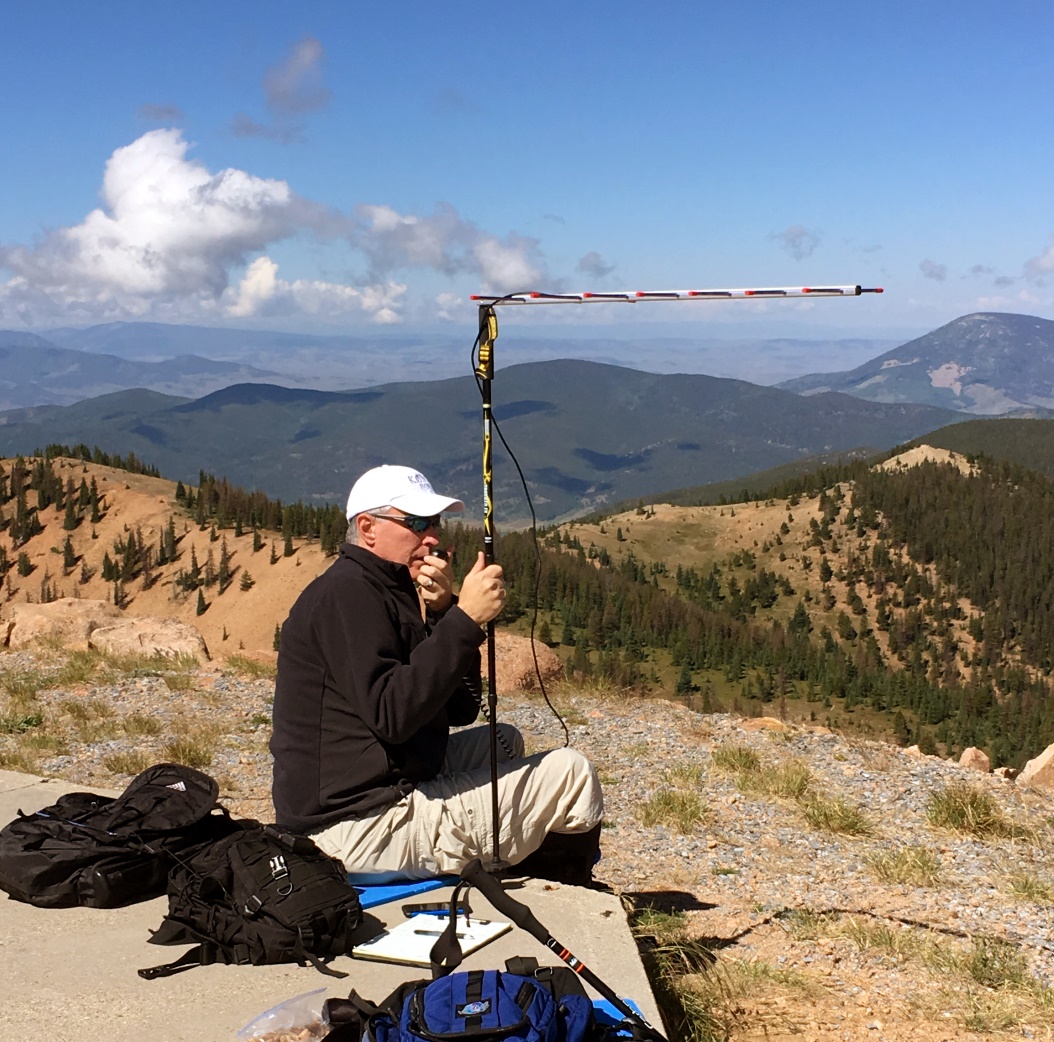 I used my Yaesu FT-817 on 432.100 MHz SSB, hoping to find someone in the UHF contest that is happening concurrently with the 14er event. I didn’t work anyone on 70cm SSB but I did work K3ILC in Colorado Springs on FM at a distance of ~90 miles. Not too bad. The Arrow antenna is attached to my hiking stick via the camera mount thread.
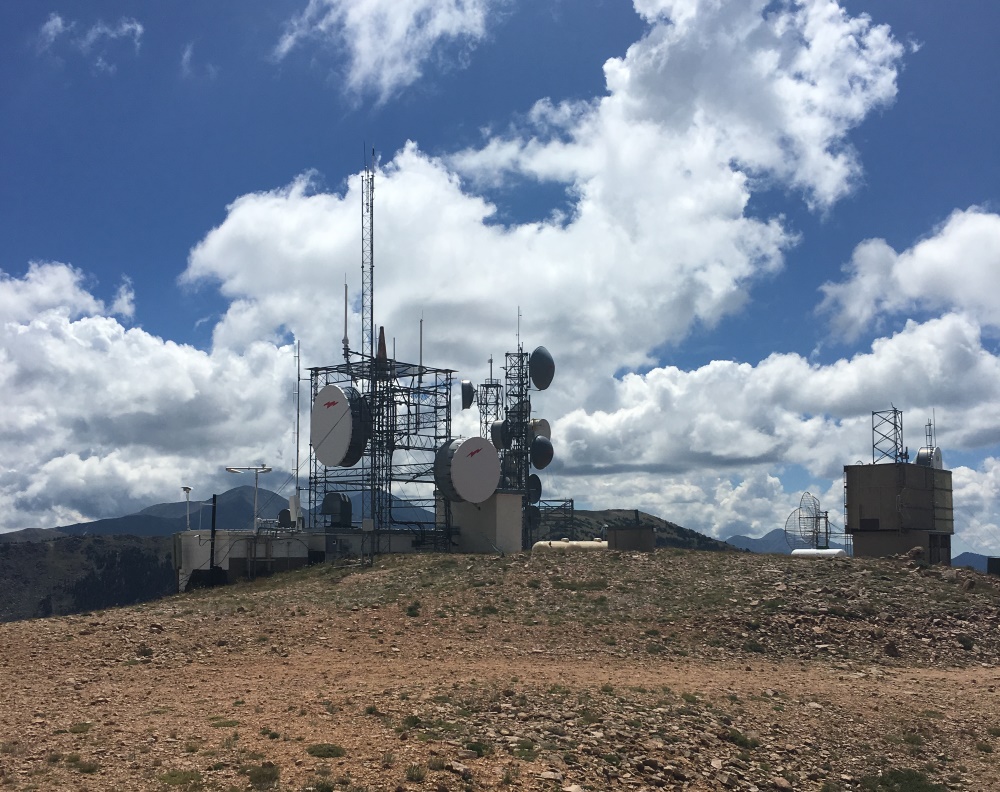 There is a substantial radio site on Monarch Ridge that did provide some RF interference to us on 2 meters. The 70 cm band seemed to be unaffected but I can’t be sure. The “bad boy” transmitter is the KMYP automated weather station (AWOS) transmitting continuously on 124.175 MHz. Well, at least we could receive current weather information. We did relocate to put some distance between us and the transmitters but my lack of mobility kept us from going too far.
If you are looking for an easy access SOTA summit near Monarch Pass with excellent views, this is it. The hike up should not be very difficult but the tram makes it even easier. If you plan to operate 2 meters, expect some interference. Next time, I’ll try locating even further away from the transmitter site. I might even bring along some bandpass filters. Other SOTA enthusiasts have reported no problems on the HF bands.
At the time of this post, there are plans to put a 2m amateur repeater at this site on 145.325 MHz.
73, Bob K0NR
The post Monarch Ridge South SOTA Activation (W0C/SP-058) appeared first on The KØNR Radio Site.
All VHF Shack Sloth
 On June 21st, I worked Steve K7PX on Mount Garfield (W0C/FR-040) using 2m fm to push me over 1000 points to quality for the SOTA Shack Sloth Award using only VHF. This is my first significant SOTA award, which I have been working towards for several years now. I decided to pursue Shack Sloth using only the VHF bands, which is much more difficult than using HF. Why? Something about mountains, Height Above Average Terrain (HAAT) and VHF radio has always intrigued me.
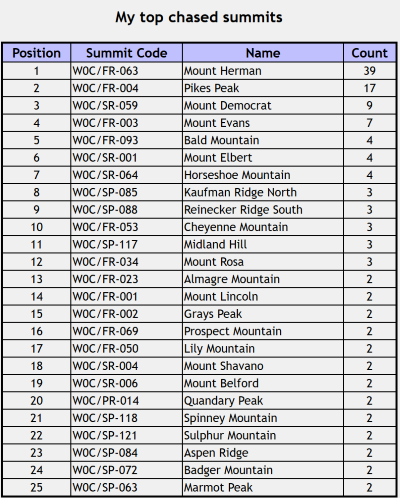
Here’s the line up of my top chased summits, with Mt Herman and Pikes Peak taking the clear lead. Mt Herman is The Most Radio-Active Mountain in Colorado and it is in my backyard. Most of those contacts were with Steve WGØAT and Frank KØJQZ. Thanks, guys! Pikes Peak is also a clear VHF shot from my house and many SOTA activators and tourists like to activate that summit. No surprise, the rest of the summits are various peaks in Colorado, worked from my house or from our cabin near Trout Creek Pass. Quite a few of these are Summit-to-Summit contacts made when activating peaks, often during the Colorado 14er Event.
 Most of my thousand points were contacts made using plain old 2m fm, The Utility Mode. A few contacts were made on 2m ssb along with some 70 cm fm and ssb contacts. I have been encouraging folks to try 2m ssb for huge improvements in weak-signal performance but the universal nature of 2m fm seems to be winning out.
My next goal is Mountain Goat with VHF only. I’ll need to activate a lot of summits to get that done, so it will take me a while. It’s always good to have something to work towards.
73, Bob KØNR
The post All VHF Shack Sloth appeared first on The KØNR Radio Site.
SOTANA May Be Right For You
I have “a friend” that could probably use this.

The post SOTANA May Be Right For You appeared first on The KØNR Radio Site.
Summits On The Air – Colorado Style
 Summits On The Air – Colorado Style is the title of my presentation at Hamcon Colorado, 2 pm Friday May 13th. I will be discussing the Summits On The Air program and the Colorado 14er Event.
The slides are available here:
Summits On The Air -Colorado Style
The conference will be excellent. I hope to see you there!
73, Bob KØNR
The post Summits On The Air – Colorado Style appeared first on The KØNR Radio Site.
Announcing: 25th Annual Colorado 14er Event
Amateur Radio operators from around Colorado will be climbing many of Colorado’s 14,000-foot mountains and Summits On The Air (SOTA) peaks to set up amateur radio stations in an effort to communicate with other radio amateurs across the state and around the world. Join in on the fun during the 25th annual event and see how many of the mountaintop stations you can contact. This year the event is expanded to include the entire weekend. However, many mountaintop activators will hit the trail early with the goal of being off the summits by noon due to lightning safety concerns.
See the very cool 25 Year Anniversary t-shirts available at http://www.cafepress.com/wg0at
The 14er event includes Summits On the Air (SOTA) peaks, which add over 1700 potential summits! If you aren’t up to climbing a 14er, there are many other summits to choose from (with a wide range of difficulty). See the W0C SOTA web page at w0c-sota.org
Radio operators who plan to activate a summit should post their intent on the ham14er Yahoo Group. To subscribe to the “ham14er” email list, visit the Yahoo groups site at http://groups.yahoo.com/group/ham14er/ . Also, be sure to check out the event information at http://www.ham14er.org It is also a great idea to post an ALERT on the SOTAwatch.org website.
Frequencies used during the event
Activity can occur on any amateur band including HF and VHF. The 2m fm band plan uses a “primary frequency and move up” approach. The 2m fm primary frequency is 147.42 MHz. At the beginning of the event, operators should try calling on 147.42 MHz. As activity increases on that frequency, move on up the band using the 30 kHz steps. Don’t just hang out on 147.42 MHz…move up! The next standard simplex frequency up from 147.42 MHz is 147.45 MHz, followed by 147.48 and 147.51 MHz.
| Frequency (MHz) | Comments | Frequency (MHz) | Comments |
| 147.42 | Primary 2m FM Frequency, then up in 30 kHz steps | 14.060 | 20m CW Frequency |
| 147.45, 147.48, 147.51 | Alternate 2m FM frequencies | 14.345 | 20m SSB Frequency |
| 446.000 | Primary 70 cm FM frequency | 18.092 | 17m CW Frequency |
| 446.025 | Alternate 70 cm FM frequency | 18.158 | 17m SSB Frequency |
| 144.200 | 2m SSB calling frequency | 21.060 | 15m CW Frequency |
| 50.125 | 6m SSB calling frequency | 21.330 | 15m SSB Frequency |
| Other Bands/Modes | Standard calling frequencies and/or band plans apply. | 28.060 | 10m CW Frequency |
| 28.350 | 10m SSB Frequency |
Warning: Climbing mountains is inherently a dangerous activity.
Do not attempt this without proper training, equipment and preparation.
Sponsored by The Colorado 14er Event Task Force
Here’s the event flyer in pdf format: Colorado 14er Event Flyer 2016
The post Announcing: 25th Annual Colorado 14er Event appeared first on The KØNR Radio Site.
Yaesu FT-1DR: A Trail Friendly SOTA HT
A common topic in the QRP community is the Trail Friendly Radio (TFR) concept for backpack-style operating on the high-frequency bands. I’ve adapted the concept for the VHF/UHF bands, calling it the VHF Trail Friendly Radio (VTFR).
Strong candidates for the best VTFR include the Elecraft KX3 (with 2m option) and the Yaesu FT-817. Heck, both of these radios deliver all of the HF bands, 6m and 2m in one portable package. (The FT-817 also has 70cm.) See my blog post that compares the two rigs.
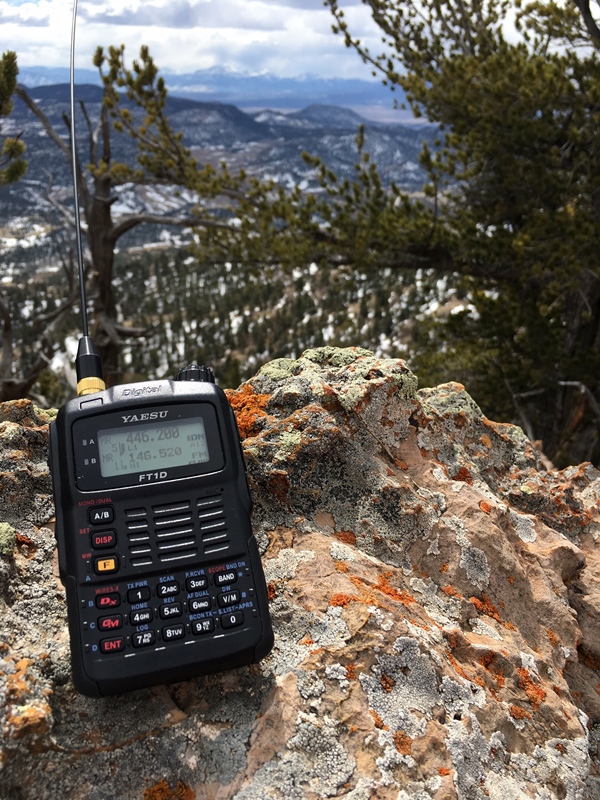
But the other set of strong contenders for the best VTFR is one of the many dualband HTs available on the market. It is hard to beat the compact, portable attributes of these great little radios for casual use on the trail. I’m not going to review them all but instead talk about my current favorite: the Yaesu FT-1DR. (Yaesu has recently replaced the FT-1DR with the newer model FT1XDR, which is the same design but with an improved GPS receiver and larger battery pack.)
My main usage of the radio is when hiking and doing Summits On The Air (SOTA) activations. This radio has a lot to offer in terms of capability and features, but the main things that stand out are 2m/70cm band coverage, two independent receivers and built-in GPS/APRS capability. Most SOTA VHF operating is on 2m fm so that band is critical, but I also make contacts on 70cm. More important is that together 2m and 70cm covers that vast majority of fm repeaters in my state, providing the best backcountry repeater coverage. The built-in APRS features allow the HT to be an effective tracking device as I move down the trail. SOTA chasers can see my position in real-time and anticipate when I’ll be on the summit. The radio has two separate receivers which turns out to be very useful when on the trail. With two receivers, I can monitor 146.52 MHz (2m fm calling frequency, often used for SOTA) while also keeping an ear on a local 2m or 70cm repeater. Another configuration is using one side of the radio to ping my location via APRS while the other side monitors 146.52 MHz.
The extended receive capability of the radio opens up lots of listening options: AM broadcast, FM broadcast, airband, shortwave and NOAA weather radio. I don’t use these very often but there are times that I want to tune to weather or news.
I am not a huge fan of Yaesu’s C4FM digital mode but do use it on occasion. The DN (digital narrow) mode supports voice and position information simultaneously, so Joyce KØJJW and have been using it to keep track of each other on the trail. The radio provides a basic indication of distance and direction to another C4FM radio.
One final note: if you buy an FT-1DR, I recommend upgrading the belt clip to the BC-102 clip from Batteries America. It is way better than the standard one from Yaesu.
73, Bob KØNR
The post Yaesu FT-1DR: A Trail Friendly SOTA HT appeared first on The KØNR Radio Site.
Winter SOTA Activation of Kaufman Ridge North
Today, Joyce KØJJW and I activated Kaufman Ridge North (W0C/SP-085) for Summits On The Air (SOTA). We’ve been on the summit before, including the first ever SOTA activation back in September of 2012. This summit is close to our cabin, so it made for a convenient hike. The mountain is not that difficult of a climb but we encountered quite a bit of snow in March, up to three feet in places, which we tromped across with snowshoes.
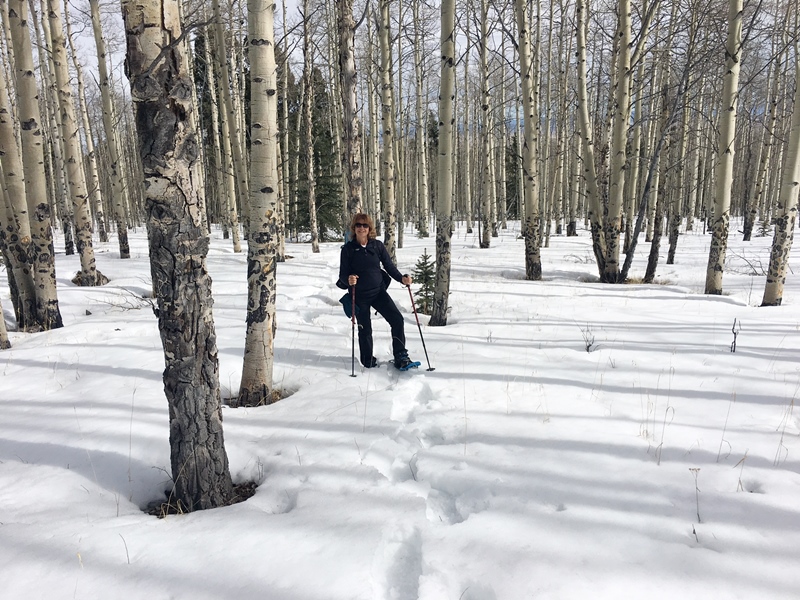
My blog posting about the next mountain to the south, Kaufman Ridge HP (W0C/SP-081), outlines a good way to access both summits during the summer. However, a seasonal gate closure (December to April) means we needed to find a different route. We approached the mountain from the north, parking our vehicle on Castle Court (a short side road off of Kaufman Road). We quickly crossed what appears to be private property (empty lot, no signs) to get to the US Forest Service boundary. Once we hopped the fence we were on public lands. We intentionally routed to the east to avoid some houses.
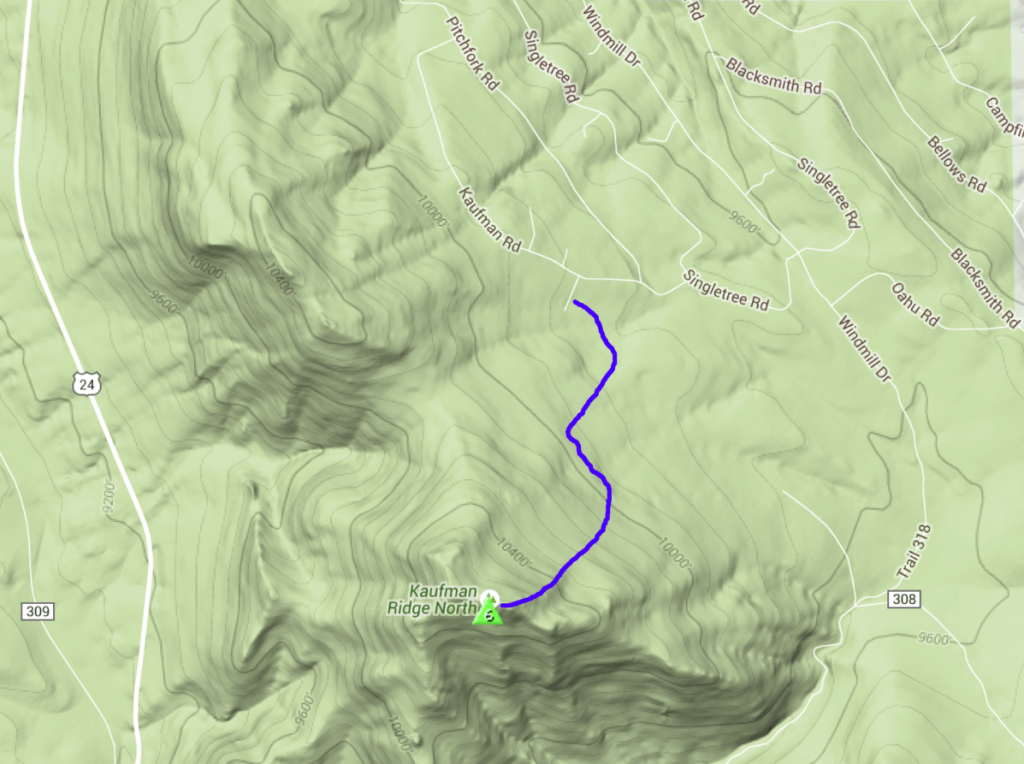
I don’t claim that this route is optimal. We had to break a lot of trail, pushing through the snow. We found a section of trail that had recent snowshoe traffic on it but it wasn’t of much use to us heading to the summit. We followed numerous game trails which appeared and disappeared on the side of the mountain. Mostly, we busted through the snow on our own. Surprisingly, the last quarter mile to the summit had little snow, so we removed our snowshoes at that point and just hiked in boots.
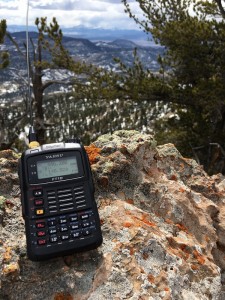 My Yaesu FT-1DR has become my favorite rig for SOTA activations. It covers both 2m and 70cm with dual-receiver capability. it has a built-in GPS receiver and APRS capability that facilitates easy APRS tracking. Joyce and I have a pair of these which we’ve been using to track each other’s positions on the few occasions we get separated on the trail.
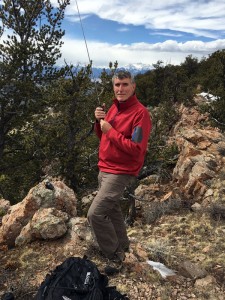
After we made the summit, I made a few contacts on 146.52 MHz. Thanks to Jim KDØMRC, Dave KØHTX, Carl K5UK and Candy KEØDMT for giving me my four required SOTA contacts.
The weather turned out to be better than predicted…partly cloudy and temps around 50 degrees F. On the way back down, we retraced our ascent path so we had more of a snowshoe trail to follow. I have to admit that this trip was a good lesson in how off-trail snowshoeing can really be a challenge. This was many times more difficult than a summer trail hike of equal length and elevation gain. Trip stats: 2.6 total miles, 1300 vertical feet.
At least, that’s my story and I’m sticking to it.
73, Bob K0NR
The post Winter SOTA Activation of Kaufman Ridge North appeared first on The KØNR Radio Site.













