Posts Tagged ‘history’
 Tidbits From the QRP History Book
 October 7th, 2013 |
  Author:
 It seems that Kruse felt that American operators had become too enamored with high power operation and that the QRM and inefficiencies of high power operation were precluding the "grassroots" operator from even hearing DX stations. Weiss writes,
"QST continually derided the abuse of power among American amateurs by coining a long list of derogatory epithets for the high power types. Such names as "watt-hog", "ether buster", "tribe of ampere hounds", "ampere chaser", "thunder factory', "watt burner" and "most miles per gallon" flowed across the pages of QST, leaving little doubt as to the attitude of the QST staff, and presumably the ARRL, to combat the developing dependence upon brute power by American amateurs in place of the ideals embodied in the QRP Operator...."
In, December 1923, the very first QRP contest, The Station Efficiency Contest, was announced with this subtitle, "Miles Per Watt: An Argument For The Small Set and For Intelligence In Place of Brute Force" Weiss comments, "In other words, the use of low power was inextricably linked with intelligence and diametrically opposite to high power"
Further Kruse argued, "...what if his brute power does let him cover 4,000 miles, isn't he still inferior to the other man who handled his power correctly and went twice as far per watt?"
So there you have it, QRP operation = Intelligence.
Need we say more;-)
The book goes into much more detail about the attack on high power operation and rising credibility of the QRP operator in those early days. Interesting reading and entertaining as well.
In the beginning……
 … there was Hugo Gernsback. Here are a few of his contributions:
– Established one of the first companies to sell equipment to radio amateurs in 1904.
– Founded the Wireless Association of America in 1909.
– Published two amateur radio oriented magazines: Modern Electrics in 1908 and The Electrical Experimenter in 1913.
– Initially proposed the idea of allocating 200 meters and down to amateur radio in 1912.
Why don’t we know more about Hugo Gernsback and his early contributions to the hobby? At what point did the momentum shift from Hugo and his Wirless Association of America to Hiram Maxim and his ARRL? … and why?
Hugo made a huge contribution to science fiction but it seems his contributions to amateur radio have been overlooked.
In the beginning……
… there was Hugo Gernsback. Here are a few of his contributions:
– Established one of the first companies to sell equipment to radio amateurs in 1904.
– Founded the Wireless Association of America in 1909.
– Published two amateur radio oriented magazines: Modern Electrics in 1908 and The Electrical Experimenter in 1913.
– Initially proposed the idea of allocating 200 meters and down to amateur radio in 1912.
Why don’t we know more about Hugo Gernsback and his early contributions to the hobby? At what point did the momentum shift from Hugo and his Wirless Association of America to Hiram Maxim and his ARRL? … and why?
Hugo made a huge contribution to science fiction but it seems his contributions to amateur radio have been overlooked.
A very special day
Today is a special day if you’re of Polish descent, Catholic, and a Ham Radio operator. Today is the feast day of St. Maximilian Kolbe. For those of you who are not Catholic, a Saint’s Feast Day commemorates the day that the faithful believe that the Saint left this earthly existence, directly heading to Heaven for his or her eternal reward.
It was on August 14, 1941, that Father Maximilian Kolbe, a Franciscan friar died from an injection of carbolic acid. Fr. Kolbe was a detainee at Auschwitz, during WWII. He was sent there for the crime of providing shelter and safe harbor to over 2,000 Polish Jews in his friary at Niepokalanów.
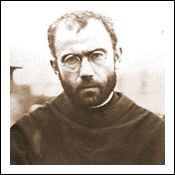
At the end of July 1941, three prisoners disappeared from Auschwitz, during what appeared to be a successful prison break. To retaliate, the deputy camp commander picked out 10 men at random to be starved to death. One of the chosen men, Franciszek Gajowniczek, cried out that he had a wife and children and begged for mercy. Fr. Kolbe heard this and asked, and was granted permission to take Gajowniczek’s place.
In the starvation bunker where the condemned men were being kept, Fr. Kolbe celebrated Mass each day and led the men in hymns and prayers. Two weeks later, after all the men had passed, Fr. Kolbe was the last condemned prisoner left alive. The Nazi’s had other plans for that bunker, so to end it all, Fr. Kolbe was given the lethal injection.
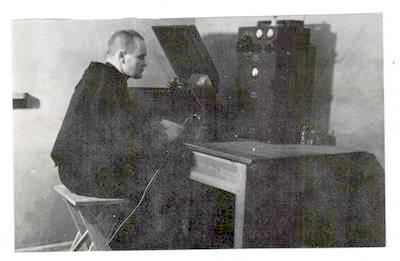
But during his lifetime here on earth, Fr. Max was unique among Saints, as he was an Amateur Radio operator. His call sign was SP3RN, and this might be the only photo in existence of him “at the key”, so to speak.
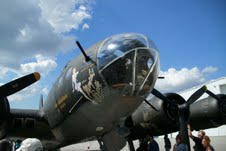
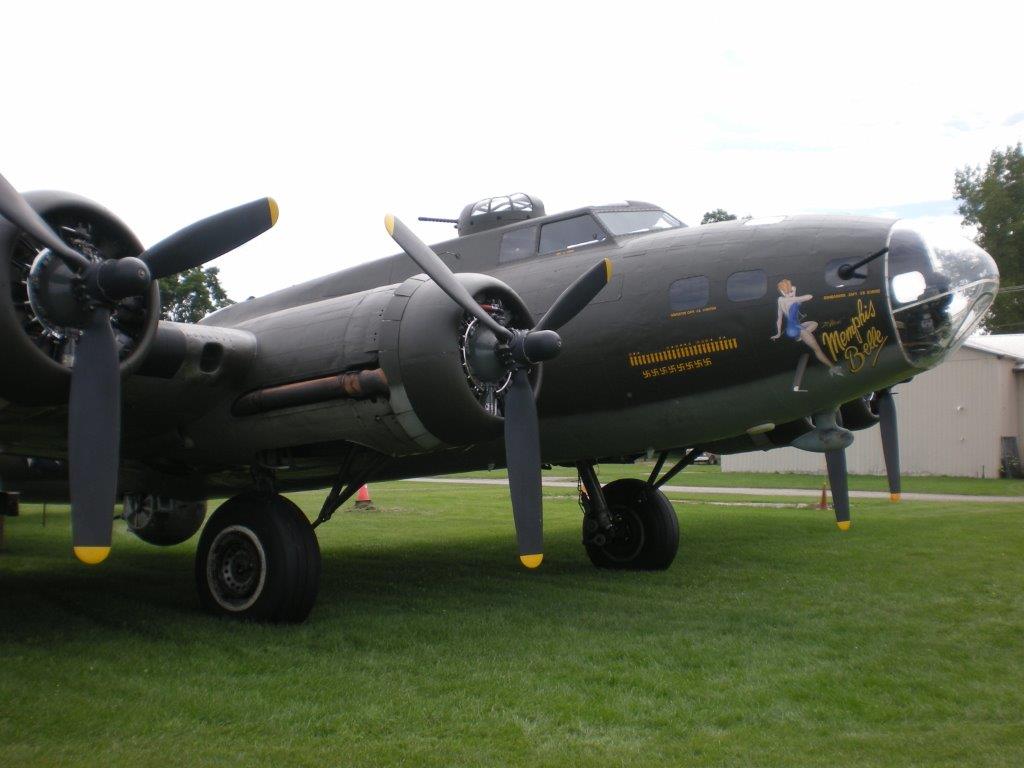
Memphis Belle
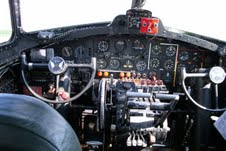
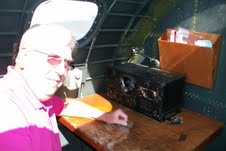
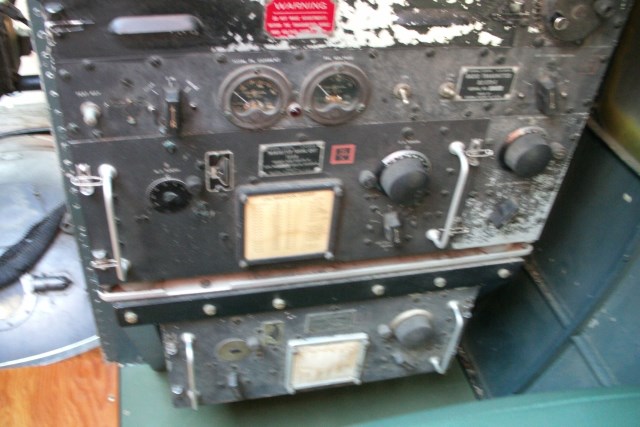
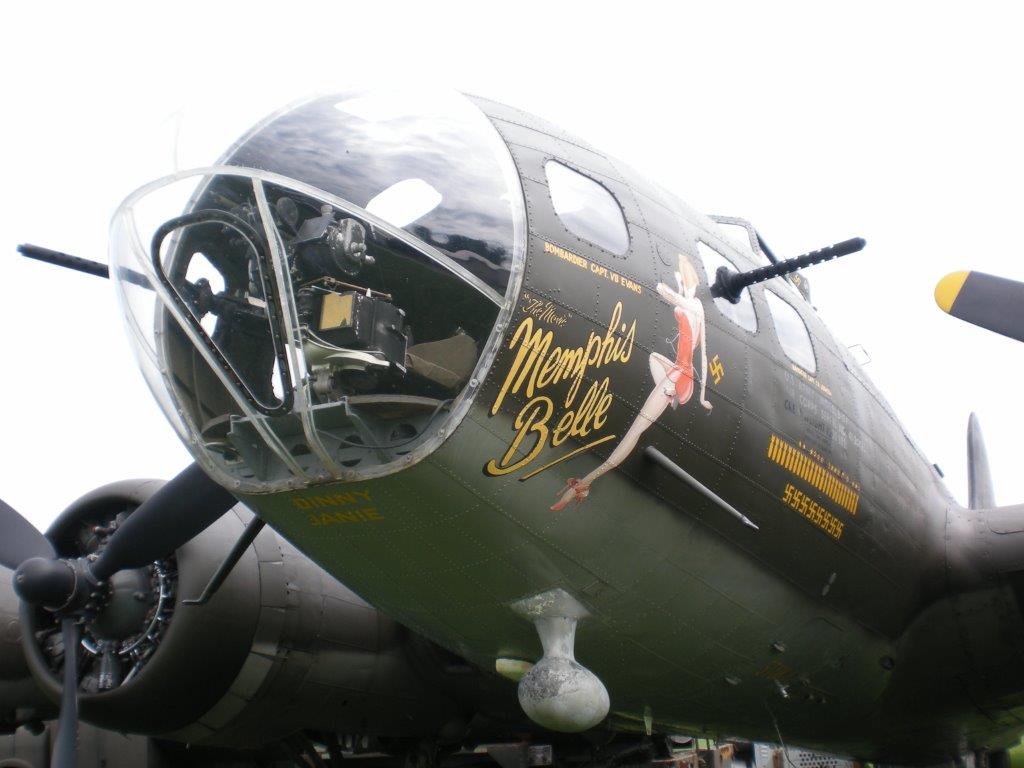
I had mentioned that I was going to be offering the “QRP – Do More With Less” blog up to guest bloggers. Here’s the first! This post is in response to an e-mail that I received from Steve K8SAR. He had sent me an e-mail about his visit to the Memphis Belle.
I thought this was too cool to keep to myself, so I asked Steve to write something up. Here’s the story of his adventure in his own words:
Larry, I thought you’d be interested. The Memphis Bell was in our town over the weekend with a friend who was one of their volunteer pilots. I had the chance to get a tour of the fighting lady including the radio station on board. I doubt they’re functional but they are indeed very interesting!
What’s in a name – radio societies all over the world

Image © Freeworldmaps.net
The IARU HF Championship took place this weekend. This is the contest where every country has national stations which exchange the abbreviation of the radio amateur society. Therefore it was an opportunity to reflect on what the names of the national societies mean. Many of the names in the IARU list portray the heritage of a hundred years. It is not so strange then that this may make some of them hard to understand and even a bit old-fashioned.
Starting with the ARRL – American Radio Relay League or NRRL (Norwegian …) then this is about a network of stations relaying messages in a country with large distances. This is a bit 1920’s to me. Looking at the ARRL web page it looks as if the the ARRL agrees and really would like to modernize the name to the National Association for Amateur Radio. The Portuguese may already have modernized it a bit by the use of network instead of relay: “Rede dos Emissores Portugueses” (Network of Portuguese Transmitters), or perhaps it is just because this is the same word as “relay” in Portuguese?
Most societies have “radio amateur” in the name like the German and the French: Deutscher Amateur Radio Club, Union Francaise des Radioamateurs. My knowledge of Spanish is not so good but this one sounds better to me: Union de Radioaficionados Espanoles as “radioaficionados” gives me the impression of “radio fans”, but perhaps it is just another word for “radio amateurs”?
Just like “radio relay” is a bit old-fashioned, the Swiss also have an old name in Union Schweizerischer Kurzwellen-Amateure. It must have been coined before VHF and UHF as Kurzwelle means Shortwave.
A name which sounds more contemporary despite its age is the Radio Society of Great Britain. Many others have similar names, one example is Amateur Radio Society of India.
The word “club” is used by many and seems to emphasize the hobby aspects, e.g. Radio Club Argentino and Český radioklub (Czech Radio Club).
Contesting is in many ways like a sport, at least in the same sense as chess is called a sport today. Examples that use this word are Chinese Radio Sports Association, Belarussian Federation of Radioamateurs and Radiosportsmen, and Mongolian Radio Sports Federation.
The there’s those who value the experimental aspects, like Vereniging voor Experimenteel Radio Onderzoek in Nederland (Society for Experimental Radio Research), Experimenterende Danske Radioamatører (literary Experimenting Danish Radio Amateurs) and Federacion Mexicana de Radio Experimentadores.
A similar technical emphasis is in the word “transmitter”: Irish Radio Transmitters Society, Foreningen Sveriges Sändareamatörer (literary Society of Swedish Transmitter Amateurs) and Österreichischer Versuchssenderverband (literary Austrian Experimental Transmitter Society).
The protection from the royal family exalts the society, but it is something I could only find in Belgium: Royal Union Royale Belge des Amateurs-Emetteurs / Koninklijke Unie van de Belgische Zendamateurs / Königliche Union der Belgischen Funkamateure.
Finally, these are the most serious and ambitious names I could find: Egyptian Radio Amateurs Society for Development, Syrian Scientific Technical Amateur Radio Society, and above all the Wireless Institute of Australia.
Which words should be used in the name of a radio society today? It’s a balance between reflecting a hundred years of history and communicating with contemporary people.
Personally I don’t like to use the word “amateur”. It comes originally from the same root as “amour” and “amore” and thus means someone who loves and is passionate about something. But today it gives the impression of being unprofessional. A contemporary name should also emphasize the experimental side in my view.
Happy Independence Day!