Posts Tagged ‘field day’
 Field Day – this the way to do it.
 June 30th, 2013 |
  Author:
 Field Day, as it should be. QRP, fun and good friends. This is a wonderful example of putting out the maximum effort to get the most out “of sending the very least!”
I’ve worked these fine folks individually many times over the years. It’s so nice to be able to put faces and voices to the people “behind the code”.
72 de Larry W2LJ
QRP -When you care to send the very least!
W5MPZ Field Day!
Our station was active for almost 24 hours, minus a lull at about 1:10 am Sunday morning. Our backup arrived at around 2 am, which included Brian (N5ZGT, Rocky Mtn Division Director), who just got back from a Turks and Caicos island vacation (or DXPedition, you might say), and Scott (N5SQR) who worked PSK and SSB.
Setup and Operation
Beam
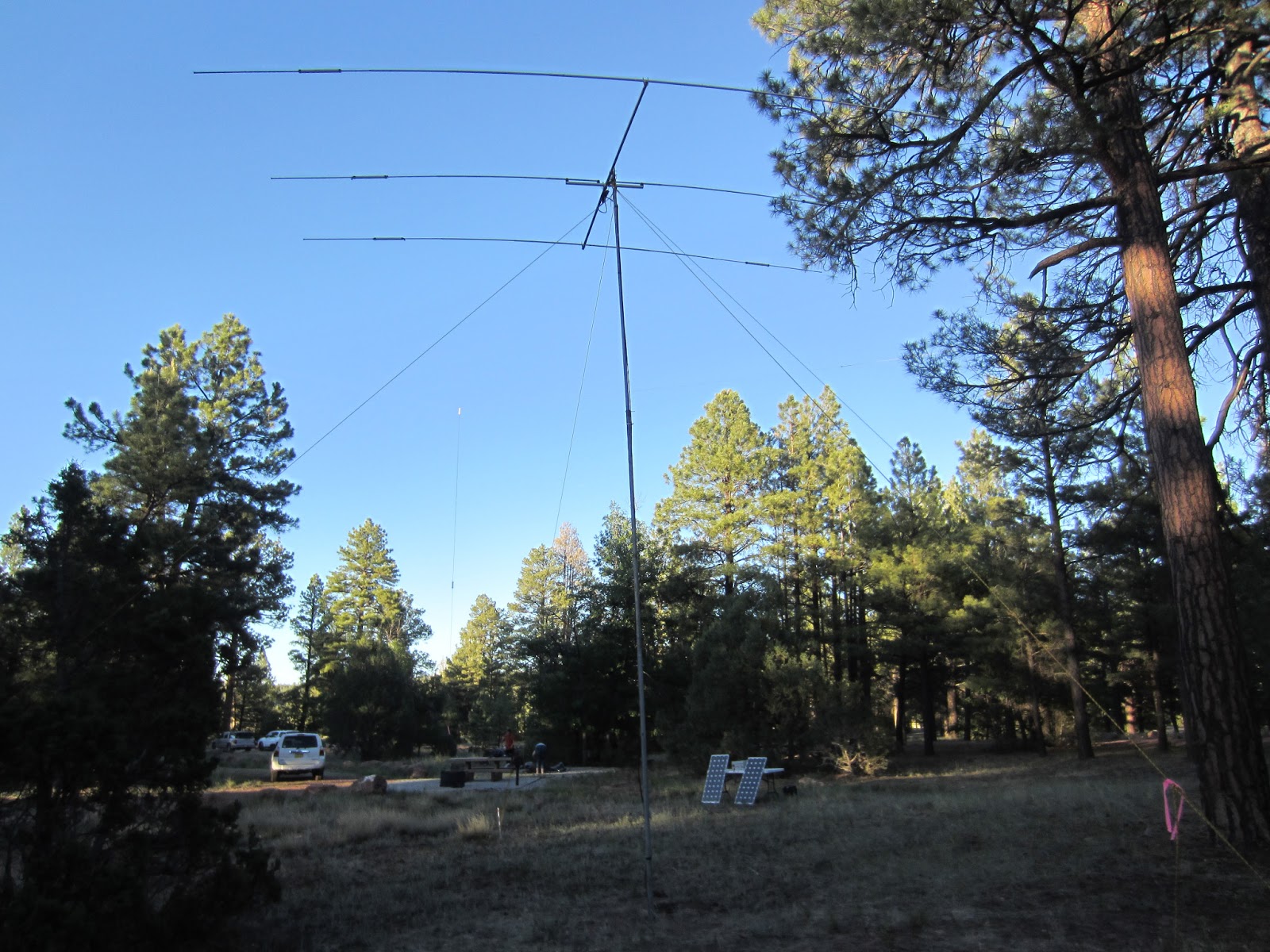 |
| TA-33 with the 80m windom in the background |
Dipoles
On my first shot, I got over this tree and the line sat perfectly on the brown number post.
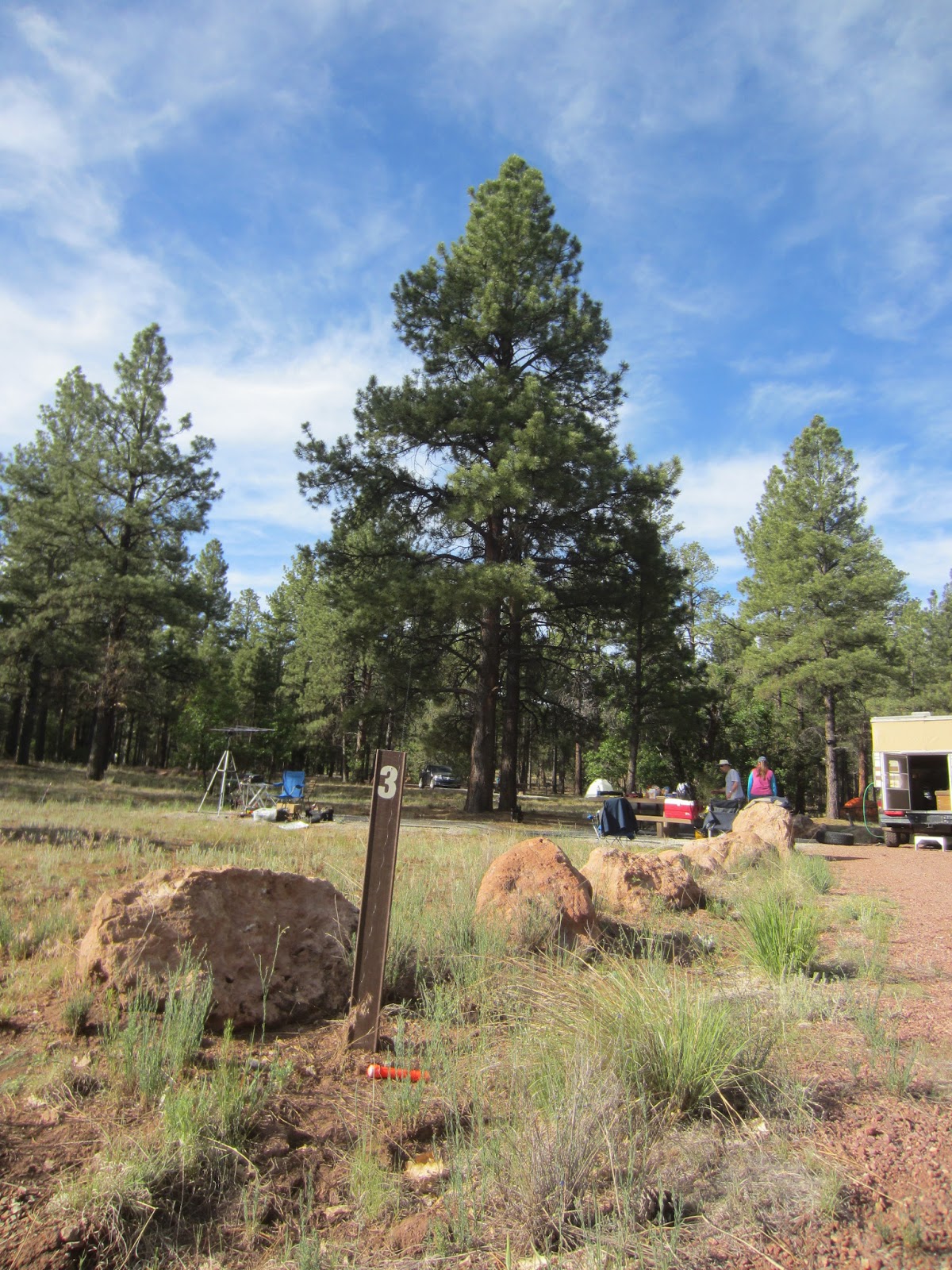 |
| The perfect shot. |
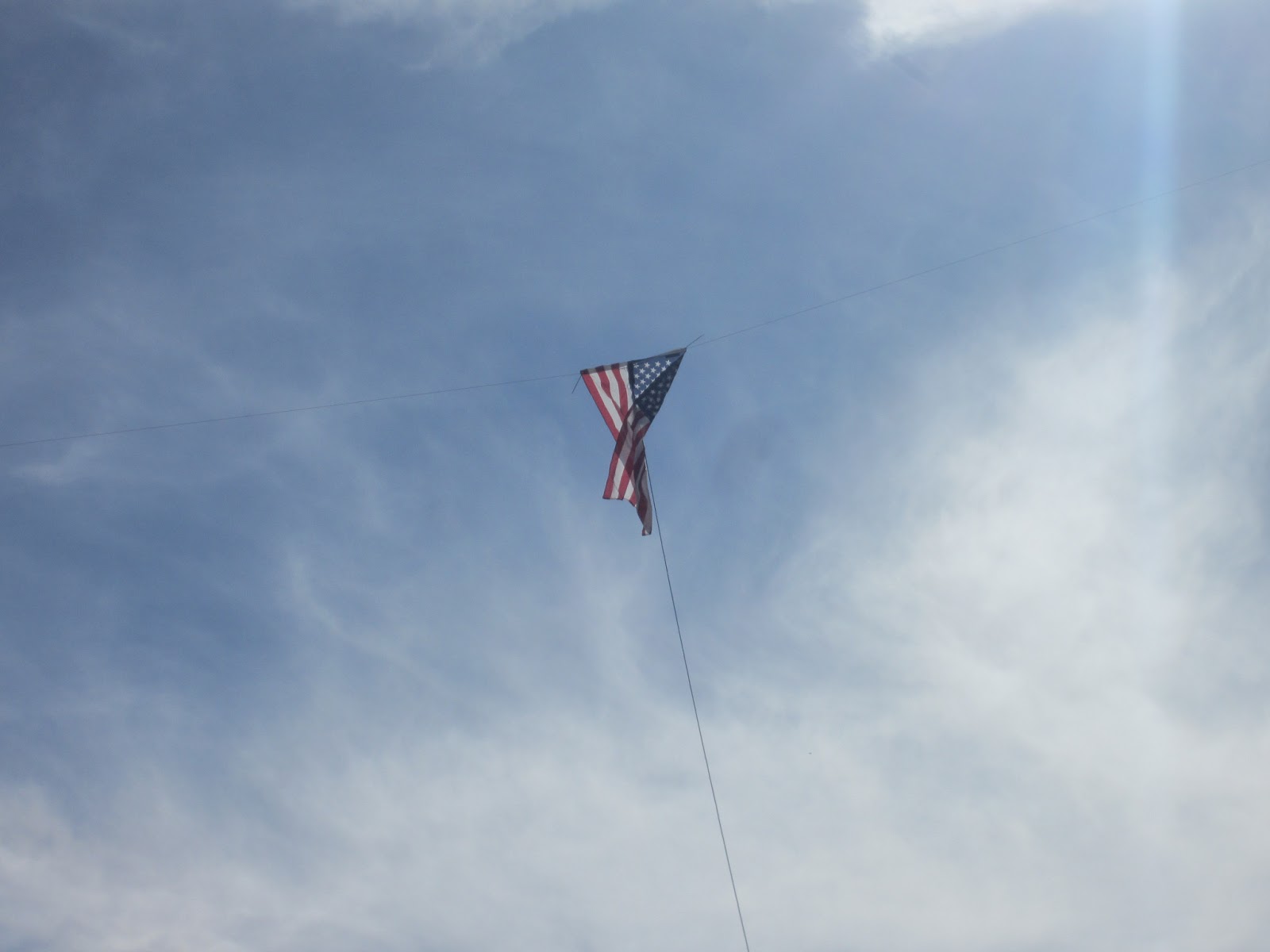 | ||
| Old Glory on our 80/40 trap dipole |
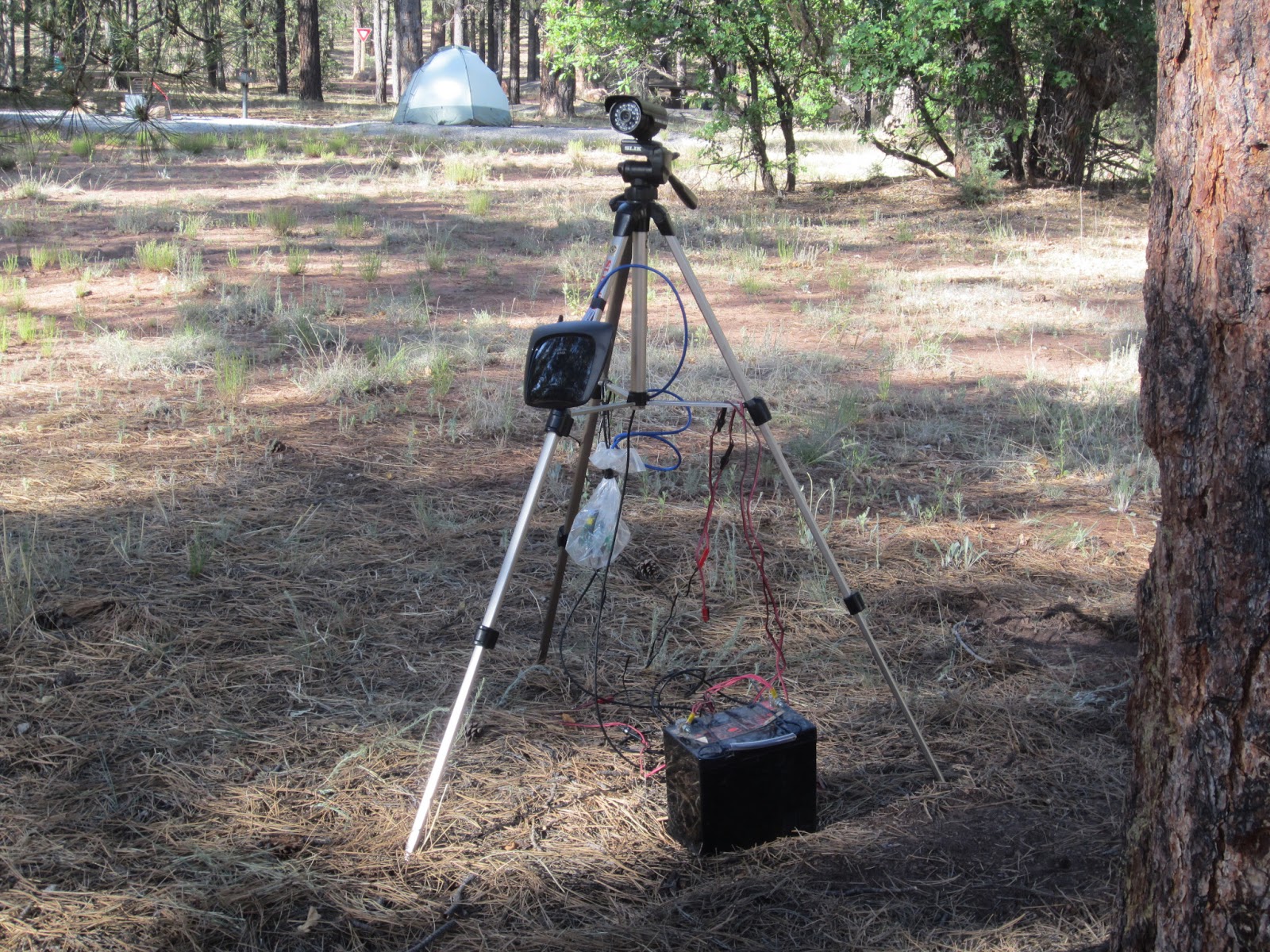
RPi camera
Operation
We were 2A, so we had 2 stations on the air, all supported by batteries. We operated SSB, CW and PSK31.
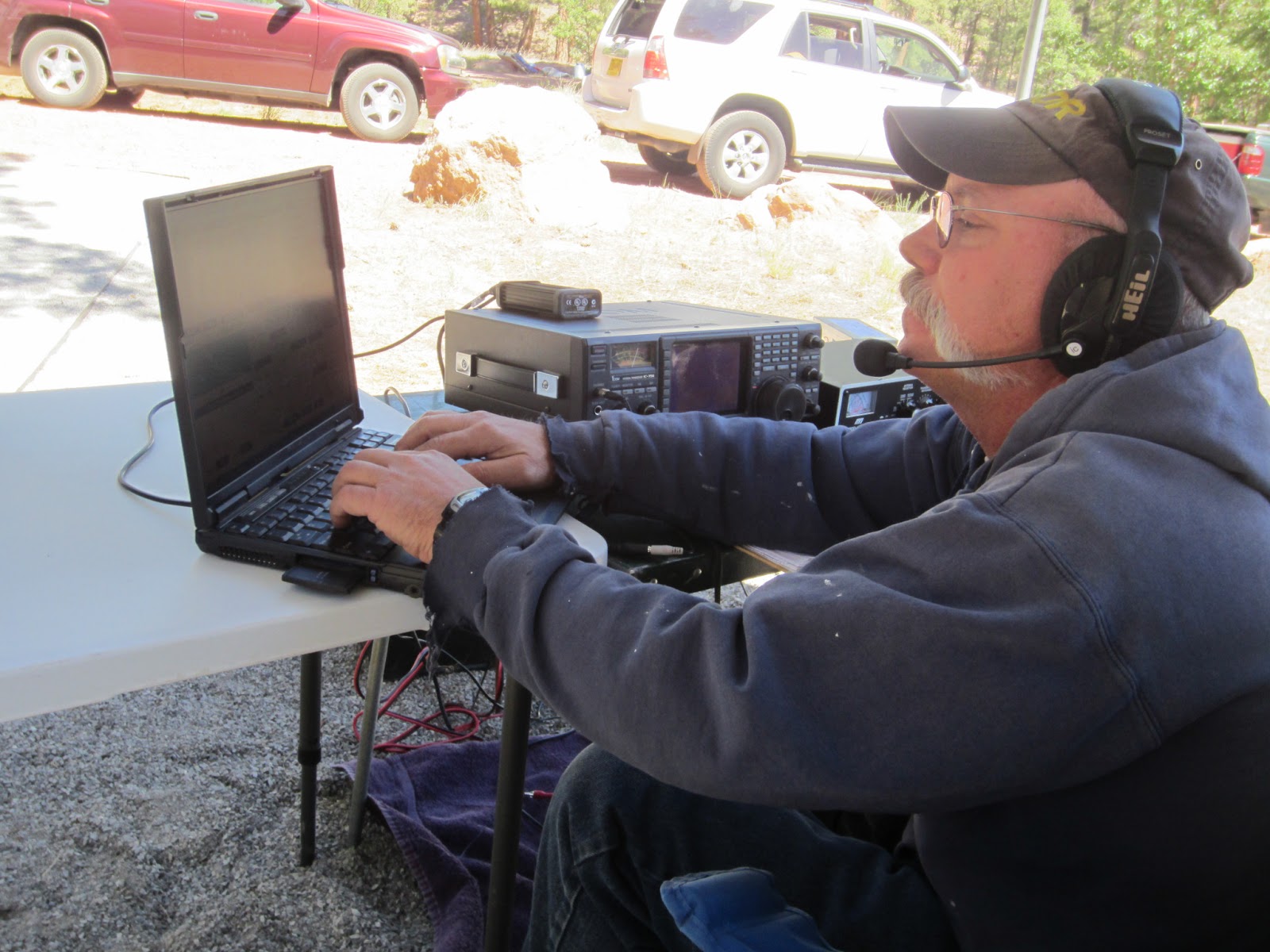 |
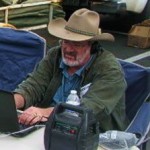
| Scott, N5SQR working SSB |
No field day station is without its problems. We were lucky to only have minor issues, like the logs not syncing or the digital station computer interface not working. These were easily and promptly fixed. Everything else (except for the band conditions) was perfect.
Our ops came from all areas of the hobby. Brian, for example, just got back from Turks & Caicos, and worked hordes of stations from VP5-land, while Seth never worked a contest before being a technician.
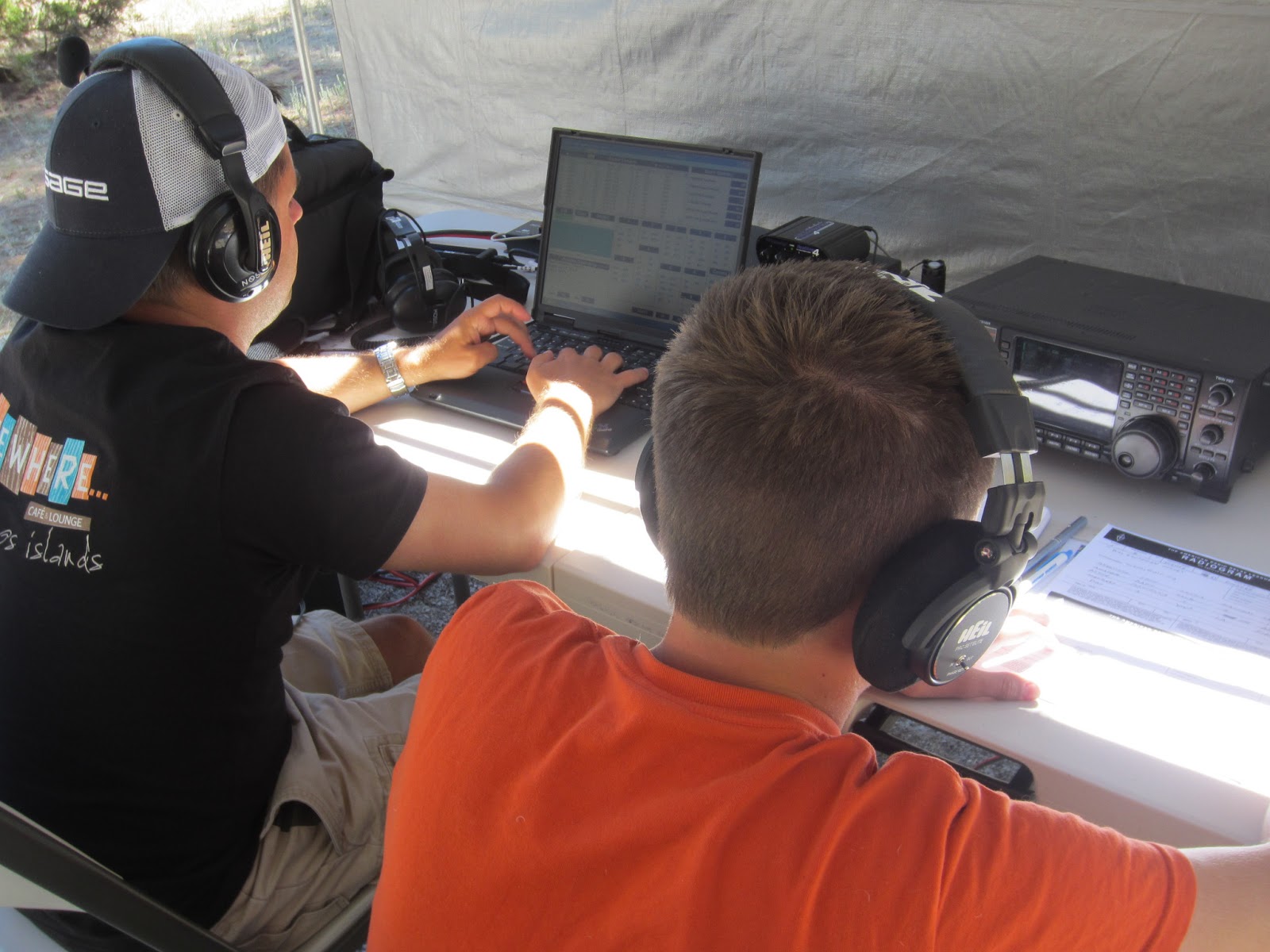 |
| Brian and Seth teaming up to send Radiograms for bonus points |
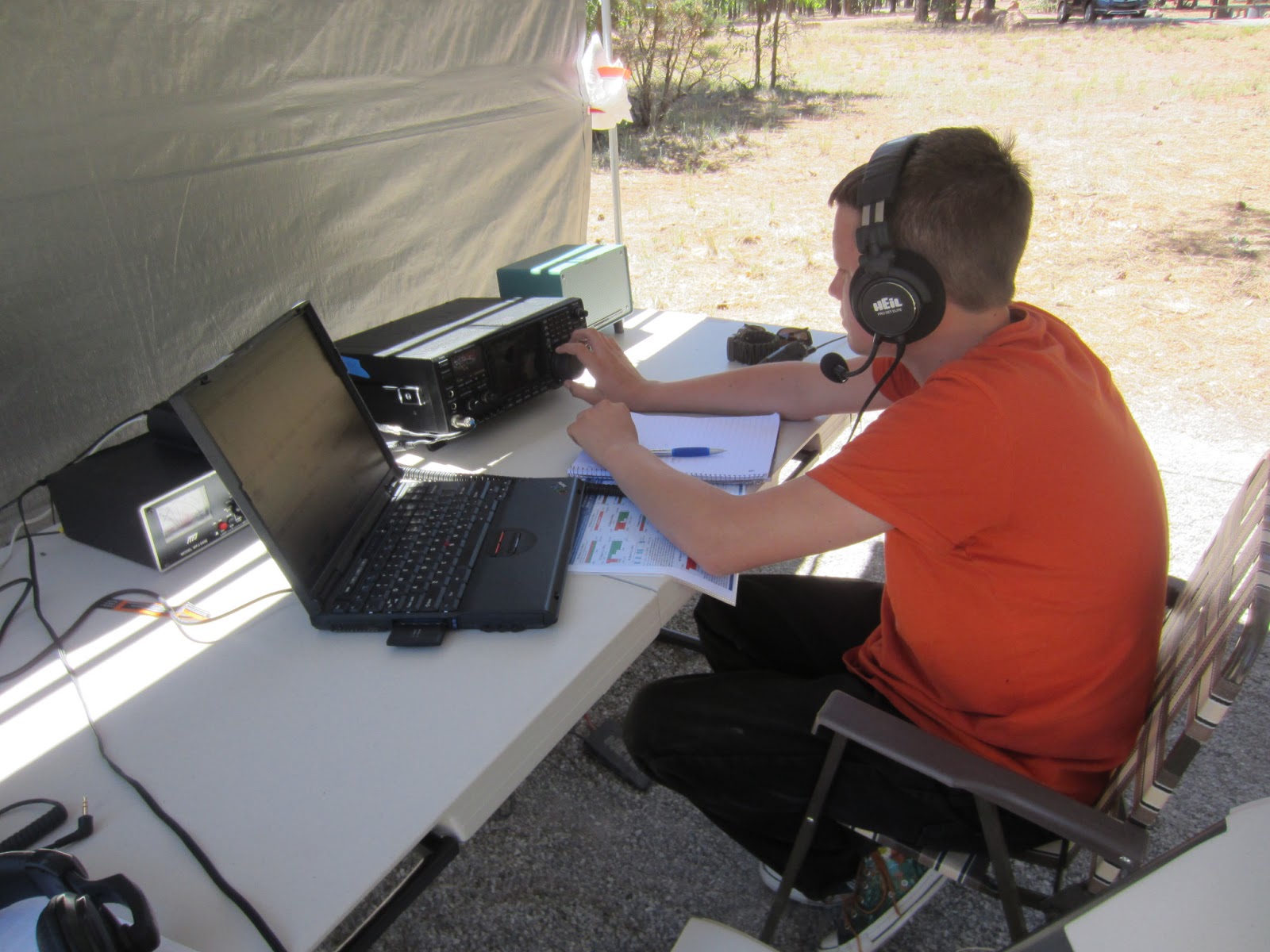 |
| Seth taking names and gettign mults on the voice station |
Seth quickly caught the Field Day bug and worked the 12-1am shift by storm, and eventually took both working and logging on the voice station on solo.
It was very cool to see him warm up to the air and get excited to work stations. It reminds me of my first Field Day, where I was thrown into the action and started racking up QSOs as fast as any other operator after only having a few hours to figure it out.
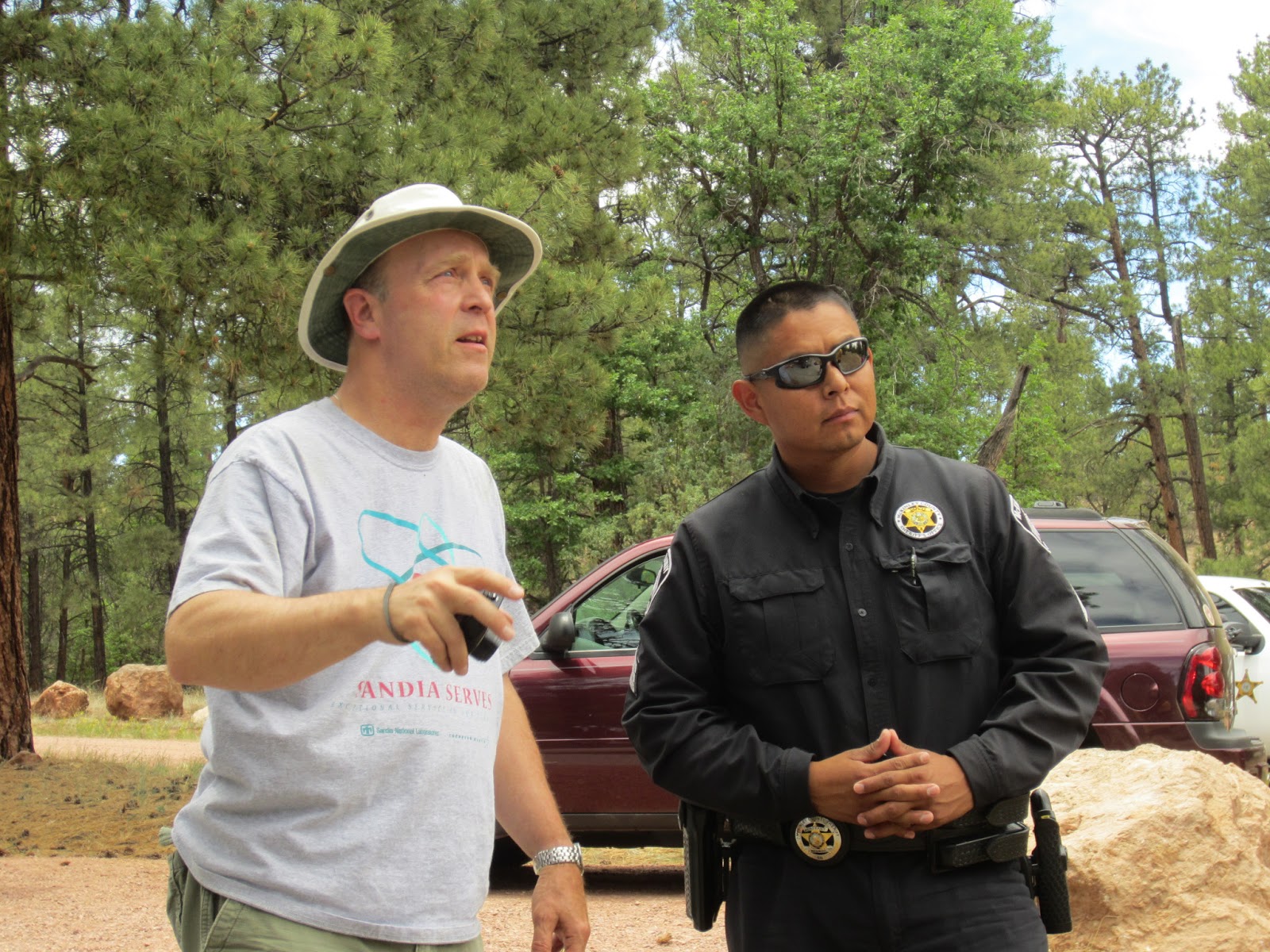 | |
| A visitation by the local sheriff |
Satellites
 |
| The Arrow LEO-SAT yagi and other antennas in the background |
 |
| Sat Station Setup — FT-817 for RX and an 897 for TX |
My job at W5MPZ was to bring a satellite QSO to the log for an extra 100 points. Unfortunately, this didn’t happen.
I had several attempts at SO-51 (the only FM satellite), VO-52, FO-29 and the zombie AO-7 (all SSB/CW transponders). I had most luck with the SSB satellites but had problems in being able to hear myself.
To work the SSB satellites (all but SO-51) you need to know where your signal ends up after it gets translated to the other band. For example, FO-29’s uplink band is 145.8-145.9 MHz, while the downlink is 435.9-436.0 MHz. One would think the 100 kHz passband would be linearly related, e.g. I transmit on 145.85, and hear myself on 435.95, but this isn’t the case. The doppler effect causes the frequency to differ by up to 500 kHz on UHF, so you need a way of calculating doppler, or simply finding yourself.
My technique was to spin a carrier through the passband until I heard it on the downlink, and switch to SSB to call CQ and tune into myself. Upon the switch, I lost myself.
I figured out the solution on the last pass of the weekend. The FT-897 has a feature in SSB mode that allows you to send CW at your tone frequency. So if I’m on 145.000 and have a 700 HZ CW pitch, it would send it at 145.000.70 MHz. Therefore, if you were tuned into 145 MHz on another rig, you’d hear that same pitch. All I had to do was zerobeat on the flipped bandpass, and call away. I finally heard myself repeated by the satellite, but didn’t have any replies within the last 5 minutes of the pass.
It was worth the effort (and in hindsight I should have just worked the ISS’s message system via packet)!
Summary
The underlying point of Field Day (aside from preparedness) is to have fun. W5MPZ did exactly that. Our support team of family members kept us well fed, watered, sheltered, and our batteries charged. One could not ask for a better place to set up and operate from, and the weather (despite being cold in the mornings) was amazing – not having wind and the 100°F temperatures to contend with was a huge relief.
I’m not sure of the final QSO count or score, but we only missed a few sections in Canada – NT, MAR, and ONN I believe — like we expected. Field Day isn’t a contest, so the score isn’t important to me or any of the operators aside from personal club goals and whatnot, so that wasn’t a worry. What matters is the coming together of like-minded people to getaway from the daily grind, have a ton of fun, share stories, and work stations.
Plans for the weekend
A lot, if not most of you probably have Field Day plans for the weekend. Not me.
There are several clubs in the area that have operations going on, but none really super close. Marianne is working on Saturday, and I don’t want to go anyplace farther from home, while leaving the kids home alone.
So, if everything goes according to plan, I want to spend the afternoon putting down more radials for the Butternut. The goal is to get about a dozen to twenty more radials down, after mowing the lawn. That would give me a total of 36 to 46 radials total, depending on how many I get down.
The Butternut really plays well with the current 25 radials that I already have in place. Some more can only make things better.
72 de Larry W2LJ
QRP – When you care to send the very least!
LHS Episode #098: Feudal Exercise
 Sometimes you feel like a nut. Sometimes you don’t. Luckily, Richard’s miraculous recovery from the Creeping Death outweighed Russ’s totally miserable Ides of January, resulting in a listenable episode with a bunch of content–mostly thanks to elcaset, a listener of the show, via IRC. There’s also a bit about svxlink using a Raspberry Pi (yes, it is possible and completely functional) and lots of information about upcoming events. We’d like to thank everyone you who submitted feedback, including The Radio Gangsta, who we also hope will get some much-needed psychological attention soon.
If you think about it, make sure to download the Black Sparrow Media app for your iPhone, iPad or Android device. And please tell your friends about the show. Have them sign up for the mailing list, episodes via RSS, the Google+ community and all the other ways they can keep up with what’s going on in LHS Land.
73 de The LHS Guys
Field Day 2012 – ala’ K6BBQ
My good friend Rem K6BBQ has completed his Field Day video. As usual, it’s a hoot to watch.
But Rem ….. 50 Watts? 100 Watts? Seems to me that Buddistick is awful close for that kind of power, Bud! Make sure you don’t glow in the dark!
All teasing aside, it looks like Rem had a great time; and I wouldn’t have minded being there to give him a helping hand as his logger, or perhaps his official burrito taste tester?
72 de Larry W2LJ
QRP – When you care to send the very least!

LHS Episode #086: W9YA on YFKTest
 A lot of interest has been focused on contest logging of late. We’ve had several comments and questions on the topic. With the recent passage of Field Day and Hamvention, many hams wanted to know what options there were for Linux. As it happens, YFKTest has been on our radar for some time. In order to get the full scoop, we invited Bob, W9YA, the current lead developer of YFKTest to come on the program and let us know what’s going on with YFKTest, what Russ has been doing wrong with it, and where it’s headed in the future.
It turns out that while simple, YFKTest is a competent and fully featured contest logger for many different contests. It works for CW and SSB logging, has rig control built in, and in the future may support network capable logging. There are many more features too numerous to name here. So sit back and let W9YA give you all the ins and outs. And stay tuned to the end of the show where our intrepid hosts tackle feedback from you, the listener. Best of luck in all your upcoming radio ventures.
73 de The LHS Guys
The KARS 2012 Summer Field Day Video
It took a little while but I finally got the video for the Katy Amateur Radio Society summer field day together. I didn’t shoot as much video or as many photographs this year as I actually spent time a fair amount of time operating for a change!
Hopefully it will still be an entertaining, if short, reminder of those two days in June.
Katy Amateur Radio Society – Summer Field Day 2012 from Owen Morgan on Vimeo.
 Posted with Blogsy












