Posts Tagged ‘CW’
 A 630m Maritime Adventure
 August 18th, 2017 |
  Author:
 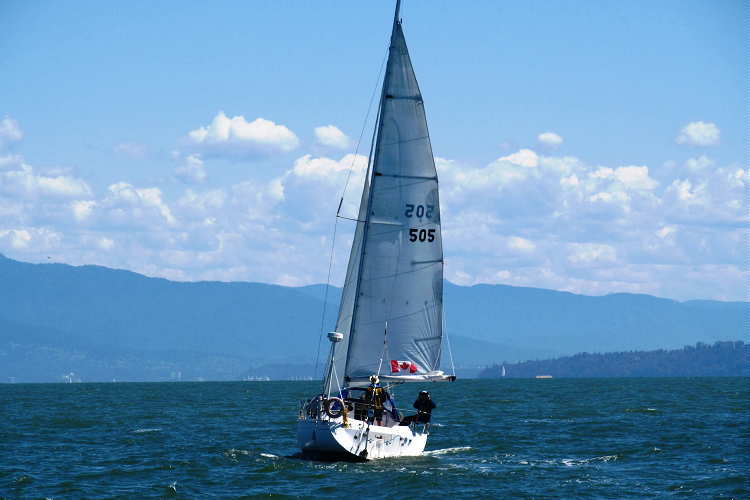 |
| HAKUNA MATATA |
Crewed by Mark (VA7MM) and YL May (VE7MAY), Toby (VE7CNF) and XYL Nancy, the 31' Benateu recently completed a 14-day circumnavigation of Georgia Strait's Gulf Islands. This is a yearly adventure that has been successfully completed for the past few summers and looks as though it may now be an annual tradition.
Normally, the crew kept up regular radio contact on HF as well as on VHF when possible but this year saw a major departure.
In previous summers, near the end of the voyage, the crew has always visited us here on Mayne Island for an afternoon of vittles and libation before heading for home. There is always a good amount of time spent recalling the past-year's radio activities, winter projects and reminiscence of the 'good old days'. Last year, just as the party was ending, I jokingly suggested that 'next year', it would be cool to work them from the boat on 630m.
Although there was no immediate commitment, I knew that the seed had been planted, and with three of the four crew being engineers, I suspected it might be hard for them to resist, and ... just before departure, the local bunch of 630m ops were put on alert to be watching for CF7MM/mm on 475 kHz CW as they would be attempting to work us from three different overnight anchorages during their summer voyage!
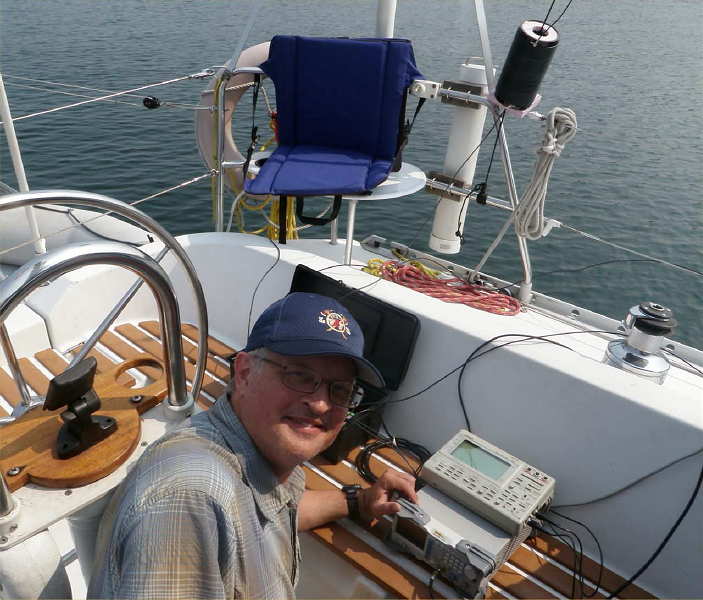
Evidently Toby had been working quietly during the winter to make this become a reality. Here are some pictures of the system along with Toby's (the system's builder) comments.
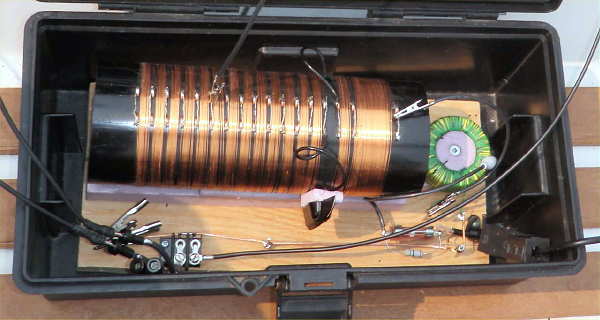 |
| Variometer and matching transformer |
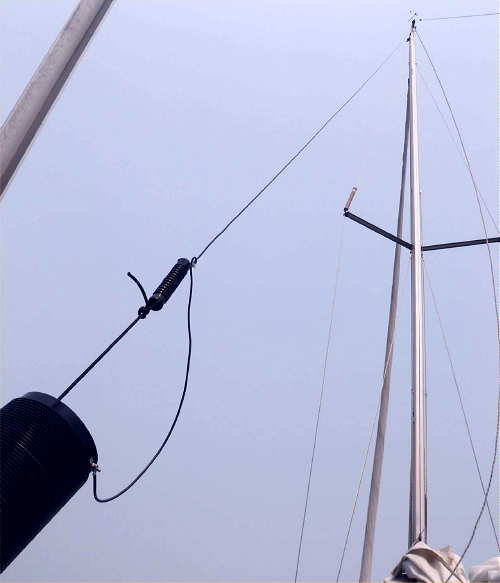 |
| Wire vertical and loading coil |
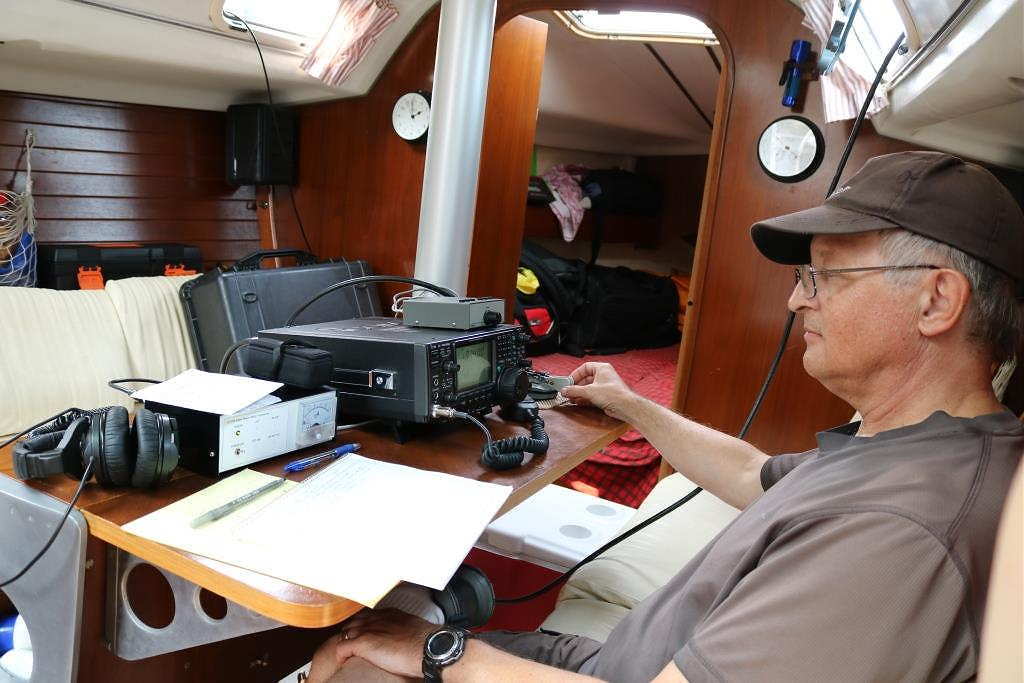 |
| Toby (VE7CNF) working the pileups! |
 |
| Tuneup |
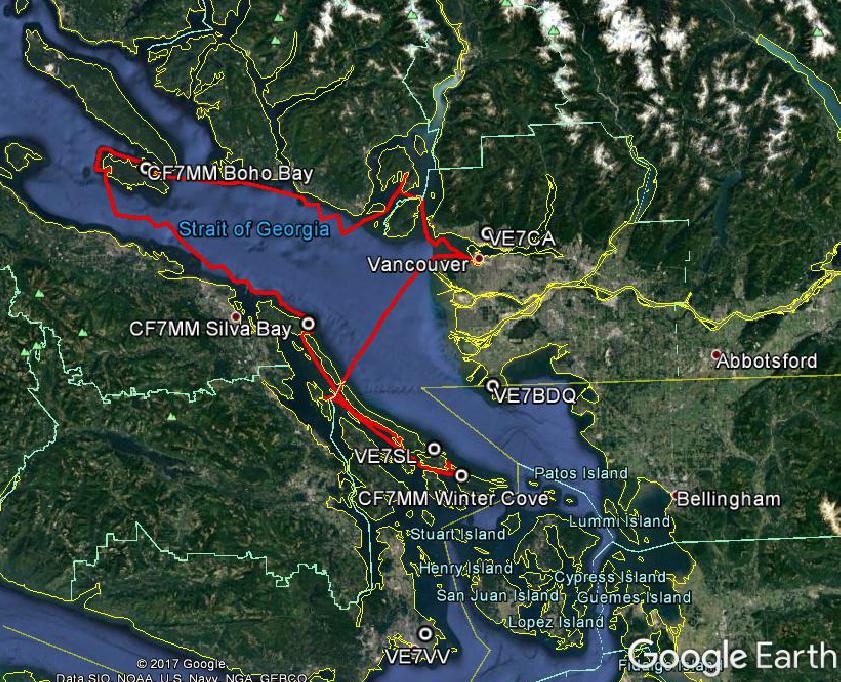 |
| The route, heading north from Vancouver |
Some of the contacts are shown below. Note the transceiver is not really on 160m ... it's just the i.f. for my 630m transverter!
I was impressed with the strength of ground wave signals given the low transmitter powers and EIRP's well below 5W. Received signals ranged from S1 to S9+10dB and copy was easy for all QSOs. QSO distances ranged from 10 to 142 km. We had low receive noise levels in all locations, with Silva Bay being a little noisier than the others due to many nearby boats and some shore power lines.
We tried disconnecting the gunnel ground wires and leaving only the keel, and found that the antenna capacitance and resistance did not change. When we disconnected the keel and left only the gunnel wires, the antenna capacitance dropped to about 87pF and antenna resistance dropped by a few ohms. It appears that the keel provided most of our ground coupling to sea water and it would have been a sufficient ground on its own.
More details of Toby's 630m transverter as well as a practical 630m antenna tune-up procedure can be found on his website here.
All-in-all, I think the 630m operation was a great success and very likely the first-ever 630m marine mobile operation on that band, as I don't recall this happening anywhere else over the years. It was also a great way to pay homage to the band's original maritime heritage where its quality groundwave and skywave capabilities were used to advantage for so many decades safeguarding mariners worldwide.
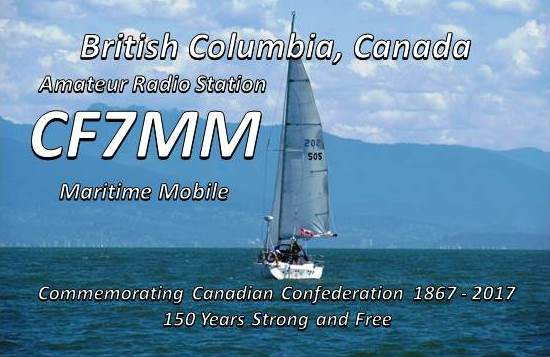
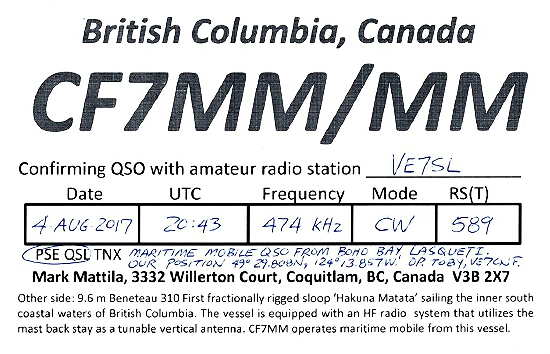
Maritime mobile operation on the amateur bands has some great history behind it, including the yacht YASME. In the mid-50's, Danny Weil was the first ever amateur to undertake DX'pedition style operations via sailboat, as he visited numerous rare islands in the Caribbean and South Pacific.
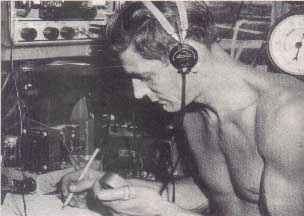 |
| Danny on the YASME - courtesy: www.gm3itn.co.uk |
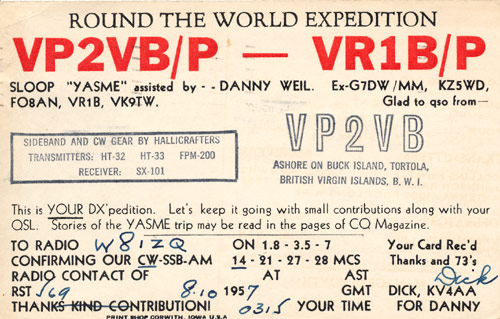 |
| Original YASME QSL - courtesy: http://hamgallery.com/ |
His exploits were regularly published in CQ magazine at the time and always made for exciting reading as Danny would eventually wreck three YASMES over the years! His adventures laid the groundwork for future island-hopping DX operations such as those undertaken by Gus Browning (W4BPD), Don Miller (W9WNV) and all that followed ... I'm sure they would all have enjoyed working the HAKUNA MATATA as well!
YADD
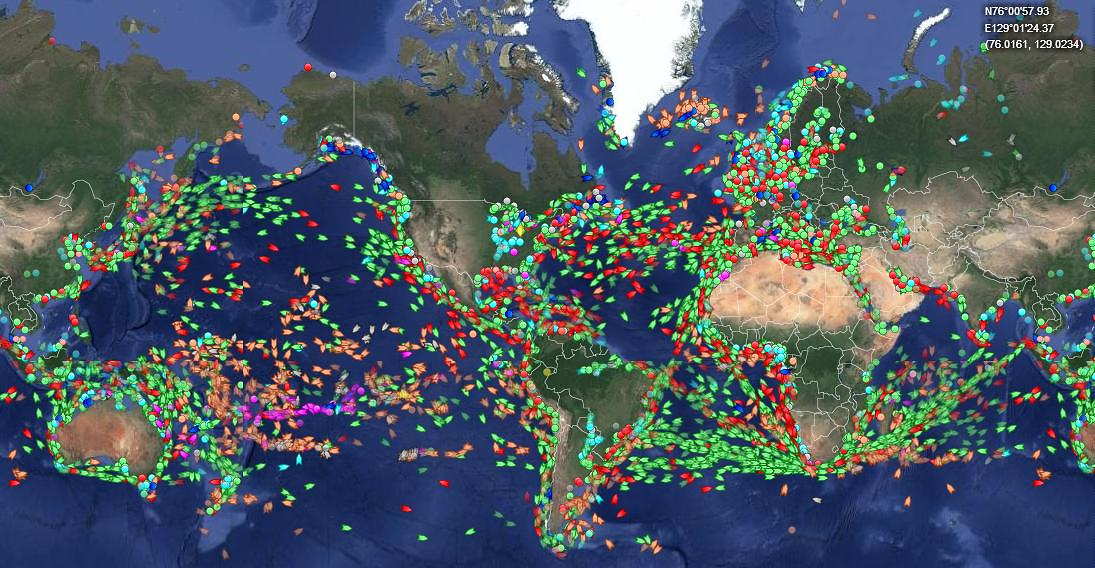 |
| Maritime Traffic - courtesy: www.marinetraffic.com/ |
Until very recently, I had believed that there were no longer any HF maritime operations left, other than various Coast Guard weather announcements and an emergency watch on certain USB frequencies.
Over the past week I have discovered that HF maritime activity is still alive and well, through the worldwide Digital Selective Calling (DSC) system, which has been around in one form or another since the early 90's as part of the Global Maritime Distress and Safety System (GMDSS) ... I guess I was just asleep at the switch, having not been aware of the HF DSC activity!
Although it's not CW, there's still ample opportunity to hear and follow global shipping traffic as vessels of all types contact coastal land stations or call each other. One requirement that keeps the DSC frequencies busy is the requirement for vessels to test their systems at least once per week, providing many opportunities to log various coastal stations or add a new ship to your logbook. Ships can be heard calling coastals for a routine signal test, setting up an SSB phone QSO on a specified frequency or just calling another ship for a test or a phone sked. As well, DSC can be used to send a distress message alert in times of emergency.
Messages are sent in an error-correcting FSK mode, similar to the Navtex system, using the same speed and shift of 100 baud /170Hz. There are a few programs that can be used to decode the DSC messages but one of the best and most popular is the freely available "YADD", by Dirk Claessens .
YADD stands for "Yet Another DSC Decoder" and is an offshoot of Dirk's equally popular and effective "YAND", a free Navtex decoder.
YADD and several other software decoders can be downloaded from the NDB List Info site ... the best source of hands-on information for topics involving NDBs, Navtex, DGPS, DSC DXing and more.
After downloading and installing YADD and setting audio levels correctly, YADD began decoding signals with ease.

The spectrum display at the top of YADD's screen shows the audio passband coming from the receiver. With the receiver in the CW mode, DSC signals will appear on the frequency that your receiver's BFO offset frequency is set for. I prefer an offset of 400Hz so the spectrum display shows the signal at 400Hz, with the tuning cursor centered on a signal. A narrow CW filter should also be selected but no narrower than 170Hz.
Each vessel using the system, as well as the coastal land stations, have a unique 9-digit MMSI number (Maritime Mobile Service Identity). Once the software detects the MMSI numbers being used, it can then display the vessel's name (or the coastal's location and distance) so you know who you are listening to ... it's all very slick!
After initially running my receiver for a few minutes on the 12MHz DSC channel, I decided to look up the location of the first two ships I had heard, using one of the Internet's marine traffic sites.
I was surprised to find that my first catch was a large tanker under way in Kola Bay, having just departed Murmansk, in the Russian Arctic. Vessel number two was also under way along the east coast of South Korea.
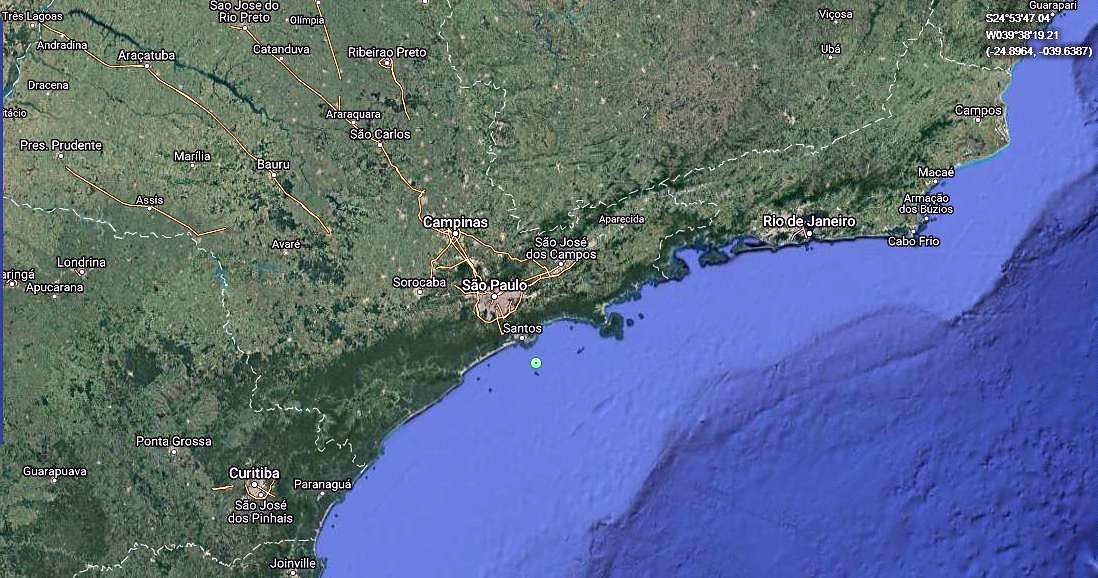
The YADD screen above is showing the large bulk carrier 'SALANDI' (3FEB9) calling Rio de Janeiro Radio (PWZ) today on 16804.5KHz.
 |
| Courtesy: Henk Guddee |
I soon discovered an active group of DSC DXers in Yahoo Group's DSC List, which I quickly joined and started asking a lot of questions. The 'Files' section also contains the latest list of ship MMSI numbers so that your YADD look-up text file can be kept up-to-date.
One of the group members, GM4SLV, has set up a wonderful website called YaDDNet devoted to collecting and posting listener's decoded loggings in realtime. One of YADD's features is the ability to automatically upload decoded signals, similar to PSK Reporter. It's an easy 30-second job to configure YADD to upload your spots to the net. His site also contains the latest MMSI look-up file used by YADD which is updated in real time from the latest log postings ... presently at 34,566 vessels!
Clicking on any of the uploaded ship names displayed in the real time YaDDNet log, automatically takes you to an online vessel-tracking site which usually has a picture of the ship along with all of its information, including its present position.
If you set up YADD to do some listening, I'd strongly urge you to also set it up so that your decoded spots are uploaded to the YaDDNet page in real time. Configuring this capability is very simple. Your latest logs will also keep the MMSI database up-to-date for all YADD users.
If, like me, you have missed the maritime CW activity on HF, you may find monitoring DSC traffic of interest ... both ships and coastals. I may even try QSLing some of the coastals again, many of which will still issue a traditional card QSL, upholding a long standing shortwave radio tradition ... but grab them while you can!
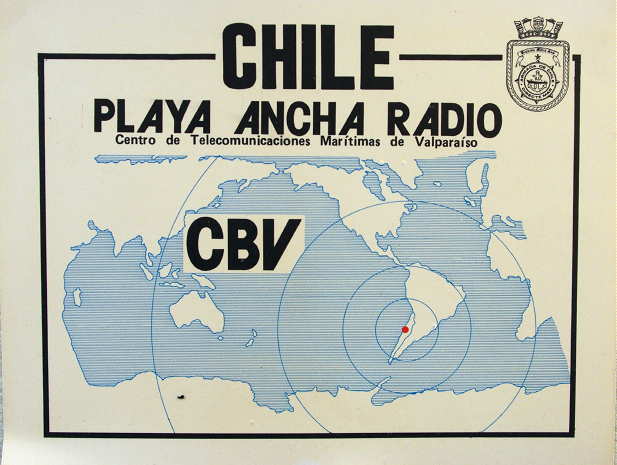 |
| From my collection. Heard 4349KHz CW Aug '96 |
YADD
|
| Maritime Traffic - courtesy: www.marinetraffic.com/ |
Until very recently, I had believed that there were no longer any HF maritime operations left, other than various Coast Guard weather announcements and an emergency watch on certain USB frequencies.
Over the past week I have discovered that HF maritime activity is still alive and well, through the worldwide Digital Selective Calling (DSC) system, which has been around in one form or another since the early 90's as part of the Global Maritime Distress and Safety System (GMDSS) ... I guess I was just asleep at the switch, having not been aware of the HF DSC activity!
Although it's not CW, there's still ample opportunity to hear and follow global shipping traffic as vessels of all types contact coastal land stations or call each other. One requirement that keeps the DSC frequencies busy is the requirement for vessels to test their systems at least once per week, providing many opportunities to log various coastal stations or add a new ship to your logbook. Ships can be heard calling coastals for a routine signal test, setting up an SSB phone QSO on a specified frequency or just calling another ship for a test or a phone sked. As well, DSC can be used to send a distress message alert in times of emergency.
Messages are sent in an error-correcting FSK mode, similar to the Navtex system, using the same speed and shift of 100 baud /170Hz. There are a few programs that can be used to decode the DSC messages but one of the best and most popular is the freely available "YADD", by Dirk Claessens .
YADD stands for "Yet Another DSC Decoder" and is an offshoot of Dirk's equally popular and effective "YAND", a free Navtex decoder.
YADD and several other software decoders can be downloaded from the NDB List Info site ... the best source of hands-on information for topics involving NDBs, Navtex, DGPS, DSC DXing and more.
After downloading and installing YADD and setting audio levels correctly, YADD began decoding signals with ease.
The spectrum display at the top of YADD's screen shows the audio passband coming from the receiver. With the receiver in the CW mode, DSC signals will appear on the frequency that your receiver's BFO offset frequency is set for. I prefer an offset of 400Hz so the spectrum display shows the signal at 400Hz, with the tuning cursor centered on a signal. A narrow CW filter should also be selected but no narrower than 170Hz.
Each vessel using the system, as well as the coastal land stations, have a unique 9-digit MMSI number (Maritime Mobile Service Identity). Once the software detects the MMSI numbers being used, it can then display the vessel's name (or the coastal's location and distance) so you know who you are listening to ... it's all very slick!
After initially running my receiver for a few minutes on the 12MHz DSC channel, I decided to look up the location of the first two ships I had heard, using one of the Internet's marine traffic sites.
I was surprised to find that my first catch was a large tanker under way in Kola Bay, having just departed Murmansk, in the Russian Arctic. Vessel number two was also under way along the east coast of South Korea.
The YADD screen above is showing the large bulk carrier 'SALANDI' (3FEB9) calling Rio de Janeiro Radio (PWZ) today on 16804.5KHz.
|
| Courtesy: Henk Guddee |
I soon discovered an active group of DSC DXers in Yahoo Group's DSC List, which I quickly joined and started asking a lot of questions. The 'Files' section also contains the latest list of ship MMSI numbers so that your YADD look-up text file can be kept up-to-date.
One of the group members, GM4SLV, has set up a wonderful website called YaDDNet devoted to collecting and posting listener's decoded loggings in realtime. One of YADD's features is the ability to automatically upload decoded signals, similar to PSK Reporter. It's an easy 30-second job to configure YADD to upload your spots to the net. His site also contains the latest MMSI look-up file used by YADD which is updated in real time from the latest log postings ... presently at 34,566 vessels!
Clicking on any of the uploaded ship names displayed in the real time YaDDNet log, automatically takes you to an online vessel-tracking site which usually has a picture of the ship along with all of its information, including its present position.
If you set up YADD to do some listening, I'd strongly urge you to also set it up so that your decoded spots are uploaded to the YaDDNet page in real time. Configuring this capability is very simple. Your latest logs will also keep the MMSI database up-to-date for all YADD users.
If, like me, you have missed the maritime CW activity on HF, you may find monitoring DSC traffic of interest ... both ships and coastals. I may even try QSLing some of the coastals again, many of which will still issue a traditional card QSL, upholding a long standing shortwave radio tradition ... but grab them while you can!
|
| From my collection. Heard 4349KHz CW Aug '96 |
NAQP CW contest.
NAQP CW contest.
Old, But Still Useful!
This old WWII military training video is still useful regarding Morse code:
[embedyt]https://www.youtube.com/watch?v=YqTn-165orw[/embedyt]
This is an antique United States Navy Training Film from 1943/1944, in which proper hand-sending of Morse code is demonstrated. The film covers some basic principles and mechanics of manual keying of the International Morse code, as used during WWII.
Amateur (Ham) radio operators find Morse code (and the ‘CW’ mode, or ‘Continuous Wave’ keying mode) very useful, even though Morse code is no longer required as part of the licensing process. Morse code is highly effective in weak-signal radio work. And, preppers love Morse code because it is the most efficient way to communicate when there is a major disaster that could wipe out the communications infrastructure.
While this military film is antique, the vintage information is timeless, as the material is applicable to Morse code, even today.
There’s more about Morse code, at my website: http://cw.hfradio.org
For additional joy, here are a few of old films regarding Morse code:
Morse Code – Principles and Basic Techniques (US Army Signal)
(Learn to Send Perfect Morse Code by Hand – Vintage Training Film (Ham Radio / CW))
[embedyt]https://www.youtube.com/watch?v=qmg1MlstxWM[/embedyt]
Vintage 1944 Radio Operator Training: How to Send Morse Code (CW) by Hand
[embedyt]https://www.youtube.com/watch?v=XjupJslRj5E[/embedyt]
This one is a pretty cool film:
1939 Film: New Zealand Shortwave Communications; Morse code (CW)
[embedyt]https://www.youtube.com/watch?v=H-KUat5WEkU[/embedyt]
I’ve also created a play list, and most of the videos are still online. Once and a while something changes and I have to update the list. Here is the list:
Original Title: TECHNIQUE OF HAND SENDING, by Department of Defense, Published 1944
Usage CC0 1.0 Universal
TECHNIQUE OF HAND SENDING
PIN 23735 1944
IMPORTANT PARTS OF THE TRANSMITTER, TENSION SPRING, ADJUSTING CONTACTS, ADJUSTING SPRINGS. ELEMENTS OF MORSE CODE, TIMING, AND PARTS OF BODY THAT FUNCTION WHEN TRANSMITTING CODE. IMPORTANCE OF CORRECT POSITION AND OPERATION.
Producer Department of Defense
Enjoy!
Hunting For NDBs In CLE 221
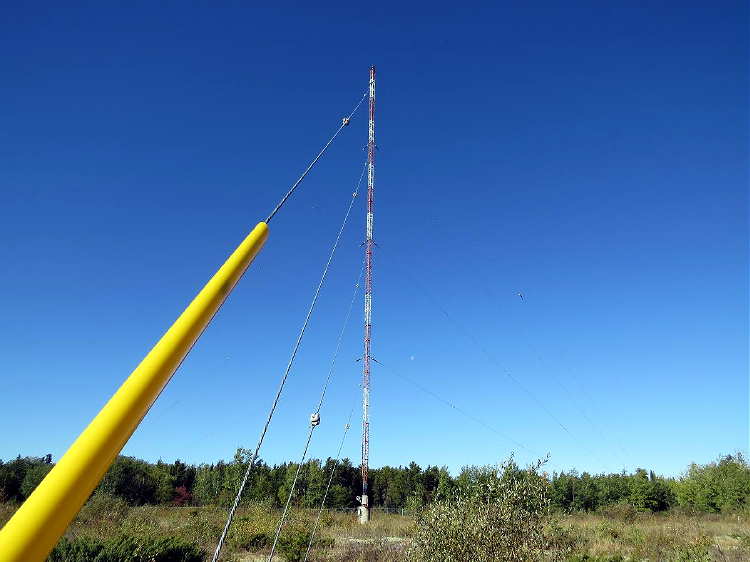 |
| YBV - 370kHz (VE3GOP) |
This coming weekend will see another CLE challenge. This time the hunting grounds will be: 370.0 - 384.9 kHz.
For those unfamiliar with this monthly activity, a 'CLE' is a 'Co-ordinated Listening Event', as NDB DXers around the world focus their listening time on one small slice of the NDB spectrum.
A nice challenge in this one is to hear the Berens River (Manitoba) NDB, 'YBV', on 370 kHz. 'YBV' is a 25-watter and is well heard, having been logged from coast-to-coast as well as in Europe. Look for 'YBV's CW identifier, repeated every 10.4 seconds, on 370.373 kHz with your receiver in the CW mode.
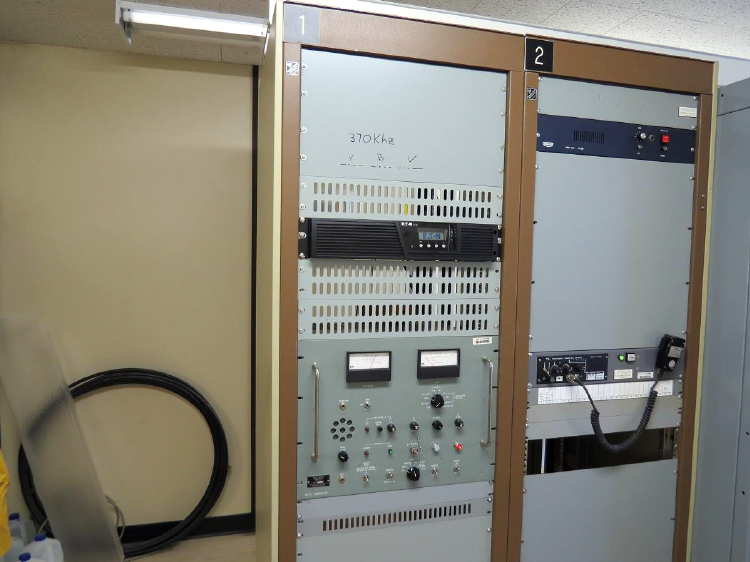 |
| YBV's 25W TX Rack (VE3GOP) |
When tuning for NDBs, put your receiver in the CW mode and listen for the NDB's CW identifier, repeated every few seconds. Listen for U.S. NDB identifiers approximately 1 kHz higher or lower than the published transmitted frequency since these beacons are modulated with a 1020 Hz tone approximately.
For example, 'AA' in Fargo transmits on 365 kHz and its upper sideband CW identifier is tuned at 366.025 kHz while its lower sideband CW ident can be tuned at 363.946 kHz. Its USB tone is actually 1025 Hz while its LSB tone is 1054 Hz.
Often, one sideband will be much stronger than the other so if you don't hear the first one, try listening on the other sideband.
Canadian NDBs normally have an USB tone only, usually very close to 400 Hz. They also have a long dash (keydown) following the CW identifier.
All NDBs heard in North America will be listed in the RNA database (updated daily) while those heard in Europe may be found in the REU database. Beacons heard outside of these regions will be found in the RWW database.
From CLE organizer Brian Keyte, G3SIA, comes the usual 'heads-up':
Please join us in our 221st coordinated Listening Event which starts
this Friday. All are very welcome.
CLEs are not contests - if you enjoy taking part you will be a winner!
54 of us sent logs for CLE204 back in February 2016 when we
Days: Friday 28 July - Monday 31 July
Range: 370 - 384.9 kHz
Just log all the NDBs that you can identify with their nominal (listed)
frequencies in the range (it includes 370 kHz, but not 385 kHz)
plus any UNIDs that you come across there.
Please send your CLE log to the List in a plain text email if possible
(not in an attachment) with 'CLE221' at the start of its title.
Show on each log line:
# The date (e.g. 2017-07-29, etc., or just 29) and UTC.
(the date changes at 00:00 UTC)
# kHz (the nominal published frequency, if known)
# The Call Ident.
Show those main items FIRST - other optional details such as Location
and Distance go LATER in the same line.
If you send interim logs, please also send a 'Final' (complete) log.
As always, tell us your own location and brief details of the equipment
that you were using during the weekend.
I'll send the usual 'Any More Logs?' email at about 17:00 UTC on
Tuesday - you can check from it that your log has been found OK.
All logs must arrive on the list by 08:00 UTC on Wednesday 2nd
August at the very latest.
Joachim has again offered to make the combined results which he
To help your listening, seeklists and maps for your part of the World
Good listening - enjoy the CLE
Brian
----------------------------------------------------------
From: Brian Keyte G3SIA ndbcle'at'gmail.com
Location: Surrey, SE England (CLE coordinator)
----------------------------------------------------------
These listening events serve several purposes. They:
- determine, worldwide, which beacons are actually in service and on-the-air so the online database can be kept up-to-date
- determine, worldwide, which beacons are out-of-service or have gone silent since the last CLE covering this range
- will indicate the state of propagation conditions at the various participant locations
- will give you an indication of how well your LF/MF receiving system is working
- give participants a fun yet challenging activity to keep their listening skills honed
Final details can be found at the NDB List website, and worldwide results, for every participant, will be posted there a few days after the event. If you are a member of the ndblist Group, results will also be e-mailed and posted there.
The very active Yahoo ndblist Group is a great place to learn more about the 'Art of NDB DXing' or to meet other listeners in your region. There is a lot of good information available there and new members are always very welcome. As well, you can follow the results of other CLE participants from night to night as propagation is always an active topic of discussion.
If you are contemplating getting started on 630m, listening for NDBs is an excellent way to test out your receive capabilities as there are several NDBs located near this part of the spectrum.
You need not be an ndblist member to participate in the CLEs and all reports, no matter how small, are of much value to the organizers.
'First-time' logs are always VERY welcome!
Reports may be sent to the ndblist or e-mailed to either myself or CLE co-ordinator, Brian Keyte (G3SIA), whose address appears above.
Please ... give the CLE a try ... then let us know what NDB's can be heard from your location! Your report can then be added to the worldwide database to help keep it up-to-date.
Good hunting!













