Posts Tagged ‘Contests’
 Get Ready For Field Day
 June 20th, 2013 |
 Author:
 Attention all radio amateurs, this weekend is ARRL Field Day! Don’t forget to get on the air.
Field Day is a flexible event, so it can be anything you want it to be: camping weekend, stay at home, participate with your club, go mobile, whatever you desire. Remember to season to taste.
One more thing: Field Day is not a contest. But you can still keep score.
Oh, remember that the national simplex FM calling frequency of 146.52 MHz should not be used for making Field Day contacts. Like all contests…wait Field Day is not a contest. Whatever.
- 73, Bob K0NR
The New VHF Contest Categories
 The results are in from the 2013 ARRL January VHF Contest, which includes the new Single Operator 3 Band and Single Operator FM Only entry categories.
There were 77 entries in the SO3B category, with Rich KV2R having the high score: 6368 pts. Breaking his contacts out by band reveals 50MHz:92 QSOs/18 Grids; 144MHz:83 QSOs/12 Grids; 432MHz:12 QSOs/2 Grids. I operated in the same category but with a lower score: 1311, broken out by band this way: 50MHz:27/12; 144MHz:24/8; 432MHz:3/3. As I recall, 50 MHz propagation was not really that great, which is going to be the major swing factor for scores in the SO3B category. Scanning through the top SO3B entries reveals a relatively consistent pattern of 50 MHz having the highest number of QSOs, with 144 MHz in the same ballpark and 432 MHz significantly lower in count.
There were only 23 entries in the SOFM category, which is probably not a big surprise. While there are pockets of FM activity during VHF contests, historically the fun mode has not been used that much for contesting. The whole idea behind SOFM is to open up contesting to the FM operator. It remains to be seen how effective this will be but if it does catch on, it will take some time to build momentum. Ev W2EV had the high score of 1080 in the FM category, broken out by band here: 50MHz:19 QSOs/4 Grids; 144MHz:27 QSOs/4 Grids; 222MHz:5 QSOs/4 Grids; 432MHz:8 QSOs/3 Grids. W2EV’s score shows just a few grids per band, indicating shorter distance contacts overall. With only 4 grids on 50 MHz, he probably did not benefit from sporadic-e propagation on that band. The second place entry was from Erich KC9CUK who only worked the 2 Meter band, producing a score of 441 with 63 QSOs and 7 grids. The remaining entries had less than 30 QSOs. Almost everyone had contacts on 144 MHz but the usage of the other bands varied significantly.
I have always been most interested in operating 50 MHz and 144 MHz, sometimes adding in 222 MHz and 432 MHz, so I find SO3B a nice addition to the contest. In this category, I get to operate my favorite bands but my score does not get compared with the guys that have built stations that do 50 MHz through light. I suspect there are plenty of other VHF contesters in this same boat.
I find the FM category very interesting, as I have always tried to encourage FM operating during the contests. Clearly, FM is less effective than SSB and CW, particularly when the signals are weak. I don’t know whether this category will attract new operators or not to VHF contests. FM operation needs to hit critical mass because activity generates activity. That is, if you are the only FM contester in your area, its going to be frustrating. Of course, it will help if the established SSB stations make it a point to also work FM.
Oh, one more thing… we still need to get rid of the rule that says no contacts on 146.52 MHz. This rule is counterproductive. Every time I talk with an FM op about “getting on during the contest” they say “OK, so I should just call on five two, right?” I have to explain that calling on the calling frequency is not allowed during the contest (uh, that’s only for FM, you see) and their minds start to wander to topics that make more logical sense.
73, Bob K0NR
K0NR June VHF Contest
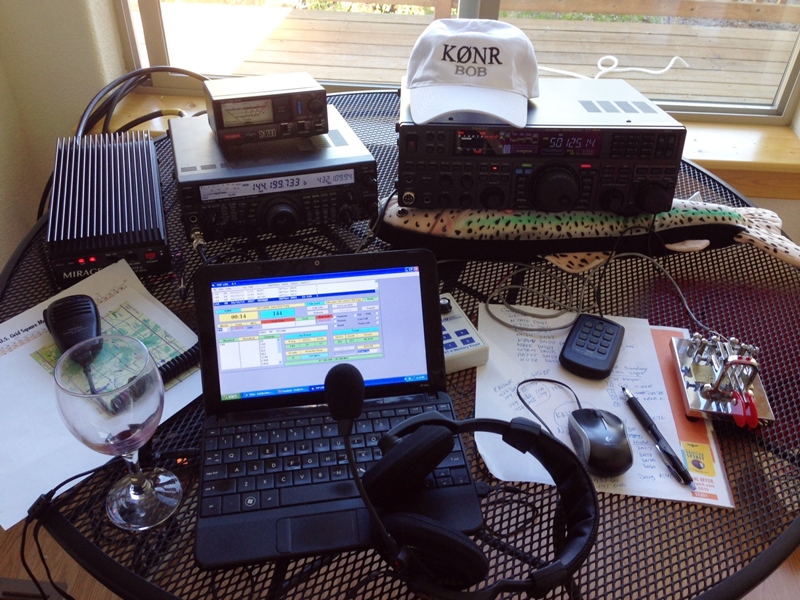
My June VHF Contest operation was at the cabin DM78av, operating in the new 3-band single-op category this year. Usually, I have been a two-band guy just focusing on 2M and 6M. I drug along my 432 MHz antenna and drove it with 50W from my FT-847, picking up a few more QSOs that way.
My score is down from the previous two years, which I think relates to the 50 MHz propagation. I subscribe to the theory that any June contest that has any sporadic-e is a success, so I am not going to complain. However, it did seem like I spend more time digging weak signals out of the noise on 6 Meters this year. It was often just barely open and the QSO rate was slow.
Best DX was XE2WK in EL03 on 50 MHz.
73, Bob K0NR
2013 ARRL June QSO Party K0NR DM78
Band QSOs X pt = QSO pts. X Grids = Points
 ---------------------------------------------------------------
 50 320 1 320 112 35840
 144 34 1 34 11 374
 432 13 2 26 6 156
 ---------------------------------------------------------------
 TOTALS 367 380 129 49020
Claimed score = 49020
CQ WPX CW contest in the books
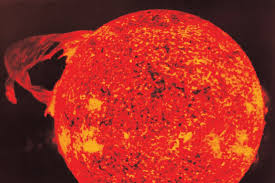 |
| Lots of Solar action |
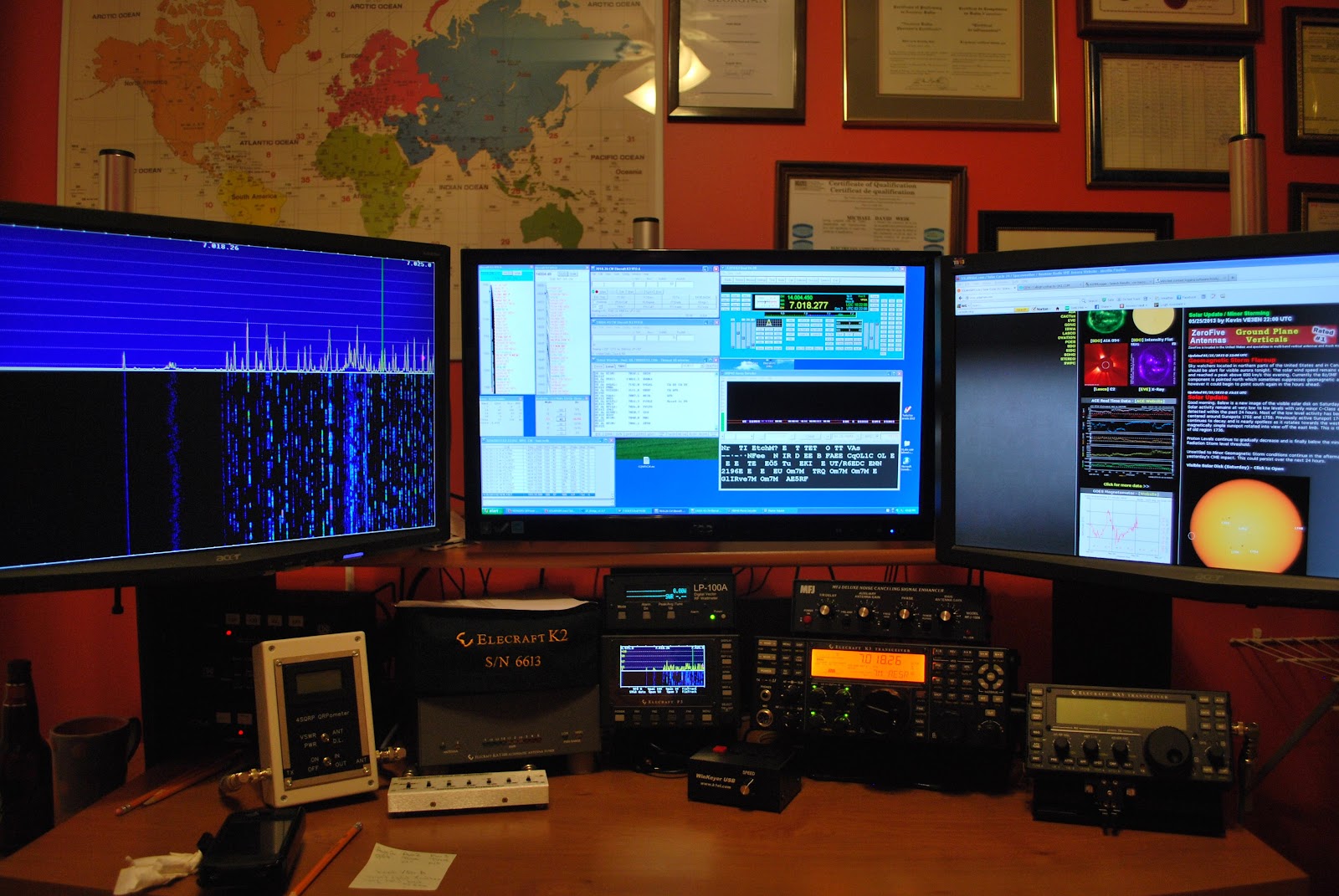
- When running N1MM logging program, N4PY rig control software and the Flex Radio Flexcontrol vfo knob all together through LP-Bridge some very very strange things can happen. This resulted in some lost contacts and down time due to software issues.Going to have to get these programs to shake hands and get along.
- Funny thing.....I have been practicing my contest CW code with Morse runner and using my laptop. Well it would seem that my fingers became very familar with the smaller keyboard on the laptop. When I contested on my home PC and regular sized keyboard I was making mistake after mistake while keyboarding calls and exchanges. I do have a smaller keyboard for the desktop PC and started to use it towards the end. Going to have to stick to the same keyboard as it seems size does matter.
- It seemed to me that most of the contesters CW speed was in around 25-30 wpm and I did find that very comfortable.
- At least the bummer conditions were world wide and leaves us all in the same playing field more or less.
- I contacted OQ5M in the contest and soon after he commented on my blog of how good my signal was. This fast interaction is kinda cool.
- My contact with Australia, Cuba and Hawaii.
- The politeness of the op's whom I had to give several repeats too, those who still could not make out my call just said "bad QRM and hope to contact later 73"
Day one of CQ WW CW contest
- The propagation was.....shall we say (because this is a family blog) crap!!
- I was in the contest for a grand total of 5 hours today.
- There was some down time as you can tell from fact number 2...software troubles, USB port trouble and K3 updates and the list can go on. (This is normal contest OMG stuff)
- The attic dipole once again did very well considering the conditions.
- The evening once 20m closes down I am done as with the poor conditions for some reason 40m has not been a great band for me with the attic dipole.
- So far I have not used any paper and pencils to copy call's I have been able to just use the keyboard. Now yes in the picture above in the center monitor bottom right you will see MRP40. (cw decoding program and the BEST one out there) That was up and running for the contester who for some reason send at @#@%$$# SPEEDS!!
- With the propagation conditions in the dumps I was very please to get my QRP signal heard in Hawaii, Australia, South America and Cuba.
- I have been practicing my contest code with some programs and for the first time code at 30-35wpm was clear and understandable!
Adding my two cents worth…………
HF Slacker Works the CQ WPX Contest
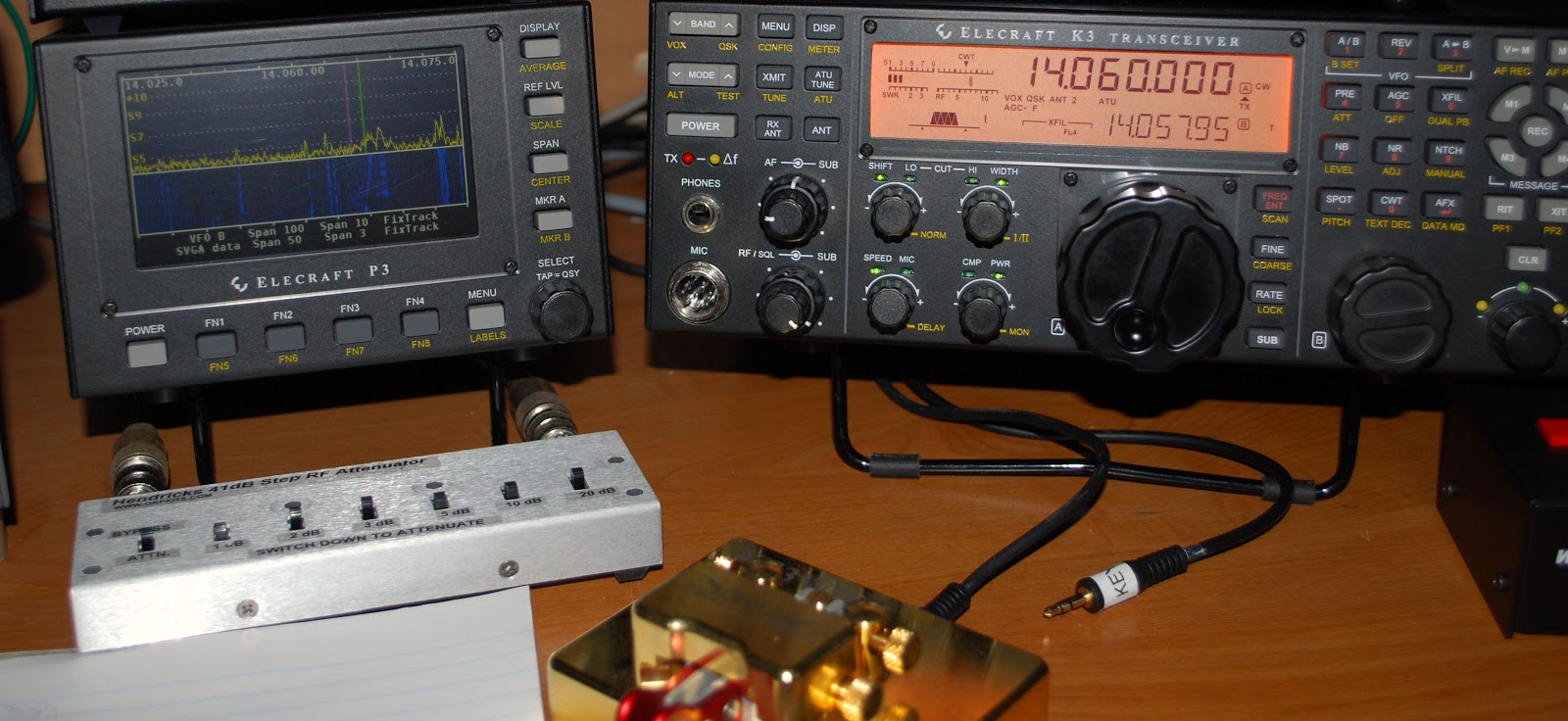
 This past weekend, I had to great time working the CQ WPX (SSB) Contest. I am pretty much an HF Slacker but I do like getting on the air once in a while for these contests. The attraction seems to be the opportunity to make lots of contacts in a short time and picking up a few new countries. The format for this contest is really fun…multipliers are based on the callsign prefix, so “everyone is DX”…sort of. CQ has an awards program (CQ WPX Award) that is also based on prefixes worked, so the contest is a good way to pursue that award. The ARRL recently added CQ WPX Award support to Logbook of the World, which will help with confirming contacts. Us HF Slackers don’t like messing around with actually sending QSL cards when transferring a few bytes electronically is sufficient.
I operated from our mountain cabin, with just 100W to a trap dipole up in the trees. Not a Big Gun station, especially not in this contest. There were quite a few stations on the Caribbean, many of them contest DXpeditions. Conditions were pretty good on 20M and 15M, with 10M also quite usable during portions of the day.
        Band    QSOs     Pts  WPX
           7      39      69   30
          14      71     142   59
          21      81     163   54
          28       9      24    6
       Total     200     398  149
       Score : 59,302
The last time I submitted a log for CQ WPX was in 2011 with roughly the same station. That year, I made 98 QSOs for a score of 18,920. So this year’s score is an improvement over that effort.
But the most important thing is to have fun messing around with radios.
73, Bob K0NR