Posts Tagged ‘amateurradio.com’
 I’m famous! and ICube-1, MOVE and Velox-PII telemetry decodes
 November 26th, 2013 |
  Author:
 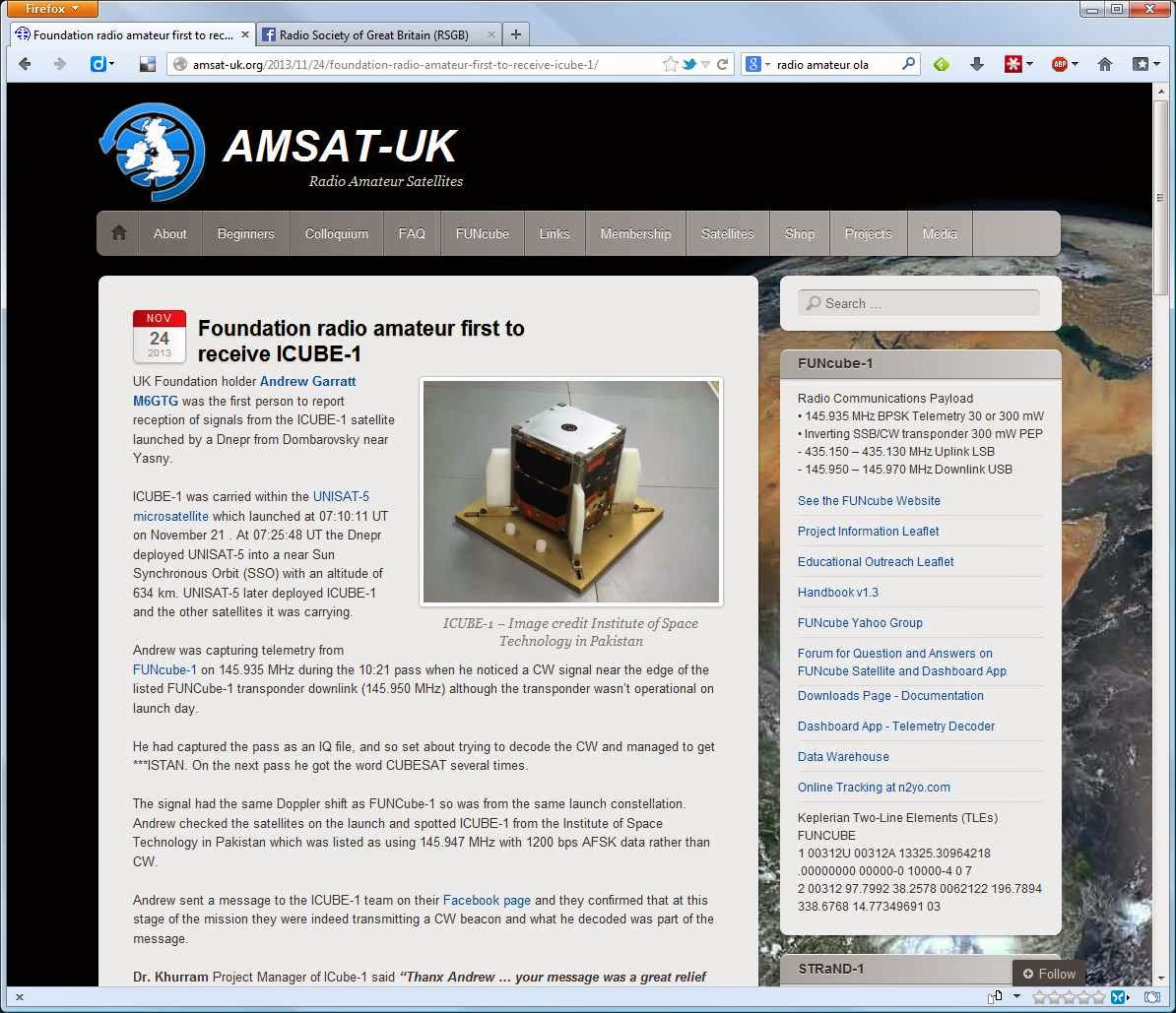 |
| Screenshot of the Amsat-UK webpage |
I had the IQ file from SDR# so could process it as much as I needed and have used a couple of Morse/CW decoder tools before, but find the free ones often struggle with the faint Doppler shifting CW, just a little too much noise and not enough signal.
Audible decoding isn't an option (yet) but I can visually decode, but the signal going up the waterfall shows the dots and dashes but is too quick for me, and ideally I would like it horizontal rather than vertically.
Then I remembered I had installed Spectravue a few years ago, Spectravue is a powerful spectral analysis/receiver program primarily for use with SDR devices, it was the program used to calibrate my first FUNCube Dongle.
Spectravue is able to take the IQ file and play it back at varying speeds, it can demodulate signals and importantly allows pausing of the playback and easy access to the section of interest, something SDR# is sadly lacking, also it allows a horizontal waterfall display and the ability to save images.
I set about processing and decoding and as you can see from the screenshots below, I managed to identify most of the message (the letters have been added later) The FUNcube-1 telemetry signal can be seen at the top of the images, along with some QRM.
 |
| Partial decode of ICube-1 CW beacon |
 |
| Partial decode of ICube-1 CW beacon |
During the process I also spotted two further signals from Velox-PII (145.980 MHz) and the First-Move Cubesat (145.970 MHz) - both of these were recorded in the first decent pass over the UK after deployment (10:21 on 21 November 2013) the incorrect time shown on the bottom of the screen shots comes from the fact the files processed were copies and the file time stamp had been altered in the process.
I can only wonder when the first reception reports were made? Then again I shouldn't be greedy, one first-to-report is probably enough ;-)
 |
| Velox-PII Telemetry/CW beacon |
 |
| First-Move Telemetry and partial ICube-1 |
FIRST-MOVE built by students at the Technical University of München. MOVE stands for München Orbital Verification Experiment. Details here
Did I make ICube-1’s first signal report?
Well this morning saw the launch of the numerous satellites from the Dnepr rocket including Funcube-1, and this morning saw the first passes over the UK. Like many others I eagerly sat in front of my computer awaiting the chance to decode the telemetry. However I was doing it remotely using a VNC connection as I was in work...
Sure enough at 10:21 the pass started and a nice strong signal appeared on the waterfall and the FUNCube dashboard sprang to life. I managed 29 packets on the first pass!
 |
| The upload ranking at the FUNcube data warehouse |
However I noticed another CW signal further up the spectrum which seemed to be on the edge of the FUNCube transponder allocation (145.950MHz) I went to twitter and asked if FUNCube-1 was transmitting a CW beacon? Peter 2E0SQL thought it might be another satellite.
At start of earlier FUNCube-1 pass, what looks like CW on transponder downlink frequency? #funcube pic.twitter.com/yLvgzYzZRJ
— Andrew Garratt (@nerdsville) November 21, 2013

I had captured the pass as an IQ file, and set about trying to decode the CW. I had several attempt using fl-digi remotely but chasing a fast moving doppler on a laggy remote connection wasn't good but I seemed to repeatedly get ***ISTAN.
On the next pass the same thing happened, this time I got the word CUBESAT several times..
The signal had the same doppler shift as FUNCube-1 so was from the same launch constellation and a quick check and I spotted ICube-1 the first cubesat launched by Institute of Space Technology in Pakistan.. which was listed as broadcasting on 145.947MHz using AFSK.
It must be.. ***ISTAN... CUBESAT.... So I sent them a message on their Facebook page and they confirmed that at this stage of the mission they were indeed supposedly broadcasting a CW beacon and what I decoded was part of the message!
Khurram project manager of ICube-1 said "Thanx Andrew ... your message was a great relief for us"
and on their facebook page
First Signal has been received from ICUBE-1 in UK ... Alhamdulillah the ICUBE-1 mission is successful ... Congrats everyone. Satellite will pass over IST around 9:30 pm today
So it seems lowly M6GTG may have made the first signal report confirming Pakistan's first successful cubesat deployment!
I am grinning madly at the moment!
Shock and Awe – The story of electricity.
Amateur radio has a long history, going all the way back to wireless experiments in the late 1800s. However the study of electricity has its roots in the observation of natural phenomena and stretches back much further.
I ran across this excellent three part documentary detailing the story of the discovery of electricity. The presenter is Jim Al-Khalili, currently Professor of Theoretical Physics and Chair in the Public Engagement in Science at the University of Surrey. He not only knows his stuff, he is also an interesting and engaging speaker.
The documentary runs for three hours but is worth your time if you are interested in the story of electricity and the people behind its discovery and history. I hope you find it as enjoyable as I did.
My APRS broadcasts received by the ISS
I screen capped the evidence from the website http://ariss.net which documents Amateur Radio data digipeated by the ISS. In order to appear on the page, a position report in a valid APRS format must be received and then digipeated through the ISS system, then be heard by an internet gateway station, which then forwards it on to the APRS Internet System.
Okay it sounds a bit more impressive when put like that ;-)
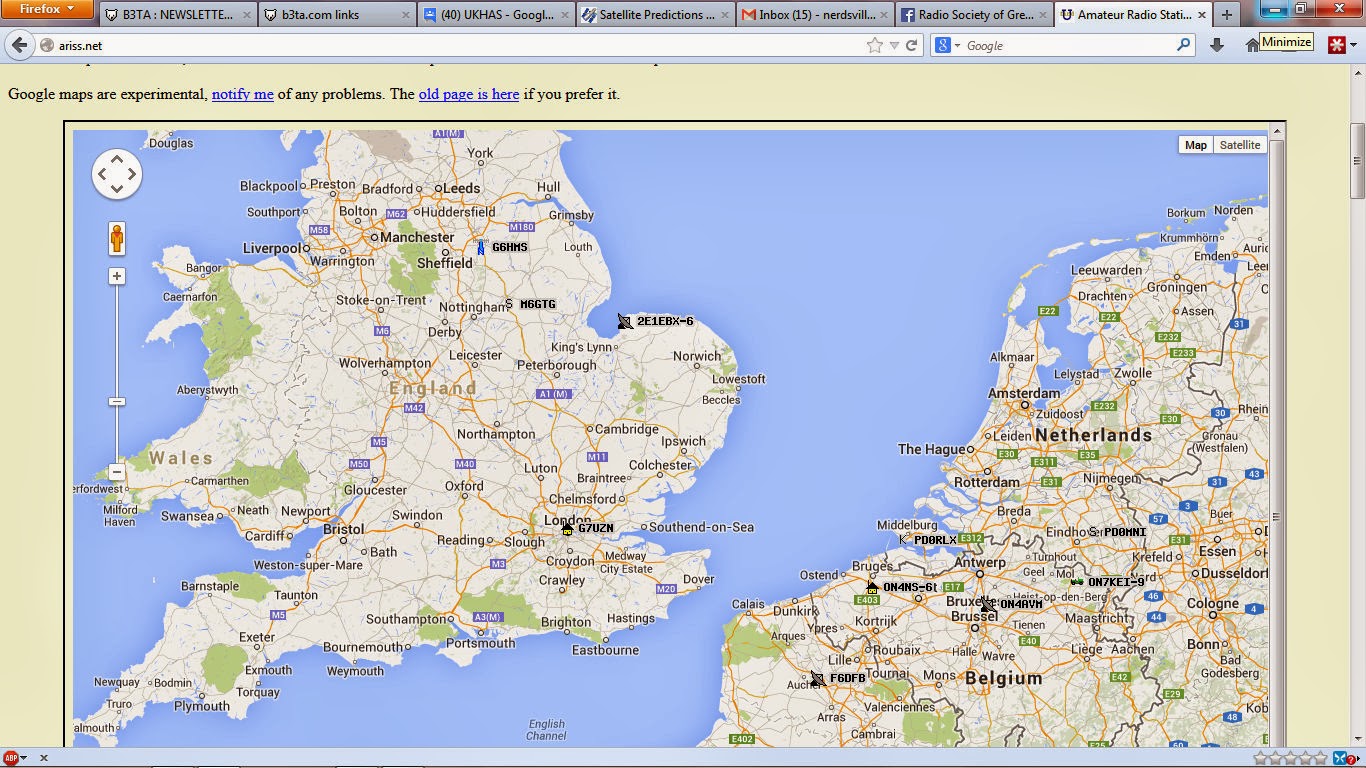 |
| The map showing received stations, M6GTG is me! |
 |
| The detail of my report |
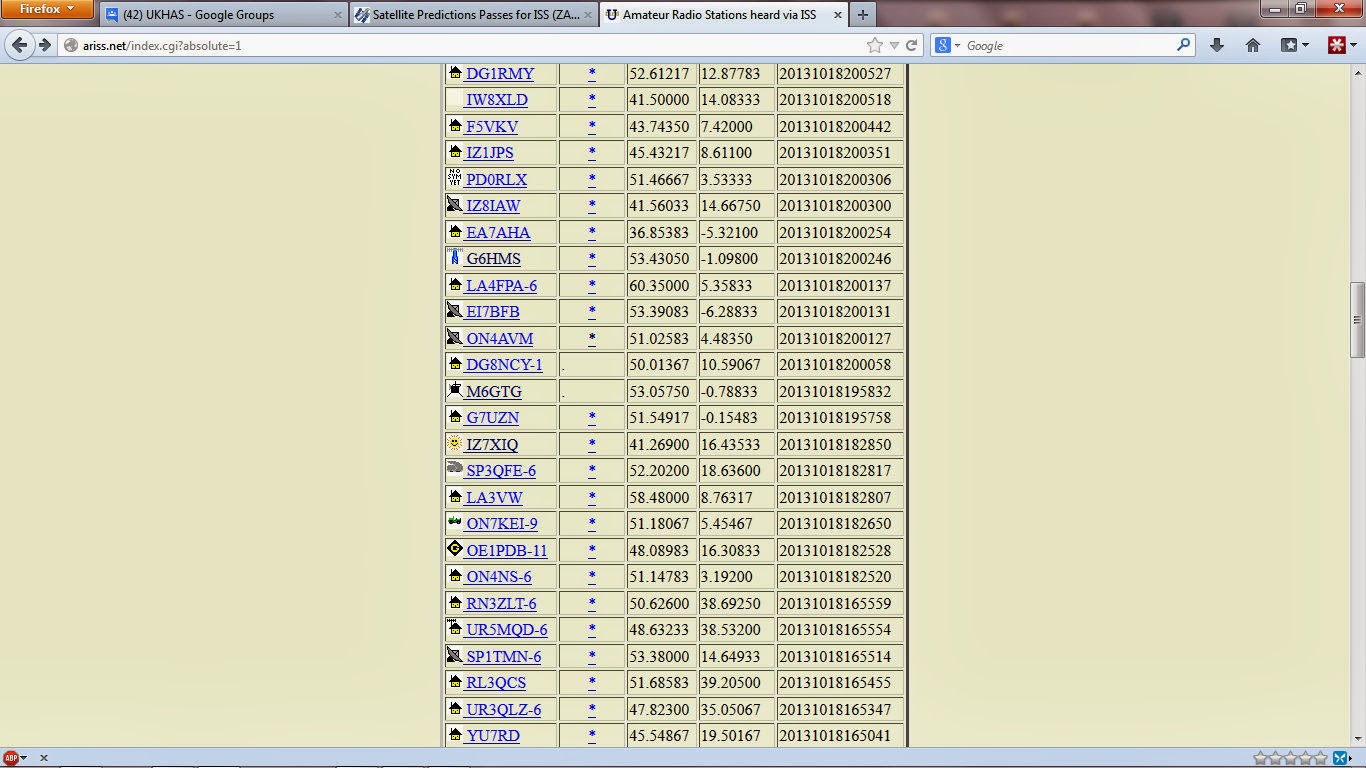 |
| List of stations with time stamps, showing me! |
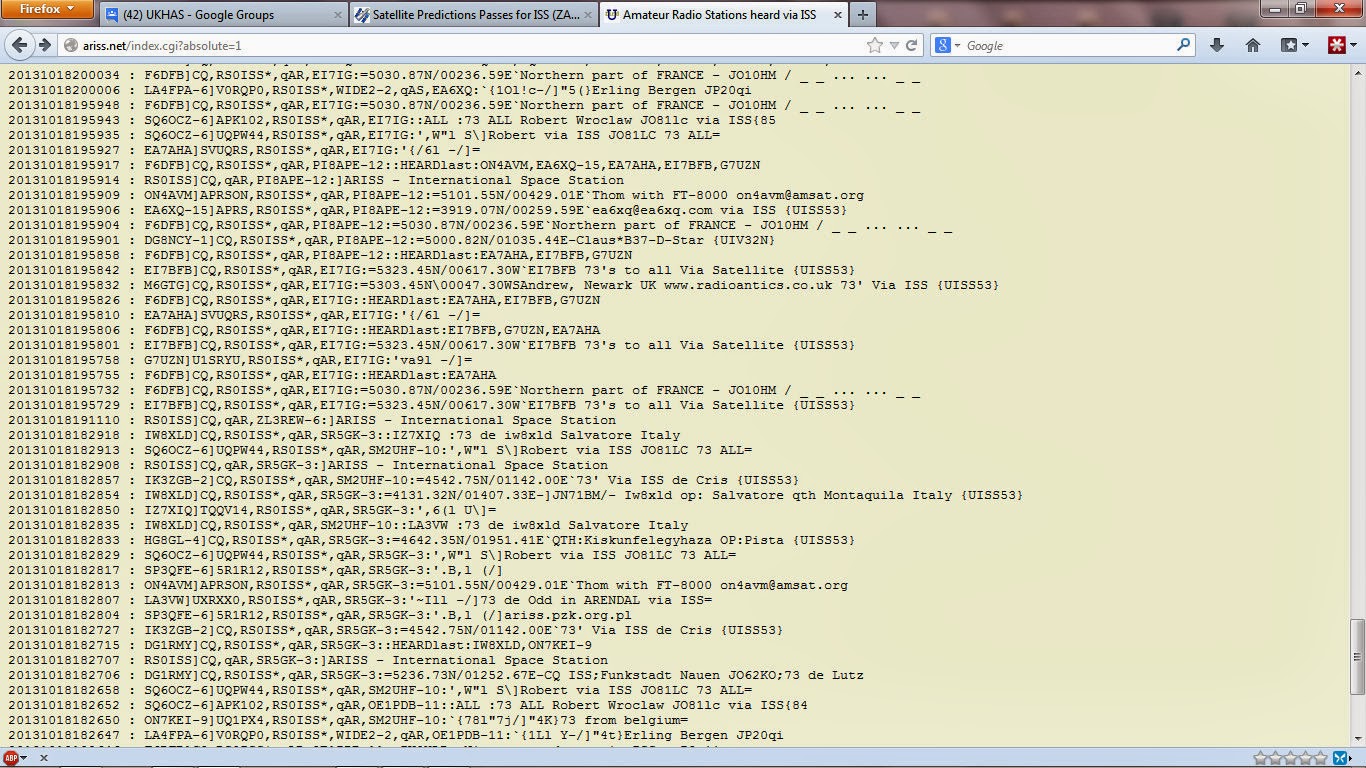 |
| List of digirepeated messages |
It consists of a small embedded PC running embedded XP, the sound card output was connected to the microphone input of my Baofeng UV-5R+ operating in VOX mode set to 145.825MHz. The radio was connected through my power/SWR meter in to the X-50 antenna. I used the UV-5R+ instead of the UV-3R since it has a little more power and better audio. I had a SWR of around 1:1.2 and outputting 4W.
The software I used was UISS from ON6MNU and the AGWPE packet engine. It has taken a little time to work out how to setup UISS into auto-beacon mode and putting in the time of the next decent pass (approx 45 degrees elevation) I set it to broadcast position and text data messages every 30 seconds.
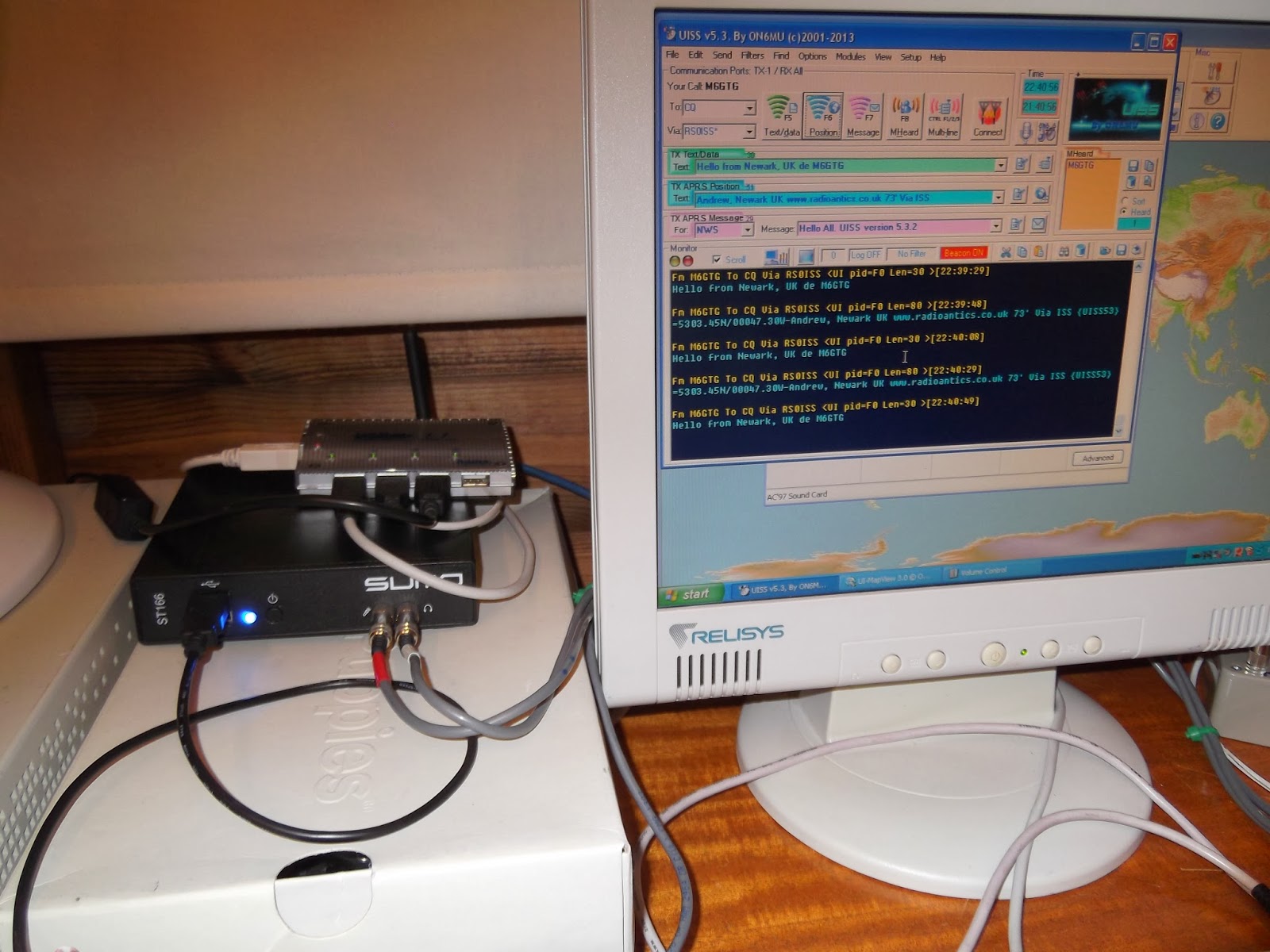 |
| The embedded PC running UISS |
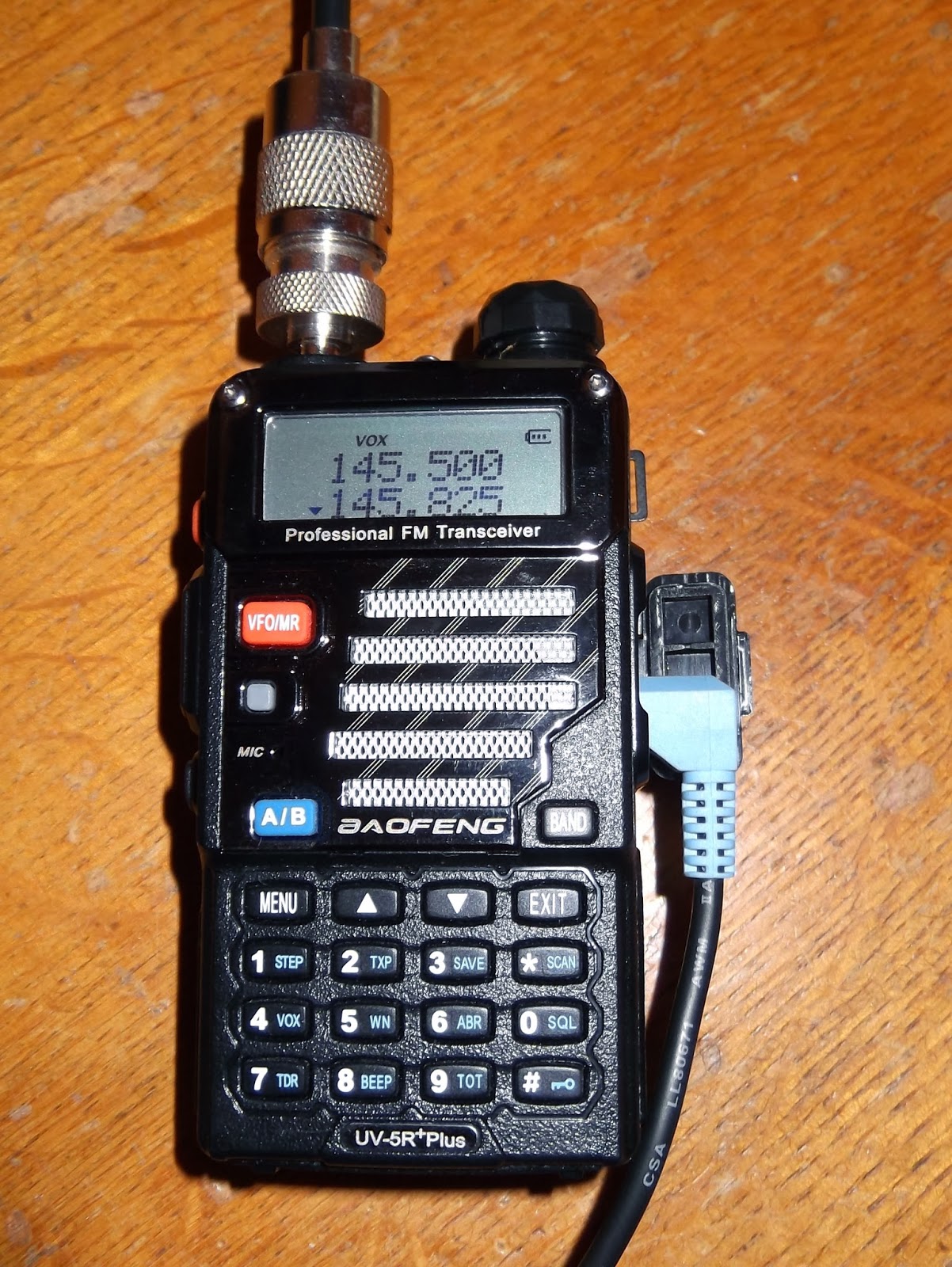 |
| UV5R+ in VOX mode on 145.825MHz |
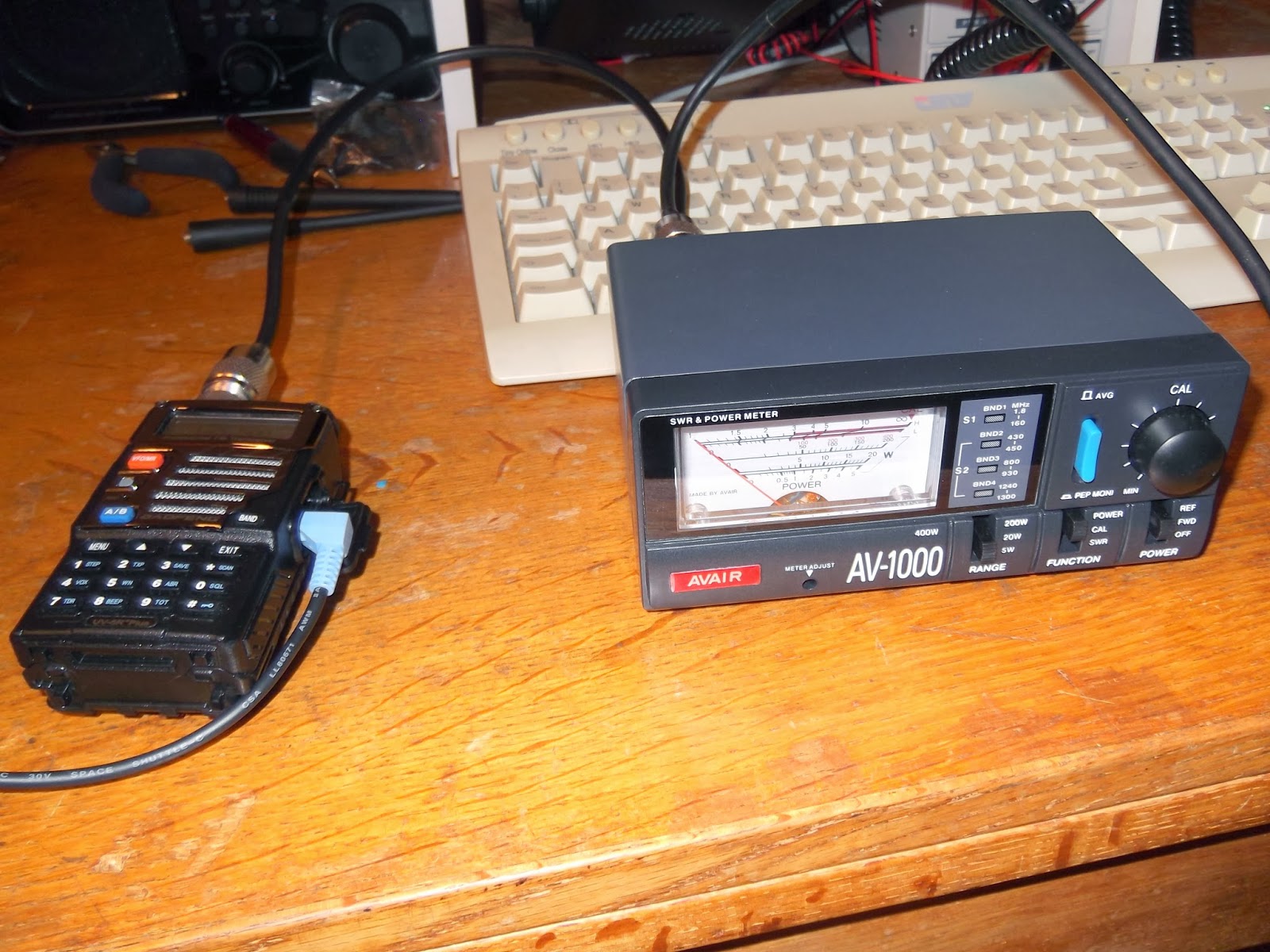 | ||
| The power meter showed 4W output, SWR about 1:1.2 |
I stood out in the dark, hoping to see the ISS pass over but the cloud cover was too thick and monitored using a handheld scanner. I heard my transmissions obviously and the ISS broadcasts as it repeated received messages, but I didn't know if any were mine till I got back to the PC.
At 522,000,000 miles per watt, Voyager 1 might be the ultimate in QRP.
At 522,000,000 miles per watt, Voyager could be the ultimate in QRP … if you have the right antenna.
From Backblocks To High Seas
I came across this great piece of history via the Google+ page of Cristian YO8TNB and had to share it here for others to enjoy. I have a soft spot for New Zealand, being so close to my country of birth, and I particularly noticed the carefully cultured accent of the announcer. On a more serious note, this video is an invaluable record of the wired and wireless technology used in 1939 and the procedures for transmitting a message from land to sea.
Philco Tropic Model 3012
Last weekend I attended the Houston Vintage Radio Association holiday dinner & picked up a Philco Tropic Model 3012 during the fundraiser auction. I had let a few other radios go without placing a bid and was beginning to think I might go home empty handed when I saw the Philco “on the block”. A few seconds later I was the proud owner of this vintage receiver.
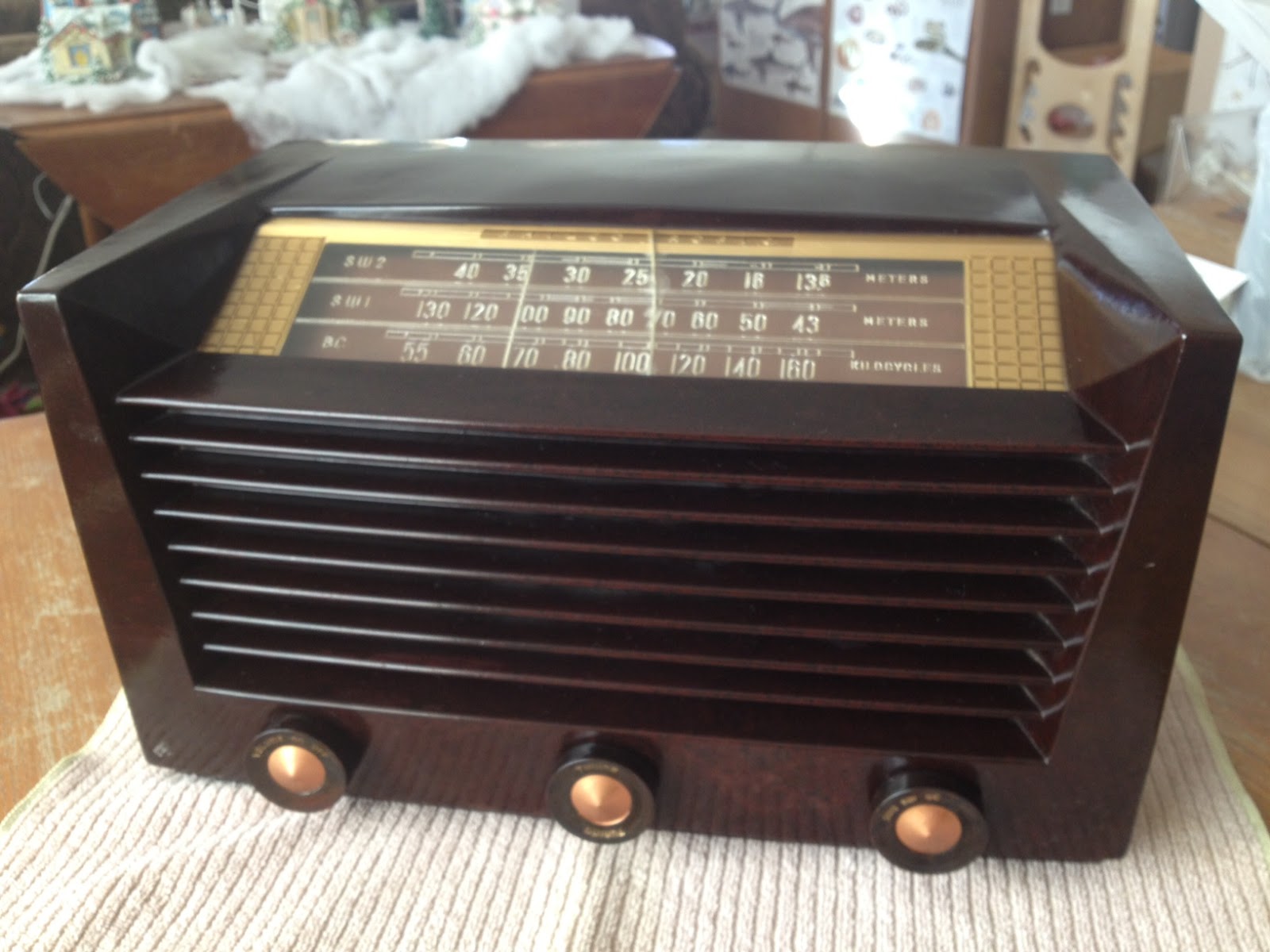 |
| Philco Tropic 3012 |
Information on this model seems a little scarce, however the style of case was introduced by Philco in 1951 and used in their line of AM/FM receivers for many years after that. This particular example is a transformer-less AC/DC set with a potentially live chassis and the unusual (to me) lineup of 14Q7, 7B7, 14B6, 35A5 & 35Y4 vacuum tubes.
What prompted me to bid on this particular radio was the inclusion of two shortwave bands in addition to the typical AM broadcast band. The dials are marked off in meters which also appealed to the ham radio side of my interests.
After attaching a short length of wire as an antenna I was able to pick up signals across the two SW1 & SW2 bands so I’ll be interested to see what it can receive with a long wire antenna at night.
After a gentle cleaning with dilute mild detergent to remove dirt I rubbed in some beeswax polish to restore the original gloss. Sadly the plastic dial is cracked in the middle but I can look past that given its a little more unusual than the typical All American Five receiver.
Being over fifty years old I wonder what this radio has been used to listen to and what stories it could tell. Perhaps it gave some youngster his or her first taste of ham radio, listening to shortwave stations and AM QSOs until they received the final demand to, “Switch that radio off and GO TO BED!”













