 |
 Fantastic Conditions on 10 and 12 m
 26 March 2014 | by
Sverre Holm, LA3ZA, is a regular contributor to AmateurRadio.com and writes from Norway. Contact him at [email protected].
And again
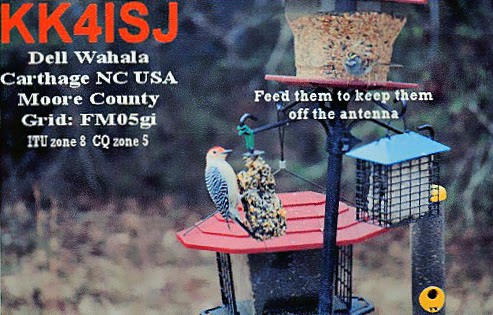
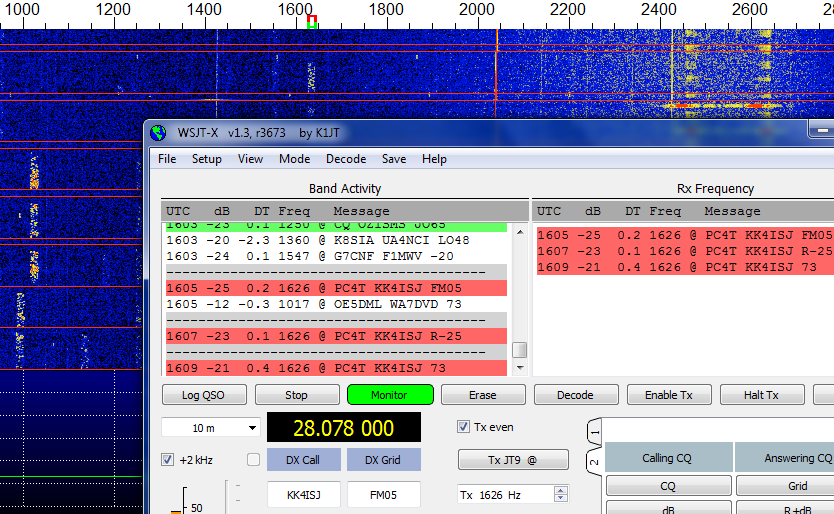
Yesterday 10 m was in a very good shape again. I made 2 qso's with 500mW JT9. First RW3TP 2537km report -13dB, second KK4ISJ 6596km report -25dB. If I told such a story 20 years ago that I made 500mW qso's over more than 6000km they will laugh at me. Yes, Joe Taylor did a great job. Today propagation is poor, but you'll never know...
Paul Stam, PC4T, is a regular contributor to AmateurRadio.com and writes from the Netherlands. Contact him at [email protected].
Two Down, Ten to Go
Yes..I know this blog update is late by several weeks. But the good news is I’m still on track to complete my 2014 QSO a Day challenge. As I write this, I’ve nearing the 90 day mark and all has been smooth sailing. Hopefully my March update will hit your blog catchers in a more timely manner.
While my total QSO count is low for February, I did manage one new DX and added the Philippians to my logbook.

The QSO breakdown for February is as follows:
Mode
Number QSO’s
JT65
34
SSB
3
PSK31
0
2m FM
0
Additional notes of interest:
DX Stations Worked in February – 1
New DX Entities in February – 1
Total QSO’s for February – 37
Total QSO’s for 2014 – 110
Total consecutive QSO days – 59
Days left in 2014 – 334
Until next time…
73 de KD0BIK (Jerry)
Jerry Taylor, KD0BIK, is a regular contributor to AmateurRadio.com and writes from Colorado, USA. He is the host of the Practical Amateur Radio Podcast. Contact him at [email protected].
The allure of DX
is a very good thing, but can be bad at times. My buddy W3BBO describes it as an “obsession” or an “addiction”. I’d have to agree with him there. Once you get your first taste and get hooked, there’s no turning back. Add QRP power to the mix and, if you’re addicted to challenges – stick a fork in you, you’re done.
The bands were alive with signals again during lunchtime today. But yet, I only worked two stations. My addiction got in the way. I worked Laci HA0NAR in Hungary, who I have worked many times before. I also worked LY10NATO, who asked me to spot him, as he was calling CQ without many takers. Being in the car, away from the Internet, I didn’t have that luxury.
My downfall came when I heard TX6G on 12 Meters. He was LOUD. 599+ loud at times. I immediately thought, “Wow! THAT loud, here’s my chance to work them QRP.”. Not today, Grasshopper, not today.
Undoubtedly, if I wasn’t so hard headed, I could have worked at least three or four more stations in my limited time allotment. However, my stubborn Polish side got the better of me, and I did a Don Quixote, and chased a windmill.
The windmill won.
72 de Larry W2LJ
QRP – When you care to send the very least!
Larry Makoski, W2LJ, is a regular contributor to AmateurRadio.com and writes from New Jersey, USA. Contact him at [email protected].
More QRP again
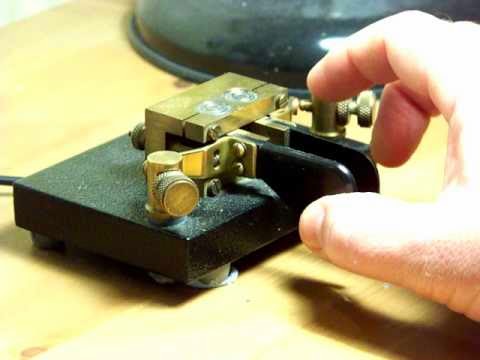
My daily routine, I start my day with CW on 14060 KHz. I listen for for activity. The last few days I worked OH9XX/P on 20m, I was using 5 watts. Yesterday UA2FAI, I was using 1 watt. Also worked RG3R with 1 watt but with JT9 on 10m. Of course all with the Yaesu FT817 and my end fed wire. Today we have nice spring weather. Sunny but a little cold about 1,5 C now at the moment. Yesterday also good results with WSPR into the USA with 500mW on 10m.
Paul Stam, PC4T, is a regular contributor to AmateurRadio.com and writes from the Netherlands. Contact him at [email protected].
Arduino Frequency Display for Kenwood TS-520S HF ham radio PART 3
This is PART 3 of the project “Arduino Frequency Display For a Kenwood TS-520S HF Ham Radio”. This part covers 0.9 volt 38 MHz signal amplified into Schmitt triggered NAND gate for cleanup before going to a divide by 8 ripple counter chip then finally being cleanly counted by the Arduino using multiply by 8 math function to restore counts to 38 MHz. All parts: (PART 4), (PART 3), (PART 2), (PART 1)
Thanks for joining!
Todd Harrison, KF7NBI, is a regular contributor to AmateurRadio.com and writes from Arizona, USA.
Two more pileups busted tonight.
Ten Meters was busy after I got home from work – plenty of signals. I heard TX6G but they were kind of weak, so I decided to check 15 Meters. They were louder there and their pileup wasn’t quite as busy as on 10 Meters. So, I started sending my call, with no luck. After a bit, I noticed their signal was starting to fade. Not wanting to lose them, I decided to go QRO and bumped up the power to 75 Watts. Bingo on the first call at higher power – TX6G is in the log for a new DXCC Entity. The group is there until April 1st, which is a week from tomorrow – so I will try throughout the week to try and get them via QRP. That’s a tall order, but do-able if the pileups get smaller as the DXpedition draws to a close.

From there I went back to 10 Meters and listened more than anything. I heard quite the few JAs and tried calling a few, but 5 Watts just wasn’t cutting it. Then, I heard a fierce pileup for VP2V/SP6CIK. I managed to bust that pileup with 5 Watts.
I was amazed at the ferocity of that pileup. While the British Virgin Islands are an easy hop from the US, I guess they are a rarer entity from Europe and Asia. I heard quite the few JAs being answered as well as a lot of European stations. Whoever was behind the key was handling the pileup methodically and precisely. Very good pileup management and very good pileup discipline. I only heard a few “UP”s from the Pileup Police. All in all, it was a well behaved group.
I didn’t go out to the car at lunchtime today, as winter has returned for a brief visit. It was 27F (-3C) and I just wasn’t in the mood to freeze. Tomorrow we’re supposed to get anywhere from a dusting to 3 inches (7.5 cm) of snow. BUT, by Friday and Saturday, it’s supposed to be back up near 60F (16C). That’s the only good thing about late March snows in New Jersey – they tend to disappear fast.
I guess the old Mark Twain quote about the weather in New England holds true for New Jersey, too. If you don’t like the weather in New Jersey, just wait a few hours. It will change – especially this time of year.
72 de Larry W2LJ
QRP – When you care to send the very least!
Larry Makoski, W2LJ, is a regular contributor to AmateurRadio.com and writes from New Jersey, USA. Contact him at [email protected].
 Ham Radio Deluxe |
 W5SWL Electronics |
 Ham Radio Prep |
 KB3IFH QSL Cards  Hip Ham Shirts  HamRadioAuctions HamRadioAuctions Reliance Antennas Reliance Antennas Enigma Shop Enigma Shop |  morseDX  Ni4L Antennas  R&L Electronics R&L Electronics antennas.us antennas.us QRV QRV |
- Matt W1MST, Managing Editor
