 |
 Arduino Frequency Display for Kenwood TS-520S HF ham radio PART 3
 25 March 2014 | by
 This is PART 3 of the project “Arduino Frequency Display For a Kenwood TS-520S HF Ham Radio”. This part covers 0.9 volt 38 MHz signal amplified into Schmitt triggered NAND gate for cleanup before going to a divide by 8 ripple counter chip then finally being cleanly counted by the Arduino using multiply by 8 math function to restore counts to 38 MHz. All parts: (PART 4), (PART 3), (PART 2), (PART 1)
Thanks for joining!
Todd Harrison, KF7NBI, is a regular contributor to AmateurRadio.com and writes from Arizona, USA.
Two more pileups busted tonight.
Ten Meters was busy after I got home from work – plenty of signals. I heard TX6G but they were kind of weak, so I decided to check 15 Meters. They were louder there and their pileup wasn’t quite as busy as on 10 Meters. So, I started sending my call, with no luck. After a bit, I noticed their signal was starting to fade. Not wanting to lose them, I decided to go QRO and bumped up the power to 75 Watts. Bingo on the first call at higher power – TX6G is in the log for a new DXCC Entity. The group is there until April 1st, which is a week from tomorrow – so I will try throughout the week to try and get them via QRP. That’s a tall order, but do-able if the pileups get smaller as the DXpedition draws to a close.

From there I went back to 10 Meters and listened more than anything. I heard quite the few JAs and tried calling a few, but 5 Watts just wasn’t cutting it. Then, I heard a fierce pileup for VP2V/SP6CIK. I managed to bust that pileup with 5 Watts.
I was amazed at the ferocity of that pileup. While the British Virgin Islands are an easy hop from the US, I guess they are a rarer entity from Europe and Asia. I heard quite the few JAs being answered as well as a lot of European stations. Whoever was behind the key was handling the pileup methodically and precisely. Very good pileup management and very good pileup discipline. I only heard a few “UP”s from the Pileup Police. All in all, it was a well behaved group.
I didn’t go out to the car at lunchtime today, as winter has returned for a brief visit. It was 27F (-3C) and I just wasn’t in the mood to freeze. Tomorrow we’re supposed to get anywhere from a dusting to 3 inches (7.5 cm) of snow. BUT, by Friday and Saturday, it’s supposed to be back up near 60F (16C). That’s the only good thing about late March snows in New Jersey – they tend to disappear fast.
I guess the old Mark Twain quote about the weather in New England holds true for New Jersey, too. If you don’t like the weather in New Jersey, just wait a few hours. It will change – especially this time of year.
72 de Larry W2LJ
QRP – When you care to send the very least!
Larry Makoski, W2LJ, is a regular contributor to AmateurRadio.com and writes from New Jersey, USA. Contact him at [email protected].
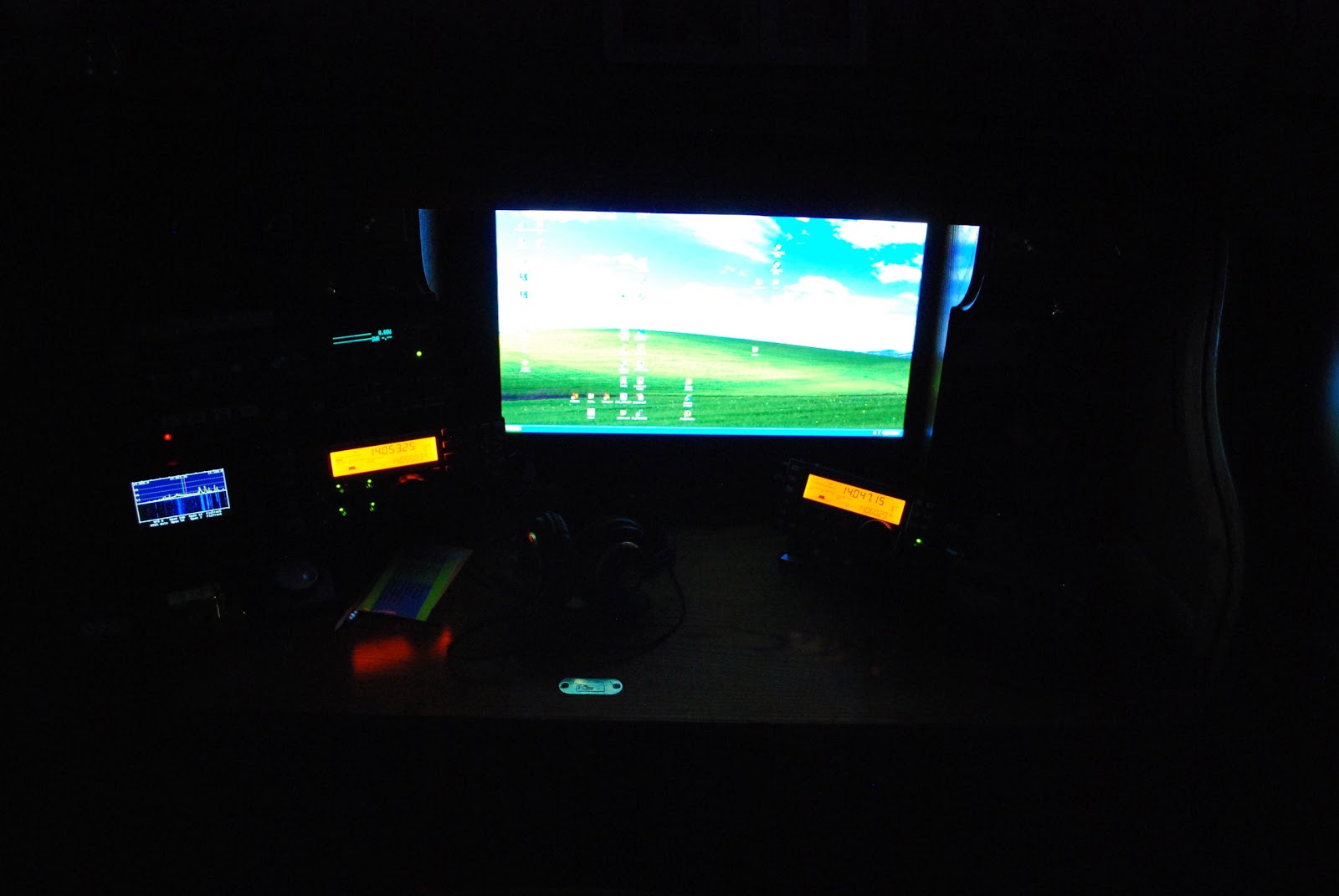
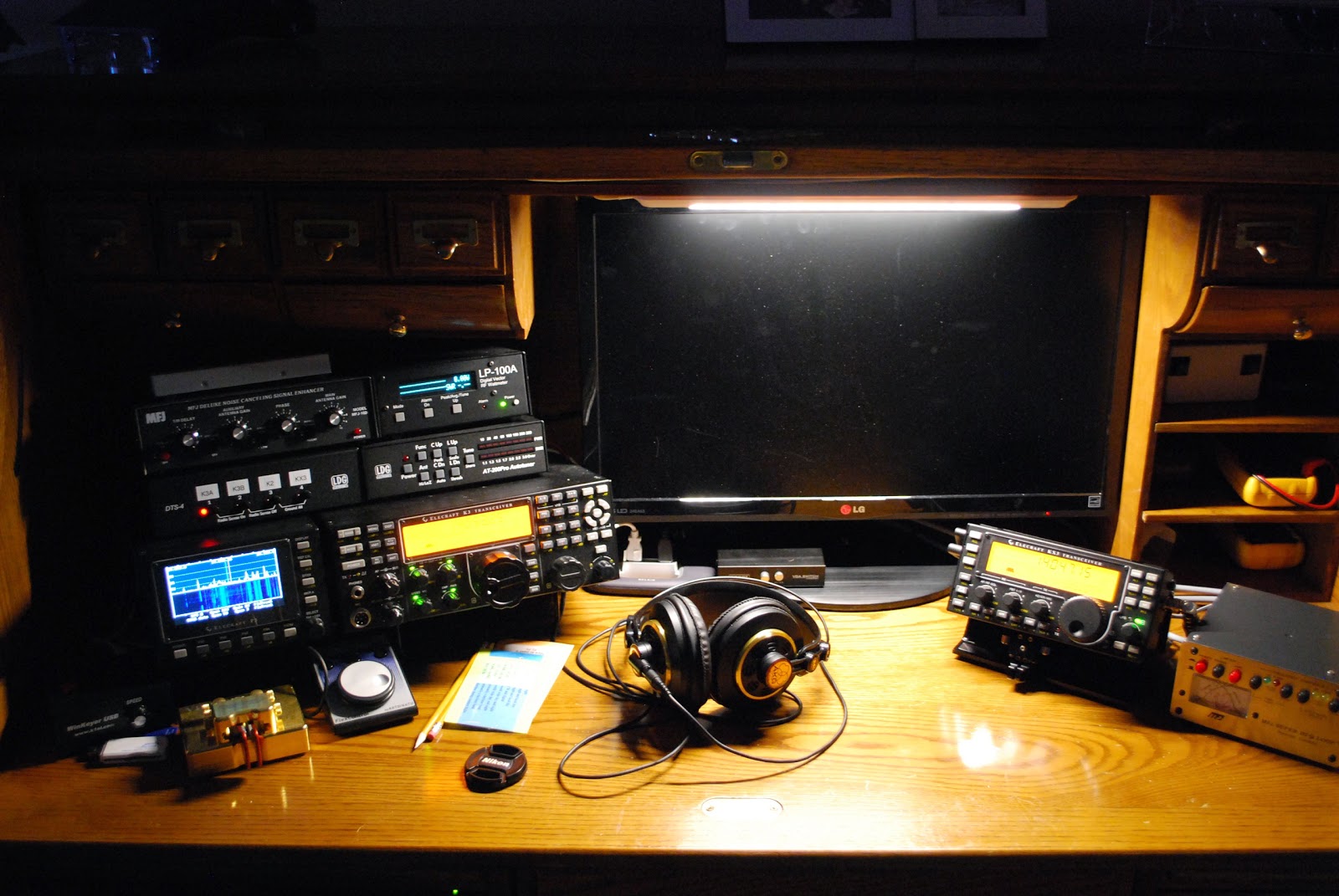
There is a good idea out there…….
 |
| Trying to find my way around |
 |
| That's better |
Mike Weir, VE9KK, is a regular contributor to AmateurRadio.com and writes from New Brunswick, Canada. Contact him at [email protected].
HamRadioNow: Digital Solves All Your Problems?
Digital Solves All Your Problems? OK, I admit, that’s pure click-bait. In this episode I talk with Bruce Perens K6BP. Some of you may recognize that name, and maybe not have even known Bruce is a ham. Out there in the real world, Bruce is known for being one of the founders of the Open Source Software movement, and he remains an evangelist for the idea. Here in Ham Radio, he’s turned that focus to things like CODEC2, FreeDV, and the HT of the Future (put some mental reverb on that as you read it).
What we’re talking about begins with the ARRL’s FCC petition to update our rules regarding digital modes to get rid of the reference to Symbol Rate, and replace it with a simple 2.8 kHz bandwidth limit (on HF) into which you may stuff anything that’s legal… BUT, they retain the cw/data – Phone/Image distinction. I just spent a few quality minutes on Wikipedia trying (again) to understand symbol rate, and I don’t get it. But I do get bandwidth.
Our discussion progresses to more on CODEC2 (a free, open-source CODEC for high-quality, low bit-rate voice transmission), FreeDV (a free, open-source program for using CODEC2 on digital voice) and that HT (HT HT HT).
But it’s that 2.8 kHz bandwidth idea that’s got a lot of ham’s undies in a knot. The worry, as I understand it, is that with an “anything goes” 2.8 kHz digital policy, digital will proliferate across the bands, causing interference to analog modes (SSB, CW). And the analog ops won’t be able to tap the digital ops on their RF shoulder and say sri, OM, QRM, pse QSY, tnx. WinLink2000, a fairly wideband and often automated digital mail system, is frequently the focus of their displeasure, as it can tromp on a cw QSO without recognizing what it’s doing (if I understand the argument correctly, and I don’t claim that this is either a complete and correct analysis of the issue).
In the program, Bruce and I recognize the potential problem. We might not think it’s likely to be as serious as some hams think it is, and we don’t have a solution, other than to note that QRM is a fact of life. But it is something worth discussing, and I’d like to have that discussion soon on another episode of HamRadioNow. I’ve got a few suggestions on guests to talk to about it, but I’m open to more (be quick).
We think the ARRL is taking a baby step with this proposal, in that it retains what we think is an artificial distinction between bits that make text, and bits that make image and voice. But last time the ARRL tried anything like this, about 10 years ago with their “Regulation by Bandwidth” proposal (a far more sweeping plan that would have divided the bands into segments that permitted stuffing whatever fit into 200 Hz, 500 Hz, and 3 kHz bandwidths), a large part of the membership got very unhappy. They still are.
So expect the topic to come up in the near future, and periodically for a while, because this won’t have a quick fix. But I don’t think it’s a good idea to hold back progress on future modes because they may cause some trouble with our current modes.
73, Gary KN4AQ
HamRadioNow.tv
Gary Pearce, KN4AQ, is the host of HamRadioNow.tv. If you enjoy this and other HamRadioNow programs, help keep them 'on the air' with a contribution. Contact him at [email protected].
Finally! On the air from home QTH…
Several months ago I built an UNUN, like the one I use for my portable ops antenna, but this one was going in my attic.
I finally had time this weekend to get this thing installed in my attic. I cut a piece of wire 30′ long for the radiator. My shack is in the basement, and one wall is the garage wall. So I drilled a hole at the bottom of the garage wall, and in the ceiling of the garage.
I then ran my coax from the basement up into the attic – very easy.
Then came the fun part, walking on roof trusses to get the wire installed. Pretty easy, and luckily it is still cool outside.
Once installed I went down to the shack and hooked up the KX3 to the antenna. It tuned up nicely on 40 thru 10 meters with the internal tuner. So I put a quick CQ on 20 meters and was spotted coast to coast on the RBN – success!
About 11:30 pm on Sunday night I had time to get down to the shack again and see what was going on.
As soon as I turned the radio on I heard W1AW/5 (NM) calling CQ with no takers. So I threw my call out and he came right back with one repeat on my call. We exchanged 599 and it was fun.
I then spent about another hour messing around with FLDIGI and WSPR – with no success. More to report on this later….these modes are all new to me, so there is a pretty big learning curve.
So now I can actually have some ham radio fun from home!
Burke Jones, NØHYD, is a regular contributor to AmateurRadio.com and writes from Kansas, USA. Contact him at [email protected].
NOAA success!
Hooked up the 137 MHz receiver to the Cubieboard on Friday night. Wxtoimg installed without a hitch, Cubian already put itself into the dialup group (necessary for serial access for ordinary users) and I was ready to go. NOAA-19‘s next pass was after midnight local time, so I went to bed. The next morning I was greeted by a rather garbled image of east Asia. Hmmm….thinking cap on. I checked the recorded audio file on another computer and it was messed up, so either Cubie can’t handle the input well or the input is not good. Back to basics and after feeding a very clean and stable 12 Volts to the receiver I had perfectly synced images. Because of recent storms I lowered the double cross dipole, so reception is not perfect. But with high passes I now can get some nice images, like this one….
Hans "Fong" van den Boogert, BX2ABT, is a regular contributor to AmateurRadio.com and writes from Taiwan. Contact him at [email protected].
Disappointment and then …. jubilation!
Amateur Radio is lot like other areas in life. There highs and there are lows – there are valleys and there are peaks. Often, the journey from one extreme to the other takes places within minutes of each other.
This evening, I was tooling around 10 Meters late. It was after 7:00 PM local time. The sun was already down, but sometimes – just sometimes, this is when the good ones can be heard. Twiddling the dial, I heard a very weak BY5WJ. China! So I turned up the power, as I’ve never worked China and started tapping out my call, Woo hoo! Success! “W2LJ UR 579 TNX LARRY DE JOSH”.
Josh? In China? Me, 579? Can’t be! Then I realized it was 6Y5WJ – not BY5WJ. It was Josh in Jamaica, and we have worked a few times before. Obviously, being in his log, my info popped up and that’s why he answered me by name. After a few minutes, the band changed, and he became “normally loud” for what I would have expected a Jamaican station to sound like in New Jersey. So in a few seconds, I raced around the globe from the exotic Far East to the warm shores of the Caribbean. A bit of a disappointment, to say the least (no offense, Josh!).
At that point I started switching bands. 12 Meters – not much. 15 Meters – W1AW/5 in New Mexico is coming in strong. 17 Meters – not much. 20 Meters – OK, a lot more signals than the other bands (as we all know, 20 Meters is usually open to somewhere). What’s that? VU2what? A few more seconds of listening – it was VU2PHD, Mat in India. Wow! I very rarely ever hear India on the air. Still set at 75 Watts from my failed China QSO, I tapped out my call. Holy crow – I hear “W2?” coming back. I sent out my call a few more times, following up with my suffix twice, “W2LJ W2LJ LJ LJ”. I got a “W2LJ UR 559 QSB. UR CALL AGN?” I immediately sent back “DE W2LJ W2LJ UR 579 579 IN NJ NJ. OP LARRY LARRY”. Or something like that, I’m so exhilarated right now, I can’t even remember the exact exchange. All I know is that this was my first QSO with the Indian sub-continent, and is only about the second or third time I have even heard them on the air! And I’m in his log!
I immediately ran over to my e-mail program to send a quick note to my buddy Bob W3BBO in Erie, PA. Bob is my friend, my DX Guru, and is the only person I actually know who is on the DXCC Honor Roll. To my surprise he had already written me, “Did I hear what I think I heard on 20 Meters?”
I was able to answer in the affirmative and asked him how he happened to be listening. He had worked Mat earlier in the week and was going to make another attempt, as he wasn’t sure that Mat got his call correctly the first time. He had heard Mat come back to me and sent a quick e-mail to confirm. Whatever the reason, one of my best friends was on the scene to hear me work a new one. It just doesn’t get much better than that!
72 de Larry W2LJ
QRP – When you care to send the very least!
Larry Makoski, W2LJ, is a regular contributor to AmateurRadio.com and writes from New Jersey, USA. Contact him at [email protected].
 Ham Radio Deluxe |
 W5SWL Electronics |
 Ham Radio Prep |
 KB3IFH QSL Cards  Hip Ham Shirts  HamRadioAuctions HamRadioAuctions Reliance Antennas Reliance Antennas Enigma Shop Enigma Shop |  morseDX  Ni4L Antennas  R&L Electronics R&L Electronics antennas.us antennas.us QRV QRV |
- Matt W1MST, Managing Editor
