 |
 Native Americans
 20 June 2014 | by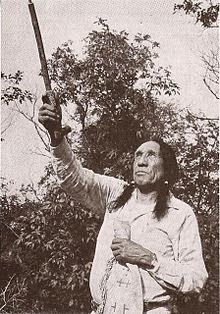
Several weeks ago, I worked KF7YRL in the state of Montana. One of the great things about ham radio is learning about the people and places they live in the world. I love this aspect of the hobby. It’s absolutely amazing to me that folks, over a thousand miles away, can communicate in “real time” with simple “dots and dashes”. Often times I wonder what life was like before the modern conveniences we’ve learned to take for granted in the complex world of today.
While talking to Steve, it became apparent that, like myself, he was a guitar player. Much of the conversation revolved around acoustic music. He uses an “Aspen” guitar. I use an Italian made “EKO” guitar which I bought in Naples Italy in 1970.
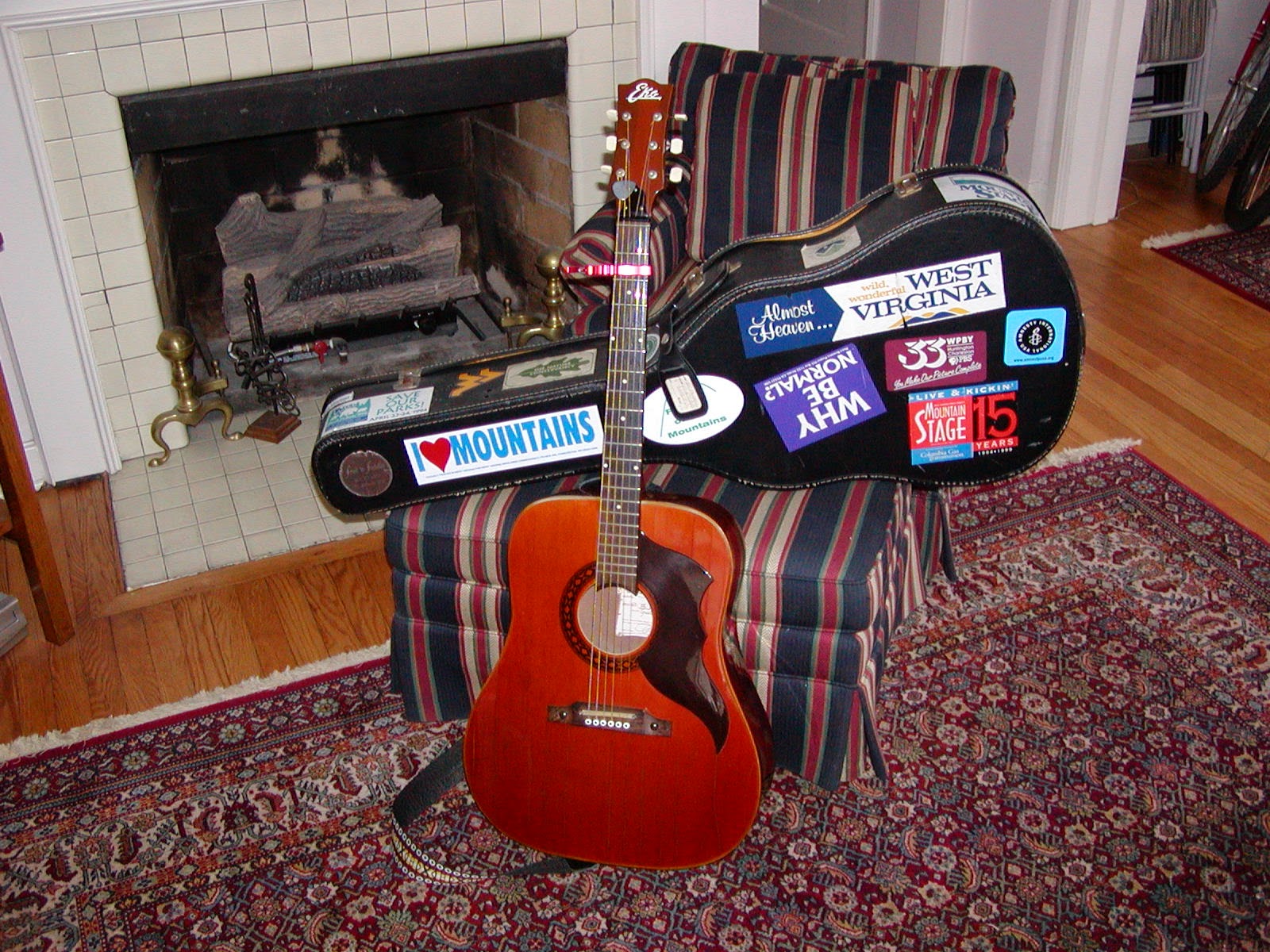
Guitars are “special” things which “fit” the hands of different people in unusual ways. Over the years, I’ve discovered there isn’t a “right” guitar for every musician. Every guitar has a different “neck” and this part of the instrument is “critical” to every player and every guitar plays differently. We’re both happy with our choice of guitars. That’s part of the joy of music….the universal language.
Steve lives on a ranch in Montana (Sonntag Ranch and Wildlife Preserve) and is an “emergency physician” on a “Cheyenne Indian Reservation” in that state. He lives in a town which is named after the Miniconjou Lakota Chief “Lame Deer” who was killed by the United States Army in 1877, by the way, under a flag of truce just South of this town.
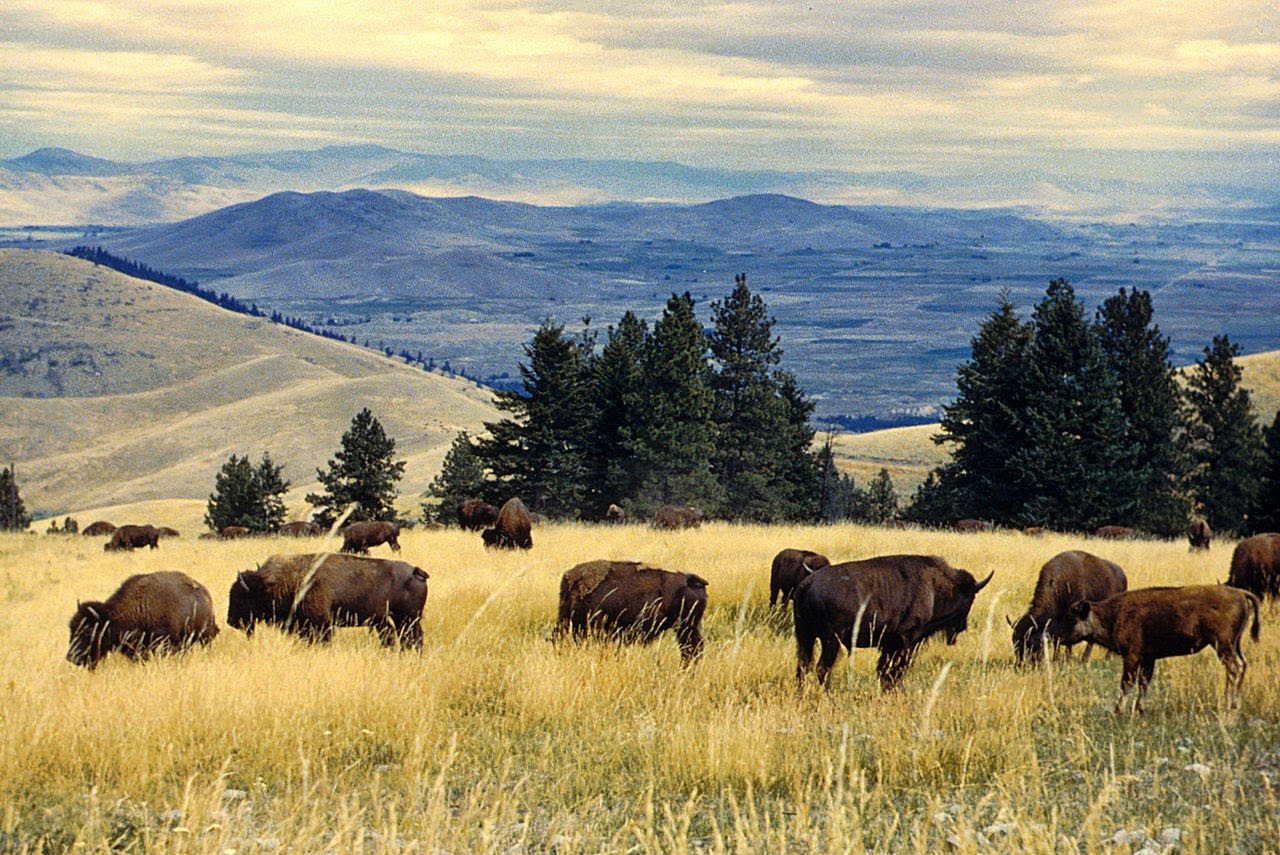
Not too long ago, I had the privilege of seeing the “northern” part of Montana and experiencing the rolling prairies which seem to extend forever, rolling along endlessly in a sea of golden grass. It’s breathtakingly beautiful in the summer months but brutally harsh in the winter time.
The Native Americans have always inspired me due to their relationship and respect for nature. Being active in the Boy Scouts during the days when I worked on heavy equipment in the coal fields here in West Virginia, the American Indians (slang) were looked upon with great respect for their skills in outdoor living. I also hold that value and respect for “true” Native Americans.
Lets face it folks, the American Indians were here long before us, and they used the land a lot more wisely than we do now. It’s becoming more and more difficult each day to find a “quite” place where the relationship with the earth, it’s wildlife, and it’s people are viewed as harmonious and not a commodity.
I chuckle every time I hear complaints about immigration in America these days– all those complaining about being invaded by foreigners, free-loading, and being just plain “Un – American”. Yes…. it is laughable and probable to use much harsher words.
I think living independently and “off the grid” is an admirable characteristic. Although I’m too old now for traveling long distances by foot, horseback, or even bicycle; in past years I’ve actually “lived’ out of a backpack, or the panniers carried on a bicycle, and I loved every minute of it.
Society at large should experience this humbling experience. It makes a person realize the really important things in life; like food, shelter, and clothing. The rest of life is what you make it and I’ve found that keeping life as simple as possible is a good way to live life.
QRP radio, in many ways, has these qualities. A simple radio, with a simple battery, with a simple wire in the trees for an antenna, sitting under the stars, around a campfire, with a set of earphones, so as not to disturb the neighbors.
I look forward to more conversations with Steve (KF7YRL) in the future. He provides an extremely valuable service to this part of Montana. I can visualize this part of the country easily and I like what I see.
John Smithson, Jr., N8ZYA, is a regular contributor to AmateurRadio.com and writes from West Virginia, USA. Contact him at [email protected].
Email from space?
Just had an email with this at the end:
“Sent from the ISS …-.-“
I am assuming this came from the International Space Station (ISS).
If correct, this is a first for me.

Roger Lapthorn, G3XBM, is a regular contributor to AmateurRadio.com and writes from Cambridge, England.
Lightning damage risk
I am always nervous about lightning strikes.
The excellent Southgate News today told the (true) story of a local CBer who had his vertical and CB rig destroyed by lightning. See http://www.huntspost.co.uk/news/latest-news/
huntingdon_cb_radio_user_almost_electrocuted_after_lightning_
bolt_strikes_aerial_1_3648368http://www.huntspost.co.uk/news/latest-news/
huntingdon_cb_radio_user_almost_electrocuted_after_lightning_
bolt_strikes_aerial_1_3648368
I usually disconnect antennas when there is lightning about but I am still nervous. One of my friends (not a radio ham and with no big antennas in the air) who lived in a normal estate home had his home struck years ago and it took out lots of his household wiring. The chances of a direct hit are rare, but I am always bothered and never quite sure what the best advice is.

Roger Lapthorn, G3XBM, is a regular contributor to AmateurRadio.com and writes from Cambridge, England.
Disappointment with Spice and the QRP-er’s favorite, the LM386
The trusty old LM386 audio amplifier from the 70’s is still used a lot in low power and portable equipment. Recently some ultra high gain circuits have been recommended that I wanted to simulate with Spice. I started with the datasheet examples for checking the quality of the model. The result was surprising.
In the data sheet one can find a minimum parts circuit, a high gain circuit, and a bass boost circuit:
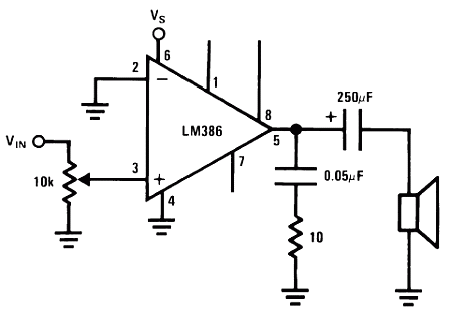 | 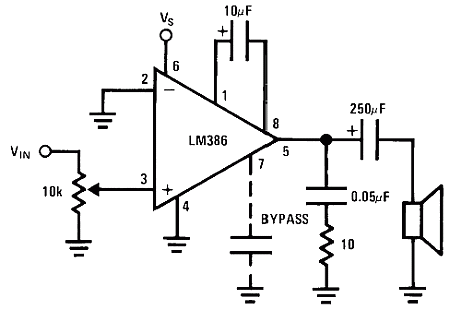 |  |
Gain = 20 (26 dB), minimum parts | Gain = 200 (46 dB) | Bass Boost |
There isn’t any official Spice model available from the manufacturer of the chip, at least not that I have been able to find. But there is a “no-frills LM386 model” attributed to Dave Dilatush (5/30/95) so I used that and a put it in a separate LM386.sub file.
The Spice code is quite simple and listed at the end of this posting. The result is shown here in two sets of curves. The first is for the 26 dB and 46 dB amplifiers.
The first result is in the left-hand curve which shows that the high-gain version has problems with the low frequency response, so I increased the 10 μF feedback capacitor to 100 μF in the right-hand plot (between pins 1 and 8). That makes the plot almost as flat as that of the data sheet down to 100 Hz.
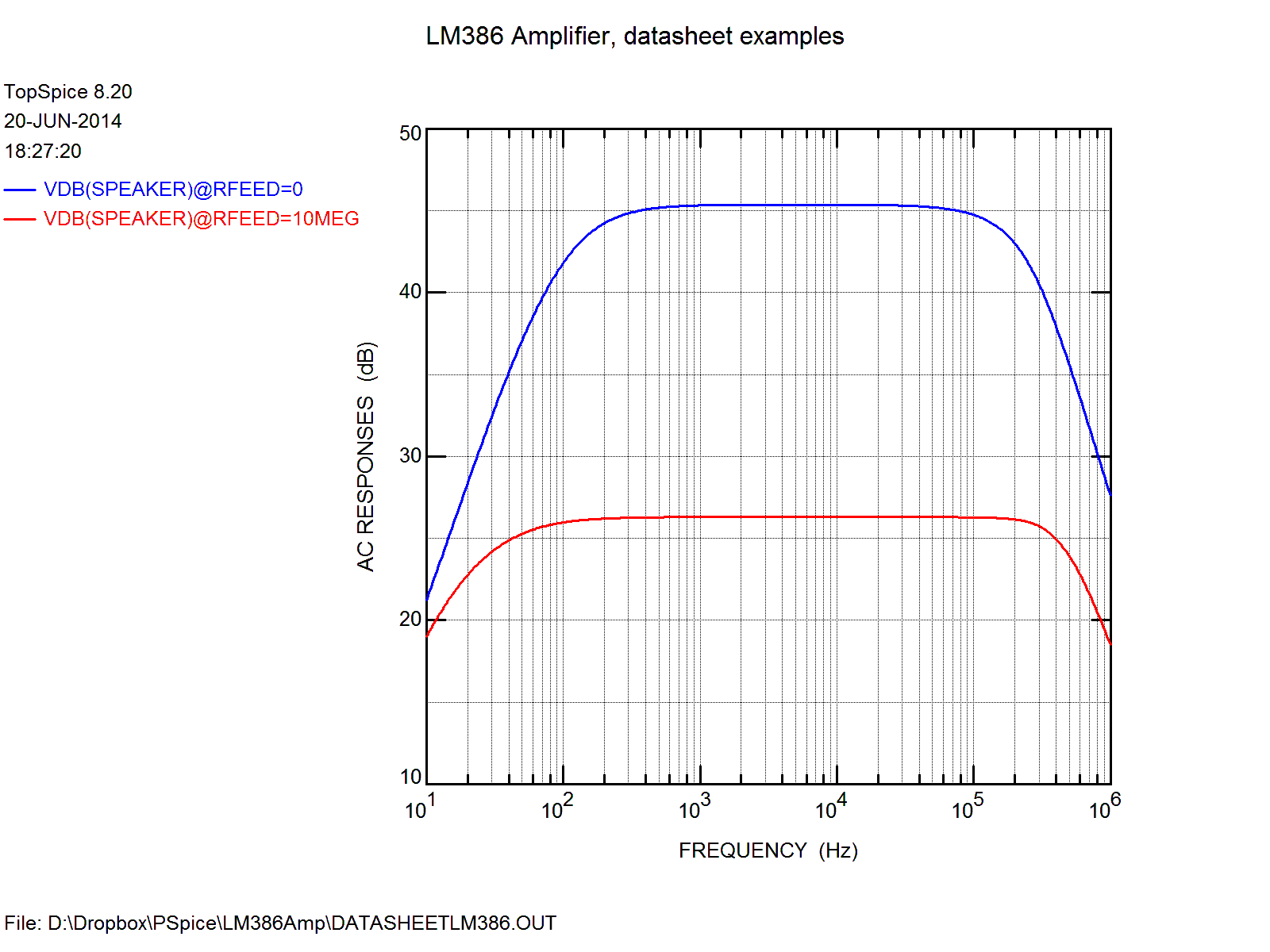 |  |
| 26 and 46 dB amplifiers according to data sheet | 26 and 46 dB amplifiers with 100 uF in the feedback |
Second, the high frequency response is too high in the simulation compared to the data sheet shown below. The Spice model does not seem to have enough high-frequency roll-off.
Third, close inspection shows that the gain of the high-gain amplifier (the blue curve) levels off at 45.4 dB, not 46 dB. This should indicate that the open-loop gain of the Spice model is not high enough.
For comparison, the data sheet plots the responses as follows:
 | 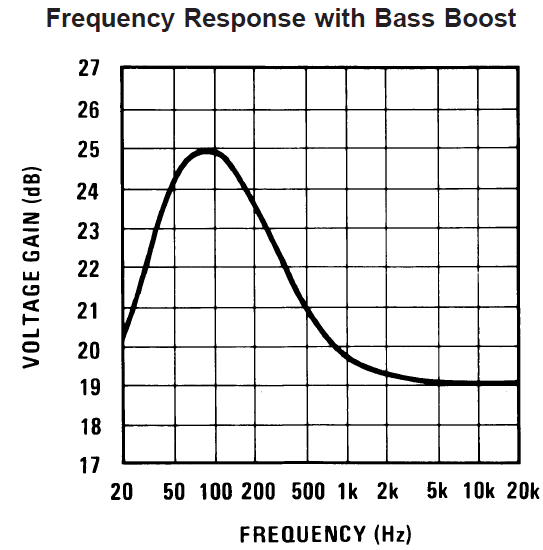 |

Finally here is the simulation of the bass boost. It is actually quite close to that of the data sheet, probably because the gain is not very high and the original plot only goes to 20 kHz.
In conclusion, in order to do simulate the LM386, there is a need for a Spice model with more roll-off at high frequencies and with a higher open loop gain.
I also observe that there is a constant current source in the LM386 model of value i1=5 mA. It must for sure be too high since the data sheet says that the quiescent current for the entire chip is min. 4 mA, max 8 mA.
Before there is any point in simulating the “Unleashing the LM386“-circuit that I introduced in Sprat (autumn 2003) or the simplified version that SM7UCZ (Johnny Apell) introduced in Sprat this spring – both based on the circuit of JF1OZL (Kazuhiro Sunamura), the Spice model needs some improvement. These circuits are also in George Dobbs, G3RJV’s articles in Practical Wireless, May and July 2014.
Actually I knew that improvements are needed since I have already tried with inconsistent results. But I have the hope that some of the readers may steer me towards an improved model.
Links:
- Dave Dilatush no-frills LM386 model.
- Comments on the quality of the LM386 Spice model.
- Datasheet for LM386
Spice code for use with TopSpice or LTSpice:
LM386 Amplifier
*
*
* LM386 Data Sheet curves simulated in TopSpice
* Sverre Holm (LA3ZA), 20 June 2014
*
**********************************
.include lm386.sub

* Step through 26, 34, 46 dB
cfeed nc4 100 10uF
*rfeed nc3 100 {Rvar};     LTSPice
*.STEP param Rvar LIST 0.01 10Meg;          LTSpice

rfeed nc3 100 10Meg;     TopSPice
.STEP Rfeed LIST 0 10Meg;    TopSpice

* Comment out for flat response (default)
*Xfeed nc3 output BassBoost

.probe
.ac dec 100 10 1e6 ; 100 steps per decade from 10 Hz to 1 MHz
*.tran 1u 3m 0 5u
.save vdB(speaker)
*.print ac V(speaker);  LTSpice
.print ac vdB(speaker); TopSPice

vsupply vcc 0 dc 9
rsupply vcc vs 10
csupply vs 0 470uF

vsignal inn 0 ac 1 sin 0 .05 1k
rplus nc1 0 1e-6

* Output circuitry
csnub output snub .05uf
rsnub snub 0 10
ccoupling output speaker 250uf
rspeaker speaker 0 32

xamp inn nc1 nc2 nc3 nc4 output vs 0 lm386

cbypass nc2 0 0.1uf ;bypass cap for PSRR

************************************************************
* Bass boost (in LM386 Data Sheet)
.subckt BassBoost nc3 output
cfeed output 10 33nF
rfeed nc3 10 10k
.ends BassBoost
************************************************************
.end
Spice circuit for the LM386 (store in LM386.sub):
* NO-FRILLS LM386 MODEL
* Dave Dilatush 5/30/95
*
*http://groups.google.com/group/sci.electronics/browse_thread/thread/4acbf7a7f3c36b0f/db8514b79b5b1709
*

* lm386 subcircuit model follows:

* IC pins:     2   3   7   1   8   5   6   4
*              |   |   |   |   |   |   |   |
.subckt lm386 inn inp byp  g1  g8 out  vs gnd

* input emitter-follower buffers:

q1 gnd inn 10011 ddpnp
r1 inn gnd 50k
q2 gnd inp 10012 ddpnp
r2 inp gnd 50k

* differential input stage, gain-setting
* resistors, and internal feedback resistor:

q3 10013 10011 10008 ddpnp
q4 10014 10012 g1 ddpnp
r3 vs byp 15k
r4 byp 10008 15k
r5 10008 g8 150
r6 g8 g1 1.35k
r7 g1 out 15k

* input stage current mirror:

q5 10013 10013 gnd ddnpn
q6 10014 10013 gnd ddnpn

* voltage gain stage & rolloff cap:

q7 10017 10014 gnd ddnpn ;
c1 10014 10017 15pf

* current mirror source for gain stage:

i1 10002 vs dc 5m
q8 10004 10002 vs ddpnp
q9 10002 10002 vs ddpnp ; diode

* Sziklai-connected push-pull output stage:

q10 10018 10017 out ddpnp
q11 10004 10004 10009 ddnpn 100 ; diode D1
q12 10009 10009 10017 ddnpn 100 ; diode D2
q13 vs 10004 out ddnpn 100
q14 out 10018 gnd ddnpn 100

* generic transistor models generated
* with MicroSim's PARTs utility, using
* default parameters except Bf:

.model ddnpn NPN(Is=10f Xti=3 Eg=1.11 Vaf=100
+ Bf=400 Ise=0 Ne=1.5 Ikf=0 Nk=.5 Xtb=1.5 Var=100
+ Br=1 Isc=0 Nc=2 Ikr=0 Rc=0 Cjc=0p Mjc=.3333 ;
+ Vjc=.75 Fc=.5 Cje=5p Mje=.3333 Vje=.75 Tr=10n ;
+ Tf=1n Itf=1 Xtf=0 Vtf=10) ;

.model ddpnp PNP(Is=10f Xti=3 Eg=1.11 Vaf=100
+ Bf=200 Ise=0 Ne=1.5 Ikf=0 Nk=.5 Xtb=1.5 Var=100
+ Br=1 Isc=0 Nc=2 Ikr=0 Rc=0 Cjc=0p Mjc=.3333 ;
+ Vjc=.75 Fc=.5 Cje=5p Mje=.3333 Vje=.75 Tr=10n ;
+ Tf=1n Itf=1 Xtf=0 Vtf=10) ;
.ends
*----------end of subcircuit model-----------
Sverre Holm, LA3ZA, is a regular contributor to AmateurRadio.com and writes from Norway. Contact him at [email protected].
Amateur Radio Newsline Report 1923 June 20 2014
- Coconino county AZ may revise its distracted driving law to exempt hams
- FCC dismisses proceeding dealing with the 902 MHz band
- SSB and AM on 11 meter CB coming to the United Kingdom
- Hams in the Netherlands face new restrictions on 2300 Megahertz
- Heard Island DXpedition team plans a complete reorganization
Remoting K8GU…kinda
We welcomed our second child, a daughter, into the family last week. Since she is our second, the time in the hospital was more about making sure she was healthy than us learning all the ropes. So, I had some undisturbed time to read on the Internet with a sleeping baby on my chest…and wish I could remote control my station.
Having been party to the discussion surrounding remoting a local contest station (K4VV), I had seen enough traffic about different VOIP options to start with Mumble for the audio stream. I set up a Mumble server on my Linux server at the house, and then setup the Mumble client on my hamshack computer. I ran a 1/8-inch TRS cable from the rear-apron line-out port of the K3 into the line input of one of my sound cards on the computer. I put a free Mumble client on my iPhone and viola! It worked out of the box.
I have been using Pignology’s HamLog on my phone for quick logging of one-off QSOs and goofing off with its vast array of tools. HamLog also has the ability to remote control a rig using Pignology’s hardware. Since, I’m really not in a good position to drop $300 on a box I’ll use a couple of times per year, I reasoned that there might be an alternative. Enter the socat utility:
root@tula:~# socat /dev/ttyUSB1,raw,echo=0 tcp-listen:7373,fork
Freakin magic. I used HamLog to connect to a “Remote PigTail” and it mostly works. The frequency display does not seem to work and HamLog loses the connection if the phone falls asleep. But, it is functional. Another interesting wrinkle is that when my shack PC screensaver comes on, it mutes the audio stream piped into Mumble. But, those are all minor irritations at this point considering the trivial amount of effort that went into getting a remote control going…
Ethan Miller, K8GU, is a regular contributor to AmateurRadio.com and writes from Maryland, USA. Contact him at [email protected].
New satellites second pass: QB50P1 and P2 heard – perhaps Nanosat-BR too?
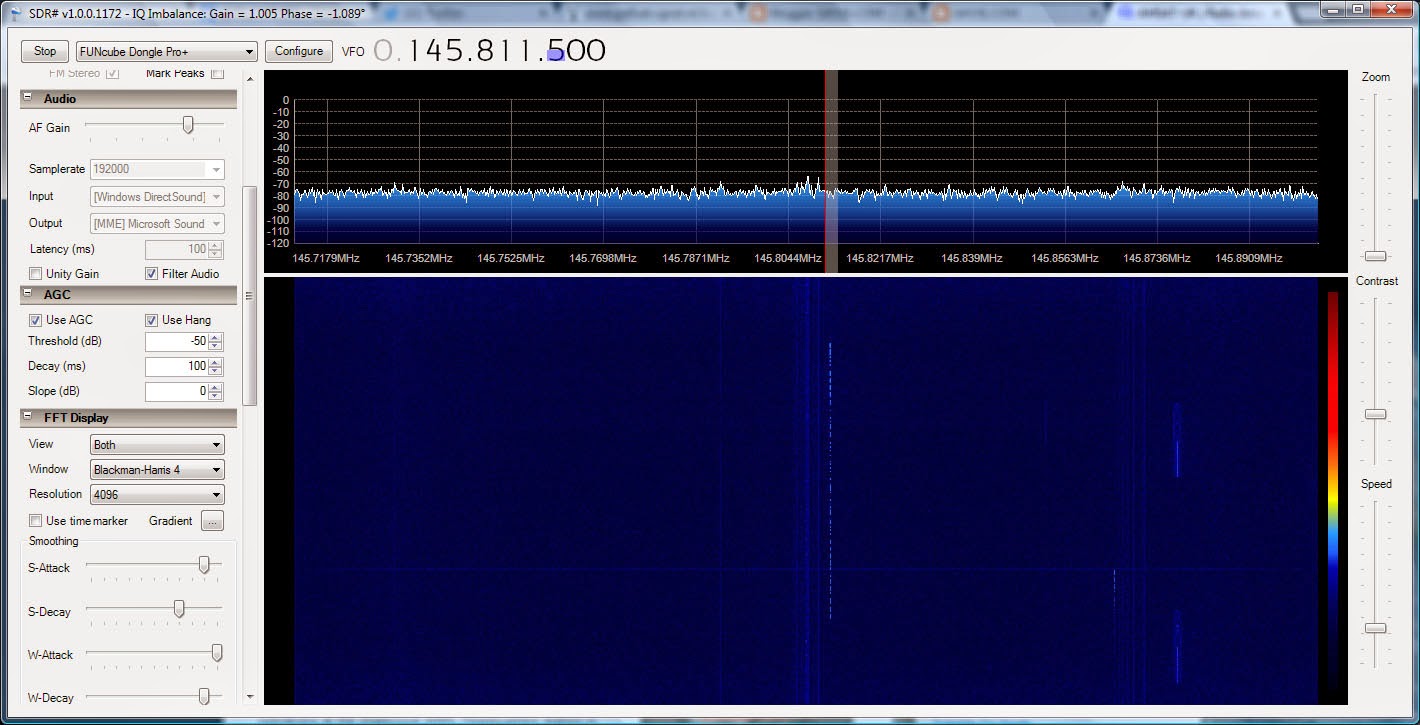
I decided to listen on the second pass of the new satellite deployments, this time using the Funcube Dongle Pro, recording in baseband, so I would have the chance to replay it again if there was anything interesting.
QB50P1 was heard sending CW, QB50P2 was sending QPSK. Down on the 145.865 there was some CW (a sample was B1UARJZB4K – hopefully not too many errors there!) which I think may have been Nanosat-BR
Fascinating!
Tim Kirby, G4VXE, is a regular contributor to AmateurRadio.com and writes from Oxfordshire, England. Contact him at [email protected].
 Ham Radio Deluxe |
 W5SWL Electronics |
 Ham Radio Prep |
 KB3IFH QSL Cards  Hip Ham Shirts  HamRadioAuctions HamRadioAuctions Reliance Antennas Reliance Antennas Enigma Shop Enigma Shop |  morseDX  Ni4L Antennas  R&L Electronics R&L Electronics antennas.us antennas.us QRV QRV |
- Matt W1MST, Managing Editor
