 |
 Echoes of CW: A Signal Corps Tribute to Virginia L. Scott and the WAVES of WWII
 7 July 2026 | by
 Looking at this historic photograph brings back a flood of memories from my own time in the Signal Corps. It shows WAVE operator Virginia L. Scott in March 1943, sitting in the Code Room of the U.S. Navy Radio School in Madison, Wisconsin.
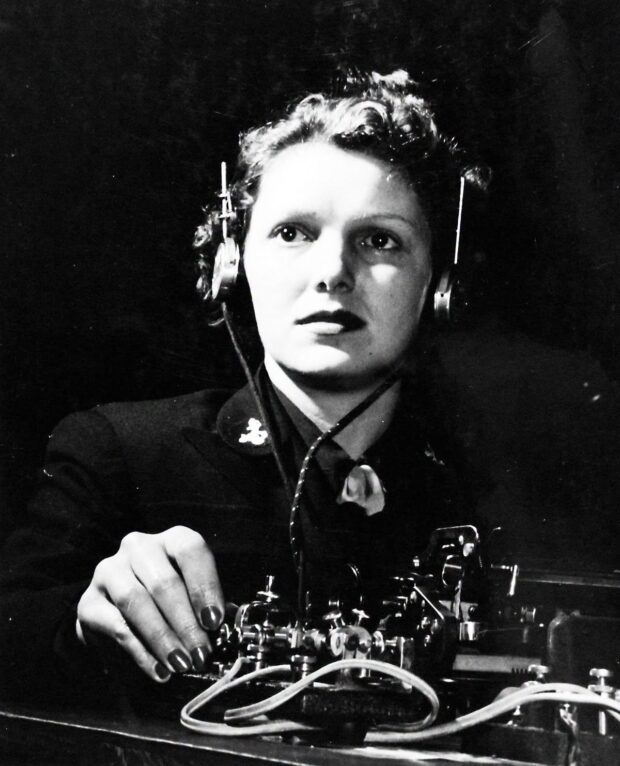
WAVE operator Virginia L. Scott in March 1943, sitting in the Code Room of the U.S. Navy Radio School in Madison, Wisconsin.
The photograph, catalogued in the National Archives as 80-G-431533, captures an ordinary phase of the highly technical work carried out by the WAVES during the Second World War. Seeing her at that workstation with her telegraph key, headphones, and operating table under the glare of direct lighting, I can almost hear the familiar rhythm of CW ringing in my own ears. It is a language of its own, and as an amateur radio operator who loves sending and receiving Morse code, I know exactly the kind of deep focus she is holding in that frame.
During World War II, the Women Accepted for Volunteer Emergency Service stepped up to fill critical roles so that men could be sent to combat zones. Virginia Scott was part of that groundbreaking wave of female personnel who took on demanding technical jobs in the Navy. As someone who has served in military communications, I have immense respect for the structured training and standardized procedures these women had to master.
Radiotelegraphy was the primary transmission tool of the era, the absolute lifeline of naval operations across vast and unforgiving oceans. Long before digital uplinks, it was the sheer skill of the operator that pushed the message through the static.
Her hand rests on that bug key in a way any seasoned Morse code operator would recognize immediately. Sending messages via CW is an art form that requires strict physical and mental discipline. You have to maintain a fluid, consistent rhythm so the operator on the other end, perhaps dealing with heavy interference on a ship thousands of miles away, can copy the signal without error. Scott is entirely focused on executing her message while maintaining the standard posture required by her training. It reminds me so much of the pride we took in the Signal Corps, ensuring every dit and dah was sent with perfect clarity. Dealing with secure information meant there was absolutely no room for sloppy sending.
This specific photograph was originally taken by the U.S. Navy for internal use, but it captured something so profound that painter John Philip Falter used it as a direct reference for a Navy recruitment poster. His painting faithfully reproduced the layout of the scene, turning a moment of routine operational work into a powerful piece of public communication. For anyone involved in the history of communications, and certainly for a fellow CW enthusiast like me, this photo represents a concrete example of how vital these women were. They kept the frequencies alive and proved that the steady hand of a skilled operator was an essential weapon in winning the war.
Here is one of the paintings based on this photograph, and served as a recruitment poster for the WAVES program.

This “It’s a Woman’s War Too! Join the WAVES” poster by John Falter was produced around 1942 as a World War II recruitment tool for the United States Naval Reserve.
This “It’s a Woman’s War Too! Join the WAVES” poster by John Falter was produced around 1942 as a World War II recruitment tool for the United States Naval Reserve. The WAVES (Women Accepted for Volunteer Emergency Service) was established in July 1942, allowing women to serve in the Navy in non-combat roles, such as radio operators and clerical staff. Artist John Philip Falter was a well-known American painter who created numerous propaganda posters and Saturday Evening Post covers, often featuring realistic portraits.
 Ham Radio Deluxe |
 W5SWL Electronics |
 Ham Radio Prep |
 KB3IFH QSL Cards  Hip Ham Shirts  QRV QRV Reliance Antennas Reliance Antennas |  morseDX  Ni4L Antennas  R&L Electronics R&L Electronics antennas.us antennas.us |
- Matt W1MST, Managing Editor
