 |
 TX Factor at UK’s National Hamfest 2014
 19 November 2014 | by
 Episode 6 is now live at txfactor.co.uk. It features the best from the UK’s biggest rally, National Hamfest 2014. The team meets the exhibitors and visitors and brings a flavour of this amazing annual ham event to those who couldn’t make it this time.
There’s also a chance to win the compact, yet function-packed dual band VX-3 transceiver in our next free-to-enter competition.
We hope you enjoy the show and look forward to your comments and feedback at [email protected]
73 from the TX Factor team
Nick Bennett 2EØFGQ co-hosts TX Factor with Bob McCreadie GØFGX and Mike Marsh G1IAR. Contact the team at [email protected]
Joy and Disappointment
It was a bit of a whirlwind evening for me, so I'm a bit shaky on the numbers. Of the 16 student we started with, about 10 showed up for exams last night. Two couldn't make it due to doctor appointments and one get held up at work. What happened to the other three is beyond me. I had everyone's e-mail and was sending out regular announcements. These three individuals haven't come to class for the last couple of weeks. There was no indication of a lack of interest, or lack of understanding the material - so maybe it's been personal issues. Life happens, we all know that, and most people are reluctant to talk about their circumstances.
Everyone who turned out last night earned their Technician class licenses with the exception of two. The two who missed, missed by very little - the bittersweet part. Just about everyone who passed took a stab at the General, and one actually earned it. That was very gratifying.
We have decided to hold another VE session this Saturday morning at 8:00 AM at the EOC. The people who couldn't make it last night will get their opportunity. The people who missed get the chance to dust themselves off and give it another go. And maybe some will return for a second crack at upgrading to General.
Everyone was invited to the monthly South Plainfield Amateur Radio Club meeting tonight. The real "Elmering", the real teaching starts now. It's one thing to help someone to get their license. It's another thing entirely to transform these newbie Hams into confident, knowledgeable, content and active Amateur Radio operators.
72 de Larry W2LJ
QRP - When you care to send the very least!
Larry Makoski, W2LJ, is a regular contributor to AmateurRadio.com and writes from New Jersey, USA. Contact him at [email protected].
Gifts for Ham Radio Operators
 A post I read online today reminded me of something. Last week a friend’s XYL ask me for some good Christmas stocking stuffer ideas for her husband. I drew a blank! I didn’t have a good answer for her.
Mugs? Vehicle decals? T-shirts? That was about the best I could come up with on short notice.
So, what under-$30 ham-related items would you like to see in your Christmas stocking this year? Leave your answers in the comments and we’ll have a list of good ideas!
Here’s what I’ve come up with so far…
Laser Engraved Ham Radio Callsign Plaque
 | This is a pretty unique idea. They take your ham license details and put it into a template. Then they laser off the metal lacquer leaving shiny metallic writing underneath and mount it on a oak plaque.– $22.99 from HamCrazy.com |
 | Another unique gift idea, this is a beautifully crafted 3-D version of your call sign. Available in several different varieties of wood.— $4 per letter on k7bon.com |
Engraved Brass Plate for the Elecraft K3
 | Granted, we’re all not lucky enough to own an Elecraft K3. But if you do, here’s a beautiful way to let everyone know who assembled it!— $5.50 from Arkay Engravers Associates |
Please don’t forget the awesome t-shirt designs offered by our sponsors, HamShirts.com and Hip Ham Shirts! They always make great gifts — who couldn’t use another t-shirt?!
Matt Thomas, W1MST, is the managing editor of AmateurRadio.com. Contact him at [email protected].
Mystery Solved from Paraguay
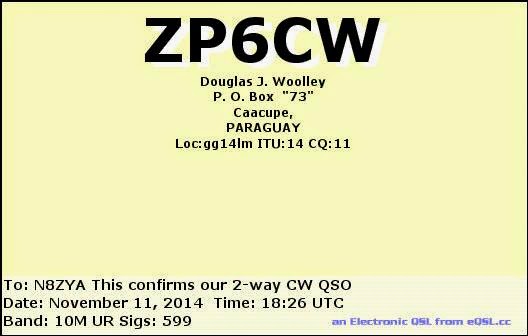
It was nice to see this card in the electronic mail box this evening! I had mistaken the call for CP6CW and the mystery is now solved. While sitting at a picnic table at the Hurricane Wave Pool Park on November 11th, I distinctly hear the wrong call. (it happens from time to time)
We’ve worked several times before but this was my first contact with them on 10 meters. Morse Code is such an amazing thing isn’t it? You catch the band open for a few minutes and bounce a signal 4,677 miles into South America. I’m happy to see this confirmation card (ZP6CW) from Paraguay.

John Smithson, Jr., N8ZYA, is a regular contributor to AmateurRadio.com and writes from West Virginia, USA. Contact him at [email protected].
More BK Building
 |
| 1935 ARRL Handbook. Source: http://www.arrl.org/ |
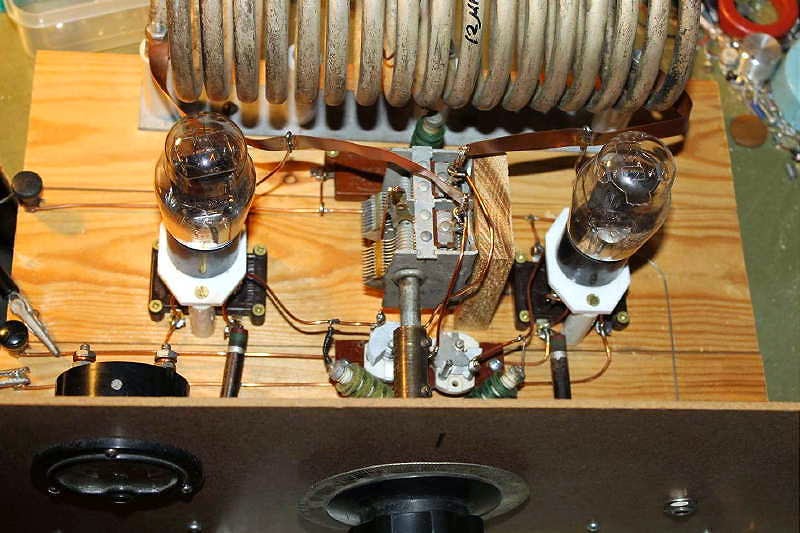
Although John did not have every period-appropriate component available to him, it didn't discourage him from building his BK rig. For too many, this is often a stumbling block that leads to nothing being built....as the boy's of '29 no doubt would have done, he put something together completely from his junkbox.
It will be super to have another left-coast station in this years '29 Party...and a Canadian station to boot!
Anyone else building for the BK? ....there's still a few weeks left.
Steve McDonald, VE7SL, is a regular contributor to AmateurRadio.com and writes from British Columbia, Canada. Contact him at [email protected].
Skeeter Hunt Certificates
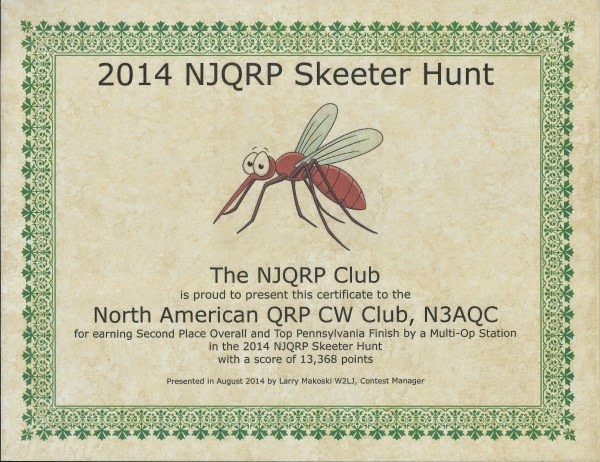
If you earned a certificate, it has been noted on the Scoreboard spreadsheet, in the "Notes" column:
https://docs.google.com/spreadsheets/d/1odmnlTAnQST7FgsEnsItHaT_ZO0e8yZpzLqxcsyGRkY/edit#gid=1768430587
Thanks for your patience, and I apologize profusely for the delay - but hey, like John Lennon said, "Life is what happens when you're busy making other plans."
Look for the Skeeter Hunt to be making an appearance on Facebook in the near future! Oh ..... and there will be at least one change in the rules for next year. Look for that announcement in the Spring of 2015. (Hey, I gotta give you something to look forward to!)
BTW, I want to take an opportunity to mention something about the "QRP - When you care to send the very least!" and the "Skeeter Hunt" items that I offer through Cafe Press. There's no big markup there - each item is offered at $1 above Cafe Press cost. The proceeds (which ain't much - believe me!) go towards the purchase of ink, paper, envelopes and postage for the Skeeter Hunt certificates. Next year, I am hoping to offer plaques to the top three finishers.
72 de Larry W2LJ
QRP - When you care to send the very least!
Larry Makoski, W2LJ, is a regular contributor to AmateurRadio.com and writes from New Jersey, USA. Contact him at [email protected].
146-147MHz in the UK – why?
I find it extremely odd that OFCOM has granted access to an additional 1MHz of VHF when the existing 144-146MHz band is grossly under-occupied most of the time. Take a listen 144-146MHz in YOUR area in the UK or elsewhere in Europe. Mostly you will hear white noise!
This is only ad interim, only by NoV to full licence holders, and only in some areas. It is clearly a sop for messing with the microwave allocations. It is very unlikely much new (to radio science) will be gained by this 1MHz allocation. MUCH more would have been learned by a 100kHz allocation around 40 or 60MHz or by allowing UK amateurs free access below 8.3kHz or back onto the withdrawn 73kHz band.
I know it is heresy to say “no, I am not interested” but OFCOM could have done so much better and it has lost credibility in my eyes as a result. I cannot believe allocating this spectrum to radio amateurs serves any useful purpose at all. The RSGB talks about digital TV etc. Sorry, this is rubbish: it is hard enough getting anyone on digital TV on 432MHz and 1296MHz where most ATV activity takes place! I can see perhaps a small handful of people forcing themselves to use this band. On 40MHz, the Es possibilities would have been wonderful.
No, in my humble opinion OFCOM should not have given radio amateurs this band at all. It would really have advanced radio science if they had allocated new, smaller, bands at more interesting places in the spectrum. Let us at least hope OFCOM supports moves internationally to a contiguous new amateur band at 5MHz (60m) at WRC2015 next year. This will be useful in the quieter years to come.

Roger Lapthorn, G3XBM, is a regular contributor to AmateurRadio.com and writes from Cambridge, England.
 Ham Radio Deluxe |
 W5SWL Electronics |
 Ham Radio Prep |
 KB3IFH QSL Cards  Hip Ham Shirts  HamRadioAuctions HamRadioAuctions Reliance Antennas Reliance Antennas Enigma Shop Enigma Shop |  morseDX  Ni4L Antennas  R&L Electronics R&L Electronics antennas.us antennas.us QRV QRV |
- Matt W1MST, Managing Editor
