 |
 We’re Giving Away 20 Free Software-Defined Radio (SDR) Receiver Sets!
 11 December 2014 | by
 NooElec and AmateurRadio.com have teamed up to give away
SDR (Software Defined Radio) receiver packages to TWENTY hams!
Over $1,200 in free prizes and they’ll pay the shipping worldwide!
The deadline to enter is 18 December 2014 20:00 UTC.
We’ve announced the winners!
Click Here
Read the rest of this post
Matt Thomas, W1MST, is the managing editor of AmateurRadio.com. Contact him at [email protected].
The Importance of 1929 – Part 3
 |
| Drum Dial Rx Tuning Courtesy: http://www.arrl.org/ |
As the leader of the ARRL's Technical Development Program and its assault on 1929 preparedness, Hull continued his relentless pace of construction and publication in the November 1928 issue of QST...turning now to receivers. The detailed article analyzed three receivers of varying complexity to see how they might fare in the busy "international bands" of 1929...and where improvements might be gleaned.
In "High-Frequency Receivers for the Coming Year / Incorporating Thoroughly Practical and Satisfying Selectivity, Open Scales, and a New Ease in Handling", editors proudly announced that,
"...practical selectivity for 1929 has been secured; it is within the reach of every amateur." [QST November, 1928]
 |
| QST Oct '28 Courtesy: http://www.arrl.org/ |
Another equally important issue was addressed in QST's October 1928 edition, once again by Ross Hull.
"In view of the present off-band operation, it is not surprising that amateurs have been wondering how it will be possible for them to stay within the relatively narrow confines of the 1929 bands and to know definitely and at all times that the frequency of their transmitters is legal." [QST October, 1928]
"The Frequency Measurement Problem / Applications of the Monitor in Transmitter Setting and Signal Checking" described, in exacting detail, the construction and calibration of a combined monitor and frequency meter that would fulfill the new rules regarding frequency allocations...but only if hams used them regularly.
 |
| QST Sept '28 Courtesy: http://www.arrl.org/ |
With the ARRL's reliance on QST's significant advertising revenue as a major source of income, the urgent 'need' to rebuild was not overlooked by the ad-men, as more building would mean that more parts had to be purchased. A skeptic might even suggest that the possibility of increased advertising revenue may have been just as much of a driving-force for the need of new construction than the new rules themselves!
 |
| QST 1929 Courtesy: http://www.arrl.org/ |
Advertisers in QST were not shy about reminding amateurs of the coming deadline as well as promising easy solutions to compliance.
In early 1928, QST published several of the Convention articles that would apply to amateurs. Chief amongst them were the frequency allocations. North American amateurs lost about 40% of the spectrum space that they had previously enjoyed but...the harmonically-related bands, although slimmed-down, were retained along with exclusive access to the new and largely unwanted territory of 28-30mc.
Many amateurs at the time complained about the loss of older frequencies and that the League representatives had dropped the ball. In light of the times, and in view of the commercial feeding-frenzy for new broadcasting allotments, they fared very well.
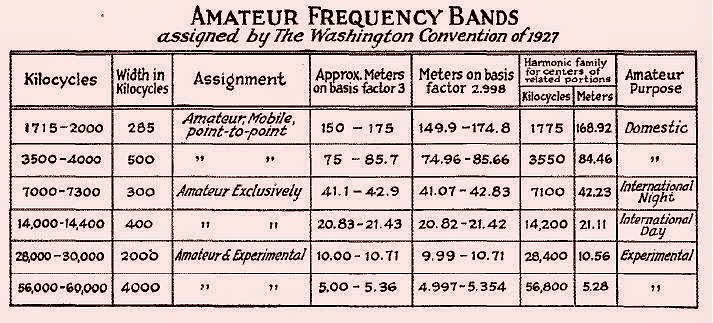 |
| 1929 Band Plan - QST Jan '28 Courtesy: http://www.arrl.org/ |
But it wasn't just frequency assignments that were changing...1929 operators would need to change their crummy old operating habits as well! ....(cont'd)
Steve McDonald, VE7SL, is a regular contributor to AmateurRadio.com and writes from British Columbia, Canada. Contact him at [email protected].
The Importance of 1929 – Part 2
 |
| W6BAM - 1929 Compliant. Courtesy : N7RK |
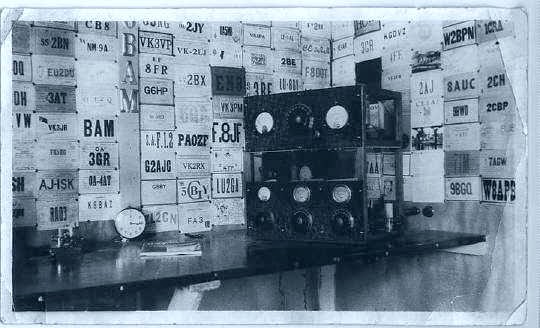
It wasn't long before the ARRL shifted its focus to the new days ahead and seemingly, every issue of QST leading up to the 1929 implementation date, addressed the topic. It is of interest to see how the ARRL interpreted the new rules and developed a strategy to meet the requirements. Many of the rules were broad enough to allow for varied interpretations, all of which could be compliant. In hindsight it seems they made a very good choice on the best way to tackle the present mess on the ham bands...to inform every ham possible of his or her responsibilities for meeting the coming challenge and to show them how.
As far as amateur 'experimental' radio was concerned, the delegates addressed several critical points...in fact, the very recognition of amateur radio itself was a significant step forward for hams worldwide:
"Article 1, {16} the term "private experimental station" means -- (2) a station used by an "amateur," that is, by a duly authorised person interested in radio technique solely with a personal aim and without pecuniary interest."
Although not as big an issue in North America, where governments had long-supported ham radio, for many countries it would mean operational status would now be recognized. The ARRL's campaign to convince hams that their stations must be 'DX-ready' was now given some teeth. Thus began the campaign to convince hams that their 1928 junk must go:
"...for the great average of American amateur stations...it is not a reassuring spectacle in view of next year's requirements. We seriously doubt if as many as one-half of one percent of the active stations to-day are good enough to offer their operators any reasonable chance of success in international work next year. The rest, we think, will have to be rebuilt....floppy waves, bum notes, crawling frequencies, too-big condensers, sloppy practices, haywire assembly, and lack of precision measurements...These must go.. " [QST Editorial, May, 1928]
It sounds alarmingly descriptive of our annual BK Party...but proclaiming that 99.5% of U.S. amateurs would need to rebuild was surely a bold statement and one, as time went on, was gradually toned-down in QST editorials.
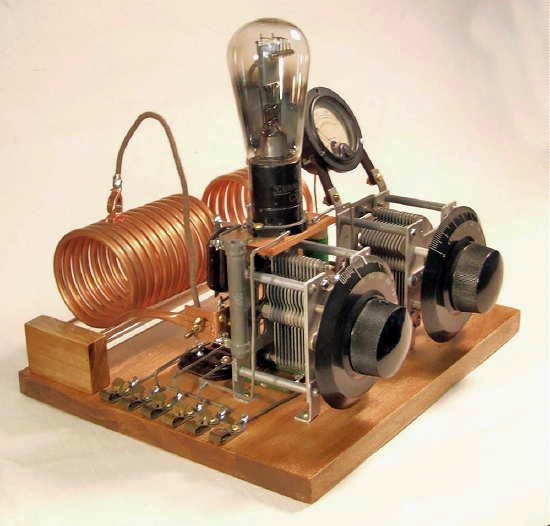
Addressing the 'haywire assembly' issue, articles soon appeared showing better construction practices for earlier familiar designs, the self-excited favorites.
 |
| Courtesy: WØVLZ |
Read with caution as you will likely be tempted to begin the parts-search for you own version soon after. It was Niel's superb series of videos that inspired my interest in 1929 construction.
 |
| Hull's 1929 MOPA. Courtesy: http://www.arrl.org/ |
 |
| Hull's High-Powered 1929 Self-Excited Transmitter. Courtesy: http://www.arrl.org/ |
The second article in the issue, "Adapting Medium and High-Powered Self-Excited Transmitters for 1929 Service / Some Design, Constructional and Tuning Considerations Involved", was described by Hull...
"For a week or more, the Laboratory was filled with odors of burning bakelite, hard rubber and wood, and at times whiffs of smoke drifted lazily across the tables -- but in the end our pulse had returned to normal, for we had found that even 250-watt self-excited transmitters can be made to behave in a 1929 manner with just the same treatment we had given the low-powered set".
As noted earlier, it was of interest to see how the men at ARRL interpreted the new rules to such an extent as to call for a complete overhaul of transmitter construction. The Washington delegation had only provided a broad hint as to what must be done regarding stability and spectral purity, while still craftily ensuring that transmitters would always be required to remain "state of the art":
"Article 5, {18} (3) ..the frequency of the waves emitted must be as constant and as free from harmonics as the state of technical development permits"
The ARRL took this opportunity to push the "state of technical development" as it concerned amateur radio. Hull defined the requirements for a 1929 signal as:
"...must be entirely within the limits of the band....its frequency 'flutter' due to irregularities of plate supply must not exceed about 1/30 of 1% (approximately 250 cycles at 40 meters). In addition, the frequency of the signal must be relatively constant. The signal must not 'shimmy' as the antenna vibrates, it should not 'chirp' as it is keyed, nor can it "creep" appreciably as...the tube heats. In short, the frequency of the first dot transmitted should be within 1/10 of 1% (about 750 cycles at 40 meters) of the hundredth dot, even if the plate has reddened...or the voltage drifted. At the end of a few hours of operation the frequency should not have strayed much further." [QST August, 1928]
By today's standards, not a tall order, but in 1928, there was much to be done.
With the deadline fast-approaching, the vigorous campaign to drag hams out of the cesspool of clicks, harmonics, wide signals, raw AC and into the promised land had begun....lead mainly by the hands of George Grammer, Ross Hull, James Lamb, Robert Kruse and Beverly Dudley, nirvana was just over the horizon and surely could be reached .....but only if they rebuilt their 1928 'heaps'. (cont'd)
Steve McDonald, VE7SL, is a regular contributor to AmateurRadio.com and writes from British Columbia, Canada. Contact him at [email protected].
WSPRnet problems
WSPR signals propagate around the world and allow very weak signals to be correctly decoded. WSPR is some 12-14dB better than normal speed CW. If 10W gets through on CW less than 1W is quite enough with WSPR. My own 10m 500mW beacon, to a simple “nothing special” end-fed wire antenna has been copied on every continent in recent weeks, including Australasia and Antarctica.
The main bonus with WSPR is that all reports can be automatically sent to an internet database (WSPRnet), so anyone can see where signals are reaching and how well. Today though, the WSPRnet database has been in trouble, possibly due to being overloaded. It was not working the last time I checked but was working late this morning.

Roger Lapthorn, G3XBM, is a regular contributor to AmateurRadio.com and writes from Cambridge, England.
Tromelin, Andamans and SOTA
So what's happened since I last blogged.
Tromelin Expedition FT4TA: The expedition team did a great job, making nearly all bands available with good signals, at least in South Texas. I enjoyed both working the expedition, to fill some band slots, but also the event. The daily news, conditions, the complaining, etc.... I worked them on 10m, 15m, 20m, 30m and 80m. All new bands except 20m. My practice, as I have written about here, is to try to work the expeditions, during the last days, QRP. I was not able to do that on this expedition. The pile-ups never really slacked off, which brings me to my point.
Now that many expeditions use Club Log and other online tools to post how many QSO's each caller has logged, the information is leading to much debate. I am on a particular reflector where an individual copied and posted the band scorecard for multiple individuals and berated them for making multiple band/mode contacts when so many needed Tromelin for an all time new one.
My thoughts on this one: As long as an individual doesn't dupe band/mode slots, working the expedition is fair game. If a DXer builds a station that is capable and puts in the time operating to work Tromelin on 20 band slots, why not. Telling him not to is like telling a guy with a Ferrari that he can only drive the speed limit. If, for whatever reason, a dipole is all you have, you know that working rare DX is a tough proposition. Why should the capable stations be made to wait on those not so capable. In my early days of DXing, not working an expedition motivated me to improve my station, improve my operating skills, improve my understanding of propagation, etc... Failure is often life's greatest teacher.
DX-peditions can control this somewhat by limiting the number of bands they operate on, but those guys paid their money, why shouldn't they have all the fun they can.
Andamans VU4CB and VU4KV: This team also did a nice job activating a pretty rare place, that from my part of the world, is difficult to work. I was able to get QSO's on a few bands and was impressed with the operation. I was not able to work these guys on QRP either. VU4VB operated from a rare IOTA which I also chased. So, please all around on this one.
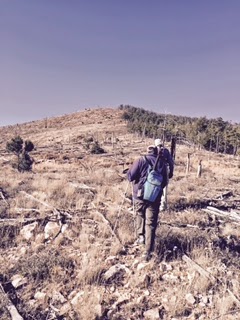
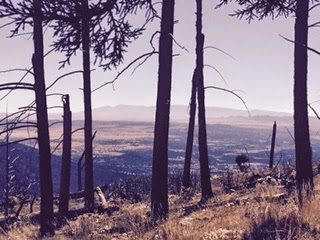
SOTA Activations: I did find time to get in four SOTA activations near my Santa Fe, NM QTH during November. I activated three peaks, along with Fred KT5X and John K1JD, southeast of Albuquerque, NM.

Mike Crownover, AD5A, is a regular contributor to AmateurRadio.com and writes from Texas, USA. Contact him at [email protected].
Android WSPR apps
Thanks (again) to Steve G1KQH, these are Android apps for WSPR. I see they now include a TX beacon.
Two new WSPR Apps for Android
WSPR Beacon
and another I have just found:https://play.google.com/store/
apps/details?id=xxx.wspr. g4swy&hl=en_GB 73 Steve
http://www.g1kqh.talktalk.net/

Roger Lapthorn, G3XBM, is a regular contributor to AmateurRadio.com and writes from Cambridge, England.
The Importance of 1929 – Part 1
When it comes to the Bruce Kelley QSO Party and the rules involving the use of circuitry and tubes popular in 1929 or earlier, some have enquired..."Why 1929...what was special about that year in particular?"
Over the past few nights I've spent some enjoyable hours reading QSTs from the late '20's. It seems that 1929 was really the beginning of much that we have come to recognize, for all of our lives, as 'Amateur Radio'....but to answer the question, we really need to go back a few more years.
Prior to that time, and especially in the very early years, amateur radio seemed to have much in common with the 'wild-west'. Rules, if any, were difficult to enforce, as was licensing. May hams operated without a licence, choosing their own call letters. There was a lot of crazy stuff happening...bootleggers, broadcasting music and a general 'every man for himself' approach.
 |
| Headquarters - Courtesy: http://qsl-history.webs.com/ |
With the appearance of QST, in 1915, membership grew quickly and it soon became a sign of notability to be a League member. By the late 20's radio was thriving and growing at unprecedented rates. The U.S. amateur population grew from 16,000 in 1926, to 30,000 in 1932 alone. By 1938 there were 50,000 licenced hams in the U.S.
However, a federal judgement, in 1926, ruled the Radio Act of 1912, to be largely unenforceable, creating even more chaos amongst broadcasters. Things were getting somewhat chaotic in the amateur radio world as well as in the commercial field. The time was ripe for some serious changes.
In order to gain some control over this new technology and the chaos surrounding its usage, more so in the commercial field (ships, aircraft, broadcasting, telegraph), the U.S. Congress passed the Radio Act of 1927 thus giving more tools to the recently-established Federal Radio Commission, the forerunner of today's FCC.
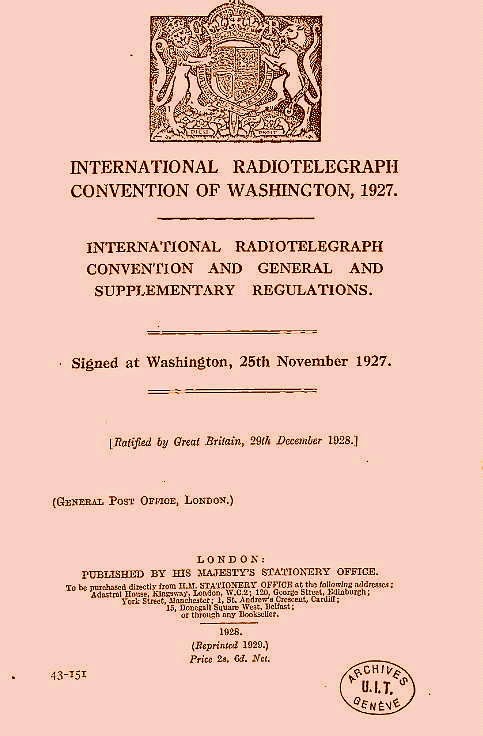
Although the Radio Act of 1927 gave the FRC the power to enforce regulations, it came down to the international agreements hammered out in the winter of 1937 to make things happen. The International Radiotelegraph Conference, attended by representatives from 72 countries, met in Washington, DC to grind out some international 'rules' since the growing popularity and surprising success of the 'shortwaves' was now of worldwide concern.
Much as we see today, the fight for radio spectrum had begun. The 172-page Washington document makes fascinating reading and in it we see the basis for many of amateur radio's beloved fundamentals.
 |
| Courtesy: http://www.arrl.org/ |
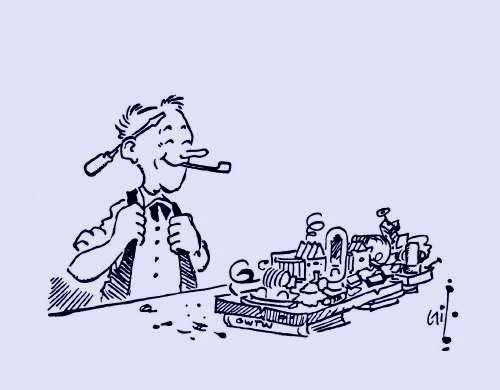
The amateur's of 1927 didn't know it yet, but they would soon be deep in rebuilding their stations to meet the 'new requirements' of 1929!
Steve McDonald, VE7SL, is a regular contributor to AmateurRadio.com and writes from British Columbia, Canada. Contact him at [email protected].
 Ham Radio Deluxe |
 W5SWL Electronics |
 Ham Radio Prep |
 KB3IFH QSL Cards  Hip Ham Shirts  HamRadioAuctions HamRadioAuctions Reliance Antennas Reliance Antennas Enigma Shop Enigma Shop |  morseDX  Ni4L Antennas  R&L Electronics R&L Electronics antennas.us antennas.us QRV QRV |
- Matt W1MST, Managing Editor
